


Phu Quoc’s reopening prompts new source market focus

Vietnam is eyeing up new markets as the island of Phu Quoc prepares to welcome again tourists in November.
At a webinar hosted by Delivering Asia Communications, industry players said plans are well underway to welcome double-vaccinated visitors in a similar scheme to Phuket’s sandbox.
This includes the current island-wide vaccination programme. Guidelines also state only hotels that meet certain criteria, such as size, can register to reopen.
Linh Le, principal and co-founder of Luxperia, said traditional markets for Phu Quoc were Russia, China and South Korea. However, Covid-19 has changed the game.
“As a result of the pandemic, the whole world is reassessing when and where to travel,” he said. “You have to consider the bilateral agreements countries have in place with regard to what vaccinations are accepted and quarantine restrictions on return.”
Le added that due to this, charter flights from Europe will play a key role in Phu Quoc’s recovery.
India will also be a key driver in countrywide recovery. Ken Atkinson, founder of Grant Thornton Vietnam, said this has been fuelled by recent diplomatic discussions.
He remarked: “The main target when Vietnam reopens is charter flights from India and trying to capture some of the Indian wedding market.”
Linh Bui, managing director of Sens Asia Travel, predicts the US, UK, Switzerland and Germany will show a fast rebound.
“These operators are requesting new products and updated pricing,” she said. “They’ve been really active working with us to come up with new ideas even though they know they can’t travel here right now.”
Jai Kishan, general manager of New World Phu Quoc Resort which opened in May, believes once regional borders relax, the island will see a shift towards short- and medium-haul travel. He said Hong Kong and Singapore will lead the pack.
However, recovery will be slow with global economies shattered and expendable income at an all-time low. “It will be two to three years before we’re back to 2019 levels,” said Kishan. “People’s income has dried up and purse strings have been tightened across the world.”
While visa-free travel will remain in place on Phu Quoc, Atkinson suggested this be rolled out nationwide. “The big question is if visa exemptions will continue. This will make Vietnam more competitive without the regulations of other countries.”
New hotels: DoubleTree by Hilton Putrajaya Lakeside, Novotel Shanghai Qingpu Excellence Hotel, and more
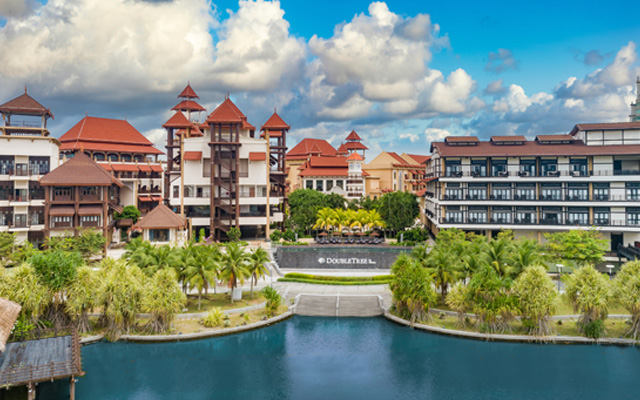
 DoubleTree by Hilton Putrajaya Lakeside, Malaysia
The 290-room hotel sits in the heart of Malaysia’s third Federal Territory, a 20-minute drive from Kuala Lumpur International Airport and surrounded by several scenic attractions, making it a convenient stopover for leisure and business travellers.
Ten room types are offered, along with complimentary Wi-Fi for Hilton Honors members, a flat-screen TV with HD channels, 24-hour room service as well as a work-desk for business travellers to work in comfort.
For recreation, guests have the option of a child-friendly Splash Pool, a Lakeside Pool that overlooks the scenic Putrajaya lake, and a well-equipped fitness centre.
The resort features two restaurants: all-day dining Makan Kitchen, which serves authentic Malaysian fare and specialty dishes across Malay, Chinese, Indian, Iban and Peranakan cuisines; and KOFFEE deli.
Built for business events, the property has has 22 meeting rooms that are all outfitted with an LCD projector, Wi-Fi and wired Internet, video and teleconferencing facilities, digital sound system as well as a dedicated event manager to provide technical support. The largest room setup is at 926m2.
There is also a hybrid virtual studio to support new-generation meetings and events.
 Novotel Shanghai Qingpu Excellence Hotel, China
The new 240-key hotel charms families with two floors dedicated to family rooms – 25 in all – including four whimsically decorated family suites which can be connected with neighbouring family rooms.
Other facilities include InBalance fitness centre, and a range of F&B outlets.
With the new hotel joining sister property Pullman Shanghai Qingpu Excellence, which opened in 2019, both hotels make a strong product for business events. Event organisers have access to 524 combined guestrooms and suites as well as function spaces totalling 2300m2, comprising a high-ceilinged, 800m2 pillarless grand ballroom, 200m2 of outdoor terrace space connected to the ballroom and 15 breakout rooms with varied configurations and sizes.
Groups will appreciate expanded dining options at Pullman Shanghai Qingpu Excellence, which includes Azur Chinese Restaurant, Q Seafood & Grill and Yue Café all-day restaurant.
 Swiss-Belhotel Cendrawasih, Biak, Papua, Indonesia
Swiss-Belhotel International made its entry into Indonesia’s Biak island with the opening of Swiss-Belhotel Cendrawasih, a four-star property aimed at both business and leisure visitors.
It features 102 guestrooms that take local heritage into their design. Guests can access all-day dining Swiss-Café restaurant, a swimming pool, gym, massage service as well as seven meeting rooms for up to 200 guests and a ballroom for up to 800 guests.
The hotel is conveniently located adjacent to Hadi supermarket and department store – the largest shopping centre on the island. Frans Kaisipo International Airport sits 4km away.
Navigating the next frontier of hospitality with smart video

 Like me, most Singaporeans will be looking forward to the reopening of borders. As a tourist or traveller, the question on most of our minds would be, “am I going to be safe from Covid-19 while traveling?”
On the business end, will the ability to juggle absolute safety and maintain a seamless customer experience mean big investments for the already suffering hospitality sector?
An unlikely hero that can support the industry’s transformation is video and video technologies. An open platform Video Management System (VMS) is the software for video, that enables users to capture, record, view and analyse video from their network of cameras as well as integrate a range of various smart software capabilities on a single unified platform. This intelligent software is cost-effective and not only improves safety and security standards, but also enhances service quality for guests.
Major players like Marriott and Hyatt hotel groups have already incorporated the VMS into operations, enabling increased visibility across the premises, reassuring guests of a higher standard of security.
What many do not realise is that the VMS provides a flexible infrastructure for these businesses to do more in their decision making, beyond just security applications. Video analytics enables hotels to gather insights based on key demographics or preferences to enhance their personalised services, resulting in improved client satisfaction and eventually, loyalty.
Assuring security as part of the customer experience
Security has outgrown legacy closed-circuit television (CCTV) technologies. Smart video capabilities such as facial recognition and video analytics, provide hoteliers with active assets to prepare for the safe reopening of the industry.
With the pandemic still ongoing, many hotels in Singapore have been requisitioned as government quarantine facilities to combat the spread of Covid-19. These facilities must abide by strict infection prevention and security protocols to ensure the safety and security of quarantined individuals.
To aid with increasing security requirements, video assets can be enhanced with motion detection and video analytics capabilities. The system enables security teams to monitor crowd capacity in common areas, and ensure guests under quarantine do not risk their safety, and the safety of others, by leaving designated quarantine zones.
Solutions to safeguard privacy
There are of course no-go areas for cameras, such as guestrooms, but for common areas, there are innovative solutions that safeguard guests’ privacy on camera. Privacy masking software replaces moving objects captured on live or recorded videos with silhouettes ensuring privacy-sensitive monitoring and absolute personal data protection. Privacy masking is applied to the video and can be integrated with other analytics so that viewers only see a blurred silhouette.
The system extracts only metadata from video footage that is critical for necessities, such as crowd control. However, this can also be adjusted for high-risk zones (i.e., quarantine zones or restricted areas).
Adding value to customer service
While video technology’s most direct use is to ensure the safety and security of guests, staff and critical assets, there is tremendous potential for video in customer service.
Guests would expect to be greeted by friendly staff at the lobby and guided to their rooms. Unfortunately, the pandemic has made it impossible to return to the same standards of service in pre-Covid times. These days, guests are more likely to encounter a crowded lobby filled with masked strangers, while hotel staff would struggle to manage and provide quality service.
Swissotel the Stamford and Grand Park City Hall have both successfully implemented self-check-in kiosks. Placed at their lobbies and equipped with facial recognition software, guest’s waiting time was reduced by up to 70 per cent, allowing guests more time to enjoy their stay. This implementation also safeguards hotel staff by reducing physical contact at the reception desk.
Facial recognition software is also able to identify guests with their masks on and can attach the assigned room number to each guest, providing a quick and hassle-free experience for everyone involved. It can also be combined with access capabilities to provide a more personalised experience allowing guests to gain access to their rooms by simply standing by the door instead using a key card.
This technology is also adapted for License Plate Recognition (LPR) – guests or VIPs can gain access to parking facilities without lifting a finger. This also ensures suspicious vehicles are not given access and parking spaces are optimised for authorised vehicles.
What’s next for video?
There are many benefits and possibilities that the VMS can provide, with the integration of data analytics, AI, and IoT devices. Decision makers now have the freedom to leverage emerging technologies beyond security.
The hospitality industry needs to accelerate digital transformation for long-term recovery, or risk customer abandonment and falling further behind. As a first step, the VMS empowers these businesses by combining infrastructure and digital applications across the enterprise into a single, customised touchpoint.
Indonesia lifts passenger inbound cap following industry protest

Indonesia’s directorate general of air transportation has reversed its policy to impose a cap on international passenger arrivals in Jakarta’s Soekarno-Hatta International Airport. The new policy took effect from October 4.
In a letter addressed to national and international airlines operating in the country, seen by TTG Asia, Novie Riyanto, director general of air transportation of the Ministry of Transportation, said: “Following an evaluation, the cap on inbound traffic to Soekarno-Hatta International Airport of 90 passengers per flight, as of October 4, is no longer valid.”

He added that along with the revised policy, the airport has added new health check facilities and improved upon existing ones, and additional international entry points were being prepared. He also said that sufficient quarantine facilities were in place.
However, airline operators are still required to submit data on their flight arrival plans and the number of passengers on each flight.
Last Wednesday (September 29), Novie issued a letter stipulating that international flights arriving at Soekarno-Hatta International Airport will be capped at 90 passengers per flight with effect from September 30.
The now-reversed policy was part of efforts to guard against the entry of new Covid-19 variants into the country, prevent queues for PCR test checks, as well as to ensure the quality of inspection results and that every passenger meets the application provision.
“This needs to be done so that we can carry out stricter supervision to prevent the new variants (from entering) Indonesia,” Novie said.
The policy had sparked reactions from IATA and the Association of the Indonesian Travel Agents, who respectively sent letters to Indonesia’s transport minister to appeal against the decision.
Both associations deemed the last-minute policy notice as extremely disruptive for the airlines to impose.
Maldivian tourism operators brace for winter demand surge with some resorts selling out
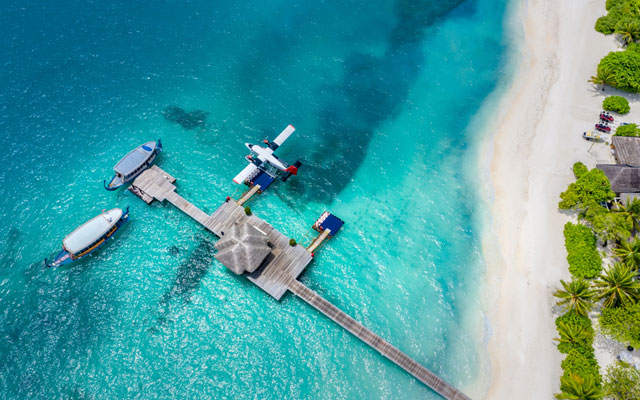
The Maldives, one of the few tourism destinations that is thriving in the post-pandemic era, is anticipating a surge in tourist traffic this upcoming winter, with some resorts already fully booked ahead of the peak season.
A senior official at Diethelm Travel shared that forward bookings are painting a rosy picture for the sector, with tourism and hospitality operators seeing “unbelievable” demand for rooms.
Some resorts will be running at full capacity this winter, he said, adding that “it is going to be one of our best winter seasons”.
Maldivian tourism authorities said there were a total of 114,896 arrivals last month, higher than 107,620 in September 2019. Russia, Germany, the UK, Italy and the Middle East markets are doing well, with Monday (October 4) recording 6,000 arrivals, the country’s highest single-day arrivals to date.
Pent-up travel demand coupled with the fact that it remains one of the few destinations open to international tourists amid the pandemic have made the Maldives a holiday hotspot.
Furthermore, with its seclusion and signature one-island-one-resort concept which allows for social distancing, the Maldives is considered one of the safest destinations to visit during this time.
Industry officials said that with the growing demand for winter vacation packages, resorts have stopped offering discounts.
Shafraz Fazley, managing director at Viluxur Holidays, is also optimistic about winter season bookings. Some resorts are expecting a full house, he said, adding that Russia is strong, Saudi arrivals are growing in numbers while a relatively new market, Brazil, have been showing promising returns.
He said there has been an increase in visitors from the US staying at a range of properties, from three to four-star accommodation to super luxury resorts.
Shaushan Aan Shafeeq of Maldives Holiday Collections said they were excited at the prospects of a promising winter season, and expects more airlines to resume flying to the island nation by year-end and in 2022.
2022 marks the destination’s golden jubilee of tourism with Thoyyib Mohamed, managing director at state-run Visit Maldives, saying it will be a historic year with many activities being planned by the industry.
As of Monday, the Maldives has recorded 85,042 Covid-19 cases and 231 deaths.
Six more airlines to roll out IATA Travel Pass
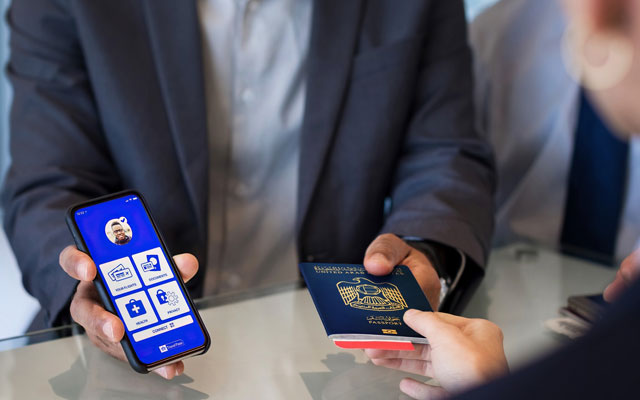
Etihad Airways, Jazeera Airways, Jetstar, Qantas, Qatar Airways and Royal Jordanian will implement IATA Travel Pass in a phased rollout across the airlines’ networks.
These six airlines join Emirates Airline as IATA Travel Pass implementation pioneers, the International Air Transport Association (IATA) said in a release.
IATA Travel Pass is a mobile app that can receive and verify a range of Covid-19 test results and digital vaccines certificates. Currently, vaccine certificates from 52 countries – representing the source of 56 per cent of global air travel – can be managed using the app. This will increase to 74 countries, representing 85 per cent of global traffic, by the end of November.
Willie Walsh, IATA’s director general, said that the IATA Travel Pass is now entering the operational phase following months of testing.
“The app has proven itself to be an effective tool to manage the complex mess of travel health credentials that governments require. And it’s a great vote of confidence that some of the world’s best known airline brands will be making it available to their customers over the coming months.”
The app offers a safe and secure way for travellers to check the requirements for their journey, receive Covid-19 test results and scan their vaccine certificates, verify that these meet the destination and transit requirements and share these effortlessly with health officials and airlines prior to departure, said IATA.
It added that this will avoid queuing and congestion for document checks, thereby benefiting travellers, airlines, airports and governments.
Agoda employees get their hands dirty to clean up Phuket’s Kamala Beach

A group of 24 employees from Agoda’s Bangkok and Phuket offices, alongside CEO John Brown, recently conducted a clean-up drive at Phuket’s Kamala Beach, doing their bit to tackle beach waste.
Polluted beaches and waterways is the second biggest concern regarding tourism’s impact on the environment, according to Agoda’s 2021 global Sustainable Travel Trends Survey.
With that in mind, the Agoda team partnered with a local non-profit, Phuket Has Been Good To Us Foundation, to pick up trash at Kamala Beach last Friday (October 1). After collecting 43 bags of trash, the Agoda employees also sorted trash and cleaned recyclables.
The #MyPledge beach cleaning drive in Phuket is the second in the series of Agoda’s #MyPledge beach clean-up events following the first which kicked off in Singapore in September.
The activity will roll out to other markets across Asia, including Indonesia and Hong Kong, until the end of this year, with hundreds of employees from the digital travel platform taking part in the events.
As part of the #MyPledge campaign, Agoda worked with influencers across the region to raise awareness of tourism’s impact on the environment and invite the public to share their pledges of simple steps they might take to travel more sustainably in the future.
Sabre and Emirates reach new distribution agreement
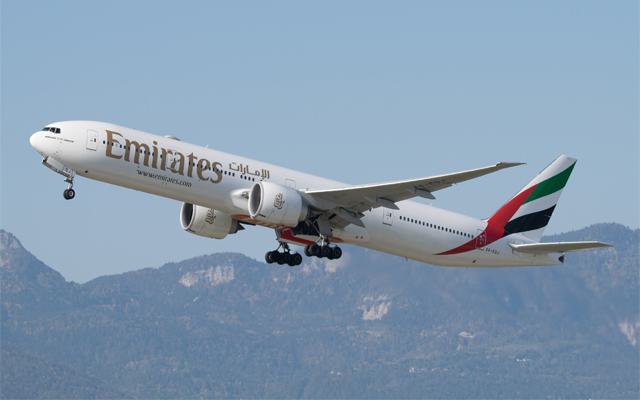
Sabre Corporation and Emirates have signed a new multi-year, worldwide distribution agreement that will provide Sabre-connected travel buyers and agencies with access to the airline’s content, through Sabre’s GDS.
Further to this, Emirates will create and distribute NDC offers through the Sabre GDS. The new contract will connect Emirates to a global network of travellers, while supporting its global vision to provide travel buyers and travellers with personalised offers.
Emirates CCO Adnan Kazim said: “The new contract will support us to meet the needs of our agency partners. Providing agencies with flexibility, choice and efficiency will help them to thrive in the current climate and will help us drive revenue and growth.”
Roshan Mendis, CCO, Sabre Travel Solutions, added that the agreement “will provide both Emirates and travel buyers with immense value, removing complexity in the buying process, which is crucial to the recovery of the industry”.
In addition, Sabre will continue to partner with Emirates on advanced retailing, data and analytics capabilities through a number of its solutions in areas such as network planning, revenue optimisation and market intelligence.
Klook adds Atome to payment options

Klook and Atome have signed a deal to expand buy now pay later payment acceptance for travel, attractions and leisure experiences across South-east Asia.

The partnership will start in Singapore before rolling out to Hong Kong, Malaysia, and the Philippines in the coming months.
Klook users in these four markets will be able to pay with Atome during checkout on Klook’s mobile app and website. To pay, users have to register and select Atome as the payment option. Customers’ bills will then be split into three zero-interest payments, with no annual or servicing fees.







While appreciating this year’s display, Tulipmania – Its Wild Origins, visitors can imagine themselves following in the footsteps of Kazakh nomadic tribes, who once traipsed across the foothills of Tien Shan, the great mountain system of Central Asia. The vibrant displays take in a depiction of a bazaar that represents Kazakhstan’s role as a trading hub and cultural melting-pot along the Silk Route, as well as towers and gates inspired by Timurid dynasty architecture.
Tulipmania – Its Wild Origins also features an online component where videos of the floral display will be posted on Gardens by the Bay’s Facebook and website progressively from October 7.