Brought to you by IT&CM Asia and CTW Asia-Pacific
Here are 9 exciting reasons to participate at the upcoming MICE and Corporate Travel virtual event taking place on 28 to 30 September 2021, 10am to 7pm (GMT+8).
Brought to you by IT&CM Asia and CTW Asia-Pacific
Here are 9 exciting reasons to participate at the upcoming MICE and Corporate Travel virtual event taking place on 28 to 30 September 2021, 10am to 7pm (GMT+8).
This is a snapshot of our growing exhibitor list. Click on the link for the latest updates.

Check out our latest confirmed buyer list here.
With enhanced interaction and round-the-clock access on the proven and improved OnAIR virtual event platform.

Even for those based outside the Asia-Pacific region
Plus added meeting opportunities on the event’s Meeting Hub platform for Exhibitors and Buyers.
That rewards a buyer’s time and active participation during the virtual event with cash vouchers and prizes! There is no registration fee. In addition, stand to earn as much as USD 220 in cash. Here’s how:


This is when pre-event Scheduled Meeting requests commence for registered Exhibitors and Buyers to firm appointment dates and times with each other. Register early and get a head-start on securing meets with your preferred business potentials.
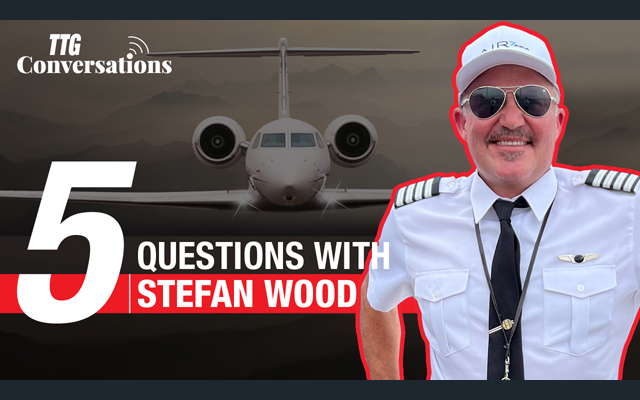
In our recent TTG Conversations: Five Questions video interview, you spoke of opportunities in crisis – particularly the opportunity to transform Far East Hospitality (FEH) into a world-class manager of lifestyle brands. But before you saw that opportunity to transform, what were the immediate actions you had to take to protect your ship and crew?
Well, Karen, this is my 16th crisis. When you go through different crises and you reflect, you will find that there are patterns of things that you should do. So, when Covid-19 hit, I intuitively knew what must be done.
The first thing we did was to bifurcate our response teams into two different task forces. One worked on operations – what must be done to take care of business today. That entailed navigating through all the government protocols required for us at that time, keeping our people safe, knowing how much cash we have and how long we could last, and deciding if we should institute pay cuts and shorten work weeks, things like that.
The other task force worked on a transformation plan. I knew that this is a great opportunity for us to transform. Transformation (of FEH) has been brewing in my mind for a long time but we could not (do it) because we were so busy running at marvelous occupancies and delivering very high GOPs. We were trapped in a problem of success.
We are a local mid-tier hotel operator that delivers very, very strong margins through a very evolved, centralised cost containment strategy. But as successful as we are, we cannot grow very much in this arena. We have to reinvent ourselves to do something else. That reinvention is to be a world-class manager of lifestyle brands.
What was the easiest and hardest part about this transformation?
Work comes in three stages. The first stage requires a lot anticipation and to measure ever so often if the decisions are a right call. The second stage requires a plan.
The third stage requires selling that plan. Now, this is a very difficult process in an organisation that is complex and is publicly listed. Selling the plan to your bosses is actually the easiest step because they are interested in the outcome. If you are fairly certain (of a positive outcome), they will (accept it). It is also easy to sell to your subordinates, as they often only needed to know what you would like them to do to fulfill your plan. The most difficult part is to sell to your peers in the industry and to solicit support.
And after that, the final secret ingredient on how to move things forward, is to have the courage to execute.
I suppose I have waited for an opportunity like this. At that beginning, I thought this pandemic would probably last nine months, and we would get that much time for the transformation. But as the pandemic evolved, it became clear that this is very different from SARS. SARS was short, it was not global, there was no misinformation on social media, and there was no political overtones.
So, now, we may even have two years to fulfill our transformation plan.
You have been vocal about your expectations of how post-pandemic travel would look, and your outlook is very conservative and cautious.
Now, my (expectations about) post-pandemic travel is going to be very unpopular. A lot of people say that they cannot wait to travel again. I don’t believe that at all. People only say that because they think travel is going to be like what it was before.
But now, to travel, you have to take (multiple swab) tests, you have to go and apply (for exit and/or entry permits), and then you have to be quarantined according to the law.
So, what would make travel so compelling that it would drive people forward? Lives and livelihoods will be the main travel motivators in the beginning, although at some point regulators will make travel a lot easier. Still, travel will be more cumbersome than pre-Covid, just like how travel is more inconvenient compared to pre-9/11.
This pandemic has questioned the viability of the Singapore tourism model. (There is a lot of talk about) pivoting to quality tourism. I think pivot means a lot more than what most people think it means. We have to create experiences that are so unique to Singapore that people will come here just for that.
We need to ask why does New York thrive, why does Ginza thrive? They thrive because they have so much creative energy. So, that means, before Singapore can go into quality tourism, we have to think about bringing in new creative energy. There must be a seismic shift and not a rhetoric one. We have been saying that we want to go into quality tourism for the longest time, and yet we do not want to give up on volume. If we expect high occupancy and things to go back to what it was prior to 2019, then I think we are headed in the wrong direction.
I imagine Singapore has to become a specialist sushi restaurant with only 40 seats. Therefore, the person who sits on my counter has to get a check that is at least S$100.
For this to happen, there must be vision and direction. Perhaps, by way of policies that determine how land is utilised. Perhaps, stop allowing many, many hotels with very, very small rooms to be built to cater to developing markets.
Back to the analogy of the sushi restaurant: the sushi master can command S$100 per lunch because he has real skills. So, for Singapore to thrive as a high quality tourist destination, we require real skills that are not taught in tourism schools. There must be an underpinning of Singapore’s creative industries. I’m talking about musicians, filmmakers, videographers, dancers, artists, copywriters – you need people who are alive in the arts and are not just automatons.
This transformation to quality tourism is also necessary because now, tourism is creating jobs for foreigners and not for the Singapore core. The more we do, the more foreigners we have to hire.
It’s time for a job redesign because we know that foreign labour is going to be even harder to come by. So, how can we completely redesigned a hotel and create jobs that Singaporeans would want?
Singapore’s increasingly educated population and improving standards of living have presented a hiring challenge for the service industry. Let’s say Singapore manages to establish a strong creative industry to support the ultimate tourism dream, and is able to attract these high-yield customers. Will that improve the population’s perspective of a service profession?
In the 70s, the person who works in the restaurant cannot afford to buy that bottle of wine he serves his guest. What he eats is totally different from what the guest eats. But he serves his guest with a lot of reverence, and he’s very happy and very proud of his job because he is able to rub shoulders with important people.
Now, you fast forward to today and the situation is reversed. Singaporeans may not feel the same way.
However, my answer to your question is yes because we are not a homogeneous people. We don’t all want to become lawyers, doctors or accountants. There are people who enjoy serving.
A long time ago, British Airways had a beautiful advertisement showing a group of children playing musical chairs. There was one child who put his hands on more than one chair, trying to be as safe as possible. He grew up to be an accountant. Another child stood around and ordered other children to move faster and to go here and there. He became a managing director. There was another child who just helped the smaller kids along. She became a British Airways crew.
Whatever the (professional ambitions are), you must be able to pay sufficiently for the person to enjoy a particular basic lifestyle.
Let’s go back to your point about having to redesign a hotel in order to create jobs that Singaporeans would be proud of. How are you doing that?
Some hotels take a parasitic model. They do nothing but provide the basics and wait for tourists to come. Such hotels run with one Singapore manager and a plethora of low-wage workers. A hotel must be a destination (and it can only be so if it has) a holistic offering that delivers a totally different experience.
With the opening of The Clan Hotel Singapore in March, we created the quintessential Singapore success story that is not borrowed from our colonial past. When people talk about what is iconic in Singapore, they generally refer to the colonial era. But that wasn’t a good time for Singaporeans, you know, because we were servants.
What makes a better Singapore story is the time we came here with nothing on our backs, and with only our clansmen to help us.
The concept of clansmen is marvelous in that you take a stranger in simply because he’s from your same village. You clothe him, feed him, give him a place to sleep, and provide him a job. You help him save his money, bring his wife across, and build schools for his children. Our society was built on the back of clansmen. This concept makes a powerful Singapore story, because all clans – the Chinese, the Indians and the Malays – had to unite and work together.
The Clan is a modern hotel with a nostalgic story to tell, while bringing in Singapore’s best hawker fares through room service as well as highlights around the precinct through curated tours.
We did the same over at The Barracks Hotel Sentosa. It was a hotel for the heritage aficionado, telling the story of what the building was throughout history – from being a military barracks to a hotel school and now a hotel. We brought in different artefacts to create a little hideaway.
Taking an experience creation approach to hotels allowed us to combine service with theatre. People stay with us to be part of a programme.
We experimented with this concept through the Singapore staycation product. There were many decisions we made, and one of them was to put our rates at an appropriate level while delivering quality. I refused to discount (because I didn’t want) the volume all at the same time and all on the weekend. If that had happened, we would not be able to fulfill (our experience promise). People would be jammed into our lobby with no social distancing; they would be complaining and we would suffer from a bad reputation. Our staff would feel beaten up. Plus, we wouldn’t get the revenue that we hoped for.
By orchestrating an experience that is different, new and interesting, we can charge a good price and are able to spread (guests) out. Our staff feel special because they are recognised by the customer, and the customer is happy because they find the experience really quite exceptional. Then, we have our name in lights.
In taking this strategy, The Barracks is the number one-rated Sentosa Island hotel on TripAdvisor for the longest time, and it’s been over a year now; The Clan is the number one-rated Singapore City hotel on TripAdvisor since opening in March. For a local mid-tier hotel operator, that is really something.
Langham Hospitality Group has opened the doors to The Langham, Jakarta, marking a highly anticipated entry of the brand into South-east Asia.
The hotel is located within the up-market mixed-use District 8 at SCBD (Sudirman Central Business District) complex, in close proximity to the city’s prime financial, cultural and entertainment centres.

It offers 223 rooms, including the 336m2 Presidential Suite; various F&B facilities such as celebrity restaurant Tom’s by Tom Aikens; meeting facilities; and the brand’s signature Chuan Spa.
Speaking at the opening press conference on September 9, CEO Brett Butcher said the opening was the “culmination of many years of hard work and dedication to delivering the very best product, facilities and service in this international gateway city”.
The Langham, Jakarta is a project delivered with Indonesia’s premier developer Agung Sedayu Group. Butcher said the partnership allowed Langham Hospitality Group to “create something truly remarkable” and to take “luxury to new heights”.
Alex Kusuma, CEO of Agung Sedayu Retail Indonesia, tracked the partnership back to eight years ago, when Agung Sedayu Group decided to create a prestigious complex that would become the group’s flagship.
Alex said “District 8 has been (created) to become a new benchmark, not just for ourselves but for the city as well”. It houses offices, apartments and a shopping mall.
When quizzed on the opening during a tourism crisis, Alex said: “People are just tired of the situation (and) want to look forward to something different. We hope that the hotel will provide a breath of fresh air.”
Norwegian Epic and Norwegian Getaway have been deployed once again in the Mediterranean as Norwegian Cruise Line (NCL) returns to cruising in a post-lockdown world.

A third of NCL’s fleet of 17 ships are now back in operation.
Following an extensive refurbishment at the end of 2020, Norwegian Epic returns to sailing with an all-new The Haven by Norwegian, featuring 75 upgraded suites combined with redesigned experiences, including The Haven Restaurant and The Haven Courtyard Pool and Sundeck. Her first voyage took passengers to popular ports in Spain and Italy from Barcelona over seven days.
Meanwhile, Norwegian Getaway embarks on her first voyage from Rome (Civitavecchia). Through October 25, she will sail a mix of 10- to 11-day Greek Isles itineraries, calling to Dubrovnik, Corfu, Katakolon – NCL’s newest embarkation port located on the Peloponnese peninsula – as well as Santorini, Mykonos, Naples and Livorno (Florence/Pisa). With up to 13 hours in each port and no more than two days at sea, guests will have more time exploring the destination.
Representatives of the ports in Barcelona and Civitavecchia welcome the return of cruise tourism.
Pino Musolino, president and chief executive officer of Port System Authority of the Central Northern Tyrrhenian Sea, said: “The cruise industry is an important cornerstone for our country and region, contributing more than 400 million euros (US$473 million) annually to the economy of the territory of Civitavecchia alone, and providing for more than 1,800 jobs. As such, we couldn’t be more excited to welcome back both NCL’s crew and guests, and look forward to working closely with the team once again.”
Jose Alberto Carbonell, managing director of the Port de Barcelona, said in a statement that efforts have been made to “ensure a safe resumption of cruising from Barcelona for guests, crew and the citizens of our city”.
“We’re thrilled to welcome NCL back to the Port de Barcelona”, said Jose Alberto Carbonell, managing director of the Port de Barcelona. “During the past 18 months, we’ve worked diligently with the NCL team to ensure a safe resumption of cruising from Barcelona for guests, crew and the citizens of our city. We are glad to finally celebrate the comeback of cruising together.”
NCL’s fleetwide redeployment will continue in partnership with local governments and are guided by the robust protocols of the line’s SailSAFE health and safety programme, which at its cornerstone includes that all crew and guests must be fully vaccinated to embark on voyages through December 31, 2021.
The South Korean government has once again extended its special advisory against overseas travel for another month, this time until October 13, 2021.
The current advisory was supposed to expire on September 13.

With this advisory, citizens are urged to cancel or postpone trips abroad.
According to Yonhap News Agency, the extension was necessary as many countries continue to struggle with outbreaks of Covid-19 variants, the foreign ministry said.
The cautious approach comes as South Korea ramps up her national vaccination programme, with president Moon Jae-in noting today that 36 million residents will have at least their first Covid-19 vaccine shot ahead of the Chuseok holiday next week, from September 20 to 22.
The government plans to get 70 per cent of the population fully vaccinated by end-October, and it expects the goal to be achieved earlier.
Following on earlier successful campaigns to drive domestic tourists to local neighbourhoods, the Hong Kong Tourism Board (HKTB) has launched a new West Kowloon neighbourhood promotion that highlights the district’s rich heritage and thriving arts and culture scene.
Part of HKTB’s Hong Kong Neighbourhoods campaign, the West Kowloon programme will focus visitors’ attention on the vibrant street life in Yau Ma Tei and Jordan as well as two world-class museums – M+ and the Hong Kong Palace Museum in the West Kowloon Cultural District (WKCD) – which will open in the end of 2021 and 2022.

HKTB noted that Yau Ma Tei and Jordan are home to many historical architectures, time-tested stores and traditional craftsmanship, while WKCD will provide a new artistic lure. It expects the campaign to draw people from across the city to rediscover the district from new perspectives to drive in-depth local tourism and stimulate economic activities in the neighbourhood.
Five thematic walking routes are offered, focusing on Heritage & Craftmanship, Cultural Arts and Culinary Arts. They take visitors into little-known corners of the city that are often overlooked by residents and visitors alike, such as a bookstore hidden in the Tin Hau Temple, a seafood restaurant transformed into an art hotel, and a condiment store promoting western dishes fused with traditional fermented tofu.
The routes offer recommendations for more than 50 points of interest, shops, and restaurants, and are available as an interactive e-map on the West Kowloon neighbourhood campaign page of the HKTB website. Special offers have been arranged with shops and restaurants in the neighbourhood for people who take part in the walks to encourage spending.
In addition, HKTB has teamed up with FriendsWithYou, a pop-art duo featuring Samuel Borkson from Florida, US, and Arturo Sandoval III from Cuba, to bring their gigantic art installation and signature pop-art characters to the neighbourhood. The installations will be in the Art Park in the West Kowloon Cultural District from September 23 to October 14. Admission is free.
More photo opportunities can be found across the West Kowloon neighbourhood, such as the footbridge and subway between the WKCD and Jordan, which will be transformed into an Arts Corridor.
For those who are unable to visit the district at the moment, HKTB has produced promotional films featuring well-known personalities from the neighbourhood, who guide viewers along the streets and sidewalks and share their first-hand perspectives.
Dane Cheng HKTB executive director, said: “Experiential tourism is a rising and inspiring trend, particularly where it blends arts and culture with authentic local life. The HKTB has chosen to launch this large-scale promotion before borders reopen because we want residents to savour the experience first and discover hidden gems in their community, rekindling their enthusiasm and appreciation and creating a harmonious art-life aura in the West Kowloon neighbourhood.
“We hope Hong Kong people will then share their experiences with friends and relatives outside Hong Kong. Besides, visitors around the world are eager to travel as soon as travel restrictions are eased, and we will be able to capitalise on the opportunities if we are well prepared in advance. We are also encouraging tour operators to create in-depth tours for Hong Kong residents to help them plan ahead for the return of international visitors.
Cheng added that the new West Kowloon neighbourhood programme would also “spread a positive message and showcase Hong Kong’s new art and cultural travel opportunities” to communities worldwide and inspire them to visit Hong Kong once travel is possible again.
At a time when business survival is being challenged and individuals find themselves tackling new procedures and pressures at work and at home arising from remote work arrangements, mentorship becomes a critical function that is also harder to grasp.
According to industry team leaders, that difficulty is faced by both mentor and mentee – difficulty in offering guidance and difficulty in reaching out for help.

Andrew Chan, founder of ACI HR Solutions, a leading human resource firm specialising in the travel, hospitality and lifestyle industry, explained that the pandemic has had an impact on jobs, resulting in leaders themselves being adversely affected. Furthermore, with lockdowns and social distancing in place, mentorship meetings are disrupted.
“In general, most were just scrambling to survive and deal with their present situation, waiting until the fog lifted a little before seeking or offering mentorship,” Chan observed.
However, the isolation from team members and leaders has only served to emphasise how interactions at the workplace are the critical basis from which deeper collaborations and ideas are born, as well as offer much needed social connection for mental well-being.
Ailynn Seah, vice president of sales, MIC and Associations with Marina Bay Sands in Singapore, who has played mentor to members of her team at work as well as people outside of her work environment, said: “I have seen how problems such as mental health compound with isolation. It is more difficult to maintain a positive outlook on the future.
“For example, one of my current mentees who has always been a high performing employee at work suddenly broke down during one of our sessions when she revealed that she had trouble coping with the pressure. And this is why the value of mentoring has been highlighted during the pandemic.”
Compounded difficulties
Even in rosier times, before the pandemic hit and disrupted travel, tourism and business events, team leaders in the industry said mentorship was not an easy function to deliver and access – but difficulties were mostly due to misconceptions.
Chan explained: “One big misconception is that mentors must be managers or are in leadership roles, which is not necessarily true. A mentor can be anybody that is experienced in his/her role and life itself. This discourages potential mentors as they may feel that they are not in a position to offer mentorship.”
Leaders may also keep away from offering constructive guidance due to a lack of personal or professional confidence, as well as poor communication skills, lack of motivation, and lack of space in one’s emotional bandwidth, suggested Benoit Badufle, managing director of Horus Development & Consulting.
Badufle, who was named Highly Commended Mentor 2019 in ACI HR Solutions’ 2019 Mentor of the Year awards, offers this advice to leaders: “If you do not have a natural inclination to mentor younger contemporaries, you may change your idea by understanding that, as a mentor, you nurture people but you also cultivate yourself. That is an absolute certainty.”
On the receiving end, Chan said mentees could likely resist requesting for guidance to avoid being perceived as weak. “Again, this is a misconception, as being able to identify one’s shortcomings and the curiosity to gain knowledge is often seen as a strength by leaders,” he said.
Seah shares the same observation. She elaborated: “On the contrary, I think that accepting a mentor reflects strength and trust. Regardless of the scope of the mentorship, the mentor-mentee relationship and trust are crucial in making the mentorship work. It takes a certain level of trust on the mentee’s end to confide in and reveal their vulnerabilities without the fear of being judged.”
Different ways to connect
Against a backdrop of safe distancing considerations and remote work arrangements, mentoring sessions are slipping behind screens.
For Badufle, interaction limitations have inspired him to come up with new ways to connect with his team. One of the things he did was to establish a weekly Zoom lunch, during which the team would discuss a classic film that he had recommended days ahead. Through this exercise, Badufle introduced the team to major cinema works such as 2001 a Space Odyssey, The Paths of Glory, Clockwork Orange, and AI Artificial Intelligence.

“These are works that my young colleagues may never have discovered, and sharing these films allowed us to discuss themes such as technological innovation, its possibilities and its perils; war and deception; societal responses to crime, ethics and conscience, etc. They loved it and took much interest as these discussions broadened their intellectual and emotional universe. Mentorship is also about that, developing skills but also (expanding) horizons,” Badufle said.
Online mentorship does not mean a lack of human connection, opined Seah, who said “the inherent kindness and empathy behind each interaction can still be felt through the screen, serving as a strong support system and an opportunity for connection”.
She also emphasised that despite the gloom of the pandemic, the changed environment has given her an opportunity to expand her mentorship contributions.
From having time to mentor only one person pre-pandemic, Seah now has four mentees on hand – one is with Children-At-Risk Empowerment Association (CARE Singapore), a pilot mentoring programme by Marina Bay Sands’ corporate responsibility programme Sands Cares; one with Daughters of Tomorrow; one with PATA SIT Student Chapter; and one with a Christian organisation where Seah guides a lady who lost her job during the pandemic.
“Now more than ever, I see the importance of mentorship, and the mentor-mentee relationship being even more 360 degrees,” said Chan. “The experience and resilience through past crisis from mentors are obviously invaluable, but I also see younger mentees being able themselves to offer insights into how the industry might reshape itself post-Covid, particularly around digitalisation and technology.”
When asked which provided the strongest influence on a positive mentoring culture at the workplace – corporate direction that mandated mentorship through structured programmes or leaders passionate about raising people around them, Seah said neither could exist without the other.
“While having a structured mentoring programme would work, its efficacy and longevity still lie with the individuals delivering the programme. If individuals don’t have the heart or passion, or view the programme as obligatory, then the essence of mentoring and the act of helping another person grow wouldn’t be true to its calling,” explained Seah.
“Likewise, a company may have leaders who are passionate about nurturing the people around them to grow, but leaders are human too. The passion in mentors is like a flame – without a positive environment to fuel the flame, the flame will also eventually burn out. As much as an individual can effect change alone, a company’s culture that celebrates diversity, collaboration and social ties, would benefit many more in the long run,” she added.
Seah revealed she has been personally motivated by like-minded executives at Marina Bay Sands. “In 2018, a few female executives and I started a Women’s Connect Lunch to get to know other female employees at the company. It was a no-agenda lunch, but it helped foster new friendships across departments,” she said.
The company’s pilot mentoring programme for youths, launched earlier in 2021, has also given Seah a sense of fulfilment in being able to mentor a 14-year-old teenager for the very first time.
Giving recognition
As companies in travel, tourism and business events emerge from the initial shock of Covid-19 and begin to chart their recovery, Chan recognised that mentorship would play a critical role in the industry’s talent roadmap.
As such, ACI HR Solutions has brought back its annual Mentor of the Year award, which was put on pause in 2020. The event has received an “overwhelming response” and almost 50 per cent more nominations than previous years.
Chan said that there were also “some wonderful and compelling stories from mentees”.
“This just shows me how important mentorship has been during this Covid crisis, and it fills me with confidence that we have the experience and expertise to bring us through it,” he remarked.
This article was first published on ttgmice.com.
IATA has appointed Philip Goh as its regional vice president for Asia-Pacific, a position last held by Conrad Clifford who has been promoted to the role of deputy director general since July 1, 2021.
Goh is a 34-year veteran of the airline industry. He has held various senior management roles at Singapore Airlines in Singapore and overseas, at Virgin Atlantic Airways in London, and has extensive experience working throughout the Asia-Pacific region.
Most recently, he was regional vice president for the South West Pacific for Singapore Airlines (2017 to 2021), based in Sydney.
Goh reports to Clifford, and leads IATA’s activities across Asia-Pacific, a region covering 37 countries and territories and home to 45 IATA member airlines. He is based in Singapore, where IATA’s Regional Office is located.
Standard International has exceeding its budget for 2021 by over 20 per cent on the back of strong US portfolio performance, revealed CEO Amar Lalvani at a virtual press conference on September 9.
The strong domestic tourism performance in the US has led Lalvani to believe that travel and tourism elsewhere will rebound just as positively once international borders reopen along with vaccinations in place.

At the press conference, Lalvani also highlighted the company’s Asian debut with two properties in Thailand. The Thai properties are part of Standard International’s global expansion, which includes 10 projects in Ibiza, Singapore, Melbourne, Lisbon, Dublin, Brussels and Las Vegas between now and 2025.
The Standard, Hua Hin is targeted to open on December 1 with 199 keys, while The Standard, Bangkok Mahanakhon will open as the group’s Asia flagship hotel with 155 keys next year.
“This has been a time of unprecedented crisis for the hospitality industry, and the millions of people around the world who work in the sector. However, we do remain highly optimistic about the future of the (hospitality) industry and our business despite the circumstances,” he said.
“Many sectors have been permanently transformed by Covid-19, but not all transformations are equal.”
Businesses such as retail shops, movie theatres and gyms are easier for consumers to switch with the emergences of online shops like Amazon, streaming services like Netflix, and companies like Peloton which allow people to work-out from respectively, according to Lalvani.
However, leisure travel, meetings, restaurants, spas and sports are not.
“Coming to Thailand, being on the beach, eating Thai food…there is nothing like that. It doesn’t matter how good your Zoom or movie theatre is, nothing can replace that,” he remarked.
Singapore Changi has become the first airport in the Asia-Pacific region to successfully complete the Airport Health Measures Audit Program, Airports Council International (ACI) World said in a press release.
The Airport Health Measures Audit Program – developed in partnership with Bureau Veritas – supports airports in their post-pandemic recovery by addressing their specific risks and reassuring passengers through an on-site audit of their health measures.
By successfully completing the audit, Changi Airport has demonstrated compliance with a harmonised set of measures, aligned with the recommendations of national and international authorities, and can now display the associated SafeGuard label.
The SafeGuard label certifies that teams have been effectively trained on hygiene best practices and assures that protective measures are properly set up and implemented in a transparent way.
Changi also successfully renewed its accreditation under ACI World’s Airport Health Accreditation Program, demonstrating that the health measures in place at the airport are aligned with industry best practices.
“By being the first airport in the Asia-Pacific region to successfully complete the Airport Health Measures Audit Program, Changi Airport has shown they are committed to ensuring the health and safety of passengers, staff and the general public,” ACI World director general Luis Felipe de Oliveira said.
“This sets an example for the industry, showing how we can work together to support recovery and bring back the sustainable social and economic benefits of aviation we deliver to the communities we serve.
“Partnerships, like the one we have forged with Bureau Veritas, has benefitted Changi Airport and will support the wider aviation industry and help to push it forward during the recovery process and beyond.”