TTG Asia
Asia/Singapore Friday, 23rd January 2026
Page 746

STB, KTO partner to boost bilateral tourism

0

The Singapore Tourism Board (STB) and the Korea Tourism Organization (KTO) have signed a two-year MoU to co-promote both destinations, develop tech solutions to benefit the two countries’ respective industries, and boost bilateral tourism.

Under the partnership, KTO and STB will jointly drive destination and product awareness through marketing and promotional activities to capture pent-up tourism demand as international travel gradually resumes.

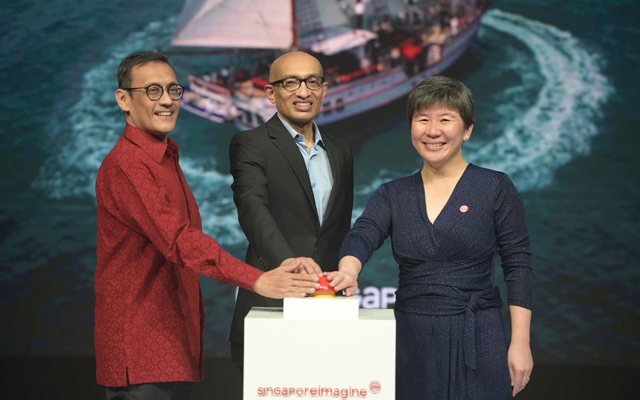
STB’s Keith Tan and KTO’s Ahn Young Bae ink pact to enhance bilateral tourism (Photo credit: STB)

This includes a new cartoon series, featuring the character Hojong from KTO’s set of mascots Kingdom Friends and STB’s Merli, which will be officially launched following a successful pilot social media event in April this year. The video campaign will see both characters coming together to introduce attractions from their respective countries.

Both organisations will also support tourism start-ups to develop technologies that will benefit the tourism sector. For example, STB will support Korean start-ups through the Singapore Tourism Accelerator programme to develop quality solutions and pilot them within Singapore’s tourism industry.

To kick off the partnership, KTO and STB will progressively launch familiarisation trips for trade and media partners to promote safe travel between both destinations under the vaccinated travel lane (VTL) launched between Singapore and South Korea on Monday, allowing quarantine-free travel between both countries for fully vaccinated tourists.

Ahn Young Bae, president, KTO, said: “I am optimistic that this MoU will play a key role in reviving tourism between both countries, and we are excited to welcome more Singapore travellers to South Korea.”

Keith Tan, CEO, STB, added: “South Korea is a key source market for Singapore, and as international travel gradually resumes, we look forward to welcoming South Korean visitors back. We are confident that this partnership with KTO will drive awareness of Singapore’s new and reimagined offerings, expand the capabilities of our industry, and support the overall recovery of our tourism sector.”

The partnership reflects STB’s continued efforts to raise the attractiveness of Singapore to South Korean travellers. Last year, STB and Studio Dragon Corporation signed a three-year partnership to promote Singapore as a destination in South Korea through the production of Korean dramas in Singapore.

South Korea is an important visitor source market for Singapore, ranking ninth out of 15 top visitor source markets in 2019. Singapore received about 646,000 South Koreans in 2019, a three per cent increase over 2018.

Industry players revel in Cambodia’s full reopening

0

Cambodia’s tourism players are celebrating after a snap decision on Sunday (November 14) saw the nation become the first in South-east Asia to fully open to vaccinated travellers with no restrictions.

“Christmas has come early for the tourism and hospitality industry in Cambodia,” said Nick Ray, consultant for CamDMC, on the news that the country has fully opened to fully inoculated tourists.

Cambodia’s sudden move to fully reopen borders comes on the back of its successful vaccination drive

Prime minister Hun Sen made the surprise announcement on Sunday that from the following day (November 15), fully vaccinated travellers from any destination are welcome without quarantine.

Inbound travellers must present a negative PCR test result taken 72 hours before departure and undergo a free rapid test on arrival. Once given the all-clear – an estimated 10- to 15-minute wait – arrivals are free to enter the country with no quarantine or restrictions on movement.

The requirement for health insurance has also been scrapped. While the visa-on-arrival service remains suspended, tourist e-visas can be applied online in advance of travel.

Virginie Kury, general manager at Asian Trails Cambodia, said: “This means we’re back to business and the economy will slowly be able to restart. Guides, hoteliers, restaurateurs and all staff in tourism businesses will be able to breathe again by earning a decent salary.”

The move also means Cambodia is the only South-east Asian country to fully reopen with very few restrictions, presenting an opportunity the industry is hoping to seize.

Jacques Guichandut, managing director of All Dreams Cambodia, said: “This means we are the sandbox for South-east Asia and can really be seen as one destination. It will encourage the tourism sector to reconsider Cambodia and change the image we had.”

The announcement supersedes previous plans to stagger Cambodia’s reopening. This was slated to start on November 30, with vaccinated arrivals spending five days at the coastal resort of Sihanoukville, Koh Rong island or the Dara Sakor area of Koh Kong.

The Cambodian premier said the full opening was due to Cambodia having vaccinated more than 88 per cent of the population. Third booster jabs are being rolled out countrywide.

In spite of the full opening, Guichandut predicts initial recovery will be slow, and will only start to pick up in 1Q2022. With Cambodia’s inbound international arrivals pre-Covid predominantly from Asia, he added predicting a full recovery is tough as quarantines continue to be widespread across the region.

Phillipa Harrison

0

Tourism Australia has had to shift its focus to the domestic market during the pandemic. What were some of the challenges over the past year and how did you address them?
When Covid-19 emerged last year, Tourism Australia had recently returned to domestic marketing for the first time since 2013, with the launch of the Holiday Here This Year campaign, in response to the 2019-20 summer bushfires. With the pause of international travel due to the pandemic, we were ready to refocus greater attention on marketing to an Australian audience to encourage domestic travel.

Apart from the challenges of travel restrictions and having some stop-start moments to getting travel up and running again, one of the challenges we found as we returned to market domestically is that Australians may not know what’s on offer in their own backyard as well as they think they do.

Typically, the domestic holidays people take tend to be similar each year while the research and dreaming goes into the big overseas trip. So, our domestic marketing has also encouraged Australians to think differently about domestic holidays and to travel more like an international traveller would when exploring their own backyard.

What do you see are the biggest needs of the tourism industry right now, and what are you doing to meet them?
The thing that will really support the industry in getting back on its feet is to have people travelling again, and the pathway to achieving this is through vaccination. That’s why in August we launched the It’s our best shot for travel initiative, which was designed to encourage the community to support the tourism industry by getting their Covid-19 vaccination.

Australia’s plan is to rely less on lockdowns when vaccination rates reach 70-80 per cent. How confident are you that domestic tourism will return then and why?
We know from our consumer research that there is pent-up demand for travel, and Australians are keen to take a domestic holiday. Research shows that Australians want to travel again. Our Travel Sentiment Tracker from September shows Australians are increasingly feeling like they need a holiday, with 67 per cent indicating they want to take a holiday in the next six months.

In 2021, we have seen that demand for domestic travel reach a new high for the first time since the start of the pandemic, with Australians booking more domestic holidays and spending more when they travel. After many months of decline, the figures for May 2021 (prior to the Delta outbreaks) show that overnight trip expenditure exceeded 2019 levels by nine per cent or an additional A$540 million (US$407.1 million). The average spend per trip also increased to A$778, up 25 per cent compared to May 2019.

What are your plans now that the Australian government has announced the reopening of international borders?
Our intention is to ramp up our marketing as quickly as possible, with a focus on converting interest in Australia into bookings. We know there will be increased competition between destinations looking to rebuild their visitor economies, and returning to pre-Covid levels of travel will take time. However, we are certainly looking forward to, once again, welcoming visitors from our key markets to Australia.

Guest experience platform Xperium grows despite pandemic, looks to double portfolio by end-2022

0

Since the launch of its guest experience management platform Xperium in 2018, India-based RepUp has seen its portfolio grow to nearly 30,000 rooms across South-east Asia, South Asia, the Middle East, and the US.

Xperium leverages AI to deliver analytics and automation that drive revenue, increase guest satisfaction and streamline operations for hospitality businesses.

The company plans to add another 30,000 rooms to its Xperium platform by end-2022: Prashar

Unlike most similar products on the market that only have transactional data about the guest, Xperium provides data such as the number of visits, average spend, average feedback score, online reviews, and more.

This data, along with the company’s in-house machine learning models, enable hotels to personalise guest experience based on purchase behaviour, past visits, feedback and guest preferences. This allows hotels to maximise revenue per guest through upselling and to offer relevant offers that have higher conversion rates through targeted omnichannel marketing.

“We have seen three to seven per cent additional revenue generated for our clients as a result of targeted marketing campaigns, upsells and direct bookings,” said Pranjal Prashar, CEO and co-founder at RepUp.

“Hotels use our solution in many ways, from highly specific campaigns like sending a freebie to guests on their fifth visit to simple upsells like room upgrades, spa packages, etc. Hotels have also been using the platform for remarketing to past guests or selling use-later vouchers during the Covid-19 pandemic.”

Many of the company’s hotel clients used the platform to promote staycation/daycation packages, F&B offerings to customers within driving distance, and spa packages during the pandemic, shared Prashar.

And, despite the pandemic, the company expects to double its portfolio by the end of next year.

“We have a very healthy sales pipeline in these markets because of new partnerships and integrations built during the pandemic, and we expect to add another 30,000 rooms by the end of 2022,” said Prashar.

“In 2022, the markets of US, Middle East and South-east Asia are going to bring in an additional 15,000 rooms, whereas 10,000 are going to come from previously churned customers that stopped subscription due to the pandemic.”

He added the company has partnered with Guesty and a few other platforms to venture into a new vertical – vacation rentals, which is expected to contribute another 5,000 rooms.

Creating multiple local PMS partnerships is key to growing the company’s business since a lot of hotels prefer to use regional PMS players, explained Prashar.

During the pandemic, the company integrated with many PMS and strengthened its partnerships in target markets with key players, including Oracle, WINHMS, IDS, Cloudbeds and Hotelogix.

RepUp was among nine companies picked to be the pioneer cohort of the Singapore Tourism Accelerator, launched in October 2019 by the Singapore Tourism Board. The company’s participation in the programme pushed it to expand to other industry verticals, revealed Prashar.

“We opened up a new vertical dedicated to covering attractions, and the Singapore Tourism Board was a key part of this initiative. Customer experience and reputation is a larger problem for not just hospitality, but any customer facing brand,” he said, adding that the company has also ventured into the luxury retail segment which it is “highly optimistic” about.

Prashar said he is “cautiously optimistic” about the hospitality sector’s recovery, and has plans to strengthen the company’s presence across the globe over time.

He noted that the markets in which Xperium has a presence in are starting to see a pick-up in activity, and that global hotel occupancy has reached 60 per cent, almost double the occupancy figures in 2020 – which, though far from 2019 numbers, are “a big improvement”.

“Our direct focus is going to be in the Middle East, Africa and South-east Asian markets because we have a good presence there and the growth opportunity is immense. We are also expanding in the US through a partnership model with existing players in micro markets,” he said.

Maldives airport to complete seaplane terminal, new runway by 2022

0

A new seaplane terminal at the Maldives’ Velana International Airport is scheduled to open next year, followed by a second runway, officials said.

State-owned Maldives Airports Company general manager Hassan Areef said while there may have been delays, work is progressing in these two major developments at the country’s main international airport.

Construction of seaplane terminal at Velana International Airport delayed

The Maldives, with a fleet of over 55 planes, has one of the largest seaplane operations in the world as the over 200 resorts in the archipelago are all accessible only by sea or air. “We are hoping to open the new seaplane terminal next year followed by the new runway,” said Areef.

The tourism industry has expressed concerns over delays at the airport due to overcapacity and long waiting times for incoming aircraft.

According to Ahmed Karam, a guesthouse owner and former president of the Guesthouse Association of the Maldives, the delay in opening the second runway at the airport is affecting the growth of tourism.

“The capacity at the airport has increased over the years and more airlines are flying in. Planes have to circle the airport for 20-30 minutes before landing due to the traffic,” he said.

However, Areef said while seasonal traffic has increased – with Maldives expecting a solid winter season of arrivals – these delays are nothing new and seen in most international airports including Heathrow in the UK.

“Once when I was travelling to Turkey, we had to circle several times over Istanbul airport. This is a common occurrence in many airports,” he told TTG Asia.

He also pointed out that the airport delays are due to European carriers arriving at the same time and not according to arrival slots allocated. “Some of them arrive earlier than the scheduled times which then creates some delays,” he said.

Abdulla Ghiyas, former president of the Maldives Association of Travel Agents and Tour Operators, said there has been an increase in scheduled flights operated by airlines like Emirates, Flydubai, Qatar Airways, Etihad and British Airways. “There are also several charter flights operating,” he added.

The airport caters to some 35 international airlines connecting the Maldives to over 40 destinations. Passenger capacity has been increasing, with the airport currently catering to three million people annually. A new terminal being built, which is scheduled to be ready by 2023, will cater to 7.5 million passengers.

Meanwhile, a new apron, part of the airport redevelopment project covering an area of 35,000m2, was opened this month. It can accommodate a maximum of nine aircraft.

The Maldives is targeting 1.3 million tourists this year, with operators saying this figure would be easily achieved due to steady arrivals and a positive winter season in spite of the pandemic.

Australia beckons Singaporeans back with new campaign

0

Scoot to launch flights between Singapore and London via Bangkok

0

Singapore extends vaccinated travel lanes to more countries

0

Vietnam welcomes first foreign tourists in nearly 20 months

0

More than 400 international tourists arrived in Vietnam last week, the first batch of travellers to the South-east Asian country in almost 20 months.

Two charter flights carrying more than 400 South Korean and Japanese fully vaccinated passengers from Seoul and Tokyo landed in the southern resort city of Nha Trang on Thursday (November 11), state media reported.

Vietnam’s borders have been shut to foreign visitors since March last year; Nha Trang pictured

The flights came ahead of Vietnam’s plans to reopen the resort island of Phu Quoc to vaccinated foreign visitors on November 20, with a target of receiving at least 5,000 travellers in coming months.

International tourists entering Vietnam are required to present proof of vaccination and of a negative pre-departure Covid-19 test result.

The country’s borders have been shut to international visitors since March last year and there are almost no commercial flights entering the country.

Vietnam has reported more than a million infections and almost 23,000 deaths since the pandemic began.

So far, the country has fully vaccinated about 32 per cent of its 100 million population, as it scrambles to procure enough vaccines to reach herd immunity by the end of next year’s first quarter.

Japan mulls restart of travel subsidy campaign

0

The Japanese government plans to restart its domestic travel subsidy programme, Go To Travel, in February, as it looks to revitalise the pandemic-hit tourism economy.

The Japan Tourism Agency-run scheme, which covered up to half of travellers’ expenses, was initially in place from July to December 2020, but was halted amid a rapid increase in Covid-19 cases nationwide.

Japan’s Go To Travel campaign may resume in February 2022; Keage Incline in Kyoto, Japan pictured 

Discussions on the programme’s resumption follow the lifting of states of emergency across the country, the decline of new and serious infections and the full vaccination of 77 per cent of the population as of end-October.

However, the scheme will be implemented under more stringent measures in response to the criticism it received last year for contributing to the spread of Covid-19. Procedures to confirm travellers’ vaccination status or virus test results have been trialled since October, with operational guidelines to be devised by the end of this month.

Japan’s tourism minister Tetsuo Saito said the resumption of the Go To Travel campaign is “crucial for the recovery of tourist sites and local economies,” adding that “it is important to balance the prevention of contagion and the promotion of tourism”.

Sebastien Duval, community director at travel agency Japan Travel KK, said a successful restart of the Go To Travel programme “would prove that travel is relatively safe,” which in turn could lead to “return to business as usual for domestic stakeholders” and even accelerate the reopening of borders to international tourists.

Kyoko Nagano, founder of Mypal Inc, an agency for cultural tourism-related businesses, agreed that the programme could be a lifeline, particularly to regional operators. Many breweries that she supports resumed in-person tours as late as October 1 so she said they should “see a good impact” from Go To Travel via tour participant numbers and sales at souvenir shops.

Mid- and lower-priced hotels and ryokan inns are also expected to enjoy greater business under the restart, as plans are underway to reduce discount rates for accommodations. This move is intended to avoid the concentration of travellers at luxury options, which was another criticism of the initial scheme.