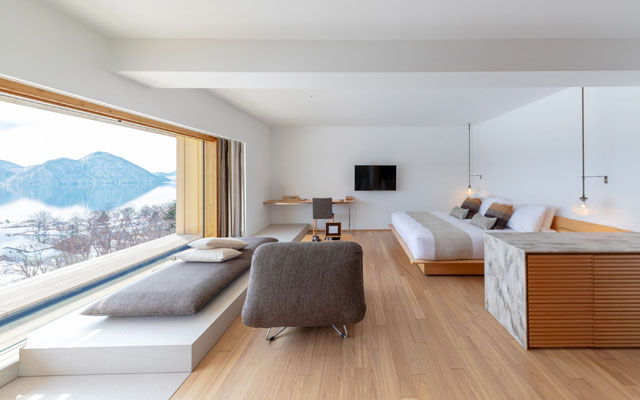
General managers of two Marriott properties in Thailand are exploring flexible working arrangements for their staff – something unheard of before the pandemic.
Choo Leng Goh, general manager of The Athenee Hotel Bangkok – A Luxury Collection Hotel, told TTG Asia there are a “variety of options” for flexible working arrangements in the hotel industry, especially for operations and customer-facing roles.
Goh: flexible working arrangements may be the solution
“For instance, flexible hours – where operational staff may choose to reduce their core hours, go part time, or arrange seasonal hours due to personal demands. Another option is working a compressed week, by taking on more hours on the days they work.
“There’s also the option of adjusted working hours, which would allow associates to do a school run by starting a little earlier,” Goh explained.
Such policies could also “attract new talent” to Marriott, at a time when the company is on a growth trajectory in Asia-Pacific, she noted.
Tina Liu, general manager of W Bangkok, shared with TTG Asia that her property is also exploring “similar models of alternative work arrangements”.
While the various approaches could work for most positions, Liu said remote work would only apply to administrative roles.
Some benefits of an improved work-life balance include boosting staff engagement, higher productivity, lowering absenteeism and turnovers, reducing one’s carbon footprint due to less commuting, and ensuring an associate’s mental well-being is at its healthiest.
“This arrangement could also reignite interest in those who did not even consider a career in hospitality, or perhaps left the industry due to the lack of flexible working arrangements,” added Liu.
However, the first step is to “formalise this modern approach”, and “remove any stigma or guilt by having a structure and achieve higher retention”, Goh pointed out.
Goh opined: “It’s a shame to see wonderfully talented and skilled people leave their hotel jobs as it wasn’t able to fit into their lifestyles. This can have a negative effect and cause stress and anxiety for the associate who feels they need to leave or are not valued.
“Some of these flexible working arrangements may be the solution.”
Airlines operating flights to Sri Lanka are now filling up their tanks for both ways, so as to avoid refuelling in the crisis-hit country.
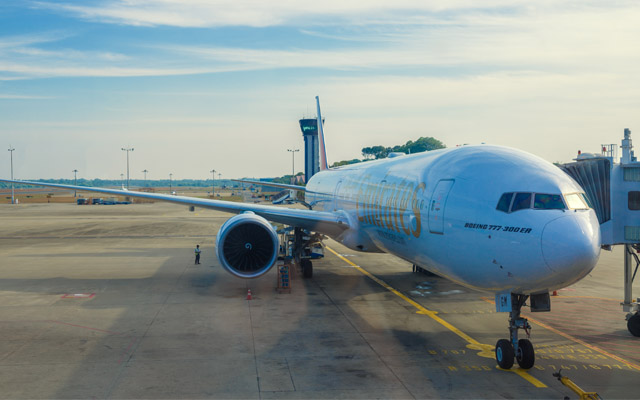
A source at Emirates confirms that aircraft on Sri Lanka operations are ‘tankering’ – the technical term used to signify an aircraft carrying enough fuel for the return journey. Emirates is the second largest inbound and outbound carrier in Sri Lanka after national carrier SriLankan Airlines.
Airlines resort to ‘tankering’ to avoid fuel shortage in Sri Lanka
While larger aircraft can afford to ‘tanker’, smaller ones without large tanks must refuel or top-up in Colombo, which the source said is now a “nightmare”.
Dimuthu Tennakoon, president, Board of Airline Representatives (BAR), said SriLankan Airlines services from Indian airports are choosing to refuel there.
Sri Lanka’s resource crisis has impacted travel confidence, with travel advisories against travel to the country emerging the past week. As a result, passenger loads have plunged.
According to the Emirates source, flights from Dubai to Colombo were carrying just 100 passengers and 75 on the return. The airline has reduced its operations from five to twice daily.
Qatar has done the same, cutting five daily services to three, while Singapore Airlines is now operating just one daily service instead of two.
Aviation industry officials have requested that the authorities allow airlines to pay their fuel bill direct to the overseas supplier – through the state-owned Ceylon Petroleum Corporation, the country’s main fuel importer – to overcome the foreign currency shortage. They are currently waiting for a response.
Tourist arrivals to Sri Lanka stand at 62,980 in April 2022, compared to 106,500 in March, owing to the economic crisis as well as the off-season period.
Reopening requirements are not conveyed to SME DMCs
Higher daily cap on arrivals in June still insufficient to meet demand
Fortunately, most DMCs have been resilient and few have shut down
With information appearing in dribs and drabs, and only from what they read in the media, Japan’s DMCs say they are being sidelined from the country’s leisure travel opening next month.
The return of leisure travellers for the first time in two years is the biggest event for struggling DMCs. Instead of excitement, these inbound specialists are engulfed in anxiety as they find themselves lacking in details that would allow them to be first in line to welcome back tourists.
The return of leisure travellers to Japan is the biggest event for struggling DMCs
Many suspect it is the big tour operators that have the headstart. Accusations are levelled at Japan Association of Travel Agents (JATA) for protecting the interest of and sharing information only with big boys such as JTB and JATA board members, not smaller players that form the bulk of its membership.
“This was exactly what happened with the GoTo domestic campaign in 2020, which was co-ordinated by JATA. Smaller players (learnt) the details on the same day as the general public through the media. Whereas, JTB and the other JATA board members had their coupon discount plans up and running from day one. The rest of us had to understand how to apply for those discounts for our clients and wait for months for applications to be approved,” said Alex Debs, founder, Hitotoki, a luxury travel designer.
“We need to know, do we need to apply to authorities to sell monitored tours, or is being a licensed travel agency enough? What are the rules for guided tours – some media reports say it’s having a guide all day with client; others say trains and big cities are off-limits,” said Debs.
Contacted by TTG Asia, JATA’s spokesperson said: “JATA provides member companies with equal information. It is difficult for JATA to clearly indicate (information) because it depends on the infection status of Covid-19. The situation is the same for both large companies and SMEs.”
It is complicated
Japan’s route to leisure travel reopening is complicated, lending herself to different interpretations, poor communications and possible misunderstandings.
Prime minister Fumio Kishida mentioned that Japan would welcome back tourists in June during a visit to London earlier this month, but gave no further details.
Then came the announcement of a “trial” in May to allow in small groups of 50 tourists from Australia, Singapore, Thailand and the US.
“Apart from the chosen seven (tour operators to handle the groups), little information is communicated to the rest of the DMCs (and) how they will measure the outcome of this pilot,” said Eileen Yee, regional general manager Japan, Hong Kong, China & Educational Travel at Discova.
The seven agencies included JTB and Nippon Travel Agency, according to DMCs.
On May 27, the prime minister shed more light on Japan’s reopening starting June 10. While foreign tourists from 98 countries/territories will be allowed to enter, they will be grouped into red, yellow and blue (lowest risk), and only tours with fixed schedules and guides will be allowed. The scale of the tours and other details will only be finalised after evaluating the current trials.
The cap on overseas arrivals will double to 20,000, as reported earlier. NHK World-Japan says this is effective June 1 and “will include foreign sightseers”. This suggests the cap also counts business travellers, students and families of residents, who have been allowed in since March.
Debs: the lack of information surrounding June 10’s reopening mirrors the GoTo domestic campaign launch situation in 2020, where smaller DMC learnt the details on the same day as the general public through the media
Not enough
“Our sales and reservations manager, Mayu Dan, says there are currently about 120,000 students and business travellers waiting to travel to Japan. So a cap of 20,000 (overseas arrivals) is probably not going to be enough,” said Discova’s Yee.
Japan welcomed 87,000 foreign visitors a day in 2019. It has said it will increase the cap gradually but for now, a bunfight for the first leisure tourists is imminent. Those with information on rules and requirements will be a cut above the rest.
Should DMCs even bother? These specialists typically handle individual travellers who seek customised trips and deeper local connections which escorted group tours cannot fulfil.
“We are not expecting that FIT trips like ours will be allowed until (autumn). It would certainly be helpful to know now when that opening will occur – we are hoping for September. We are currently quite busy fielding enquiries for year-end 2022 and into 2023,” said Carl Kay, president of Tokyo Way. Like many DMCs, the company makes individual wishes come true, be it hiking with a monk in a sacred forest, or cooking ramen with a celebrity chef.
Peter Cools, general manager of Destination Asia Japan, agrees that the bigger agencies will profit more from the first round of opening than smaller DMCs. They have the bandwidth to organise ad hoc seat-in-coach tours.
“Smaller DMCs that are still prominent will not be able to do this in such a short timeframe, given the lack of information and explanation,” said Cools.
Moreover, the big operators are familiar with and are well-known for package tours, said Afra Rahman, CEO of Maha Group which operates Japan Private Tour.
Cools is doubtful demand will be high. “The only way to get business is to fully open borders with no arrival restrictions, as we have seen in other destinations such as Thailand and Vietnam,” he said.
But Rahman believes “people will come despite the strict rules”, and DMCs need to be flexible and adept. “Preparation for travel is more crucial than ever. Relaying accurate information, such as documents needed to enter Japan and PCR/vaccine-related information, without overwhelming our clients, is important,” he said.
Mind-boggling
The glacial pace of the G7 nation’s tourism opening is baffling the world. Most Asian countries are now racing to disband all Covid-19 rules altogether. Like them, Japan has the virus under control while the ratio of triple-vaccinated residents is respectable.
“Japan doesn’t have to rely on inbound tourism as its domestic market is huge. Add to this is the important Japan elections in late July. There is strong support among locals to maintain current borders restrictions,” said Hitotoki’s Debs.
“The authorities may be trying to earn some time and not take any risks before the elections. Things will suddenly loosen up around August.”
It looks like DMCs will just have to continue bulking up their muscles for a few more months, to be fighting fit when independent leisure travel returns.
Most have been resilient and few have shut down, according to DMCs interviewed.
Tokyo Way’s Kay, for instance, used the down time to become the first graduate in Japan of the Transformational Travel Council’s transformation design course. It has inspired him to integrate some of Japan’s mountain-based spiritual traditions into the agency’s cultural and luxury offerings.
Hitotoki worked hard during Covid-19 to get new clients, including offering self-quarantine packages for those allowed to enter at times when the daily cap was lower, said Debs.
Tourists may be in for richer tours and higher quality service when Japan truly reopens.
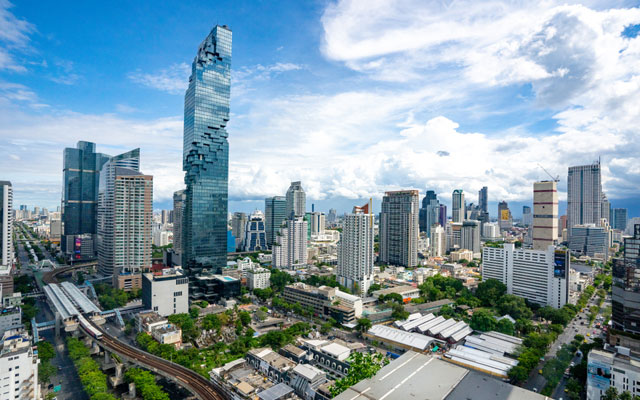
New research by www.money.co.uk has named Bangkok, Thailand the leading global city for affordable luxury experiences, based on prices of several key expenses, including the cost of five-star hotels, spa hotels, Michelin-star meals, and luxury car hire.
With a score of 9.49 out of 10, Bangkok displays the best value for money for hiring a private luxury car or limousine at US$59 and for luxury hotel stays at an average of US$295 a night. Michelin star-dining in the city is comparatively cheap, at US$150 per head while a night in a spa hotel is only US$241.
Bangkok displays the best value for money for luxury travel experiences
The study, which identifies where travellers can best stretch their dollars, ranks Brussels, Belgium in second place. The average cost of a five-star hotel stay is US$360 in the city while a spa hotel stay averages at US$274. A Michelin-star meal knocks the traveller back by just US$156, and a high-end limousine hire costs US$150.
Other Asian destinations that have made it to the list include Osaka, Japan at fourth spot with a score of 7,59, and Tokyo, Japan at eight spot with a score of 6.73.
Malaysia Airlines’ first direct flight from Doha touched down at Kuala Lumpur International Airport on May 26, paving the way for Malaysia to welcome travellers from more international destinations.
The service provides passengers seamless connectivity via Doha’s Hamad International Airport, enabling optimal connections to the US, Europe, Africa, and the Middle East through the airline’s codeshare partnership with Qatar Airways.
Tourism, arts and culture minister Nancy Shukri (centre) joins Malaysia Airlines on the service’s first touch-down in Kuala Lumpur
MH160 departs Kuala Lumpur International Airport daily at 21.20, while MH161 departs Hamad International Airport daily at 01.30. The service is operated with the A330-300 aircraft, equipped with 27 business class seats, 16 economy seats with extra legroom and 247 economy seats.
Nancy Shukri, tourism, arts and culture minister, who personally welcomed passengers arriving on the first flight, said: “It is indeed a huge relief for the tourism industry as we welcome more international tourists, newcomers and regulars alike, to further boost our economy.”
Malaysia has set a goal of two million international tourist arrivals this year and at least RM8.6 billion (US$1.9 billion) in tourism receipts.
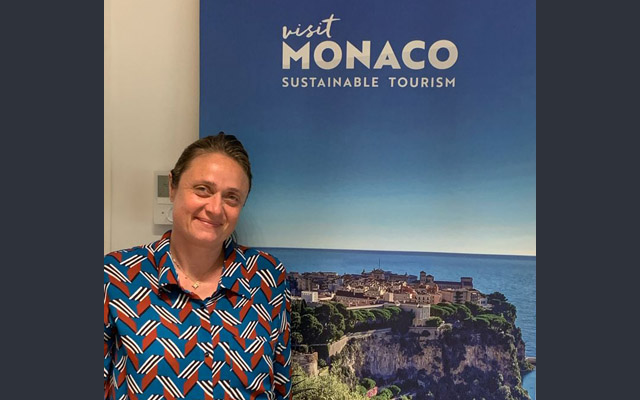
I’ve been told that Monaco’s green credentials may be Europe’s best-kept secret. Will you let me in on that secret – what has Monaco been doing lately on the sustainability front? Many actions are carried out in Monaco in favour of sustainable development. While they may be unexpected, they are certainly no secret.
A strong environmental policy is upheld by the Princely Government of Monaco at the request of HSH Prince Albert II of Monaco, who since his accession in 2005 has made sustainable development a priority. Proof of this is the ambitious objective he has set for the Principality – to achieve carbon neutrality by 2050.
Achieving this objective requires the cooperation of all stakeholders, and that is why all sectors – from the public sector such as the Department of the Environment, the Mission for Energy Transition, the Department of Tourism, etc, to the private sector – are committed to it.
We know what are the most polluting points and we know that we must work as a priority on energy, mobility, and waste management.
Actions are also taken to preserve biodiversity (terrestrial and marine) and to develop the Smart City in Monaco.
Sustainable development is not just about the environment; the social/societal aspect is also very important.
You spoke of Prince Albert II’s sustainability mandate, and that leads nicely to my next question. There are two Monaco princes who are known to be avid environment protectors. Prince Albert I was behind the Oceanographic Institute, while Prince Albert II founded the Prince Albert II of Monaco Foundation. What critical legacies are they leaving behind in the area of environment protection? Indeed, at the beginning of the 20th century, Prince Albert I of Monaco already encouraged people to “know, love and protect the oceans”. His research and cartography work has made it possible to better understand the oceans and those who inhabit them. Evidence of this are the Oceanographic Museum of Monaco and the Oceanographic Institute based in Paris.
Today, the actions and commitments have continued to intensify since the advent of HSH Prince Albert II in 2005. With the creation of his Foundation, the sustainable policy that he pursues with his government, and his speeches at the United Nations and on international summits such as the COP Climate Change Conferences, make him a fervent defender of the climate and the oceans.
Monaco is synonymous with luxury living, and luxury experiences are known to require displays of excess. How can one balance luxurious treatments with responsible consumption? Monaco is a luxury tourism destination but it is no less sustainable. I think we should reconsider the notion of luxury. The dictionary definition reads “character of that which is costly, refined, sumptuous”. Moreover, isn’t luxury a guarantee of quality, and therefore of sustainability?
I remember a person who decided to buy a watch from a famous Swiss brand for its quality but also in order to bequeath it to his son. Sustainable tourism incorporates these notions. In Monaco, most hotels are high-end hotels. Eighty-eight per cent of them are certified with binding environmental certifications such as Green Globe, Green Key or Planet 21. All strive to constantly reduce their waste and minimise their usage of water and energy resources – and they have succeeded!
The Monte-Carlo Bay Hotel Resort, for example, succeeded in reducing its electricity bill by (an equivalent of one month’s usage) in the first year of using the Smart+ system. The establishments of Monte-Carlo Societe des Bains de Mer, Fairmont Monte Carlo, and Hotel Metropole Monte-Carlo, among others, operate with heat pumps – an alternative and low-polluting solution.
Milestone launch of the White Paper on Sustainable Tourism in Monaco was attended by Department of the Environment’s Patrick Rolland; Economic, Social and Environmental Council’s Caroline Rougaignon; Ministry of Finance and Economy’s Jean Castellini; Mission for Energy Transition’s Annabelle Jaeger-Seydoux; and Monaco Tourist & Convention Authority’s Guy Antognelli
As there is now a stronger consumer movement towards responsible travel, where sustainably-developed destinations, responsible commercial entities and experiences that bring direct benefits to locals are preferred by consumers, what is Monaco doing to ensure that travellers are aware of the destination’s green credentials? It is true that the demand of sustainable travel products is growing, and it is obvious that the pandemic we have just experienced has raised that awareness.
These offers exist in Monaco, and the Monaco Tourist and Convention Authority is in charge of promoting them. One of the missions of the department I am in charge of, is to highlight the actions carried out by the sector.
Sustainable tourism has become a priority for the entire destination. Stakeholders in the hotel, F&B and events sectors have all set up their action plans, and they communicate and educate their customers and visitors on the objectives. Our initiatives are promoted via our websites, social media networks and the media, which are increasingly positioning Monaco as a flagship destination. The New York Times cited the Principality in its 2022 listing of 52 places for a changed world.
Looking forward to the next decade and beyond, what else is on Monaco’s plans for sustainable destination development? Sustainable development is part of a process of continuous improvement, and that is why we decided to launch our White Paper on Sustainable Tourism in Monaco last year. This document is an inventory of tourism in Monaco and highlights areas for improvement in line with the sustainable development objectives set by the UN and the Principality’s energy transition objectives.
This work was carried out in a collegial manner with all the stakeholders. Five major strategic axes were defined – train, and raise awareness; communicate and improve the visibility of our actions; reduce the impact of tourism on the destination; develop tourism for all and by all; and measure our progress.
To carry out these future challenges, the Sustainable Tourism Department of the Monaco Government Tourist & Convention Authority is becoming a proper, bona fide corporate social responsibility department. Our new three-year action plan will allow the destination to develop further its already strong sustainable positioning.
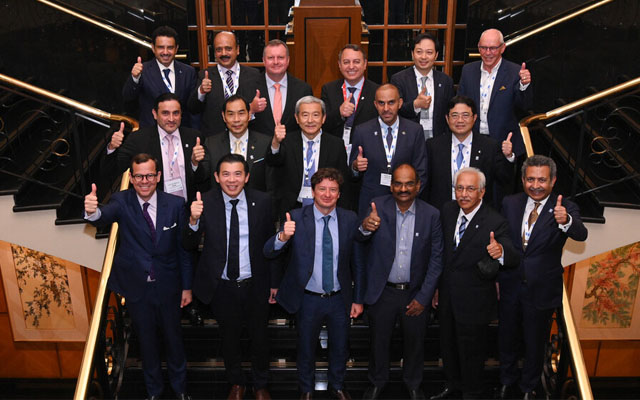
Emmanuel Menanteau is the new President for Airports Council International (ACI) Asia-Pacific’s Regional Board, commencing June 1, 2022 to end of 2024.
Having served ACI Asia-Pacific as the first vice president, Menanteau has also been appointed to the ACI World Governing Board.
New board members of Airports Council International
Four new Regional Board Directors were also named for a three-year term, commencing June 2022: Iskandar Mizal Bin Mahmood, managing director of Malaysia Airports Holdings; Kyung Wook Kim, president and CEO of Incheon International Airport Corporation; Cheok Kuan Kan, executive director of Macau International Airport Company; and Hyeong Jung Yoon, president and CEO of Korea Airports Corporation.
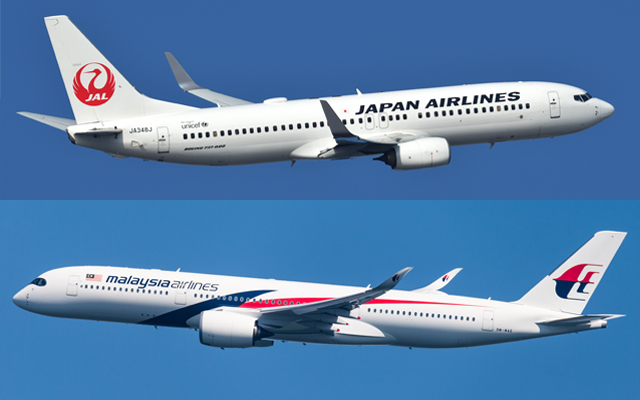
Japan Airlines and Malaysia Airlines have each signed multi-year individual deals with ATPCO for its pricing tool, Architect. The tool’s next-generation capabilities and functionality reimagines traditional pricing management and fare filing processes, enabling airlines to transition from managing fares to managing their pricing strategy.
Masanori Miyajima, VP marketing strategy, Japan Airlines, said: “Architect displays the most accurate, real-time view of all fares in the market. The enhanced functionality in Architect is exactly what Japan Airlines needs to be competitive in the market.”
Japan Airlines and Malaysia sign with ATPCO
Izham Ismail, group CEO, Malaysia Airlines, added: “The customer service from ATPCO and usability of Architect, along with the automation of the tool is what sealed the deal. The flexibility offered and the ability to customise means we can see what we need to see, while also enabling us to streamline the implementation of our pricing strategy. We were able to get up and running in only a few short weeks and are already benefitting from the clearer data Architect provides.”
Architect includes the Total Price feature displaying the full picture of the fares that flight shoppers see in the market, including the breakdown of taxes, surcharges, and carrier fees. Architect assembles this content automatically and calculates the “total price.” With Architect assembling the data in a single calculation, analysts can focus on optimising revenue with faster access to the data they need and have a more accurate view of the pricing their customers see in shopping results across sales channels.
ATPCO’s head of sales & partner success – APAC, Sam Lau, noted: “As the industry continues its recovery from the effects of the pandemic, more airlines have the time and money to invest in solutions that help accelerate their recovery.
“Asian carriers were uniquely impacted by to COVID-19, with many countries implementing some of the strictest measures to combat the pandemic. We are happy to see the other side of this and to work with carriers like Japan Airlines and Malaysia Airlines to help them stay competitive in the market.”
ATPCO will continue to partner with all airlines to continually add new features and functionality to support its partners’ efforts in achieving pricing excellence.
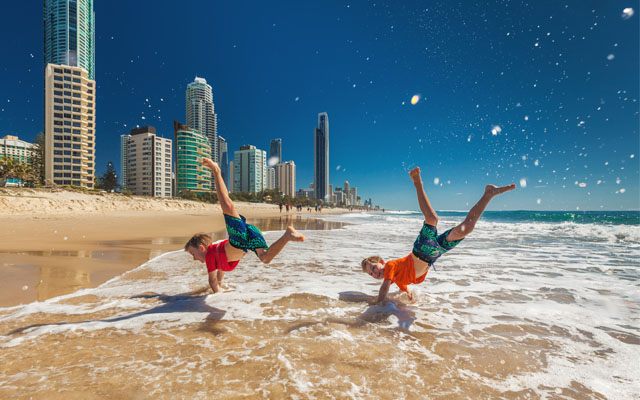
Destination Gold Coast has launched the Play The Day Away campaign on May 25 to showcase the breadth of destination offerings.
To convert pent-up demand for travel into Australia’s favourite holiday playground, Play The Day Away blends elements of musical, singing and dancing to promote the Gold Coast’s well-loved venues, places, and experiences in a new way, while casting a spotlight on the discovery of other lesser-known locations.
Destination Gold Coast launches the Play The Day Away campaign to showcase the destination’s offerings
Destination Gold Coast CEO Patricia O’Callaghan said: “Destinations are investing millions of dollars globally into marketing campaigns to attract visitors, so we knew we had to do something different to cut through an exceptionally crowded market.
“That’s why we have chosen to use the energy of dance and song in this campaign to showcase the Gold Coast in a way that has never been done before.”
She added that after two years of lockdowns, disrupted travel plans and cancelled holidays, the need to have fun and the desire to travel again is stronger than ever. Play The Day Away provides travellers with a window into the Gold Coast’s playful personality.
“Through this campaign we will not only broaden perceptions of the region among interstate families, couples, and friends but also get our core interstate visitors of Sydney and Melbourne to reappraise the Gold Coast as their top holiday destination,” she shared.
There are eight experiences, products, and locations from across the Gold Coast featured in the campaign, including The Pink Hotel Coolangatta; Greenmount Beach, Coolangatta; Warner Bros. Movie World; The Tropic, Burleigh Pavilion; O’Reilly’s Rainforest Retreat, Lamington National Park; QT Gold Coast, Surfers Paradise; Q1, Surfers Paradise; and Surfers Paradise Beach.
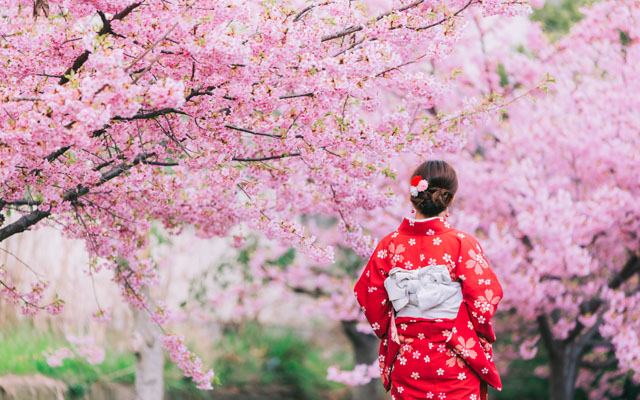
Following on from a trial reopening in May to permit small group tours from four countries, Japan is now set to allow entry of some package tour groups from 98 countries and territories, including the US and China, starting June 10.
No Covid tests or quarantine will be required upon entry for these tourists, regardless of vaccination status.
Japan to ease border restrictions further from June 10
The announcement came from prime minister Fumio Kishida on May 26. Details that followed stated that permitted tour groups must be sponsored by Japanese travel agencies and similar organisations responsible for the visitors, and tour guides will accompany the travellers throughout their stay. Activities will be carefully monitored.
According to news reports, Kishida acknowledged that “active exchanges between people are the foundation of the economy and society” in his speech at the Future of Asia conference in Tokyo.
Leading up to June 10, preparations will be made to allow international flights to land at New Chitose airport in Hokkaido and Naha airport in Okinawa.
Tourist numbers are likely to remain limited at first.
Japan had earlier announced intentions to double its cap on arrivals from overseas to 20,000 a day starting June.
At the same time, countries and regions will be divided into three categories – red, yellow and blue – depending on their assessed virus risk.
Travellers arriving from countries or regions on the blue list can bypass quarantine with proof of a negative pre-departure PCR test, according to the Foreign Ministry.
Travellers on the yellow list will have to show proof of vaccination with selected vaccines to skip quarantine.
Japanese travel and tourism stakeholders have called for the country to reopen to tourists fully or be left behind in global tourism.





 I’ve been told that Monaco’s green credentials may be Europe’s best-kept secret. Will you let me in on that secret – what has Monaco been doing lately on the sustainability front?