Qatar is looking to target Indian travellers with health and educational tourism as it seeks to maintain momentum with tourism arrivals after hosting the FIFA World Cup.
The country welcomed more than 3.4 million visitors to watch the World Cup in November 2022, with international arrivals continuing to flock to Qatar. According to official figures, 559,063 people arrived by air alone on January 3, marking a 64.4 per cent increase compared to the previous year.
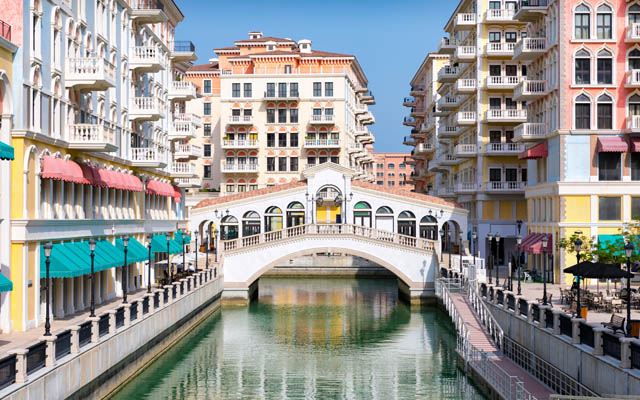
Qatar is targeting the Indian market with health and educational tourism, among other offerings; Qanat Quartier in Doha, pictured
At the Arabian Travel Market, Qatar Airways’ group CEO, Akbar Al Baker, remarked that Qatar remains relatively unknown to the Indian market at the moment, which presents huge potential for the nation.
“India is a huge market… unfortunately, many Indians have not yet discovered my country,” he said. “People who have come from the subcontinent to Qatar are so excited by it that they keep on coming, and we need to spread the word to the whole of India.”
Bakar shared that a famous Bollywood actor is currently filming in the country, which could be a draw to attract Indian tourists to Qatar. He anticipates the destination to be on Indian travellers’ radar once the film is released.
He opined that “Qatar has a value that India has not yet seen”, with golfing facilities, cultural, archaeological and historical sites, museums, beaches and nature, as well as its world-class medical and educational tourism offerings.
With the goal of encouraging more Indians to come for medical and educational tourism, Bakar noted: “We’re the only country in the region that has all of the major US educational institutions (as well as) world-class hospitals and medical facilities.”
In addition, he said that India sits close to Qatar, with a flight time of about three to four hours. Not only that, since December last year, Indian travellers enjoy a free 30-day visa-on-arrival.
The beloved Paddington bear has checked into The Langham hotels across Australia, China, Hong Kong, Indonesia, the US and the UK.
This summer, guests can enjoy an exclusive Paddington-themed stay, with specially-designed rooms featuring Paddington pillowcases, bed runners, cushion covers, tepee tents, children’s bathrobes, and slippers.
The Langham invites guests to check in with Paddington this summer
Guests will also receive gifts such as a Paddington plush, mug, porcelain diner set, a children’s raincoat and drawstring backpack, and more.
In addition, guests can indulge in a Paddington-themed afternoon tea, which combines The Langham’s afternoon tea set with a selection of Paddington-inspired delicacies and treats.
The offer is now available for booking until May 31, for stays between June 10 and December 31.
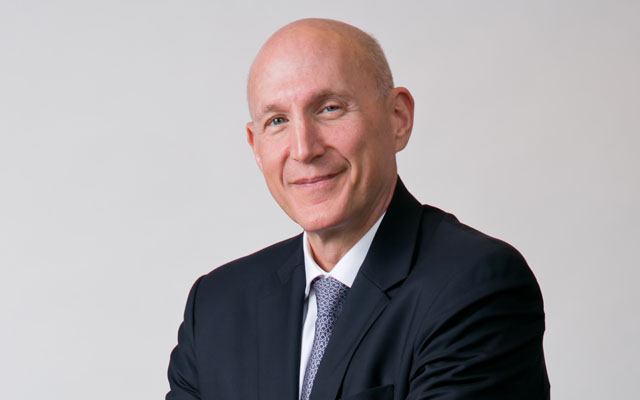
Hotelier Michael Issenberg has joined the Board of TFE Hotels, where he will assist the company with the next stage of its growth and evolution.
A 26-year veteran of Accor, where he helms as chairman and CEO of Accor Asia Pacific, Issenberg brings more than 42 years of international experience at executive management and Board level in the travel and hospitality industry to the table.
He is also the current chair of Tourism Australia and a director of the Star Entertainment Group.
Vishal Sanadhya has been named the new hotel manager for Four Seasons Hotel Jakarta.
With more than 16 years of experience with Four Seasons, he will take charge of day-to-day hotel operations.
He was previously part of the pre-opening team at Four Seasons Hotel Bangkok at Chao Phraya River, and has supported several Four Seasons properties in other locations, including Beijing, Maldives, Singapore and Mumbai.
The climate crisis was under the spotlight during the opening session of Arabian Travel Market (ATM) on Monday, with tourism and economy figureheads from across the Middle East discussing travel industry action plans.
According to Sustainable Travel International, tourism is responsible for approximately eight per cent of global carbon emissions from transport, food and beverage, accommodation, and related goods and services. The opening session looked at the industry’s crucial role in climate change – a particularly pertinent topic as the UAE prepares to host COP28 later this year.
Tourism and economy figureheads from across the Middle East discuss travel industry action plans at the opening of ATM 2023
The session featured Sujit Mohanty, regional division for the Arab States, United Nations Office for Disaster Risk Reduction (UNDRR); Abed Al Razzaq Arabiyat, managing director, Jordan Tourism Board; and Walid Nassar, tourism minister for Lebanon, with CNN anchor and correspondent Eleni Giokos as moderator.
Building a picture of the current situation, Mohanty said: “Globally, in the last 20 years, there have been US$2.97 trillion in economic losses due to disasters. Climate change is leading to more frequent and severe climate-related hazards such as floods, heatwaves, cyclones and hurricanes. In turn, the tourism industry loses enormous amounts of money due to these hazards. Therefore, the return on investment is clear – invest now to help protect the future.”
The UNDRR works closely with governments, the private sector and stakeholders across the globe, including 22 Arab nations, to reduce disaster risk.
Jordan is one of the highest-ranking countries in the region on The Euromonitor Environmental Sustainability Index and responsible tourism is now a key focus for the nation.
“Educating both businesses and travellers on how they contribute to the carbon footprint is one of our key priorities. In parallel with education, we are offering incentives to hotels, businesses and other stakeholders to encourage sustainable practices,” said Arabiyat.
Despite political and economic challenges, Lebanon has attracted a significant number of tourists since 2022. In summer 2022, Lebanon welcomed two million tourists, a quarter of which were international. As a result of the growth in visitor numbers, rural tourism has seen a boost, an area of tourism which is more sustainable and, therefore, more favourable to the issue of climate change.
Speaking on the growth of rural tourism, minister Nassar said: “The guesthouse sector has grown in the last two to three years in Lebanon, which has been a welcome trend. We have now established a syndicate of over 150 guesthouses, encouraging tourism in more remote areas.”
Agreeing that the issue of climate change is urgent now, Danielle Curtis, exhibition director ME for Arabian Travel Market, said the opening session “provided the perfect launchpad for ATM 2023 as we explore the future of sustainable travel under the theme: Working towards net zero.”
Asia’s hosting of two Winter Olympic Games – 2018 in PyeongChang, South Korea and 2022 in Beijing, China – has put the region on the world map for ski holidays, observes Rachael Harding, chief executive officer for East and South Asia & Pacific at Club Med.
In this episode of TTG Conversations: Five Questions, Harding discusses the growing interest in ski holidays, which has led ski business contributing to a third of total business at Club Med, up from just 10 per cent years before. She credits ski sports events for creating a new generation of sports enthusiasts and the emergence of ski sports associations for the spike in winter sports holidays.
She also talks about the importance of Asian source markets, what Japan’s declining domestic demand for snow sports mean to ski resorts in the country, what’s being done to convert travellers new to ski holidays, and how mountain resorts in beautiful locations lend naturally to the sustainable tourism model.
I most certainly sit in the laggard category within the technology sphere. Most tech innovations do not send a shiver of excitement through me, and I remain contented with my trusty circa-2015 MacBook Pro and Samsung Galaxy S21 FE (for context, the S23 was launched this February).
But when ChatGPT made the headlines last November, my ears twitched. It was a big reaction from someone like me, and the world responded even more wildly. Within two months, ChatGPT gained 100 million monthly active users, while its developer, OpenAI, became one of the 50 most visited websites in the world.
By mid-February, there were some 200 e-books on Amazon’s Kindle store that listed ChatGPT as the author or co-author. And according to a Reuters report, that number is climbing steadily. There was even a commentary on how ChatGPT was challenged to write a film – and it churned out 50 scripts in an hour.
How intriguing.
So, I went onto OpenAI to poke around. First, I asked ChatGPT to write me a family trip for Osaka, and then an off-the-beaten-path travel plan for the same destination. The first enquiry spat out all the usual tourist landmarks. The second recommended Shinseikai District, Abeno Harukas Observatory and Dotonbori – not quite hidden gems – but it did point out a hike up Mount Koya and a temple stay as well as a bike tour and traditional tea ceremony. For first-timers to Osaka, ChatGPT could provide a useful starting point in their travel research.
Can ChatGPT take on more serious prompts? I asked for a news update on Singapore’s business events industry. Within seconds, it churned out content that mirrored latest news reports on Singapore’s busy calendar of events and pace of recovery.
For another test of accuracy, I asked it for a background of myself. It claimed I have been with the company since 1995 – which would have made me a 15-year-old worker.
Next up, can ChatGPT mimic a human writer and create content that tugs at heartstrings? I asked for a Singapore love story. That tale was bland, but Singapore Tourism Board would have been proud because the lovers found romance around the city-state’s top tourist landmarks.
My verdict is this: ChatGPT is great as a starting point for travel and tourism content, which makes it a great customer engagement tool for companies keen to build travel interest and then reel the customer towards conversion. It can help with first drafts of trend reports, destination backgrounders, ad copy and the likes. But it is not so evolved yet to be able to understand and convey the emotions that are part of travel and tourism. Nor can it be relied on for factual content without a human fact-checker.
That said, ChatGPT is still learning and developing. With the speed of tech advancement these days, who knows, it might just close those gaps and more by the time this page is printed and put in your hands.
It has been challenging trying to pin down Lauretta Alabons. Since pandemic restrictions were relaxed, the co-founder of LAMC Productions, who is also known as “Singapore’s First Lady of Entertainment”, has been working around the clock to populate her events calendar with live music and comedy acts.
Case in point: at the start of June, she will host renowned South African funny man Masood Boomgaard for a one-night-only performance at the Victoria Theatre. But this is just the tip of Alabons’ iceberg.
Anirudh Ravichander performs to a full house (Photo: Maestro Productions)
“Performers and artists have been impacted by the pandemic and are ready to come out and see their fans,” she said, adding that there is also pent-up demand for shows.
Alabons is not alone in her sentiment about the thriving live entertainment industry in Singapore. These include concerts, musicals, theatre, sporting events, performances and exhibitions.
In the process, this has led to a mini boom in tourism, as many of these events – some of which are large-scale – attract foreigners to the city-state.
Destination entertainment
Earlier this year, Maestro Productions organised a one-night concert for Indian music producer and singer Anirudh Ravichander. All 12,000 tickets sold out in two days, with more than 20 per cent bought by foreign visitors.
“This underscores the popularity of Anirudh’s performances as well as the strong pent-up demand for good quality concerts here from foreigners who want to come to Singapore not just for the usual sightseeing tours,” said Parthiban Murugaiyan, who is the chairman and managing director of Maestro.
Recent acts brought in by LAMC have also seen similar breakdowns. It organised The Singapore Rockfest and hosted The Piano Guys, both of which saw 25 per cent of ticket buyers from overseas markets.
“The Singapore Rockfest was an opportunity to draw fans from Malaysia, India, Vietnam, Hong Kong and Manila. Our first market is Malaysia, as many of the rock bands are not able to perform there,” Alabons told TTG Asia.
Some concertgoers even arrived on cruise ships, prompting Alabons to consider reaching out to cruise lines to package such unique local experiences for their passengers.
Parthiban attributes the lifting of pandemic travel restrictions and the love for globetrotting as among the key factors contributing to the spike in popularity of live performances.
He said: “Singapore’s trusted tourism brand name has attracted visitors to come here for events.
“I think it’s also the mindset of the people where balancing a good lifestyle has become a priority.”
Spotlight on Rain at the Marquee Anniversary celebrations on April 8, 2023 (Photo: MARQUEE Singapore)
A continuous encore
The industry is certainly rising to the occasion. Over at Marina Bay Sands, its vice president of regional entertainment, David Baxley, said the integrated resort is looking to grow its entertainment tourism segment from Singapore, South-east Asia and beyond.
“We set our eye on attracting entertainment seekers with the emphasis on providing a premium luxury experience. We expanded our scope beyond a traditional 90-minute performance to include pre- and post-event experiences,” he shared.
It seems to have worked, given how it repeatedly hosts sell-out shows. These include JJ Lin’s After the Rain concert in November 2021; South Korean hip-hop group Epik High’s concert in July 2022; and more recently, Hong Kong star Joey Yung’s concert in March 2023, which saw over 6,000 fans in attendance.
Additionally, in a reflection of the surging demand for great entertainment, Baxley said there were more than double the number of concerts, musicals and performances staged at Sands Theatre and Sands Expo & Convention Centre, from just 13 events in 2021 to 34 in 2022.
“Building on the momentum, we grew our entertainment repertoire by expanding our Sands Live concert series in 2023, which aims to showcase the biggest stars from Asia and beyond, across different venues and presentation styles,” he added.
At press time, veteran Taiwanese singer Zhao Chuan and South Korean megastars Rain and PSY are set to perform in April.
“The current entertainment landscape is highly competitive and the challenge lies in not just trying to secure the best international acts for Singapore, but also ensuring that the experience is unique and compelling enough to draw tourists,” Baxley pointed out.
And when these stars descend on Singapore, they bring a revenue boom to the country’s travel, hospitality and related businesses.
Maestro’s Parthiban said: “The multiplier effect on jobs and the Singapore’s economy can be substantial. By having more blockbuster shows here, we can also boost Singapore’s brand name and expand its range of offerings to lift tourism numbers and revenue.”
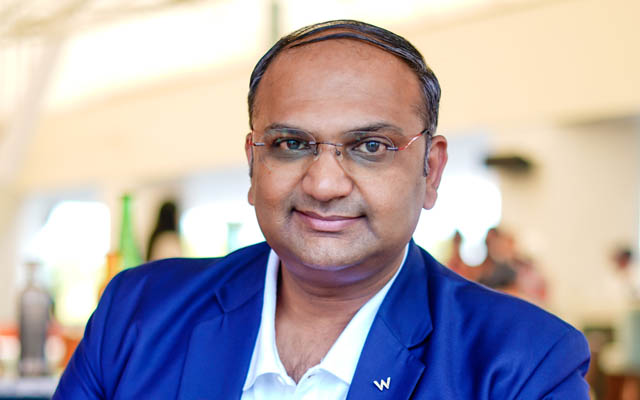
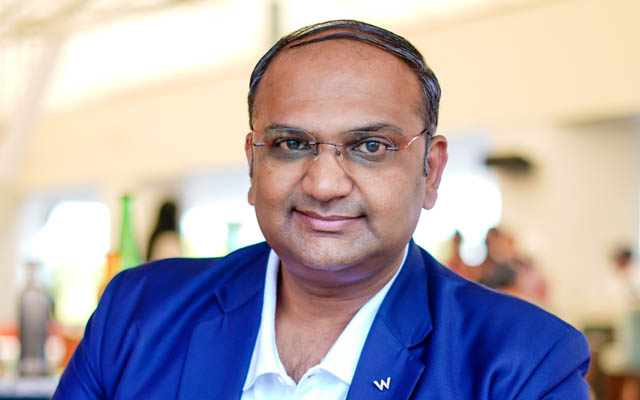
W Goa has named Siddharth Joshi as its new director of sales & marketing.
With over 20 years of experience in the hospitality industry, Joshi’s in-depth knowledge of the market and his strategic approach to sales and marketing will help him develop and implement sales and marketing strategies to drive revenue growth, enhance the hotel’s brand positioning, and foster strategic partnerships.
Joshi joins the W Goa team from The Leela Palaces, Hotels and Resorts where he was also director of sales & marketing.
The Japan Association of Travel Agents (JATA) plans to boost rebound of the outbound market with a new promotion to coincide with the Japanese government’s downgrade of Covid-19 to the same disease level as influenza on May 8.
The project, which is sponsored by airlines, JATA member companies and foreign tourist authorities, aims to provide information and campaign details on a new website and normalise overseas trips via a social media campaign.
Japan hopes to have outbound travel recover to the 2019 level by 2025
Launching the project, Atsushi Sakai, vice president of JATA, said the goal is “to spread awareness among Japanese people that it’s time to resume overseas travel”, adding that the promotion will initially run from April 2023 to March 2024.
Since the outbreak of the pandemic, Japanese consumers have shown reluctance to resume trips, even domestically. The government-run national travel subsidy programme is scheduled to run until summer, albeit excluding the consecutive national holidays known as Golden Week.
A mere 2.8 million Japanese travellers departed for overseas trips in 2022, up from 512,000 in 2021, but 86.2 per cent down from the record high of 20 million in 2019, according to consumer data provider Statista.
The outlook is bleak, too. Japan ranked top among 15 countries in travel reluctance according to a July 2022 survey by market research company Morning Consult, with 35 per cent of Japanese respondents answering that they would “never travel” again, either domestically or internationally. Next was South Korea, with 15 per cent of respondents.
Those most eager to travel again were respondents in Italy and Spain; only four per cent of them said they would “never travel” again.
Moreover, JTB Corporation, the largest travel agent in Japan, forecasts only 200,000 Japanese consumers will journey overseas during the upcoming Golden Week, 79 per cent fewer compared to the same period in 2019.
Hence, the Japan Tourism Agency is aiming for outbound travel to recover to the 2019 level by 2025.



 He is also the current chair of Tourism Australia and a director of the Star Entertainment Group.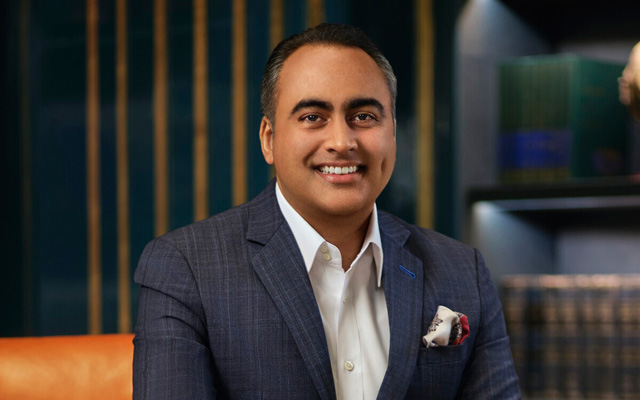
 He was previously part of the pre-opening team at Four Seasons Hotel Bangkok at Chao Phraya River, and has supported several Four Seasons properties in other locations, including Beijing, Maldives, Singapore and Mumbai.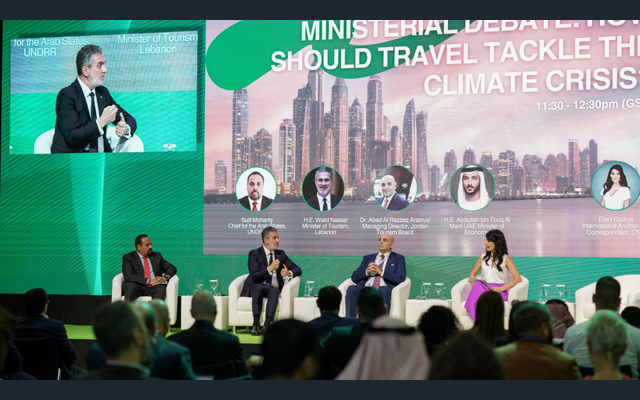




 Joshi joins the W Goa team from The Leela Palaces, Hotels and Resorts where he was also director of sales & marketing.








The climate crisis was under the spotlight during the opening session of Arabian Travel Market (ATM) on Monday, with tourism and economy figureheads from across the Middle East discussing travel industry action plans.
According to Sustainable Travel International, tourism is responsible for approximately eight per cent of global carbon emissions from transport, food and beverage, accommodation, and related goods and services. The opening session looked at the industry’s crucial role in climate change – a particularly pertinent topic as the UAE prepares to host COP28 later this year.
The session featured Sujit Mohanty, regional division for the Arab States, United Nations Office for Disaster Risk Reduction (UNDRR); Abed Al Razzaq Arabiyat, managing director, Jordan Tourism Board; and Walid Nassar, tourism minister for Lebanon, with CNN anchor and correspondent Eleni Giokos as moderator.
Building a picture of the current situation, Mohanty said: “Globally, in the last 20 years, there have been US$2.97 trillion in economic losses due to disasters. Climate change is leading to more frequent and severe climate-related hazards such as floods, heatwaves, cyclones and hurricanes. In turn, the tourism industry loses enormous amounts of money due to these hazards. Therefore, the return on investment is clear – invest now to help protect the future.”
The UNDRR works closely with governments, the private sector and stakeholders across the globe, including 22 Arab nations, to reduce disaster risk.
Jordan is one of the highest-ranking countries in the region on The Euromonitor Environmental Sustainability Index and responsible tourism is now a key focus for the nation.
“Educating both businesses and travellers on how they contribute to the carbon footprint is one of our key priorities. In parallel with education, we are offering incentives to hotels, businesses and other stakeholders to encourage sustainable practices,” said Arabiyat.
Despite political and economic challenges, Lebanon has attracted a significant number of tourists since 2022. In summer 2022, Lebanon welcomed two million tourists, a quarter of which were international. As a result of the growth in visitor numbers, rural tourism has seen a boost, an area of tourism which is more sustainable and, therefore, more favourable to the issue of climate change.
Speaking on the growth of rural tourism, minister Nassar said: “The guesthouse sector has grown in the last two to three years in Lebanon, which has been a welcome trend. We have now established a syndicate of over 150 guesthouses, encouraging tourism in more remote areas.”
Agreeing that the issue of climate change is urgent now, Danielle Curtis, exhibition director ME for Arabian Travel Market, said the opening session “provided the perfect launchpad for ATM 2023 as we explore the future of sustainable travel under the theme: Working towards net zero.”