TTG Asia
Asia/Singapore Friday, 24th April 2026
Page 1761

Trafalgar sees changing traveller habits as Asia sales spike

0
gavintollmannew
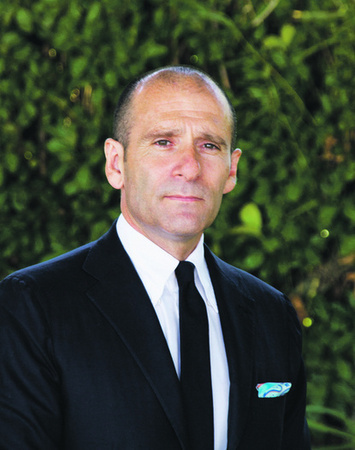
Gavin Tollman

Asian markets, especially those in South-east Asia, have been critical to Trafalgar’s success in the region.

“We’ve had an outstanding 2016. Our growth was as much as 60 per cent in one year, and every year it has been solid double-digit growth (over the past five years) out of South-east Asia,” revealed Gavin Tollman, Trafalgar’s global CEO in an interview with TTG Asia.

“The main markets that have recorded great growth are Singapore, Malaysia, the Philippines and India.”

Back in August, Trafalgar offered agents an exclusive deal to sell 2017 Trafalgar tours. When asked how much that helped to boost sales, Nicholas Lim, Trafalgar’s president Asia, said: “Sales were up 80 per cent compared to the same time last year. Now we are currently up 30 per cent as numbers have stabilised.”

Trafalgar has also launched a separate booklet on family experiences this year, and Tollman explained that while it has been inside regular brochures all along, it was separated this year as the company has seen an enormous pick-up of Singaporeans wanting to travel together as families. Another thing he noticed, was that Singaporeans really love food.

He shared: “We have an Italian series built entirely around food and this tour has a higher percentage of Singaporeans as compared to any other tour. It seems that the love of food has definitely had an impact here.”

However, he lamented that the market was “very last-minute driven”. To Trafalgar, last-minute tours are those booked within 90 days of departure.

“For example, I had an agent tell me yesterday that they had a group of 12 looking for a Christmas market, but there were no more tours available. (This is because) the rest of the world has been buying such tours since March, which is something that they could have done too,” Tollman elaborated.

He stressed: “It’s a psychology I need to talk to the trade about. What I would be reiterating to our agent partners is this: to avoid disappointment, you have to make a commitment earlier.”

Tollman also spoke of the other trends that are coming out of Asia, such as the change in travel styles.

For instance, he said that the CostSaver Europe and Britain tours for 2017 tended to attract a much younger audience, because “there are fewer inclusions, and this segment sees it as an opportunity – within a structured environment – to go to a destination, but have the chance to explore on their own”.

Moreover, current hot destinations in demand from the Asian outbound market are Iceland and Scandinavia.

“Different trends come and go, and right now the flavour of the month is nature and natural experiences. There is a lot of open space and natural beauty in Iceland and Scandinavia,” he said.

Tollman concluded: “When I looked for growth five years ago, I saw a huge opportunity by looking East. To date, it is one of the best decisions I have made in my 30-year career. At the moment, there is a 30 per cent growth going into 2017, and it does not look like it’ll stop anytime soon.”

Drukair trains sights on India, SE Asia as source markets

0
wang-chuk-tshering
Wang Chuk Tshering speaking at the Discover Breathtaking Bhutan Travel Fair 

Drukair, the national carrier of Bhutan, is taking a four-pronged approach to promote arrivals among South-east Asian markets, but not before making India its first priority.

The first initiative is the recent launch of holiday packages via Royal Druk Holidays, an extension of the airline that promotes and markets Bhutan.

Wang Chuk Tshering, head of marketing and sales, Drukair, told TTG Asia: “It is similar to Royal Orchid Holidays by Thai Airways. This is a separate department from Drukair with its own department head. We have also recruited new staff for the department.”

He indicated that Royal Druk Holidays’ priority was to “promote all inbound tourism into Bhutan, especially to the huge Indian market first as they don’t need visas”.

“After the Indian market, we are targeting countries like Singapore, Malaysia, Indonesia,” Tshering outlined.

In 2015, almost half of international tourists (48.9%) were from the Asia-Pacific region. Of the top 10 source markets, tourists from China accounted for 19.3% of total visitors, followed by the US (14.6%) and Thailand (7.7%).

Tshering attributes the increased awareness of the country to roadshows and dinner events – the second approach – that Drukair has been part of.

He elaborated: “We hosted dinner events for potential and top agents in Indonesia, Malaysia and Singapore, and this was done in collaboration with the Tourism Council of Bhutan.”

Tshering also added that Changi Airport has been “very supportive” when it came to marketing events, as much of Drukair’s traffic goes through Singapore, a major hub for the airline. The other three cities that Drukair considers to be major are Kathmandu, New Delhi, and Bangkok.

To expand the airline’s network, Drukair’s third approach is exploring codeshares and alliances. In addition, the airline will be increasing flight frequencies next year.

“We have seasonal flights to Mumbai in India, and next season we plan to increase our frequency. Currently, we fly daily to Bangkok, but from next year May we will be increasing that to twice-daily. For Singapore, we have three flights weekly and we plan to increase it to four flights a week,” he said.

On the final approach, Tshering shared: “We do a lot of online promotional activities through Twitter and Facebook. Also, we run promotions such as winter discounts. For example, this year we ran a 25 per cent discount offer.”

Bhutan received 155,121 visitors in 2015, a growth of 16.2% over 2014.

Druk Asia, the Singaporean representative of Drukair, is currently running a Discover Breathtaking Bhutan Travel Fair at Ion Orchard Basement 4 until October 30.

Korean Air to fly direct to New Delhi in December

0
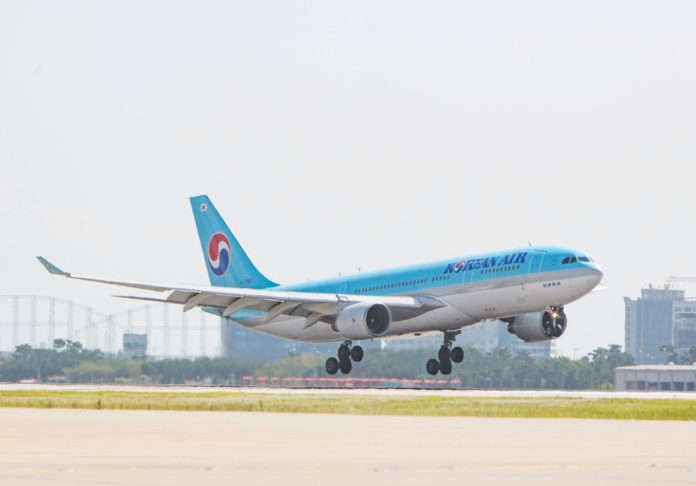
A330-200 Landing

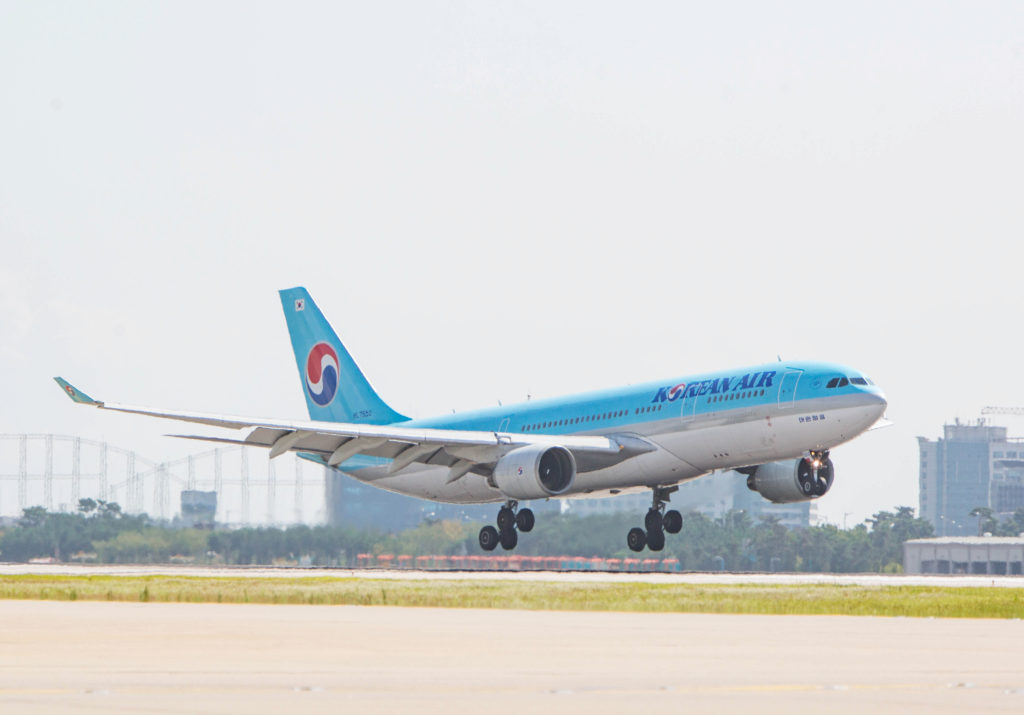
A330-200 Landing

Korean Air will be flying direct from Incheon International Airport to New Delhi’s Indira Gandhi Airport beginning December 1.

The service departs from Incheon International Airport at 12.45 and lands in Delhi at 16.20. The return flight departs Delhi at 19.40 and arrives at Incheon at 05.50 the following day. The service will operate on Tuesdays, Thursdays, Fridays, Saturdays and Sundays.

The route will be serviced by an Airbus A330-200 capable of seating 218 passengers. The airplane will also be outfitted with Korean Air’s newest seats in both the First and Prestige Class.

Delhi is Korean Air’s second destination in India after Mumbai.

MATTA welcomes Malaysia’s plan to invest in ecotourism

0

tourists-at-mount-kinabalu
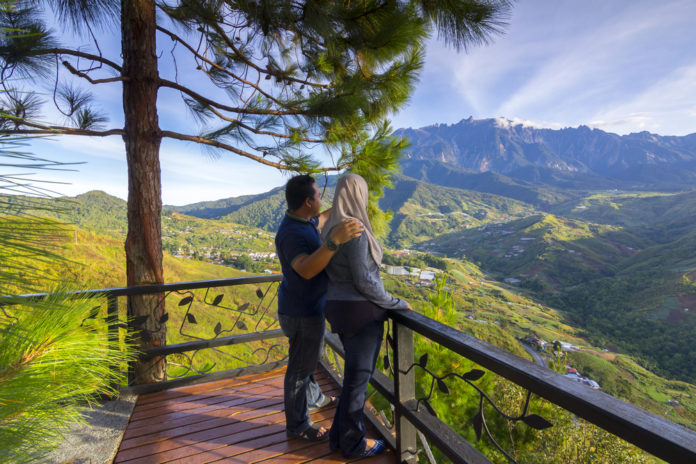
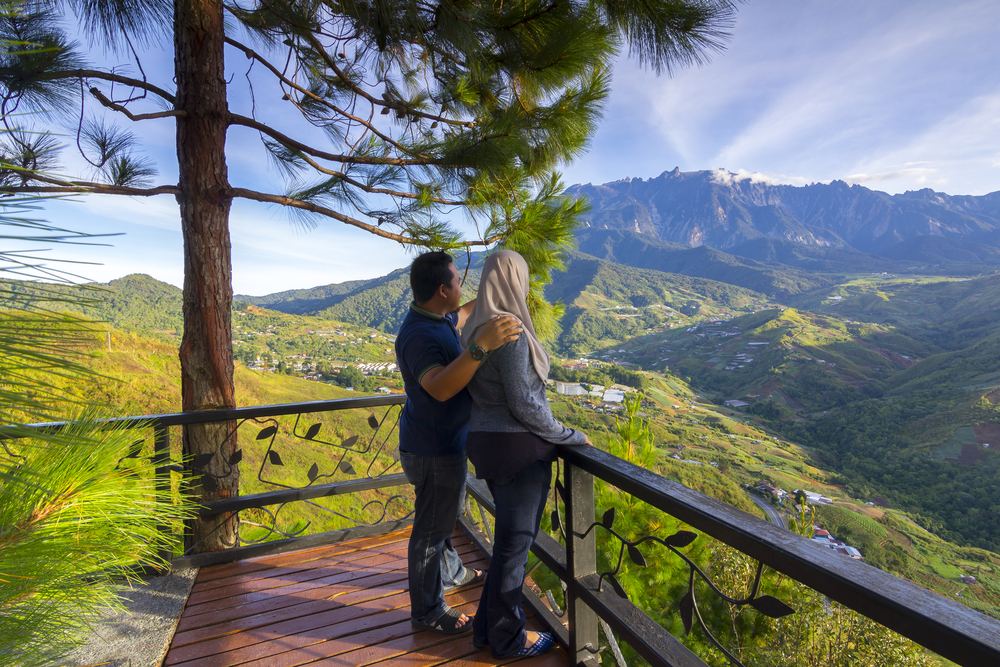
Tourists at Kinabalu National Park

The Malaysian Association of Tour and Travel Agents (MATTA) inbound vice president, Tan Kok Liang, has welcomed the government’s allocation of RM400 million (US$96.1 million) for clean air and ecotourism initiatives.

In tabling Budget 2017, Malaysian prime minister Mohammad Najib Abdul Razak acknowledged that the tourism sector has contributed significantly to the country’s economy. The government is now targeting 32 million visitors for next year, which is expected to generate RM120 billion (US$28.84 billion) in tourism receipts.

Tan said: “Capitalising on our clean air and promoting activities like walking or trekking tours will attract tourists from countries with high pollution index, such as China and India. These two Asian giants are also the biggest contributors of visitor arrivals to Malaysia, excluding our ASEAN neighbours.

“We should repackage and rebrand our tours so that tourists can enjoy our clean air when engaging in outdoor activities. Jungle and mountain resorts such as Taman Negara and Kinabalu National Park, together with many of our clean cities and towns throughout the country, will benefit from these initiatives and ought to be heavily promoted.”

He added that travellers from Europe also visit Malaysia mainly for ecotourism and that investing in this sector would ensure sustained interest from the longhaul source market.

Philippines prepares for renewed Chinese interest as tensions cool

0

iloilo-molo-church
Molo Church, or Church of St Anne Parish, is a Spanish colonial church and heritage site in Iloilo, Philippines

Chinese arrivals into the Philippines is set to rekindle following the thawing of political tensions between the South-east Asian nation and China, prompting the latter to lift a longstanding travel advisory against its neighbour.

Tourism secretary Wanda Teo, part of a delegation that accompanied Philippine president Rodrigo Duterte on a state visit to China earlier this month, said she is looking to double arrivals from China to one million this year and to two million thereafter.

Teo is preparing for the bonanza by coordinating with the Department of Foreign Affairs and Bureau of Immigration to simplify visa application procedures for Chinese tourists, including visa on-arrival, e-visa facilities and launching Mandarin language training programmes for tour guides.

She expects big tour groups from China over the next two months as cancelled chartered flights resume, and as more flights connecting the two destinations, including the twice-weekly China Eastern Airlines chartered services from Guangzhou to Laoag, Ilocos Norte takes off on November 1.

Teo also met with Chinese businesses who are willing to invest in Philippine tourism infrastructure including in areas like Iloilo, Subic and other tourism zones offering incentives such as tax relief.

Rajah Travel Corp president Aileen Clemente said two million yearly arrivals from China is feasible “if the visa facilitation, infrastructure and permits are in place”.

Clemente, who also helms ASEANTA, added: “It is an opportune time to improve the relationship with China, especially since the tension (arising from) the territorial dispute and with ASEAN cooperating with China”.

Hannah Paula Yulo, director of sales & marketing at Paradise Garden Resort Hotel & Convention Center in Boracay, said that while it’s doable to double the arrivals from China this year, the country needs to increase its capacity.

Boracay is the prime destination for Chinese travellers but Yulo pointed out that the existing hotels on the island resort already can’t cope with demand.

Japan grants onsen properties financial aid for promotions

0

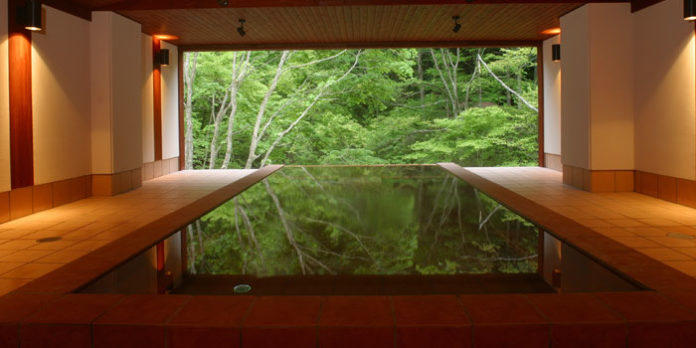
tobira-onsen-myojinkan
Tobira Onsen Myojinkan

Operators of hot spring hotels in Japan have welcomed news that 102 million yen (US$981,000) is to be invested in promoting their establishments to tourists.

The Environment Ministry, working with local governments and communities that have hot springs, is to draw up a selection of travel plans that highlight some of the nation’s best onsens. The project is scheduled to begin in April 2017.

“We are located in a very rural area and relatively few foreign visitors – even those visiting the prefecture – know about us,” said Emi Ikeda, spokesperson for Tobira Onsen Myojinkan, located in Nagano prefecture.

“Around eight per cent of our visitors are from overseas, the majority of them from Europe because we are a member of the Relais & Chateaux organisation.”

Without the affiliation, Ikeda admitted that it would be hard to attract as many Europeans.

Yoshihiro Ueta, president of the Hotel Oya Onsen in Tokushima Prefecture, southern Japan, faces a similar challenge. “Onsens are a key part of Japanese culture and something that all foreign visitors want to try when they come here, but it is often difficult for hotels like ours to promote ourselves to a foreign market,” he said.

“The Hiltons and Prince hotels of this world have a global presence and the power to tell travellers from around the world about their properties, but we don’t,” he added. “This sort of assistance could make a huge difference for us, as well as introducing a relatively unknown part of Japan to foreigners.”

Chie Ariyoshi, assistant manager of the Overseas Division of the Kyushu Tourism Promotion Organisation, also welcomed the national government’s initiative, saying it will help give the entire region greater visibility.

Kyushu is home to one-third of all onsens in Japan, she pointed out, but it can be difficult for foreign visitors to get the full picture and know what each establishment is best known for.

IHG expands boutique brands across APAC region

0

gloverpark_room
Kimpton Glover Park Hotel, Washington

The InterContinental Hotels Group (IHG) is bringing two of its boutique brands outside the US with Even heading to Australia and New Zealand and with Kimpton Hotels & Restaurants properties expanding into Asia in the next two years.

With Even, IHG provides a wellness-centric brand offering from city locations rather than resorts.

IHG intends to plant 10-12 new Even properties, each with 150-200 rooms, in major cities in Australia and New Zealand, revealed IHG’s AMEA COO Alan Watts.

He said: “Even is the first wellness-focused brand with an accessible price. The concept includes facilities like a fitness zone and yoga mat for each room, a studio for sports classes and group runs along with the hotel general manager. That’s why we seek staff who are active in the gym (so they) can give advice to our guests.”

Meanwhile, Kimpton Hotels & Restaurants, acquired by IHG in 2015, is a boutique brand positioned as slightly more upscale than the group’s Hotel Indigo offering.

CEO Mike Defrino said: “The boutique hotel concept is not only growing in Europe and the US but also in China and the rest of Asia.

“For China, primary markets will be Hong Kong, Shanghai and Beijing… The Chinese market is beginning to embrace the next level of lodging, not (simply) luxury but a more approachable form of luxury.”

According to Defrino, the ADR of Kimpton-branded hotels in the US is US$240, 10 per cent (US$20) lower than the typical luxury threshold.

Hotel Indigo is also expanding in Asia. IHG now has 11 Hotel Indigo properties in the pipeline for the AMEA region, having opened Hotel Indigo Bangkok Wireless Road last year and Hotel Indigo Singapore Katong this year.

These will be followed by the soon-to-open Hotel Indigo Bali Seminyak, the first Hotel Indigo property to open in a resort location.

China’s HNA to acquire 25% stake in Hilton for US$6.5 billion

0

hilton

China’s HNA Group will be acquiring an estimated 25 per cent equity stake in Hilton Worldwide – including Hilton’s planned spin-offs of Park Hotels & Resorts and Hilton Grand Vacations – from affiliates of investment firm Blackstone for an approximated transaction value of US$6.5 billion.

If successful, the deal, expected to close in the first quarter of 2017, will reduce Blackstone’s interest in Hilton to around 21 per cent.

As part of the transaction, HNA will enter into a stockholders agreement with Hilton, and into similar agreements with Park Hotels & Resorts and Hilton Grand Vacations, effective upon closing.

The agreement allows HNA to appoint two directors, one HNA member and one independent member, to Hilton’s board of directors, bringing the total to ten board members.

As well, HNA has agreed to certain restrictions on its ability to sell any of its interest in Hilton for a two-year period, and to limitations on HNA’s ability to acquire more than 25 per cent of Hilton’s outstanding shares without Hilton’s consent.

Blackstone, which made initial investments into Hilton nine years ago, will continue to have two seats on Hilton’s board, including Jon Gray who will remain chairman.

Trump to expand new brand Scion in Asia, CEO says ‘we’re not in politics’

0

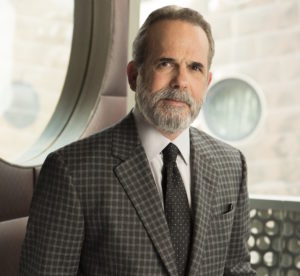
eric-danziger
Eric Danziger

Trump Hotels has launched a second brand, Scion, which it hopes to expand in Asia, but despite CEO Eric Danziger saying “we’re not in politics”, politics does get in the way.

The US media over the last few days has painted the move as the Trump name being dropped for Scion due to supposed declines in bookings at Trump Hotels in the heat of Donald Trump’s presidential campaign. But Danziger, in an interview at HICAP (Hotel Investment Conference Asia-Pacific) last week, said this was completely untrue.

Scion is an upper upscale lifestyle brand which is also big on local experiences, while Trump is clearly known as a five-star brand, said Danziger.

“It breaks my heart and my name isn’t even Trump,” said Danziger. “I had created a dozen brands in my career and as you know there’s a limited number of markets you can bring a five-star brand like Trump to. I thought as a hotel company, we should have an option to do hotels that couldn’t be a Trump. The only link is the name, Scion, which is a bit of the wink to the family.”

In Asia, two Trump hotels continue to be under construction in Bali and Lido (65km south of Jakarta), scheduled to open in two years. Danziger – along with EVP hotel operations Jeff Wagoner and EVP new brands & innovations (a new post at Trump Hotels) Kathleen Flores – were at HICAP to introduce Scion to the market and continue to expand Trump in Asia.

Danziger said most US media had picked up on a report by a distribution channel which he hadn’t even heard of in his 45 years in the business. Hipmunk said it saw around 40 per cent drop in bookings, said Danziger, whereas in reality, four of the five hotels it used were up over last year. What’s more, the channel had produced all of 16 roomnights in the whole year before. A 40 per cent drop constituted fewer than eight roomnights, Danziger pointed out.

He is unfazed by the media brouhaha which at one point said “we (Trump Hotels) were decimated!”.

“We make it a point that in the hotel group, we’re not in politics, we’re completely separate,” Danziger told TTG Asia. Luxury hotels customers, he pointed out, chose hotels based on “where they want to be, the kind of hotel they want to stay at, the kind of service its people give, and that is the definition of the Trump brand and they know it”.

Developers and owners chose their hotel brands based on who could bring them success. “It’s hard to argue that a Trump Hotel isn’t successful. In most of the markets, our hotels beat the competition by a lot,” he claimed.

“An owner is going to to care about the results of his hotel…At this moment in time, (the politics) is not an issue for an owner who invests US$150 million in a hotel; he/she wants to make sure it’s going to work two, five, 10 years from now. This (political) ‘controversy’ will pass and they are going to have a successful hotel.”

Asked why there weren’t more Trump Hotels in Asia apart from the two being built, Danziger said: “The reality is the company (is relatively new). The first hotel opened 10-12 years ago and in the first 10 years, we’ve done 14. The company just didn’t have the focus to be able to do more than that. It’s a small group and they brought me in (August 2015, the first CEO ever for Trump Hotel Collection) and I brought the team in.

“I took the Wyndham (Hotel) Group when I was CEO from 20 properties in Asia to 1,100 properties. I came over here every nine weeks and I’ll do that again – we will have the commitment to put both brands in major markets in Asia.”

Visa waiver prompts more Singapore flights by Myanmar’s flag carrier

0

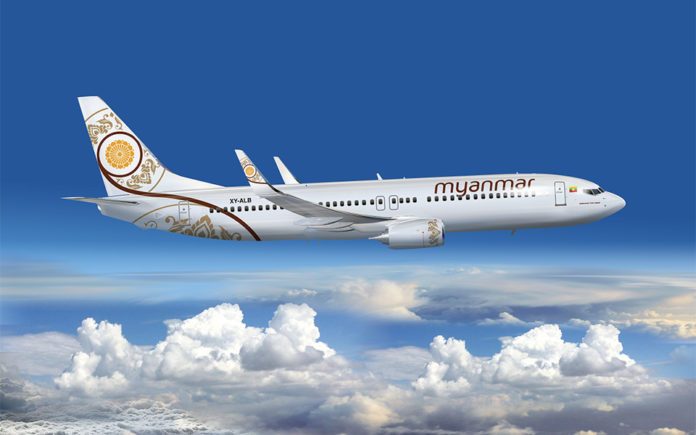
myanmar-national-airlines

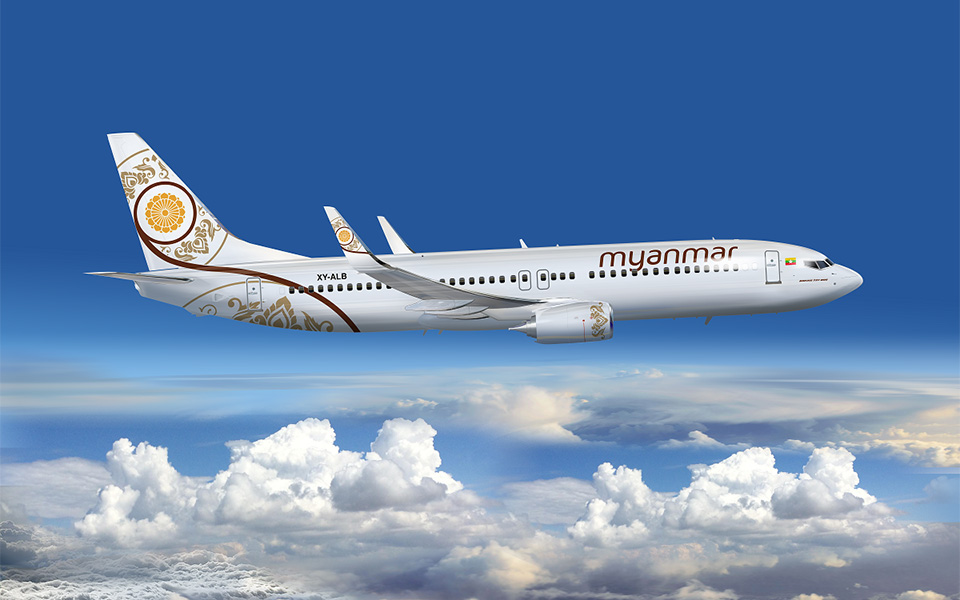
Myanmar National Airlines (MNA) will add five more flights per week on its Singapore-Yangon route starting December 1, when the visa waiver between the two countries comes into effect.

Demand for the route, which MNA commenced as a daily service in August 2015, has been slow to moderate, according to some outbound agents in Singapore.

One reason for this, suggested Shirlene Goh, head of sales at ATG Tours, is that Singaporean travellers seeking emerging destinations are faced with many options including Myanmar and Bhutan.

She added that since the visa waiver was announced, there have been more enquiries for Myanmar, though it remains to be seen if demand will significantly pick up.

Yet, Singapore – one of only four international destinations served by the airline – is “the obvious choice” as the carrier expands beyond its domestic network, according to Belinda Sim, general manager of MNA’s GSA in Singapore, Discover the World.

She told TTG Asia: “The countries share good trade relations. There’s also been a lot of student exchange between the two countries. And being the national carrier of Myanmar, they were looking for a place where people from Myanmar were travelling to.”

According to Than Tun, CEO of MNA, Singapore is “one of the most popular destinations, with 1.5 million passengers in the past year”.

Sim expects the visa waiver between the two countries will make “some difference” especially for outbound traffic from Myanmar.

The additional flights will depart Yangon Monday-Friday at 16.00 and touch down in Singapore at 20.30, before returning from Singapore at 21.15 and landing at 22.45.

Currently, carriers serving this route include Singapore Airlines, Jetstar, Silkair, Tigerair and Myanmar Airways International.

A correction was made on October 28, 2016 to reflect that Belinda Sim does not represent MNA