TTG Asia
Asia/Singapore Wednesday, 22nd April 2026
Page 1670

Booking engine for business travellers now live

0

A new membership-based booking engine, BudgetBusinessTravel.com, was launched on April 27, hoping to “fill a gap in the world of OTAs” by catering to independent business travellers.

“Today close to 55 per cent of travellers book their trips online and this number has been growing around 12 per cent per annum in recent years. Independent business travellers (form) a large part but are often overlooked by the travel industry,” said Steve Harrop, founder of the company.

Apart from allowing business travellers to book their own trips, what sets BudgetBusinessTravel apart from other OTAs is the option for customers to request assistance from their personal account manager around the clock.

This will make it easier for business travellers to update their itineraries and change bookings quickly and without having to pay processing fees.


Harrop: addressing needs of independent business travellers

BudgetBusinessTravel also offers a seven-level rewards programme. Members can move up the levels and unlock additional concierge-like services and discounts by booking more trips on the website or through referrals.

Loyalty programme members would not lose their status after certain periods of inactivity and are guaranteed lifetime access to benefits.
Indian luxe market on ascent in Philippines

0

For a market that has traditionally been dominated by group tours, India is starting to show signs of maturing with more luxury travellers opting for the Philippines.

The “influx of luxury travel now especially to Cebu, Palawan and Boracay for short holidays and honeymooners” are being driven by discoveries of lovely locations and experiences in the Philippines, according to Arjun Shroff, managing director, Shroff International Travel Care Philippines.


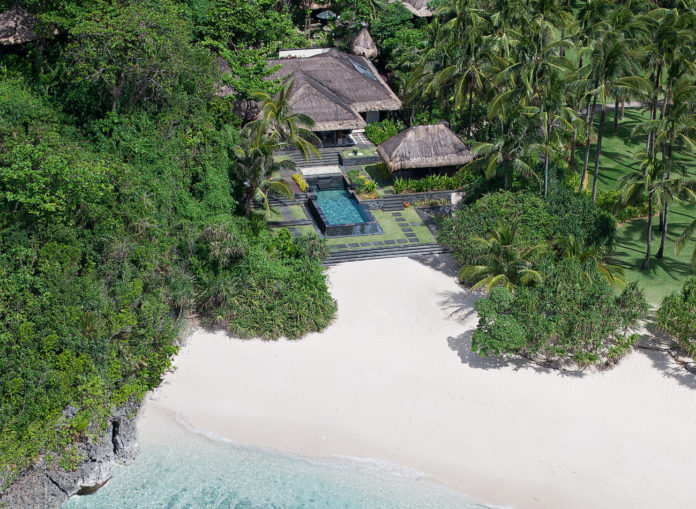
Beach villa at Shangri-La’s Boracay Resort & Spa

These travellers, Shroff said, are not only from major source markets like Delhi and Mumbai but also from secondary and tertiary cities like Hyderabad and Ahmedabad where there are affluent societies.

Indian luxury travellers are mainly made up of families, a smattering of FITs and honeymooners, he noted.

Validating the uptrend, Rajah Travel Corp’s senior sales executive Jaret Salac said that their Luxe Collection products are “doing well”, especially packages whose components include stay at The Farm at San Benito, an upscale wellness centre in Batangas; Shangri-La’s Boracay Resort & Spa, which is the toniest in the island; and the exclusive El Nido Resorts in Palawan.

The typical Indian luxury travellers fly Singapore Airlines to the Philippines (due to an absence of direct flights from India), stay in Makati hotels in Manila, and go further afield to destinations like Boracay, Kawasan Falls or Oslob for whaleshark interaction, Salac said.

Weddings and honeymoons are another segment that Philippine suppliers are keeping their eyes peeled for Indian luxury travellers, although honeymooners is still a bigger market than destination weddings, which is still considered a “very niche” by travel consultants.

Nevertheless, Shangri-La’s Mactan Resort & Spa is one of the few resorts that have successfully tapped the Indian weddings and honeymoons market.

Indian weddings are large-scale events requiring a varied selection of venues, the availability of Indian cuisine and Indian chefs, as well as an experienced team familiar with the nuances of Indian culture and traditions, explained Shangri-La’s Mactan Resort & Spa director of sales and marketing, Albert Lafuente.

Sri Lanka TPB still saddled with debt

0

Sri Lanka Tourism Promotion Bureau (SLTPB) still has millions of rupees owed to companies from transactions made under the 2010-2015 (up to January) administration, the payment of which had been delayed due to audits, said tourism ministry secretary Janaka Sugathadasa.

The inability to quickly pay off these debts will delay a campaign announced for launch in May.

Janaka, at a media briefing last week to announce hosting the annual PATA Conference in Sri Lanka next month, told reporters that the government owes US$500,000 to three TV stations – Al Jazeera, Bloomberg and Sky News – for a media campaign that ran from September 2014 to March 2015.

Some US$200,000 was paid under the previous administration, but the remaining debt lingered while an audit was carried out by the Tourism Ministry over these dues and other alleged irregularities up to 2015.

SLTPB has another 600 million rupees (nearly US$4 million) in unsettled liabilities that came out of sponsorships and promotions undertaken during the previous regime. The tourism secretary said the debt will be settled and the amount was being verified.

Taiwan startup launches tour guide platform

0

Observing growing demand for private guides especially in the business travel sector, new Taiwanese travel startup Wogogo has launched a platform that allows travellers to search and match with local professional tourist guides.

The goal is to enhance travellers’ experience by pairing them with a local who provides stories on the destination, said Wogogo COO Muse Fang. This will allow travellers to not only discover sights but also get an experience of the local lifestyle and culture.

Safety and service quality are key focus areas, Fang said. On top of being required to have tourist guide licences and pass a criminal record check, Wogogo-certified guides also need to complete a course instructed by flight attendants to improve service.

Over the past months, the Taipei-based platform has been interviewed by more than 1,000 individuals and already selected more than 300 guides at key locations all over the world to join the group, according to Wogogo.

The channel offers three service models – tour guides without transportation; those who are also drivers; and those with chauffeur. Prices of the services range from US$19.95 to US$39.95 per hour.

Wogogo was launched in February 2017 and currently covers tours in Taiwan. It plans to expand its business to other countries including Japan and the US in the near future.

Maldives’ first Movenpick resort slated for 2018 launch

0

When the 105-unit Mӧvenpick Resort & Spa Kuredhivaru Maldives opens in 2Q2018, it will mark the first resort in the Maldives for Swiss hospitality company.

Situated on the remote Kuredhivaru Island in Noonu Atoll, in the exclusive northern part of the Maldives, the contemporary tropical resort will feature 33 beach villas and 72 over-water villas.

Resort facilities will include a luxurious spa with 14 private treatment rooms, a yoga pavilion, gym, volleyball and tennis courts, in addition to a business centre, library and retail boutique.

The resort will feature a comprehensive dive centre, beach sports activity centre, exclusive guest-only superyacht, as well as a small-scale marine research centre and private marina.

The first Marine National Park in the Maldives, which consists of a group of nine uninhabited islands commonly known as Edu Faru, is approximately 15 minutes from the resort via speedboat. The popular Christmas Tree Rock and Orimas Thila dive sites are also a boat ride away.

AirAsia connects Bangkok-Danang with daily flights

0

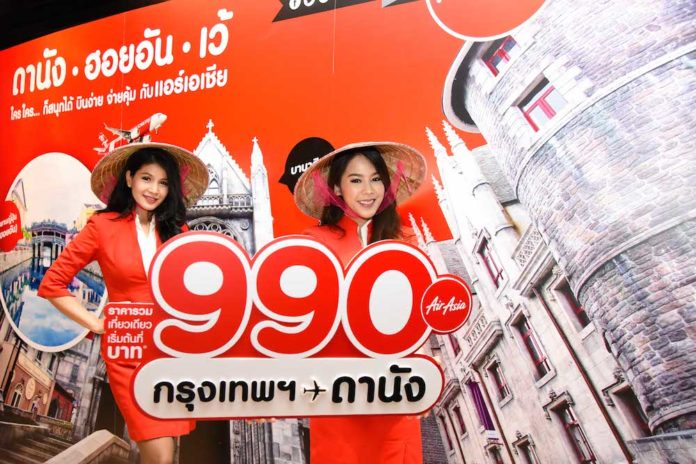
AirAsia will soon begin daily direct flights from Bangkok-Don Mueang to Danang from June 9.

FD636 will depart from Don Mueang at 10.10 and arrive in Danang at 11.30, while the return flight, FD637, will leave Danang at 12.00 and land in Don Mueang at 13.20.


Air Asia introducing Bangkok-Danang debut fare

The Danang route addition is another important step for the airline as it strengthens its CLMV network and makes AirAsia the first and only LCC to connect Bangkok with north, central and south Vietnam, the carrier said in a statement.

David Cameron speaks at WTTC Global Summit

0

WTTC 17th Global Summit kicked off in Bangkok yesterday, making the Thai capital the first country in South-east Asia to host the event. Following opening speeches by WTTC chairman Gerald Lawless and UNWTO secretary-general Taleb Rifai, WTTC president & CEO David Scowsill called for a more sustainable world in his opening speech, titled ‘Is It Too Much To Ask?’, followed by former UK prime minister David Cameron’s (pictured) keynote address on ‘Altered States – Has Globalisation Had Its Day?’

The two-day summit is hosted by the Ministry of Tourism and Sports and the Tourism Authority of Thailand. Over 900 leading figures and senior executives from the both the private and public sectors across the world’s travel industry are joining in the event. The summit continues today.

Myanmar’s beach destinations to watch

0

Myanmar’s four key beach destinations – Ngapali, Kawthaung, Ngwe Saung and Chaungtha – are emerging as up-and-coming tropical getaway spots in Asia, each with its own distinct characteristics.

According to C9 Hotelworks’ new Ngapali Beach Tourism Market Review, the impact of more airlift to Ngapali’s main gateway of Thandwe last year pushed growth up 28 per cent, leading to a total of 71,603 passengers arriving in Ngapali via domestic flights from Yangon, Bagan, Mandalay, Heho and Sittwe. Germany, the UK, France, Switzerland and Italy were the top five international source markets.

Ngapali beach

With Thandwe Hotel Zone recording a 31 per cent increase in visitors to 72,353 in 2016, the local government now plans to extend the zone and is “in advanced discussions to add direct international flights”, according to C9 Hotelworks’ Ngapali Tourism Market Review.

Sixty nine per cent of hotel demand in Ngapali comes from overseas travellers, but domestic tourism is rising fast. C9’s managing director, Bill Barnett, said: “Local travellers in tourist accommodations grew 79 per cent compared to 11 per cent by foreigners for the same period.”

With new demand, hotel occupancy levels on an annualised basis now exceed 60 per cent. Average room rates in upscale accommodation ranges from US$150-200. One key addition to the market has been the arrival of the Hilton brand.

Crowding in the Thandwe Hotel Zone has prompted the government to work on expanding the zone south by seven kilometres. The extension will be developed in two phases and add roadways, electricity and other public service to the area.

And due to limited land with beach access, new hotel establishments are now moving inland and south of Ngapali. Overall, there are only 26 hotel establishments in Ngapali hosting a total of 878 keys; 516 keys are currently under development.

With high room rate and mounting demand, C9 foresees Myanmar’s big four beach destinations (Ngapali, Kawthaung, Ngwe Saung and Chaungtha) would attract a significant amount of attention from both domestic and international hospitality players.

Kawthaung is rapidly evolving as a tourism hub for the Mergui Archipelago and the connection to the nearby Thai market of Greater Phuket via Phang Nga and Ranong has many synergies.

Ngwe Saung and Chaungtha, given their driving access from Yangon, clearly are more attractive to surging domestic numbers and more volume driven products.

MITA nudges Malaysian agents towards Chinese market

0

Malaysian Inbound Tourism Association (MITA) is encouraging more inbound agents to cater to the China market to ensure there are enough suppliers to support the expected influx of Chinese tourists this year, according to the association’s president Uzaidi Udanis.

“By getting new agents involved, we believe Malaysia can create niche itineraries and promote new destinations to encourage more repeat visitors,” Uzaidi said.


Uzaidi: working with Tourism Malaysia on B2B networking sessions in China

He added: “We are also trying to attract agents with non-Chinese speaking staff to enter this market as many Chinese travel agents these days are able to communicate in English. Mandarin is no longer an essential requirement.”

For a start, MITA is collaborating with Tourism Malaysia to organise a B2B networking session in Xiamen from May 22 to 25, following the Malaysian government’s announcement to open a new visa centre in the city to improve tourism numbers to one million from the Fujian province itself.

There are also plans to hold similar B2B networking sessions in other Chinese cities in 2H2017.

Uzaidi said: “MITA hope to keep costs below RM5,000 (US$1,138) per participant and this will cover airfare, ground arrangements and the B2B session. By keeping costs low, we hope to encourage new and small inbound agents to participate.

“We understand many are unable to promote at overseas travel trade events where a table at the Malaysia pavilion will cost anything between RM6,000 to RM20,000, (excluding) airfare and ground arrangements.”

Global travel defies numerous crises

0

Passengers from Europe, the Americas and the Far East are making more bookings and taking more flights despite recent terrorist attacks and ongoing geo-political wrangles, according to ForwardKeys.

The company revealed that Thailand is benefiting from the BRIC boom, which is helping to fill a gap left by a reduction in Chinese visitors after the Thai government discouraged cheaper tour groups from China since September 2016.

On the recovery of BRIC countries, ForwardKeys found that Brazil has been on the up since the end of its political crisis in 2016, and Russia had its first positive monthly performance, in December 2016, since its annexation of Crimea in March 2014. Both countries’ currencies are recovering in value – indicating more travel to come.

Forward bookings show that four out of five of the top rising destinations for Brazilians are in Europe; Indian travellers prefer Asia-Pacific; and Russians like Georgia, Czech Republic, the UAE and Italy.

Meanwhile, forward bookings to the US have picked up after the uncertainty that president Donald Trump’s travel ban introduced, mainly due to the Easter holiday shift.

Longhaul arrivals in Western Europe are starting to surge again, ForwardKeys said, reaching visitor numbers higher than those seen before the Paris attacks in November 2015.

China, the Netherlands, the UK, and Germany are fuelling the increase in forward bookings to Canada and Mexico, which are setting the pace for longhaul arrivals in North America.

ForwardKeys added that “China’s power to make or break a destination is demonstrated by the recent trend in visitor numbers to South Korea”. International arrivals in South Korea (for stays of four to eight nights) fell 10 per cent in 1Q2017 due to cancellations by Chinese tour groups in March, while forward bookings for the same category are currently lagging 28 per cent.

ASEAN countries are the most likely to benefit from South Korea’s visitor crisis as they have the increased capacity for visitors from China, the company stated.

The findings will be presented at the World Travel and Tourism Council’s Global Summit taking place in Bangkok today and tomorrow.