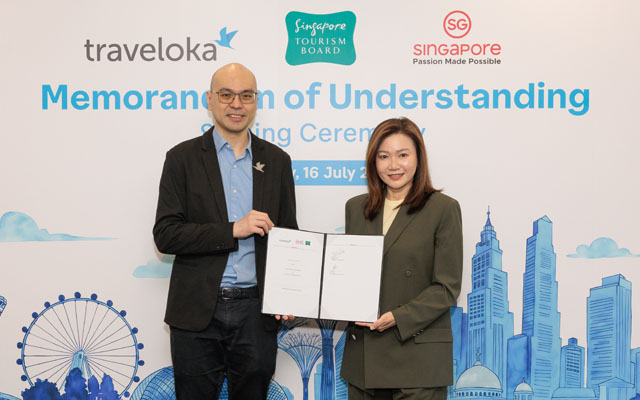
The Singapore Tourism Board (STB) and Traveloka have signed a memorandum of understanding to promote Singapore as a preferred destination for travellers from Indonesia, Malaysia, Thailand, Vietnam and Australia.
The partnership supports the next phase of tourism growth through joint marketing efforts across the five markets, with campaigns designed to encourage more leisure travel to Singapore.
From left: Traveloka’s Albert and Singapore Tourism Board’s Melissa Ow have solidified their partnership to promote Singapore as a preferred destination; photo by Traveloka
Malaysia remains one of Singapore’s largest visitor markets, with around 1.3 million Malaysians travelling to Singapore in 2025. On Traveloka, Singapore is also among the most-booked destinations for Malaysian travellers, with booking volume almost doubling year on year.
Building on this demand, STB and Traveloka will work together to develop campaigns and travel experiences aimed at Malaysian travellers, reinforcing Singapore’s position as a preferred shorthaul destination.
The collaboration forms part of broader efforts to strengthen Singapore’s appeal across key regional markets and encourage repeat visits through targeted promotions and destination marketing.
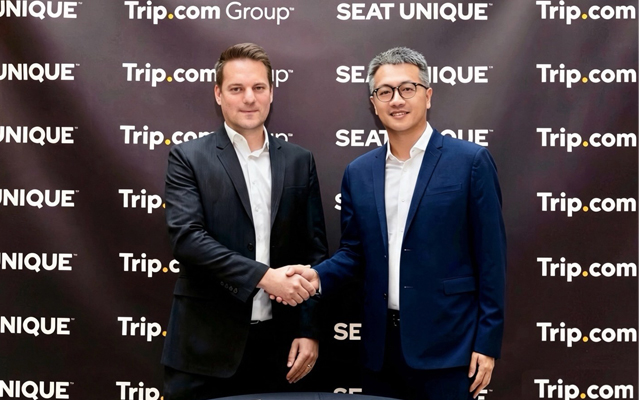
Trip.com Group has partnered with premium hospitality platform Seat Unique Group to add official hospitality and VIP packages for sporting, music and entertainment events to its travel platform.
The partnership will introduce a new live events category across Trip.com Group’s platforms, giving travellers access to more than 500,000 official hospitality and VIP packages covering Formula 1, Premier League football, major concert tours and other events. For Seat Unique, the deal marks its first major expansion into Asia-Pacific.
The partnership will offer official hospitality and VIP packages for sporting, music and entertainment events
The move reflects growing demand for experience-led travel. According to Trip.com Group research, two-thirds of Asia-Pacific travellers have planned a holiday around a concert at least once, while 66 per cent said they would travel internationally to see their favourite artists perform. Football, basketball and Formula 1 also rank among the most popular live sporting events for travellers.
Through the partnership, travellers will be able to book official hospitality packages sourced directly from Seat Unique’s network of more than 140 rights holders, including sports clubs, venues and event organisers.
Seat Unique works with organisations including Arsenal FC, Everton FC, Real Madrid, AC Milan, Co-op Live and several Formula 1 Grands Prix. Official hospitality and VIP packages are expected to become available on Trip.com in the coming months.
Robin Sherry, CEO, Seat Unique Group, said: “By partnering with Trip.com Group, we’re giving millions of travellers access to official premium experiences at some of the world’s biggest sport, music and entertainment events through a platform they already know and trust.”
Bo Sun, chief marketing officer, Trip.com Group, added: “Experience-led travel is reshaping how people plan their journeys, and travellers are increasingly building trips around the moments that matter most to them. Live events are a powerful expression of that shift, and through this partnership we’re bringing fans closer to some of the world’s most exciting sports, music, and entertainment experiences.”
Langham Hospitality Group (LHG) is expanding food waste reduction initiatives across its hotel portfolio, with properties introducing new food and beverage offerings that make use of surplus ingredients as part of the group’s sustainability programme.
The initiative encourages culinary and bar teams to develop menu items using excess ingredients that would otherwise go to waste, supporting more efficient kitchen operations while maintaining the quality of guest dining experiences.
Langham Hospitality Group hotels are introducing menu items that repurpose surplus ingredients as part of the group’s sustainability programme
At Cordis, Auckland, orange peels and pulp from freshly squeezed breakfast juice are repurposed into a marmalade compote served with yoghurt, diverting around 390kg of food waste from landfill each year.
The Langham, Jakarta has introduced house-made sausages using fresh cuts of meat, while The Langham, Boston serves a Coastal Catch Burger made from cod and salmon trimmings, helping utilise up to 220kg of fish each year.
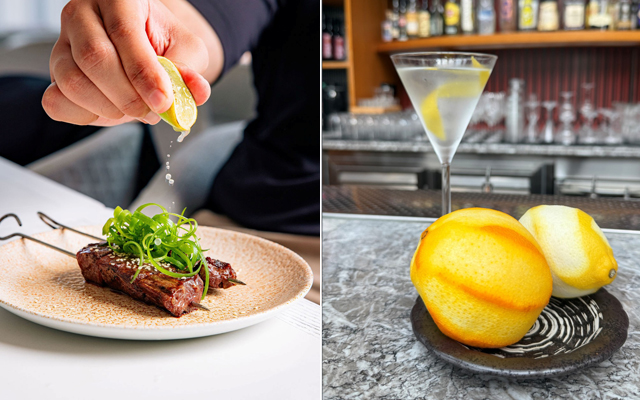
At The Langham, Gold Coast, Wagyu beef trimmings are used for beef skewers, while rendered Wagyu fat is turned into cooking tallow. The hotel’s bar also creates cocktail infusions using near-overripe fruit and citrus peels.
Eaton HK has developed cocktails using citrus peel and recycled coffee grounds, giving food by-products a second use.
LHG CEO Bob van den Oord said: “Sustainability becomes most meaningful when it is embedded into the everyday decisions we make, including how we source, prepare and serve food. This programme reflects how our teams are translating broader sustainability commitments into practical action, finding thoughtful ways to respect the ingredients we work with while enhancing the guest experience.”
The initiative follows several sustainability milestones for the group. Earlier this year, The Langham, Huntington, Pasadena achieved EarthCheck Master Certification after 15 years of continuous certification. It joins Cordis, Auckland, Cordis, Hong Kong, Eaton HK, The Langham, Hong Kong and The Langham, London in attaining EarthCheck’s highest certification level.
LHG now has 18 EarthCheck-certified properties across its portfolio.
Singapore’s inbound tour market has long been associated with static, recycled scripts – a norm that Yong Min Ho, founder and chief storyteller of The Urbanist Singapore, is actively trying to challenge.
Leveraging a background in higher education management and urban geography, Ho has moved beyond cookie-cutter tours to build a highly structured heritage education practice. His approach draws on a decade spent managing international relations and strategy at two of Singapore’s local universities. However, his foundation runs deeper: as a geography undergraduate, he won a research grant and best thesis award for studying how young Singaporeans perceive colonial architecture in the Civic District.
Ho leads a heritage tour at the Asian Civilisations Museum, using storytelling to connect visitors with Singapore’s history; photo by Asian Civilisations Museum
When the pandemic prompted a career re-evaluation, Ho chose to translate this academic expertise into a commercial heritage practice.
“I did not leave my corporate life out of any angst, or because I was burning out,” he reflected. “Instead, it was an intentional shift to pursue a lifelong interest rather than waiting for retirement. Sometimes we think that we can pursue a passion when we retire… but there will never be enough money, and that’s the point. I felt like it was time to bite the bullet to pursue something I’m genuinely passionate about.”
Rather than replicating mass-market itineraries, he approaches his routes from a pedagogical standpoint.
Ho explained: “When I started, the intent wasn’t tour guiding per se, but heritage education. It is about marrying historical facts with people, and what strings them together is design and storytelling experiences.”
Rather than introducing a landmark conventionally – such as pointing out a temple inscription – each stop opens with a strategic question. Although invisible to participants, this pedagogical framework allows the narrative to progress naturally. The approach has attracted specialised audiences, including Executive MBA cohorts, international university study trips, corporate teams and educators seeking deeper context.
Currently, The Urbanist Singapore offers a portfolio of eight tours focusing on invisible or altered landscapes. For 2026, Ho developed The Lost Anchorage: Telok Ayer to Padang tour, which required six months of conceptualisation and archival research. The walk traces Singapore’s original 1800s shoreline, now entirely swallowed by coastal reclamation.
To help visitors visualise this vanished maritime boundary, Ho created custom map sets featuring historical overlays instead of paper brochures. Paired with wooden stands, the maps also serve as display pieces.
Ho’s tours encourage visitors to look beyond familiar streets and uncover the stories that have shaped Singapore’s urban landscape
To heighten immersion, Ho collaborated with local storyteller Kamini Ramachandran to produce ambient audio chapters that blend narrative history with the sound of crashing waves, establishing a sensory framework before untangling the architectural history on site.
Ho maintains a pragmatic outlook on the tourism ecosystem. Acknowledging that intensive archival research and standard public walking tours rarely generate sustainable revenue on their own, he intentionally steered his business towards a B2B consultancy model.
To scale his one-man operation – supported part time by his sister on administrative tasks – Ho has partnered with Jane’s Singapore Tours. By outsourcing the delivery of his established itineraries to its pool of licensed guides, he frees up time to focus on commissioned projects.
This has generated commercial momentum with corporate entities and lifestyle brands. The Urbanist Singapore is currently engaged in a six-month partnership with Singapore River One and Tuan Sing Holdings to deliver architectural tours spanning Robertson Quay and Clarke Quay. Ho is also part of the curatorial team behind the neighbourhood walks at Temasek Shophouse and designs tours for the Singapore International Foundation. Most recently, he launched a dedicated heritage tour in July for New Bahru, the city’s newest creative cluster.
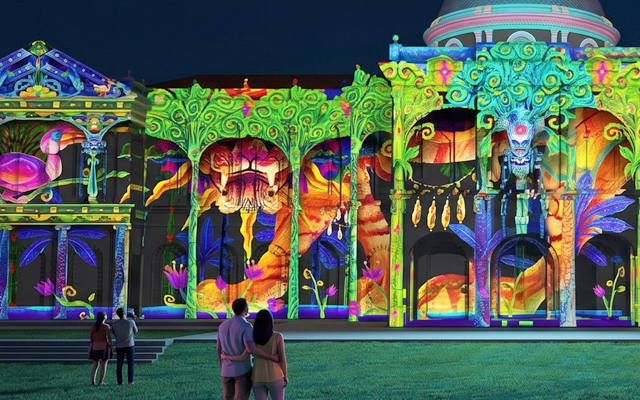
Singapore Night Festival will take place this year from August 21 to September 5 with a programme inspired by myths, legends and folklore from Singapore and South-east Asia, bringing immersive installations, projection mapping, performances and interactive experiences to the Bras Basah.Bugis precinct.
The 17th edition of the festival introduces a new Museum Zone centred on the National Museum of Singapore and the Children’s Museum Singapore, alongside three returning festival zones spanning Funan, CHIJMES, Cathay Green, Waterloo Centre, Bras Basah Complex and Stamford Arts Centre.
Tales of Earth and Sea brings folklore to life through projection mapping on the façade of the National Museum of Singapore
The festival’s inaugural Malam Projection Mapping Competition is a new addition, attracting almost 50 submissions from artists and collectives across South-east Asia. The top 20 works will be projected onto The Cathay during the festival’s opening week, with the top five remaining on display throughout the event.
Another new feature is Alight 2.0, a conference for projection mapping and light-based art that will bring together artists and creative practitioners from across the region to discuss the intersection of art, technology and public space.
Among the headline attractions is Tales of Earth and Sea, a projection mapping work by Indonesian multimedia collective The Fox, The Folks at the National Museum of Singapore, accompanied by street theatre performances from Dutch theatre group Close-Act Theatre. Visitors can also explore The Lost Legacy of Fort Canning: The Forbidden Hill, a 70-minute night trail combining soundscapes and live traditional Malay dance inspired by the myths of Bukit Larangan.
Other installations include Vikings of the Tropics at Armenian Street Lawn, Once Upon A Time at Capitol Singapore Outdoor Plaza, The Dragon’s Tooth: A Legend of Becoming Light at Singapore Management University Campus Green, and Stormy Straits at Bugis Street Art Lane. Festival works will also extend to nearby malls including Funan, Plaza Singapura and Raffles City Singapore.
Most programmes are free. During the festival, visitors can use an interactive map and personalised trails available on the official website.
Veteran tourism executive Aliana Mei Hung Chan has died at the age of 76 in Toronto on June 29, 2026.
Born in Hong Kong, Chan built a career in the global tourism industry spanning more than 40 years. She moved to Asia in 2004 after transferring from the Hong Kong Tourism Board’s (HKTB) Canada office. She later held positions with Venetian Macau before joining Hong Kong Disneyland as vice president, Asia-Pacific regional sales and travel operations.
She retired in August 2014.
Chan was known for her leadership and earned the respect of colleagues across the tourism industry.
She is survived by her daughter Denise, son-in-law Ed, and grandson Malcolm.
Priscilla Poon, vice chairman of the Hong Kong Association of Registered Tour Co-ordinators, recalled: “I worked under Aliana’s leadership and guidance in several capstone events for Hong Kong’s tourism industry in 2000’s during her tenure at the HKTB i.e. 88th Lion’s International Convention in 2005 which brought 20,000+ international delegates to the city. She knew the potential of her team and was always empathetic. Although petite in frame, she had the shoulder of a giant for others to stand on, and now the world is smaller without her.”
Edmund Tsang, vice chairman of the Hong Kong Association of Travel Agents, said: “A true pioneer who raised tourism and hospitality education level in former British Hong Kong 50 years ago, despite scarce resources and government policy limits. We will deeply miss Aliana.”
Once regarded by some as Australia’s “sleeping giant”, Adelaide is steadily transforming into one of the country’s most interesting city stays.
New luxury hotels, growing wellness and wildlife experiences, and stronger aviation links from Asia are giving travellers more reason to linger in the South Australian capital rather than simply pass through on the way to Kangaroo Island or the Barossa.
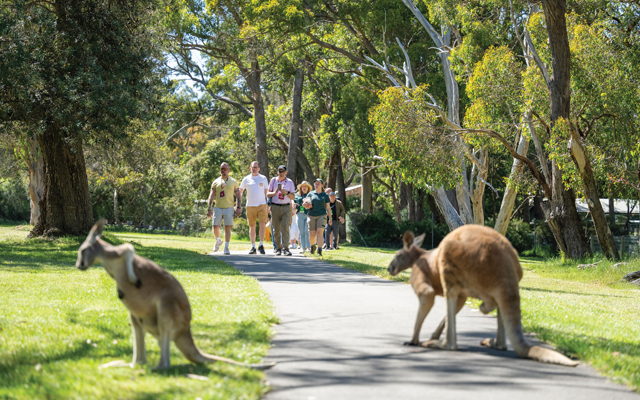
Adelaide is strengthening its appeal with new hotels, food and wine experiences, wildlife encounters and improved connectivity from key Asian markets; photo by Tourism Australia
“I think we’re starting to become the less-kept secret,” said Stella Biggs, executive officer at Adelaide Hills Tourism. “For a long time, Adelaide was offering so much but wasn’t quite the first destination on the list when people thought of Australia. That’s certainly changing.”
That shift is helping position Adelaide as a compact city stay where contrasting experiences sit within easy reach of the CBD.
Within 20 minutes of the city centre, visitors can be in the Adelaide Hills, on the beach, spotting wildlife or tasting wine, while more than 200 cellar doors sit within an hour’s drive. Adelaide is also one of the world’s handful of National Park Cities.
Major events are helping shift perceptions of Adelaide. The city will host the Rugby World Cup and MotoGP next year, while recent events such as AFL Gather Round and LIV Golf have already demonstrated Adelaide’s capacity to attract world-class sporting spectacles.
According to Martin Kaesler, South Australian Tourism Commission’s manager for eastern markets, these events showcase the city to new audiences and “at least elevate Adelaide to the front of mind”.
Improved aviation access is helping raise Adelaide’s profile across Asia, with direct links from Guangzhou, Shanghai, Hong Kong, Singapore and Kuala Lumpur. The region remains central to South Australia’s long-term growth strategy.
“From a strategic perspective, we’ve definitely identified that the growth in the coming decade, and over the next two decades, is going to be from the Asian markets,” he said, noting China’s position as South Australia’s largest international market by visitor expenditure.
Singapore and Hong Kong remain strong visitor markets, while Indonesia and Vietnam present emerging South-east Asian opportunities.
A decade of investment has also reshaped Adelaide’s skyline and visitor offering. From the redevelopment of Adelaide Oval with its on-site hotel and rooftop adventure experiences to a wave of luxury openings including EOS by SkyCity and Marriott, the city has steadily expanded its premium inventory.
Another 1,000 rooms are expected to come online over the next year, including internationally recognised brands such as Kimpton and Westin.
“Interestingly, we had a lot of new hotel development during the Covid pandemic and at the time there was an element of panic about what was going to happen with all the new hotel stock,” said Kaesler. “But in the end, it turned out to be a really good news story.”
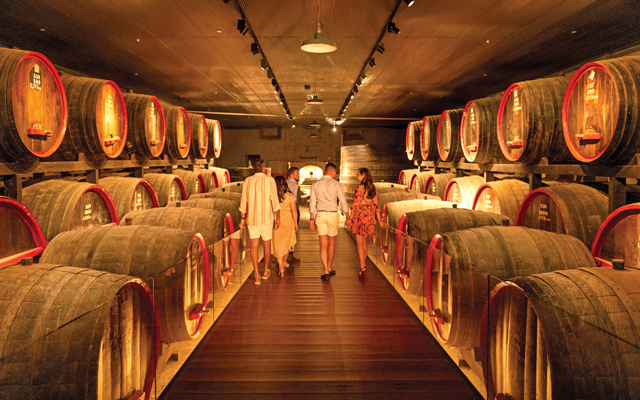
McGill Estate highlights Adelaide’s food and wine offering; photo by Tourism Australia
Food and wine remain central to Adelaide’s appeal, but the narrative is expanding into more immersive and wellness-led experiences that resonate strongly in Asia.
Self-drive is an especially important trend from Singapore and China, and South Australia’s relatively light traffic and open roads make it an appealing entry point.
At the premium end, small-group and private touring tap into a growing desire for behind-the-scenes encounters, such as tastings hosted by winemakers in their own homes.
The broader shift towards immersive travel is also creating new opportunities for Indigenous tourism. Alistair Hotham, visitor services lead at Adelaide Economic Development Agency, said travellers increasingly want experiences that connect them more deeply with place and culture.
“We’ve definitely seen a rise in interest in Aboriginal tourism products and those products being offered as bookable experiences,” he said.
Many experiences now invite visitors to participate directly, from learning about native botanicals with Aboriginal guides to tasting Indigenous foods and wines, creating deeper connections with South Australia’s stories and landscapes.
Meanwhile, at the already iconic Adelaide Central Market, a multimillion-dollar expansion anchored by the new Treehouse Hotel and expanded retail and dining offerings is further strengthening its role as a hub for culinary tours and hosted tastings that connect the city directly with its surrounding food and wine regions.
Beyond the city, new tourism experiences are adding depth to the destination mix. One standout is Monarto Safari Resort, which brings luxury accommodation into the wild landscapes east of Adelaide. Its offerings include sunrise wildlife encounters on open-range plains and immersive lemur experiences at neighbouring Monarto Safari Park.
In the Adelaide Hills, Jurlique Farm is tapping into growing demand for wellness and nature-based experiences. Tourism and farm manager Cherie Hutchinson said South-east Asian visitors already account for around 15-20 per cent of guests.
“We have been strong on product marketing but tourism is a new, untapped opportunity for us,” she said. Hutchinson plans to promote the farm more actively in South-east Asia and China next year, supported by new experiences such as a tea-blending workshop.
For Kaesler, Adelaide’s biggest challenge remains visibility rather than product. “People just don’t know enough about us,” he said, and the work ahead is about changing that.
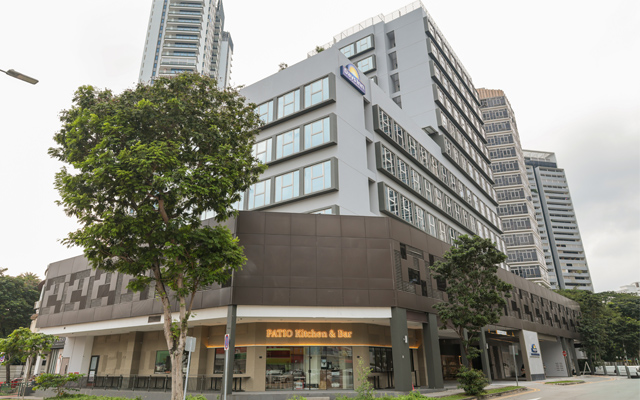
Wyndham Hotels & Resorts has soft-opened its third property in Singapore – the Days Inn by Wyndham Singapore Novena – ahead of a planned official launch in August.
The 365-key hotel, which had undergone a detailed renovation from its previous life as Value Hotel Thomson, now boasts guestrooms outfitted with ambient lighting and an AI-powered voice assistant that controls lighting and offers hotel information, as well as a spacious outdoor fitness circuit on the rooftop where guests can also enjoy unblocked views of new and old Singapore.
Days Inn by Wyndham Singapore Novena is located in the heritage district of Balestier, where guests can explore local food, traditional trades and historic streets
Keane Sua, spokesperson for Worldwide Hotels, which owns the property and manages it on a franchise arrangement with Wyndham Hotels & Resorts, said the hotel is positioned for “aspiring travellers” – value-conscious consumers who are starting to explore neighbouring destinations and keen to see what Singapore offers.
The hotel, which is located closed to three hospitals and private clinics, is courting medical tourists too. To help such guests with recovery, the hotel offers wellness mats that use infrared heat to promote pain relief, blood flow, tissue healing, and other functions. Sua added that the outdoor fitness circuit will come in handy for recovering guests who need physical therapy.
While the hotel enjoys a convenient location on the city fringes, supported by both public bus and subway networks, Sua said the district is also a lesser-known part of Singapore. To acquaint guests with the history and heritage of the Novena and Balestier district, the hotel is working with an experienced tour operator to curate a walking trail that will introduce disappearing local trades, favourite foods through the generations, and other stories.
Promotional rates for the opening period start from S$122 (US$95), and will scale up after.
“However, this hotel is mid-tier, so prices will stay in the 100-plus range. Of course, room rates would go up further during high peak seasons, like when the Formula 1 races are in town and the mandatory government levy on room revenue comes into play,” Sua noted.
Michael Hofstetter, regional director, franchise operations, South East Asia and Pacific Rim, Wyndham Hotels & Resorts, stated booking pace has seen a “strong pick-up” since the hotel opened for reservations on July 12.
Under the franchise agreement, the hotel will benefit from Wyndham Hotels & Resorts’ global distribution network, access to initiatives and training to achieve quality management, revenue management support, and more, shared Hofstetter.
With the opening of the Days Inn by Wyndham hotel, Wyndham Hotels & Resorts now has three brands present in Singapore – the other two being Wyndham and Trademark Collection by Wyndham.
When asked if the company intends to bring more of its 25 brands into Singapore, Joon Aun Ooi, president, Asia Pacific, told TTG Asia that the team is “very happy” with the current presence, but remains open for “new opportunities to extend the breadth and depth of our brands”.
He added that Singapore is a unique development market, where opportunities for new deals are limited. As a result, Wyndham Hotels & Resorts will focus on conversion opportunities.
Ooi also hinted that another announcement may come in the near future.
Michael Yu, head of finance, APAC, said Wyndham Hotels & Resorts remains focused on expanding its property network through quality growth.
“While our development looks for opportunities to enhance awareness of our brands, we also remain focused on enhancing the value to our existing owners. When we add more properties in Singapore, we are also increasing the overall competition,” explained Yu.
“Therefore, identifying the right property, right owners and the right brand for a single destination is very important,” he added.
Ooi shared that the company has had to turn down opportunities for brands where there is already a strong presence of existing owners.
Hofstetter added that having a balance of brands within the same destination allows owners to share business opportunities. “There is greater brand visibility for Wyndham Hotels & Resorts, and owners and their properties are not competing. And if one hotel gets a business lead that is not quite suitable, they can share it with another hotel that may be a better fit,” he said.
Asset World Corporation (AWC) will add a cross-river cable car and a new Museum of Old and New Art (MONA) to Bangkok’s Asiatique The Riverfront Destination as part of a major redevelopment aimed at strengthening the city’s tourism and cultural offering.
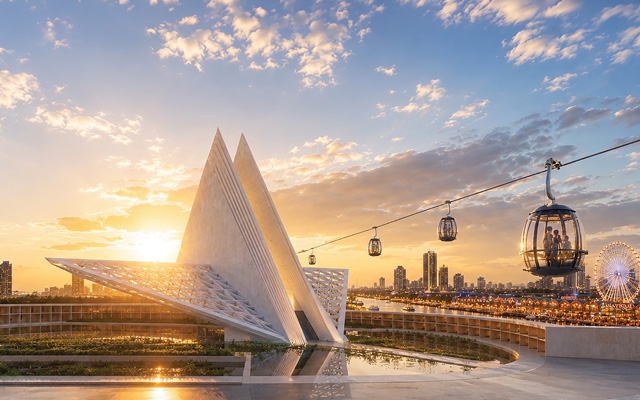
The development will include what AWC describes as the world’s first sustainable themed cross-river cable car, linking Asiatique with the company’s mixed-use development on Charoen Nakhon Road, alongside MONA Bangkok, developed in partnership with Australia’s Museum of Old and New Art in Hobart.
A rendering of the proposed MONA Bangkok and cross-river cable car at Asiatique The Riverfront Destination
AWC said the cable car represents an investment of more than two billion baht (US$61 million). Designed without support pylons in the Chao Phraya River, it will use energy-efficient technology to connect the two developments while incorporating art, lighting, sound and architectural elements into the passenger experience.
The cable car will connect directly to MONA Bangkok, which will be developed specifically for Bangkok rather than replicate the museum in Hobart. Conceived as a platform for cultural exchange, the museum will showcase works by Thai and international artists while contributing to Bangkok’s contemporary art landscape.
MONA, Australia’s largest private museum, opened in Hobart in 2011. Founded by David Walsh, it houses a collection of ancient, modern and contemporary art and is known for its technology-driven visitor experience and cultural programming.
Together, the cable car and MONA Bangkok are intended to establish Asiatique as a tourism, lifestyle and cultural destination while strengthening Bangkok’s position as a centre for contemporary art and cultural tourism.
Wallapa Traisorat, CEO and president, Asset World Corp Public Company, said: “This landmark collaboration with MONA Australia will help create a new iconic destination for Bangkok while contributing to Thailand’s position as a global hub for sustainable tourism, arts, culture, and creative learning.”
David Walsh, founder, MONA, added: “Having spent most of the last 25 years studying how museums work, AWC has presented us with a remarkable opportunity to take what we’ve learned to one of the great tourist centres of the world.”
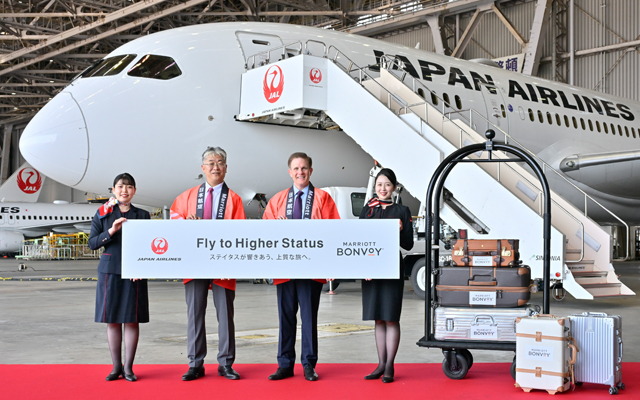
Marriott Bonvoy and Japan Airlines’ (JAL) Mileage Bank programme have expanded their loyalty partnership, introducing reciprocal elite status recognition and new member benefits across flights and hotel stays.
The enhanced collaboration builds on the existing ability for members to convert Marriott Bonvoy points and JAL miles. It marks Marriott Bonvoy’s first comprehensive loyalty partnership with a Japanese airline and JAL’s first with a global hotel group.
Marriott Bonvoy and Japan Airlines have expanded their loyalty partnership with reciprocal elite status recognition and member benefits across flights and hotel stays
Members who enrol in both programmes will be able to receive reciprocal elite benefits, earn higher-tier status more quickly and access additional travel privileges. Marriott Bonvoy members will receive JAL Fly On Points when they link their accounts, with the number awarded based on their Marriott Bonvoy elite status. JAL Mileage Bank members will receive Marriott Bonvoy elite status or accelerated qualification based on their JAL membership tier.
The partnership comes as loyalty programmes continue to influence travel decisions. Marriott Bonvoy’s 2026 Loyalty Trends Report found hotel and airline programmes are the most valued by travellers, with Japanese travellers increasingly seeking to maximise benefits across multiple loyalty schemes.
John Toomey, chief commercial officer, Marriott International, Asia Pacific excluding China, said: “Our enhanced alliance with JAL is an exciting milestone that brings together two iconic travel brands to create more rewarding journeys for our members. Together, we are unlocking new possibilities for travel and setting a new standard for loyalty experiences in Japan.”
Shingo Nishida, executive officer, senior vice president, mileage and lifestyle business division, JAL, added: “By partnering with Marriott Bonvoy, we are extending the benefits of JAL beyond the skies, creating new opportunities for our members to enjoy greater travel experiences and progress more quickly through our membership tiers.”





 She retired in August 2014.