A peer-to-peer travel booking platform just launched in Singapore is touting commissions for users making travel recommendations that result in bookings.
Trvl received US$3.5 million in funding with which it aims to become a global player with millions of users. It is founded by Jochem Wijnands, who had sold his previous company Prss to Apple for an undisclosed amount to become Apple News.
Peer-to-peer travel booking platform goes global
The start-up states that the website displays user reviews during the booking process, and pays those offering “peer-to-peer travel advice” a commission of up to 15 per cent on every booking.
“We’re living in the DIY age of travel bookings, and Trvl is rewarding (travellers) for acting like your own travel agent,” said Wijnands.
Trvl cites its own research showing that 91.7 per cent of respondents value personal recommendations highly or very highly. It is not stated if the same can be expected from online reviews tied to commissions.
Arthur Hoffman, COO of Trvl, said: “When deciding where in Asia to launch first, the choice was easy. Singapore is an affluent nation of passionate travellers.” Citing Euromonitor, Trvl shared that 89 per cent of Singaporeans are making travel bookings online (as of September 2017), whereas 10 years prior it was just 36 per cent.
Airfares for key Singapore business routes – including Jakarta, Kuala Lumpur, Shanghai and New York – fell over five per cent the past year, according to CWT Solutions Group, the consulting division of Carlson Wagonlit Travel, and CAPA – Centre for Aviation.
“Singapore remains one of the most competitive aviation markets in the world and this, along with lower oil prices, has pushed airfares down over the past year,” said Richard Johnson, director, Asia Pacific, CWT Solutions Group. “The new terminal at Changi Airport will further alleviate capacity pressures, theoretically allowing for more competition and creating further downward pressure on fares.”
Competitive Singapore market has pushed airfares down
“That said, we do expect to see an increase in average ticket price over the next year as oil prices creep back up and airlines begin to rationalise capacity. Segmentation of fares is also becoming more prevalent, allowing airlines to grow their revenues through the ancillary portions of the ticket cost,” added Johnson.
The Business Travel Pulse report also revealed that passenger numbers for Singapore increased by 5.9 per cent in 2016, supported by growth across all regions as air travel to and from South Asia, Africa and the Americas saw double-digit growth.
The number of seats increased 3.9 per cent increase in 2016. Currently, more than 80 airlines operate at Changi Airport, connecting Singapore to some 380 cities across 90 countries and territories worldwide. Stiff competition in the market has kept airfares in check.
Looking at hotels, occupancy rates in Singapore are stable at 82.1 per cent in 2017, a slight decrease of 0.3 per cent versus 2016. Last Room Available rates are also expected to remain flat this year. Meanwhile, with new supply coming into the city, the average daily booked rates have decreased by S$3.70 (US$2.70) compared with 2016, indicating a favourable market for buyers.
A new adventure travel company has been launched in South-east Asia, brokering tailor-made, “human-powered” experiences in the region to travel agents and independent travel specialists.
Indigo White was founded by Holly Richter, who has 14 years of experience guiding and designing for Backroads, a luxury cycling, trekking and kayaking company, combined with 10 years living and working in Asia as both a product manager and director of adventure at Exo Travel.
Indigo White is a new start-up offering tailor made, experiential adventure travel in South-east Asia
Richter said that many adventure travel suppliers tend to focus “on one aspect of travel”, be it cycling, trekking, cultural, luxury, culinary. Indigo White wants to host a blend of these aspects for guests.
Richter added: “There are communities here that are opening their doors to limited numbers of guests, in the hopes of sharing their unique customs and culture and to encourage a form of livelihood for their community.”
Combined with consulting with colleagues and friends on trendy spots to visit locally, such “human-powered travel” allows for “accidental, natural interactions”, she said.
Experiences include rafting through virgin rainforest in northern Thailand, peddling on secluded paths through the otherwise crowded Angkor complex, or spending time with gracious Karen hosts attempting to reintroduce domesticated elephants into the wild.
Indigo White said it is already working closely with a number of partners around the world and crafting exclusive experiences for clients.
Royal Caribbean Cruises (RCL) is on the cusp of what it says to be an unprecedented digital transformation, involving innovations such as an app expected to be rolled out to its 48-ship fleet, and VR and AR experiences.
“Our new app will make it simpler than ever to book and plan your cruise vacation from home or with a travel agent. Once on board, you can navigate our ships with interactive maps and guides, explore the ship with cool features like X-ray vision, or order drinks that can be delivered to you wherever you are on the ship,” said Jay Schneider, senior vice president, digital at RCL.
Enhancing the guest experience with the help of VR technology
To streamline boarding, manage check-ins automatically and improve wayfinding, the company is combining technologies including facial recognition, RFID tagging, GPS mapping and Bluetooth-enabled beacons. RCL is looking to use facial recognition technology to help accelerate ship boarding and check-in, for example.
The app, along with the next generation of the company’s WOW Bands, will also unlock guest staterooms and enable guests to control stateroom lighting and temperature.
An initial release of the cruise guest app is already available on selected ships in RCL’s fleet. “Our aim is to have the app enabled on about 15 per cent of our fleet by the end of this year, and more than double that by the end of 2018,” said Schneider.
Moreover, the company is planning to deploy VR and AR technology to transform ship spaces into virtual environments and enhance entertainment. Stateroom ceilings might be replaced by starry skies, walls of restaurant can transform to the sights and sounds of an outdoor café, for example.
Transforming ship spaces into virtual environments
Beyond the guest experience, RCL will also effect changes to make ships more energy-efficient, enhance ship management and put more connectivity into the hands of crew members.
An example of innovations that will help overall ship management and improve energy efficiency are forthcoming command centres that use AR to assist with navigation and manoeuvring.
In addition, in a safety-related application of the same technologies that will help servers deliver a drink to a guest anywhere on board, next generation bridge technology will allow officers to track guests on their way to muster stations to ensure all are accounted for and locate stragglers.
RCL is also innovating to reduce fuel consumption across its fleet, which not only lowers operating costs but also lightens stack emissions that are part of cruising’s environmental footprint.
Location The serviced residence is located on Jalan Karbela Selatan, in the heart of Jakarta’s Kuningan CBD area. It also lies within walking distance from Setiabudi One, a building housing a wide array of dining and leisure options.
Room The 31-storey Fraser Place Setiabudi has 151 serviced residences, offering one-, two- and three-bedroom apartments.
My two-bedroom Executive Apartment on the 19th floor comes with a view of the landscaped swimming pool and Jakarta’s skyscrapers in the background.
The two bedrooms come with separate living areas. The master bedroom is connected to the main bathroom through a large walk-in closet, whereas the second room has a separate bathroom.
The apartment has a well-equipped kitchen with a built-in electric stove, microwave oven, double-door refrigerator and dishwasher. Other equipment includes a home entertainment system, washer and dryer, and a storage room.
The equipment and furnishings are elegant in design and arranged to minimise space that the 108m2 apartment remains expansive and comfortable for long-staying guests.
F&B
Jardino, the all-day dining venue and bar at the lobby level, serves Asian and western cuisine. The contemporary bistro also offers both indoor and alfresco seats facing the lush garden.
As my stay coincided with the Ramadan period, the restaurant – which usually opens at 06.00 for breakfast – began services at 03.00 to provide Muslim guests with an early sahur (pre-dawn meals during the fasting month).
Although there were less than 10 guests having meals that morning, the lavish sahur spread – just like any breakfast buffet – way exceeded my expectations as as I was prepared to choose from a set menu.
Facilities
Although the property is located on a busy street, I did not feel the throng when I strolled in the garden. The tropical garden outside the restaurant is lined with high plants, separating it from the crowded environs while offering a feel of tranquillity and privacy.
The jogging track, basketball court and the landscaped swimming pool and kids’ pools are also located in this area.
Indoor facilities include a 24-hour gym, steam and sauna, hot and cold Jacuzzi. I was so tempted to try these facilities, but unfortunately had to give them a miss as I had to check out early for meetings.
Families with children can set their worries aside as this serviced residence has a children’s playroom and games room to keep the little ones busy. As well, there’s a small meeting room with a capacity up to 80 people.
Service
My check-in process was a breeze and I was swiftly escorted to my room. The restaurant staff was likewise responsive and my à la carte order was quick.
Verdict A serviced residence that scores highly on its central location. It is ideal for business travellers and families, whether for short or long stays.
Cambodia is gearing up to host its inaugural travel mart this week in a bid to boost international visitors to the country, ahead of its 2020 target of attracting seven million foreign tourists.
The Cambodia Travel Mart, organised by the Ministry of Tourism and Slickbooth Holding, Events and Public Relations, will kick off on November 17, and will take in three jam-packed days of activities. These include pre-online business matching, friendly golf tournaments, tourism-related workshops, seminars and display and information booths.
The tourism business forum is expected to attract more than 500 companies and agencies from across the globe. This includes about 200 national and international sellers, and more than 200 international and national buyers. More than 50 media agencies will also attend.
At the event launch, tourism minister Thong Khon said CTM is two years in the making and comes at a time when the country has started to “integrate itself in the region”, and aims to demonstrate its “abilities to compete with neighbouring countries and attract tourist growth”.
Supervised by TTG Asia Media and Events, CTM will also promote ASEAN tourism destinations and mark Visit ASEAN@50 celebrations.
Carlson Rezidor Hotel Group has appointed Gary Ye vice president, operations, China.
The Chinese national will be joining the company on December 18, and will report report directly to Katerina Giannouka, incoming president, Asia-Pacific.
Based in the chain’s Shanghai office, Ye will be responsible for spearheading the company’s hotel portfolio in China. His responsibilities include driving operational excellence to raise guest satisfaction levels and brand compliance, developing and implementing key strategies and services to elevate owner, employees and guest engagement, and leading commercial resources to drive revenue and profitability.
Ye brings with him a hospitality career that spans 27 years. Prior to joining Carlson Rezidor, he held senior roles in Hilton Worldwide, InterContinental Hotels Group (IHG) Greater China and SkySea Cruise Line.
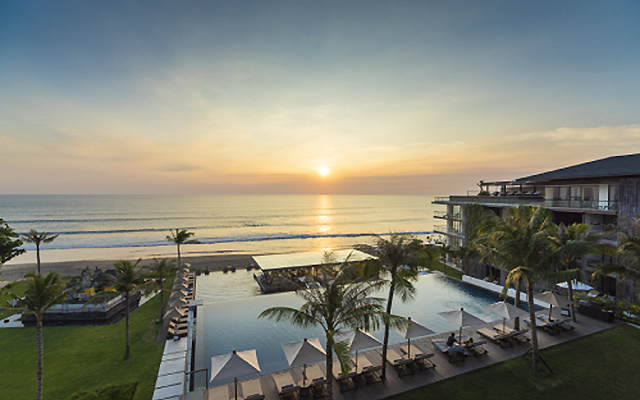
Six Senses Hotels Resorts Spas has appointed Manish Puri as the general manager for its upcoming Bali property, Six Senses Uluwatu, scheduled to open early 2018.
Puri joins Six Senses Uluwatu following a two-year stint as general manager of Six Senses Qing Cheng Mountain in China. He began his Six Senses career as general manager of Evason Ma’In Hot Springs and Six Senses Spa in Jordan, before serving five years with Six Senses Yai Noi in Thailand.
With more than 25 years in the hospitality industry, Puri started his hotel career as a management trainee in the Oberoi School of Hotel management and worked in various positions in F&B with the Oberoi Group.
He then joined the Burj Al Arab in Dubai as a private dining manager before returning to India to open The Leela Palace Kempinski, Bangalore. This was followed by a stint with the opening team at the Grand Hyatt Mumbai, followed by a F&B management role at The Imperial in New Delhi, and on to higher responsibilities at Taj Hotels, Palaces and Resorts.
Chiang Mai expected to attract more visitors from Latin America an Europe
Qatar Airways will launch flights between Doha and two key cities in Thailand, developments that are expected to drive travel, including from longer haul markets such as Latin America, to secondary Thai destinations.
Come December 13, the airline will commence four-times weekly flights between Doha and Chiang Mai. As well, from January 28, the airline will fly between Doha and U Tapao-Rayong Pattaya International Airport four times weekly, serviced by the Boeing 787 Dreamliner.
Malinee Nitikasetsunthorn, director, The Americas market division covering North America and Latin America, Tourism Authority of Thailand (TAT), believed the direct Chiang Mai flights would make it much easier to promote Northern Thailand to travellers from Sao Paulo and Buenos Aires, where Qatar has direct, daily connections.
Chiang Mai expected to attract more visitors from Qatar, Latin America and Europe
With TAT opening an office in Sao Paulo in 2018, this could be a dual boost for traffic from Brazil to Thailand, said Malinee. This will be TAT’s first dedicated office in Latin America.
As Chiang Mai is a longhaul destination, Malinee believed it would attract tourists with high spending power as well as niche segments such as luxury clients, honeymooners and couples celebrating their anniversaries.
Apart from Latin Americans, TAT governor Yuthasak Supasorn said the market of cultural, adventurous travellers from Europe could also grow.
He shared that a media fam trip to Chiang Mai from the Middle East, Europe and South America would accompany the launch, with top outbound agents from Oman invited as well.
Inbound agents interviewed believed the new flights would offer more opportunities to tap into different markets flying with Qatar Airways.
An inbound agent, Yves Van Kerrebroeck, managing director, Asian Trails based in Bangkok, said:“Traditionally quite a few European travellers start their programme in Bangkok before travelling to Chiang Mai and beyond, experiencing the cultural diversity and beautiful landscapes along the way. With this new direct flight there are increased possibilities to adapt the order of such itineraries, visiting areas such as the Golden Triangle, Sukhotai, Phitsanulok and Ayutthaya in a different sequence.”
Meanwhile, the launch of direct Doha-U Tapao-Rayong flights is expected to have an enormous impact on the region. Siam Royal View Resort, the largest mixed-use development on Koh Chang, expects the island in particular to benefit, citing the presence of a new ferry service close to the airport to Koh Chang.
As Thailand’s second largest island, Koh Chang has been already experiencing a steady increase in the number of visitors. This is likely to increase, now that the Thai government has rubber stamped its ambitious plans to spend millions on infrastructure along the Eastern Seaboard Corridor, the hotel stated.
In the 2010 -2015 period, there was an increase of over 220 per cent to over 1.1 million hotel registrations, and that’s not counting the number who stay in non-registered accommodation, it added.
Norwegian Cruise Line (NCL) Holdings says it is seeing double-digit growths from the Asian market for all its three brands and expects performance to remain buoyant despite stronger competition in the cruise sector.
The global cruise company returned to Asia nearly a year ago, after an absence of some 15 years, and now has regional offices in Hong Kong, Singapore, Tokyo and Mumbai.
Chan: not a zero sum game in Asia
Felix Chan, NCL Holdings’ vice president of sales – Asia (excluding China and Australia), said overall the three brands were doing well, although one brand might do better than others in some countries, while in other markets all three might be on equal footing in their growth.
The company operates NCL, which it pitches as “contemporary”; Oceania Cruises, “upper premium” and Regent Seven Seas Cruises, “ultra-luxury”. The nett per diem is around US$150, US$300 and US$600 respectively.
Chan, interviewed in Singapore, was not worried about intensifying competition for Asian cruise passengers, pointing out that the overall industry was growing.
“It’s not a situation where I take more share and the others get less, i.e. it’s not a zero sum game. If you look at the Asian travel industry as a whole, outbound is expanding, cruise vacation is a part of outbound travel, and its penetration is still small,” he said.
What’s more, the cruise sector has many segments it can attract, including MICE, multi-generational groups and couples, he added.
“What we have to do is to get more people to recognise the value of cruising as a vacation alternative, then the penetration will grow even more,” said Chan.
According to Chan, the value of a cruise vacation is particularly evident in places where hotel prices and transportation are expensive. Said Chan: “For example, we had received a lot of enquiries for Cuba, because it’s difficult to find very good hotels while transportation is expensive. And even when you pay high prices, you don’t get good service. But if you go on a cruise, you can go to many destinations apart from Havana, and at a lower cost. Same with places such as Hawaii and northern Europe, where land costs are expensive.
“Asians are very destination-driven, but also value-driven. If a cruise can offer better value for the budget they have, they will choose to cruise. That’s why places such as the Baltics are popular. Imagine on a land vacation, they have to book flights going to the different places.”
Travel agents are crucial in educating the value proposition to the different segments. “That’s why we have set up offices (throughout Asia); we want to reach out to agency partners,” he said.
The biggest Asian markets for NCL Holdings excluding China and Australia are Japan and India, but “Hong Kong, Taiwan and South-east Asia are growing very fast”, said Chan.
Luxury cruising is also promising. Chan said he had already seen “a number of Asian couples” booking the Regent Suite, which costs US$10,000 per day per person.