TTG Asia
Asia/Singapore Wednesday, 22nd April 2026
Page 1486

Malaysia’s charm offensive in the Middle East

0

Whether it’s the launch of a new campaign, hiring dedicated market representative or investment in better systems to attract last-minute bookings, it’s clear that Malaysia’s all out to win over Middle Eastern travellers.

The attention given to the Middle Eastern market is deemed critical, as key markets from the region to Malaysia had tumbled in 2017.
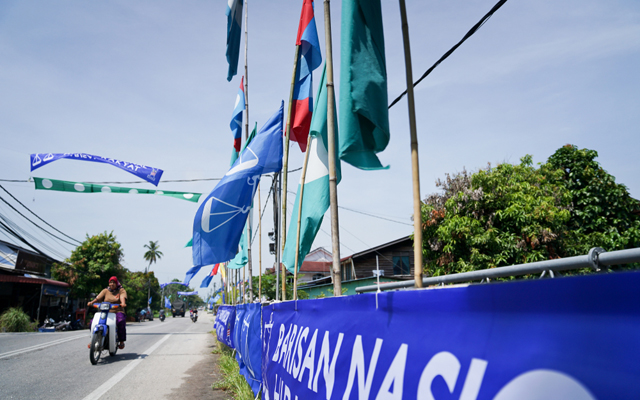
Malaysia has mounted an aggressive campaign to woo Middle Eastern travellers

Arrivals from Saudi Arabia declined 16.6 per cent to 92,789 tourists in the first 10 months of 2017, whereas arrivals from the UAE dropped 38.9 per cent to 7,255 visitors during the same period.

Malaysia’s Ministry of Tourism and Culture and its promotional arm, Tourism Malaysia, are understandably concerned as Middle Eastern travellers are top spenders in Malaysia and stay between seven to 10 nights in the country.

The average daily expenditure of visitors from the Middle East, which varies from RM1,185 (US$303) for Kuwait to RM1,046 for the UAE and RM943 for Saudi Arabia, is notably higher than RM720 for Singaporeans, who contribute close to half of total arrivals to Malaysia and stay an average of four nights.

The decline was in part due to Tourism Malaysia’s reduced promotional budgets in 2016 and 2017, which resulted in a lack of presence in the UAE, TTG Asia understands.

A source at Tourism Malaysia said: “There is also increased competition from other countries to attract the Middle Eastern traveller. Turkey, Georgia and Azerbaijan have become ‘hot’ destinations for Middle Eastern travellers due to affordable airfares from LCCs and short flight time of between three to four hours.

“Also, the decline in tourist arrivals from Saudi Arabia was partly due to the austerity measures taken by the Saudi Arabian government to save money after tumbling oil prices.”

This included cutting minister’ salaries by 20 per cent and scaling back perks for public sector employees from September 2016 until March 2017. The uncertainty in the economy led some travellers to hold back on their longhaul holiday plans,” the source noted.

From this year, Tourism Malaysia is ramping up international promotions to all major markets, including the GCC countries as a lead-up to Visit Malaysia Year 2020, where it hopes to attract some 36 million tourists and RM168 billion in tourist receipts. At the annual Arabian Travel Mart this year, Tourism Malaysia will be promoting its Visit Malaysia Year 2020 campaign.

Malaysia’s mid-year mega sales period has been specially timed to coincide with the summer holidays, which is also the peak arrival period for Middle Eastern travellers to Malaysia. Carnival Mega Sale will run from June 15 to August 31 as part of the government’s efforts to promote Malaysia as a shopping paradise to the Middle East market.

As well, the Malaysian government is working on improving the arrival experience for foreign visitors flying into the country. According to Malaysia Airports Holdings’ managing director Badlisham Ghazali, Kuala Lumpur International Airport has been working closely with the Immigration Department since early 2017 to open more counters during peak periods to reduce queueing time.

Improving the airport experience is especially timely and necessary amid fierce competition from South-east Asian destinations, remarked Ally Bhoonee, executive director, World Avenues.

He said: “The arrival experience is the first impression tourists get of Malaysia and if it is not pleasant, it could deter repeat visits to Malaysia. Tourists may opt to go elsewhere.

“Europe and Turkey are also aggressively wooing Middle Eastern visitors. Political instability in the Middle East has also resulted in more demand for short- and medium-haul holidays. Malaysia has to put in much more effort today to compete.”

According to Ally, his company had seen a decline of 30 per cent from the Middle East last year, the bulk of which is from Saudi Arabia. To arrest the decline, the company had employed a full-time Arabic-speaking marketing manager from Egypt to be based in its Kuala Lumpur office to be in regular communication with outbound agents from the Middle East and support the efforts of the company’s sales offices in Qatar, Kuwait and Egypt, which generates business leads and provides marketing support to agents on the ground.

To compete with OTAs, the company leverages its Arabic-speaking personnel to provide assistance and itineraries in Arabic.

Meanwhile, Within Earth Holidays has recently invested in a B2B system that allowed dynamic packaging with instant confirmation and the flexibility to make changes in hotel room categories and duration of stay, an initiative executive director Saini Vermeulen believes will give the inbound agency an edge to obtain last-minute bookings from the Middle East.

This year, the company also plans to work with partner hotels in Kuala Lumpur, Langkawi and Penang to invite several social media influencers from the Middle East on a fam trip to Malaysia so that they can share their experiences and attract more tourists to Malaysia.

Jai Kishan, general manager, New World Petaling Jaya Hotel, said the newly opened property will be exhibiting at the upcoming Arabian Travel Mart, and has also established connections with the Middle East market through sister properties, Rosewood Jeddah and Rosewood Abu Dhabi.

He added: “We have also identified social media channels, influencers, bloggers and socialites that resonate well with the Middle Eastern travellers and we will invite them on fam trips to stay in our property.”

Riding out the turbulence

0

Following a wave of cancellations after emergency rule was declared in the country on February 5, tourism bodies in the Maldives are intensifying efforts to restore travel confidence in the country through international trade shows, marketing campaigns and dialogues with overseas embassies and authorities.

Most resorts are located far away from the political unrest in the capital, says the Maldivian trade

The emergency status had been activated to quell opposition protests after a Supreme Court order to release several political prisoners was revoked. Emergency rule was extended for another 30 days from February 19 and was finally lifted on March 22.

Among the fallouts from the crisis was the cancellation of a new Spanish charter, which would have brought in 750 passengers per week in summer, said Yoosuf Riath, CEO of Capital Travel & Tours. The authorities, he revealed, had been working for years to convince the charter operator to come to the Maldives.

Several countries had also issued travel warnings, including China, the Maldives’ largest source market. Trade sources said that in the initial days following the crisis, airports in China including Shanghai even displayed notices saying it was not safe to travel to the Maldives.

However, China has since downgraded advisory to just an alert, following discussions between the Maldivian government, industry bodies and Chinese authorities, a senior official at the Association of Travel Agents (ATA) told TTG Asia on condition of anonymity.

“Tourists are not affected at all because they go to the resorts straight from the airport and Malé is on another island,” he stressed.

“The key is to tell the world that the Maldives is safe for travel. Everybody is working hard on this, and to restore normalcy,” the ATA official added.

A major challenge for the Maldivian trade, whenever any political crisis erupts in the atoll nation, is to convince visitors that the resorts are located far away from the political action in the capital and that travel – and tourists – would be unaffected.

In spite of the spate of travel advisories issued during the 45-day state of emergency, tourist arrivals to the Maldives in February 2018 rose 19 per cent year-on-year, with Chinese inbound numbers surging 38.1 per cent from the same period last year, in part due to the Chinese New Year, which fell in February this year.

While the arrivals for February did not register any drop, Abdulla Ghiyas, president of the Maldivian Association for Travel Agents and Tour Operators (MATATO), is more worried about cancellations and declining enquiries for subsequent months.

“We need to look at March data too. I think April to June will be difficult months,” he said, adding that refusal by resorts to refund may have also mitigated declines in February.

Sharing similar concerns, Sunny Umar, CEO of Maldives Getaways, remarked: “The impact of cancellations would be felt in May-June.”

At press time, general manager of an inbound travel company, who declined to be named, said the number of cancellations has reduced and enquiries have returned to the pre-emergency level.

MATATO – while looking to launch its own marketing initiatives – is also urging the government to spend more on destination marketing to counteract the effects of negative press.

Earlier in January, tourism minister Moosa Zameer announced that 100 million rufiya (US$6.5 million) would be spent on tourism marketing in 2018, an amount that is likely to increase after the February crisis.

Tourism deputy minister Hussain Lirar has announced that the industry is working with the government and overseas PR agencies to restore confidence for travellers.

Meanwhile, the message that the Maldives is safe to visit was disseminated at the recent ITB Berlin.

This year, the country’s tourism promotion body, Maldives Marketing and Public Relations Corporation, plans to participate in 10 international travel fairs, including in China, Russia and Germany.

In January, things were looking up for tourism in the Maldives, with 2017 arrivals growing at double the rate over the previous year.

Moreover, an ongoing airport expansion was set to increase capacity by over six times, and plans were underway to attract more airlines to the destination.

These would help to tackle an oversupply of rooms in the Maldives, which is expected to see an addition of 20 new resorts this year.

Lionel Messi joins UNWTO’s team responsible tourism

0
UNWTO's Zurab Pololikashvili welcomes Messi to the organisation's responsible tourism movement after the Barcelona-Leganés match last Saturday
UNWTO’s Zurab Pololikashvili welcomes Messi to the organisation’s responsible tourism movement after the Barcelona-Leganés match last Saturday

FC Barcelona’s star forward and worldwide football phenomenon, Lionel Messi, has been appointed UNWTO Ambassador for Responsible Tourism.

Messi joins the Spanish football player Fernando Hierro and Spanish coach Vicente del Bosque as the first personalities appointed by the UNWTO to advance the links between sports and tourism and promote the transformative power of responsible tourism.

UNWTO secretary-general, Zurab Pololikashvili, commented: “Messi is a unique sportsman and an example of how willpower and constant work yield good results. It is a great honour to have Messi joining UNWTO and other well-known personalities in promoting the positive values and benefits that tourism represents.”

Messi is the first football player in history who won five Ballon D´Or – the first four consecutively – and four European Golden Shoes. In the time he has played for Barcelona, the club has won a total of 30 titles, including eight Spanish Leagues, four Champion Leagues and five King’s Cups of Spain.


Outbound travel unaffected as Malaysia goes to the poll in May

0
For some agents, there have not been cancellations for trips coinciding with the election (photo credit: Harris Hamdan/Shutterstock)

Japan to impose ‘sayonara tax’ on departing travellers from 2019

0
Funds from levy collection will go towards building infrastructure, promoting rural destinations and more

Travellers leaving Japan by plane or ship will have to pay 1,000 yen (US$9.30) in departure tax effective January 7, 2019, the first permanent levy to be introduced since the land value tax was established in 1992, according to the Japan Times.

The new levy, coined the “sayonara tax”, will apply to all travellers, both Japanese and non-Japanese, except children under two years old and transit passengers who depart within 24 hours of arrival.

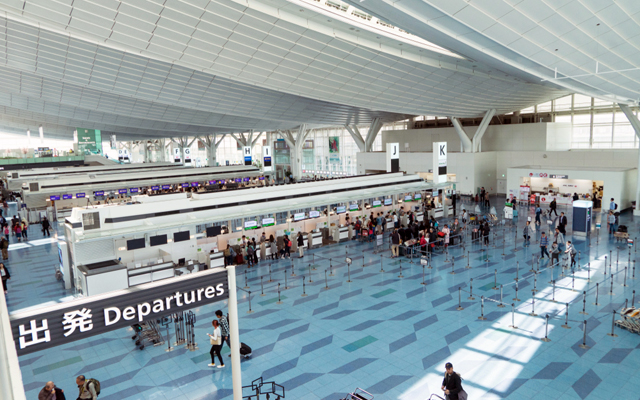
Funds from levy collection will go towards building infrastructure, promoting rural destinations and more; Tokyo Haneda airport pictured

The move comes amid a visitor boom in Japan, which saw tourist arrivals grow by 19.3 per cent to reach over 28.6 million in 2017, with the number targeted to grow to 40 million by 2020.

Among the proposed uses of the funds are the enhancement of tourism infrastructure, promotion of destinations in rural Japan and the backing of global tourism campaigns.

There are also plans to have public transportation operators expand free wireless internet services as well as electronic payment systems.

Eastern Economic Corridor, Belt and Road initiatives rev up Rayong’s tourism

0
In 2017, tourism revenue to Rayong totalled over US$1 billion

The tourism sector in Thailand’s Rayong province is set to flourish with plans to develop U-Tapao into the third Greater Bangkok gateway airport, in line with the Eastern Economic Corridor (EEC) initiative, as well as spillover effects from China’s Belt and Road Initiative.

Rayong last year hosted seven million visitors, while tourism revenue to the province in 2017 tallied in at just over US$1 billion and is expected to rise sharply on positive market sentiment, according to according to C9 Hotelworks’ newly released Rayong Hotel Market Update.

In 2017, tourism revenue to Rayong totalled over US$1 billion

While accommodation supply presently stands just under 15,000 rooms, with widespread interest spurred by the government’s EEC initiative, Thai and overseas investors are flocking east, C9 observed.

C9 Hotelworks managing director Bill Barnett added: “The domino effect from China’s Belt and Road Initiative is clearly a game changer for Rayong. Looking back over the past 12-18 months Chinese visitors saw some retraction due to Thailand’s zero-baht tourism crackdown but opening up the skies at U-Tapao is going to propel the province into an entirely new destination proposition.”

Bangkok’s rising status as a megacity is a catalyst for change, Barnett said, and a key demand generator is the redevelopment of U-Tapao into a third Greater Bangkok gateway airport.

Airlift at U-Tapao is rapidly expanding with scheduled and non-scheduled (charter) flights now serving 26 overseas cities. According to C9’s research, last year aircraft movements surged by 47 per cent year-on-year, with much of international lift now coming from mainland China.

Looking at EEC investment into large-scale projects, C9’s report notes that the expansion of the industrial zones at Map Ta Put and Laem Chabang and upcoming high-speed railway lines are key elements to a medium and long-term strategy for sustainable growth.

Despite Rayong’s legacy domestic tourism market and secondary attraction as a spillover destination from nearby Pattaya and Jomtien, the visitor source markets are changing.

Both the Japanese and South Korean segments have registered increased from activity in expansion of the industrial zones and Russians along with Western Europeans are being attracted by the coastal resort areas and offshore islands.

Wyndham Group adds ‘by Wyndham’ to its hotel brands

0
Beginning April 16, the updated brand names and logos will appear across Wyndham’s digital placements

As it transitions into a pure-play hotel franchising and management company, Wyndham Hotel Group is adding the “by Wyndham” suffix to 12 of its brands to unite diverse hoteliers under a common name as well as improve guest trial and brand awareness throughout its portfolio.

Brands that will incorporate the Wyndham hallmark include Super 8, Days Inn, Howard Johnson, Travelodge, AmericInn, Baymont, Ramada, Ramada Encore, Dolce, Dazzler, Esplendor, and Trademark – representing 7,074 properties across the globe.

Beginning April 16, the updated brand names and logos will appear across Wyndham’s digital placements

Beginning April 16, the updated brand names and logos will appear across Wyndham’s digital placements from brand websites to mobile sites and third-party listings.

As for hotel signs, Wyndham property owners in North America may immediately begin placing orders. The updates will roll out progressively around the world with an expected completion date of December 2022.

The cross-branding initiative represents a further evolution of the company and its brand portfolio leading up to its spin-off as a pure-play hotel franchising and hotel management company (Wyndham Hotels & Resorts), which is scheduled to occur later this quarter.

Wyndham said in a statement that the shift is also intended to reinforce the Wyndham Rewards by allowing guests to more easily associate each brand with the programme.

Wyndham’s Wingate, Microtel, Hawthorn Suites and TRYP brands already incorporate “by Wyndham”. All 20 of the company’s brands participate in its Wyndham Rewards loyalty programme, which has more than 55 million members.

Letter to the editor: What’s in a levy?

0
Alerting industry to the implications of changes

It is time to review the Travel Agents Ordinance (Cap 218), in place since 1993, as the Hong Kong government and the industry are split whether these levy rules should be reformed.

It is loosely known to travel agents (TAs) that a levy is charged on a “package comprising of two or three outbound services”. The Travel Industry Council (TIC) of Hong Kong provides only minimal guidance on this topic, even though the total levy received exceeds HK$25 million (US$3.2 million) in 2017.

Alerting industry to the implications of proposed changes

Under the Ordinance, licensed TAs are mandated to pay levy from outbound fare received, i.e. the actual sum paid by consumers for outbound travel service. An outbound travel service has five necessary components: it must be offered to the public; comprising two or all three qualifying services selling as a package; this package must be available only at an inclusive price; and pre-determined before being made available to public.

When all five conditions are met, a levy has to be paid, regardless of how TAs invoice them. If one or more elements are not satisfied, then nothing will render TAs liable for levy on those services sold.

Herein lies matters that TAs should be highly concerned about. Unlike brochure packages from wholesalers which in most cases have to be levied, it is questionable whether services booked (usually separately) by corporate clients also have to be levied. One should ask if all five elements are met before paying a levy.

The two usual decisive elements are “pre-determination” and “inclusive price”. For the former, the judgment of ABTA vs CAA in the UK tells us it means the package content must be fixed before being made available to consumers, e.g. an air-plus-hotel package. Any add-on services purchased after the sale is thus post-determined.

Ad-hoc packages, such as study or incentive tours, assembled according to needs and requirements raised by consumers before being made available, also satisfy this “pre-determined“ requirement.

For the latter, “inclusive price” is a line drawn between “purchasing all services as a whole” versus “purchasing separate services at the same time”. A package price is usually an inclusive price, because it is cheaper than purchasing the individual services separately, and is cheaper only as a package.

What if the package price is simply the arithmetic total of all individual prices (such as for corporate clients or individual flyers mixing-and-matching)? There is no definite answer in law, but that total price, no matter how you name it, is less likely an inclusive price.

Squarely, the government now proposes to remove these two determinants. If so, a levy may be charged on most outbound services sold by TAs, who all along have difficulties (not a legal restriction) passing the levy on to consumers. The likelihood of facing sanctions for failing to pay levy also increases.

The industry must hence be alert to these implications when lobbying with the government.

Tasman Tam
Barrister-at-law
Hong Kong

Banyan Tree readies for Malaysia debut with GM, DOSM hires

0
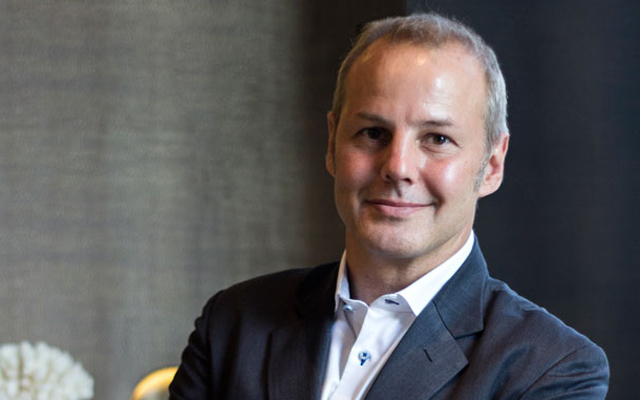
Anders Dimblad

Banyan Tree Kuala Lumpur has appointed its general manager and director of sales & marketing ahead of the brand’s debut in Malaysia in June.

The general manager post will be filled by veteran hotelier Anders Dimblad, a Swedish national with almost two decades of experience in the luxury hospitality industry.

Anders Dimblad

Prior to joining Banyan Tree Kuala Lumpur, Dimblad served as vice president of hospitality in DAMAC Hotels & Resorts, Dubai. He was also previously with Banyan Tree Hotels & Resorts from 2004 to 2014.

Shereen Chow has been named the hotel’s director of sales & marketing. With over 27 years of experience in the hospitality industry, Chow has held directorial positions in the area of sales and marketing at One World Hotel, The Saujana Kuala Lumpur and most recently, Hilton Worldwide’s sales office in Malaysia.

Banyan Tree Kuala Lumpur will mark the brand’s debut in Malaysia. The urban resort is located in Malaysia’s capital and occupies the top seven floors of the Banyan Tree Signatures Pavilion Kuala Lumpur Building.

Aviation roundup: Virgin Australia, Hainan Airlines and more

0

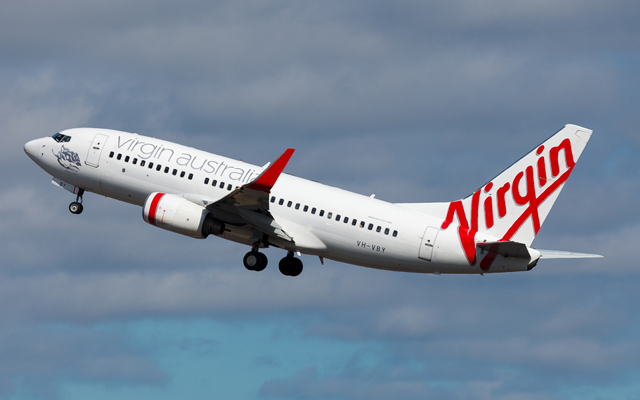
Virgin Australia to link Sydney and Hong Kong

Virgin Australia has announced plans to fly to operate daily return services between Sydney and Hong Kong.

Services between the two cities will start in mid-2018, subject to relevant approvals. The route will be serviced by its dual-aisle Airbus A330-200 aircraft.

VA89 will depart Sydney at 10.00 and arrive in Hong Kong at 17.40, while the return leg VA88 will depart Hong Kong at 19.50 and arrive in Sydney at 07.10 the following day.

Hainan Airlines launches new China-Austria route
Hainan Airlines has announced that it will be launching a non-stop service between Shenzhen and Vienna this coming October. The route will be serviced by a Boeing 787 Dreamliner twice a week.

This will be the airline’s third direct service from Shenzhen to Europe this year, after the Shenzhen-Brussels and Shenzhen-Madrid services.

Malindo Air to begin flying to Bali from Melbourne
Malindo Air will introduce a daily non-stop service between Melbourne Airport and Bali this coming June.

The flight will arrive at approximately 05.00 and depart at 07.00. This move will add 118,260 seats both ways on an annualised basis.

THAI ups flight frequency to Tokyo
Thai Airways International (THAI) has increased its flight frequencies from Bangkok to Tokyo (Narita) from 21 flights per week to 28 flights per week, equivalent to four daily flights.

The new flight out of Bangkok, TG626, departs the Thai capital at 23.35 and arrives in Tokyo at 07.45 the following day, while the returning TG627 leaves Tokyo at 09.45 and lands back in Bangkok at 14.15.