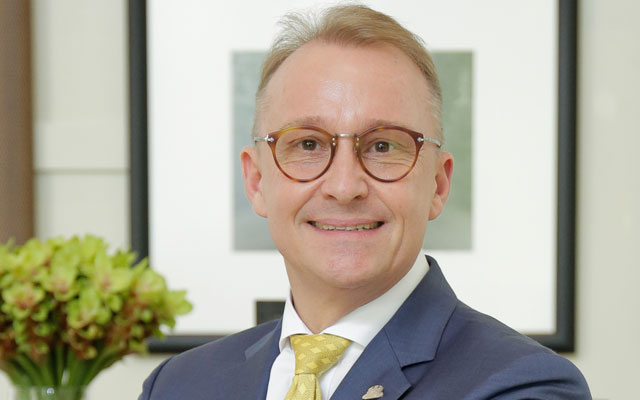
Onyx Hospitality Group has appointed Michael Gaehler as the new general manager of Oriental Residence Bangkok.
Prior to his appointment, Gaehler was group general manager at Regent Hotels and Resorts in Taipei, where he oversaw hotel projects in Vietnam, Taiwan, Indonesia and mainland China.
The Swiss hotelier began his career in his native country as commis de cuisine at Restaurant Frohsinn in Aarau. He rose through the ranks, working in a variety of positions in the hotel industry and was named general manager at Villa il Tesoro, Maremma in Tuscany in 2003.
After another general manager assignment in Switzerland, Gaehler further honed his hotelier experience with pre-opening roles and running luxury hotels of various sizes across Asia.
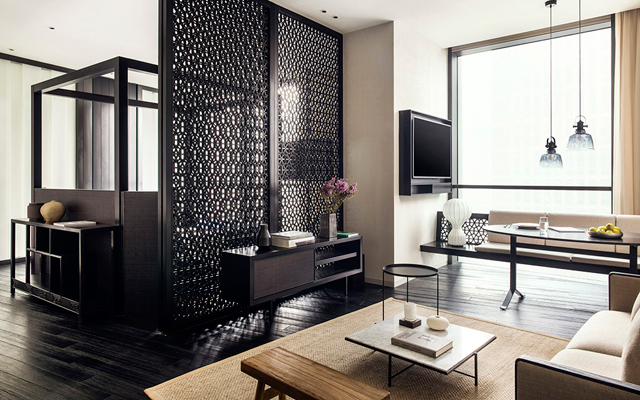
The Middle House in Shanghai recently opened featuring five serviced residence units, on top of suites
Preferred Hotels & Resorts is putting priority on growing its residences collection and sees a huge opportunity in Asia where hotels with a residential component are becoming popular with developers.
Preferred Residences is not a home-sharing business, the bandwagon that several global hotel chains have jumped on of late, although its intent is the same, i.e. to cater to new travellers’ desire of staying in a home, or a home-like environment, and living like a local. Since its launch three years ago, the portfolio has grown to over 80 members and Preferred expects to have more than 100 members by year-end.
The collection comprises largely high-end residential units in hotel or resort developments, serviced apartment units, and villas and suites in resorts, not individual homes. In Asia-Pacific, examples are the five residential units in The Middle House, a five-star boutique hotel in Shanghai which is part of Swire Hotels; 8 on Claymore Serviced Residences in Singapore which offers 85 apartment units; and Andara Resort & Villas, Phuket, which has 26 villas and 37 suites.
The Middle House in Shanghai recently opened featuring five serviced residence units in addition to suites
Preferred’s president Michelle Woodley, interviewed during the recent ILTM Asia Pacific in Singapore, said Preferred Residences differs from home-sharing in that “it is about providing a luxury residential experience with the amenities, safety and services of a hotel”. The company may extend to home-sharing in the future as “there is a certain segment that is interested in home-sharing with some branding – however, nothing eminent right now”, she said.
As it is, there is enough ground for Preferred to build up the collection as hotel developers are increasingly including residential units in their projects. Often, this supports the financials and infrastructure for the hotel development and vice versa.
In Asia, the ‘branded residence’ concept has taken off since Adrian Zecha launched the first Aman, Amanpuri in Phuket, in 1988. According to C9 Hotelworks’ research, Thailand now accounts for 41 per cent of South-east Asia’s supply, with over 21,000 hotel residence units, followed by Indonesia, while Vietnam, in particular Danang, is a rising star.
C9 Hotelworks counts at least 29 new hotel residence projects in Thailand alone as of October 2017. In addition, it expects developers to continue to seek brand affiliation for the projects as this fetches a price premium and greater buyer demand.
This augurs well for Preferred, which sees opportunity in Asia. “We see growth and opportunity for these types of developments and the support of the Preferred Residences branding provides value to the owner and choice for the consumer,” said Woodley.
Preferred’s customers expect access to a range of offerings depending on the ‘when, where and why’ of their travel, said Preferred’s CEO Lindsey Ueberroth in an earlier interview with TTG Asia. “The member who stays at a luxury hotel on one trip may stay at a moderate shared apartment on the next trip,” she said.
The rise of multi-generational stays in the Asian travel market, or of groups of friends or groups with similar interests travelling together, or of weddings and other celebrations being held overseas, also fuels demand for residences, which often have multiple rooms. To engage families, corporates and leisure travellers, Preferred is working on a dedicated section and new features for the residences collection on its website, which will be relaunched in the third quarter.
The fee for joining Preferred Residences is similar in nature to joining the other four collections of Preferred, namely Legend, LVX, Lifestyle and Connect. In fact some members that are already in one of the four collections have also joined Residences as an “add-on”. Examples include Montage Los Cabos, Mexico, which has 122 rooms and 52 residence units. It is in both Legend and Residences. Or, Primus Hotel Shanghai Hongqiao, which is in both LVS and Residences. The newly-opened hotel has 393 rooms and 158 residences.
Celebrating its 50th anniversary, Preferred has over 650 member hotels in the five collections, and the focus to grow residences is a way to expand further and create a new revenue stream. Woodley said it is eyeing a footprint of 250 to 300 members in the residences collection eventually.
Preferred appears to be the first and only one among independent hotel chains to have a strategic focus on residences. When approached by TTG Asia, WorldHotels’ CEO Geoff Andrew said the company has no plans to tap residences potential, but the main reason is priorities.
“We have just launched our new hotel collections and have a number of other major projects on our plate, including a new loyalty programme and CRM. For now, we want to focus on growing the hotel portfolio and driving additional revenue per hotel,” said Andrew.
Meanwhile, Preferred is also branching out to offer consulting solutions to hotels, including PR and representation, with Asia-Pacific as a key area of growth.
Earlier this year, it set up Preferred Hospitality Solutions to offer these services. This sits under Preferred Hospitality Group, a consulting arm which was set up in 2012 and has since represented several provinces in China including Suzhou and Nanjing in PR, social media and sales to the US market. In May, Preferred appointed Susan Devine as executive vice president to oversee Preferred Hospitality Group and its expansion in hospitality solutions. Devine has been with Preferred since 2006 and was senior vice president strategic development before the new role.
Said Woodley of the services offered: “A new hotel opening in Singapore may want to do a media event in London. For them to go find an agency who does not know them, and figure out a way to do a launch event in London, is difficult. But Caroline (Michaud, Preferred’s executive vice president corporate communications and PR) and her team can put together a programme for three to six months.
“Also branding. Often times hotels go through a renovation and they need help in positioning themselves in the marketplace because they’ve just invested all this money, and that might include more than just branding, into communications strategy, revenue management strategy – we’re able to bring the resources together and work with them on that.
“Pre-opening is another area. We’ve got owners and developers who are opening independent hotels for the first time; they need the expertise – how do I hire a GM or director of sales, what should my pre-opening plan look like? We have a lot of know-how and resources in our organisation to help them do that. That applies globally but we see a big opportunity here in Asia for that piece of business.”
Absolute Hotel Services has promoted Suchitra Sirirak to general manager of U Chiang Mai.
Suchitra first joined Absolute Hotel Services in April 2015 as a public relations manager at U Sathorn Bangkok, where she rose to the position of executive assistant manager of the property two years later in 2017.
She also possesses extensive experience working in hotel management for organisations such as Centara Hotels & Resorts, The Peninsula Bangkok, and The Siam Luxury Suites and Villas.
The much criticised Visit Malaysia Year 2020 (VMY2020) logo will soon be replaced, a decision made shortly after a new tourism minister was sworn into prime minister Mahathir Mohamad’s cabinet.
The Ministry of Tourism, Arts and Culture is planning a contest to find a replacement logo and “a discussion at the ministerial level will soon be held to decide on the details”, according to a report by The Star, quoting tourism minister Mohamaddin Ketapi.
The old logo (above) will be replaced, after much online derision
The existing logo was launched by former tourism and culture minister, Mohamed Nazri Abdul Aziz, at the ASEAN Tourism Forum in Chiang Mai in January.
Inbound operators selling Malaysia do not think a change in logo at this stage will confuse the market.
Raaj Navaratnaa, general manager, New Asia Holiday Tours & Travel, said: “We have not done (such) extensive international marketing (based on) VMY2020 that a change in logo at this stage will have an impact.”
Bobby Eng, general manager, Sunflower Holidays, is in favour of the contest format, as it will help to create buzz around VMY2020, especially if it is open to foreign participation.
Azizi Borhan, managing director, Asutra Convex, opined: “The ministry has to be fast in deciding on a new logo and relaunch it as well as the VMY2020 campaign at major travel shows that will take place from September onwards such as PATA Travel Mart, ITB Asia, IT&CM Asia and WTM.”
Asiatravel.com Holdings suspended trading on July 6
The Singapore Tourism Board (STB) has served a Notice of Intent to Suspend to Asiatravel.com and its subsidiary companies – AT Reservation Network, AT Express and SH Tours.
The Notice of Intent to Suspend is served on grounds of public interest, STB said in a statement, with an independent auditor’s disclaimer over the continuation of Asiatravel as a going concern in the audited financial statements of the group for the 2017 financial year.
Asiatravel.com Holdings’ controlling shareholder missed a critical payment leading up to the online travel company ceasing trading on the Singapore Stock Exchange July 6
STB added that it is aware that Asiatravel and its subsidiaries are unable to fulfil some of their outstanding obligations to their business partners and customers.
Asiatravel and its subsidiaries have 14 days to submit reasons to STB, to show cause against the Notice of Intent to Suspend their travel agent licences.
During this period, Asiatravel and its subsidiaries will still be required to ensure that consumer bookings are not affected, and make good all existing obligations to their consumers and industry partners.
They are also required to inform all customers of the notice of intent to suspend with immediate effect.
Speaking to TTG Asia in an exclusive interview after Asiatravel suspended trading on the Singapore Stock Exchange, executive chairman and CEO Boh Tuang Poh expressed there is opportunity for a turnaround for the group, citing new funding, transformation and restructuring exercises to bring costs down, among other reasons.
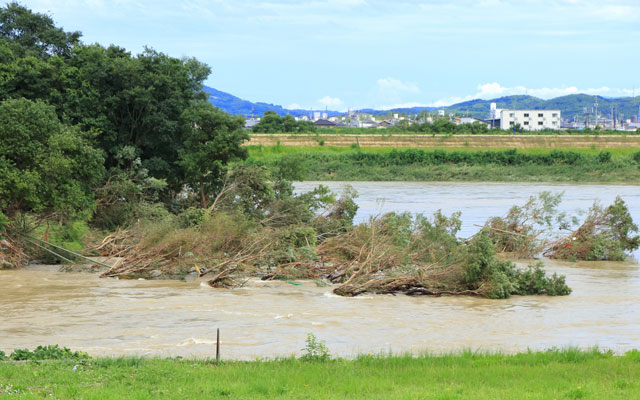
Asahi river in Okayam city,Okayama prefecture, Japan,2018,07,08: after flood
The travel industry in western Japan has been hard-hit by the floods in the region, some of the worst the country has seen in the past 30 years.
A number of foreign tourist groups were caught up in the disaster and others were cancelling plans to visit the region, TTG Asia understands.
The Asahi River in Okayama city after the flood, taken earlier this month
Travel agencies in the area insist, however, that problems are temporary and that major tourist sights are largely unaffected. Moreover, they say hotels in the main cities are operating as usual and that transport services could be back to normal in a matter of weeks.
The prefectures of Hiroshima and Okayama have been most affected by flooding and landslide, triggered by torrential rains on July 7 and 8. Several towns in the region have reported more than 58cm of rain in the space of 18 hours, causing rivers to burst their banks, inundating low-lying areas and destabilising hillsides.
“The flooding and landslides have been very bad and we have had some clients call to cancel or alter their trips after seeing the images on the news,” said Megumi Ueda, general manager of the Kyoto-based Ayabex travel agency.
“We are lucky in some ways because we are not into the peak travel season yet so we have been able to change destinations for groups that still want to come to Japan, while others have chosen to delay their trips until later in the year,” she told TTG Asia.
One group was in Okayama Prefecture during the height of the flooding, Ueda said, but decided to continue with the trip as the bad weather has passed.
Popular sights in the region – such as the Atomic Dome Park in Hiroshima and the UNESCO-listed Miyajima Island, in the Inland Sea – have largely escaped damage and are operating normally, said Eiji Tanaka, president of the Travel With agency in Hiroshima.
“The problem right now is the road and rail links into the region,” he said. “Hiroshima Airport has been affected by power outages, but we understand that it is open again now. But the highway and rail links to the city have been damaged. We have been told that the government is working hard to repair the links, but the work will not be completed for another few days at least.”
Travel firms are keen to emphasise that floodwaters have largely subsided and landslides mainly affected more remote mountain towns rather than destinations that are popular with foreign travellers.
The death toll in what is the worst flooding to affect Japan in more than 30 years has surpassed 200 and rescue teams are still searching towns and villages for survivors.
Facial recognition check-in technology pilot at two Marriott International properties in China will begin from July 20
Marriott International is teaming up with Chinese e-commerce giant Alibaba Group to test facial recognition check-ins at two of its China hotels.
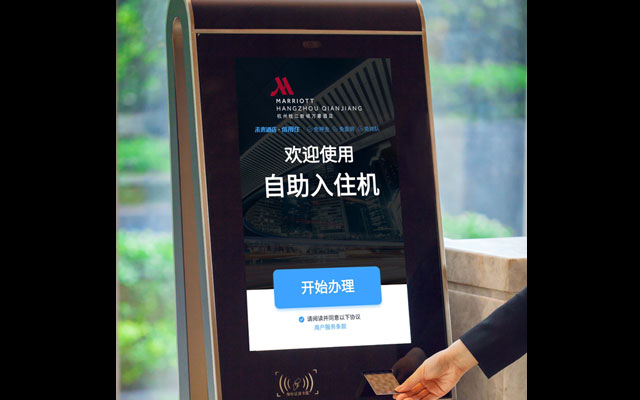
The facial recognition technology, which comes from Fliggy, Alibaba’s travel service platform, will enable the check-in process to be completed in less than a minute, compared to the current average queue time of three minutes.
The facial recognition check-in will be tested at two Marriott properties in China beginning July 20
Guests can simply scan their IDs or passports, input their contact details and take a photo. Once the software verifies the identities and booking information, room keys will then be dispensed.
The project will kick off at Hangzhou Marriott Hotel Qianjiang and Sanya Marriott Hotel Dadonghai Bay this month, with a global rollout planned in the future.
This latest announcement follows the joint venture’s recent global rollout of the Post Post Pay (PPP) functionality and redesigned storefront on Fliggy.
Moving forward, the joint venture will seek to personalise the experience for Chinese travellers by enhancing the storefront and linking the loyalty programmes of Marriott International and those of the Alibaba ecosystem.
Thai hotel operator Centara Hotels & Resorts is now accepting WeChat Pay transactions on its two websites for online room reservations.
This is in addition to 15 of Centara’s Thailand hotels that already deploy nearly 100 EDC devices for QR code scanning on WeChat Pay, where bills for accommodation, restaurants and spa treatments can be paid directly from smartphones.
Centara aims to make payment more convenient for Chinese travellers by offering WePay
By the end of 2018, the company expects to have WeChat Pay available at all Centara Hotels & Resorts globally.
Thirayuth Chirathivat, Centara’s CEO, said in a press statement: “A seamless payment experience for consumers using any channel is an element of our platform for expansion, which should see us double both revenue and the number of our properties over the next five years. As consumer behaviour evolves, Centara has adopted an omni-channel strategy to stay relevant and to provide a great customer experience.”
He added: “The number of Chinese tourists booking with Centara keeps growing. They are a significant customer base for all businesses in Thailand. Centara’s Chinese websites www.centarahotelsandresorts.cn and centarahotelsresorts.com receive hundreds of thousands of visits from Chinese users. Almost half the visits come from a mobile device.”
Earlier this year, Centara signed an agreement with TreePayCo, a payment platform facilitator to develop a system that allows Chinese customers to use their mobile phones to make e-payments outside of China for accommodation and services at Centara properties.
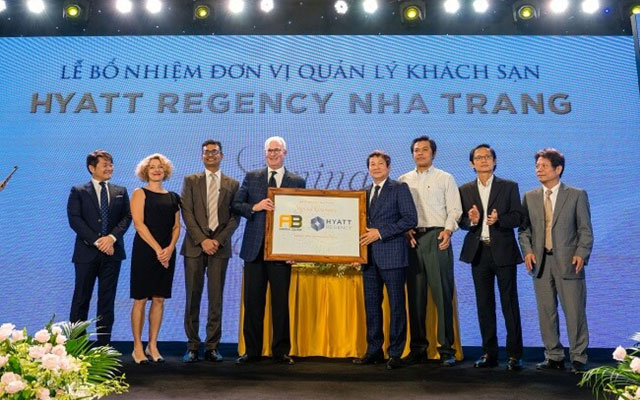
A Hyatt Regency hotel is set to open in Nha Trang in late 2019, marking the brand’s debut in the Vietnamese coastal resort city.
Part of a mixed-use development comprising retail and office space, Hyatt Regency Nha Trang will feature 434 guestrooms, a majority of which will offer sea views, more than 1,130m2 of meeting space, multiple bars and restaurants, a fitness centre, and a swimming pool.
Hyatt’s David Udell (fourth from left) and A&B Group (fourth from right) at the official announcement of the partnership
The hotel will be located along Tran Phu Street, lined with pastel-coloured houses and shops reminiscent of colonial Vietnam.
The property is the outcome of a management partnership between a Hyatt affiliate and an A&B Group affiliate.
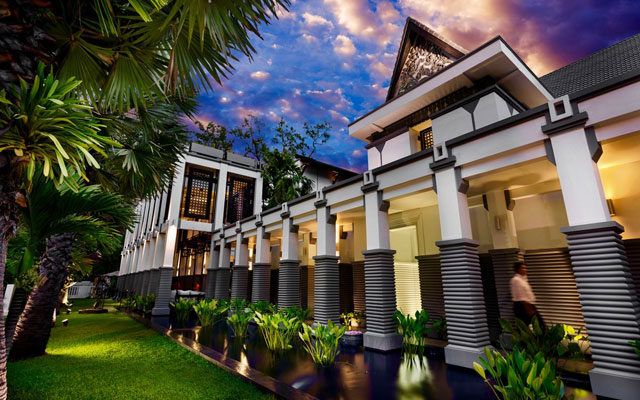
The 39-room Shinta Mani Angkor in Siem Reap has rolled out a four-night Shinta Mani Angkor Ultimate Experience Package.
The package, priced at US$1,650++ per couple, entitles guests to receive return airport transportation, fast-track immigration upon arrival, four-night accommodation in a Deluxe Room and daily breakfast.
Shinta Mani Angkor’s exterior
Outdoor activities include a full-day trip to the Angkor Complex complete with a private car, driver and English-speaking tour guide; a private visit to a local village and water well; and a visit to the landmine museum.
In addition, the package also features an authentic Khmer cuisine dinner at Kroya Restaurant, a local cooking class, a sunset boat cruise, an hour-long spiritual meditation, as well as a 90-minute spa treatment of choice at the Shinta Mani Spa.