Wharf Hotels has appointed Walter Ng as group director business development.
Reporting to the vice president, finance and business development, Ng will lead the business development team to explore new business opportunities, leasing, investments, acquisitions and hotel management agreements.
A seasoned hospitality executive, Ng has 15 years of development experience and has directed numerous international real estate and hotel-focused mixed-use opportunities. His expertise includes hotel pre-opening planning and operations; acquisition and disposition; capital improvement and renovation; and contract negotiation.
He has held various senior positions in Hong Kong, Tokyo, Singapore and New York, including roles with Marriott, The Hongkong and Shanghai Hotels, and Far East Organization.
Six Senses Uluwatu has appointed Joel Bartlett as resort manager to take charge of the property’s overall operations.
Bartlett has more than a decade of experience in Asia’s high-end hospitality sector, including an extensive career with Shangri-La Hotels and Resorts. Prior to his latest appointment, he was director of rooms at One & Only Hayman Island, Australia.
The attraction does not currently offer agent rate
The temporary suspension of Singapore Flyer’s flight operations has left local DMCs questioning the observation wheel’s attractiveness vis-à-vis other tourist landmarks in the vicinity.
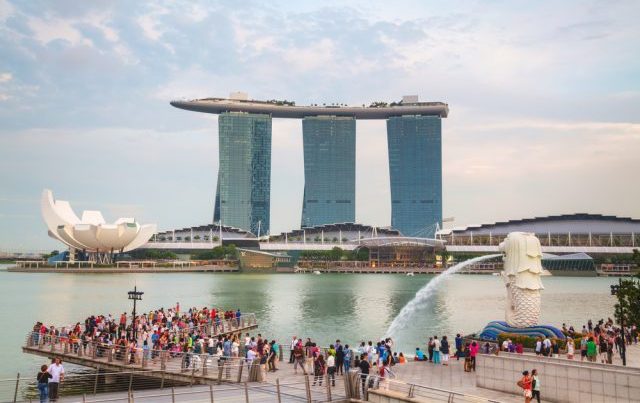
The Flyer is often prominently featured in the skyline of Singapore, standing alongside other attractions such as Marina Bay Sands and Gardens by the Bay.
The Singapore Flyer does not offer agent rates
This proximity has made the Flyer an icon of Singapore, opined Laurence Lee, director of business development, Indochina, inbound, Hong Thai Travel Services.
He expressed, however, that the aforementioned neighbouring landmarks have become “more prominent” and also more popular in comparison to the Singapore Flyer.
Kei Satoh, sales & marketing senior manager, JTB Central Sales Operations (Asia Pacific), agreed, commenting that visitors often “prefer other tour packages” to itineraries that include a visit to the Flyer.
He has not seen much demand for tickets to the Flyer, and his agency does not currently offer Flyer tickets in its menu of attraction ticket bundles.
The Flyer can stand to benefit from improvements to renew visitor interest, Satoh said. He suggested: “Right now, Singapore Flyer has no agent rate. If they introduce promotional bulk prices for agencies, we would consider selling the ride in more packages.”
Straco Leisure, the operator of the Flyer, is “not able to commit when the flight (schedule) will be resumed”, said Veronique Ye, director, marketing and sales, Singapore Flyer.
She assured: “We are working around the clock with the Building and Construction Authority and specialist professional engineers to investigate the technical issue and conduct all necessary tests before we resume flight operations.”
President Abdulla Yameen has declared a 15-day state of emergency in the Maldives, suspending parliament and sending police to the Supreme Court, reported Reuters.
Security forces have arrested former president Maumoon Abdul Gayoom, who is the estranged half-brother of Yameen, and two Supreme Court judges as a crackdown on the opposition intensifies.
Political unrest hits the shores of the Maldives
The emergency decree gives Yameen sweeping powers to make arrests, curtailed power of the country’s judiciary and removed immunity granted to Supreme Court judges.
Yameen has rejected adhering to the court, which last week ordered the release of political prisoners and the reinstatement of elected members of parliament.
Political tension has been mounting in the Indian Ocean state, as opposition supporters on Sunday took to the streets to urge the government to obey the court order.
The latest tumult comes at a time when the island nation is entering into the peak tourism season. China, the US and India have issued travel advisories for the Maldives.
Meanwhile, the Maldivian Ministry of Foreign Affairs has stated that no curfew will be imposed and that services and business “will not be affected”.
There will also be no restrictions on travelling to or from the popular holiday destination, and all transportation remains operational, according to the department.
The Winter Olympics provides just a short-lived boost to South Korea's tourism
The 2018 Winter Olympics taking place in Pyeongchang from February 9 to 25 is unlikely to fix South Korea’s tourism troubles, providing only a short-lived boost, according to ForwardKeys.
Based on its analysis of 17 million flight booking transactions, ForwardKeys found that inbound flight bookings for February are 15.4 per cent ahead of the same period last year, but bookings for March are 24.9 per cent behind.
The Winter Olympics provides just a short-lived boost to South Korea’s tourism
ForwardKeys further stated that one would expect there to be a steep year-on-year decline in Chinese travel to South Korea prior to the Games, and a strong surge during, with the 2017 Chinese New Year falling on January 28 and this year on February 16.
However, Chinese bookings for February are just 5.6 per cent ahead of where they were at this time last year, a stark contrast to the 108.6 per cent increase in overall Chinese outbound bookings.
There is also a marked shift in profile of Chinese visitors. In February 2017, 65 per cent came in organised groups, as opposed to independently. ForwardKeys said that this year, 82 per cent will be independent travellers, attributing this to a likely overhang from Beijing’s ban on group travel. On the bright side, the Winter Olympics has helped boost inbound tourism from certain longhaul markets. Excluding China, overall bookings for the Olympic period are currently 20.1 per cent ahead. Flight bookings from Hong Kong are up 24.8 per cent, from the US 23.8 per cent, from Germany 30.7 per cent, from Canada 41.6 per cent and from Malaysia 19.1 per cent.
The most spectacular growth came from Vietnam, 555 per cent ahead, the result of the combination of improved air connectivity, a visa waiver for the Olympic period and Tet holidays (Vietnamese New Year).
Olivier Jager, CEO, ForwardKeys, commented: “The reality is that South Korea is very heavily dependent on China for its tourism exports and, right now, the strongly growing outbound Chinese market is headed elsewhere in Asia. The rebuilding of diplomatic relationships between Seoul and Beijing is the key to its recovery.”
Inbound tourism to South Korea was hit after the Chinese government introduced measures to discourage its citizens from visiting, with political tensions heightened when South Korea deployed US-made THAAD missiles in response to sabre rattling from North Korea. In the year to April 1, 2017, visitor arrivals fell by 67 per cent, according to ForwardKeys.
In late November 2017, China relaxed its ban on group tours to South Korea and, in early January North and South Korea held talks which resulted in the North Koreans planning to attend the Winter Olympics in Pyeongchang.
China is reportedly drafting a proposal to allow gambling on Hainan, a move that would allow betting on the mainland for the first time, Bloomberg reported on Friday.
Casinos may soon rise on Hainan island
Macau is the only Chinese territory where gambling is allowed, as China currently bans gambling and casinos on the mainland.
Macau has been seeking to diversify its offerings in recent years to attract Chinese families and tourists, the same market that the southern island of Hainan – dubbed China’s Hawaii – currently attracts.
The Hainan plan, which includes relaxing visa rules and building a new airport, could directly threaten the casino industry in Macau if it goes through.
New app will allow KrisFlyer members to use digital KrisFlyer miles for point-of-sale transactions
The Singapore Airlines (SIA) Group says its KrisFlyer programme will launch the world’s first blockchain-based digital wallet for frequent flyers.
Scheduled for rollout in about six months, the app will allow KrisFlyer members to use digital KrisFlyer miles for point-of-sale transactions at participating retail merchants.
New app will allow KrisFlyer members to use digital KrisFlyer miles for point-of-sale transactions
The digital wallet app will be enabled through blockchain technology, using an SIA-owned private blockchain involving only merchants and partners.
The group says it has seen success in its proof-of-concept exercise carried out in collaboration with KPMG Digital Village and Microsoft. It will go on to sign new retail merchant partners for KrisFlyer, initially in the Singapore market.
Melbourne’s Avalon Airport is set to become international when AirAsia moves its operations from Tullamarine Airport later this year.
AirAsia X Malaysia will operate twice-daily flights between Melbourne and Kuala Lumpur as the first international carrier at the airport. Half a million international passengers are projected to move through Avalon Airport in the first year of operations.
Avalon will soon become an international airport
AirAsia X Malaysia’s CEO Benyamin Ismail said in a statement: “Melbourne and Victoria are important markets to us and this new service with 560,000 seats annually will provide a significant boost to business and tourism, including to attractions such as the Great Ocean Road.”
Justin Giddings, CEO of Avalon Airport, commented:.“This is a 10-year agreement structured to accommodate AirAsia X’s significant growth. It is the first such deal in Australia, and provides a unique low-cost opportunity for people and businesses to access over 130 destinations throughout Asia.”
In operation as a commercial airport since 2004, Avalon is currently only serviced by Qantas’ low-cost arm Jetstar flying to Sydney, Adelaide, Hobart and the Gold Coast, according to a report by The Sydney Morning Herald.
The Victorian and federal governments are expected to help fund the necessary infrastructure and services at Avalon Airport, which is owned by the logistics giant Linfox, the same report added.
Alexander Pichel has been appointed general manager of Siam Kempinski Hotel Bangkok, transferring from Hotel Indonesia Kempinski Jakarta, where he had been general manager since 2015.
The German native brings 30 years of experience in the hospitality sector, including as resident manager at the Grand Hyatt Hotel in Dubai, managing director for a number of Rosewood hotels in the Middle East and general manager at the Hyatt Regency Bishkek in Kyrgyzstan.
Village in a valley at UNESCO-listed Batad rice terraces in the Cordillera Administrative Region
The Philippine government is placing a greater emphasis on countryside tourism and aims to increase tourists’ average length of stay beyond 10.5 days and raise per capita expenditure.
Currently, the Philippine Department of Tourism (DoT) is working closely with the Department of Environment and Natural Resources, the Department of Interior and the local government to develop programmes, and with the travel trade on promotions.
Rural tourism to benefit industry and communities; pictured, village in the UNESCO-listed Batad Rice Terraces, Cordillera Administrative Region
Benito Bengzon Jr, undersecretary tourism development at the DoT, told TTG Asia on the sidelines of the ASEAN NTO meetings during ATF 2018: “Emerging destinations for countryside tourism include Siargao, the northern part of Palawan and the Cordillera Administrative Region, besides known destinations such as Bohol and Boracay.”
He added that countryside tourism has been well received by FITs aged between 20 and 30 from South-east Asia due to the strong presence of low-cost carriers which make travel more affordable.
It has also gained popularity with European tourists who visit the country in search of unique, authentic experiences such as replanting mangroves, creating artificial reefs and weaving lessons.
This promotion is part of the government’s 10-point socioeconomic agenda introduced in 2016, where rural tourism will help benefit the local communities.
The 2018 Winter Olympics taking place in Pyeongchang from February 9 to 25 is unlikely to fix South Korea’s tourism troubles, providing only a short-lived boost, according to ForwardKeys.
Based on its analysis of 17 million flight booking transactions, ForwardKeys found that inbound flight bookings for February are 15.4 per cent ahead of the same period last year, but bookings for March are 24.9 per cent behind.
ForwardKeys further stated that one would expect there to be a steep year-on-year decline in Chinese travel to South Korea prior to the Games, and a strong surge during, with the 2017 Chinese New Year falling on January 28 and this year on February 16.
However, Chinese bookings for February are just 5.6 per cent ahead of where they were at this time last year, a stark contrast to the 108.6 per cent increase in overall Chinese outbound bookings.
There is also a marked shift in profile of Chinese visitors. In February 2017, 65 per cent came in organised groups, as opposed to independently. ForwardKeys said that this year, 82 per cent will be independent travellers, attributing this to a likely overhang from Beijing’s ban on group travel.
On the bright side, the Winter Olympics has helped boost inbound tourism from certain longhaul markets. Excluding China, overall bookings for the Olympic period are currently 20.1 per cent ahead. Flight bookings from Hong Kong are up 24.8 per cent, from the US 23.8 per cent, from Germany 30.7 per cent, from Canada 41.6 per cent and from Malaysia 19.1 per cent.
The most spectacular growth came from Vietnam, 555 per cent ahead, the result of the combination of improved air connectivity, a visa waiver for the Olympic period and Tet holidays (Vietnamese New Year).
Olivier Jager, CEO, ForwardKeys, commented: “The reality is that South Korea is very heavily dependent on China for its tourism exports and, right now, the strongly growing outbound Chinese market is headed elsewhere in Asia. The rebuilding of diplomatic relationships between Seoul and Beijing is the key to its recovery.”
Inbound tourism to South Korea was hit after the Chinese government introduced measures to discourage its citizens from visiting, with political tensions heightened when South Korea deployed US-made THAAD missiles in response to sabre rattling from North Korea. In the year to April 1, 2017, visitor arrivals fell by 67 per cent, according to ForwardKeys.
In late November 2017, China relaxed its ban on group tours to South Korea and, in early January North and South Korea held talks which resulted in the North Koreans planning to attend the Winter Olympics in Pyeongchang.