Stuart Gemmell has been appointed general manager for a trio of Siem Reap properties under Shinta Mani Hotels.
In his new role, Stuart will oversee the day-to-day operations of the three Siem Reap boutique hotels – Shinta Mani Angkor, Shinta Mai Shack and Bensley Collection – Shinta Mani Siem Reap. He will also work closely with the director of the non-profit Shinta Mani Foundation, a key part of the Shinta Mani Hotel Group.
Hailing from Melbourne, Stuart’s career spans 25 years in hospitality, with the past 18 in South-east Asia. Until recently, Stuart held the position of general manager at The Purist Villas in Bali, and for five years, general manager at IBAH resort in Bali for Warwick Hotels. He spent a decade with Orient Express Belmond as hotel manager on Road to Mandalay in Myanmar and in corporate sales roles.
Stuart spent the first half of his career handling operations management at Starwood luxury collection in Port Douglas Australia, and Hilton on the Park in Melbourne. Stuart has also headed up a hospitality training centre in Lombok and delivered digital marketing units at colleges in Australia.
An earlier version of this story wrote that WTS Travel and Tours was the official tour partner of the LaLiga-GCOX partnership. That was incorrect, as GCOX has inked two separate partnerships with LaLiga and WTS Travel respectively. The article has since been updated.
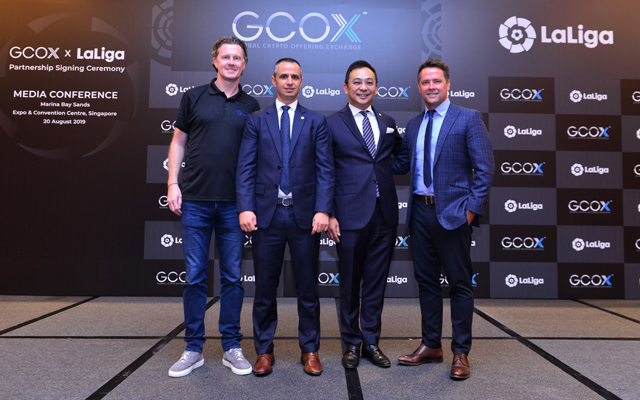
Spanish football league LaLiga announced a partnership with licensed crypto Exchange GCOX yesterday to develop a range of exclusive LaLiga-themed products and experiences – including tours – purchasable through a crypto token.
The LaLiga Football Experience Token, which does not yet have a launch date, will be developed by GCOX. Among its potential product list will be football-related tours organised by WTS Travel and Tours.
WTS Travel and Tour’s Voo Wei Keong (left) inks a pact with GCOX’s Jeffrey Lin which will see WTS organising football-related tours via a crypto token developed by GCOX
These tours, which will be developed through a separate partnership between GCOX and WTS, may feature perks from visits to LaLiga stadiums, ambassador meet-and-greets, as well as match tickets, said Voo Wei Keong, director of WTS Travel and Tours. He added that these football-themed tours will also be combined with visits to popular holiday hotspots and gastronomical adventures.
“We’ve been in talks with GCOX since May, and we’ve been exploring how we can be a partner who organises tours (for the cryptocurrency community),” disclosed Voo.
Jeffrey Lin, CEO of GCOX, agreed that these “bespoke tour packages” will explore both LaLiga-related attractions, as well as destinations in Spain.
He expressed: “Travel and football are two very big industries, with fans around the world. But when we look within the Singapore context, no tour operators specialise in that because it’s so difficult (to arrange). Fans who want to attend matches in Spain have to make their own arrangements there. This is a new business segment that operators can penetrate with the help of blockchain.”
Lin observed: “Looking at how industries are moving, it seems likely that more companies will go into blockchain technology. It may not necessarily be crypto tokens, but how they store and protect data.
“For the travel industry, more and more vendors are accepting cryptocurrency because it is a straightforward, fast and safe transaction, especially for countries that they have never thought of reaching before, such as Africa and Latin America. All of these ‘unbankable’ countries now have a medium of transaction.”
On working with blockchain technology, WTS’ Voo told TTG Asia: “Blockchain is still a new technology to us, and we’re still learning how we can incorporate it into our business.”
The deal between (from left) LaLiga’s Steve McManaman and Ivan Codina, GCOX’s Jeffrey Lin and international football star Michael Owen will boost football tourism
The GCOX-WTS partnership complements the growing popularity of sports tourism in Asia, where the demand is rising for fan merchandise and experiences beyond game tickets and official apparel. Lin observed that football tourism is especially strong in Thailand and Japan.
Meanwhile, the LaLiga-GCOX partnership, which covers Asia and the Middle East, will also offer other “Money Can’t Buy Experiences” such as football clinics, pre-season fixtures against local clubs, events with LaLiga ambassadors and exclusive access to games.
In addition, the LaLiga Football Experience Token will enable token holders to auction and bid for league tours; hospitality and retail services; as well as engagements with football players and clubs.
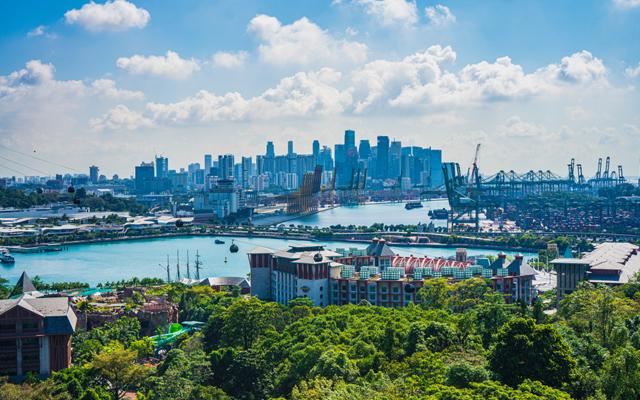
Pulau Brani, a port terminal island just south of Singapore’s southern coast, is set to become a resort island dubbed “Downtown South”, with a new attraction similar to Universal Studios and Downtown East, a lifestyle and entertainment destination in Pasir Ris in the eastern part of Singapore, reported Singapore’s Today Online.
These plans form part of the future Greater Southern Waterfront, a mega waterfront development in the southern part of Singapore, announced Singapore prime minister Lee Hsien Loong at the recent National Day Rally.
Pulau Brani will be developed into a resort island dubbed “Downtown South”
The Greater Southern Waterfront will occupy 2,000ha of land and cover 30km of coastline from the Gardens by the Bay East area to Pasir Panjang, the report added. Development of the area is slated to start in five to 10 years.
Pulau Brani, located near Keppel Harbour, is now home to the Brani Terminal, which is among the PSA International city terminals that will move to the Tuas mega port by 2027, said the report.
“This will free up prime land for re-development. It will be an opportunity to reshape the Greater Southern Waterfront into a new place to live, work and play,” the prime minister was quoted as saying.
After Brani Terminal moves out, Lee revealed that Pulau Brani will be developed alongside Sentosa.
Furthermore, Sentosa and the Rail Corridor – which runs from Tanjong Pagar in the south to Woodlands in the north – will also be connected, according to the report.
Meanwhile, Sentosa’s beach areas will be revitalised and its nature and heritage trails expanded, added the report.
Airline veteran Mandy Ng has been appointed CEO of HK Express, taking over from Ronald Lam who has returned to the parent Cathay Pacific Airways amid a major management shuffle at Hong Kong’s flagship carrier.
Lam is now Cathay Pacific’s chief customer and commercial officer, the airline’s joint second-in-command. He was HK Express CEO for about a month, but will now take on the chairman’s role at the budget carrier.
Mandy Ng will take over Ronald Lam to become CEO of HK Express
Ng will become the first woman to lead a local airline, according to a South China Morning Post report, which added that all three Cathay Pacific-run airlines are currently headed by Chinese nationals: Cathay Pacific is helmed by Augustus Tang, while Algernon Yau leads sister carrier Cathay Dragon.
According to a statement, Ng has been with Cathay Pacific for 17 years and has since held a variety of positions involving planning, revenue and sales in Hong Kong, Thailand and Malaysia. She was previously part of a team overseeing the integration of HK Express after its acquisition by Cathay Pacific.
Prior to joining HK Express, Ng was general manager business development at Swire Pacific, a position she held since July 2018. Prior to that, she was the director and general manager of Akzonobel Swire Paints Hong Kong, in charge of the joint venture between Swire and Akzonobel that manufactures and distributes decorative paints in mainland China and Hong Kong, primarily under the Dulux brand.
Koh Chang, one of the largest Thai islands in the Gulf of Thailand, still remains largely under tourists' radar
Despite being one of the country’s biggest islands in the Gulf of Thailand, Koh Chang has remained somewhat off the mass tourism development footprint due to limited accessibility, finds a recent C9 Hotelworks’ report.
The Koh Chang Tourism Market Review stated that in 2018, the island’s hotel market hosted 1.2 million guest arrivals at 272 tourism establishments with a combined total of 7,617 rooms. Over the past decade, domestic travellers accounted for between 59 per cent to 71 per cent of total room night demand.
Koh Chang (pictured), one of the largest Thai islands in the Gulf of Thailand, still remains largely under tourists’ radar
Market-wide hotel occupancy teeters between the mid to high 60’s, though the off-season often sees numbers drop by half. In a nutshell, it’s a very wide swing between high and low seasons, said the report.
C9 Hotelworks’ managing director Bill Barnett said: “The island is heavily reliant on domestic tourism due to limited international accessibility when compared to other popular Thai beach destinations such as Phuket and Samui.”
Among overseas source markets, mainland China has been the fastest-growing over the past few years, with year-on-year growth totalling 54 per cent in 2017. The other top five international markets are Germany, Russia, Sweden and the UK.
The average length of stay for tourists is 2.9 nights, with foreign and domestic demand averaging 4.6 and 2.6 nights respectively. Long-stay overseas travellers often reside up to two months.
However, the C9 report highlights that the biggest barrier to entry for new, larger hotels remains the lack of direct airlift and dependence on the privately operated Trat airport. Owned by Bangkok Airways, the region’s booming LCCs do not fly to the destination and most visitors come overland from Bangkok and then by ferry.
Based on C9’s recent visits to the island, Barnett expects that a clear uptick in new development for larger hotels and brands will start to appear in the pipeline in the near future.
With The Emerald Cove Koh Chang expected to rebrand to an international group by 2020, recognisable hotel brands are expected to drive occupancy during low season periods.
“Koh Chang is not unlike Koh Tao and Koh Pha-ngan in that they are largely tropical outposts that are likely to be caught up in a broader wave of development for the simple fact they offer sun, sand, sea and sunshine,” Barnett added.
Construction of a new road at the southern tip of the island is currently under the government’s development plan, which will make the east coast more accessible, said the report.
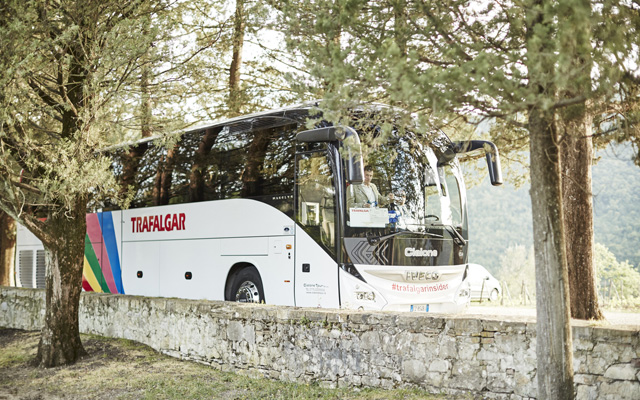
Travellers can now earn loyalty points across TTC's various brands such as Trafalgar
The Travel Corporation (TTC) has rolled out an evolved customer loyalty programme across its portfolio, said to better enable advisor partners to reward repeat TTC travellers.
Building on the group’s existing loyalty offering, the multi-brand programme introduces a simple two-tiered reward system that will provide TTC’s guests with enhanced loyalty options, rewards and flexibility, while creating opportunities for advisors to encourage incremental bookings across the portfolio.
Travellers can now earn loyalty points across TTC’s stable of brands which includes Trafalgar
Tier 1 recognises all past guests who have travelled one to four times with any applicable TTC brand, offering benefits such as priority access, up to five per cent discount on some dates and on some trips, and an exclusive five per cent off on new release trips for a limited time, plus private secret sales and special recognition whilst on trip.
Tier 2 recognises all past guests who have travelled five times or more with any applicable TTC brand, and will enjoy all the benefits of Tier 1 on any trip, any country, any time.
This loyalty programme is applicable to participating guided and cruise brands such as Trafalgar, Costsaver, Contiki, Insight Vacations, Luxury Gold, Uniworld, U River Cruises and AAT Kings, meaning that travellers are rewarded regardless of the brands they choose throughout their travel lifetime.
As part of the programme, travel advisors will benefit from exclusive offers that will drive subsequent bookings back to them, according to TCC’s CEO Brett Tollman. “Sales managers will also have access to past guest lists and will have offers or promotions available to them, so advisors are able to actively target these leads themselves, meaning even better advisor business support,” he said.
Travel advisors are encouraged by TTC to reach out to their dedicated sales manager, and review more details at https://ttc.com/loyalty/.
Gupta: travel marketers are able to win new business and loyalty from travellers with the clever use of location data and intelligence
Today’s travellers are increasingly looking for personalised and meaningful experiences when travelling. To them, the use of personal data by hotels and service providers to deliver an experience that’s specifically tailored to them can either make or break the trip.
Blis’ recent #RealRetail series revealed that the majority of travellers worldwide prefer to book their travel online. 89 per cent of Australians and 92 per cent of Singaporeans would rather browse a website – on any screen – than go to a travel agency to plan their next vacation.
Therefore, to fully capture the travellers’ market, especially with the upcoming seasonal holidays, businesses should use a combination of first-party data and real-world intelligence, to provide targeted services and offerings to suit the travel patterns and needs of the travellers, improving their brand recall when travellers are deciding where to go in future.
The latest research from Blis in partnership with WBR, Real-World Intelligence: Mapping human behaviour to effective mobile marketing, highlights additional trends in travellers’ behaviour that marketers can learn from. According to our survey of 150 senior marketers in Asia-Pacific, the purchase journey for travellers can be broken down into five phases, each of which is an opportunity for marketers:
1) Being inspired to go and travel
2) Searching for providers (airlines, hotels, tour companies, etc.)
3) Booking the trip
4) The actual travelling phase
5) Reviewing and sharing the trip upon return
According to our research, travel marketers believe that the inspiration and booking phases are the two most important opportunities for location-based marketing to deliver personalised adverts and messaging to travellers. The numbers break down like this:
While it’s logical to invest the most in marketing while prospective travellers are online ideating, researching and booking, there are opportunities at the later stages of the journey.
Travel time marketing Marketers can leverage real-world intelligence to discover what kind of experiences vacationers will enjoy, what they’re willing to pay for their travel, and where they want to go for their next excursion.
Many travel companies in the region have access to troves of first-party customer data via reservations, loyalty clubs and other sources. All of this can be combined with real-time and historic customer data to make appealing offers, both while the traveller is onsite and after their trip.
For example, if a hotel club member is staying at your facility, and you know from their files that they travel frequently for business, an offer for a discounted massage or high-end car service might be appreciated. A family that frequently stays with your franchise might respond well to offers for packages to kid-friendly attractions in the area.
When asked if they have delivered location data-enhanced dynamic digital creative to target travellers, one marketer responded: “We have digitally mapped geo-locations and activity hotspots across the country and use these locations to run our campaigns and send promotions on a frequent basis.”
Since many airports now offer free Wi-Fi, there are also opportunities to reach weary travellers as they land. Letting them know there are nearby coffee joints, car services or rentals, and other amenities will simultaneously make their lives easier and boost your business results.
Post-travel opportunities Even when the trip is over, there are additional opportunities to attract new prospects and to win the loyalty of just-landed travellers. Using a combination of first-party data and real-world intelligence, marketers can gain a lot of insight into what people did on their trip, and what their past travel habits have been. Using this information, personalised messages and offers can be sent to recent visitors that make them feel valued – and inspire them to travel again.
A hotel could thank a traveller by very simply offering a complimentary night or meal on their next stay. Restaurant chains in the region might consider the same tactic. But consider how these offers could be personalised further: If the traveller enjoyed a favourite drink or activity, like beach yoga, while staying at your property, why not make a personalised offer or thank you note based on that activity? If their travel history shows that they’re more adventurous, invite them to properties that feature kayaking, rock climbing or another activity they might enjoy. If they enjoy shopping, show them photos and information about sale seasons in destinations known for great shopping. These personalised touches are sure to win their loyalty and repeat business.
For brick-and-mortar travel services Travel agencies are struggling these days, but there’s still a market for in-person bookings, particularly for tours and more elaborate family vacations. The small percentage of travellers in Asia-Pacific who prefer to meet with a human to book their trip still constitutes a market worth fighting for.
Our recommendation is to use location data to send targeted ads to prospects as they are approaching a nearby competitor. This is a classic retail strategy, and it is successful at increasing footfall. As a potential traveller walks in the direction of the nearest Thomas Cook, make sure they see an offer for your agency first – and make sure it’s one that will get them in your door instead of theirs.
The travellers’ purchase journey offers many opportunities for marketers to reach and engage these desirable consumers. Using a powerful combination of real-time location data and real-world intelligence – along with their own first-party data – travel marketers can win new business and loyalty from travellers at any stage.
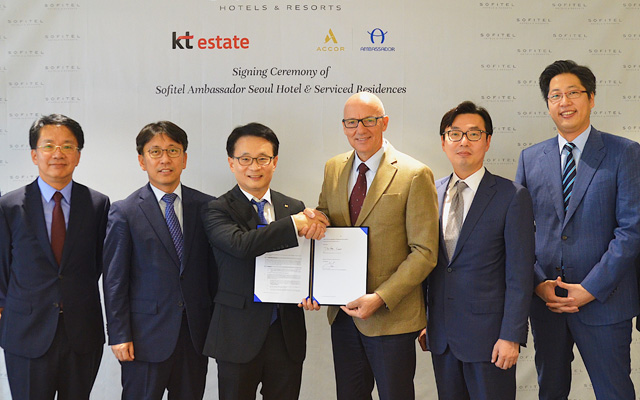
Accor Ambassador Korea will be launching the first Sofitel in South Korea in partnership with kt estate. In attendance at the signing ceremony of Sofitel Ambassador Seoul Hotel & Serviced Residences were (from left) kt estate's Min-Soo Sohn, Kong-Hwan Lee and Dae-San Lee, and Accor's Patrick Basset, Hyun-Jun Cho and Chris Cho
Accor Ambassador Korea, a joint venture between Accor and Ambassador Hotel Group, will launch its first Sofitel Hotel & Serviced Residences in Songpa, Seoul.
Slated to open in 2021, Sofitel Ambassador Seoul Hotel & Serviced Residences will feature 563 rooms and suites, an all-day dining restaurant and bar as well as meetings and events space. Leisure facilities include an indoor swimming pool, outdoor Jacuzzi, fitness, spa and kids’ room.
Accor Ambassador Korea will be launching the first Sofitel in South Korea in partnership with kt estate. In attendance at the signing ceremony of Sofitel Ambassador Seoul Hotel & Serviced Residences were (from left) kt estate’s Min-Soo Sohn, Kong-Hwan Lee and Dae-San Lee, and Accor’s Patrick Basset, Hyun-Jun Cho and Chris Cho
Set in a commercial tower adjacent to Jamsil Subway Station, the hotel and serviced residences will be interconnected to an office building and overlook Seokchon Lake Park. Besides its proximity to Lotte World, the property will also allow easy access to Gangnam Business District and Coex Convention and Exhibition Center.
Patrick Basset, COO, Accor, Upper South-east & North-east Asia and the Maldives, said: “The development of Sofitel Ambassador Seoul Hotel & Serviced Residences represents our commitment to growing Accor’s collection of luxury and premium brands in South Korea.”
Currently operating 24 hotels in seven cities across South Korea, Accor Ambassador Korea will enhance its presence in the luxury and premium segments with a pipeline of hotels, including Fairmont Seoul in 2020 and MGallery Seoul Mapo in 2022.
Why
Wellington, which claims to have more cafes, bars and restaurants per capita than New York City, is packed with places to eat and drink. Most of these establishments serve both local and international cuisines, but they mostly make use of local produce and products.
Cheese platter tasting at Moore Wilson’s grocery store
What
New Zealand’s Zest Food Tours offers the Capital Tastes walking tour, which takes guests on an exploratory journey of the tastes and flavours that Wellington serves up. The 3.5-hour tour comes with a personal guide to relay local stories, sprinkled with morsels of history and architecture along the way.
The tour also takes travellers behind the scenes of the various dining establishments, allowing them to learn the process of food production and offering opportunities to sample the high-quality products of Wellington’s artisan businesses.
Other food tours that Zest Food Tours operates include the Private Taste Wellington, which visits to a local foodie’s home, and the Wellington Walking Gourmet tour, which features a two-course tasting lunch matched with New Zealand wines.
How
The tour started from Wellington i-SITE Visitor Information Centre, where our guide, Fab, was waiting for us. After a short introduction and safety briefing, we walked down the road to Mojo Coffee at One Market Lane and had the choice of starting our morning with a cup of coffee, tea or hot chocolate. There was also a platter of petite fours – cheese scones, ginger crunches and caramel slices – laid out. While we munched on the delights, Fab shared with us a brief history of the café, as well as its organic tea and coffee products.
We then walked to the Gelissimo Gelato by the waterfront and tasted the variety of home-made gelato and sorbets, with flavours ranging from chocolate and salted caramel to passionfruit and lemon.
Owner Graham Joe also invited us to peek into his production kitchen just behind the counter, where he produces 300 litres of gelato and 400 litres of sorbet every day.
He explained that he has developed around 300 flavours since the cafe’s launch in 2010. Ingredients from local suppliers feature heavily, such as ginger beer from HardieBoys, peanut butter from Fix & Fogg, heritage plums from Hawks Bay, and mandarins from the orchards of Gisborne. These flavours are then mixed with 80 per cent plus organic fresh milk. Joe also tries to use seasonal fruits, and we were lucky to taste the feijoa flavour when we visited in mid-May.
Feeling energised and with a cup of gelato in hand, we continued the tour to Kura Gallery. Along the way, Fab pointed out to the street art adorning the walls and buildings, and relayed the story behind each of them. At Kura Gallery – which showcases Maori and New Zealand art and design – we tasted three New Zealand honeys of Manuka, Rewarewa and Tawari, each possessing its own unique flavour.
After a little souvenir shopping, we continued our walk to Wellington’s famous Moore Wilson’s grocery store. This 1918 establishment is said to be the best place to find local New Zealand produce and products. I then realised we were not here to grocery shop, but to have a cheese tasting.
Fab had set up a table in one corner of the bustling store, with a cheese platter awaiting our tastebuds. We gathered around it, and had a delightful time combining the different cheeses with an assortment of bread, crackers, seasonal fruits, chutney and preserves available.
Chocolate tasting at the Wellington Chocolate Factory
Our last stop was the Wellington Chocolate Factory, located in a building that originally housed a shoe factory in 1923, before it was turned into a New York-style apartment in 1996. The building now houses a craft brewery, bakery, café, cocktail bar and restaurant. Wellington Chocolate Factory was the first craft bean-to-bar factory to open in the country and it produces only certified organic chocolate made in New Zealand.
Here we learnt and tasted different chocolate beans and various chocolate bars. There were single origin bars like Solomon Island and Peru Chocolate Bars; inclusion bars like Chilli Lime Peanuts and Craft Beer Chocolate Bars; and speciality vegan bars like Coconut Milk Chocolate Bars.
Verdict
The tour requires a minimum of two, with a maximum group size of eight people. The small group made it easy to follow Fab’s storytelling, as well as obtain answers to our burning questions. Out of the 3.5 hours, actual walking was around 90 minutes on flat surfaces, so this tour is definitely suitable for most travellers.
Also, at the end of the tour, I was delighted that I had a couple of jars of honey and a few bars of chocolate to take home.
Duration Half-day tour from 09.15 to 13.00 Rates NZ$205 (US$131) per person Contact details Website: www.zestfoodtours.co.nz
Barely weeks after closing its US$45 million Series B round, Singapore-based hospitality start-up RedDoorz has raised a fresh US$70 million investment as first close of a larger Series C round driven by high investor demand.
The latest funding round, which is ongoing, was led by Singapore-based growth equity firm Asia Partners. Other co-investors include Rakuten Capital and Mirae Asset-Naver Asia Growth Fund, as well as existing investors Qiming Venture Partners and International Finance Corporation.
The new funding brings the total amount of funds raised by the company to approximately US$140 million since its launch in 2015, putting it on head-to-head competition with rival Oyo in the South-east Asian market while Accor recently inked a franchise deal for 15 budget hotels in Singapore.
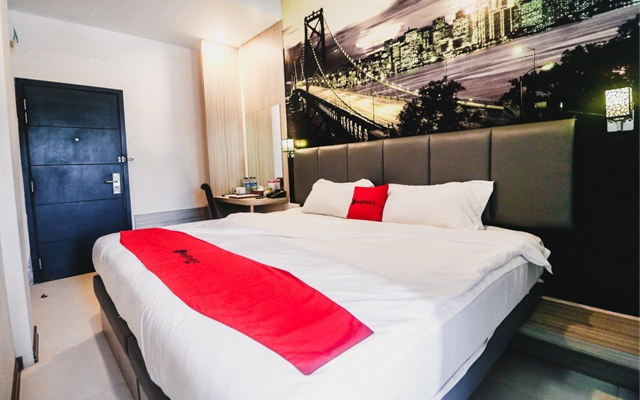
RedDoorz has raised US$70m as first close of a larger Series C round (Photo Credit: RedDoorz)
Amit Saberwal, founder and CEO of RedDoorz, said: “This new round is a testament to our strong business growth and market leadership position we were able to build during the last few years. RedDoorz operates in some of the most dynamic markets in the world and we see tremendous opportunities to continue growing our platform and expanding into new markets.”
He added: “We believe we are on the right track to create the next tech unicorn in South-east Asia and with the backing of our new investors, who bring deep expertise building large successful tech and digital businesses in our region, we are well positioned to fully execute on our strategy and mission.”
RedDoorz said it will use the new funds to launch in new markets and scale technology, customer experience projects, people and marketing investments to further strengthen its leadership position in the region. A significant portion of the latest proceeds will be used to build a second engineering hub in Vietnam which will complement the current regional tech hub based out of India.
The company also plans to ramp up its hotel staff and quality training programmes across all properties in Singapore, Indonesia, Vietnam and the Philippines as it helps employ approximately 10,000 people across the region through its hotel partners.
Oliver Rippel and Nicholas Nash, co-founders and partners of Asia Partners, which was involved in the IPO of South-east Asia’s startup Sea and Flipkart’s sale to Walmart, said: “Our mission is to help build and mentor Southeast Asia’s next generation of tech unicorns. Our team has a unique combination of investing and operating skills to help companies such as RedDoorz become true market leaders.”
Rakuten Capital, the corporate venture arm of Japanese Internet services giant Rakuten Group, has invested in regional leading companies such as Gojek, Carousell and Shopback. The Mirae Asset-Naver Asia Growth Fund, a joint venture between Seoul-based Mirae Financial Group and Internet company Naver Corporation, counts HappyFresh and BigBasket as portfolio companies and also recently participated in Grab’s US$1 billion Series H round.