

APAC hit US$4.5 billion in the first six months of 2019, with more than half of the capital originating from domestic buyers in Japan, China and Australia, says global real estate consultancy JLL.
According to JLL’s latest Hotel Investment Highlights report, investors are facing mounting pressure to deploy capital amid geopolitical uncertainty. To generate target returns, a number of investors have adjusted their risk expectations to explore opportunities within their home countries.
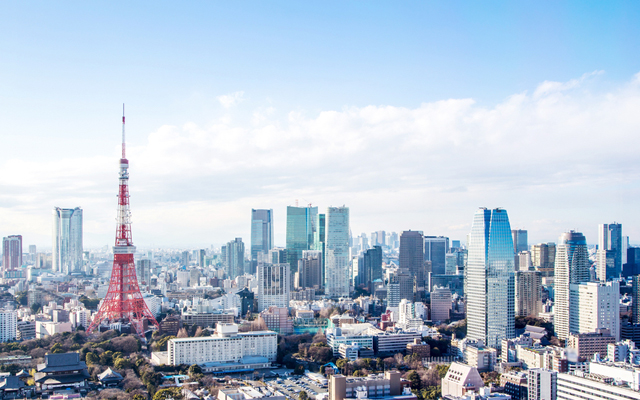
Japan’s hotel market recorded the highest domestic transaction volumes in Asia-Pacific at US$1.1 billion in 1H2019. Of this, Japanese REITs accounted for almost half of the total amount invested in the market. This was from deals such as Japan Hotel REIT Investment Corporation’s US$563.5 million acquisition of the Hilton Tokyo Odaiba and its US$25.2 million purchase of Hotel Oriental Express Osaka Shinsaibashi.
“Demand from Japanese institutional investors is growing due to low borrowing costs and expectations of continued market growth on the back of upcoming large-scale events such as 2019 Rugby World Cup, Tokyo 2020 and the 2025 World Expo,” says Mike Batchelor, CEO Asia, JLL Hotels & Hospitality.
He added: “We believe that the 12 per cent forecast increase in international visitors to Japan in 2019 will continue to spur local investors to explore hospitality opportunities in major cities such as Tokyo and Osaka over the rest of the year.”
Following closely behind as the region’s second most traded market is China, registering US$1.1 billion in domestic investment volumes. In Q12019, local internet giant JD.com purchased the Beijing Jade Palace for an estimated US$400 million. The hotel is slated to be converted into a mixed-use office development later in the year.
Batchelor said: “This deal is part of a wave of domestic investors buying hotel assets for conversion to alternative uses such as offices. As hotel deals are driven by a price per square metre basis in China, they tend to be priced lower than other commercial properties. Given the low-yield profile of such transactions, foreign investors are likely to be priced out of the hotel market, leading to more domestic transactions in China.”
Traditionally a hot spot for offshore buyers, local investors dominated the Australian hospitality market in 1H2019. Comprising close to 80 per cent of the total US$388.2 million invested, domestically-traded deals included the Next Hotel Brisbane, Hilton Surfers Paradise, MACq 01 Hotel and the Mayfair Hotel Adelaide.
Craig Collins, CEO Australasia, JLL Hotels & Hospitality explained: “The size, location and type of assets that were traded in the first half suited the mandates of larger local investors, which explains their level of dominance. From 2018 to June 2019, Australian buyers more than tripled their level of capital invested in hotels.”
He added: “Whilst domestic investors will continue to be very active, the Australian hotel investment market remains a firm focus of offshore groups. Based on expected transaction activity for the second half of 2019, we expect international capital to dominate hotel acquisitions over the rest of the year.”















Indonesian travel industry members have voiced their support for president Joko Widodo’s plan to move the country’s capital to East Kalimantan, predicting that the move will help boost tourism and bring about better infrastructure to the Indonesian portion on the island of Borneo.
Haryadi Sukamdani, chairman of Indonesian Hotel and Restaurant Association, welcomed president Jokowi’s plan to move the capital, which will straddle North Penajam Paser and Kutai Kartanegara regencies in East Kalimantan.
The hotelier said: “This will bring positive impacts to tourist destinations, (particularly) in East Kalimantan. Kutai Kartanegara is rich in natural resources, including nature attractions, but the regency has yet to explore its tourism potential to the maximum due to the lack of infrastructure.”
Similar to Kutai Kartanegara, North Penajam Paser also has infrastructure that remains far from adequate, according to Haryadi, who shared the example of having to use a long, drawn-out route from North Penajam Paser to the well-developed city of Balikpapan, due to Balikpapan Bay that separates the two cities.
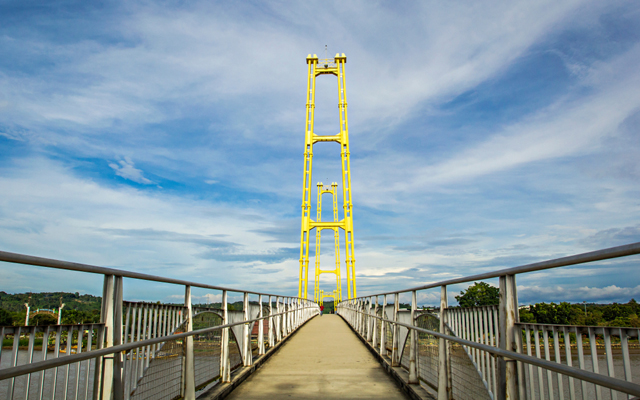
Should the local government build a bridge between North Penajam Paser and Balikpapan, he suggested, travellers would benefit from the shorter travel time and the regency could speed up its tourism development with better infrastructure.
Like Haryadi, Haryadi, Sudarsana, general manager of business development of Santika Indonesia Hotel and Resorts, also expects the new location of the capital city would boost tourism in Kutai Kartanegara and North Penajam Paser, encouraging locals to create new offerings in the regency to lure more tourists.
He said that the new capital city would also benefit the neighbouring provinces on Kalimantan Island because of its strategic location. Hoteliers and business players in the travel industry would not miss this good momentum to expand or deepen penetration into Kalimantan.
“Luxury and star-rated hotels will pop up in North Penajam Paser and Kutai Kartanegara,” he projected.
Currently, Santika Indonesia Hotels and Resorts has three hotels in the area – Samarinda in East Kalimantan, Banjarmasin in South Kalimantan and Palangkaraya in Central Kalimantan.
According to Sudarsana, Santika is considering to open a new property in East Kalimantan. He said: “We have yet to make a decision, but (the opening of the new hotel) is already in discussion. We have surveyed the location.”
Bahriyansyah, owner of Bee Holidays, states that tourist attractions in Kalimantan possess their own uniqueness and are not inferior to those in Java.
“We have world-class tourist sites, such as the Derawan Islands. I believe that president Joko Widodo’s decision to pick East Kalimantan as the new site of the capital city will scale up the brand of tourism in (the area),” he said.
“When it comes to promoting tourist sites, for example, we (travel agents in Kalimantan) are on our own now. We need the government to help support and back us up in branding our tour products,” added Bahriyansyah, who also expects that the capital city move would uplift Kalimantan’s profile through a better private-public partnership.
However, he foresees the opening of the new capital will entail migration from other parts of the country, which in turn will lead to greater competition for the local community.
Bahriyansyah hence would like the government to prepare the local trade in Kalimantan to face this potential challenge so that they would not be left behind as competition intensifies.