TTG Asia
Asia/Singapore Friday, 19th December 2025
Page 1127

Santika on expansion spree in Indonesia, revamps Amaris brand to keep ahead in budget sector

0

Santika Indonesia Hotels & Resorts has unveiled plans to progressively grow its Indonesian footprint, as part of its efforts to continue developing properties in the “10 New Balis” destinations, particularly in the Labuan Bajo, Mandalika, Borobudur and Lake Toba areas.

In Lombok – one of the “10 New Bali” spots – the Indonesian homegrown hospitality chain recently opened boutique villa The Kayana Beach Lombok.

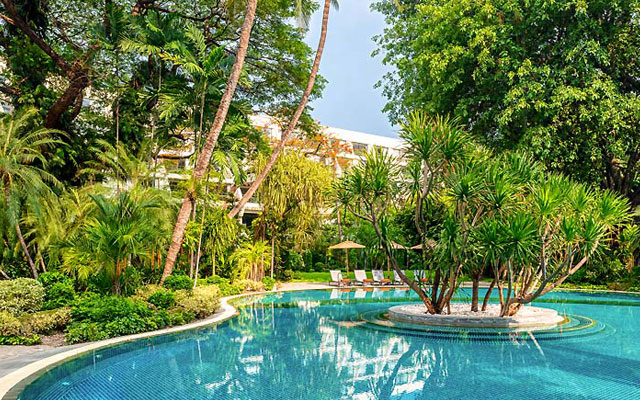
Santika’s recent opening of boutique villa The Kayana Beach Lombok (pictured) is part of the Indonesian hospitality chain’s efforts to develop properties in the “10 New Balis” destinations

Speaking to the media at the opening of The Kayana Beach Lombok last week, Santika’s general manager business development and marketing communications, Sudarsana, said: “We are looking to develop (upmarket) villas in Borobudur, Labuan Bajo and Mandalika. Currently, we are doing surveys in these areas. There are three locations (around) Tanjung Aan which we would like to consider building a five-star (boutique) property.”

The hotel group, which owns Hotel Santika Mataram, is currently building Hotel Santika Premiere on Lombok’s Senggigi Beach which is slated for a 2021 opening. It will also launch Santika Pasir Koja in Bandung and Amaris Slipi Jakarta this year.

In 2020, Santika will open eight more properties, with another eight hotels in the pipeline which are estimated to open between 2021 and 2022.

Sudarsana added that expansion plans aside, Santika is also keen on growing its new, millennial-friendly Kampi brand as well as upmarket brands – The Kayana, The Samaya and The Anvaya – as the market for these categories were steadier than the lower-end brands due to the tough market competition.

“We are currently operating our own properties in these categories and we are open to managing other investors’ properties in the future,” he said.

Meanwhile, the hotel group is also planning to redevelop its Amaris budget brand to compete with new “kids on the block” like RedDoorz and Oyo Rooms.

“With 66 Amaris in operation today, we are the biggest operator in the budget segment in Indonesia at the moment. However, the emergence of platforms like RedDoorz and Oyo Rooms are disrupting (the budget hotel market). Therefore, we need to redevelop and refresh the brand to stay ahead of the competition,” Sudarsana said.

He added that the revamp is currently underway and expected to be launched this year.

Santika Indonesia Hotels & Resorts now operates 112 hotels under four brands across Indonesia.

Tech-savvy travellers demand more automated journeys: SITA

0

Airport and airline IT executives believe that the growing number of tech-savvy travellers will have the biggest impact on their digital plans over the next six years to 2025, according to a new SITA report.

The report, 2025: Air Travel for a Digital Age, shows that by 2025, 68 per cent of all passengers will be digital travellers and will expect to manage their travel using their mobile phones.

SITA: Tech-savvy travellers demanding more automated, seamless journeys

This demographic shift has created digital travellers who are demanding more automation and hands-on control over each step of their journey. In particular, they expect to use their mobile phone to access services ranging from baggage location notifications, to boarding and payments. They also expect their trip to be delivered as a single, unified experience across airports, airlines, border control and other modes of transport – from the moment they leave home to when they arrive at their destination.

SITA CEO’s Barbara Dalibard said: “This demographic shift brings with it the expectation to use technology everywhere, including during travel. This will have a profound impact on how passengers interact with airports and airlines by 2025. In fact, 83 per cent of airport and airline IT leaders surveyed by SITA believe that this demographic shift will be the most important influence on their passenger solutions strategy by 2025.”

Dalibard maintains that this shift requires more efficient operations and collaboration between airlines, airports and other stakeholders responsible for delivering that experience. Baggage is a prime example. For a single journey, a bag can change hands a dozen times between the airline, airport, the ground handler and customs agencies. If the right data is not shared between the entities, it is difficult to keep track of that bag or to provide the information the passenger seeks on their whereabouts of their bag.

Digital travellers display higher satisfaction than non-technology users

Biometric technology is one of the key enablers to delivering more automation as well as smoothly linking each step in the journey. This technology is already being used at airports for border control and boarding aircraft and that is set to grow significantly, both in terms of geographic spread and functionality. According to SITA’s research, more than over half of the industry’s IT leaders believe biometric travel tokens will be the key driver for the future passenger experience.

To date, the focus has largely been on using biometric identity across a single journey or airport but more and more, the industry is shifting its focus to providing a persistent digital identity that can be used across multiple journeys.

Dalibard said: “To truly benefit from biometric technology, we as an industry need to work together to develop and agree a digital identity that not only provides passengers control over their identity but is accepted in any airport and across borders, much like passports are today. This cannot be done in isolation and requires a high degree of collaboration to make it a reality.”

SITA is already working with industry organisations such as IATA, ICAO and ACI. The company is also founding steward of the Sovrin Foundation, a private-sector, international non-profit whose mission is to enable self-sovereign identity online.

Far East Hospitality makes Japan foray under Village brand

0

Singapore-headquartered Far East Hospitality (FEH) will be opening the company’s first overseas property in Japan.

Set to open in 2Q2020, Village Hotel Ariake Tokyo will be the brand’s first property outside of Singapore. Owned under a 50-50 joint venture between FEH and Far East Organization, the 306-key hotel will be located in Koto City, eastern part of Tokyo, near the waterfront area of Ariake.

An artist’s impression of Village Hotel Ariake Tokyo – FEH’s first Village brand property outside Singapore

Village Hotel Ariake Tokyo, which targets the local business community and leisure markets, is in the vicinity of wholesale seafood and food market Toyosu Market, exhibition and convention centre Tokyo Big Sight and the Ariake Arena, one of the venues hosting the Tokyo Olympics in 2020. Tokyo Disneyland Resort is also a short car ride from the hotel.

FEH’s CEO Arthur Kiong said: “Japan’s hotel industry is seeing a steady growth in demand, specifically from the mid-tier market in neighbouring countries. Ahead of the 2020 Tokyo Olympics, we see this regional expansion as an opportunity to raise brand exposure in this major international gateway city.”

Early this year in April, FEH signed a hotel management agreement with Five Elements Development to manage two boutique hotels in Ho Chi Minh City, which are both slated to open in 1H2020.

Hotel Reve is a 56-key property inspired by Vietnam’s oldest art and antique street Le Cong Kieu, whereas the 30-key Suzu Hotel is located in Vietnam’s Japan Town, and will house an onsen, omakase restaurant and tatami rooms.

On the home front, FEH in April launched the Village Hotel Sentosa and The Outpost Hotel Sentosa as part of its expansion in the local mid-tier market.

The third hotel of the Sentosa precinct, The Barracks Hotel Sentosa, is slated to open at the end of 2019 with 40 colonial-style rooms, and exclusive pool and jacuzzi access for guests.

Come 2Q2020, FEH will launch The Clan Hotel, a 324-room property catering to affluent and tech-savvy business travellers in their late-20s to mid-40s.

ADB, PATA partner Plug and Play to push sustainable technology adoption

0

The Asian Development Bank (ADB) and PATA have teamed up with Plug and Play, a global open innovation platform, to develop technologies that could disrupt and redefine the sustainable tourism space in the region.

The Plug and Play Travel Asia Pacific platform is designed to bring together regional and international corporations to focus on key issues such as improving travel experiences, operational efficiency and sustainable tourism.

ADB and PATA teams up with Plug and Play to push sustainable technology adoption

ADB’s senior investment officer Dominic Mellor said: “ADB recognises that Asia and the Pacific benefit tremendously from tourism. Well-managed tourism is helping to end poverty, make cities more liveable and inclusive, and promote peace.”

He added: “In this context, our shared intention is to leverage the Plug and Play Travel Asia Pacific platform to pilot and scale sustainable and circular economy technologies that reduce waste, conserve energy and water, and provide green solutions to reduce the tourism industry’s carbon footprint and the effects of over-development across the region and beyond.”

PATA’s CEO Mario Hardy said the Plug and Play Travel Asia Pacific platform is “the perfect partnership” to foster sustainability among its members, transforming their businesses for “a more profitable, inclusive and ecological future”.

This is in line with the advocacy role that PATA has played in the Asia-Pacific region to drive “more inclusive stakeholder collaboration and public private partnerships”, Hardy added.

Since inception, Plug and Play has evolved to become one of the most established global consortium innovation platforms covering 14 industry-themed verticals that reviews thousands of start-ups per year across its 29 offices.

Jupe Tan, managing partner of Plug and Play Asia Pacific, said: “In the past few years, we’ve been collaborating with over 300 corporations – mostly in the Fortune500 category – to connect them with cutting-edge start-ups and execute their corporate innovation strategy. As part of our vision to help the world progress through innovation and connection, Plug and Play looks to continue to expand its reach within the regional tourism sector with more corporations to join the Plug and Play Travel Asia Pacific platform.”

Currently working with several prominent airlines, airports, hotels, travel agents and other industry stakeholders, Plug and Play aims to also provide regional local large enterprises with transfer and corporate best practices from its existing global corporate travel consortium.

ATPCO does away with star ratings in NGS standard

0
NGS Mock Example 2

ATPCO has announced a key change to its developing Next Generation Storefront (NGS) standard, which now enables channel partners to present the NGS “shelves” algorithm in a display that aligns with the unique needs of each channel’s customers. This change eliminates the requirement to use the star rating system that initially defined each shelf.

The standard retains the NGS shelf system, which uses ATPCO’s Routehappy rich content data to group like-type products on six shelves that are displayed in value order from left to right, but channels now have more freedom to design visual identifiers and customise the label for each shelf’s common data elements.

Instead of a star rating system, that identifier can now be a custom combination of text, icons or graphics, as long as it clearly indicates the commonality and progression of the six shelves.

The update to the evolving standard comes on the heels of two recent ATPCO NGS working and advisory group meetings in London and Dulles, where group members, which include leading airlines, distribution channels and other industry platforms like OpenJaw, workshopped alternatives that facilitate greater customisation within the standard.

The working group addressed feedback that stars are sometimes conflated with quality, and that giving channels the freedom to highlight the shelves in different and innovative iterations according to their customer needs was a better outcome for all.

After unveiling its intent to develop the NGS industry standard at its annual Elevate conference in October 2018, ATPCO said in 11 months it has seen considerable progress from its fast design approach: experiment, iterate, adapt, based on industry and partner feedback. Early pilots have shown that NGS delivered commercial value to airlines and bottom-line growth for sellers.

ATPCO will continue testing with the industry to ensure NGS fully aligns with the global needs of consumers, airlines and channels alike, while simplifying and enhancing flight shopping for travellers, said Gianni Cataldo, head of R&D at ATPCO in a statement. “Our latest adjustment to NGS comes directly from feedback collected via our channel partners.”

The core NGS value has proven to be the underlying shelf placement algorithms that ensure like-type products are consistently presented on the same shelf. Cataldo explained: “We realise that airlines and channels are retailing experts and are best positioned to manage how the shelves are presented. ATPCO is an organisation that wants to be a two-way partner to the industry, not a referee on the field telling them what is best for their customers. Our shift away from the star rating system made the most sense.”

The NGS working and advisory group is currently still open for any airline, platform, channel, or GDS to join. More information is available here.

Hilton names global head for LXR Hotels & Resorts

0

Hilton has appointed Feisal Jaffer as global head of LXR Hotels & Resorts, the company’s newest luxury brand launched in 2018 as a collection of independent hotels worldwide.

In his new role, Jaffer will be based in Hilton’s global headquarters in McLean, Virginia, and will report directly to Martin Rinck.

Jaffer possesses nearly 20 years of global experience growing businesses and brands across the hotel, real estate and technology sectors in Asia-Pacific, the UK and the US.

Prior to this, Jaffer served as senior vice president, business development, of Singapore-based Capella Hotel Group – which is part of Pontiac Land Group – where he was responsible for originating and executing new hotel management and investment opportunities. He was also part of the core team that incubated a new premium lifestyle brand and forged strategic partnerships to augment guest experiences.

In addition to this role, he also served as senior vice president, acquisitions & development at Pontiac Land Group to lead the international expansion of marquee hotel developments in Australia, the Maldives and the US.

Jaffer has also held investment and business development roles with Host Hotels and Fairmont-Raffles Hotels International respectively.

New hotels: SAii Lagoon Maldives, lyf Funan Singapore, and more

0
SAii Lagoon Maldives

SAii Lagoon Maldives, Curio Collection by Hilton

Nestled within the Emboodhoo Lagoon a 15 minutes’ boat ride from Malé International Airport, SAii Lagoon Maldives forms part of Crossroads Maldives, the country’s first and only integrated resort. With a total of 198 rooms and villas, including over-water pool villas, the resort will be Hilton’s third property in the Maldives, and marks the first Curio Collection by Hilton in South Asia.

F&B offerings include Miss Olive Oyl, a poolside Mediterranean seafood grill and bar; Mr. Tomyam, a Thai fusion eatery with an open kitchen and alfresco dining areas; bean/Co, which serves fresh coffee, premium tea and grab and go snacks; and the Café del Mar beach club.

For recreation, the resort has an ocean-view infinity pool and fitness centre, the PADI-certified Watersports & Dive Center, the Marine Discovery Centre, the Lèn Be Well Spa, and Junior Beach Club and Camp. A wide range of water sports and recreational facilities is available at The Marina @ Crossroads, a 30-berth marina and lifestyle centre that also houses the Crossroad Event Hall, which can be accessed directly from SAii Lagoon Maldives via a footbridge.

lyf Funan Singapore

The Ascott has opened lyf Funan Singapore, the largest co-living property in South-east Asia. Located in the heart of Singapore’s civic and cultural district, it is also the world’s first property under Ascott’s new ‘lyf’ co-living brand targeted at millennials and the millennial-minded.

Spanning about 11,241m2, lyf Funan Singapore houses 412 rooms across 279 apartments. The nine-storey co-living property offers easy access to City Hall MRT, and is located near shopping mall Raffles City Singapore and the National Gallery Singapore.

lyf Funan Singapore is an integral part of CapitaLand’s Funan integrated development, which also comprises two office blocks and a mall offering retail concepts, co-working spaces, urban farm, theatre, cinema, artisan shops, craft workshops, gymnasium, rock climbing and futsal facility.

Park Hyatt Shenzhen, China

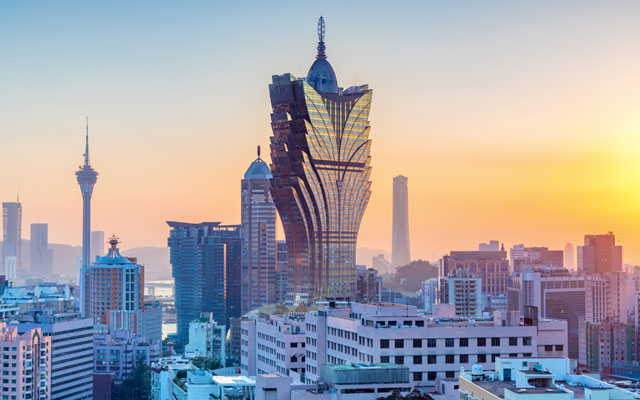
Hyatt Hotels has opened Park Hyatt Shenzhen within a 48-story skyscraper that is located in the heart of the Futian CBD in Shenzhen. Designed by the New York-based architectural firm Kohn Pedersen Fox Associates, the 195-key hotel resembles a dynamic glass and steel butterfly with its wings spread against the Shenzhen city skyline.

Park Hyatt Shenzhen will launch a collection of bars and restaurants. On Level 33 are the Living Room, which offers afternoon tea or evening drinks, and the Garden Pavilion, specialising in Cantonese, Sichuan and Jiangnan cuisine. The Glasshouse on Level 47 is a contemporary European restaurant and bar, whereas the Attic, located on Level 48, serves as a penthouse bar with a large marble counter bar. The hotel also boasts more than 1,500m2 of event space, a spa, a 25m indoor lap pool and fitness facilities.

Brady Hotels Jones Lane, Melbourne

Melbourne’s new Brady Hotels Jones Lane offers sleek styling and laneway setting in the heart of the city’s theatre, cultural and shopping precinct.

Tucked down Little Lonsdale Street on the corner of Jones Lane, the 4.5-star boutique hotel is located near attractions like Her Majesty’s Theatre, Comedy Theatre, Old Melbourne Goal, Royal Exhibition Building, Melbourne Museum, Chinatown, Lonsdale Street’s Greek precinct, as well as shopping malls Melbourne Central and QV Melbourne.

The hotel’s 153 rooms contain king beds and openable windows, and 96 of the rooms also boast balconies. Hotel services and amenities include a 24-hour reception, round-the-clock room service, cardio gym, self-serve laundry and bike storage room.

Holiday Inn Express Pattaya Central, Thailand

Located just a two-hour drive from Bangkok’s Suvarnabhumi International Airport, the new 241-room hotel is located a stone’s throw away from retail options Terminal 21 Pattaya, Central Festival Pattaya Beach, Pattaya Night Bazaar and Mike Shopping Mall.

Holiday Inn Express Pattaya Central is designed around the needs of smart travellers. Guests can start the day with Free Express Start Breakfast, which offers the option of taking their breakfast to-go if they need a faster break. Hotel’s facilities include a rooftop swimming pool, parking onsite, a 24-hour fitness centre, free Wi-Fi and internet stations.

Have tech, will travel: can travel startup unicorns fly in SE Asia?

0

In just a few years since its 2012 launch in Malaysia, Singapore-based ride-hailing giant Grab has expanded to eight countries and become South-east Asia’s most valuable unicorn at US$14 billion. Its keenest rival in the region, Go-Jek, is also Indonesia’s first decacorn after its valuation hit US$11 billion, and continues to attract attention from investors (the latest? Amazon).

These ride-hailing ventures have grown to become super-apps, engaging consumers on multiple fronts from trip planning to food delivery and mobile groceries as they clamour for a piece of South-east Asia’s 650 million and increasingly tech- and travel-savvy population.

Other notable unicorns in the Asian travel sector include Klook, after the Hong Kong-based travel booking platform secured US$200 million in Series D funding last year, and Indonesia’s Traveloka, whose recent fundraising efforts reportedly valued the OTA at US$2 billion.

In this hospitality space, Singapore-based hotel chain startup Reddoorz has raised US$70 million from investors, including Japanese e-commerce leader Rakuten, putting it on collision course against Indian rival Oyo, which has scaled up its expansion in South-east Asia with the appointment of a CEO for the region.

The blossoming of ride-hailing apps, flight tracking and hotel booking solutions are just some of the ongoing metamorphosis of South-east Asia’s travel tech sector.

In the words of Simon Akeroyd, Amadeus’ vice president corporate strategy & business development, the quality of travel startups was still “very poor” in 2015, when Amadeus Next programme was set up as a community to incubate tech start-ups which provide travel-related services.

In the four years since, South-east Asia’s startup scene quickly turned “much more vibrant and mature”, Akeroyd noted, as entrepreneurs have gotten a “better grip” of the gaps in the regional travel market.

But Akeroyd also urges budding travel tech startups to focus less on achieving unicorn status and more on solving problems. This view is also echoed by Blanca Menchaca, CEO of BeMyGuest, who remarked that the B2C space appears sexier to budding entrepreneurs, in part due to their connection with the masses and the high-profile success stories in the consumer space, when in fact growing investment is being poured into the B2B sector.

As Facebook founder Mark Zuckerberg famously said, a product is not truly a compelling business until it has one billion users. Few startups will achieve trailblazing status in the consumer space like Grab, let alone achieve massive global reach like Facebook or Google.
But in a diverse region such as South-east Asia, where tourism is a fast-growing market, there remains plenty of pain points – not to mention opportunities – in the travel business sector that are still awaiting solutions.

I’m definitely putting my bets on the B2B travel space.

John Slosar steps down as Cathay Pacific chairman

0

Cathay Pacific yesterday announced that John Slosar “will be retiring” from his role as chairman on November 6. He will be replaced by Patrick Healy, a long-time executive at the Swire Group conglomerate that is the airline’s majority shareholder.

Slosar became the latest high-profile executive to exit Cathay Pacific, after Rupert Hogg resigned as chief executive just weeks earlier. The flagship carrier and its staff members have come under greater scrutiny by the Chinese aviation regulator amid ongoing anti-government protests in Hong Kong.

John Slosar resigns as chairman of Cathay Pacific Airways, ending his 39-year career with Swire Group

Slosar ends a prolific 39-year career with Swire Group, which included as CEO of Cathay Pacific from 2011 to 2014 and then as chairman since 2014.

Healy, currently managing director of Swire Coca-Cola, is also a director of John Swire & Sons (H.K.) and a non-executive director of Swire Properties. He first joined the Swire Group in 1988, spending 14 years with the group’s beverages division in mainland China, followed by four years as CEO, HAECO Xiamen.

“Despite current challenges, I am confident in the future of Hong Kong and Cathay Pacific will remain fully committed to this great city as Asia’s key aviation hub,” Healy said in a statement.

Korea Tourism Organization Marketing Manager

0
KTO logo HQ

Korea Tourism Organization (KTO) is the National Tourism Organization of the Republic of Korea, with offices located worldwide to promote and boost tourism to Korea, so as to make it one of the top destinations in the world.

The KTO Singapore Office is looking for enthusiastic and hardworking individual for the following position:

Korea Tourism Organization Marketing Manager

1-year contract (including 2-months probation) | S$4,200 (commensurate with experience)

As a Korea Tourism Organization Marketing Manager, Your key responsibilities on the job include :

1. Public Relations / Media

  • Offline and Online (ex. bloggers) Media
  • Contact point for media relations
  • Press Tour – Select and invite media, contact point for media throughout. Follow up with media upon return from trip to ensure publicity from trip.
  • Decide storyline for bi- weekly press releases
  • Answer all media enquiries in a written and dated format
  • Track published PR articles generated by us, calculate ad value and update into TMS (calculation and uploading done by Tourism Officer)
  • Local film production in Korea – Go through all proposals and provide recommendation on KTO’s level of participation. Contact point for production crew throughout.
  • To maintain and ensure cordial relationship with all media
  • Solicit free tourism publicity

2. Trade / Airlines

  • Contact point for trade with regards to advertising and promotions
  • Decide storyline for bi-weekly trade releases
  • Regular contact with product planners and marketing managers to explore new opportunities to promote Korea.
  • Execute and follow through advertising subsidy campaigns including campaign completion reporting and documentation.
  • Arrange regular meetings with top agents
  • Monitor travel agents product offer/pricing through press ads and usage of logos
  • Monitor competitor destinations product offer/pricing.
  • Manage NATAS or other ad hoc consumer travel fairs
  • Encourage travel trade to improve itineraries through adding new festivals/events/destinations
  • Invite and arrange travel agents for FAM trips
  • Arrange and execute presentations to trade.
  • Monthly sales forecast.
  • Solicit new travel agency partners.
  • To maintain and ensure cordial relationship with all trade partners (travel agencies and airlines).

3. Advertising & Promotions

  • GIT Event and special interest (e festival, farm stay) execution and promotion
  • Offline (newspaper, print), Online (SNS, online portals), Outdoor (MRT station etc) advertising planning, execution and reporting.
  • Maintain constant update with various advertising mediums.
  • Manage and upload information to KTO Singapore Facebook account.
  • Recommend right advertising platform.
  • Work with GM or Manager to develop and execute promotions with business partners.

4. Business Development 

  • Co-work with Singapore official partners. e STB, NATAS, etc
  • Solicit business opportunities with 3rd parties to promote Korea e Working with event companies to promote K-pop concerts, non-verbal performances, Korea Festival, etc
  • Ensure KTO’s brand is visible in the event collateral.
  • Co-promote event with 3rd party (EDM, Facebook etc)
  • Participate in the event; if necessary

5. Others

  • Ad-hoc tourism research work
  • Arrange ad-hoc business appointments between visitors from Korea (HQ, Province) to Singapore tourism bodies
  • Other ad-hoc duties (assisting Director, General Manager and Manager).

Applicants should possess at least the following requirements:

  • Diploma in tourism or any related fields
  • At least 5 years experience in Tourism fields
  • Excellent written and spoken English language
  • Basic skill in conversational and written Korean would be an added advantage
  • Service-oriented, quick learner, team player, IT-savvy
  • Knowledge of Tourism Industry in Korea would be an added advantage
  • Able to commence employment in October 2019

Recontract opportunities are available based on assessment after 1 year.

Send your detailed resume with a recent photograph of yourself to us at kto.recruitment@gmail.com by 17 September 2019. Only shortlisted candidates will be notified for an interview. Overseas applicants will be interviewed via video conferencing.