TTG Asia
Asia/Singapore Wednesday, 8th April 2026
Page 1124

More Chinese travellers hunger after adventure travel

0

Chinese travellers are increasingly opting for destinations with diverse and exciting offerings, as they explore new ways to experience culture and nature during their holidays.

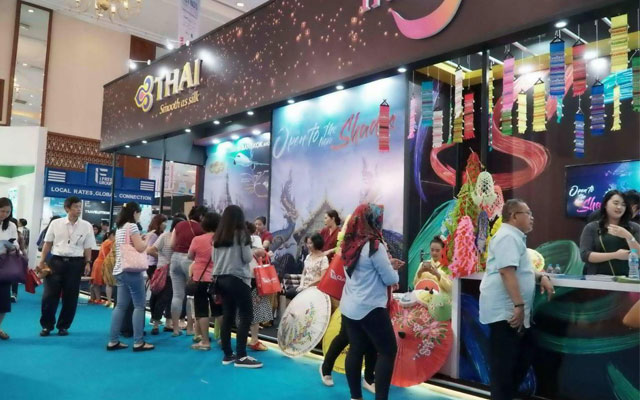
Exhibitors at the recent China International Travel Mart in Kunming, Yunnan told TTG Asia that as the Chinese market continues to expand rapidly, the demand for adventure travel is also swelling.

Demand for adventure travel is growing among Chinese outbound tourists

Sounh Manivong, director general, tourism marketing department of the Laos Ministry of Information, Culture and Tourism, noted: “The Chinese like to visit attractions like waterfalls, and do (activities like) rafting, kayaking and ziplining.”

He added that the China market is of growing importance to Laos. “For the first nine months of this year, Laos received 800,000 visitors from China, which was 22 per cent more than the same period last year. We’re expecting this number to reach one million by the end of this year,” he noted.

To play to the evolving tastes of Chinese travellers, Laos’ tourism ministry is spurring local travel sellers to enrich and expand the availability of outdoor and adventure offerings.

Likewise, travel sellers in Mongolia are seeing more Chinese travellers visiting the country not just to seek out landmarks like the 40m-tall Chinggis Khaan Statue Complex, but also overnight stays in a 13th century micro-kingdom run without electricity, interact with shamans and witness their ritual performance, and join pastoral herders in everyday experiences like producing dairy and riding yaks.

“We are getting more requests from Chinese visitors to visit and stay at these camps, so we are promoting new inbound group tours that cover these attractions at CITM,” said Unurchimeg Ochirbat, reservation manager, Genco Tour Bureau JSC.

In India, tour operators like Siva Kumar, spokesperson for Kerala Tourism, is also paying attention to China’s emergence as a growing feeder market to Kerala. The Indian state welcomes around 10,000 Chinese visitors a year, and numbers have continuously risen year-on-year.

“Nature and green tours are becoming increasingly popular among the Chinese, which is one of Kerala’s selling points. We also have other products like houseboats and white sandy beaches that we think will appeal to this market,” shared Kumar.

“To lure more Chinese leisure tourists, we’ve also held our own standalone roadshows in Shanghai and Beijing,” he added.

However, Kumar lamented that the lack of direct flights between China and Kerala are hampering growth for the Chinese inbound market, as most Chinese travellers have to connect to the state via New Delhi.

– Additional reporting by Rachel AJ Lee

Mount Bromo’s new booking platform welcome but questions linger over ‘differential’ treatment of visitors

0

Bromo Tengger Semeru National Park (TNBTS) Agency has rolled out an online booking platform for visits to Mount Bromo, a key attraction in East Java which Indonesian president Joko Widodo has envisioned as one of the 10 New Bali’s.

The website (www.bookingbromo.bromotenggersemeru.org) is aimed at bolstering arrivals as well as increasing transparency, TNBTS’ head John Kenedie said in a media release.

Bromo Tengger Semeru National Park Agency rolls out online booking platform for visits to Mount Bromo

Bromo, Tengger, Semeru and Banyuwangi welcomed 417,949 inbound tourists in 2018, and the government set an ambitious target of one million visitors to these destinations this year.

TNBTS charges Rp29,000 (US$2) and Rp220,000 for domestic and foreign tourists, respectively, on weekdays; and Rp34,000 and Rp320,000 on holidays.

According to John, online booking is mandatory for travellers who use the service provided by travel agents, tour operators and event organisers. On the other hand, independent travellers, who come alone or in groups, can opt to book tickets online or purchase them manually at counters for arrivals between 07.30 and 16.00. Online bookings are mandatory for them if they arrive between 16.01 and 07.29.

With this move, Adjie Wahjono, operation manager of Aneka Kartika Tours, expected illegal levy transactions in Mount Bromo to end under the TNBTS’ transparency push through the online booking service.

As well, he foresaw that the online platform could curb the fraudulent practice of foreign tourists passing off as locals in order to purchase domestic tourist tickets to enter Mount Bromo, as the identities of visitors are now needed for verification with their identity card or passport.

However, Adjie pointed out that the TNBTS agency’s different treatment towards independent visitors and those who book under a third-party provider was not only confusing but also discriminative.

“Why are independent travellers allowed to buy tickets manually on the spot (between 07.30 and 16.00)? (Fraud) will still exist then,” he said. “If the agency wants to implement a booking system, it should be enforced to all, not only travel agents.”

Meanwhile, Monas Tjahjono, managing director of Monas Tours and Travel, expressed concerns that the new booking system could put a damper on the business of travel agents who sold Bromo tour packages because of the same ticket price given to both agents and independent travellers.

“It will be okay if we got a discount of 10 per cent or more for a ticket that we book online for our guests,” he said.

Agreeing with Monas, Adjie said that travel agents deserved a special admission ticket price for their contribution in attracting inbound travellers to Bromo through overseas promotional activities.

As well, Monas found fault with the incomplete information on the new booking platform, such as the lack of explanation as to whether tourists could get a refund from TNBTS if they postpone or cancel the trip.

Monas also criticised the agency for making the website only available in Bahasa Indonesia, as it could deter foreign travellers. “Is the agency targeting the domestic market only?” he questioned.

Correction: An earlier version of this story wrote that online bookings are mandatory for visitor arrivals between 16.01 and 19.29. This is incorrect. Online bookings are required between 16.01 and 07.29. 

Dillip Rajakarier moves into CEO seat at Minor International

0

Dillip Rajakarier will soon take up the role of group CEO for Minor International, effective 1 January 2020, the Thailand-based hospitality announced.

Promoted from group COO and Minor Hotels CEO, Rajakarier will maintain his current leadership role as Minor Hotels CEO. Founder Bill Heinecke will remain chairman of the board and chairman of the executive management committee.

A seasoned hotelier, Rajakarier has been instrumental to the global expansion drive of Minor International and Minor Hotels throughout the past decade, including the acquisition of Spain’s NH Hotels.

Go-Jek partners Trans-Cab to grow Singapore fleet

0

Indonesian ride-hailing company Go-Jek will be expanding its fleet in Singapore through a partnership with local taxi company Trans-Cab, according to a report by Channel NewsAsia.

The tie-up was announced at an event last week to celebrate Go-Jek’s first anniversary in Singapore.

Go-Jek to expand fleet size in Singapore via a partnership with local taxi company Trans-Cab

Trans-Cab, which is Singapore’s second-largest taxi operator, has a fleet of 2,954 taxis as of September, according to figures from the Land Transport Authority.

Under the partnership, Trans-Cab drivers will be able to access bookings made via Go-Jek’s platform. Trips on Trans-Cab taxis booked through the Gojek app will be priced at a flat rate, rather than by a metered fare, said the report. Trans-Cab drivers will also enjoy the same benefits as Go-Jek’s driver-partners, which include insurance and medical coverage, it added.

Trans-Cab CEO Teo Kiang An was also quoted by the report as saying that the two companies are also exploring new joint benefits for their respective drivers, including preferential home electricity rates by Union Energy, which is Trans-Cab’s parent company.

Go-Jek’s CEO Andre Soelistyo noted that the company hit 30 million trips in Singapore within its first year here, said the report.

Soelistyo took over the role of co-CEO last month, alongside co-founder Kevin Aluwi, after former CEO Nadiem Makarim resigned from the company to join Indonesian president Joko Widodo’s new cabinet.

In September, Trans-Cab had partnered with local ride-hailing firm Ryde to allow its taxis to be booked via its app.

The taxi operator had also previously tied up with Go-Jek’s rival Grab for the launch of its JustGrab service.

Tourism agencies look to WeChat to expand Chinese reach

0

WeChat launched an alliance on Tuesday with some 30 foreign tourism agencies, including the Singapore Tourism Board (STB), to promote wider use of its in-app tools to reach Chinese tourists, according to a report by The Straits Times.

The Welcome with WeChat Alliance aims to support foreign tourism agencies in developing tools to reach out to Chinese consumers, said the report.

WeChat launches industry alliance with some 30 foreign tourism agencies to boost usage of its tools among Chinese consumers

The move comes as tourism agencies are turning to China’s popular social media app to capture a bigger share of the growing Chinese outbound tourist market.

In 2018, Chinese tourists made 149 million overseas trips, with total spending amounting to US$130 billion, marking a year-on-year increase of 14.7 per cent and 13 per cent, respectively.

The report quoted Zhang Yang from China Tourism Academy as saying that market demands are also changing as the Chinese become more well-travelled, with many opting to travel independently over a group tour.

“When people travel abroad now, they find information on social platforms including WeChat. In the past, they travelled with travel agencies, but now they like to plan their trips themselves,” said Zhang.

The WeChat app has more than 1.1 billion monthly active users, who use it for everything from paying bills, booking train and plane tickets to researching attractions.

WeChat’s latest move comes as Chinese e-payment giants Alipay and WeChat Pay announced earlier this month that they plan to open their platforms to foreigners visiting China.

Ascott to bring flagship brand to Penang come 2021

0

Ascott, a wholly owned subsidiary of CapitaLand, has secured a contract from Malaysian property developer Plenitude to manage its first Ascott-branded serviced residence in Penang.

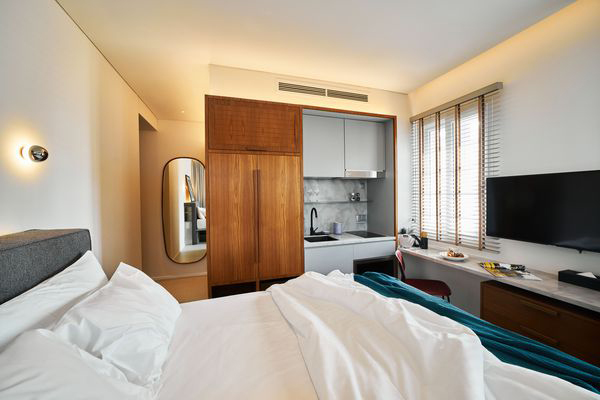
Slated to open in 4Q2021 along the Gurney drive promenade in Georgetown, Ascott Gurney Penang will offer 250 studio apartments and two-bedroom apartments with fully furnished kitchenettes, built-in washers and dryers, averaging 57m² in size.

Ascott to open its first Ascott-branded serviced residence in Penang come 4Q2021

Facilities will include an all-day-dining restaurant, banquet facilities, meeting rooms, an infinity swimming pool, a gymnasium, a sauna, residents’ lounge, kids’ club, kids’ wet park and dedicated outdoor barbeque areas. The property will also comprise retail components and office units.

With the addition of Ascott Gurney Penang, Ascott will have a total of more than 5,000 serviced apartment units across 25 properties in the country.

In 2020, Ascott expects to open three new properties – Ascott Star KLCC and lyf Raja Chulan in Kuala Lumpur, as well as Juru Residences in Prai, Penang.

New Thai hospitality brand to debut with Bangkok property

0

Siam Sindhorn will be launching Sindhorn Midtown, a new Thai-born hospitality brand, in the heart of Bangkok’s Langsuan neighborhood.

Slated to open in March 2020, Sindhorn Midtown’s first property is situated within two towers, and offers a collection of 344 hotel rooms and suites, as well as 49 serviced residences.

Sindhorn Midtown set to rise in Bangkok next March

Hotel facilities include an in-house restaurant and bar, a lobby which doubles as a workspace and living room, a swimming pool, a fitness centre, and two steam rooms.

More attractions added to Chimelong Ocean Kingdom in Zhuhai

0

One of China’s biggest marine theme parks, Chimelong Ocean Kingdom in Hengqin (Zhuhai) continues to woo visitors with the addition of show-stopping entertainment and facilities.

In July, the theme park opened the doors to the 6,700-seat Chimelong Theatre, alongside Dragon, a 100-minute Broadway-style show featuring world-class performances with water-land-sky elements. Performed on a 270-degree waterway ring stage equipped with spectacular lighting systems, the stunning circus extravaganza features over 41 floats, and gathers a professional team of 300 artists from some 22 countries.

Leading the lineup next year will be Marine Science Park, which is expected to launch in 1H2020, whereas the construction of Marine Science Hotel has entered its final stage with a targeted opening in January 2020.

A spokesman told TTG Asia: “The Chinese mainland, Hong Kong and Macau markets registered continuous and stable growth since the Hongkong-Zhuhai-Macau Bridge (HZMB) opened a year ago. It shortens the travelling time and draws more overseas visitors from Hong Kong International Airport to Zhuhai.

“Apart from residents or visitors departing from Hong Kong, we also observe more visitors who are willing to spend one or two days to explore Zhuhai. The HZMB offers visitors a novel and seamless travel experience.”

According to the spokesperson, the soon-to-launch first phase of the Guangzhou-Zhuhai Intercity MRT Extension Line – connecting Gongbei’s Zhuhai station to Hengqin Chimelong station – which will see a 17km section become operational, is set to “further enhance accessibility to the theme park”.

At the Chimelong Tourism Development Forum in October, chairman of the Guangdong Chimelong Group Su Zhi Gang unveiled the group’s blueprint for future development.

In addition to the expansion of existing resorts in Guangzhou and Zhuhai, Chimelong Qingyuan International Forest Resort will mark the group’s third venture. It will have attractions like China’s inaugural sanctuary for wild South China tigers, a giraffe castle and an elephant-theme hotel.

Moreover, Chimelong also plans to construct an aerial cable car across Macau and Zhuhai Hengqin, passing above Hengqin Mountain Indoor Zoo, Botanical Garden and Macau’s attractions. The ride is expected to carry 60,000 passengers each day.

Japan goes all out to attract Asians, especially repeat travellers

0

Asian markets are taking a significant lead in Japan’s inbound arrival numbers, with countries including China and South Korea making up 85 per cent of current visitor volume, shared the Japan National Tourism Organization (JNTO).

Further data from a case study by JNTO revealed that shopping expenditure took up half of total consumption per Chinese visitor in Japan. This was representative of the overall trend seen from Asian markets, said Michinori Yamasaki, JNTO’s executive vice president.

Japan looks to further grow arrivals from Asian countries; Sensoji Temple in Tokyo, Japan pictured

In order to stimulate further growth for this region, JNTO and Japan’s travel industry players have risen to the occasion with strategies and campaigns targeting Asian travellers.

For instance, JNTO has joined hands with local prefectural governments and suppliers to launch 100 Experiences in Japan, a guide which casts the spotlight on local gems in outlying regions.

Tadashi Kaneko, executive vice president, JNTO, is confident that this campaign will be “especially attractive for repeat visitors”. This segment comprises 60 per cent of total Japanese tourist arrivals, of which 80 per cent are from Asia.

Regional government organisations are also rolling out their own developments to expand their Asian appeal. Kobe, which has been receiving high numbers of travellers from Chinese mainland and Taiwan, has launched a campaign promoting the area as a golf destination.

Buoyed by a growing roster of direct flights connecting many parts of Asia to Japan, Shikoku Prefecture is now stepping up participation in global trade shows such as Visit Japan Travel Mart. Its airport in Takamatsu has direct flights to Taipei, Seoul and Shanghai; and Matsuyama has direct flights to Seoul and Shanghai.

Former tourism chief Lionel Yeo to head Singapore Sports Hub

0
The former STB chief Lionel Yeo will be the next Sports Hub CEO

SportsHub (SHPL), the company that owns the S$1.3 billion (US$973 million) Singapore Sports Hub (SSH) facility at Kallang, has appointed former Singapore Tourism Board (STB) head Lionel Yeo as SSH’s new CEO, with effect from February 3, 2020.

“The Singapore Sports Hub is a major national project that I had been involved with during my time in government service. I am aware of the challenges SportsHub faces and also of its achievements and tremendous potential. I am humbled to be given the opportunity to serve as its CEO, and look forward to engaging with all stakeholders to build on its success for Singapore,” Yeo said in a media statement.

The former STB chief Lionel Yeo is now the next Sports Hub CEO

He will take over from SHPL chairman Bryn Jones, who had been acting CEO since April.

Yeo will be the fourth man to helm the Sports Hub after Frenchman Philippe Collin-Delavaud, India-born Singaporean Manu Sawhney, and Oon Jin Teik, according to a report by The Straits Times.

During Yeo’s tenure at STB from 2012 to 2018, he played a key role in attracting major sports and leisure events to Singapore, including the BNP Paribas Women’s Tennis Association Finals, the Singapore Rugby Sevens and football’s International Champions Cup.

Yeo is also currently serving as CEO Advisor at ride-hailing firm Grab.

SSH’s chairman Bryn Jones said: “We are delighted to have appointed Lionel after a search that began in June this year for a candidate that would lead the team behind SportsHub to deliver a comprehensive programme for everyone in Singapore to watch, play and support sports events and also to enjoy world class entertainment.”

He added: “The CEO has the all-important job to realise the SportsHub’s vision, goals and plans with the support of our partners and to work closely with them to deliver this vision and our long-term strategic plan to be the region’s premier sport, entertainment and lifestyle destination.”

In 2018, Sports Hub hosted more than 210 events or more than 400 event days annually, said the company in a statement.