Accor has appointed Claire Haigh as its director of communications for the Pacific region.
In her new role, Haigh will lead communications for Accor Pacific’s apartment, hotel and resorts portfolio which includes Sofitel, Pullman, MGallery, Novotel, Mercure, Mantra, Peppers, Art Series, Swissotel and ibis; as well as premium membership platform Accor Vacation Club, across Australia, New Zealand, French Polynesia and Fiji.
Haigh will also direct communications for Accor’s corporate social responsibility initiatives, and the group’s newly launched global lifestyle loyalty programme, Accor Live Limitless.
For the past five years, Haigh was global communications director for Pernod Ricard’s winemaking division and their portfolio of champagnes, spirits and wines in Australia and New Zealand.
Prior to that, she served as head of communications for Whitbread Hotels and Restaurants in the UK. She has also drove creative communications, strategic brand partnerships and external affairs for AB InBev, Coca-Cola and Oakley.
Outrigger Hospitality Group has appointed Brent Shiratori as vice president, global brand group.
In his new role, Shiratori will champion brand strategy through creative development and content strategy for web, social, email and paid media, campaigns, communications programs, brand resources, including tools and systems, as well as oversight of the brand intranet environment and media asset management.
Previously with Outrigger for three years, Shiratori founded the brand strategy firm Aidia Marketing, and was director strategic planning at Matsumoto & Clapperton as well as management supervisor at Carol H Williams Advertising in Oakland.
He has also cut his teeth at Laird Christianson Advertising, CP Advertising and Starr Seigle Advertising.
Japan’s Olympics minister said on Tuesday (March 3) that Tokyo’s contract with the International Olympic Committee (IOC) allows it to postpone the upcoming 2020 Tokyo Games until the end of the year, over concerns that the Covid-19 outbreak would cause the IOC to cancel the competition.
“The contract calls for the Games to be held within 2020. That could be interpreted as allowing a postponement,” Seiko Hashimoto told parliament, according to Channel NewsAsia.
Tokyo 2020 Olympics could be postponed until end of the year due to the Covid-19 outbreak
“We are doing all we can to ensure that the Games go ahead as planned,” she added.
Under the hosting agreement, the right to cancel the Games belongs to the IOC. Last week, IOC president Thomas Bach doubled down on his stance that the Tokyo Olympics will go on as scheduled in July, despite the ongoing Covid-19 threat.
Hashimoto said Japan’s government and Tokyo were still committed to hosting the sporting event.
Japan risks losing billions if the Games get canned over Covid-19 fears.
The latest budget is 1.35 trillion yen (US$12.51 billion), with Japan’s government providing 120 billion yen to build the Olympic Stadium and 30 billion yen toward the cost of the 2020 Paralympics, the report quoted Hashimoto as saying.
Japan’s Board of Audit put government spending between the bid in 2013 and 2018 at 1.06 trillion yen.
Severely ailing from the impact of the Covid-19 pandemic, the Philippines’ tourism sector gets a shot in the arm with several initiatives, including a US$8.2 million budget for a new domestic travel campaign and US$1.7 million for industry staff training and preparedness on the virus.
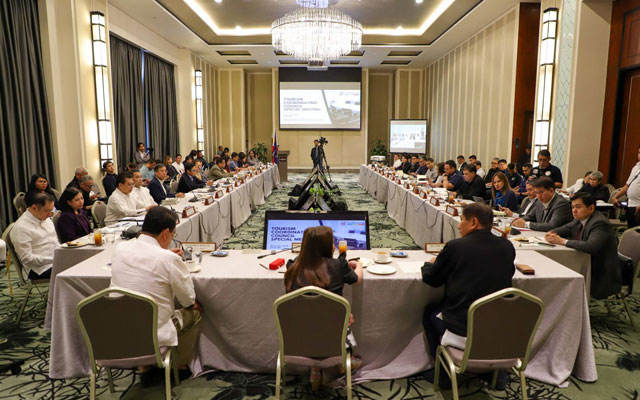
Tourism secretary Bernadette Romulo-Puyat disclosed these during the special meeting of the multi-sectoral Tourism Coordinating Council on Wednesday, noting that while foreign arrivals grew by nearly 10 per cent in January, it nosedived by 42 per cent to a paltry 418,128 in February.
Tourism secretary Bernadette Romulo-Puyat announcing government incentives to aid businesses during Covid-19 at the Tourism Coordinating Council meeting last Wednesday
Hotel occupancy rates in Boracay and Bohol plunged by 40 per cent, and other prime destinations such as Cebu and Manila are also suffering from reduced occupancy at varying degrees.
In a related development, Bounce Back, a multi-sectoral meeting initiated by the Department of Trade and Industry, and Management Association of the Philippines last week submitted several takeaways in lending support to the beleaguered tourism sector.
One of its participants, former tourism secretary Mina Gabor, suggested forming a Philippine Department of Tourism (DoT) crisis communication committee to handle emergencies like the Covid-19 epidemic, with continuous training provided for its members.
Gabor told TTG Asia that since nearly 99 per cent of all tourism companies are micro, small and medium enterprises, “there should be a funding mechanism to help these people,” and the funds can come from DoT.
This funding mechanism is akin to the suggestion made by another Bounce Back participant, tourism consultant Jerome de la Fuente, for a “stimulus package” to tide the industry over the slump.
This can take on the form of double deduction on expenses for tourism-related training, tax holidays, soft loans, and so on, he added.
Gabor cited the need for communicating positivity during a crisis. “We must counter the (Covid-19) fear with good news. We should show that there’s no local transmission, that Filipinos are not wearing masks and there’s no panic buying. We have to communicate better and laymanise our language so the people can understand better and prevent panic”.
Citing a DoT advert on CNN that showcased Philippine beaches, Gabor said that it sends the message, especially to the cold countries afflicted by Covid-19, that the destination is sunny, safe, refreshing and the people happy.
Over the weekend, the DoT hastily cancelled the ill-advised Shopping Festival which was supposed to take place from March 1-31.
Furthermore, the discounted Domestic Fun promotions designed to rev up domestic travel has not been getting the expected number of participating hotels and desired discounts.
As of press time, Domestic Fun has 38 participating hotels (of which only one is a foreign brand) offering up to 70 per cent discounts for the country’s top 10 destinations, and three Philippine carriers dangling up to 30 per cent discounts, which travel agents could include in their tour packages.
Tourism Congress of the Philippines president Jojo Clemente explained that they are still receiving more rates and more participating hotels.
“We’re continuing to reach out to Western Visayas and other regions. It is a moving situation. The hotels and airlines will adjust (their rates)”, he added.
However, de la Fuente said Domestic Fun’s destinations like Boracay are “proven bestsellers”, so hotels won’t drop their rates too much as it would be difficult to raise the rates when the situation improves. Hotels also won’t drastically cut rates just to gain a handful of patrons.
De la Fuente said domestic promotions are rate-driven, especially since the Philippines is mainly mass market and the archipelagic nature of the country means having to spend on airfares too.
He suggested tapping lesser known destinations where rates are still affordable, including destinations with resorts that can address wellness and virus concerns with wide space, farm and agricultural attractions.
De la Fuente also suggested that hotels and resorts should not just reduce rates, but incorporate value and add ons, plus better guest experience.
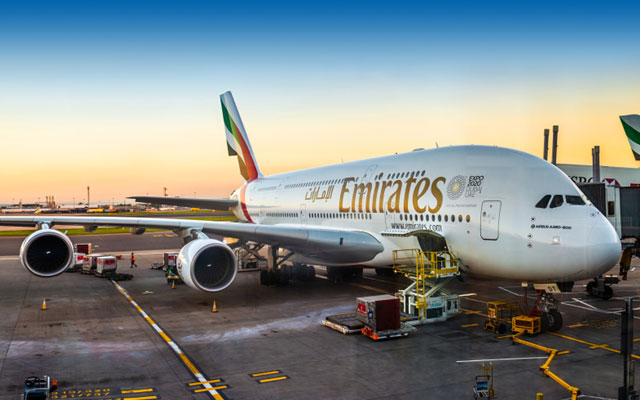
Malaysia’s travel trade is banking on Emirates’ upcoming service from Dubai to Penang, via Singapore, from May 1 to raise the profile of the destination among European travellers, especially as the new route coincides with the European Summer holidays.
The new service was originally scheduled for April 9.
Emirates’ new Dubai-Penang service poised to take off from May 1
Gotz Travel & Tours managing director, Sheikh Awadh Sheikh Abdullah, said the Singapore-Penang combo will make it easier to market to Europeans since it offers travellers the chance to see two destinations in one holiday trip.
“Singapore offers a city experience, while Penang offers an island experience, food, culture and the (experience of visiting the) UNESCO World Heritage Site of George Town,” he added.
Arokia Das, director, WL Leisure, shared: “It is good timing as May is the start of the European Summer. We are looking at 10-day programmes – seven days in Malaysia and three days in Singapore. We will take advantage of the connectivity to contact our existing agent partners and cultivate new agent contacts throughout Europe.”
However, he warned that the Covid-19 outbreak could be a dampener. “Usually for future bookings, 80 to 90 per cent of the bookings are considered guaranteed. With the outbreak, only about 20 per cent of future bookings are guaranteed. It now all depends on how quickly the outbreak in Europe and Asia can be contained,” he said.
Agreeing, Kingston Khoo, director of sales and marketing at Mutiara Taman Negara Resort, said: “We had 40 to 50 per cent cancellations from March to May – and these were mainly from Italy, Central Europe and regional markets. We hope these new flights will attract more Eastern Europeans.
“We hope to see a spillover of business from the new flights, especially for European tourists who do overland trips from the northern part of Peninsular Malaysia to the southern region – from Penang to Cameron Highlands and then, Taman Negara; before moving on to Kuala Lumpur, Melaka and exiting through Singapore.”
Aimed at protecting the ecosystem, the Raja Ampat administration in West Papua intends to tighten regulation on cruise tourism by rolling out a circular to prevent more cruise vessels from crashing its coral reefs.
The circular will require operators and agents of cruise ships wanting to sail to Raja Ampat to employ locals on board and to pay a deposit to the Raja Ampat administration to ensure the safety of the island’s ecosystem.
Raja Ampat authorities deliberate measures to prevent further coral reef damage by cruise ships
The deposit, which will be returned at the end of the trip, will vary from 100 million rupiah (US$7,068) for a yacht to one billion rupiah for a cruise ship.
The move is in response to the separate incidents of MV Caledonian Sky, Aqua Blu and KLM Lamima hitting the coral reefs in the waters of Raja Ampat during the period of March 2017 to January 2020, according to I Wayan Dumya, project manager of G-Tour.
The multiple incidents, he said, had prompted the local government and industry players, such as travel agents like G-Tour, to meet in various meetings to craft regulations that echoed the spirits of conservation, education and empowerment in a bid to prevent repeat episodes.
Wayan said: “The local government is furious at (the incidents) because no one wants to take responsibility for the damage of the coral reefs.”
The local government proposed imposing a deposit so as to make cruise ships more careful, according to Wayan, who had attended the meetings.
However, he added, industry players opposed the proposal on grounds that it would be hard to execute. In the meetings, they also argued that the proposed deposit could make more travellers reluctant to visit Raja Ampat because the regulations would be more complicated.
The meetings did not result in any resolution, and therefore, Wayan said he was surprised by the issuing of the circular, which he said did not involve industry players like himself.
For Ketut Sediya Yasa, managing director of Destination Asia Indonesia, what he deemed more important than imposing a deposit is giving clear guidelines on safe tracks through which certain types of cruise ships may pass and anchor.
If the government could provide such information and enforce those rules, imposing a deposit would be unnecessary, he said.
Questioning the purpose behind getting cruise ships to fork out a deposit, he said: “Is it to prevent them from (escaping after damaging the coral reefs)? I think it will be very difficult for them to do so since they are so big. They also have an agent (in Indonesia) who would certainly have coordinated with the local government and related stakeholders before the arrival of the ships.”
Ketut opined that if implemented, the circular could hit the tourism sector in Raja Ampat because it complicated the process and may make cruise ships reluctant to visit.
Lack of digital and communication technology in Raja Ampat, he added, would also pose a problem to operators and owners of cruise ships when they have to deal with the deposit transaction.
The circular is not final yet, according to Fransiskus Xaverius Teguh, Ministry of Tourism and Creative Economy expert staff on sustainable development and conservation.
Fransiskus said that while the Raja Ampat administration had the authority to issue the circular, he had called on the local government to consult with other stakeholders, including trade players, first as a way to realise quality tourism in Raja Ampat.
“We (central government) agree that the regulation is made to protect and conserve the environment in a sustainable way. What should be underlined is that Raja Ampat’s natural resources, including the beauty of its coral reefs, must always be protected and not exploited excessively. Therefore, regulation is needed to prevent (ships) from being concentrated in main areas,” Fransiskus said.
“We will advocate more intensively and give (the local government) a fuller picture (on conservation) in a bid to prevent regulation (made by the local government) from being counterproductive,” he added.
Kempinski Hotels is going against the current of poor business confidence in the travel and tourism industry with news of continued portfolio expansion, with several openings lined up for Asia, as well as new agreements being signed for near-future developments.
At a media breakfast on Wednesday, CEO and chairman of the management board, Martin Smura, unveiled details surrounding its mega project in China – the Universal Beijing Resort (UBR).
Smura: construction works on Universal Beijing Resort will not be affected by the Covid-19
Scheduled to open in 1Q2021, phase one of the project comprises The Universal Studios Grand Hotel, NUO Resort Hotel-Universal Beijing Resort, Universal Studios theme park and the Universal CityWalk retail, dining and entertainment complex.
The project is developed, constructed and operated by Beijing International Resort, while operations of the two hotels, as well as delivery of guest experiences, are shouldered by Key International Hotels Management, a joint venture between Beijing Tourism Group and Kempinski Hotels.
The Universal Studios Grand Hotel will sport 800 keys and offer a contemporary interpretation of Hollywood’s golden age, while the 400-key NUO Resort Hotel-Universal Beijing Resort will be a luxurious interpretation of China’s ancient royal gardens.
In its entirety, UBR will boast 6,000 keys.
Smura told TTG Asia that the ongoing Covid-19 outbreak resulting in dismal travel and tourism performance worldwide have no bearing on the project.
He explained: “This project is geared towards the local market. China today is still a very local market; foreign travel business to China is less than 10 per cent. So I’m not worried about this project, and you will soon see why. Asian people, particularly from China, are much more swift commercially. When they bounce back (from a crisis such as this), they bounce back quickly and travel demand will be strong.”
Smura added that construction is going according to plan, “and we are on time”.
While UBR makes progress, Kempinski Hotels will celebrate the opening of its second property in Bangkok this May – Sindhorn Kempinski Hotel Bangkok in the upscale Langsuan neighbourhood.
Guestrooms will be spacious – with sizes from 66m2, and guests will enjoy an integrated spa, wellness and fitness facility that spans over 4,000m2 across three floors. The wellness focus continues with restaurant Flow which will dish out plant-based cuisine prepared with locally sourced 100 per cent certified organic produce.
“Yesterday, we signed an LOI (letter of intent) for a big project in Vietnam, and in the coming days, we will be signing on a new fantastic resort in Phuket (Thailand). We are also in the bid for one of the greatest hotels in Hong Kong,” Smura revealed.
“If markets are in difficulty, then it is the best time to make our move. One cannot be shy to come through and close deals,” he emphasised, adding that he also has his eye on Sri Lanka and a resort in Malaysia to join the upcoming Kempinski Hotel Kuala Lumpur.
“It is always nice to have a combination of a city hotel and a resort property (in the country). Our city hotel in Kuala Lumpur is now under construction towards a 2021 opening,” he said.
Globally, the hotel company will add 6,000 new rooms in the near future. Notable openings beyond Asia include 7Pines Kempinski Ibiza which will open for the season this May; The David Kempinski Tel Aviv in late-2020; and Kempinski Hotel Tbilisi in Georgia by year-end.
While the scourge of Covid-19 has undoubtedly taken a toll on travel sector confidence globally, and mounting flight cancellations are disrupting travel plans, Singapore’s tourism industry seems poised to bounce back from the crisis in the later part of the year, with local travel agents reporting healthy growth for outbound tourism going into 3Q and 4Q.
Travel agents whom TTG Asia spoke to said they have seen demand for outbound holidays nosedive between 20 to 50 per cent since the Covid-19 outbreak.
A segment of Singaporeans are booking tour packages for travel at a later date, while others are riding on the cheaper rates during this lull season to satisfy their wanderlust
However, they added that destinations in Europe, Central Asia and Australia with low numbers of reported Covid-19 cases remain on the travel radar of Singaporeans, with no cancellations of existing bookings and with enquiries rolling in for tours departing from 3Q.
Shannon Hee, director of ASA Holidays, shared: “Most of them are travelling to destinations such as Turkey, Europe, and Russia, departing at the later part of the year.”
In the meantime, to boost travel demand, some agencies have been dangling attractive deals and discounts – and a portion of travellers are biting, capitalising on the current lull to score a good bargain.
Hee said: “The younger crowds, those in their mid- to late-20s, are still travelling. In fact, we have seen a rise in this age group (among our clients) as the rates have become more affordable for them. Those in their 30s and 40s are also willing to go ahead with their travel plans.”
In light of the epidemic, Hee added that they will be pushing out new itineraries to less-affected destinations inclined towards the tropics and outdoors, such as the South Pacific Islands, “to reduce the fear of exposure”.
“We’re also offering reduced prices and free cancellations to customers who wants to book for a later date to travel, but is worried (their travel plans may be disrupted by) the evolving situation of the outbreak,” she said.
As well, bespoke tours are seeing an uptick in the current climate, added Hee.
She explained: “As our private tour groups are typically formed by customers (who are already acquainted with each other), they worry less about potential exposure and it is also easier to conduct contact tracing.”
Group tours are still favoured among families, who see it as a more economical way to travel, said Alicia Seah, director of marketing & communications, Dynasty Travel.
As part of their efforts to stimulate travel, the agency will be offering an extra night complimentary on a 3N stay in Australia – one of the lesser virus-hit areas and popular with Singaporean families, shared Seah.
She added that the agency has also stepped up preventive measures. “Our tour leaders have been instructed to look out for symptoms and discuss general hygiene and etiquette with all our customers,” she said.
A spokesperson for Chan Brothers said the demographics of those who still opt to travel during this lull period vary from couples to group of friends and families.
“Frequent travellers will recognise a good deal when they see one and with the right precautions, there is no need for one’s life to be paralysed by fear,” she said.
The fight for gender equality is for everyone, and necessary for economies and communities to thrive. With this in mind, International Women’s Day 2020 galvanises all women to work towards an equal world. In support of this campaign, TTG Asia and TTGmice are featuring women leaders in the travel, tourism and business events industry this week. Today, we speak to Subashini Balakrishnan on her search for that ever-elusive work-life balance, and how she would like to use her position to support females in the tourism industry.
Why did you leave an IT career in a MNC to lead KBK Tours & Transport?
I grew up witnessing my father, K Balakrishnan, establishing KBK Tours & Transport with heaps of passion. Even today, he sincerely enjoys his work and does it with great passion. At the same time, I understood that KBK’s services could be diversified and expanded as the company was focused mainly on ground handling at that time.
This thought was constantly running through my mind and I could no longer be comfortable in the corporate environment. I knew that (my dream) would only materialise if I channelled my attention solely on KBK.
So I quit the corporate world and dived into the tourism industry, which was new to me! However, I felt this was a field worth exploring and tourism is an amazing industry with so much potential for further growth.
What fresh take did you bring into the business, and how have you revolutionised your father’s business since taking over two years ago?
One of my policies is to attend as many tourism events as possible. Such events greatly help to build our network and understand the industry from various dimensions.
Since I joined the company, we have diversified our operations and services to bring in tourists directly from overseas and we are no longer solely dependent on providing logistic services.
Our products and services have been re-defined to cater to the needs of tourists from various market segments. Nevertheless, I constantly review and update our standard operating procedures to ensure KBK is aligned with current market trends.
Do you enjoy what you do today?
I absolutely love what I do! I simply enjoy getting up to go to work each day. Tourism has created an ongoing opportunity for me to explore the diversity of Malaysia, meet people from various cultures and backgrounds, handle various travel processes, attend travel tradeshows, and so much more. Every working day is different.
How is it like juggling both the business and your young family?
Well, managing both business and family is quite challenging. Fortunately, my husband, parents, parents-in law, brothers and children have been super supportive. They are my pillars!
Each day, I set a schedule and my priorities, and execute my business and family chores accordingly. I start my day as early as 04.30. This allows me to have sufficient time and space to ensure work-life balance.
How do you create a more family-friendly work environment?
I give my staff time-off to run their personal errands, and when necessary, allow them to work from home. I believe when one’s staff are happy, they will also be productive and loyal to the company.
If you had all the time and resources, how would you use your leadership position to support fellow females in the tourism industry?
I would like to offer internship to females taking up tourism courses so they will be able to have a hands-on experience in the trade. I would also like to give webinars for women of all ages and backgrounds on career opportunities in the travel trade. Who knows, some women may be looking for a career change (in the travel industry).
How do you promote gender equality in your workplace?
Promotions and incentives for staff are based on performance, and have nothing to do with one’s gender. I encourage all my staff to attend relevant training programmes to strengthen their skill sets and abilities. The work environment is friendly, one that promotes respect between (colleagues).
Clarks Inn Group of Hotels has launched Clarks Premier Kota in Rajasthan’s third largest city. Located on the prominent Bundi Road, the 75-key hotel offers 27 Deluxe Rooms, 12 Executive Rooms, 12 Suites and 24 Studio Rooms with separate living area and a kitchenette. Hotel facilities include a vegetarian restaurant, a rooftop restaurant, lounge bar, health centre, swimming pool, discotheque, and a conference hall which can accommodate up to 120 people.
ibis Styles Vung Tau, Vietnam
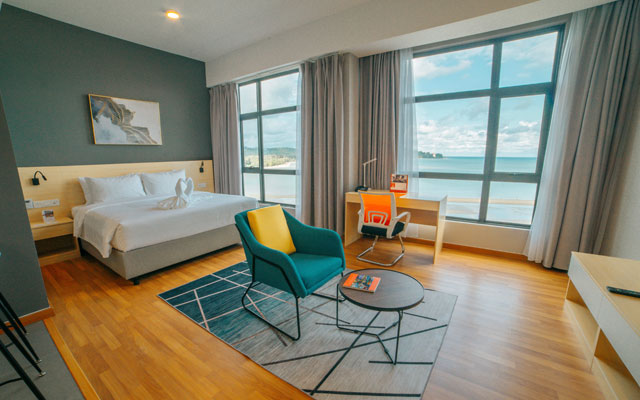
Accor has unveiled the second ibis Styles in Vietnam with the opening of ibis Styles Vung Tau. Overlooking Vung Tau’s long sandy Back Beach, just a two-hour drive from Ho Chi Minh City, the hotel offers 250 guest rooms, ranging from the 24m2 Standard Room to the 46m2 Premium Family seaview room with balcony.
On-site amenities include a restaurant serving Vietnamese food and international cuisine, a rooftop bar, an infinity pool, a 24-hour gym, a kids’ club, and family rooms which can host up to four guests. For meetings and events, the hotel offers two meeting rooms, which can be combined into a large seaview ballroom that can accommodate up to 200 guests.
Kanvaz Village Resort Seminyak, Indonesia
Kanvaz Village Resort Seminyak has opened in Bali, offering 147 rooms, ranging from 34m2 up to 75m2 in size, and eight suites. Resort facilities include four F&B outlets, customisable event spaces, a 110m lagoon pool, as well as spa and wellness facilities. The interior and architectural direction of the hotel took inspiration from royal homes during Indonesia’s colonial era, combined with an open-space, urban village concept.
Villa de Pranakorn, Thailand
Thai hotel management company Unicorn Hospitality has opened Villa de Pranakorn, a luxury boutique hotel nestled in Bangkok’s historic Sam Yot district. Located a short walk from Sam Yot MRT station, the 47-key hotel features a range of accommodation, from Superior Rooms to Premium and Grand Deluxe Rooms, as well as the luxurious Mahachai and Pranakorn Suites. On-site facilities include a fitness centre, a spa, pool bar and lobby bar, as well as a restaurant serving Thai dishes and pan-Asian delicacies.
Swiss-Belhotel Kuantan, Malaysia
Swiss-Belhotel International makes its Malaysian debut with the soft opening of a waterfront property in Kuantan. Located in the traditional fishing village of Tanjung Lumpur, the 27-storey property offers 366 rooms and suites, including 86 Family Rooms and 16 suites. On-site facilities include a swimming pool, children’s pool, Jacuzzi, fitness centre, water lounge, an all-day restaurant, a lobby lounge, and 10 meeting rooms including a ballroom.
Swiss-Belhotel Kuantan is the first stage of the Kuantan Waterfront Resort City, a 200-hectare mixed-use development, which also features a business park, healthcare hub and tourist resort, marina walk, green promenade, waterfront bars and restaurants, duty-free shopping, golf course and a waterpark.