TTG Asia
Asia/Singapore Tuesday, 30th December 2025
Page 1104

Brand USA targets SE Asia, India for growth

0

South-east Asia remains an integral market for Brand USA, the destination marketing organisation for the US, as the company looks to further grow their tourist numbers from the region.

Inbound arrivals from South-east Asia to the US totalled 810,000 last year and is slated to grow by 44 per cent to 1.2 million by 2023. This is also bolstered by increasing air connections, with Singapore Airlines having launched non-stop flights from Singapore to Seattle last month, on top of flying direct to New York and Los Angeles.

Brand USA’s representatives Jason Pacheco and Louis Lu says South-east Asia remains a key source market for the company.

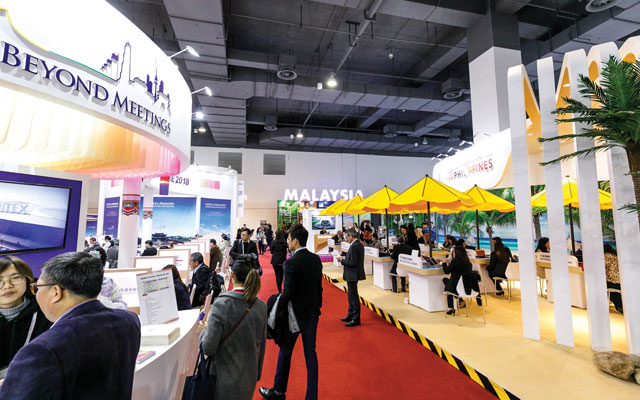
Speaking to TTG Asia on the sidelines of the South-east Asia Travel Exchange at ITB Asia, Brand USA’s Asia strategy advisor Jason Pacheco said: “If we are looking at where the new businesses are coming from, it’s Asia and we have to build a strong part of our strategy around it.”

Pacheco also hopes to attract more corporate incentives from the region.

One of Brand USA’s strategies for the South-east Asian market is developing travel products that are tailored to travellers.

Brand USA’s senior global trade development manager Louis Lu said: “We are not trying to sell packages, but are putting forth experiences and ideas for tour operators to tailor (their packages) to the requirements of their customers.”

Besides South-east Asia, Brand USA is also keen to tap the Indian tourism market. Pacheco said: “India is one of the fastest growing travel markets in the world with (an estimated) 50 million outbound tourists by 2020. There is also a lot of stopover arrivals there. The US government also has a good relationship with India’s government, which (paves the way for) establishing economic business that includes tourism (between the two countries). Plus, India has a mainly English-speaking audience.”

Technology key to enhancing passenger experience: IATA’s CEO

0

The International Air Transport Association (IATA) has called on governments and industry players to work together in leveraging modern technology to enhance passenger experience and achieve greater efficiency from infrastructure.

The call came during the opening address by Alexandre de Juniac, IATA’s director general and CEO, at the IATA Global Airport and Passenger Symposium in Warsaw.

Smart solutions like baggage tracking key to enhancing passenger experience, says IATA

Passenger first approach

To improve the passenger experience, technology options should focus on what the passenger wants. Travellers showed strong preferences for technology to enable them to track their baggage in real-time and to expedite their journey through the various airport processes, according to a 2019 IATA global passenger survey.

The industry has solutions for both these passenger expectations – the One ID initiative, and radio frequency identification (RFID) for baggage tracking. Both need the support of stakeholders, including governments.

IATA’s One ID initiative is helping the industry to transition towards a day when passengers can move from curb to gate using a single biometric travel token such as a face, fingerprint or iris scan.

“Biometric technology has the power to transform the passenger experience. Airlines are strongly behind the One ID initiative. The priority now is ensuring there is regulation in place to support the vision of a paperless travel experience that will also ensure that their data is well protected,” said de Juniac.

On baggage, airlines and airports are working together to implement tracking at key journey points, such as loading onto and off aircraft (Resolution 753). In June, airlines committed to the global deployment of RFID for baggage tracking.

“Implementation of RFID has seen some good progress, especially in China where the technology has been thoroughly embraced. In Europe, several airlines and airports are successfully working together to introduce RFID, notably, Air France at Charles de Gaulle Airport in Paris. The industry needs to be reminded that in addition to meeting our customers’ expectations, implementation of RFID will help reduce the US$2.4 billion cost to airlines from mishandled bags,” said de Juniac.

Infrastructure

Infrastructure will also play a key role in meeting customer expectations. Developing infrastructure that can cope with future demand, without relying on ever-bigger airports, is essential. In cooperation with Airports Council International, the NEXTT (New Experience Travel Technologies) initiative explores important changes in technology and processes to improve operational efficiency and the customer experience.

Among its 11 work streams, NEXTT is examining several options, including the potential to increase off-site processing, which could reduce or even eliminate queues; use artificial intelligence and robotics to more efficiently use space and resources; and improve data sharing among stakeholders to enhance efficiency.

“Accommodating growth by building bigger and bigger airports will be challenging from a public policy perspective. NEXTT provides a major opportunity to focus on using the latest industry technology standards for a sustainable future. We look forward to seeing Poland take a leadership role in delivering the NEXTT vision with the construction of Warsaw’s new airport – Solidarity Transport Hub. It’s the European Union’s first greenfield airport in over a decade,” said de Juniac.

Marina Mandarin Singapore undergoes green refurb in major rebranding

0

Singapore’s upcoming Greater Southern Waterfront district, which has been billed by prime minister Lee Hsien Loong as the city’s new “green heart”, will soon be welcoming a sustainable property taking over from the previous Marina Mandarin Singapore.

The 32-year-old hotel’s rebranding into the new Parkroyal Collection Marina Bay will be unveiled on January 1, 2020. It joins the range of properties under the Pan Pacific Hotels Group (PPHG), and will follow in the green footsteps of sister property Parkroyal Collection Pickering, which has garnered wide 
acclaim for its statement “garden in the hotel” concept.

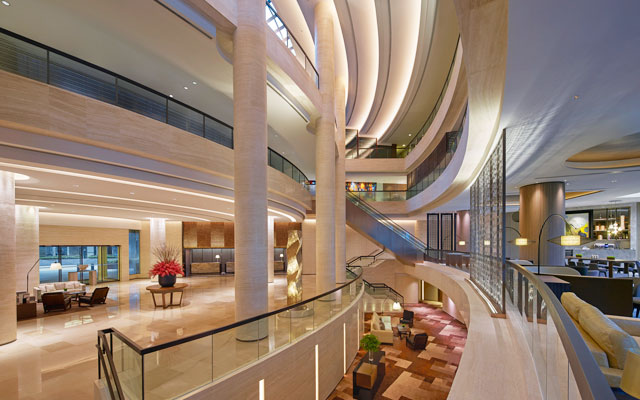
Marina Mandarin Singapore (pictured) will get a green makeover in its rebranding into Parkroyal Collection Marina Bay

With plans for the Marina Bay property to similarly sport lush landscapes and stylish interiors, renovations will be done in phases from early 2020 to mid-2021.

PPHG’s CEO Choe Peng Sum told the Daily: “Parkroyal Collection Pickering already enjoys the distinction of being the ‘World’s Leading Green City Hotel’ and with the addition of Parkroyal Collection Marina Bay, we have created a distinct category of visually stunning hotels that infuse green design with our sustainable efforts.”

Moscow’s tourism committee spotlights climate change

0
Fetisov alongside celebrities Allan Wu (far right) and Fiona Fussi (second from left) who graced the event

Moscow City Tourism Committee is at ITB Asia 2019 on a unique mission – to raise awareness of climate change through the UN Environment Programme’s #TheLastGame.

#TheLastGame is a global campaign aimed at drawing attention to the devastating effects that climate change is having on the Arctic, and boosting climate action through ice hockey. As part of the campaign, more than 25 friendly matches are being played around the world, with the main game taking place at Russia’s Barneo ice floe on April 20, 2020.

In partnership with #TheLastGame, the Moscow City Tourism Committee and the Singapore Ice Hockey Association played a friendly ice hockey match at The Rink in JCube mall on Tuesday. Viacheslav Fetisov, the first Ambassador of Moscow, UNESCO Champion for Sport, UN Environment Patron for Polar Regions and UNWTO Tourism Ambassador, was joined on ice with other international players as well as Singaporeans who share his passion for saving the planet.

Hockey match aside, the initiative also encompasses a special youth clinic which provides emphasis on hockey skills and best environmental practices for guests to implement climate change.

Commenting on Moscow’s other objective at ITB Asia, Konstantin Akopyan, Moscow City Tourism Committee’s spokesman said the team of 19 exhibitors is “exploring the South-east Asia market which is still very new” and hopes to “dispel stereotypes that (the destination) is unsafe, expensive and not tourist friendly”.

Aviation roundup: Thai Vietjet, Kunming Airlines and Thai Airways

0

Thai Vietjet adds new domestic routes

Thai Vietjet will be starting a direct service connecting Udon Thani, one of the big capital cities in northeast Thailand, with Bangkok (Suvarnabhumi) and Chiang Rai.

The Bangkok (Suvarnabhumi)–Udon Thani route will operate daily starting November 25, 2019. The daily flight departs from Bangkok at 07.20 and arrives in Udon Thani at 08.30, and the return flight takes off from Udon Thani at 09.10 and arrives in Bangkok at 10.20.

A thrice-weekly additional flight departs from Bangkok at 16.25 and arrives in Udon Thani at 17.35 every Tuesday, Thursday and Sunday.

The Chiang Rai-Udon Thani route will be available thrice-weekly on Tuesdays, Thursdays and Sundays, from November 26, 2019.

The flight departs from Udon Thani at 18.05 and arrives in Chiang Rai at 19.10, while the return flight takes off from Chiang Rai at 19.40 and arrives in Udon Thani at 20.45.

Kunming Airlines links Yangon and Kunming

Kunming Airlines has launched a new service connecting Yangon to Kunming, the capital of Yunnan province in Southwest China, to cater to the growing number of Chinese travellers visiting Myanmar.

The new route will be served by a Boeing 738 aircraft.

The four-times-weekly service will operate on Tuesdays, Thursdays, Saturdays and Sundays. KY8361 will depart Kunming at 20.10 and arrive in Yangon at 21.30.

THAI to take off for Sendai

Thai Airways International (THAI) will be starting daily flights from Bangkok’s Suvarnabhumi Airport to Sendai, the centre of Tohoku, Japan, from October 29, 2019.

The new route is in light of the country’s steadily rising popularity among Thais after the Japanese government waived visas for Thai nationals.

Using a Boeing 777-300 aircraft, the thrice-weekly service will operate on Tuesdays, Thursdays and Saturdays. TG626 departs Bangkok at 23.59 and arrives in Sendai at 07.40 the next day, while return flight TG627 takes off from Sendai at 11.15 and land in Bangkok at 16.05.

New hotel manager lands in YotelAir Singapore Changi Airport

0

Nick Cheesman has been appointed to the role of hotel manager at YotelAir Singapore Changi Airport, where he will oversee all aspects of operations and technology implementation.

Cheesman has around 14 years of hospitality experience, having cut his teeth at prominent hotels such as Regent Singapore, Shangri-La’s Villingili Resort & Spa in the Maldives, Four Seasons Hotel London, and Four Seasons Hotel Tokyo.

Prior to his Yotel move, Cheesman served as director of rooms at M Social Singapore.

Graceful rise of Asian women travellers

0

Attractive air fares and improved low-cost access to short- and medium-haul destinations have fuelled a growing trend of weekend getaways for Asian women travelling either solo or with friends.

Inbound agents and hoteliers in Malaysia who have spotted this trend are adapting their programmes and services to cater to this growing segment of travellers.

Malaysia’s tourism players are adapting their itineraries and services to cater to growing numbers of Asian women travelling either solo or with friends

Raaj Navaratnaa, general manager at New Asia Holiday Tours & Travel in Johor, has observed small groups of women travellers from the Philippines, Singapore and Indonesia heading to Johor and Melaka, especially over the weekends.

Noting that Malaysia’s affordability and variety of offerings were strong magnets, Raaj said dining, shopping and beauty treatments were often the groups’ main activities.

“They come for a relaxing holiday and they wish to be pampered. They don’t mind paying higher rates for hotels that are close to major shopping malls, or for boutique hotels,” he added.

As safety is a priority for women travellers, Klaus Sennik, general manager, Ramada Plaza by Wyndham Melaka, said online reviews pertaining to hotels’ reputation and security features were big purchase influencers.

To reassure women travellers, Ramada Plaza by Wyndham Melaka allocates special parking lots near elevators for female drivers driving to the property. Female guests are also accommodated in rooms that are close to the lifts for their convenience and security.

“By next year, we hope to allocate a women-only floor. The number of women-only floors may be expanded as demand grows. We see this growing trend both domestically as well as from Asian markets such as Japan, China, India, and regional markets,” Sennik said.

Arokia Das Anthony, director, Luxury Tours Malaysia, which specialises in India inbound, shared that his female clients are allocated female tour guides and given loaded SIM cards so that they are contactable at all times. And when it comes to accommodation, the company ensures female clients travelling in groups are placed on the same floor, and if possible in connecting rooms or rooms near each other.

Seamless travel procedures are also enforced by Uzaidi Udanis, managing director of Eyes Holidays. All-women private groups from China are always given documentation from the company, hotel vouchers and itinerary to help them pass smoothly through Malaysian customs and immigration.

Uzaidi goes a step farther by creating itineraries that appeal to his Chinese female clientele. As many women from China enjoy square dancing, the company has created four-day/three-night packages that feature traditional dance classes led by local dancers, sight-seeing tours as well as shopping.

Open sea swimming in the Straits of Melaka are also popular with women from swimming associations based in China. He said: “Many from the inner parts of China say swimming in the sea is a dream for them.”

Since interactions with locals sharing the same passion are desired, Eyes Holidays offers private swim events for Chinese female travellers.

Over at The Frangipani Langkawi Resort & Spa, female guests are keen on organic farming and eco-walks organised by the property to showcase onsite green practices.

Looking to charm female travellers, Sennik said cocktails go at special rates during Ladies’ Night every Wednesday, and plans are being made to roll out more F&B offers and to provide special female-friendly amenities in the guestrooms.

Amadeus welcomes new APAC head of commercial for hospitality unit

0

Amadeus has appointed Maria Taylor as head of commercial, Asia-Pacific for the hospitality business unit, excluding the Indian subcontinent and China.

With more than 19 years of experience in the hospitality industry, Taylor will work closely with Amadeus customers to forge strategic partnerships, lead commercial activity to ensure retention, and drive new business opportunities.

Based in Singapore, Taylor will report to Jan Tissera, head of international for the hospitality business unit.

Taylor was previously responsible for Asia-Pacific sales at TravelClick, which Amadeus acquired in October 2018. In this role, Taylor supervised the expansion of the in-region team to more than 100 employees and opened new sales territories in the Philippines, Vietnam, Malaysia and New Zealand.

Based in Asia-Pacific for 14 years, Taylor previously held leadership roles with Accor Hotels & Resorts and Meritus Hotels & Resorts.

Booking.com rolls out new tools for short-term rental partners

0

Booking.com has introduced new tools and product enhancements “specifically designed to simplify day-to-day management and help professional short-term rental partners welcome more guests”.

The new features were developed in response to the rising popularity of homes, apartments and unique places to stay as a category than traditional segments, said Booking.com in a statement.

Booking.com launches new tools to help short-term rental partners streamline business processes

More travellers than ever are looking for unique places to stay, with 43 per cent of travellers planning to stay in a new type of accommodation this year, according to a Booking.com survey last year of 21,500 respondents from across the world.

The products and features offered by Booking.com include:

Group Opportunity Centre: Spot opportunities that apply to all, or some, of your properties and save time making updates with this new tool offering relevant, actionable performance tips for your portfolio.

New Connectivity Tools: Booking.com’s new Connectivity features make it easier for you to manage your business, from key collection to damage deposits, through your software provider.

Features to Highlight Professionally Managed Properties: Showcase your property’s professional attributes to guests from the start through a range of new features, including a host score, based on reviews from the rest of your portfolio, and an external review score, based on guest reviews from trusted sites. These scores give guests peace of mind when booking your professionally managed property and improve your visibility. Booking.com is also spotlighting the unique facilities of your professional properties including 24/7 contact, keyless check-in, and much more.

Quality Rating System: Attract travellers and match guest expectations for your property with the objective quality rating system for the short-term rental industry, similar to that of traditional hotel star ratings, based on your property’s location, size and facilities.

Advisory Board: Know your voice is heard through Booking.com’s Advisory Board, a group of industry thought leaders spanning property managers and connectivity providers and dedicated to advising the company on its role as a partner to the short-term rental industry so the company can tailor their products and services to their partners’ specific needs.

More information on these products and the professional property manager experience with Booking.com is available here.

Why conversational commerce is integral to travel user experience

0

Travelling is exciting, but it’s also daunting. Tourists today rely on quick access to information to guide them and give advice, often in strange time zones or with time sensitivity.

It is therefore imperative that industry players wanting to build relationships with travellers offer seamless and efficient channels through which they can make queries.

In this way, traditional e-commerce and websites have failed the travel industry as they are impersonal and slow. Websites force travellers to find and read static pages, which are often out-of-date, to get answers. Often, travellers can’t find what they’re looking for and have to call to get up-to-date information.

An email function with a two business day response time is no longer acceptable, nor is the option of calling.

Conversational commerce, therefore, is shifting the travel industry from one that puts the burden on the consumer to self-serve to one that is instant, interactive and personalised.

Conversational commerce is the ability for consumers to communicate with brands through natural language conversations, using digital channels they know and feel comfortable with such as WhatsApp, Facebook Messenger, or the native messaging app on their phone.

Conversational commerce allows the use of natural language to buy things or query a service at any point in the customer journey. This is achieved through the use of bots in conjunction with humans, allowing a brand to have conversations with its customers at scale.

Think about the disruption caused by an A380 being grounded. Hundreds of passengers are left with flow-on connections, accommodation, and activities that need to be altered or rescheduled. How can an airline cope with the vast and complicated requirements to communicate and rebook each of these travellers?

The only manageable option combines mobile, automation, and artificial intelligence.

Travel companies are moving to conversational commerce in droves, realising that it improves travellers’ experiences by allowing them to respond to texts at their leisure, rather than call or queue at an information desk.

Similarly, airlines and agents can sell tickets and help travellers make reservations directly in messaging channels they already use, every day.

Many of the travel companies that LivePerson works with have deployed bots that can browse flights, hotel rooms and car rentals, retrieve pricing information, provide discount codes and answer FAQs. This frees up agents to focus on high-value and more complex requests.

As a result, LivePerson’s travel customers that have transitioned to conversational commerce have experienced on average a 95 per cent peak in customer satisfaction.

For instance, since embracing messaging as part of its customer service strategy, Virgin Atlantic’s CSAT score has climbed to 95 per cent and 20 per cent is the average growth in the number of calls shifted to messaging week-on-week.

The business benefits of going conversational

Conversational commerce improves more than just customer satisfaction. It is being adopted by leading travel companies because it also enhances employee productivity and increases sales conversion, benefitting a company’s top and bottom lines.

Most importantly, positive customer experience ultimately leads to more loyal customers, which is every brand’s end game.

Conversational commerce is the key to bridging the gap between average and outstanding customer experience, particularly in the travel industry. With conversational commerce, brands can create a cohesive and communicative exchange that enhances the travel experience.