Quay Perth has appointed Tony Keane as the general manager of the hotel’s management company, Louis T Collection.
Keane steps into the role with an eye on developing the brand’s profile and leading the team at the group’s first Australian property, that was formerly known as The New Esplanade Hotel.
With over 10 years of experience in hotel management, Keane’s most recent role was hotel manager at Rendezvous Hotel Central Perth, where he has been managing the property’s daily operations since 2016.
Prior to that, the Brit has also worked at Fraser Suites Perth as operations manager, and held leadership positions at the Mantra brand of hotels, resorts and apartments in Perth and Adelaide.
With Indonesia gearing up to host the MotoGP races from 2021 to 2023, the Mandalika district on the island of Lombok, which will play host to the prestigious street race, is caught up in a race of its own: to establish itself as a sports and entertainment destination.
Ever since Dorna Sports made the MotoGP announcement this February, Lombok has received visibly more attention, not only from Indonesian president Joko Widodo and the relevant government officials, but also investors who are eyeing the sites in Lombok, particularly within the Mandalika special economic zone area.
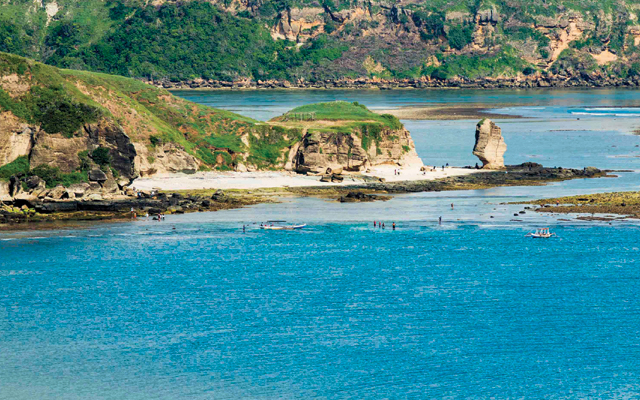
Bukit Merese Hill in Lombok, which is undergoing a major facelift (Photo courtesy of Ministry of Tourism, Indonesia)
News of the motor racing event has been met with “euphoria among the stakeholders of Lombok”, said Awan Aswinabawa, chairman of A&T Holidays in Lombok.
“People are very enthusiastic in developing villas, as well as restaurants and cafes, especially in the areas surrounding Mandalika,” he said. “I believe MotoGP was also one of the reasons AirAsia (Indonesia) decided to make Lombok a hub.”
Seeing the “excitement” that MotoGP has brought to Indonesia, Ricky Baheramsjah, head of investment and marketing at the state-owned Indonesia Tourism Development Corporation (ITDC), the country’s integrated tourism developer and operator, said there are plans to bring more sports events to the destination.
“For us to have a sustainable business plan, we should do more races than just MotoGP,” he stated.
“In fact, we have signed the contract to host World Superbike in 2021 too. The World Superbike is the second biggest motorbike race in the world and we do not want to stop there. We plan to host more races, with the MotoGP as the ‘pearl’ of the calendar.”
With that goal in mind, ITDC is investing in the building of permanent and temporary infrastructure. A 4.2km street circuit complex will be developed from the ground up, housing a paddock area with 40 garages, 50,000 grandstand seats, a standing area for 138,000 spectators, and hospitality suites that can accommodate up to 7,700 people.
Ricky said: “We will have the first street circuit in the world that can accommodate motorbike racing. It is almost like the Albert Park in Melbourne, which is an F1 street circuit.
“This is not a conversion of an existing street, like in Singapore and Monaco, but a street specifically designed to host motorbike racing because the requirements to have a motorbike race is more stringent than, say, Formula 1,” he added.
For example, the race tracks in Mandalika will be designed with more run-off areas, or crash barriers, than car racing as a safety feature when racers unintentionally depart off the prescribed course.
Based on the latest data, there are 10 hotels which will be built by 2023, with a total of 2,485 room keys.
Currently, the 102-key Novotel Lombok Resort & Villas is operating in the area, while the 256-key Pullman Resort is set to open next year.
ITDC plans to run two races in 2021, and increase to four by 2022, and subsequently, eight, Ricky said.
The aim is to have back-to-back races on weekends that stretch into the following week to encourage longer stays, he added.
ITDC management feels that they can leverage the race infrastructure, when completed, to host more than just motorbike races.
“We are also developing a 27-hole championship golf course, and we also have the facilities and event planners to host a PGA golf tournament. We can also host marathons, triathlons like Ironman, and even yacht races between Australia and Lombok because we will also have a marina,” he said.
In the next stage, the Mandalika integrated resort complex will also feature a wellness centre, theme park and convention facilities.
With all these developments in the island’s pipeline, Mandalika looks set to become more than just a beach paradise as it seeks to grow itself into an entertainment and sports destination, said Ricky.
Trade and hotel operators are upbeat about Lombok’s future, given all the buzz surrounding the MotoGP.
Sudarsana, general manager of corporate business development and marketing communications at Santika Indonesia Hotels & Resorts, said: “We are observing three possible locations around Tanjung Aan in Mandalika to build a five-star property, probably an Anvaya.”
The Indonesian hotel group is also expanding its other brands to other parts of Lombok.
It recently launched The Kayana Beach Lombok boutique villa and is currently building Santika Premiere on the other side of the island, about a 90-minute drive from Mandalika.
Ericht Alessandro, general manager of The Kayana Bali and Lombok, sees The Kayana Beach Lombok as a complement to Mandalika’s development.
“Lombok has (limited) accommodation options. The Kayana Beach Lombok serves as an upmarket accommodation option in a different location with a different product offering from those being built in Mandalika,” he said.
Meanwhile, Awan is upbeat that the MotoGP will attract travellers not only for the races but also to explore Lombok and nearby Bali or surrounding islands.
What tourism stakeholders in Lombok ought to do, urged Awan, is to step up destination promotion efforts to encourage longer stays.
“On the other hand, we also need to prepare and get ready (the infrastructure) to manage the influx of (over 100,000) spectators expected to come to the island during race days,” he said.
Ayana Hotels has appointed Stefan Fuchs as general manager of Ayana Resort and Spa Bali.
In his new role, Fuchs will be managing a trio of Ayana properties. Besides Ayana Resort and Spa Bali, Fuchs will also be helming Rimba Jimbaran Bali by Ayana, and The Villas at Ayana Resort, Bali.
Born and educated in Germany, Fuchs started his career in the F&B industry, where he was in charge of diverse catering projects all over Europe, including the Expo 1998 in Lisbon, official government functions of the Federal Republic of Germany and Formula 1 Grand Prix events.
Prior to his current role, Fuchs has also headed the operations for the Islamic Conference and Asian Games in Doha; and was part of the opening team of the Ritz-Carlton Hotels in Russia, Japan, China and Bahrain. Previously, he was with the Jumeirah Group.
Jakarta needs to ramp up marketing efforts of the city as a travel destination in Indonesia, in order to boost arrivals to its key destinations such as Kepulauan Seribu (Thousand Islands) or Kota (Old Town) which president Joko Widodo envisioned as among the ‘New Bali’s’.
That Jakarta has no lack of such attractive tourism destinations but rather a lack of promotion was a key point raised during a recent discussion about tourism held at the Bank Indonesia Museum in West Jakarta.
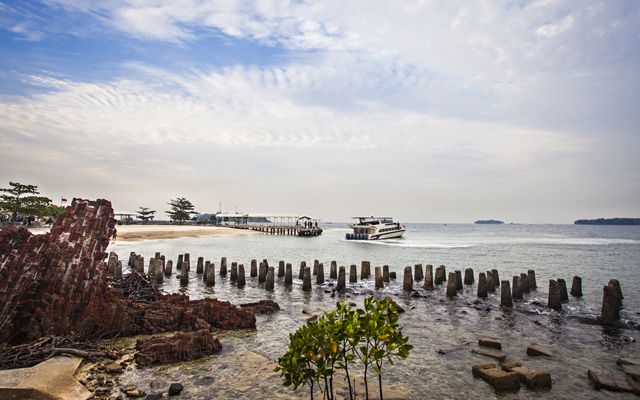
Indonesia’s trade urges Jakarta authorities to step up marketing drive around key destinations such as Kepulauan Seribu (Thousand Islands) or Kota (Old Town) to boost arrivals; Kelor Island in Thousand Islands in North Jakarta, Indonesia pictured
Hasiyanna Ashadi, managing director of Marintur Indonesia and chairman of the Association of the Indonesian Tours and Travel Agencies (ASITA) Jakarta chapter, urged the establishment of Jakarta Promotion Board (BPPD Jakarta), so that the capital city would have a destination marketing body not unlike that of Bali Tourism Board.
“We (ASITA Jakarta) have been invited to join meetings several times to form a BPPD Jakarta. According to the latest news, our letter about the formation of BPPD has already been on the table of Jakarta governor Anies Baswedan since months ago to ask for his approval. However, I do not know why he has not signed it yet,” she said.
The ongoing issues in Jakarta’s tourism sector are also a result of the absence of a deputy governor for the city, said Hasiyanna. The sector, she said, fell into disarray after deputy governor Sandiaga Uno, who was in charge of managing tourism, resigned in 2018 to run for vice president in this year’s presidential election. His seat remains vacant till today.
Hamid Ponco Wibowo, Jakarta chapter head of Bank Indonesia, proposed for the capital to form a special branding agency in charge of identifying the destinations’ most appealing assets and building stories around them to make the sites stand out from its competitors.
A survey conducted by Bank Indonesia, according to Hamid, revealed that the lack of branding was one of the reasons why twice the number of foreign travellers expressed interest to visit Phi Phi Islands in Thailand, for example, compared to the Thousand Islands in Jakarta.
He revealed that the excellent reviews of the Thousand Islands and Old Town was just 21 per cent and 35 per cent, respectively. To improve the ratings, tourism stakeholders have to step up destination marketing efforts through social media or global tradeshows.
Based on his survey, Hamid said, if the city’s administration made some improvements to the attractions, accessibility and amenities in Jakarta’s tourist destinations, foreign tourists would extend their stay and spend more, with probability to return and recommend the sites soaring as high as to 97 per cent.
Hasiyanna revealed that Jakarta’s visitor arrivals started to decline after former governor Basuki Tjahaja Purnama slashed the promotion budget from 1.2 trillion rupiah (US$85 million) to 11 billion rupiah in 2016. Since then, the budget has continued to drop.
Some 53 per cent of the total 2.8 million visitor arrivals in Jakarta last year was for business while the remaining were leisure trips. Following the Asian Games, inbound arrivals to the country declined 19 per cent from 675,000 in 4Q2018 to 547,000 in 2Q2019.
Hamid said that the fact that Old Town and the Thousand Islands had yet to receive a world recognition from UNESCO and that the capital did not host a large-scale event like the Asian Games this year posed a big challenge to tourism players to increase visitorship. A bigger challenge was to make the inbound tourists return to the sites and to promote them.
“According to our survey, the probability of foreign tourists returning to the Old Town and Thousand Islands, and to recommend them, is just 60 per cent,” he said.
In 2018, the Old Town and the Thousand Islands welcomed 580,751 foreign tourists, with the largest source market China making up 26 per cent of the total arrivals. The average length of their stay was three days, with average spending of US$28 to US$61.
Hotel booking service MakeMyTrip is currently being investigated by India’s competition watchdog for alleging giving preferential treatment to SoftBank-backed hotel chain Oyo on its platform, according to a Reuters report.
MakeMyTrip and Oyo reportedly violated industry rules by entering into confidential commercial agreements, the report quoted the Competition Commission of India (CCI) as saying in an order.
MakeMyTrip under investigation by India’s competition watchdog for alleging giving special treatment to Oyo on its platform
The order follows a complaint from industry body Federation of Hotel & Restaurant Associations of India (FHRAI).
The FHRAI’s complaint, which included a laundry list of other allegations, also said that Oyo and MakeMyTrip are stifling competition by offering deep discounts and charging “exorbitant” fees from hotels, said the report.
The FHRAI also alleged that the companies misled customers by continuing to list some hotels on their platforms with a “sold out” sign even after the hotels severed ties with them, it added.
Both platforms allows user to book hotels through their mobile apps while taking a cut of hotel fees, but Oyo also franchises its brand and offers standardised amenities at hotels on its network.
Oyo, who charges hotels approximately 20 per cent franchise fee on room revenues, have faced backlash from an increasing number of Indian hotel operators who are complaining about being blindsided by fee increases.
The backlash against Oyo comes at a crucial time for its principal backer SoftBank which is struggling to raise funding for a second investment fund following its failed public offering of office-rental company WeWork and the lacklustre returns of its other investments such as Uber and Slack.
The FHRAI cited the CCI’s order as saying that agreements between Oyo and MakeMyTrip created barriers to market access for other Indian hotel chains such as Fab Hotels and Treebo, according to the report.
Oyo said in a statement that it was reviewing the order and would cooperate with the CCI’s investigation, it added. The report also quoted a MakeMyTrip spokeswoman as saying that “the allegations are unfounded”.
The CCI said that it would have to investigate the allegations against MakeMyTrip, but did not provide any finding against Oyo.
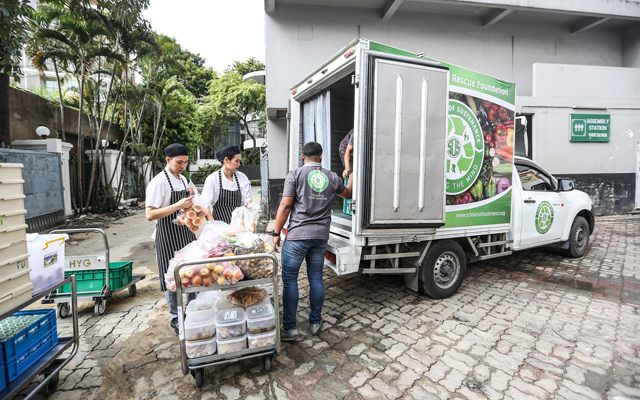
The hotel supports the Scholars of Sustenance Foundation, which collects excess food from businesses and delivers them to the needy across the city
With growing awareness and consumer demand for responsible tourism, hotel chains are jumping on board the sustainable bandwagon by rolling out a variety of green initiatives and adopting more sustainable practices.
In Thailand, the Bangkok Marriott Marquis Queen’s Park has grand plans to make the big shift to sustainability by first fighting food waste through various zero-waste tactics.
Bangkok Marriott Marquis Queen's Park sustainability efforts
1 of 3
The hotel supports the Scholars of Sustenance Foundation, which collects excess food from businesses and delivers them to the needy across the city
Hotel staffers grow a variety of herbs like tarragon and mint at its on-site gardens
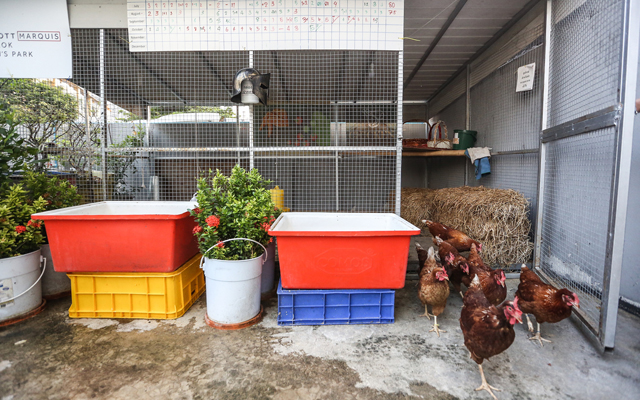
One of the hotel’s gardens is home to a troop of free-range chickens
To steer the hotel operations towards a greener future, the 1,388-key property last month hired a sustainability manager, Michael Riley. Riley’s first task was to oversee and reduce food waste at the Goji Kitchen+Bar – an effort first championed by the property’s executive chef Michael Vincent Hogan and senior executive sous chef Daniel Bucher.
Hogan shared that this food reduction movement began last year when Bangkok Marriott Marquis Queen’s Park started supporting the Bangkok-based Scholars of Sustenance (SOS) Foundation, which collects excess food from businesses and delivers them to the needy across the city.
Such partnerships with SOS and various Thai farmers help to cut wastage of food that would otherwise end up in landfills, while creating positive ripple effects within the local community.
In addition, Hogan shared how surplus food from the hotel’s buffet line are safely reused. For instance, leftover beef at the carving station is turned into a stew, while its bones are boiled and reduced to soup stock. Meanwhile, croissants are morphed into bread puddings, while fruit skins are dehydrated for cocktail mixes. Other food waste is turned into compost for the hotel’s gardens, or becomes feed for various farmers the hotel partners with – oyster shells are grounded into powder for chicken feed, for example.
The property also reduces its carbon footprint by sourcing ingredients such as pineapples, beef and fish locally, and self-cultivates a variety of herbs like tarragon and mint from its two on-site gardens. One of the gardens also houses a troop of free-range chickens and a bee colony, while an indoor vertical hydroponic garden grows rocket leaves.
On why Goji Kitchen+Bar is the first F&B venue on the property to be targeted, Riley shared: “It is the main restaurant that serves around 2,000 covers a day, and would bring about the most impact in terms of food waste. Aside from Goji, we also try to reduce excess food during banquets.”
Goji is currently the test-bed, but Riley revealed that the zero-waste initiatives will eventually be rolled out to the hotel’s other F&B venues. He shared that F&B team members at the other restaurants “have seen the benefits and have started various initiatives to reduce food waste too”.
But Riley’s plans for the hotel’s move towards zero waste goes beyond food waste reduction. “One problem I had the other day were clogged drains, and I’m trying to look for an organic solution, made from bacteria, that can break down the waste (as opposed to pouring chemicals down the drain),” he mused.
Other green initiatives he hopes to implement across the hotel include bringing in compostable, food-safe bags for use in the kitchen, and introducing glass-bottled water in rooms. Earlier this year, Marriott also announced that it was switching from small bottles of bath gel and shampoo to larger pump bottles by December 2020.
However, every step towards sustainability comes with a fresh set of challenges. Riley explained: “Being sustainable is always more expensive, so one challenge is the cost factor for the eco-friendly kitchen food bags. The other problem is finding storage space for the glass-bottled water – in comparison, plastics can be crushed easily after use.”
Aside from the efforts of both the individual property and the entire hospitality chain, Riley pointed out that changing the mindset of its hotel guests, as well as educating staff – despite a high turnover rate – is crucial.
“It is about finding the right balance that marries both business sense and sustainability because as a large hotel chain, we can definitely make a huge difference in the world,” he concluded.
The Asia-Pacific region will continue to be a major driver of global duty free and travel retail sales, growing at an estimated 8.7% annually up to 2022, according to a new study commissioned by the Duty Free World Council (DFWC) and the Asia Pacific Travel Retail Association (APTRA).
That projection from the Economic Impact Report of Duty Free and Travel Retail in Asia Pacific study is based on the Asia-Pacific travel retail industry having generated an estimated US$36.2 billion in 2017, or 45% of total global duty free and travel retail sales.
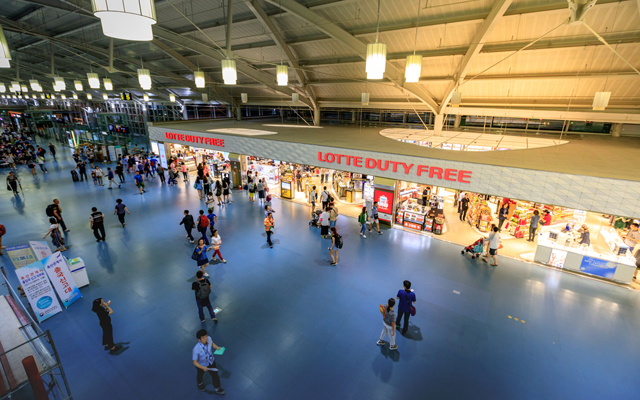
Asia-Pacific is the market leader in global duty free and travel retail market, with South Korea emerging as the world’s largest duty free market; Lotte Duty Free shop in Gimhae International Airport in Busan, South Korea pictured
“Asia-Pacific is registering exceptional growth in duty free and travel retail sales. We are also seeing the regulatory landscape become more complex and dynamic across the various product categories. This report is an important investment on the part of DFWC and APTRA in getting the data that will help us engage policymakers and regulators in protecting the sustainable growth of our industry,” said Frank O’Connell, president of DFWC.
The report identifies the following key trends in duty free and travel retail across Asia-Pacific:
East Asian markets are driving growth
South Korea is the world’s largest duty free market, accounting for nearly US$12 billion in sales, with China and Japan also being globally significant markets. Mainland China is anticipated to strengthen its position as the second biggest duty free and travel retail market in the region.
Growing diversity in product demand
Fragrances/cosmetics, wines/spirits, and fashion/accessories accounted for approximately 67% of total sales in the global duty free and travel retail sector in 2017. In Asia-Pacific, these product categories made up 75% of all duty free and travel retail sales.
Duty free is becoming increasingly digital
Duty free shoppers in the Asia-Pacific region are increasingly looking to digital platforms to facilitate their purchases. Typically, this involves the use of mobile apps which are becoming increasingly common payment methods for consumers.
Channel diversification beyond aviation
Total estimated duty free and travel retail sales by land channels were US$14.2 billion in 2017. Downtown duty free in Asia-Pacific comprises a significant portion of sales for all land channels. Cruise tourism is an emerging sector in Asia, with capacity growing at an annual rate of 41% over the last five years as the fastest growing sub-region in the world.
“The report highlights the significance of the Asia-Pacific region to global duty free and travel retail, and on a macro level, to economies in the region through job creation and contribution to GDP. As the industry body that supports, protects and nurtures the growth of the travel retail industry, we are encouraged by the positive trends indicated by the report findings,” commented Grant Fleming, president of APTRA.
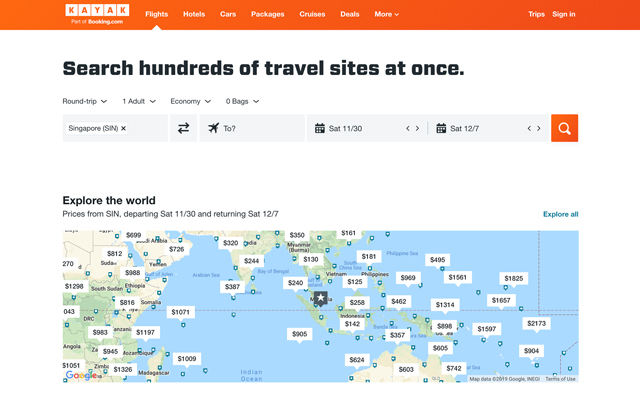
ATPCO has signed a multi-year retailing deal with Kayak to integrate all three Routehappy Rich Content types – Amenities, Universal Ticket Attributes (UTA), and Universal Product Attributes (UPA) – for Kayak’s portfolio of travel brands.
Kayak will integrate Amenities and UTAs across its travel brands to display amenities like Wi-Fi, USB outlets, in-flight entertainment and food in its flight search results.
Kayak to integrate Routehappy rich content for its portfolio of travel brands
Additionally, the UTA integration will result in an updated display that will help travellers better understand the benefits and restrictions that typically come with the purchase of a ticket. This may include seat selection, cancellations and flight changes, as well as a more visual display with a UPA integration including photos, videos and 360-degree tours of the aircraft.
The content integration is expected to help Kayak further enhance its flight shopping displays so its customers better understand the available choices when looking for a flight.
The move also comes at a time when the need for more high-quality product and fare content is growing as more airlines move toward unbundling their offerings, said both partners.
Debby Soo, chief commercial officer at Kayak, said: “We want our users to have the best possible information to evaluate flights. Routehappy makes it easy for our partners to merchandise their offers and, in turn, for travellers to make the perfect choice.”
ATPCO’s chief commercial officer Jonathan Savitch said: “Creating and distributing high quality, comprehensive rich content is hard. Our retailing teams are constantly looking at trends, monitoring fleet changes, and working directly with airlines to keep the content relevant and fresh. The days of just using price and schedule to make flight shopping decisions are over.”
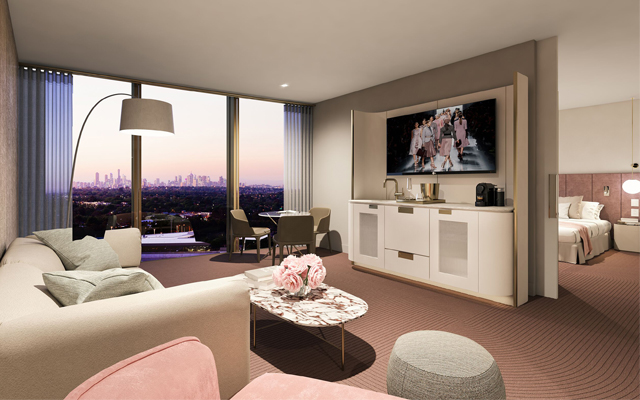
Hotel Chadstone Melbourne, MGallery by Sofitel, Australia Hotel Chadstone Melbourne, which is owned by the Gandel Group and Vicinity Centres, has opened its doors in the Chadstone megamall. The hotel features 250 rooms and suites, two penthouses, rooftop bar and lounge, wellness retreat and day spa complete with LED lounge and yoga studio, a rooftop pool with loungers and three private cabanas, as well as renowned chef Scott Pickett’s latest restaurant, Pastore, an Italian-inspired all-day dining venue.
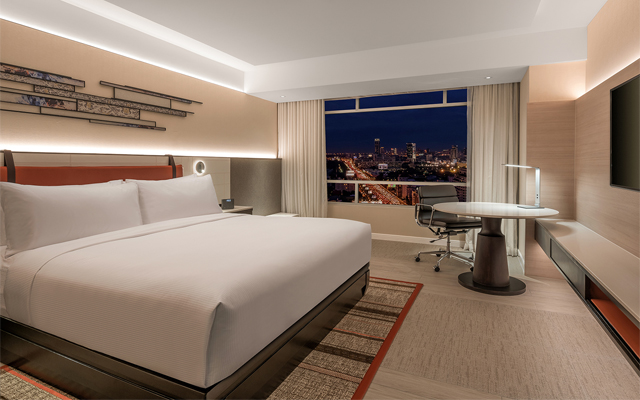
DoubleTree by Hilton Bangkok Ploenchit, Thailand DoubleTree by Hilton Bangkok Ploenchit has opened in the heart of Thai capital, offering 251 rooms and suites ranging from 28 to 240m2. Rooms are equipped with a working desk, a safe, as well as a 43-inch flat-screen HD television with local and cable channels, a mini bar and coffee-and-tea making facilities. Hotel facilities include a 24/7 fitness center, an outdoor pool, an all-day dining restaurant, a rooftop event space that can accommodate up to 40 people.
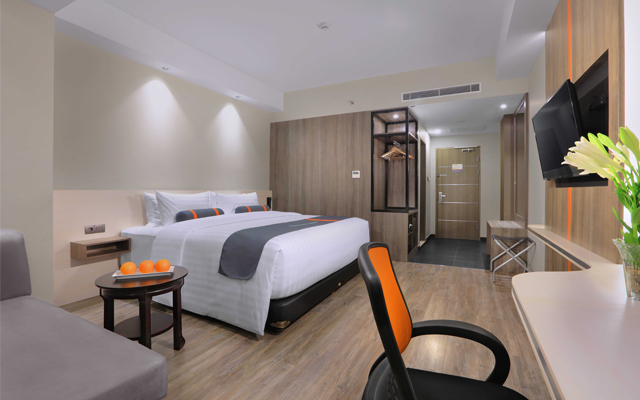
Harper Wahid Hasyim Medan, Indonesia Harper Wahid Hasyim – Medan has launched to become as Archipelago International’s third hotel in the city. Located in the centre of the city’s culinary and entertainment hub, the Medan hotel is a short drive from various tourist spots, such as Durian Ucok, Upside Down World Medan, Rahmat International Wildlife Museum & Gallery. The hotel offers 89 rooms and suites, four meeting rooms, and a Rustik Bistro & Bar.
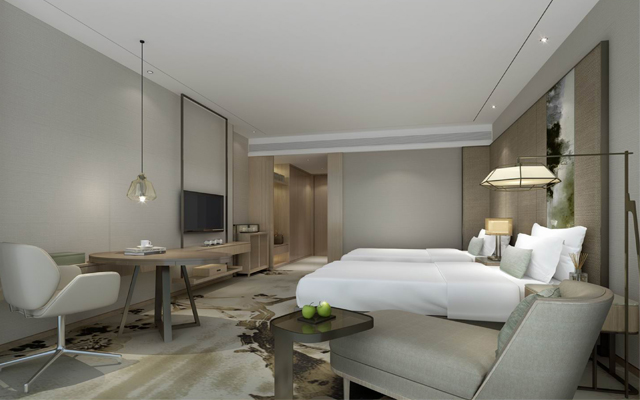
Dusit Thani Wujin Changzhou, China The Dusit Thani Wujin Changzhou hotel, located in Changzhou Science and Education Town, features 230 guest rooms and suites. For MICE groups, the deluxe hotel is equipped with a 1,100m2 pillarless ballroom and six function rooms. Recreational facilities include an all-day dining restaurant, a Chinese restaurant, a lobby lounge, the Dusit Club, a library bar, a gym, and a chess room.
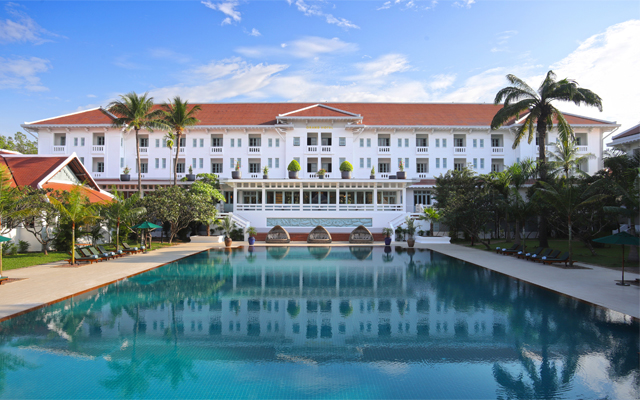
Raffles Grand Hotel d’Angkor, Cambodia The iconic Raffles Grand Hotel d’Angkor has officially reopened following an extensive six-month restoration. All 119 rooms and suites are equipped with new features such as Segafredo coffee machines, USB charging stations and Simmons pillow-top mattresses. All bathrooms have been extensively renovated and upgraded with rain showers.
New additions to the hotel include a kids’ club, and a fully air-conditioned marquee for events and functions to be launched early next year. F&B establishments, helmed by executive chef Angela Brown, include 1932, the hotel’s new signature restaurant which offers authentic Royal Khmer cuisine; an Elephant Bar; and a colonial-style conservatory.
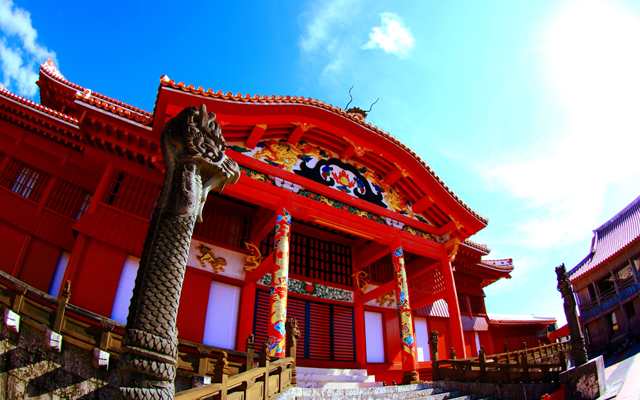
Shuri Castle, a popular tourist spot in Naha, the capital city of the Okinawa Prefecture in Japan, has been destroyed in a fire early Thursday morning, according to a report by The Japan Times.
The cause of the blaze remains unknown, said the report, adding that there were no reports of injuries, according to police and fire officials.
Fire engulfs Okinawa’s iconic Shuri Castle
Firefighters arrived at the scene at 2.40am local time after being alerted to a smoke sighting, and nearby residents were temporarily evacuated, the report added.
The report quoted an official from the Naha Fire Department as saying that efforts to put out the fire, which razed the entire 600-year-old UNESCO World Heritage Site to the ground, involved 30 fire engines and 100 firefighters.
Fire officials said it is highly likely the fire started inside the main building, and quickly spread though the nearby buildings on the site.
Originally built in the 1300s, the Shuri Castle has been destroyed multiple times due to wars and fires, most notably, during the Battle of Okinawa in 1945. Chief cabinet secretary Yoshihide Suga said at a news conference in Tokyo that the government has plans to reconstruct the gutted castle.