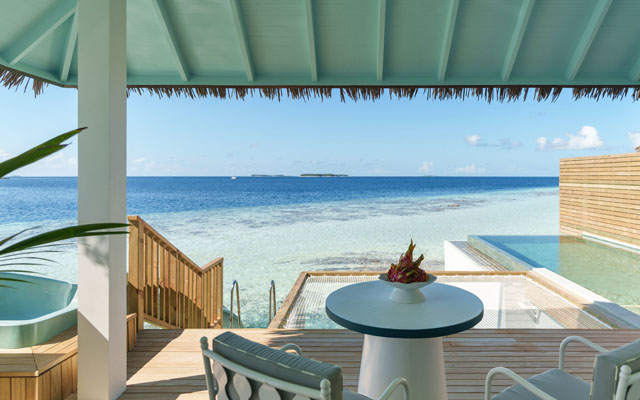
Steven Phillips has been appointed general manager to The Lux Collective’s flagship resort in Mauritius – LUX* Grand Baie Resort and Residences – scheduled to open 1Q2021.
Prior to joining LUX* Grand Baie Resort and Residences, Phillips served as area general manager for Joali Maldives, and was also the former general manager at Gili Lankanfushi for three years.
The UK native brings two decades’ worth of hotelier experience with various international brands, having overseen properties in London, Japan, Malta, Sri Lanka and Abu Dhabi.
New Zealand has unveiled a NZ$12.1 billion (US$7.3 billion) stimulus package on Tuesday – of which nearly half will go towards supporting the hard-hit aviation sector – to cushion the economic fallout from the Covid-19 pandemic.
The sum is equivalent to four per cent of New Zealand’s GDP, and the bulk of it will go towards businesses that have lost more than 30 per cent of their income as a result of the downturn, according to media reports.
New Zealand launches a NZ$12.1 billion fiscal package, which includes tax cuts for the aviation industry, to combat Covid-19 impact
Finance Minister Grant Robertson was quoted by reports as saying that “recession is almost certain” and will be more severe than the downturn after the 2008 global financial crisis.
But he added that the package, which also includes wage subsidies and tax breaks, would help counter its impact.
The package is the first phase of a broader recovery package, with further stimulus set to be announced in the annual budget in May.
About NZ$5.1 billion will go towards wage subsidies for businesses, NZ$2.8 billion towards income support, NZ$2.8 billion in business tax relief, and NZ$600 million for the aviation industry.
Robertson said the aviation support excluded direct government subsidies for ANZ, the national carrier, which recently announced it was slashing international capacity by 85 per cent and local routes by 30 per cent.
The world’s three major airline alliances – oneworld, SkyTeam and Star Alliance – have issued a joint release calling on governments and stakeholders to take action, such as providing slot relief, as well as airport and overflight fees reduction, to mitigate the unprecedented challenges faced by the global airline industry amid the Covid-19 pandemic.
The virus has sent the global aviation industry into a tailspin, due to weakening demand for travel that is tied to growing travel restrictions worldwide. As such, some airlines have been running near-empty flights or none at all, while others have been forced to temporarily shutter.
Global airline alliances urge government support to weather the Covid-19 storm
The three global alliances, which represent almost 60 airlines around the world, with member carriers contributing to more than half of global airline capacity, said that they are “strongly supporting a request by the IATA for regulators to suspend slot usage rules for the northern summer 2020 season as the airline industry suffers from extraordinary reductions in passenger demand”.
“The alliances welcome the moves in recent days by some regulators who have suspended slot regulations temporarily and urge others to follow suit promptly. They also request that regulators consider extending the suspensions for the entire operating season,” read the joint statement.
The impact of Covid-19 on the airline industry is significant, with IATA estimating up to US$113 billion in revenue losses for global passenger airlines. The impact is expected to have a ripple effect through the value chain that supports the airline industry.
The forecasted revenue loss scenario does not include travel restrictions recently imposed by the US and other governments. US restrictions on passengers from the Schengen Area will place pressure on the US-Schengen market, valued at over US$20 billion in 2019.
To alleviate the immense pressures faced by airlines in the current operating environment, and in support of IATA’s statement on March 12, the three alliances urge governments worldwide to prepare for the broad economic effects from actions taken by states to contain the spread of Covid-19, and to evaluate all possible means to assist the airline industry during this unprecedented period.
The alliances also call on other stakeholders to provide support. For example, airport operators are urged to evaluate landing charges and fees to mitigate the financial pressure faced by airlines due to a severe decline in passenger demand.
Rob Gurney, CEO of oneworld, said: “During such times of difficulty and uncertainty, it is important that the airline industry works even closer with stakeholders to mitigate adverse impacts from the virus and collaborate in areas within our control. Governments must implement the measures they consider necessary to contain the spread of Covid-19, and must be prepared for the wide-scale economic implications that will result from those measures.”
Recently, ITB Berlin was cancelled for the first time in its 58-year run due to concerns over the Covid-19 outbreak. While the impact of the virus has proven to be detrimental to the hospitality industry, the ultimate outcome of what happens to our industry remains largely unknown.
HotelPlanner has seen its fair share of how breaking news and trends have had an impact on the travel landscape, having experienced the effect of SARS in 2008, as well as the 9/11 attacks. Through these trying times, it becomes clear what the industry needs to do to survive this outbreak, and even better, come out stronger on the other end.
Hentschel: Hotels can step up safety measures and offer booking flexibility to draw travellers back
Be prepared, and know what to expect What we think will happen in the near future: The hospitality industry will continue to consolidate under global brands that use technology to see trends first and act fast to adapt to them.
For instance, once we saw bookings in China drop by 80 per cent, while Asia fell to under 50 per cent occupancy, we knew the same was going to happen to hotels in Europe and North America. We quickly made adjustments to our expenses in line with new forecasts.
There will be regional travel companies that are slow to react and will either go out of business or be acquired. Industry first-movers will also either acquire smaller companies that are not prepared for this crisis or take market share from them.
Win travellers back with two key strategies To ensure that hotels can win travellers back, there are two key strategies to employ.
First, guests need to feel safe. HotelPlanner conducted a survey recently to find out what keeps people from travelling during these times, and the top two responses indicate that it stems from a fear of getting the virus, as well as a fear of being quarantined.
Hotels can combat that fear by conducting temperature screening for all guests, staff, suppliers, contractors, and other associates; getting guests to complete a travel and health declaration and giving them a set of surgical masks and sanitisers upon check-in; as well as sanitising public areas and all guestroom door handles regularly.
The second, and more important thing to do, is to provide customers with the flexibility to change their plans. Monitoring the outbreak, it is clear that travel plans can change in an instant. Not allowing discounted bookings, as well as the flexibility for date changes and cancellations are no longer practical in today’s world where travel plans can be disrupted by government restrictions and other external factors.
Trying to go after customers for extra cash to bolster your revenue will hurt your brand’s reputation and turn repeat customers away. These properties should consider consulting their business insurance brokers instead, which should cover them for business interruptions like the outbreak.
Government stimulus is crucial to tide the industry through tough times In the US, after multiple calls from our teams pushing for government stimulus in the industry, the White House has reacted positively. Larry Kudlow, president Donald Trump’s top advisor, indicated the possibility of economic aids, and we are optimistic that it can benefit both large and small companies. With this, we can avoid massive layoffs, unemployment will stay low, and the market will continue to grow as more 401k money continues to flow into the market.
It’s tougher to push a central policy for recovery in Asia. Similar to South America, Asia is made up of small countries with very different styles of governments and free markets.
Singapore has the best system in place to implement a central stimulus for the hospitality market. However, beyond the financial support package for the tourism sector, the industry needs more than US$8 billion. The industry needs crisis loans and grants, while citizens need tax credits to spend on staycations – to get locals back int hotels since it will be months before the majority of foreign tourists will return.
Singapore has been great at taking care of people with the virus and tracking the viruses’ spread to reduce future infections. Hopefully, the republic will allow for government intervention to inject financial stimulus into the struggling hospitality businesses.
Banyan Tree Holdings, through its subsidiary Banyan Tree Hotels & Resorts, has signed a joint venture agreement with Myanmar Treasure Hotel & Resort Group (Htoo Hospitality) to establish a hotel management business in Myanmar which will manage 17 hotels and resorts owned by the latter.
The initial management arrangement will involve 15 existing properties across Htoo Hospitality’s nine brands, such as Aureum Palace Hotels & Resorts, Myanmar Treasure Resorts and Malikha Lodge, as well as two that are in development – Kandawygi Palace Hotel in Yangon and a new destination resort in the Mergui Archipelago.
Htoo Group of Companies’ U Tay Za (left) and Banyan Tree Holdings’ Ho Kwon Ping seal a joint venture deal
Some of these properties will gradually be rebranded into either a jointly-developed new brand for the Myanmar market or a brand within Banyan Tree Holding’s brand portfolio.
Under a long-term partnership, the joint venture envisions to become the top hotel management company in Myanmar, overseeing and managing hotels owned by third parties.
With the anticipated tourism boom in Myanmar, there will be strong demand for quality local hospitality talents.
Rooted in the Banyan Tree Holdings’ sustainability ethos of ‘Embracing the Environment, Empowering People’, the joint venture will also operate the Htoo Hospitality-owned hospitality school in Yangon currently known as Hotel & Tourism Training Centre. The school helps to elevate the local hospitality talent pool and provides more opportunities for locals to take steps towards a professional career in the hospitality industry.
Ho Kwon Ping, executive chairman of Banyan Tree Holdings, said: “As a leading independent global hospitality company, our Group has identified growth opportunities in Myanmar’s hotel management sector. With this head-start coupled with our hotel management expertise, we are mindful that this joint venture will open further opportunities for our Group to enter key strategic sectors in this fast-flourishing country. This strategic alliance with the established Htoo Hospitality, Myanmar’s largest hotel and resort network, will accelerate the growth and reach of our brands as we elevate hospitality service to yet another level across the country.”
U Tay Za, chairman of Htoo Group of Companies, said: “By combining our hotel assets, some of the most beautiful properties in Myanmar, and Banyan Tree’s unmatched hotel management know-how, this strategic alliance will drive Myanmar hospitality to a whole new level and bring positive synergies and value to both Partners, our employees and environment.”
Singapore’s key tourist attractions are implementing social distancing amid the Covid-19 pandemic, in response to a series of ramped-up measures announced by the government last week to prevent further spread of the virus.
The Ministry of Health now requires workplaces and public venues, such as entertainment venues, tourist attractions, dining outlets and sports centres, to limit large crowds gathering in close proximity over a prolonged duration in order to reduce the risk of local transmission.
Gardens by the Bay implements social distancing across its key attractions like Flower Dome (pictured) to prevent the spread of Covid-19
A Gardens by the Bay (GBTB) spokesperson said the attraction will “limit the number of visitors entering our indoor attractions to ensure sufficient social distancing between visitors”.
She elaborated that at the ongoing Sakura Matsuri floral display in the Flower Dome enclosure, the number of visitors will be reduced to about half its optimum capacity at any one time.
Other measures include time-stamping of tickets, especially over the weekend; and a demarcation of 1m between visitors at the ticketing counters and the entrance to Flower Dome.
“We will also be putting up notices at Flower Dome explaining the situation and seeking the public’s understanding that they may have to wait to enter because of this precautionary measure,” she said.
Capacity at GBTB’s other attractions such as Cloud Forest and Floral Fantasy will be halved as well.
Over at Resorts World Sentosa (RWS) integrated resort, face-to-face meetings among employees has been reduced by 80 per cent, through measures such as social distancing at staff cafeterias and spilt-team working arrangements, according to its spokesperson.
At one of RWS’ attractions, Universal Studios Singapore, visitors are encouraged to maintain a “safe and comfortable distance” from each other in queue lines when waiting for their turn to take rides, and when seated during live performance shows.
Wildlife Reserves Singapore (WRS), similarly, is leaving no stone unturned in order to guard against the deadly virus.
A WRS spokesperson said: “We are taking various measures over the next week to improve spacing and comfort in our dining and congregational areas, and we will implement digital contact tracing for our guests to provide their details.”
Hong Kong will put all visitors under a two-week quarantine starting midnight on Thursday (March 19) to prevent the spread of Covid-19.
The government has also advised residents to avoid all non-essential travel.
Hong Kong expands quarantine policy to all arrivals from foreign countries amid the rise in imported cases
Those arriving in Hong Kong will be put under home quarantine, the South China Morning Post reported. The new restrictions will not apply to arrivals from mainland China, Macau or Taiwan, it added.
Since February 8, anyone arriving in the city from mainland China, except Hubei province, have to serve a mandatory quarantine for 14 days as part of efforts to contain the spread of the virus.
Residents from Hubei province have been barred from entering Hong Kong since January.
Hong Kong went to an emergency lockdown for three weeks in January and February to stem the spread of the virus – a tactic which seemed to have worked in the city’s favour in ebbing the spread of the virus.
As of Monday, Hong Kong has 157 confirmed cases and four deaths in the city.
“In many countries the number of confirmed cases can be described as explosive. If we don’t adopt some strict measures … I’m afraid all precaution efforts done in the past two months would be wasted. It will affect the public health of Hong Kong,” chief executive Carrie Lam said at a press briefing on Tuesday.
The suspension of schools, which was originally supposed to end on April 20, is also likely to be extended, said Lam.
Further capacity cuts have been ordered by Singapore Airlines (SIA), Qantas, Jetstar and Air New Zealand (Air NZ) as travel demand plunges even further on the back of tougher government containment measures to contain the Covid-19 outbreak.
SIA will be suspending additional services across its network amid what it calls “an unprecedented time in the airline industry”.
Singapore Airlines reduces flight capacity by 50 per cent amid Covid-19 travel curbs
The suspensions mean that SIA will operate only 50 per cent of the capacity that had been originally scheduled up to end-April, said the airline in a statement.
SIA CEO Goh Choon Phong said: “We have lost a large amount of our traffic in a very short time, and it will not be viable for us to maintain our current network. Make no mistake – we expect the pace of this deterioration to accelerate. The SIA Group must be prepared for a prolonged period of difficulty.”
Full details about the suspended flights will be announced on the SIA website today (March 18).
As well, Qantas and Jetstar will cancel almost all international flights and make steep cuts to domestic flights until June. The move will render a 90 per cent reduction in global capacity until at least the end of May, a sharp increase from the 23 per cent capacity cuts announced last week.
Domestic capacity will be slashed by around 60 per cent over the same period, a major increase from the five per cent reduction last week.
The cuts will see the grounding of around 150 aircraft, out of about 300 across the group, including almost all of its wide-body fleet.
Affected Qantas and Jetstar flights will be announced by the end of the week.
In a similar move, Air NZ will further reduce capacity on its longhaul network by 85 per cent over the coming months.
The airline will operate a minimal schedule to allow Kiwis to return home and to keep trade corridors with Asia and North America open. Full details of this schedule will be unveiled in the coming days.
For its longhaul network, the airline will suspend flights between Auckland and Chicago, San Francisco, Houston, Buenos Aires, Vancouver, Tokyo Narita, Honolulu, Denpasar and Taipei from March 30 to June 30. It is also suspending its London-Los Angeles service from March 20 (ex Los Angeles International Airport) and March 21 (ex Heathrow Airport) through to June 30.
The Tasman and Pacific Island network capacity will be significantly reduced between April and June, with details of these schedule changes to be announced later this week.
Domestic capacity will be cut by around 30 per cent in April and May, but no routes will be suspended.
In an open letter published on Tuesday, Gloria Guevara, president & CEO of World Travel & Tourism Council (WTTC), has called on governments of all countries to take immediate action to help ensure the survival of the critical travel and tourism sector which is facing an existential threat during the current pandemic.
Guevara wrote: “No one can doubt that we are in uncharted territory. The coronavirus pandemic means the world is facing a threat on multiple fronts not seen in peacetime. The travel and tourism sector is uniquely exposed, and we estimate 50 million jobs globally are at risk.
WTTC’s Gloria Guevara calls on government support for tourism sector
“To put it bluntly, travel and tourism is in a fight for survival.
“Travel is the backbone of economies around the world. It brings in essential currency and inward investment, creates jobs and stimulates every sector.
WTTC figures show travel and tourism contributes to 10.4 per cent of global GDP and 320 million jobs. It is responsible for creating one in five new jobs and, for eight successive years, has outpaced the growth of the global economy.
“Without travel and tourism, economies around the world face an existential threat.”
Guevara identified three vital and immediate measures to be taken by governments everywhere to “help ensure the survival of this critical job-creating sector”.
She emphasised that “any delay will be costed in millions of lost jobs and almost incalculable damage worldwide”.
She wrote: “Firstly, financial help must be granted to protect the incomes of the millions of workers in the sector facing severe economic difficulties.
“Secondly, governments must extend vital, unlimited interest-free loans to global travel and tourism companies as well as the millions of small and medium sized businesses as a stimulus to prevent them from collapse.
“Thirdly, all government taxes, dues and financial demands on the travel sector need to be waived with immediate effect at least for the next 12 months.”
These measures, she opined, taken in addition to recovery funds, will protect a sector which is already facing collapse.
“We are calling upon the world to take urgent and immediate action to prevent this global health crisis becoming a worldwide economic catastrophe. Doing nothing is not an option. We implore every government to take drastic and decisive action now to preserve and protect the contribution of the travel and tourism sector, on which more than 320 million people and their families depend on for their livelihoods,” she concluded.
Malaysia’s unprecedented nationwide movement control order, which takes effect tomorrow until March 31, has left hoteliers with a sense of uncertainty around operational continuity and their obligation to protect and care for their guests.
Nardya Wray, director at Campbell House in Penang, told TTG Asia that his property has a mother and daughter from Holland whose travel agent is trying to help them leave through Kuala Lumpur as soon as possible.
Cheong Fatt Tze Mansion, Penang still has foreign guests in-house as time draws closer towards Malaysia’s nationwide lockdown on Wednesday
“While they stay with us, we will continue to look after them. But we are not sure if we are allowed to remain open and have staff working during this lockdown period,” Wray added.
She revealed that other foreign guests had checked out early on Tuesday to avoid being caught in flight disruptions.
Loh-Lim Shen Yi, executive director at Cheong Fatt Tze Mansion in Penang, also raised similar concerns about next steps.
“As a hotelier, it is our obligation to honour bookings by guests and remain open. The news broke late Monday night and we still have foreign guests with us. Some may want to stay put in the hotel as they are afraid of flying and contracting the virus,” he said.
While there are no new bookings from April onwards, Loh-Lim said he was unsure if local guests who had made advance bookings for late March would still be allowed to proceed with their stay.
Kingston Khoo, director of sales and marketing at Taman Negara Resort in Pahang, said many foreign guests had checked with their travel agents on Monday about the possibility of returning to their countries earlier but one of the hurdles they faced, especially with the longhaul market, was the lack of flights now that many international airlines have severely reduced capacity.
For existing European guests who choose to extend their stay, Frangipani Langkawi Resort & Spa managing director, Anthony Wong, is offering huge discounts.
He explained: “We know we won’t get new guests in March, so we don’t mind offering discounted rates to existing guests. Some think it is safer to stay on in Langkawi than to return to Europe at this point in time.”
In response to hoteliers’ queries, the Ministry of Tourism, Arts and Culture has offered an unofficial statement, which at press time, was still pending approval from the Malaysian National Security Council.
The ministry said hotels are allowed to continue operating and serving in-house guests who have checked in before March 18, but no new check-ins or bookings are allowed during the lockdown period from March 18 to 31.