TTG Asia
Asia/Singapore Sunday, 14th December 2025
Page 1032

Philippines’ partial travel ban on South Korea births mixed bag of reactions

0

The Philippines’ Department of Tourism (DoT) is rallying against the government’s move to temporarily ban tourists from South Korea’s northern Gyeongsang province, amid the escalating Covid-19 outbreaks in the nation.

The ban was approved by the country’s Inter-Agency Task Force (IATF) on Emerging Infectious Diseases during a meeting yesterday.
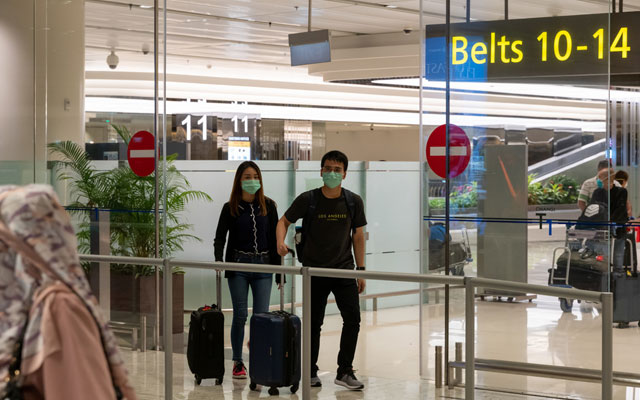
The Philippines imposes partial travel ban on South Korea

Under the ban, Filipino tourists will also be barred from visiting any part of South Korea, which has the highest number of Covid-19 cases outside China, with 1,260 infections and a total fatality of 12 to-date.

Permanent residents, students and overseas Filipino workers are permitted to travel to South Korea, but should sign a declaration stating that they know the risks involved in their trip, according to a report by Philstar.

Hurrying from “two hours of heated debate” at the IATF meeting, tourism secretary Bernadette Romulo-Puyat told PATA Philippines Chapter’s First Business Assembly 2020 yesterday afternoon that the DoT was against a total ban, which health secretary Francisco Duque wanted.

Puyat, who was not consulted when the travel bans on Chinese and Taiwanese (since lifted) travellers were imposed, outlined the implications of a ban on South Koreans, who are consistently Philippines’ top travel market for years. Last year, South Koreans accounted for 1.99 million or 24.08 per cent of total inbound tourist arrivals to the Philippines.

Last November, the Philippines signed an agreement with South Korea to boost tourism ties between the two countries. “They are (our) friends and they are very good to us,” said Puyat.

With an ongoing ban on China (the Philippines’ second biggest inbound market with 1.74 million or 21.1 per cent of total arrivals in 2019), Hong Kong (with 1.1 per cent) and Macau (0.1 per cent), including South Korea in the travel ban will mean losing nearly half of the total inbound market.

Puyat said that the Philippines could follow in Singapore’s footsteps and ban only tourists from Daegu and Gyeongsang, but admitted that it is somewhat moot as these destinations have already cancelled flights, and the South Koreans themselves have stopped travelling and gone into self-quarantine.

The partial ban is subject to a risk assessment review within two days.

PATA Philippines Chapter chairman Bob Zozobrado said the duty of denying entry to citizens from any country should not fall on the Philippines as a country; instead, the airlines, Department of Health, and the Bureau of Immigration should enforce the protocols and be stringent.

“It is their responsibility to screen (inbound visitors) and not let in those whom they feel are contaminated,” he said.

Zozobrado said that “we have to lobby against” a travel ban, even if it’s a partial one. “First of all, it’s very disparaging and very insulting to the country that’s being banned, like what happened to Taiwan,” he said.

He also noted that the Covid-19 outbreak in China has been “blown out of proportion”.

“I know that China is the epicentre of the Covid-19 virus. What has been reported by the media is how many people – 80,000 – are now contaminated, but not how many have been released after being tested negative. That’s the sad part about it,” he said.

Philippine Travel Agencies Association president Ritchie Tuano admitted that this is a tough line to straddle. “Of course, the public health and safety is of paramount importance, but we need to balance it out with the Philippine economy as well, and (consider) what the South Koreans are contributing to our economy.”

Echoing a similar sentiment, Marlene Insigne, general manager of Southeast Travel Corp, said: “I’m not for a travel ban, but if the situation (in South Korea) worsens in the next few weeks, we really have to sacrifice. We shouldn’t think only about the economy, but the people’s safety too.”
India’s proposed tax on outbound tour packages sparks outcry

0

Indian travel agents are unnerved by a possible five per cent tax collection at source (TCS) imposed on travellers purchasing outbound tour packages, saying that it would hurt sales and increase their cost of compliance.

The tax proposal is slated to be implemented from April 1, 2020.

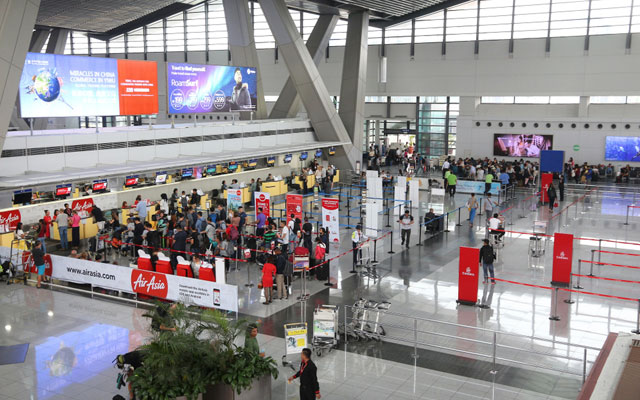
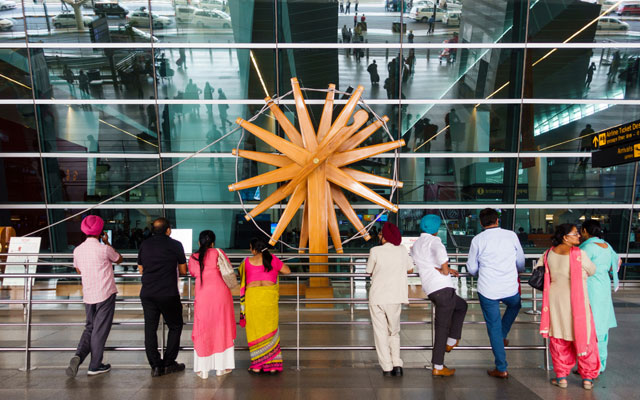
Indian travel agents fear sales would be affected by the proposed tax on outbound tour packages

Vineet Raina, founder and managing director, Pink Elephant Journeys, told TTG Asia that the move to levy TCS on sales of outbound tour packages would push her customers to book directly with foreign tour operators just to avoid the tax burden.

“Having to furnish quarterly TCS returns adds to our reporting and cost burden,” she added.

Some travel agents also warned that the new TCS would further dull their competitive edge when compared to foreign tour operators, as Indian agencies are already collecting a five per cent Goods & Services Tax.

TTG Asia understands that the Outbound Tour Operators Association of India, Travel Agents Association of India and other Indian travel agent associations have raised their objection with various government entities such as the Prime Minister’s Office, Ministry of Finance, Central Board of Direct Taxes, and Ministry of Commerce & Industry, requesting for a reconsideration of the TCS implementation.

Offering a different take on the issue, Brijesh Modi, CFO, Thomas Cook India, opined that customers would gradually adapt to the extra tax as they would recognise the benefits of booking with a tour operator in India instead of with an overseas operator just for a five per cent savings.

Brijesh said: “We don’t see any impact of TCS on our business. However, we have (proposed) that the government consider lowering the tax from five to just one per cent, just like it is for other sectors such as automobile.”

Penang trade to debate controversial tourism master plan at WiT Indie 2020

0

The Penang Tourism Master Plan (PTMP), which has drawn the industry into a protracted and controversial debate over what is required to boost the island’s appeal, will continue to come under the spotlight when tourism stakeholders gather on the stage of WiT Indie in Penang on March 13.

The new master plan, which charts out the state’s tourism direction, calls for 104 initiatives, including physical projects and programmes, but industry practitioners doubt this is what Penang needs.

Penang’s new tourism master plan has been met with criticism; Kek Lok Si Temple in Penang pictured

“You (the state) talk about revitalising alternative tourism, and yet, I see micro projects of building this or that structure when there is no proof that building more things will bring in more tourists,” Ooi Geok Ling, co-founder of WiT Indie, said to local media.

Penang’s international tourism has been floundering, with foreign arrivals dipping from its high point in 2014 at 717,714 to 553,100 in 2017. Last year, it climbed back up to 669,679, but numbers are likely to drop again due to the current Covid-19 crisis.

Some industry players have expressed disappointment in the tourism plan not “addressing the needs of travellers or operators” nor “optimising what Penang has to offer”.

“I do not think the plan addresses a sustainable outlook for the future, as it is based on large investments and more developments, rather than utilising the amazing culture and natural resources we currently have,” opined Nardya Wray, owner of luxury boutique hotel, Campbell House.

Rather, Penang should be promoting its “natural” self, as Eric Chong, owner of Penang Green Acres, suggested. “Focus on our natural heritage of the hills, nature parks, mangroves, cottage industries,” he said.

Chong will contribute to a panel discussion on sustainability in tourism at WiT Indie, alongside other champions of sustainability, including Andrew Dixon of Nikoi and Cempedak Islands, Bintan, Indonesia; Uttara Sarkar Crees of Gyalthang Eco Travel; and Irshad Mubarak, owner, JungleWalla Tours, Langkawi.

Stakeholders have been given a two-week period to give feedback before the masterplan is finalised.

Macau worst hit by Covid-19 among APAC hotels: STR

0

Hotels across the Asia-Pacific region have taken a severe dip in occupancy amid the Covid-19 outbreak, with Macau, Hong Kong and Taiwan the most deeply impacted, according to preliminary February data from STR.

Pulling from Tourism Economics’ global top 20 for mainland China outbound travel, STR analysed 14 markets for a six-week period, beginning January 6 till February 16.

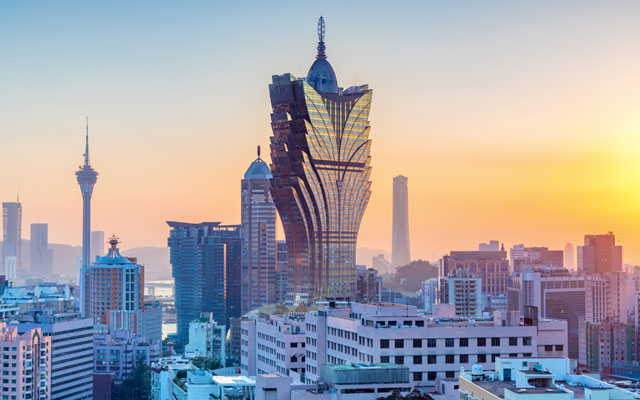
Macau registered the steepest occupancy decline in the Asia-Pacific region amid Covid-19

“With so much dependence on Chinese arrivals, it was anticipated that key markets around the region would see a negative impact from the coronavirus outbreak,” said Jesper Palmqvist, STR’s area director for the Asia-Pacific region.

“In certain markets, we saw an almost immediate decline in occupancy levels in the early days of February. Already a low business travel period due to the Chinese New Year holiday, drops in occupancy were worsened in the wake of the World Health Organization’s announcement of a global health emergency on January 30. The impact will likely continue until containment is reported and recovery begins.”

When comparing the first week of the analysis with the last, Macau saw the steepest occupancy decline (-97 per cent), falling from 96 per cent to just three per cent in a matter of six weeks. The 15-day shutdown of casinos in the market is a key reason behind the significant drop, Palmqvist noted.

Meanwhile, Hong Kong (-64 per cent to 25 per cent), already suffering from a political crisis, and Taiwan (-59 per cent to 26 per cent) were next on the list of decreases. On the other hand, Australia (+11 per cent to 73 per cent) and Indonesia (+four per cent to 58 per cent) reported increases in the metric, thanks to more recent gains.

Palmqvist said: “For those more moderate impact markets, consistent occupancy declines began with the week of Chinese New Year. The new and lower levels for these markets are in line with what was seen after the global financial crisis in 2009.

“For those markets with more stable occupancy, less dramatic declines are partially due to distance from mainland China, volume of visitors, stronger domestic or diverse travel drivers and a reasonably solid level of continued airlift. Australia was already off to a quiet start in 2020 due to the bushfires in several populated states in the country.

Indonesia has felt some occupancy and rate impact in Bali, a popular market for Chinese travellers now gone, but not at the same levels as elsewhere.”

Qantas’ centenary exhibition poised to take off

0

As part of its centenary celebrations, Qantas will be holding a fully immersive exhibition showcasing its past, present and future, which will tour four capital cities from this June till 2022.

The exhibition titled Qantas Centenary – 100 Years of the Spirit of Australia will start in the same state as the national carrier – opening at Brisbane’s Queensland Museum from June 27 to November 16, 2020, the date of the 100-year anniversary.

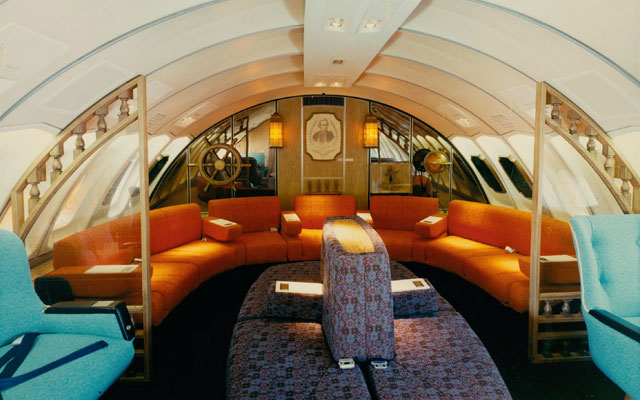
Qantas celebrates its centenary with a touring exhibition chronicling its storied history; a replica of Qantas’ B747 First Class Lounge from the 1970s pictured

The touring exhibition will be at the State Library of NSW in Sydney from December 2020 to April 2021, at Scienceworks Museum in Melbourne from June to August 2021, before its final display in Perth from December 2021 to February 2022.

The all-ages exhibition brings to life the story of Qantas through previously unseen artefacts, life-sized replicas and interactive installations. Visitors will also experience a behind-the-scenes look into Qantas’ present-day operations and a sneak preview of the future of aviation, all with free entry.

The design of the exhibition revolves around six themes – Origins, Wings to the World, Social Spirit, Challenges, Innovation, and People of Qantas – and chronicles the airline’s milestones via multimedia displays.

Qantas Group CEO Alan Joyce said the exhibition “will showcase the national carrier’s history and role in Australia like never before”.

“For almost 100 years, Qantas has been taking Australians to the world and visitors will be able to quite literally walk through this journey and immerse themselves in a century of their national carrier,” he added.

The two-years-in-the-making exhibition was created in conjunction with Freeman Ryan Design, a multi-disciplinary company specialising in design, innovation and creative direction for exhibitions.

Some exhibition highlights include scrapbooks of Fergus McMaster, Qantas co-founder, an interactive recreation of Qantas’ current Integrated Operations Centre, a futuristic aircraft seat made entirely of wool, a replica 747 First Class Lounge from the 1970s, and a look at the effects of long-haul flight via an immersive interactive experience.

Qatar Airways, American Airlines ink codeshare deal

0

Qatar Airways has signed a strategic partnership deal and revived its codeshare agreement with American Airlines (AA) in a move that will increase commercial cooperation, bolster connectivity and create hundreds of new travel options for the airlines’ customers.

The new agreement will link some of the largest airport hubs in the US to Hamad International Airport in Doha.

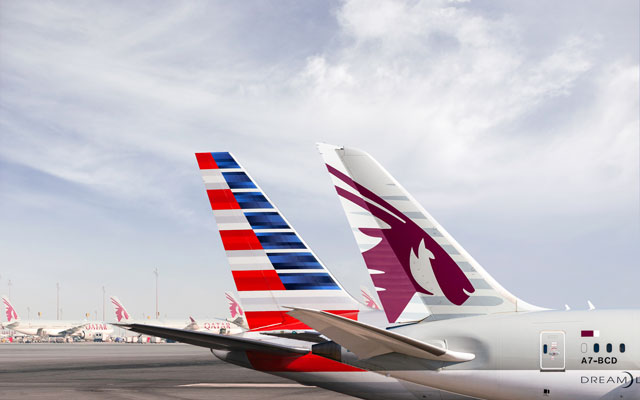
Qatar Airways, American Airlines sign strategic partnership deal

AA chairman and CEO Doug Parker said: “The issues that led to the suspension of our partnership two years ago have been addressed and we believe resuming our codeshare agreement will allow us to provide service to markets that our customers, team members and shareholders value, including new growth opportunities for American Airlines.”

Under the agreement, Qatar Airways’ passengers will be allowed to travel on AA’s domestic flights departing Boston, Dallas, Chicago, Los Angeles, Miami, New York, and Philadelphia, as well as on AA’s international flights to and from Europe, the Caribbean, Central and South America.

On the other hand, AA passengers will be able to book travel on all Qatar Airways’ flights between the US and Qatar, as well as to a range of destinations in the Middle East, East Africa, South Asia, the Indian Ocean and South-east Asia.

Both airlines will also explore the opportunity for AA to operate flights between the US and Qatar, along with a number of joint commercial and operational initiatives to further strengthen this renewed partnership.

Air NZ unveils lie-flat beds in economy class

0

Air New Zealand (Air NZ) has introduced a new lie-flat prototype sleep product, dubbed Economy Skynest, which features six full-length lie-flat sleeping pods in the economy class cabin.

The sleeping pods, which measures around 200cm by 58cm, are the result of three years of research and development, with input from more than 200 customers at the airline’s Hangar 22 innovation centre in Auckland.

Air New Zealand’s economy passengers will now be able to lie flat on select long-haul flights

Each pod will include a full-size pillow, sheets and blanket, ear plugs along with privacy curtains and lighting designed for sleep. ANZ is also exploring other features such as separate reading light, personal device USB outlet, and ventilation outlet.

ANZ chief marketing and customer officer Mike Tod said: “A clear pain point for economy travellers on long-haul flights is the inability to stretch out. The development of the Skynest is a direct response to that challenge.”

The airline will decide whether to operate the Skynest next year after assessing the performance of its inaugural year of Auckland-New York operations.

Al Bait Sharjah appoints Albert Meow as hotel manager

0

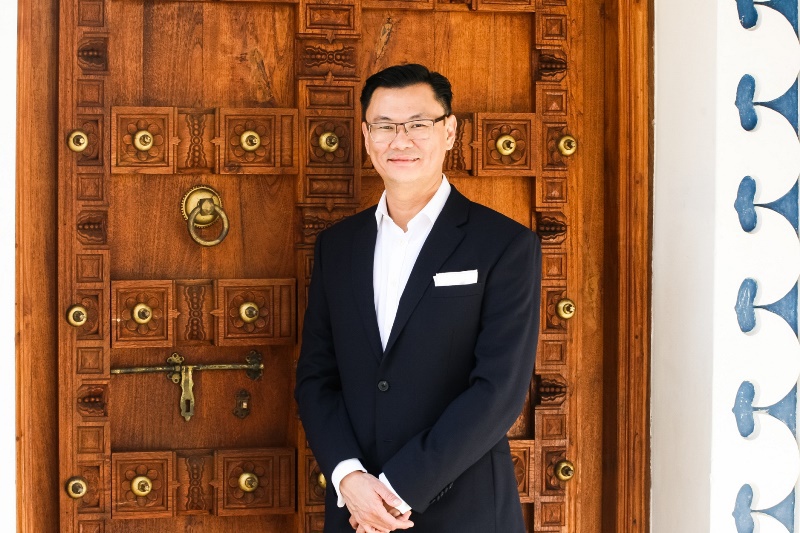
Al Bait Sharjah has named Albert Meow as hotel manager of the 53-key hotel that opened recently in the United Arab Emirates’ (UAE) third-largest city.

In this role, Meow will oversee daily hotel operations and focus otherwise on sales and marketing. His near-term priority is a strategic planning project that will expand the property’s reach in local and international hospitality markets.

Overall, Meow has more than 20 years of experience in the hospitality industry. Before joining Al Bait Sharjah, Meow was sales and marketing director at The Oberoi Beach Resort Al Zorah, Ajman.

Meow launched his career in sales at Shangri-La’s Rasa Sayang Resorts & Shangri-La’s Golden Sands Resort in Malaysia where he worked as director of events management. In 2003, he joined Traders Hotel Dubai, UAE as business development manager and moved from there to Banyan Tree Hotels & Resorts Angsana Dubai for a two-year term as assistant director of sales.

In 2009, he settled into Banyan Tree Al Wadi & Banyan Tree Ras Al Khaimah Beach as director of sales until June 2016.

Travel operators need to step up to push for sustainable change: STR

0

Global travellers are becoming increasingly conscious of the environmental impact of their travels, but may not prioritise eco-friendly holidays or be aware of how to adopt sustainable practices. Hence, the mantle falls to travel operators who need to take a proactive role to push for change.

These findings form the backbone of a study by STR’s tourism consumer insights department which surveyed more than 1,000 active travellers in January 2020 – comprising 67.4 per cent living outside the UK and the rest within – on environment issues and sustainability in the tourism industry.

The tourism industry still has a long way to go to achieving sustainable development goals

Environmentally friendly holidays are important to travellers: fact or fiction?

The majority of travellers take the issue of sustainable tourism seriously, with almost 50 per cent of respondents stating that choosing an environmentally friendly holiday option was important to them, while 40 per cent chose a neutral position. The study found that Generation Z (those born in the mid- to late-1990s) travellers placed higher importance on environmentally friendly holidays.

Despite the strong intent to undertake sustainable holidays, 37 per cent of respondents highlighted that they struggle to find the best way to be environmentally friendly. This points to the need for additional and clearer information, from the travel industry and other organisations, about the steps travellers can take to reduce their carbon footprint.

As well, a staggering 92 per cent of respondents stated that they were concerned about climate change, reinforcing the idea that sustainability is at the forefront of their destination selection and how they get there.

However, despite broad concerns about climate change, there were split views on whether travellers would avoid destinations with poor environmental credentials. Just over a third of panelists wouldn’t visit a country they perceived to show insufficient efforts to fight climate change, while the remainder (65 per cent) indicated that they would not be deterred or were undecided.

Sustainability starts at home

The study also found that many travellers have already made efforts to minimise their environmental impact. Some 50 per cent disagreed that “actions by individuals will never be enough to combat climate change”, highlighting the eagerness to make a positive difference in combating climate change.

Similarly, travellers demonstrated a high incidence of recycling, with nearly 90 per cent stating that they currently recycle their waste – far higher than the UK average of 45 per cent. Further highlighting the strong environmental conscience of active travellers, 85 per cent stated that they were minimising their use of single-use plastics, while 67 per cent claimed that they regularly buy locally grown food.

The travel industry still has plenty to do

As travellers change their lifestyle habits to minimise contributions to climate change, this affects how they view numerous industries, including tourism.

STR asked panelists how “green” they perceived key sectors of the tourism industry to be, such as accommodation providers and airlines. Some 60 per cent believed there is little or no effort to be sustainable among hotels and other accommodation providers.

While this finding highlighted generally negative perceptions of the efforts made by accommodation operators, the industry was less poorly perceived in comparison to cruises, airlines, bus tours and train operators.

What steps can tourism operators take to be more sustainable? One important move for the accommodation industry would be to minimise food waste. Again supporting the view that travellers, although eco-conscious, might not always rule out potentially environmentally harmful activities, there were mixed views that breakfast buffets should be stopped to reduce food waste. That said, a slight majority favoured the idea.

There were also mixed views as to whether travellers should pay more to stay in an environmentally friendly hotel. While some are willing to pay more, most believe this should either be the standard or seem likely to prioritise other aspects of their stay (e.g. value for money) over the hotel’s green credentials.

This might be somewhat problematic for hoteliers now, but evolving perceptions should see greater traveller engagement with sustainability. However, encouragingly, travellers believe that efforts by the accommodation sector, albeit perhaps not considered effective so far, are being taken seriously and are not a crude marketing ploy.

Of note for airlines, travellers believe that frequent flyers shouldn’t be “flight shamed” for their contribution to the climate crisis and 70 per cent were against the movement that has gained traction in Sweden. This could imply a traveller perception that sustainability efforts should be the responsibility of the airlines.

The concept of carbon offsetting has generated much debate in the airline industry, but what do travellers think of this initiative? Some 55 per cent were aware of carbon-offsetting, with 50 per cent supporting the initiative, 15 per cent not in favour, and 35 per cent unsure.

These findings highlight a degree of confusion among travellers regarding the benefits of carbon offsetting and hint that airlines may need to do more to promote and explain these initiatives.

As travellers become more aware of their effect on the environment and how our choices today will impact tomorrow, there is some way to go before both individuals and companies are in sync with their sustainability efforts.

Travellers are expecting more from the tourism sector and will continue to push for change, so the onus falls on the industry to respond and pave the way for sustainable tourism. These are the steps that will preserve tourism for the next generation.

Singapore bars visitors from South Korea’s Cheongdo, Daegu

0

Travellers from Cheongdo county and Daegu city in South Korea will not be allowed to set foot in Singapore, a decision the city-state has made in light of the growing number of Covid-19 cases in these areas.

Returning Singapore citizens, permanent residents and long-term pass holders with a travel history to Cheongdo and Daegu within the last 14 days will be issued a stay-home notice to serve a 14-day quarantine, said national development minister Lawrence Wong, who co-chairs a multi-ministry task force tackling the coronavirus with health minister Gan Kim Yong, reported The Straits Times (ST).

Singapore bans visitors from Cheongdo and Daegu in South Korea

Singapore’s move follows Hong Kong’s decision this week to ban non-resident arrivals from South Korea and to quarantine returning Hong Kong residents.

South Korea has raised its virus alert to the highest red, as the number of confirmed cases rose to 977, with a death toll of 10. In light of this, Gan was quoted by the report as saying that “visitors and returning travellers pose a heightened risk”.

Gan also sounded the alert that given the surge in the number of Covid-19 cases worldwide, Singapore can expect to see the number of cases rise due to “the risk of importation”.

On February 22, the Ministry of Health advised travellers to avoid non-essential travel to Daegu and Cheongdo, and to take precautions when travelling to the rest of South Korea.