TTG Asia
Asia/Singapore Sunday, 14th December 2025
Page 1028

Maldives’ ban on cruise ships further dents tourism

0

The Maldivian government’s decision to temporarily suspend cruise lines from entering and docking in the Maldives as a precaution against the rapidly spreading coronavirus is a blow to the industry, officials said.

The ban, which is the government’s latest move to protect the tourism-reliant country island from the Covid-19 outbreak, coincides with the increase in number of cruise ship arrivals to the Maldives.
Maldives bans entry of cruise ships over Covid-19 fears

Last month, 15 cruise ships docked in the Maldives, while 19 cruise ships arrived in the island nation in December 2019, based on statistics from Maldives Immigration.

According to Mohamed ‘Bunny’ Ali, secretary general of the Maldives Association of Yacht Agents (MAYA), there were 14 foreign cruise lines carrying a combined 20,000 passengers that were scheduled to arrive between March 1 and April 23.

“This decision impacts us badly,” said Ali, adding that passengers on cruise liners generally spend three nights in the Maldives, which is made up of two nights in a resort and one night in a guesthouse, or vice versa.

Unlike visitors to only resorts, a broader spectrum of stakeholders, from groundhandling agents, resorts, guesthouses to shops, reap benefits from business generated by cruise liners.

The temporary ban will not affect luxury yachts which also frequent the Maldives regularly. “They have three to five passengers mostly, and this sector is not affected,” said Ali, whose association deals with all sailing craft into the Maldives.

Meanwhile, apart from the ban on travellers arriving from China, the Maldives’ largest source market, industry officials are also worried about the fallout from the Covid-19 outbreak in Italy.

Italy is the country’s third largest source market after China and India. “It is still too early to assess whether arrivals from Italy will be affected. We have to wait and see,” said an inbound travel agent in the Maldives.

Abdulla Ghiyas, CEO at travel start-up Premier Maldives, said that up till now, the ban on Chinese arrivals was to some extent negated by an increase in arrivals from other markets like the Middle East, India and Eastern Europe, but noted that the situation may change with the disease spreading to other countries like Japan, South Korea and Europe.

While tourism is the country’s main foreign exchange earner and employment generator, the government has said the safety and security of the Maldivian people remains paramount.

Mount Merapi’s eruption prompts airport closure; businesses undisrupted

0

Adi Soemarmo International Airport in Surakarta (Solo), Central Java, was temporarily closed following yesterday’s eruption of Mount Merapi, which stands on the border of Yogyakarta and Central Java.

The volcano erupted at 05.33 on Tuesday, spewing a 6,000m column of ash into the sky, prompting state-owned airport operator Angkasa Pura to close the airport from 09.25 to 15.30.

Indonesia’s most active volcano Mount Merapi erupted yesterday 

The latest eruption recorded a maximum amplitude of 77mm, and lasted 450 seconds, reported air navigation company AirNav Indonesia.

Yohanes Sirait, manager of public relations of AirNav Indonesia, said that ash from the eruption had covered parts of the apron and runway of Adi Soemarmo International Airport.

During the airport’s closure, 13 domestic flights from and to Solo were cancelled, according to a press release by AirNav.

Novie Riyanto, director general of air transportation, Ministry of Transportation, said that he had rerouted several flights to destinations unaffected by the eruption.

Elsewhere, Adisucipto International Airport in Yogyakarta and Jenderal Ahmad Yani International Airport in Semarang remained open and were unaffected by the eruption.

“We will keep coordinating with AirNav Indonesia and airline stakeholders to ensure that flights remain safe and normal,” said Novie.

Tesa Puji Astuti, public relations and events manager of Surakarta-based Alila Hotel, said that ash rain caused by the eruption was so severe that it reduced visibility in Solo.

She said that five corporate clients from outside Solo who had planned to stay at her hotel contacted her today to reschedule their check-in date.

Though they did not reveal their reasons for doing so, Tesa suspected that the airport’s closure could have played a part in their postponement.

Edher Irwantoro, general manager commercial of De Tjolomadoe, a tourist attraction and events venue in Solo, which is located 35km from Merapi, said that he also experienced ash rain but that it did not affect visibility.

Business ran as per normal, he said, adding that the attraction saw 478 tourists that day, and that masks were provided for visitors in the morning.

Edher also said that the bulk of De Tjolomadoe’s visitors are made up of domestic tourists, who arrive by road. Therefore, footfall remained unaffected by the closure of Adi Soemarmo International Airport.

Similarly, Edwin Ismedi, managing director of Yogyakarta-based Trend Tour & Travel, said that his business was unaffected by the eruption as ash rain did not happen in the province.

He added that he did not receive inquiries on the eruption from his foreign business partners.

Edwin said that Mount Merapi’s eruption would not affect activities in the Yogyakarta city as long as cold or hot lava did not flow from the mountain top. Yesterday’s eruption only spewed ashes and did not affect visibility as the wind blew east towards Solo instead of southwards to Yogyakarta.

However, he said that he had prepared Pindul Cave and Indrayanti Beach in the southern part of the city as an alternative to Mount Merapi should the condition worsen.

International Women’s Day: Saluting Tourism’s Leading Ladies – Michelle de Ocampo-Ballesteros, CEO and founder, Ex-Link Events, Philippines

0

The fight for gender equality is for everyone, and necessary for economies and communities to thrive. With this in mind, International Women’s Day 2020 galvanises all women to work towards an equal world. In support of this campaign, TTG Asia and TTGmice are featuring women leaders in the travel, tourism and business events industry this week. Today, we speak to Michelle de Ocampo-Ballesteros, the female honcho behind Ex-Link Events (Ex-Link Management and Marketing Services), on training up the younger generation and the greatest hurdle she faces in her line of work.

How is it like running Ex-Link Events with your husband as business partner and what have you achieved?
I first established the business 20 years ago, in the latter part of 2001; and my husband Orly joined me after six months. Working with one’s spouse is both challenging and rewarding. Together, we face each day with the challenge of raising a bigger family and making the business move with the times.

Work-wise, we are doing what we both love, while at the same time making a livelihood out of it. It’s rewarding as we contribute to giving jobs and taking part in nation-building. Seeing those young people join the company, believe in its aspirations, and share our passion for events management is the greatest fulfillment for me.

How do you achieve work-life balance?
Since both (my husband and I are) in the business, we’ve agreed at the onset to strike a balance between family and work by devoting quality time with the family despite or, because of, the demands of work. It takes a lot of maturity and acceptance of realities but they add up to both the sweetness and spices of our continuing journey.

How are you using your position to improve the lives of those around you?
Education is important. I’m a lecturer and resource speaker on events management in universities. I have my share of training and mentoring the younger generation to develop them into productive and responsible business events associates – not just in my company, but in others too.

We cultivate a pay-it-forward culture (by lending a helping hand to) the needy and the less fortunate – our beneficiaries are the Children’s Joy Foundation and God’s Special Children for children with autism and Down’s Syndrome. Yearly, we give school supplies and donations to the Dumagat indigenous children in Antipolo. As I am the current president of Rotary Club of Mutya ng Pasig and the Inner Wheel Club of Antipolo Central, Ex-Link partners with them in projects connected to our advocacy.

How do you think the industry can be a more welcoming place for women? How can you encourage gender equality in your workplace?
The Philippines’ events management industry is providing equal opportunities regardless of gender, if my 20-year career is anything to go by. We hire people based on their skills and attitude, not by gender, and that will continue.

What is the biggest challenge for your generation of women leaders?
These days, people management, especially when it comes to the next generation, is the greatest challenge faced by all leaders, not just women. Making the millennials and Gen Z productive, interested and passionate in their work has proved very challenging.

Going back to basics helps me cope with the challenges of being a female leader these days: The heart of a mother and acumen of a business leader fused to produce a team of passionate and involved individuals. Making the workplace a productive version of home and extending compassion to employees will produce a more involved team.

Still, the keys to sustainability is harnessing working teams that are concerned with the people, the product, profitability and the planet.

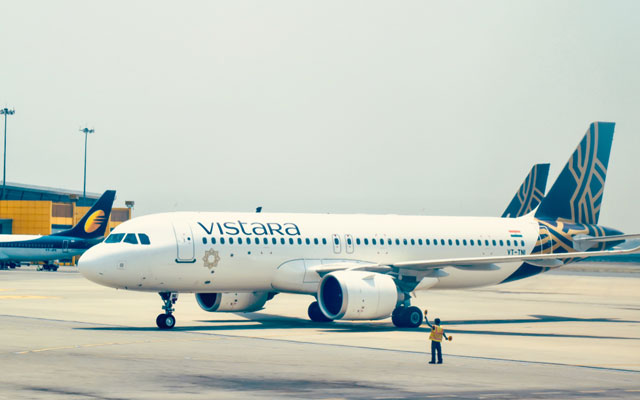
Vistara strengthens partnership with Sabre 

0

Indian carrier Vistara has signed a new deal with Sabre Corporation which will enable the airline to boost its ties with partner airlines and enhance its scheduling capabilities using components of the Sabre Commercial Platform.

The full-service carrier has also adopted Sabre Codeshare Manager and partner solution Sabre Schedule Manager.

Vistara expands partnership with Sabre

The new deal further strengthens Vistara’s partnership with Sabre as the carrier already has an existing GDS agreement with Sabre.

Vinod Kannan, CCO of Vistara, said: “Vistara has achieved significant growth in recent years, and we want to build on this success by continually expanding our fleet, boosting passenger numbers, growing our network and commencing long haul international flights. To do all of this, it is essential that we partner with industry leaders who can aid in our growth.

“Sabre’s scheduling suite will equip Vistara with the insight required to deploy optimised schedules while working with our codeshare airline partners.”

Under the new agreement, Sabre solutions will help Vistara to deliver robust, accurate and feasible schedules in a rapidly changing market environment, while minimising schedule duplication and enhancing productivity; better manage partnerships with other airlines by synchronising and automating marketing and flight information; proactively evaluate codeshare flight connection opportunities, helping Vistara to grow revenue alongside its geographic footprint.

Taxi-hailing app inDriver rides into Phuket

0

International online ride-hailing service, inDriver, which is headquartered in Mountain View, California, has launched in Phuket.

Unlike other ride-hailing services, for inDriver, drivers are not automatically assigned to riders. The service allows users to set their own fare for their chosen route, while nearby drivers who receive notice of ride requests can choose to accept or ignore the fare offered, or bargain for a higher price.

Ride-hailing app inDriver offers a flexible platform for passengers

Once the counteroffers roll in, passengers select the most suitable driver in line with the categories most important to them, in terms of fare, driver rating, estimated time of arrival or vehicle model.

The app’s Real Time Deals model combats algorithms used by other ride-hailing companies, which rack up prices because of peak hours, traffic and request history.

In the initiate stage, inDriver will recommend prices in the app, with a minimum price of 230 baht (US$7).

For a safer ride, passengers also have the option of sharing their GPS location and ride details in real time from the app with trusted contacts.

Travelling with the service, which currently operates on a cash-only basis, can be done throughout Phuket’s city borders and the nearest suburbs.

Phuket is the third city in Thailand, after Chiang Mai and Hat Yai, where inDriver was launched.

inDriver, which can be downloaded for free from the Google Play Store and AppStore, is used by 47 million people across more than 300 cities.

Sofitel Inle Lake Myat Min unveils wellness retreat

0

Luxury boutique resort Sofitel Inle Lake Myat Min has rolled out the first luxury wellness programme in Myanmar, with an exclusive focus on holistic therapies, traditional treatments, nutrition, fitness coaching and educational wellness initiatives.

The Wellness Discovery package includes a pre-arrival consultation, yoga sessions, customised meditation class, spa treatments, an in-room wellness minibar, and holistic rituals in the morning and evening.

Sofitel Inle Lake Myat Min’s guests can pamper themselves with the resort’s wellness package

Each guest will receive a wellness basket in their suite, which includes a yoga mat, skipping rope, wellness ball and dumbbells.

The resort’s wellness offering is focused on four key pillars, namely, Spa & Fitness, Yoga & Meditation, Culinary Journey, and Local Culture & Traditions.

Helmed by chef Aung Kyaw Swar, the Wellness Cuisine programme will feature locally-sourced organic products in his healthy and nutritious menus, available at the resort’s Roots Signature Restaurant.

The tailor-made energising and healing programmes are designed by onsite yoga master, Sudhir Thampi. Guests can also enjoy private and group yoga sessions as well as fitness classes as part of their package.

As well, the resort has partnered with cosmetic brand L’Occitane to create a rich selection of massage treatments and wellness experiences.

The Wellness Discovery package starts at US$180 per person per night, with a minimum stay of two nights from now until December 31, 2020.

Making travel tech affordable

0

The dynamic travel tech boom has proven a double-edged sword for industry players. While travel tech solutions promise higher outreach and efficient resource allocation, many of them are costly.

As such, travel agents who cannot afford them find themselves falling behind in terms of market penetration. Larger attraction operators, on the other hand, often struggle to strike a balance between traditional sales and new, dynamic distribution channels.

Filling this need for affordable and value-added solutions is GlobalTix, a Singapore-based company that leverages cloud technology, big data and analytics to disrupt traditional manual ticketing.

Globaltix CEO, Chan Chee Chong, explained: “Millennials are driving changes in the way travel is bought. They want things instantly and seek out unique experiences during their travel. In today’s connected world, operators need to be discoverable and bookable.”

Many Asian niche operators “are missing out on this digital and mobile revolution” because adopting the relevant technology is out of their budget, noted Chan.

To meet this need and match the budget of industry players, GlobalTix offers its solutions based on a subscription model starting from US$39 a month.

The affordable price means clients do not need to put money into customised solutions and expensive hardware, shared Chan.

Through unique customised B2B portals on GlobalTix, attraction operators can set agent-specific prices, capacity limits and special promotion prices.

Further down in the chain, agencies can access exclusive rates and reserve tickets, which are then digitally delivered to their customers.

Chan – a tourism pundit with 15 years of experience in the industry – co-founded GlobalTix with his brother, Chan Chee Kong, in 2013.

The company has grown its reach to more than 2,000 agents and 80,000 tours and activities in 120 cities.

Partnerships have been established with TripAdvisor, Expedia and Trip.com, as well as local DMCs such as Nam Ho and Asia Consolidated.

On top of solving ticketing woes, GlobalTix also offers other on-site solutions. For instance, it uses facial recognition so customers at attractions can buy candid photographs in which they have been tagged.

When asked about Globaltix’s strategy moving forward, Chan said: “We intend to strengthen our local presence to provide better customer service for partners here and become a partner of choice for agencies.”

Cheong Hai Poh joins Pan Pacific Yangon

0

Pan Pacific Yangon has appointed Cheong Hai Poh as its general manager.

With 30 years of hospitality experience, Cheong was most recently the general manager of operations and asset optimisation at Stamford Land Corporation.

Having started his career as banquet sales manager and F&B trainer at Orchard Hotel Singapore, he has also worked with SHATEC, Star Cruises, Conrad Centennial Singapore, Grand Park City Hall and Grand Copthorne Waterfront.

Indonesians march on with travel plans

0

The surge in the number of Covid-19 cases worldwide and in Asia has not hurt the confidence of a segment of Indonesian travellers who continue to throng travel fairs in search of overseas holidays.

In particular, Indonesian travel agents whom TTG Asia spoke to reported that South Korea and Japan – which has the second- and third-highest number of Covid-19 cases outside of China – remain hot destinations among their customers.

Indonesians’ thirst for travel has not been quenched by coronavirus

Erlyna Ciptadi, outbound manager of Jatra Tour, admitted that the Covid-19 crisis has weakened outbound demand. While she had around 50 outbound bookings on the first day of ASTINDO Travel Fair in 2019, this year’s opening day at the fair drew only 18 bookings.

However, she said that Japan and South Korea were still popular picks among her Indonesian clients who snapped up Sakura tour packages to enjoy the cherry blossom season this April.

Priced at 24 million rupiah (US$1,700), the Sakura package includes airfare and accommodation. To attract buyers, Jatra Tour dangled a one million rupiah discount as well as free SIM cards.

Direct routes and shorter flight times were key factors for Japan’s attractiveness to Indonesian travellers, as compared to longhaul destinations like Europe.

“Japan always offers new attractions, which allow visitors to experience inner parts of the cities. In contrast, Europe still offers (attractions in major downtown areas),” she said.

Erlyna told TTG Asia that Indonesians are now more interested in slower travel, such as “breathing in fresh air at the top of a mountain”, and less keen on the usual shopping vacations.

Likewise, Elmareza Ariesta, MICE Manager of Destination Tour, said that Indonesia’s outbound traffic to Japan and South Korea had not been hard hit by the outbreak.

Elmareza added that her customers appeared to be more confident in Japan and South Korea than with destinations in South-east Asia. She recently had a corporate client that postponed a multi-destination tour for its 107 staff members to Malaysia, Singapore and Thailand.

Sharing the same observations, Akita Priandana, deputy manager of Japan National Tourism Office Jakarta office, said his booth at ASTINDO Travel Fair this year was kept busy by curious Indonesians.

While Akhmed Faezal Alhamdi, MICE manager of Korea Tourism Office (KTO) Jakarta office, admitted seeing rising anxiety among Indonesians who are contemplating trips to South Korea, he said destination promotions were continuing, with the exception of Daegu and its neighbouring North Gyeongsang province, the epicenters of the virus outbreak in the country.

KTO Jakarta office is offering souvenirs and experience programmes for travel agents who managed to bring in at least 10 pax from companies and government institutions, as well as a welcoming ceremony in airport and gala dinner for over 500 pax.

For FITs, Akhmed added, the office is distributing a booklet that grants travellers discounts of at least five percent in destinations they visit.

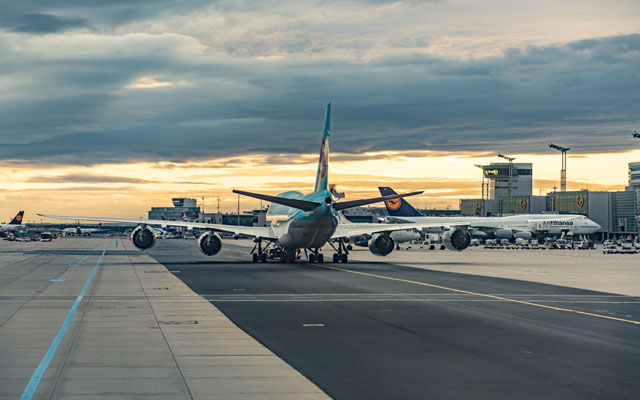
IATA requests global suspension of slot rules to ease burden on airlines

0

The International Air Transport Association (IATA) is contacting aviation regulators worldwide to request that the rules governing use of airport slots be suspended immediately and for the 2020 season, due to the impact of Covid-19.

The slot rules refer to the requirement that airlines operate at least 80 per cent of their allocated slots at airports under normal circumstances. Failure to comply with this means the airline loses its right to the slot the next equivalent season.

Relaxation of airport slot rules amid Covid-19 outbreak will give airlines breathing space

Presently, around 43 per cent of all passengers depart from over 200 slot coordinated airports worldwide.

IATA explained that regulators can relax this requirement in exceptional circumstances, such as now as the outbreak has had a severe impact on air traffic. Airlines are experiencing serious declines in demand.

Citing some example of severe impact, IATA said a certain carrier is experiencing a 26 per cent reduction across its entire operation in comparison to last year; a hub carrier has reported bookings to Italy down 108 per cent as bookings collapse to zero and refunds grow; many carriers are reporting 50 per cent no-shows across several markets; and future bookings are softening, forcing carriers to react with measures such as sending crew on unpaid leave, freezing pay increments, and planning for aircraft to be grounded.

Given these extraordinary circumstances as a result of the public health emergency, the collective view of the airline industry is that the current slot rules are inappropriate.

Regulators have already been waiving the slot rules on a rolling basis during the crisis, primarily for operations to China and Hong Kong.

However, given the recent further outbreaks this is no longer contained to Asian markets. Without certainty that these waivers will continue for the summer season (or winter season in the Southern hemisphere), airlines are unable to plan ahead sufficiently to ensure efficient rostering of crew or deployment of aircraft.

Suspending the requirement for the entire season (to October 2020) will mean that airlines can respond to market conditions with appropriate capacity levels, avoiding any need to run empty services in order to maintain slots. Aircraft can be reallocated to other routes or parked, and crew can have certainty on their schedules.

“IATA research has shown that traffic has collapsed on key Asian routes and that this is rippling throughout the air transport network globally, even between countries without major outbreaks of Covid-19,” said Alexandre de Juniac, IATA’s director general and CEO.

“There are precedents for previous suspension of the slot use rules and we believe the circumstances again calls for a suspension to be granted. We are calling for regulators worldwide to help the industry plan for today’s emergency, and the future recovery of the network, by suspending the slot use rules on a temporary basis,“ he added.

He said: “Airlines are on the front line of (this challenging situation) and it’s essential that the regulatory community work with us to ensure airlines are able to operate in the most sustainable manner, both economically and environmentally, to alleviate the worst impacts of the crisis.”