The Covid-19 pandemic has fast-tracked border control evolution, moving the world closer to a safe and contactless security and health clearance.
In this new episode of TTG Conversations: Five questions video series, Jeremy Springall, vice-president border management, SITA, explains how a safe, controlled and practical border control looks and why it takes time for airports of the world to deploy biometric technology. He also talks about Beijing Capital International Airport’s recent biometric deployment, and why it matters to the world’s current fight against Covid-19.
The Jakarta and Bali chapters of the Association of the Indonesian Tours and Travel Agencies (ASITA) have filed a lawsuit against their national board, including its chairperson Nunung Rusmiati, for making a new registration certificate for the association on the sly.
Hasiyanna Ashadi, chairman of ASITA Jakarta chapter told TTG Asia that the move was illegal, not only because it was carried out without the involvement of all association members, but also because the board had changed the association’s rules and internal bylaws through the new certificate issued by the Law and Human Rights Ministry in 2016.
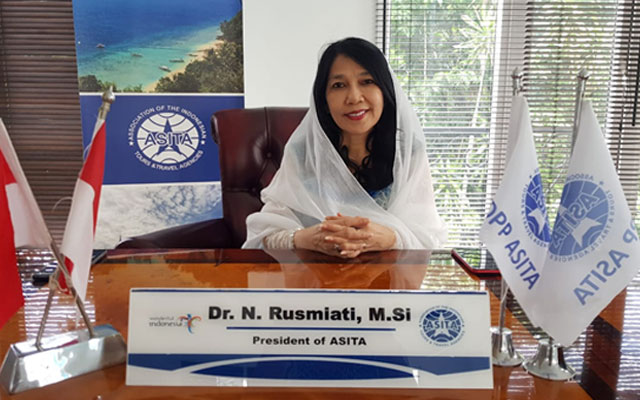
ASITA Jakarta and Bali chapters are taking their national board to court for what they claim to be an unlawful new registration certificate for the association
A statement issued by Sahlan M Saleh SH and Co law firm on behalf of the chapters on October 2 made available to TTG Asia stated that the “validity of the certificate of registration No. 30 Year 2016 and No. 170 Year 1970” will be contested.
The attorney called on people not to use ASITA’s name pending the court’s ruling and asked the central and regional governments not to involve ASITA central and chapters in any activities while in dispute.
The internal tussle within Indonesia’s major association for travel agents has been escalating following the ASITA Savior Assembly (MPA)’s vote of no confidence to ASITA Central Board Chairman Nunung Rusmiati in early July.
The central board of ASITA has retaliated by revoking the memberships of a number of its members who were part of or pro the MPA action. It ousted Jakarta chapter chairman Hasiyanna Ashadi and Bali’s I Ketut Ardana, and has appointed ad-interim boards in replacement.
Both Hasiyanna and Ardana have rejected the central board’s decision, saying that it violates the charter and bylaw of ASITA (1975 version) and declared that the chapters will split from the national ASITA until a general assembly is held.
The two “ousted” chapters will now replace MPA in taking legal action against the central board, said Hasiyanna.
ASITA chairperson Nunung Rusmiati is open to a non-judicial settlement
In a web conference with the media on October 8, Nunung said ASITA is running as per normal despite the lawsuit. She added that the incident did not bother her, as she was still supported by the association’s members from across 28 Indonesian provinces.
“(The protest come from) a sprinkle of people who have yet to move on from (the election of ASITA chairman during the extraordinary national congress in 2019) after (Hasiyanna) failed to win,” Nunung said.
Nunung’s lawyer, Erwin B Haris, explained that the 2016 certificate did not replace the 1975 certificate, instead they complemented each other. The former enhanced the latter because the organisation now has stronger legal certainty after it was registered at the Law and Human Rights Ministry in 2016.
“We gave them (plaintiffs) explanation but they did not want to listen and their responses were instead naïve and tendentious,” he remarked.
Haris shared that his client welcomes a non-judicial mechanism to settle the case but remains ready to file a countersuit against the plaintiffs.
“We expected an out-of-court settlement for this issue. Unfortunately, that did not happen as they launched massive attacks on us. So, we will take legal action to defend. We hope that (the plaintiffs) will forbear from making provocations (to us) and spreading misleading statements (about the case to the public) while waiting for the court ruling. Let the court decide,” said Budijanto Ardijansyah, vice chairman of ASITA.
About Partners-Luxury Brands Collection (APLBC) has entered into a strategic partnership with Oakwood which will see the former playing the role of global sales solutions partner to support the latter’s national and property-based sales teams.
Starting immediately, APLBC will expand Oakwood’s brand’s presence in the US, Asia and Europe.
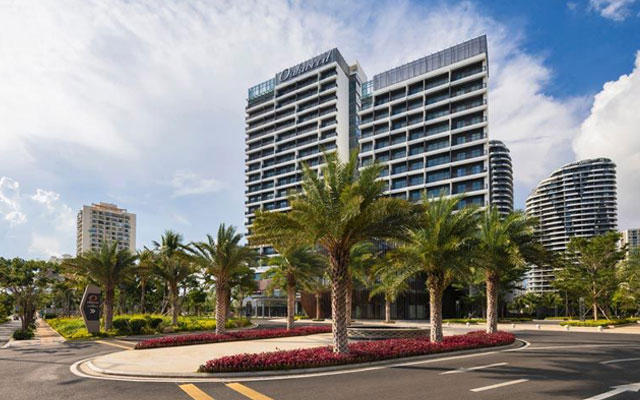
Oakwood’s global sales efforts will be supported by APLBC; Oakwood Apartments Sanya pictured
“This strategic partnership agreement marks an important milestone in Oakwood’s journey, as our focus on hospitality management has allowed us to broaden our reach into new markets and create new business opportunities,” said Michelle Low, Oakwood’s head of global sales, revenue & distribution.
Commenting on the new partnership, APLBC’s founder and CEO, Linda Bekoe, said: “As a young and ambitious hospitality commercial solutions company, we are delighted to have been selected by a major industry player like Oakwood. We see this partnership as a tremendous opportunity for us to demonstrate our capabilities as we leverage APLBC’s extensive global network of partners and key industry contacts to assist Oakwood with its global expansion objectives.”
Hilton has chosen Kyoto, Japan as the location of its first LXR Hotels & Resorts property in Asia Pacific.
ROKU KYOTO, LXR Hotels & Resorts, opening in the fall of 2021, will be operated by Tokyu Resorts & Stays Co., a fully-owned subsidiary of Tokyu Land Corporation.
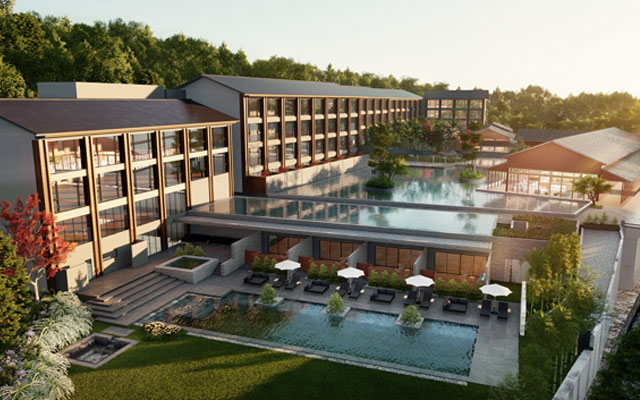
ROKU KYOTO, LXR Hotels & Resorts will open in the fall of 2021
It will be part of the Shozan Resort Kyoto, a luxury enclave currently home to some of Kyoto’s most notable and idyllic Japanese gardens, historic architecture and authentic tea houses. Shozan Resort Kyoto’s concept, which focuses on “beautiful things are born from a beautiful environment”, is aligned by LXR’s promise of offering authentic and meaningful experiences native to the local destination, history and tradition.
Armed with 114 keys, ROKU KYOTO, LXR Hotels & Resorts takes in a suite of facilities including fine dining restaurants, natural hot springs, as well as a pool and fitness centre.
Nils-Arne Schroeder, vice president of luxury & lifestyle, Asia Pacific, Hilton, said in a press statement: “There is a distinct story behind every LXR property that builds on the promise of delivering personalised attention and luxurious, yet locally immersive, experiences for our guests.
“With the cultural threads that are woven through every part of the hotel – from the architecture to culinary experiences and the surrounding environment – combined with the unique identity of the hotel and backed by Hilton’s expertise in delivering personalised experiences, I am confident ROKU KYOTO is perfectly placed to be the epitome of a peaceful retreat with a deep connection to the alluring city.”
Leading the hotel’s opening as general manager is Yoshinori Nishihara, a veteran hotelier who brings with him more than 35 years of experience.
Yangon-based boutique tour operator, Sampan Travel, has launched an online tour led by renown military historian Robert Lyman, who will take history buffs through Myanmar’s wartime past.
Conducted through seven episodes, The Burma Campaign: A Virtual Tour with Dr Robert Lyman will detail the history of the Burma Campaign of the Second World War, including the Japanese invasion, the battles of Kohima & Imphal, the exploits of the Chindits, and the race to Rangoon.
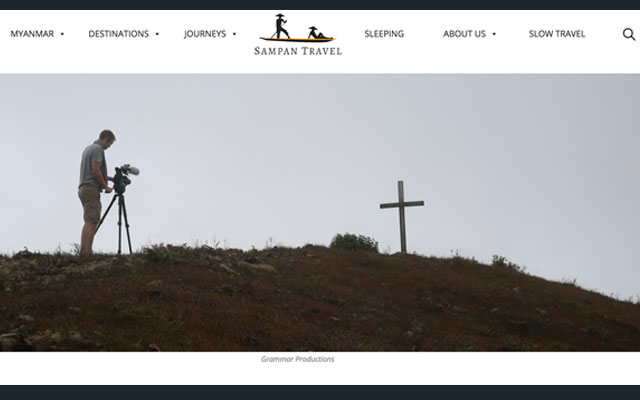
Sampan Travel takes guests on a virtual journey into Myanmar’s wartime past
The tour begins on October 26, and guests are encouraged to send advanced questions to Lyman. Recordings of the previous day’s session will be sent out each morning.
Since collaborating with Grammar Productions on its film, Forgotten Allies, about Myanmar veterans who fought alongside the British, Sampan Travel has been offering World War 2 tours in the country.
Ten per cent of revenues from the virtual tour will go towards the charity Help for Forgotten Allies.
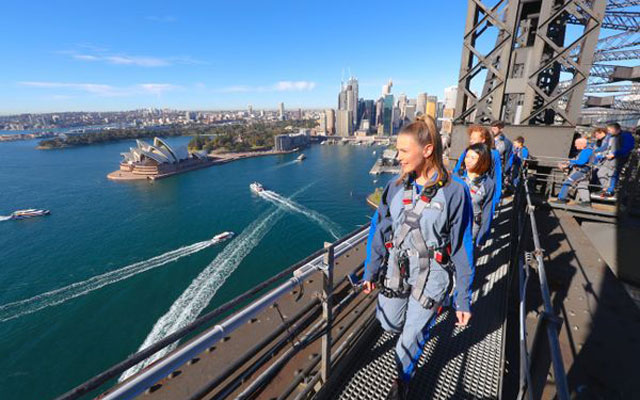
BridgeClimb, OTTO Sydney and Ovolo Woolloomooloo have come together to craft a premium one-night vacation package that promises extraordinary harbour experiences.
The Climb, Dine & Stay package combines unforgettable views from the top of Sydney Harbour Bridge, waterside dining at one of Sydney’s most respected dining institutions OTTO Sydney, and an idyllic harbourside stay the designer hotel Ovolo Woolloomooloo.
The Climb, Dine & Stay package allows guests to take in unforgettable views from the top of Sydney Harbour Bridge
Open to couples and small groups of up to 10, the package allows each guest to save up to A$173 (US$125). The package includes a 35 per cent off BridgeClimb Unlocked climb and a 16 per cent saving on a sleepover at the Ovolo Woolloomooloo.
Additional perks come in the form of a complimentary cocktail at OTTO Sydney, a BridgeClimb framed photo, and signature inclusions at Ovolo Woolloomooloo such as breakfast, in-room mini bar and snacks, and a 13.00 late checkout.
Guests can upgrade their BridgeClimb experience with a Twilight Climb, special transfer by a limousine, Tesla or water taxi, or go even farther with flowers and a private musician. A personal BridgeClimb Event Coordinator will be on hand to assist with arrangements.
Packages are priced from A$480 per person or A$960 per couple.
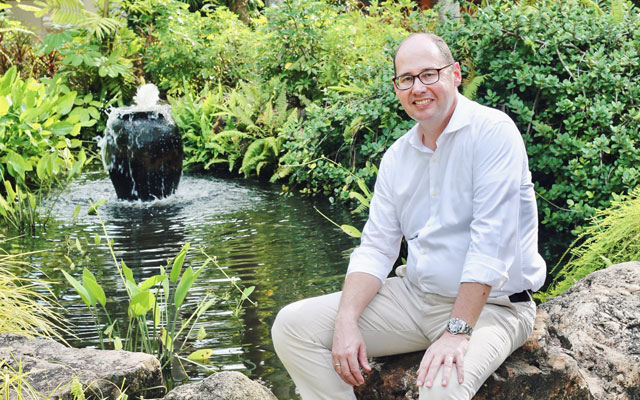
Alexandre Frenkel has joined Santiburi Koh Samui in the capacity of general manager.
The Swiss hotelier possesses almost three decades of experience, having worked with leading hotels and resorts across five countries. He also has a deep knowledge of Thailand’s hotel industry, having spent the last 16 years living and working in the Kingdom.
Frenkel started out his professional career at Hilton, where he rose through the ranks to become director of operations and director of business development at Hilton Beijing.
He then moved back to Thailand with Amari/Onyx Hospitality Group, achieving his first general manager role in 2006. He has since managed some of Bangkok’s leading properties, including Centara Watergate Pavillion Hotel.
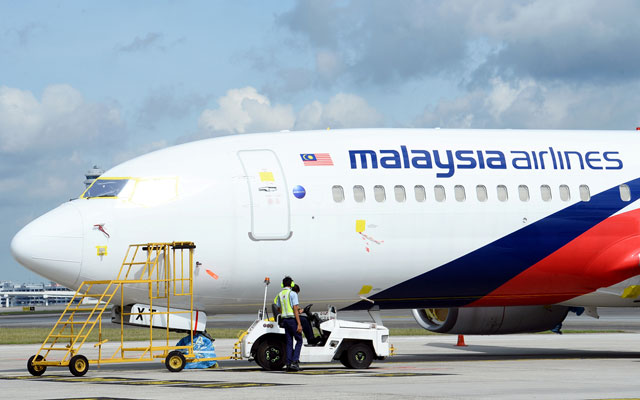
An upskilling and reskilling programme introduced by Malaysia Airlines is aimed at transforming its employees into a future-ready workforce to drive the carrier’s long-term operational sustainability.
Dubbed MH EDGILE, the programme is opened to more than 2,000 employees, mainly pilots, cabin crew and other frontliners impacted by the current reduced network and operational capacity.
To meet shifting demands in a post-pandemic world, Malaysia Airlines looks to reskill its workforce
MH EDGILE will train the employees in other job skills, either in specialised competency such as facilities management and audit or general and trainable areas such as sales and IT helpdesk.
In doing so, employees will be better equipped to support the airline’s long-term business sustainability, while developing their potential, said Malaysia Aviation Group (MAG).
Subject to approval, these group of employees will be temporarily re-assigned to support other departments that require workforce for critical roles or job functions resulting from the constrained workforce due to added deliverables and attrition, it added.
MAG CEO Izham Ismail said with the pandemic showing no signs of abating, “it is important for us to prepare our workforce with new skill sets to become more efficient in their current roles or shift into emerging positions as well as to support the business goals. This is the perfect time for the staff to reinvent themselves”.
This initiative is offered voluntarily and subject to job pre-requisites and selection criteria of the receiving department. All assignments will be on a full-time basis; however, employees will still be allowed to maintain their job license validity.
The period of the interim assignment will be dependent on the company’s business and operational requirements. Employees with the approved application will be equipped with the knowledge and new skill sets through coaching and training to prepare for the new role.
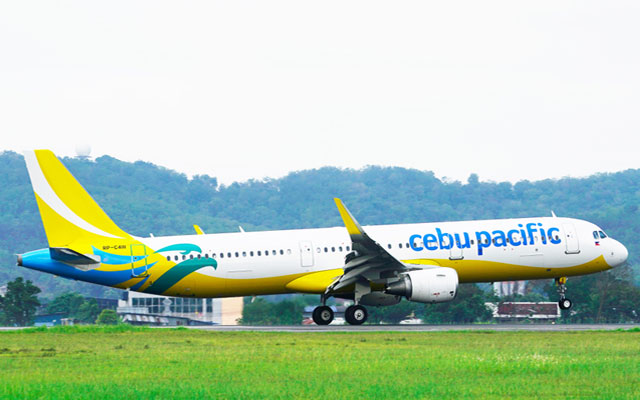
Philippine budget carrier Cebu Pacific (CEB) is seeking to raise US$500 million in additional capital to beef up its balance sheet so as to weather the pandemic storm.
CEB told the Philippine Stock Exchange that it will seek approval for the issuance of US$250 million in new convertible preferred shares, as well as another US$250 million in privately placed convertible bonds.
Cebu Pacific said this capital raising exercise will provide it with the needed runway to survive the Covid crisis
The airline envisions that the capital raising exercise will be taken up in a special shareholders meeting on November 20, 2020.
The convertible preferred shares will be made available to all stockholders, including parent and 67 per cent owner of CEB, JG Summit Holdings (JGSHI); while the convertible bonds will be offered to select international investors, the airline said in a press release.
“We need to create a longer runway for CEB so that we can continue providing affordable and accessible air transport services for everyJuan,” said Lance Gokongwei, president and CEO of CEB and JGSHI.
CEB said that it is raising this capital as part of its multi-pronged approach to working with capital providers, creditors, suppliers and all other stakeholders, especially its employees, to further strengthen its financial position in the midst of the Covid-19 crisis.
As part of the capital raising exercise, JGSHI will invest its proportionate share of the US$250 million convertible preferred share, which will be offered to existing shareholders for subscription. JGSHI has also further committed to take on any balance of unsubscribed shares in this general offering.
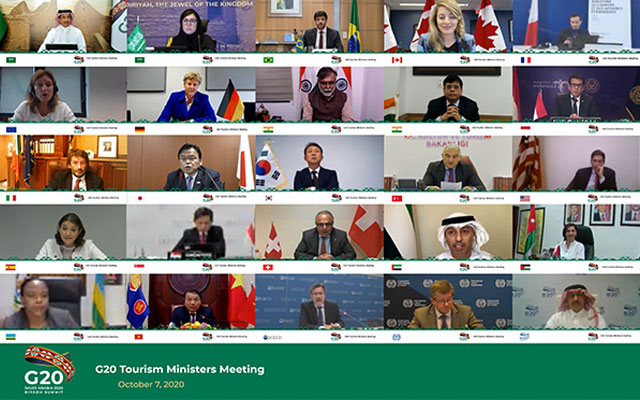
In a historic first, G20 tourism ministers hosted more than 45 CEOs and members of WTTC, who presented their plan to restart international travel and recover the 100 million jobs dependent on it globally.
The plan was unveiled during the G20 Chairmanship of the Tourism Track, at the behest of Saudi Arabia for the global travel and tourism sector to collaborate on developing insights to help accelerate the global recovery.
Saudi Arabia makes history convening first ever G20 public-private sector tourism meeting
The private sector event was opened by Ahmed Al Khateeb, Saudi Arabia’s tourism minister and chair of the G20 Tourism Track, alongside WTTC president & CEO, Gloria Guevara, to set the scene.
This was followed by a keynote from Chris Nassetta, president & CEO of Hilton and WTTC chair; and contributions from CEOs and ministers representing all regions of the world, including Argentina, the UK, UAE, Singapore and Spain. They, alongside the private sector, agreed that joint collaboration can accelerate the recovery of travel and tourism.
During the historic forum, WTTC outlined a new 24-point recovery plan which includes twelve points for the private sector and twelve for the public sector, focusing on measures to reactivate international travel.
The unprecedented plan was pulled together with input from WTTC members and covered a wide range of initiatives which hinged on securing international coordination to re-establish effective operations and resume international travel, including the implementation of an international testing regime at departure to minimise the risk of spreading Covid-19.
Gloria Guevara, WTTC president & CEO, said: “This historic meeting provided the best platform to establish public and private collaboration which will lead to rebuilding a sector which has been devastated by the pandemic… The nature of this meeting cannot be underestimated; it is the first time so many travel and tourism CEOs and leaders have been invited to sit in the same forum as G20 tourism ministers to establish a tangible plan to save the travel and tourism sector.
“This plan will have far-reaching consequences; it will bring real and genuine benefits to the industry as a whole – from aviation to tour operators, taxis to hotels, and beyond.
Al Khateeb added: “On behalf of the G20 tourism ministers, I commend the World Travel & Tourism Council and the global travel and tourism sector for their efforts to put people first during the global pandemic, by collaborating at the industry-level and with the public sector to put in place concrete actions that will protect millions of jobs and livelihoods, while ensuring that the sector is more resilient to crises in the future.”
Among the CEOs from the global private sector invited by Saudi Arabia were representatives from Carnival Corporation, InterContinental Hotels Group, British Airways, Dubai Airports, Japan Airlines, Trip.com, TUI, Radisson Hotel Group, Abercrombie & Kent, Emirates Group, The Travel Corporation, Expedia, The Oberoi Group, and Panorama Tours, among others.
IATA director general and CEO Alexandre de Juniac, and ICAO secretary general Fang Liu, also joined the chorus of voices proposing for testing to replace quarantines. UNWTO secretary general Zurab Pololikashvili also contributed to the debate.
de Juniac said: “It is critical that governments and industry work together to safely reopen borders with systematic Covid-19 testing. Some 46 million jobs are at risk. The historic participation of industry in this G20 Summit is a good start to the government-industry partnership that will be needed to revive the travel and tourism economy on which 10 per cent of global GDP depends.”












Yangon-based boutique tour operator, Sampan Travel, has launched an online tour led by renown military historian Robert Lyman, who will take history buffs through Myanmar’s wartime past.
Conducted through seven episodes, The Burma Campaign: A Virtual Tour with Dr Robert Lyman will detail the history of the Burma Campaign of the Second World War, including the Japanese invasion, the battles of Kohima & Imphal, the exploits of the Chindits, and the race to Rangoon.
The tour begins on October 26, and guests are encouraged to send advanced questions to Lyman. Recordings of the previous day’s session will be sent out each morning.
Since collaborating with Grammar Productions on its film, Forgotten Allies, about Myanmar veterans who fought alongside the British, Sampan Travel has been offering World War 2 tours in the country.
Ten per cent of revenues from the virtual tour will go towards the charity Help for Forgotten Allies.
Visit www.sampantravel.com/journeys/the-burma-campaign/