


Banyan Tree checks into extended stay space
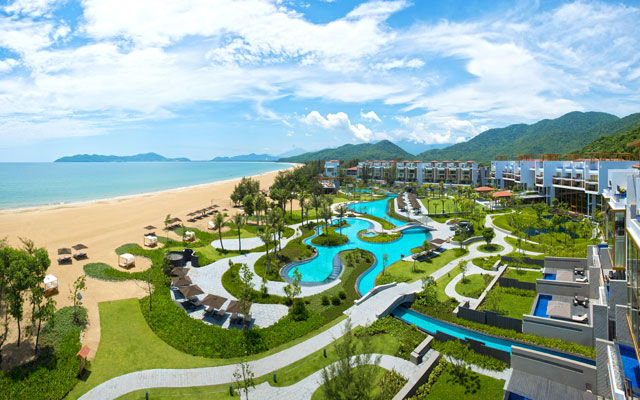
In light of the rising remote work trend and evolving travel patterns, Banyan Tree Group has rolled out a new extended stay product across multiple destinations.
Dubbed Habitat, the new offering enables guests to enjoy long-term stays at properties in more than 30 destinations across the globe under the group’s house of brands: Banyan Tree, Angsana and Cassia.
With greater flexibility and the possibility of experiencing multiple destinations with a single pass, Habitat aims to offer a new way of living, working and travelling for seasonal travellers, families and remote workers.
With a Habitat Pass, guests can book their stays in ‘units’ of seven nights, with the choice to hop from one property to another within the same brands in different locations. In addition, savings increase up to 60 per cent with each additional unit purchased, where each unit can be redeemed at a different property during the period of their stay.
Each pass is valid for 12 months and guests may book up to four units per brand, ranging from seven to 28 nights’ stay, with the flexibility to redeem each unit at a different time.
Pass holders are also given credits of up to US$700 based on the number of units purchased, which can be used across multiple inclusions, including F&B, spa, wellness activities, and airport transfers. Other inclusions are free breakfast and Wi-Fi, alongside 24-hour fitness centres in most properties.
Domestic travellers can choose from nine Banyan Tree hotels in China and four in Thailand. When international travel reopens, guests may travel to properties across China, Indonesia, Laos, Malaysia, the Maldives, Mexico, Morocco, Thailand and Vietnam.
Coronavirus fears feed soaring private jet demand
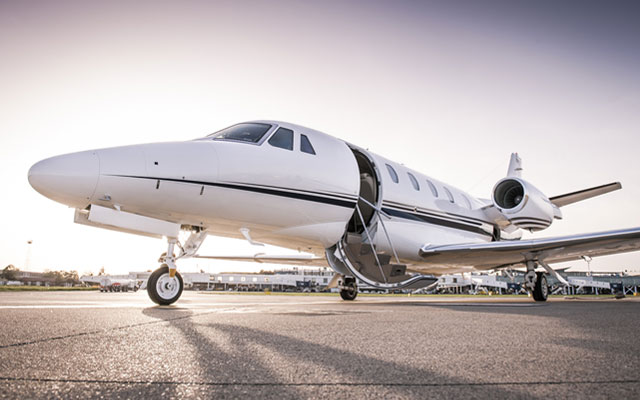
The private jet industry is set for a quicker recovery than commercial aviation, as wealthy leisure passengers switch to private flights to reduce the risk of contracting Covid-19.
Even though the start of the pandemic sent shockwaves through the private jet industry – similar to the rest of the aviation sector – a promising rebound in recent months looks set to recover some of those losses, according to a GlobalData report.
Ralph Hollister, travel and tourism analyst at GlobalData, commented: “According to GlobalData, international business arrivals are expected to decrease by 40.7 per cent year-on-year in 2020. This dramatic reduction in business travel will likely take a prolonged amount of time to regain pre-pandemic levels. In order to stay viable, private jet companies need to now strengthen their focus on the growing leisure market while corporate travel remains bleak.”
Business tourism now looks to be one of the last types of tourism to recover, as businesses look to cut costs and reduce the risk of their employees contracting the virus, which makes online events and meetings much more of an attractive proposition for at least the short-term.
Against that backdrop, it is in fact leisure travellers who have helped private jet companies on their path to recovery. Some passengers that would have flown commercially are now paying a premium to fly private to meet their needs of safety and security, said the report.
Hollister added: “Privacy, safety and flexibility needs to be the key strength of private jets that are marketed to uncertain leisure travellers that sit in the higher socio-economic classes.”
He cited the example of Jet It, a business jet fractional ownership company, that has recently experienced a sharp increase in demand for private travel, allowing its owner Glenn Gonzales to expand his company and private charter company Jet Club. Gonzales stated that he has seen his business grow 300 per cent in Q2 and Q3.
Hollister concluded: “This increase in demand spurred by leisure travellers may permanently change the business models of many private jet companies. The more purposeful targeting of leisure travellers may be undertaken in order to attract a more diverse customer base going forward, assisting to achieve a successful post-Covid-19 recovery.”
Hyatt set to make Phnom Penh debut
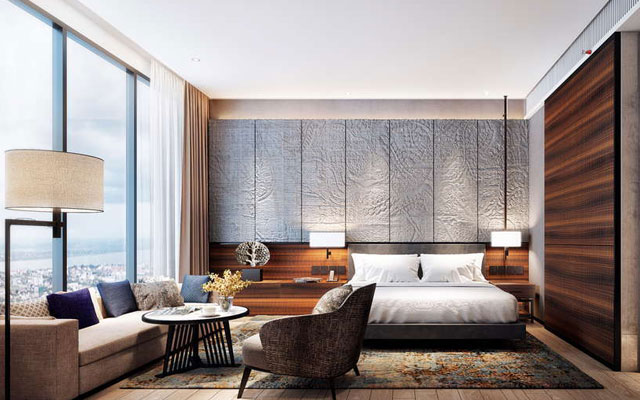
Hyatt has signed a deal to double the number of hotels it manages in Cambodia, with a new hotel in the capital city of Phnom Penh.
Slated to open in 1Q2021, the Hyatt Regency Phnom Penh will complement the Park Hyatt Siem Reap, which is expected to start welcoming guests again on November 5, after a forced closure due to Covid-19.
With 247 guestrooms including 43 suites, the Hyatt Regency Phnom Penh will be located in the heart of Doun Penh, Phnom Penh’s cultural and business district, within walking distance to the Royal Palace, National Museum and the riverside.
Conceived by Singapore-based SCDA Architects, Hyatt Regency Phnom Penh will feature five dining venues, including The Attic, a speakeasy-style bar; and an open-plan dining concept called FiveFive Rooftop Restaurant & Bar, where guests can enjoy refreshing cocktails and DJ performances.
In addition, the hotel will feature 1,400m2 of meeting space as well as a slew of recreational facilities including a 24-hour fitness centre, tropical infinity pool, spa and the Regency Club Lounge.
Renewed lockdown deals fresh blow to Malaysia’s tourism sector
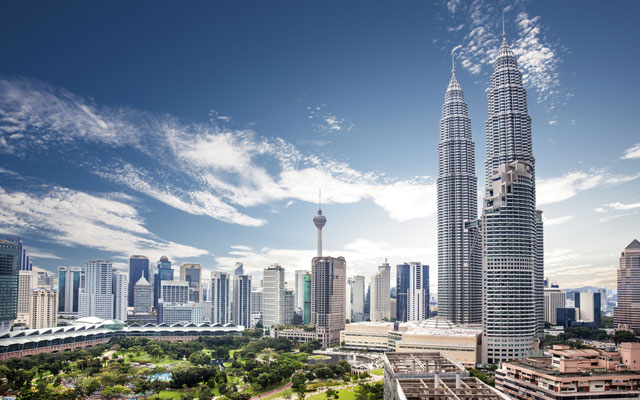
Hotels, attractions and tour agencies in Malaysia have been hit by a wave of cancellations, as the country’s major cities enter a partial lockdown once again following a recent spike in coronavirus cases.
The conditional movement control order (CMCO), which kicked off on October 14 in Kuala Lumpur, Putrajaya, and Selangor, will be in place over the next two weeks until October 27. The CMCO in Sabah, which started a day earlier on October 13, will end on October 26.
The move has had a spillover effect on domestic tourism in neighbouring states, according to tourism players whom TTG Asia spoke to. With the majority of bookings made up of travellers residing in the Greater Kuala Lumpur area, sector players have been deluged with a wave of cancellations, while new bookings have dried up.
Terengganu-based Ping Anchorage Travel & Tours CEO, Alex Lee, said that he has received more than 60 per cent cancellations following the CMCO announcement, mainly from the Klang Valley, which is affected by the CMCO.
The company also received booking cancellations from other states that were not under the CMCO, due to the current uncertainty of travel coupled with safety fears amid rising virus cases in recent weeks, he shared.
He added: “It would take months for domestic tourism to recover after the CMCO is lifted. The momentum will be slow initially and it is now vital for the government to continue supporting the tourism industry with fresh financial aid.”
Lee, who also runs the 22-villa Terrapuri Heritage Village in Terengganu, shared that current occupancy at Terrapuri stood less than 20 per cent, and the resort staff have been doing their best to persuade guests to postpone rather than cancel their holidays.
He predicted future losses in the coming months will be huge as the resort will still have to bear operating costs. Adding to its woes were unlicensed accommodation providers that were competing for domestic business by undercutting rates.
Likewise, Langkawi-based Megawater Sports & Holidays have also been hit with cancellations for jet ski tours, accommodation and ground tours in Langkawi, with the majority from Kuala Lumpur and Selangor, shared its director of sales and marketing, Sharmini Violet.
She said: “We tried to persuade guests to postpone their bookings, but they wanted to cancel. No one knows when the government will allow inter-state travel to resume from Kuala Lumpur and Selangor.
“Our marketing efforts are now focused on Kuching as AirAsia will resume its Kuching-Langkawi service from November 13. We are also looking at building our customer base from Johor and Penang.”
While the pandemic has slowed business at Megawater Sports & Holidays, Sharmini said the staff are using the downtime to upskill themselves with courses offered by the Human Resource Development Fund.
Also staring at a bleak outlook is Mutiara Taman Negara Resort in Pahang, who lost 90 per cent of its customer base, as they were from Kuala Lumpur, said its director of sales and marketing Kingston Khoo.
While the remaining 10 per cent of guests were from Penang, Johor and from within the state of Pahang, the current uncertainty made it very difficult to convince guests to postpone their bookings, Khoo added.
With recovery remaining deeply unpredictable, he said the resort’s priority now is to find ways and means to further reduce operational costs.
Under the CMCO, all tourism activities to and from the affected areas are banned. Those travelling by air through Kuala Lumpur International Airport, klia2 and Subang Airport are required to get police approval beforehand.
Nightclubs, pubs, recreational places, theme parks, indoor and outdoor playgrounds, cinemas and daycare centres are not allowed to operate during this period.
Physical seminars and conferences, workshops, courses, trainings and exhibitions are prohibited. Official and unofficial government and private events, gatherings, weddings, engagement ceremonies, birthday celebrations and similar social activities are also now allowed.
Meanwhile, dine-in at eateries are limited to two people per table; while food delivery, takeaway and drive-through are encouraged. Taxis, e-hailing and food delivery services are allowed to operate from 06.00 to midnight; with only two individuals allowed at a time in a taxi or e-hailing vehicle.
Skål Samui launches tourism recovery initiative
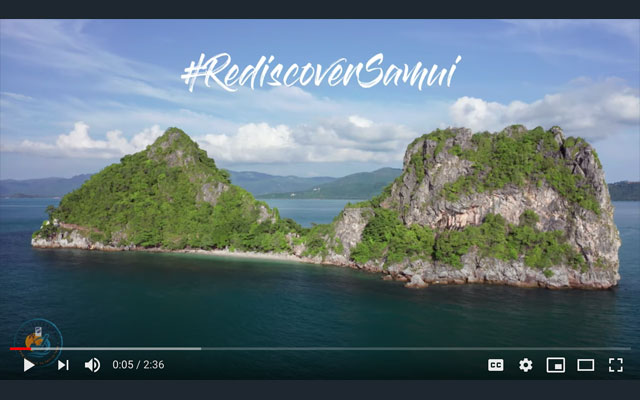
A new destination video along with a series of public relations activities are part of a new tourism recovery initiative led by Skål Samui to win over domestic and international tourists.
Debuting under the banners #RediscoverSamui and ‘prepare to fall in love’, the new promotional video contains never-before-seen footage of the best experiences the island has to offer, from white sandy beaches to ethical nature experiences.
The campaign targets mainstream media, bloggers and influencers who will be invited to experience the destination for themselves.
Some of the key messages conveyed by the campaign includes Samui’s clean and safe attractions and environment, improved state of wildlife during the tourism freeze, unrivalled choice of hotels and private villas, huge variety of restaurants and entertainment, and excellent access.
Lutz Mueller, president of Skål Samui, said: “Samui is lucky to have a fantastic collection of world-class hotels, resorts and spas, and now is the time to make sure Thailand’s travellers take advantage of what’s right on their doorstep.”
The campaign, which is being driven by members of Skål Samui, a chapter of the global hospitality and travel organisation SKAL International, underscores the organisation’s overall mission, Connecting Global Tourism.
The new video is available to all Skål Samui members and partners for their own promotional use and can be customised on demand at an extra charge.
Qatar expands tourism offerings in lead up to World Cup 2022
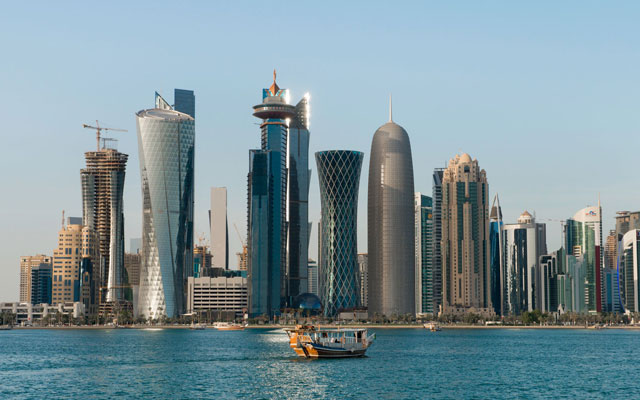
Hilton Salwa Beach Resort and Villas and Zulal Wellness Resort are the latest additions to Qatar’s tourism landscape, as the country continues its tourism development strategy to expand its leisure offerings ahead of the FIFA World Cup Qatar 2022.
The high-profile sporting event, which will take place from November 21 to December 18, 2022, is unique in that Qatar is the first west Asian nation and also the smallest country to ever play host.
The two new openings will each bring something different to the broad range of amenities and experiences already available to domestic and international tourists.
Akbar Al Baker, secretary general of Qatar National Tourism Council and CEO of Qatar Airways, said in a press statement: “Throughout this year and in the run up to the FIFA World Cup Qatar 2022, we are expanding our tourism offering to ensure guests can enjoy the very best in Qatari hospitality. Extensive hotel and resort development is key to our strategy, and we are pleased to have two outstanding developments underway, including our partnership with Hilton Hotels and Resorts with the Salwa Beach project.”
Located 84km from capital city Doha, Hilton Salwa Beach Resort & Villas is set across 3.5km of private beaches and features beach villas, each with private pools and gardens. Thirty villas are now available for bookings, with a further 246 deluxe hotel rooms and suites due to open in early 2021.
Hotel guests can enjoy a selection of F&B outlets, an elaborate Eforea Spa which takes in eight luxurious treatment rooms and a fully equipped VIP room with a Rasul mud chamber, and various activities at the Desert Falls Water & Adventure Park.
Meanwhile, Zulal Wellness Resort is set to be the first well-being resort in the region and the largest in Qatar. Partially opening in late 2020 before its complete opening in early 2021, the resort will offer treatments and facilities for sun-seeking families or couples looking to escape to the Arabian dunes.
Malaysia’s major cities back under lockdown
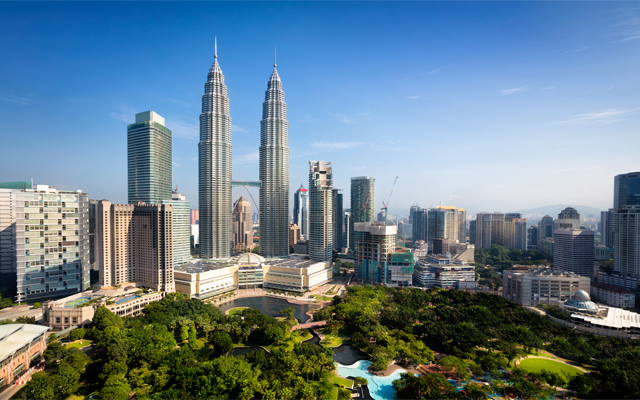
The populous regions of Kuala Lumpur, Putrajaya, Selangor and Sabah will be placed under conditional movement control order (CMCO) again until October 27, said Malaysian senior minister for security, Ismail Sabri Yaakob on Monday.
With the exception of Sabah state, which will enter lockdown at midnight today, the other three regions will begin CMCO at midnight on October 14.
The move was deemed necessary to “prevent further spreading of the infection”, said the minister.
Malaysia recorded 691 new Covid-19 infections on October 6, in what was said to be a new high for the country, according to The Straits Times. On October 12, there were 16,220 cumulative cases, with 5,039 active cases.
The country is currently in recovery MCO, which allows the reopening of most businesses and resumption of social activities. This stage follows the conclusion of the country’s CMCO on June 10.
The Selangor state government has called the decision “shocking” and has asked the National Security Council to reconsider its decision.
The latest movement restrictions will impact some 7.6 million residents in Kuala Lumpur, Putrajaya and Selangor, and 3.5 million in Sabah.
Ismail Sabri said that with the latest CMCO, social activities and cross-district travels will be prohibited, although economic activities will be allowed. As well, only two individuals are allowed to leave a house at a time.
PATA, TTGmice decipher state of business events

After years of working relentlessly to emphasise its critical contribution to the national and global economy, the business events industry has finally been presented with the perfect opportunity to drive home its point through the Covid-19 pandemic and resulting disruption of business activities.
The Future of Business Events is the second article by TTG Asia Media’s editorial team for the PATA Crisis Resource Center. Drawing observations and insights from leading industry organisations such as UFI, International Congress and Convention Association, and Exhibition and Event Association of Australasia, TTGmice reporters look at what governments and industry stakeholders are doing to sustain the industry as recovery begins slowly but surely, in an online/offline form for the time being.
Although business events are largely disabled today, industry leaders say that the legacy of pre-pandemic gatherings is still working its magic to spin off continued knowledge acquisition, trade possibilities, and wider community support.
Absolute Hotel Services, The Delivering Group power up capabilities with alliance

Hotel management contract specialist, Absolute Hotel Services (AHS), has signed on Asian hospitality and tourism marketing development company, The Delivering Group (DG), to expand its hotel and resort management business in Asia-Pacific, Greater China and North America.
Jonathan Wigley, AHS founder & CEO, said DG would bring its strong market insights and connections to the global partnership and enable both companies to benefit from the “strong growth in the mid to upper mid-scale hotel and resorts range through a combination of new builds, especially in mixed-use developments, and residential projects looking to move to managed accommodation”.
AHS currently has more than 100 hotels in its portfolio, including leading brands, Eastin Grand Hotels and Resorts and U Hotels and Resorts. Headquartered in Bangkok, with regional offices in Thailand, Vietnam, Indonesia, Hong Kong, India and Europe, AHS has achieved robust growth in markets with strong domestic tourism, reducing its exposure to short-term international market shocks such as Covid-19.
Co-founder Mark Simmons said in a press release that the alliance with AHS “bring sanother important offering to our portfolio of services to owners and operators, and immediate synergies between our respective strategies and business plans”.
The Delivering Group was founded by travel and hospitality industry leadersMark Simmons, Michael Yates and Joe Cauchi to partner withhotels/resorts, airlines, destinations, cruise operators, TMCs and other travel and tourism players in Asia Pacific to develop post-pandemic recovery strategies and re-energise their business.
The AHS and DG alliance is the third for the latter this year, which had in August announced a partnership with HiJiffy, a specialist in AI-powered hotel chatbots, and in September linked up with hotel marketing consultancy Cube, which focuses on hotel revenue management and distribution.
Fellow co-founder Michael Yates said DG would continue to look for opportunities with like-minded partners to enable precise customisation of recovery plans and business development strategies using the company’s proprietary platform Good to Go.








With the pandemic accelerating consumer demand for contactless payment solutions, budget hotels in Malaysia are looking to switch their operating models in order to capitalise on the contactless economy.
The Malaysia Budget Hotel Association (MyBHA) is encouraging its members to shift to contactless payment methods to boost their hotels’ occupancies, through the launch of the Jom Nginap (which means Let’s Stay in Malay) campaign, in collaboration with e-wallet provider Touch ‘n Go (TNG) and local digital payment solution provider Gkash.
MyBHA’s national president, Emmy Suraya Hussein, shared: “We will be the first hotel association to initiate and engage with 14 million TnG eWallet users in the country.”
Under the campaign, TnG will exhibit and promote all participating hotels in the TnG eWallet app, while Gkash will provide digital wallet solutions through business apps at zero-entry costs.
MyBHA will initially engage with 200 hotels nationwide to participate in this campaign which will run from November 15 to December 31, 2020. Looking ahead, the association will encourage more hotels to participate in similar eWallet cashback campaigns in the future.