


Taking the world by virtual storm

What was the inspiration for merging ILTM’s many events into a single World Tour? How will the new show aim to target different markets?
ILTM World Tour – access all areas will compensate for the postponed ILTM events in 2020 and provide an environment for international luxury travel brands and regional buyer communities to virtually meet to connect and build their businesses.
While we know that virtual events will never replace our love to meet and share stories in person, we know that right now, what counts the most is getting business lined up for 2021. We cannot predict the timing of when growth will come back, but we can be ready for whenever it happens.
What details can you reveal about the format and content of this event?
We have created something very different – a world tour that will take place for four hours a day, for three days over three weeks, (covering) three buyer source regions. It all starts with the sunrise in Asia Pacific; follows the sun north to Europe, Middle East and Africa; then finally crosses the Atlantic to both North and South America.
With some 2,000 participants, each event is a refined version of the annual ILTM in that region so we have given suppliers the opportunity to pick one, two or all three weeks. The ILTM World Tour is representative of the world of ILTM’s portfolio of events, so the content will reflect that. It will also be available to all participants, so they can choose when they want to watch it during the three days of each week across three weeks.
There will be content included with keynote sessions announced each day. We want them to be a surprise to those registered so I’m not going to give away too much right now.
As much of international travel is still difficult at this time, what lessons are you learning about the ILTM and luxury travel community through the past months?
2020 has been a tough year for everyone. The luxury travel industry has suffered as a result of the unprecedented events, and it has meant adapting their business strategies. With target markets shifting as some borders remain closed, we want the ILTM World Tour to open up opportunities for all participants, as well as to bring people together, uniting through shared experiences and business, whilst we plan for our return.
The ILTM World Tour is about offering all of the regions of the world – (places) where we would have had an ILTM event this year – an alternative opportunity to meet together. It doesn’t replace (attending) an ILTM in any of these countries, but we know by the response to it that the world’s luxury travel industry needed an event to happen this year, and this is the biggest we could create virtually.
But we don’t expect anyone to sit in front of a screen for hours on end. With short days and regular breaks, this is as much about self-care as it is business. It cannot replace face-to-face, but it can pave the way for a stronger 2021.
Travel search spikes, air tickets sold out within hours of SG-HK travel bubble confirmation
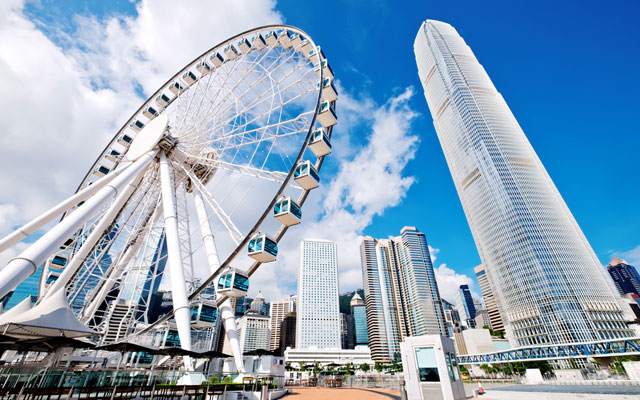
Confirmation of the Singapore-Hong Kong Air Travel Bubble (ATB) on November 11 has led to an immediate surge in travel search and flight bookings, with seats on Singapore Airlines and Cathay Pacific flights designated for the first day of the travel access on November 22 sold out within hours.
According to a news report by CNA, prices for Singapore Airlines economy class seats departing on November 22 steadily increased from about S$800 (US$593) at 10.00 on Wednesday to more than S$1,100 at about 15.00.
Cathay Pacific economy fares for the same departure date also rose, crossing the S$900 mark by late afternoon.
At Trip.com, the ATB launch announcement brought forth a 300 per cent spike in search volume for flights from Hong Kong to Singapore and a 200 per cent increase in Singapore hotel searches within three hours.
Trip.com data also showed a significant rise in the search volume for travel products from Singapore to Hong Kong, with a 200 per cent increase for flights and a 150 per cent increase for hotels.
The positive response follows on from Trip.com’s record of increased search volume since the first announcement of the ATB agreement on October 15, indicating that hunger for cross-border travel remains strong.
Consumer intelligence company Adara has also seen an encouraging rise in weekly searches since the ATB possibility was reported, with average weekly searches for Singapore and Hong Kong rising by 38 per cent and average weekly bookings by 83 per cent.
The certainty of travel between the two cities now has led Singapore consumers to plan 31 to 60 days ahead for their trips, and an 11 per cent improvement in travel interest.
Searches for longer trip are also up since the ATB confirmation, with 16 per cent of consumers looking at spending eight to 14 days (five per cent prior to the confirmation) and 20 per cent spending more than 15 days in the destination (13 per cent prior).
Singapore pushes precinct exploration through Pokémon Go

The Singapore Tourism Board (STB) has teamed up with American AR technology company, Niantic, to showcase tourism offerings and encourage precinct exploration with the popular smartphone game, Pokémon GO, as part of the ongoing SingapoRediscovers campaign to support local businesses.
With the tie-up between STB and Niantic, players will be able to meet and capture Pokémon or engage in virtual Raids with other players at up to 300 new PokéStops and Gyms located at tourism establishments and lifestyle offerings, starting November 12.
These are located at hotels, attractions, retailers, F&B establishments as well as at tour ticketing booths in 10 precincts, including Changi/East Coast, Chinatown, Joo Chiat/ Katong, Kampong Gelam, and Mandai/Kranji.
STB is also planning to schedule special Raid Battles in some areas, with details to be released in the coming weeks on the Singapore Tourism Board Facebook (@STBSingapore) and Instagram (@stb_sg) accounts.
Not only will this initiative encourage people to walk around and discover new things in their surroundings, which in turns enable the discovery of local businesses and precinct exploration, it also conveys promotion offers to players when they access online banners and microsites at PokéStops and Gyms.
Lim Shoo Ling, STB’s brand director, said: “We are excited by this collaboration with Niantic, which allows us to connect with the passionate community of Pokémon GO players in a fun and innovative way. As they pursue their favorite Pokémon across Singapore, we hope players will explore our precincts, discover hidden gems, and support local business – while staying safe and observing the necessary precautions.”
“Our strength is to influence people to walk physically from location to location, and we are hoping to utilise this to encourage people to explore different parts of Singapore in-depth and boost domestic travel needs,” said Gary Chang, APAC business development lead, Niantic.
New hotels: The Sebel Yarrawonga; COSI Krabi Ao Nang Beach; YaTi by Artyzen Hongqiao Shanghai
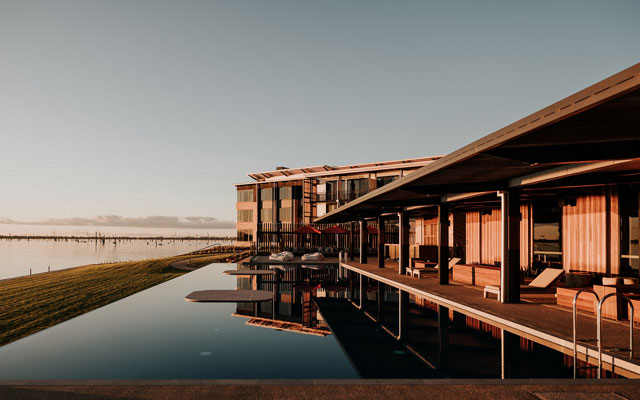
The Sebel Yarrawonga, Australia
Located in the picturesque Murray River region of Victoria and adjacent to Silverwoods Golf and Lifestyle Resort, The Sebel Yarrawonga opened on November 1 to offer accommodation, dining, conference and events facilities.
There are 63 stylish studios rooms and apartments, with a further 54 keys to come in stage two of the development in 2022/2023. Two of three F&B venues are now welcoming guests – Stock & Barrel bar and casual dining and Sunset Pool Bar. A fine dining restaurant is set to open in December.
COSI Krabi Ao Nang Beach, Thailand
Opened on October 23, the 142-key COSI Krabi Ao Nang Beach projects a youthful energy through its red hawk murals created by award-winning street artist Rukkit Kuanhaweth as well as The Hub, a destination in the heart of the hotel for guests to work, connect and relax over a film or a game.
Central to the COSI lifestyle is 24-hour convenience, delivered through a café, COSI Fit fitness centre and a self-service laundromat – all open around the clock.
The hotel is located within walking distance from Ao Nang Beach and the town’s nightlife and restaurants. Further afield, adventure-loving travellers can visit and explore the region’s caves, go rock climbing on its soaring limestone cliffs, and search for offshore island gems.
YaTi by Artyzen Hongqiao Shanghai, China
Projecting creativity, vitality and passion, the new YaTi by Artyzen Hongqiao Shanghai promises a space for youthful travellers to live and breathe social, art and culture scenes while offering stay essentials without fanfare and complications.
The 303-room select service hotel offers direct access to Artyzen Habitat, which was launched a year ago. YaTi’s guests can enjoy Artyzen Habitat’s facilities, such as a fully equipped gym, Utility Hub with self-serviced laundry, a bistro and café, an amphitheater and events studios.
The hotel is close to Ziteng Road Metro Station on Line 10 and a short drive to the Hongqiao Railway Station and the Hongqiao International Airport.
GHM to manage new resort in Koh Chang

GHM will manage Aquarius International Development’s 200-key Chedi Aquarius Koh Chang, which is slated to welcome guests in 4Q2023.
The property will feature an all-day-dining restaurant, a cliff-edge restaurant, rooftop bar, spa, infinity pool with pool bar, and conference facilities overlooking the Gulf of Thailand.
“This new resort is shaping up with an integrity of design and a certain poise that are hallmarks of the Chedi experience,” said GHM CEO Tommy Lai.
“We’ve been on the lookout for a way back into Thailand since 2013, and The Chedi Aquarius Koh Chang is the perfect vehicle.”
GHM opined that Koh Chang, as Thailand’s third largest island, will charm travellers with its relative obscurity compared with popular Phuket and Koh Samui. Its natural splendour, by way of a national park that covers 83 per cent of the island, will also work in its favour.
Solo travel advance bookings trickling in for The Travel Corporation

The Travel Corporation (TTC) has recorded an emergence of solo travel bookings out of Singapore, Malaysia and the US for 2021, many being retirees who cannot wait to resume travel and check off their travel bucket-list.
Anthony Lim, president, TTC, Asia, told TTG Asia that these customers are aged above 50 and had experienced the company’s guided travel products pre-pandemic.
Besides booking ahead with confidence, these early bookers are planning to take longer holidays and to rely on a travel company that can provide a travel itinerary, which is required for some destinations, such as Greece, when travel restarts.
Some of the destinations that are seeing early recovery for Asian bookings are Mediterranean countries such as Turkey, Greece and Egypt. Lim said these destinations could have fared particularly well as Turkey and Greece have policies that take care of travellers should they be stricken by Covid-19, while Egypt is a bucket-list destination.
“Travellers into these three countries also need not quarantine when they enter,” Lim added.
TTC’s flexible booking policy with a low US$99 deposit and allowing unlimited changes up to thirty days before the trip commences, single supplement discounts as well as full waiver of Single Supplement fees for select itineraries could have also played a part in triggering demand.
“Solo travellers recognise the attractive deals as a great opportunity with low risk since they can change their booking if they are still unable to travel,” said Lim, but added that customers are encouraged to book for trips taking place after June 2021.
As the “attractive deals” are still fresh, introduced ahead of this week, and valid until December 31, 2020, Lim expects take-ups to climb further.
“We believe that there is spark of revival in travel plans as there are travel insurance companies like Etiqa that are offering Covid-19 coverage,” he added.
Beyond financial lures, TTC is working to rebuild traveller confidence through a new well-being video and processes that provide peace-of-mind for customers. Among its efforts are a collaboration with the World Tourism and Travel Council to create a set of Safe Travels and Seamless Traveller Journey” global protocols that are aligned with WHO guidelines and national and regional government authority regulations. TTC has also appointed a well-being director for all guided programmes, who ensures adherence to hygiene procedures and provides travellers with the latest travel protocols guidelines.
COTRI to shine the spotlight on restarting Chinese outbound tourism

COTRI, the China Outbound Tourism Research Institute, will unveil details of Advantage: Tourism (A:T), a Covid-19 recovery and resilience programme, in a hybrid summit organised by the Global Tourism Forum Institute on November 27.
Wolfgang Arlt, COTRI founder and CEO, will be speaking on A:T at the summit, and COTRI will be conducting a masterclass on how to restart Chinese outbound tourism for the Asian market on December 8.
A:T partners, Arlt said, include Trend Transfer, an experienced incubator for ideas and connections for destinations; Stocastic.World, thought leader in innovation and value production; Landways International, a leading tour operator for Chinese visitors to South-east Europe; Planet Payment, Tencent Cloud Europe and TCI Research.
Arlt, who is programme lead, said A:T aims to address the significant changes in how Chinese travellers will travel, work, eat, sleep and spend their money after the end of the Covid-19 crisis.
A:T, he noted, is based on enhancing customer experience and satisfaction, transforming the focus on generating visitor arrival numbers to concentrate on local value creation and developing sustainable and qualitative KPIs of sentiment and satisfaction.
This is to be achieved by using finely tuned product adaptation based on increased knowledge to create recommendation marketing, spending money on empowerment of local stakeholders instead of huge amounts on unspecific social media marketing.
He continued: “The need to react to the challenges of overtourism, climate change, decreasing margins and decreasing levels of satisfaction of travellers, staff and locals alike, which were growing even before the virus struck, still exists.
“Decades of unreflected growth have shifted away from the priority for local welfare and KPIs addressing sustainability. There is not really a destination where this does not apply. Accordingly, even before the pandemic, many destinations have been approaching COTRI for support in moving upmarket, towards tourism which is less superficial and less discount-price oriented.
“The answer depends obviously on local strengths and the local situation, but generally speaking, there is a need for tailor-made products and services for different segments of the Chinese outbound market.
“Affluent families with children from Beijing have different interests and needs compared to a group of young foodies, who studied abroad from Shanghai, or a retired couple from Guangzhou looking for a spa holiday.
“Themed tours for Chinese with special interests can take visitors to less frequented parts of the destination and low-season times of the year. There is no need to be afraid of niches – with digitalisation, recommendation marketing and well-trained staff now, opportunities can be created as many niches in China still concern millions of potential customers.”
According to Arlt, Chinese outbound tourists travel mostly not just to relax, but to gain experiences, learn new skills from sailing to music or cooking, to meet friendly locals and to enjoy nature and landscapes.
Finding new distribution partners in China, he added, can go beyond tour operators. Twin-city relations can be used for exchanges of school children or urban planners, universities, hiking associations, retailers of outdoor equipment, and VIP clubs of banks are all possible partners if the right itinerary is offered.
He opined: “Volunteer tourism will become more important for young Chinese and also government initiatives like the Belt and Road Initiative and the Greater Bay Area programme will have positive effects for creating different forms of tourism from China to Asian countries.
Arlt believed that better quality, leading to more satisfied Chinese visitors, will allow for concentration on satisfaction marketing, “saving a lot of the budgets now spent on social media marketing with often dubious results”.
WWF works to stop elephant ivory consumption among Chinese travellers

WWF, in cooperation with GlobeScan, recently released the findings of an extensive study conducted to understand the main drivers and motivations of Chinese outbound travellers to purchase ivory products abroad and suggest targeted interventions to curtail demand among this group of travellers once international travel resumes in the new normal.
The study, which was conducted between August 2019 and January 2020, surveyed 3,011 outbound Chinese travellers to Cambodia, Hong Kong, Japan, Laos, Myanmar, Thailand, and Vietnam in the previous two years.
The results revealed that one in 10 Chinese travellers (11 per cent) had planned to purchase ivory prior to their trip. This was especially true for those travelling to Thailand (21 per cent), Japan (19 per cent), and Hong Kong (17 per cent).
More than half the people who reported buying ivory said they did so as a gift for a friend or family member, while a quarter did so as a gift for a business relation, shared Daniel Bergin, senior project manager, GlobeScan, when presenting the results via Zoom on November 10.
He also shared that 22 per cent of surveyed travellers had someone recommend visiting an ivory retailer, with almost a quarter of travellers having visited at least one shop that sold ivory.
Recommendations to visit these shops were mostly given by local tour guides (60 per cent) and staff at tourist information centres (37 per cent).
Karen Xue, director of WWF’s Ivory Initiative, shared: “The fact that ivory purchases are being facilitated by those working in the travel and tourism industry in destination countries is worrying, but also presents a good opportunity for targeted interventions.
“If we can change the behaviour of these tourism sector actors, we can greatly reduce the chances that travellers have to purchase ivory while abroad.”
When assessing the authenticity of the ivory, nearly half of the travellers surveyed (47 per cent) relied on authenticating documents provided by the sellers to determine if the ivory was real.
Of those that bought ivory, 44 per cent of consumers mailed it home to mainland China, either personally or through the retailer, while 28 per cent carried it back with them.
Jan Vertefeuille, senior advisor on advocacy in wildlife conservation for WWF, said: “These findings show that creative demand reduction efforts and interventions with the private sector are key if we want to keep Chinese outbound travellers from taking ivory home.
“If we can discredit the documentation that identifies ivory as ‘authentic’ or get courier companies to cooperate with our counter wildlife trafficking efforts, we can disrupt the flow of elephant ivory into China.”
Another key finding of the report revealed that 17 per cent of Chinese outbound travellers think it is legal to bring ivory back to mainland China.
Thus, among GlobeScan’s recommendations to WWF was to educate the Chinese public that it is illegal to transport ivory across borders under any circumstances and to have campaigns dissuading Chinese travellers from purchasing ivory.
Other recommendations included targeting courier and delivery companies in their campaigns to reduce illegal cross-border transportation as it has been found that sending ivory and rhino horn products by mail is the most popular method of transporting it back to mainland China.
As the Lunar New Year and Golden Week Holidays combined accounted for more than half the trips undertaken by outbound travellers to the seven destinations in the study, it was also recommended that campaigns be organised targeting these two peak periods.
GlobeScan also suggested devising campaigns against the practice of buying ivory as a gift. A poll conducted during the online unveiling of the findings where participants were asked what non-ivory, wildlife-friendly souvenir they thought would make a popular alternative saw the majority of respondents (44 per cent) voting for local artisan crafts, followed by gems and minerals (21 per cent).
This study builds on previous consumer surveys about the elephant ivory trade in China conducted by GlobeScan for WWF which looks at changes in attitudes and purchases since China banned its domestic ivory trade on December 31, 2017. Following this historic decision, WWF initiated a global initiative addressing the supply and demand of ivory products which is embedded in its multifaceted strategy to tackle the illegal wildlife trade around the world.
Last-minute bookings, domestic trips rise in China, South Korea
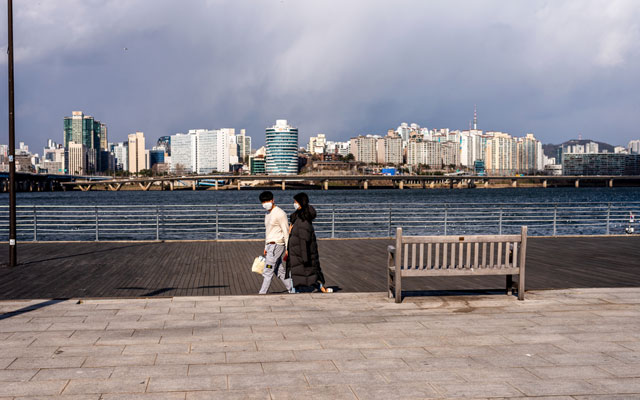
A sharp shift towards domestic tourism, shorter booking lead times, and rising demand for contactless booking tools are some of the emerging trends in the post-pandemic travel landscape in China and South Korea.
These insights are based on a study by B2B accommodation provider WebBeds, following extensive research including focus groups, expert insights, interviews with travel experts, and its own in-house data.
In China, WebBeds has found that the country relied on the rebound of its large domestic tourism sector, although uncertainty is still having a major effect. Ted Zhang, co-founder and CEO of DerbySoft, revealed that the booking window has shortened to just two to three days in advance, as customers lack information on when hotels and facilities will be fully operational.
This assertion was echoed by Zhiwei Bai, vice president of brand marketing of Tongcheng Elong, who also stated that online hotel bookings have significantly increased, and that walk-ins have become almost impossible as travellers don’t know if a hotel is still operational.
According to Bai, domestic airfares were “surprisingly low” this year, which enabled many migrant workers to book flights. Many trains were suspended and demand for bus tickets grew fast.
Wenzhi Zhao, executive vice president of Guangzhilv Travel Agency, noted that his business – like many others – has shifted to focus on domestic travel. “We are intensifying efforts to develop small group customised products with niche characteristics, especially products focused on ecotourism and wellness,” he said.
Gloria Wang, executive vice president of Jin Jiang Hotels – China Region, predicted that the domestic travel switch could continue for “three to five years… if international travel restrictions continue”. She also noted that “short-haul destinations around urban areas will become more popular, particularly in destinations with nature and fewer people”.
China’s Ministry of Culture & Tourism has forecast that domestic tourism will decline 43 per cent to 3.43 billion trips this year, while domestic tourism revenue is expected to slump by 52 per cent to US$394 billion) in 2020.
Over in South Korea, spending power and independent travel are diving revival. Following the closure of international borders, South Korea saw an 80.2 per cent plunge in international visitor arrivals in the first eight months of 2020, according to government data. But while the country has a much smaller population than China, it still ranks as the world’s ninth biggest outbound tourism market – a reflection of South Korea’s affluence. This local spending power has the potential to fuel a domestic rebound.
WebBeds research found that, as in China, booking lead times in South Korea have been severely shortened, which has also reduced the popularity of early bird rates. Flexible booking conditions are now the top priority for customers when making a travel or hotel reservation. Interestingly, Youngmi Jung, general manager overseas at Interpark, noted that travellers are now booking either ultra-short breaks or very long holidays, with a preference for self-contained stays.
The preference for secluded vacations since the onset of Covid-19 has also led to a rise in South Korean motorhome holidays. Despite mixed opinions on the sector’s long-term sustainability, Kyung Ok Kim, managing director of Hotelpass, suggested that demand may continue in the post-pandemic era, as more people become accustomed to this style of independent travel. South Korean consumers were also found to prefer contactless booking.
Finally, the usual travel seasons have been usurped by Covid-19 swings; according to Wook Sung, managing director of Shinhwa World, demand now grows when customers feel confident that an outbreak is under control and declines when a new outbreak occurs.
Sun Kok Sheng, WebBeds’ CCO for Asia Pacific, said: “The results of our focus groups in China and South Korea correlate with WebBeds’ own in-house findings. For example, our bookings have seen a considerable shortening of lead times, with a 60 per cent increase in proportion of bookings made two to three days in advance.”
“We’ve noticed a sharp increase in requests for room rates that include value-added services, such as dining, airport transfers, spa treatments and hotel credit. We’re also offering our clients in certain markets a B2B affiliate programme to book motorhome vacations,” he added.
Based on the findings of its research, WebBeds recommends that hotels and other tourism providers continue to offer flexible travel policies, rather than simply relying on discounting. It also advises travel agencies and other stakeholders to continue making investments in technology, including contactless services.








The moderate growth of international arrivals into Asia-Pacific destinations in 2019 has been derailed this year, no thanks to the appearance of the coronavirus which has led to the collapse of travel.
According to the Annual Travel Monitor 2020 (ATM 2020) released by the PATA, updated data for foreign arrivals into 47 Asia-Pacific destinations showed moderate gains in 2019, achieving an overall annual growth rate of 3.3% and reaching a new record high of almost 731 million international visitor arrivals (IVAs), relative to 2018.
However, early 2020 data for foreign arrivals into 37 Asia-Pacific destinations show a violent and dramatic decrease in growth rates relative to the same periods of previous years, dropping from a 6.3% increase in early 2019 to -67.0% in early 2020. The loss in the absolute number of foreign arrivals is more than 172 million in the early periods of 2020, relative to the same periods of just one year ago.
All but one of the 37 destinations reported annual decreases between early 2019 and 2020 and the only increase was of just 2,600, with that occurring in the first two months of the year when the real impact of the pandemic had perhaps not yet been felt.
Given that the impact of the containment practices to reduce Covid-19 infection rates were initiated at roughly different times across the globe, only those Asia-Pacific destinations with data for 1H2020 are further considered in order to create a somewhat more level comparative period. While this reduces the number of destinations to 26, the volume of IVAs is reduced by less than 18%.
Within this group of Asia-Pacific destinations, all are showing contractions in IVAs during the first half of 2020 relative to 1H2019 ranging from -41% to as much as almost -90%.
The top five performing Asia-Pacific destinations during 1H2020 can only be listed in terms of those with the least negative growth rates, relative to 1H2019. They are: Mexico (-41.2%), Costa Rica (-48.9%), Sri Lanka (-49.7%), New Zealand (-50.1%), and the Maldives (-55.6%).
The loss in IVAs during the first half of 2020 relative to 1H2019, rapidly escalated even within the least affected destinations, from less than 100,000 to almost half-a-million, in very quick progression. In addition, the losses should be considered in terms of the overall inbound volume for each destination in order to provide some measure of scale.
PATA CEO Mario Hardy said: “Preliminary results show an enormous impact across Asia-Pacific with the 37 destinations for which early 2020 data have been released pointing to a combined decrease in IVAs of 67%. On the data available, it is obvious that no Asia-Pacific destination was spared the impacts of the current pandemic and the lockdown measures needed to contain the spread of the SARS-CoV-2 virus during the first half of 2020, relative to the same period of a year ago.”
“While bemoaning the impact of this pandemic on the lives of so many and the livelihoods of so many more, it also gives us an opportunity to ask why we were so ill-prepared to respond to the threat of Covid-19. The consequence of that would be to engage in business and personal practices that ultimately offer better protection from such threats into the future.”
As noted earlier, 2019 saw moderate gains with an overall annual growth rate of 3.3% with almost 731 million IVAs, relative to 2018. When adjusted for Guam and Hawaii – which appear twice, once as individual destinations and again as inclusions in the US figures – the Asia-Pacific aggregate performance was such that it also grew by 3.3% in 2019, year-on-year and similarly, reached a record high of close to 719 million IVAs.
From 2015 to 2019, the 47 Asia-Pacific destinations covered collectively had their IVAs increase by more than 23%, adding 138 million arrivals to the collective foreign inbound count in the process.
In terms of the percentage growth rate between 2018 and 2019, Asia had the strongest annual increase at 3.7%, marginally ahead of the Pacific at 3.5% and followed by the Americas at two per cent.
By annual increase in the absolute volume of IVAs between 2018 and 2019 however, these positions changed somewhat, with Asia receiving 19.3 million additional foreign arrivals over that period, followed by the Americas with a gain of over 3.2 million and then the Pacific with just under one million additional foreign arrivals.
At the individual Asia-Pacific destination level, the top five with the strongest annual percentage gains in 2019 had increases ranging from almost 15% to more than 38%. They are: Myanmar (38.1%), Brunei (19.8%), Vietnam (16.2%), the Philippines (15.4%), and the Maldives (14.7%).
All told, 11 of the 47 destinations covered in this report had annual growth rates in excess of 10% between 2018 and 2019. In total, 39 destinations had positive annual growth rates over that period, while eight had decreases ranging from a marginal -0.6% to a very strong -21.7%.
For the absolute IVA volume increase between 2018 and 2019, the strongest Asia-Pacific performers were: China (7.22 million), Turkey (5.57 million), Mexico (3.71 million), Macau, China (3.60 million), and Vietnam (2.51 million).
Nine destinations had annual volume increases of more than one million IVAs each, while 16 had increases in excess of 100,000 apiece between 2018 and 2019. The eight destinations with reduced arrival numbers in 2019, had an annual cumulative loss of 11.725 million IVAs. However, this was offset by the annual increase of almost 35.2 million into the other 39 destinations, thereby keeping the overall Asia-Pacific annual increase in IVAs positive in 2019.
In percentage increase terms between 2018 and 2019 by source region, Africa had the strongest annual increase at 7.7% year-on-year, followed by Europe with a gain of 5.9%, and then Asia at 3.1%. The non-descript ‘Others’ category increased by 10.5% in 2019, year-on-year.
By annual increase in the absolute volume of foreign arrivals over that same period, these positions changed somewhat, with Asia generating close to 13.7 million additional foreign arrivals, followed by Europe with almost 5.2 million, and then the Pacific with 0.3 million additional foreign arrivals generated over that period. The Americas contracted marginally between 2018 and 2019, generating 64,000 fewer arrivals over that period.
At the individual source market level, the top five with the strongest annual percentage growth rates into Asia-Pacific in 2019 are: Libya (37.6%), Morocco (32.2%), Slovakia (26.7%), Serbia (25.4%), and Latvia (22.7%).
All told, 169 (71%) of the 237 source markets (including ‘Others’) covered in this report, had positive or stable annual growth rates, with 73 of those (31%) equal to or stronger than 10%. Of the total, 68 (29%) turned negative between 2018 and 2019.
For the absolute volume increase between 2018 and 2019, the five strongest source markets into Asia-Pacific are Hong Kong (3.23 million), the US (1.69 million), Russia (1.21 million), India (1.03 million), and Japan (1.01 million).
Interestingly, four of these top five source markets are within the Asia-Pacific region, suggesting that between 2018 and 2019 at least, intra-regional travel was strong. Russia was the only European source market in this group of five and generated an annual increase of more than 1.2 million IVAs into Asia-Pacific in 2019.
Of all the source markets covered in this report, seven (~ 3%), generated annual volume increases of more than one million each, while an additional 30 (~ 13%), produced more than 100,000 additional IVAs into Asia-Pacific between 2018 and 2019.