Carnival will invest in terminal and get berthing preference
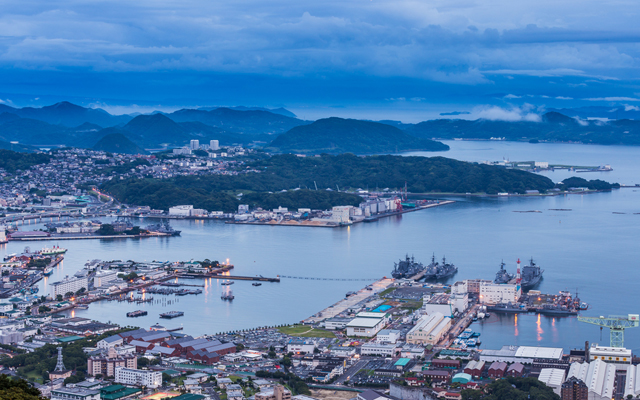
Carnival Corporation has signed an agreement with the Japanese port city of Sasebo, which will see the company invest in the construction of a new port terminal, scheduled to to come into operation by 2020.
As part of the agreement, Carnival Corporation will be granted berthing preference, enabling the company to optimise its cruise itineraries visiting the port.
Carnival will invest in terminal and get berthing preference
The partnership supports the Japanese government’s initiatives to develop the country’s ports by 2020, in advance of the Tokyo Olympic Games. Of the public-private partnerships that have emerged, Carnival Corporation has the most number of committed ports.
According to a Carnival statement, Japan’s ports have witnessed exponential growth in visitors over the past few years. The growing popularity of cruising in Asia is expected to introduce greater strain on Japan’s existing port infrastructure.
Carnival Corporation currently has the largest cruise presence in Japan, including over 870 calls in 45 ports in Japan, carrying an estimated 1.8 million cruise passengers in the market.
Meanwhile, one of Carnival Corporation’s cruise brands, Princess Cruises recently unveiled a North Asia itinerary on Majestic Princess, which will homeport at Keelung, Taipei (Taiwan) for the first time from the end of this month to July.
After ending her current Singapore homeport season on March 25, Majestic Princess will sail to Keelung, offering over 20 cruises visiting Japanese ports including Okinawa, Ishigaki, Nagasaki, Sakaiminato, Osaka, Miyazaki, Kagoshima and Busan in South Korea. Three- to seven-night sailings are available.
Chinese home-sharing platform Xiaozhu.com and global OTA agoda have combined forces in a global strategic partnership that will see both companies collaborating in areas including listings, technology and service innovation, branding and marketing.
The initial phase of the cooperative partnership will see the two companies share inventory, resulting in 100,000 listings on each platform.
Spencer Low, managing director, Greater China, commented: “This partnership will offer alternatives to traditional hotels in China, and will benefit travellers who are looking for more distinctive options for their accommodation needs.”
Among the benefits of the Xiaozhu-agoda alliance, added Low, is the flexibility for groups of friends or family to stay together at a larger property, more options for business travellers seeking home conforts, and a range of price points to cater for a variety of budgets.
Chen Chi, co-founder and CEO of Xiaozhu, dubbing the joining of forces a win-win cooperation, stated: “As Chinese outbound and inbound tourism is growing rapidly, homestay platforms must be able to provide high-quality services to global consumers. To this end, Xiaozhu is accelerating cooperation with our industry partners.”
Since launching its overseas business in 2017, Xiaozhu now covers listings in over 100 overseas cities, with a particularly strong upward trend in booming homestay markets like Japan and Thailand.
Managing crowds using computer vision software and AI
As the global aviation industry faces a boom in passenger traffic, Amadeus Ventures has invested in CrowdVision, an early stage company that uses computer vision software and AI to help airports monitor the flow of passengers in real time to minimise queues and more efficiently manage resources.
“Together with CrowdVision, we will be able to help airports to better anticipate and respond to traveller flows for better real-time, planning and investment decisions… When airports run smoothly, everyone benefits: airports can get more value out of their retail areas, more flights can take off on time, and travellers enjoy better journeys,” commented Suzanna Chiu, head of ventures at Amadeus.
Managing crowds using computer vision software and AI
According to a statement from Amadeus, CrowdVision’s existing airport customers are benefiting from reduced queues and waiting times, leaving passengers to spend more time and more money in retail areas. Others have optimised allocation of staff, desks, e-gates and security lanes to make the most of their existing infrastructure and postpone major capital expenditure on expansions.
With Amadeus as investor, CrowdVision gains access to global network of airports and travel partners, the start-up’s CEO, Fiona Strens, said.
CrowdVision joins Situm, Avuxi, Betterez, Bluesmart, BookingPal, Flyr and Yapta in the Amadeus Venture portfolio. The corporate venture arm of Amadeus was launched in 2014.
Air India launches flights to Tel Aviv
From March 22, Air India will begin thrice-weekly direct flights from New Delhi to Tel Aviv, Israel.
The outbound flight will depart New Delhi at 16.50 and arrive in Tel Aviv at 20.25. The return leg will depart Tel Aviv at 10.15 and arrive in New Delhi the following day at 09.00. Flight time is seven hours and 10 minutes one-way.
The route will utilise a Boeing 787 Dreamliner with 18 business class seats and 238 economy seats.
Citilink Indonesia flies to three new destinations in SE Asia
Budget airline Citilink Indonesia will soon be flying to Malaysia, Singapore, and Thailand.
On March 25, the low-cost offshoot of Garuda Indonesia will fly daily to Penang. Double-daily Jakarta-Singapore flights will launch later in April, and flights to Bangkok are slated to commence later this year.
New non-stop service between London and Changsha
Hainan Airlines will be launching a non-stop flight between London’s Heathrow Airport and Changsha Huanghua International Airport on March 23.
HU421 will depart Changsha at 11.20, and arrive in London at 16.30, while HU422 will depart London at 22.00, and land in Changsha at 16.25 the following day. The route will be serviced by a Boeing 787 deluxe wide-body aircraft.
This thrice-weekly service is Hainan Airlines’ second direct flight between the UK and China, having previously launched a Manchester-Beijing service.
Cathay Pacific and Air Astana become codeshare partners
Cathay Pacific and Air Astana will begin codesharing on each other’s flights on March 15, 2018.
Cathay Pacific will place its “CX” code on Air Astana’s non-stop flights between Hong Kong and Almaty, as well as on connecting services between Almaty and Astana, the Kazakh capital.
Air Astana currently flies twice weekly between Hong Kong and Almaty, on Tuesdays and Fridays, but will be upping frequency by adding a third service, on Mondays, from March 25.
Cathay Pacific will also codeshare on Air Astana’s five weekly services between Bangkok and Almaty (going daily from 25 March), and four weekly services between Seoul and Almaty.
Meanwhile, Air Astana will place its “KC” code on selected Cathay Pacific services operating between Hong Kong and Sydney, Melbourne, Perth and Singapore.
Enter the world of Konstatin Bessmertny at Mandarin Grill + Bar
Mandarin Oriental, Hong Kong is offering the Art Affair package, which includes a stay and passes to Art Central Hong Kong and Art Basel Hong Kong, two major art events taking place in Hong Kong at the end of the month.
Available from March 25 to April 2 for stays of at least three nights, the package includes accommodation at the hotel; day passes for two to Art Central (March 27 to April 1) and Art Basel Hong Kong (March 29 to 31). The Art Basel pass also comes with an Art Basel booklet, VIP lounge access, and for an additional HK$850 (US$108.40) per person, a private guided tour.
Enter the world of Konstatin Bessmertny at Mandarin Grill + Bar
Other package inclusions are daily breakfast for two at one of three restaurants of the guests’ choice; a welcome bottle of ‘R’ de Ruinart Champagne; and an art-inspired welcome amenity.
The hotel is situated adjacent to Central Harbourfront, the venue for the fourth edition of Art Central. This fair will feature over 100 international galleries showcasing emerging and established artists from across the globe.
Art Basel at the Hong Kong Convention and Exhibition Centre will bring together 248 participating galleries from 32 countries and territories for its sixth year.
Mandarin Oriental, Hong Kong is also partnering Art Advisory CONSIGG to transform Michelin-starred Mandarin Grill + Bar into a gallery featuring the works of Konstantin Bessmertny.
Room rates start from HK$4,980 per night, based on double occupancy.
Pan Pacific Hotels Group (PPHG) has appointed Rob Weeden as general manager for Pan Pacific Perth.
Prior to joining PPHG, he was vice president, sales and marketing at Shangri-La Hotels & Resorts, and was based out of Dubai, UAE since 2012.
The experienced hospitality professional has held leadership positions both domestically and abroad, over a career that has spanned more than 25 years. He has headed up Shangri-La Hotel Cairns and Traders Hotel Kuala Lumpur as general manager in 2008 and 2011 respectively, as well as worked as director of sales and marketing for several properties under the group in Malaysia and Australia.
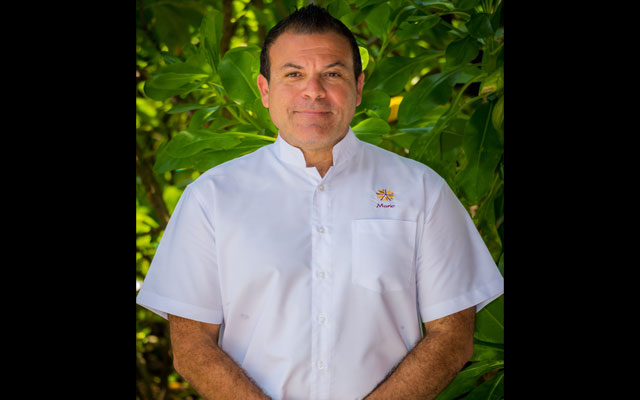
Mario Piazza has been named general manager of Angsana Velavaru, moving to the Maldives from his most recent appointment as the hotel manager of Banyan Tree Ringha, China.
Piazza first joined the Banyan Tree Group as an area recreational manager at Banyan Tree Bintan and Angsana Resort and Spa in 2001. After a stint with Vinpearl Resort and Spa Group, he rejoined the Banyan Tree Group and has since cut his teeth in various positions in different locations in the region.
He had assumed roles including group recreation director and operations – Laguna Lang Co, Vietnam and the Shanghai corporate office, director of recreation at Banyan Tree Phuket and director of hotel operations manager of Banyan Tree Lijiang.
Gilmore: Singapore ideal when considering air links, visa regulations and ease of getting from hotel to venue
Reed Exhibitions believes its inaugural ILTM Asia-Pacific show in Singapore this May could become “the Cannes of Asia”, referring to the main event, ILTM Cannes, launched 17 years ago.
In a restructure, ILTM Japan, usually held in March, will be incorporated into ILTM Asia-Pacific from this year, while the previous ILTM Asia will become ILTM China, still held in Shanghai but in October instead of June.
ILTM Asia-Pacific connects sellers to Asian buyers. Some 600 buyers are expected at the first show, with just a small percentage from China and international markets. ILTM Japan will be part of Asia-Pacific, with around 80 sellers.
Gilmore: Singapore ideal when considering air links, visa regulations and ease of getting from hotel to venue
ILTM China connects sellers to Chinese buyers. Some 220 buyers are expected at the first ILTM, with just a small percentage from Asia and international markets.
But why not the China show as the Cannes of Asia? According to Knight Frank’s Wealth Report 2018, China’s ultra-wealthy population will more than double in the next five years.
Alison Gilmore, director, ILTM Portfolio, said Singapore has the makings to be the Cannes of Asia because it has better air links and visa regulations; it is a “contained” city much like Cannes, where the exhibition venue and hotels are close by; and it is the “perfect” hub for Asia-Pacific’s high net worth individuals, which are growing in numbers.
In an interview in Singapore, Gilmore said: “One of the issues we had over the last few years was Chinese visas. A lot of Australians, and media, weren’t getting their visas to Shanghai, and they were finding this out very late. With Singapore, it’s simple and easy with no visa hassles, and within a six-hour flight time (from key Asian cities).”
As a result, organisers said they noted a 60 per cent interest in interest from Australian buyers and other key source markets like Singapore (47 per cent), India (50 per cent) and Japan (32 per cent), as well as Hong Kong, South Korea, the Philippines and Indonesia.
And unlike Shanghai, which is “spread out”, thus scattering delegates everywhere, another Singapore advantage has to do with logistics. The Singapore venue, Marina Bay Sands, and partner hotels Ritz-Carlton Millenia, Conrad Centennial and InterContinental Singapore, are all close by, as in Cannes. Gilmore expects the show to have the “intimate” feel and style of ILTM Cannes, where more business talks would be conducted outside of scheduled appointments over coffee at hotel lobbies, cocktail parties and dinners hosted by hotels, and at Singapore’s hot tables, which are within vicinity of the event.
Like Cannes, Singapore – once dubbed boring – is increasingly associated with the rich and famous, hosting world-class events such as F1 Grand Prix and boasting fine-dining concepts and luxury hotels, more of which have just opened and are reopening in the next couple of years.
As a source market, Singapore’s ultra-wealthy population – individuals with US$50 million or more in net assets, of which there are only 129,730 globally – was up 18 per cent to 1,400 people in 2017 over 2016, according to the Knight Frank report. More tantalisingly for the luxury travel market, Asia has beaten Europe as having more ultra-rich people, 35,880 vs 35,180, after a 15 per cent rise in 2017. North America remains the continent with the most number of ultra-wealthy individuals (44,000).
Asia is expected to experience turbo-charged growth in ultra-wealthy population in the next five years. Apart from a doubling in China, Japan is tipped to see a 51 per cent rise, India 71 per cent, Indonesia 66 per cent and Malaysia 65 per cent.
Such golden prospects are causing the market to buzz with activity. Western companies want ‘in’, as seen in London-based Scott Dunn buying Singapore luxury travel agency, Country Holidays, in January. Established local outbound companies are launching luxury labels, such as Chan Brothers Singapore which officially launched Prestige in January. Even ILTM is not without competition. Serge Dive, CEO and founder of Beyond Luxury Media who launched and sold ILTM Cannes, and went on to create Pure Life Experiences luxury travel tradeshow in Morocco, will be inaugurating Further East in November in Seminyak, Bali.
Gilmore is unfazed, saying competition “makes us do our best” and ILTM has a proven track record. ILTM Asia 2017 claimed that 59 per cent of buyers placed orders at the event and 90 per cent planned to place orders in excess of US$10,000 as a direct result of the show. Over a third of all buyers expect to spend US$100,000+ with clients they met at the event.
TTG Asia Luxury is the exclusive trade media partner for ILTM Asia-Pacific 2018 and will be producing a special edition to be distributed at the show in addition to its normal circulation to luxury travel planners across Asia-Pacific
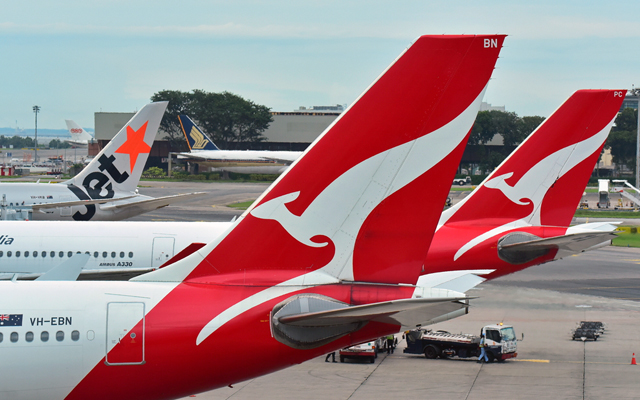
Qantas, Singapore Tourism Board (STB) and Changi Airport Group (CAG) have announced a S$5 million (US$3.8 million) partnership to promote Singapore as a destination and connecting gateway to Asia, Europe and Australia.
With the return of Qantas’ Sydney-London services via Singapore from March 25, the three-year MoU that will see all parties work on joint marketing campaigns in Australia, the UK and South-east Asia to promote travel on Qantas services via Singapore.
All parties will promote Qantas services via Singapore
According to a joint statement from the partners, London is Changi’s busiest longhaul destination. With Qantas’ new flights, Changi will offer 53 weekly services (about 19,600 one-way weekly seats) between Singapore and London. Changi Airport is also the most connected international airport to Australia, both in terms of the number of city links and weekly seats available.
Qantas Group CEO Alan Joyce said the partnership is aimed at boosting the number of people travelling through Singapore from key markets in Australia and the UK.
“Singapore is Qantas’ largest hub outside of Australia, carrying more than 20 per cent of our wide body fleet. It is a cornerstone city in our international network strategy and plays an important role in our ability to respond to the incredible growth we are seeing in travellers from Asia.
Joyce expects the deal will allow Qantas to better leverage its partner network in the region, which includes three Jetstar branded carriers that connect to its flights through Changi.
STB’s chief executive Lionel Yeo said that the partnership presents an opportunity to drive more visitor arrivals to Singapore and raise its destination profile.
“Australia and the UK have always been important source markets for Singapore, ranking fifth and 12th respectively in 2017. The addition of more Qantas services, especially the return of the iconic Kangaroo Route, is set to draw even more visitors from the two countries.
In 2017, Changi Airport handled 62.2 million passenger movements, with about 30 per cent of its passengers transiting through the airport.
And with today’s travellers becoming more selective, Changi Airport Group CEO Lee Seow Hiang said the partnership is a timely way to help differentiate Singapore as a stopover point and destination.
As a lesser-known destination for foreign travellers, South Korea’s Jeolla Province wants to leverage its rich cultural and agricultural assets to attract a greater share of visitors from South-east Asia.
Park Hui Jung, chief tourism marketing, Jeollabukdo tourism division, told TTG Asia that the destination’s selling points include the opportunity to get up close and personal with Korean culture in Jeonju Hanok Village, such as through the wearing of a hanbok, making of bibimbap and visiting Korean traditional houses.
Jeonju Hanok Village. Photo credit: Korea Tourism Organization
The northern Jeolla Province has been intensifying its marketing efforts in South-east Asia by conducting sales calls in Singapore, Malaysia, Thailand and Vietnam, said Park.
Consumer fairs and trade shows are also part of the agenda, and Jeollabukdo will be participating in this month’s MATTA Fair in Kuala Lumpur, Vietnam International Travel Mart in Hanoi and Singapore’s NATAS Travel Fair.
Meanwhile, the southern Jeolla province is keen to attract Singaporean families as the area offers farms and activities for children, Kim Bog-Hee, deputy director, Jeollanamdo Province tourism division, told TTG Asia.
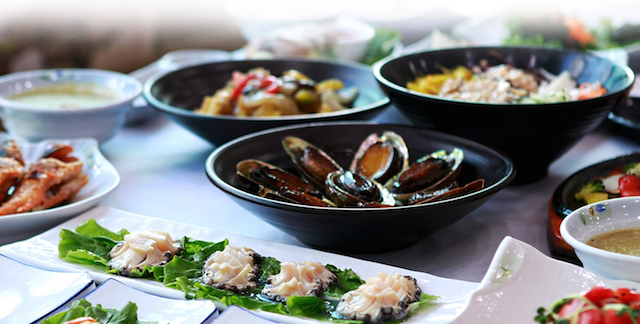
Unique agricultural experiences promoted include abalone picking and tasting in Wando from autumn to spring, while in late fall, travellers will be able to pick and taste pears, Kim continued.
An abalone meal in Wando. Photo credit: www.wando.go.kr
However, direct international flights to the province are scarce, with China remaining one of the province’s biggest markets as it enjoys twice-weekly scheduled flights from Shanghai to Muan Airport.
Still, Singapore outbound agents see promise in this fledgling Korean destination.
King Jin, senior sales manager, Apple Holidays, said: “The province is not easy to access, but Singaporeans are looking to travel somewhere they’ve never heard of.”
For his company, family groups top the segment of travellers that choose Jeolla, where there are daily departures – each group is about 25 to 30 pax strong – during the peak seasons of June and December.
“(During the school holidays), when compared to Japan, Australia and Taiwan, South Korea is more affordable for Singaporeans. (The province is also popular with families) as they have hands-on activities – such as making Korean paper – that both adults and children can do together,” King added.
He believes that the province will grow in popularity, including for FITs. But as “some Singaporeans prefer packages where everything is taken care of, I think we can still lead the market for another few years”.
Lee Hwee Noi, senior manager international product development outbound, Hong Thai Travel, concurred: “This province has been gaining popularity steadily over the last few years. We’ve sold it for about five years now, and in the first year we only had two groups. But right now we have about 15 groups, and there has been a growing number of enquires.”
For Hong Thai Travel, Jeolla is promoted for repeat travellers to South Korea as the area is located far down south, and is not easy for FITs to get there.