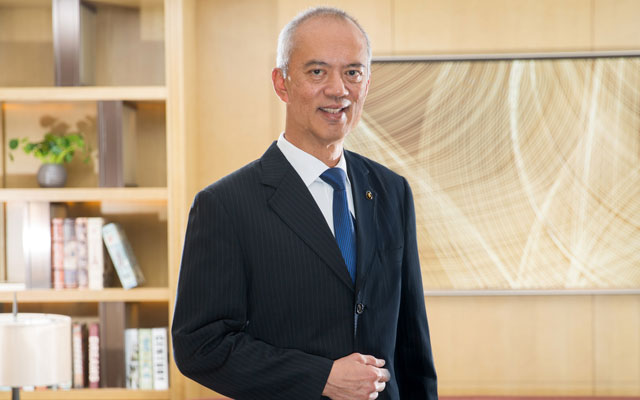
Wharf Hotels has appointed Bernard Teo as general manager of Marco Polo Changzhou, located in China’s southern Jiangsu province.
Prior to his appointment, he was based in Sydney as head of asset management at Ascendas Hospitality Australia Funds Management.
Teo has over 25 years of hospitality experience under his belt, and has held senior positions with international luxury hotel groups. In January 2012, Teo was transferred to his hometown of Perth to open Fraser Suites Perth. Prior to 2008, he also launched Fraser Hospitality’s first flagship luxury serviced apartment in Beijing in time for the Olympics.
Indonesian president Joko Widodo examining damage of the first earthquake to hit Lombok (photo credit: presidentRI.go.id)
An earthquake measuring seven on the richter scale hit Lombok yesterday, killing at least 82 people leaving 100 injured, a week after a 6.2-magnitude earthquake struck the island.
The earthquake, which was followed by more than 80 aftershocks, was also felt in Bali, Flores, and even parts of East Java. The worst affected areas were North Lombok, East Lombok and Mataram City.
Indonesian president Joko Widodo examining damage of the first earthquake (photo credit: presidentRI.go.id)
Sutopo Purwo Nugroho, spokesman for Indonesia’s disaster mitigation agency, said the casualty count is expected to continue increasing, adding that the extent of damage caused is still being determined.
Dwikorita Karnawati, head of Indonesia’s Meteorology, Climatology and Geophysics Agency, said: “We are also observing the sea level on the beach. Based on the data, the earthquake triggered a tsunami in four locations, Carik Village, North Lombok and Badas Village, North Sumba beach, Lembar Village on the Southwest Lombok beach, and Benoa Village.
“Although the tsunamis were less than half a meter high, (we) must (issue) an early warning because… amplification can occur (depending on) on the topography of the coast,” explained Dwikorita.
The tsunami warning has since been lifted.
The earthquake in Lombok also affected the islands of Gili Trawangan, Gili Meno and Gili Air, where reports say some 1,000 tourists and locals were on yesterday.
No casualties were reported on the three Gilis, and evacuation of travellers and locals were taking place at press time. On Gili Trawangan, ships have been sent for the evacuation of 45 stranded tourists.
Awaluddin, corporate communication senior manager Angkasa Pura I, shared that operational activities at both Lombok International Airport and Bali’s I Gusti Ngurah Rai airport are back to normal. The earthquake has caused minor damage to terminal facilities, but airside facilities – such as runways, taxiways and aprons – remain intact.
Either Aman or One&Only would be what the destination needs to better position itself in the upmarket segment
The six-star property in Desaru Coast that One&Only Resorts recently announced it would manage was a contract signed between Aman and the developer, Desaru Development Holdings.
It is understood that details are still being finalised between Aman and Desaru Development Holdings from a legal standpoint. Aman’s spokesperson Anna Nash said the company was not able to comment at this point; likewise Desaru Development Holdings’ CEO, Roslina Arbak, declined to comment what the legal issues were. However, she said: “What we would like to update is that we are progressing well towards the opening of the One&Only Desaru Coast.”
A luxury brand like Aman or One&Only could help anchor the destination’s upmarket ambitions
“We have replaced the operator and we are delighted to work with One&Only, the new operator of the branded luxury resort in Desaru Coast. With One&Only brand added to our collection, we will continue to curate new and quality offerings to increase optionality and strengthen our destination’s overall offerings, reflecting our disciplined approach to the management of our portfolio towards building sustainable values,” said Roslina, when asked why the change in management.
Either One&Only or Aman would be the anchor Desaru Coast needs to bolster its aspiration to be ‘a premium integrated destination resort’. Located in Malaysia’s south-eastern region in the state of Johor, the whole development spans over 1,578ha along a 17km unspoilt beachfront. To-date, Desaru Coast has also secured a Hard Rock Hotel, a Westin and an Anantara which, along with a Desaru Coast Conference Centre, are expected to open from the fourth quarter.
What has opened in Desaru Coast since 2016 are a 27-hole and an 18-hole championship course designed by golf luminaries Ernie Els and Vijay Singh, a 23-acre waterfront retail village and, just last month, an adventure waterpark.
News that One&Only is going to be in Desaru – a name that conjures wholesome fun, good value and a down-to-earth vibe rather than glamour and impeccability – draws some gasps from luxury travel planners. One said it was “like Four Seasons coming to Legoland”, while others eschew the improbability for the hope it will make Desaru Coast a more interesting destination for high-end travellers.
From previous announcements about Aman managing the resort, there’s not going to be much change in the resort’s concept, which will offer 42 suites, two luxury suites and a four-bedroom villa, and 50 One&Only Private Homes available for purchase. No opening date has been announced by One&Only.
The residential sale component is certainly a pull factor for One&Only. In an interview during ILTM Asia Pacific in Singapore in May, Philippe Zuber, president & COO of One&Only, who is leading the brand to extend its beach resorts offering into three other offerings, namely, private homes, nature resorts and urban resorts, told TTG Asia that any new property One&Only operates would have private homes for sale as part of the project. The recent renovation of One&Only Le Saint Geran in Mauritius included the development of these residences; there are also private homes in upcoming properties One&Only Mandarina, Mexico, One&Only Kea Island, Greece, and One&Only Portonovi, Montenegro.
“We are starting to sell some of these units now, and will go to market in September or October. We believe in this model and will continuously look for sites where we can accommodate this development,” said Zuber.
Moreover, Singapore has become a key Asian market for One&Only, apart from Japan and, increasingly, China. Desaru Coast is just next-door to the Lion City, wth Desaru Development Holdings’ Roslina confirming that a ferry terminal linking Desaru Coast to Singapore’s Tanah Merah Ferry Terminal, which is close to Singapore Changi International, is going on as planned.
While some may view a One&Only in Desaru as a fish out of the water, Zuber shows it is actually in keeping with the brand’s DNA. “We don’t want to be in mainstream destinations; we want to surprise our clients,” he said, when asked how One&Only picks ‘unique’ locations. “No one expected us to go to Rwanda (One&Only Nyungwe House, opening end of this year, and One&Only Gorilla’s Nest, opening 1Q2019, its first new nature resorts offerings after Emirates One&Only Wolgan Valley in Australia). We are going where others are not. Of course, the site must be spectacular, the project must respect the environment and we want it to be longterm, so we want to have the guarantee as well that it’s something to last.”
One&Only Desaru Coast is the brand’s first expansion in Asia since One&Only Reethi Rah Maldives opened nearly 13 years ago. Zuber said he has a long wishlist in Asia and this includes Japan, South Korea, Vietnam, Malaysia, Cambodia and Thailand.
On Malaysia, he said: “We believe Malaysia lately has become a very interesting destination. It has a lot to offer and is not mainstream. Many people have not been to Malaysia and we know our clients want to discover it.”
Said David Song, founder & managing director of luxury travel company Beyond X Boundaries Singapore: “I’m not surprised One&Only has decided to penetrate Asia given the newfound wealth of the Far East with emerging markets like Thailand, Indonesia and India.”
Another luxury buyer, Justin Moxley, CEO of Luphoric Malaysia, said Desaru Coast could possibly be “a destination resort with nice golf or a nice place for people to escape from Singapore for the weekend”.
“I know some HWNIs that go up there for events but I haven’t heard of someone going there for a luxury holiday specifically. If a resort like One&Only sets up there and more of that stature develops there, with the right support, it could be an interesting destination. You can stay at the resort, then head into Singapore for shopping and dining and return the same day,” said Moxley.
Meanwhile, Roslina said it’s business-as-usual for Desaru Development Holdings when asked if there’s any impact from the new government, which is widely seen as doing, in a source’s words, “corporate cleansing, project cleansing, leadership cleansing in the name for the former government’s poor governance, corruption and over-spending” and has also been flip-flopping on various key infrastructure projects.
Desaru Development Holdings is a subsidiary of Desaru Development Corporation, a joint venture among the state government of Johor, prominent Malaysian architect/planner Esa Mohamed, and Themed Attractions Resorts & Hotels, a wholly-owned subsidiary of Khazanah Nasional.
First product enhancements will roll out to the Silver Muse flagship later this month
A slew of product and fleet enhancements has been announced for Silversea Cruises following its acquisition by Royal Caribbean Cruises Ltd (RCL).
The two companies have just closed on the deal, which gives RCL 66.7 per cent stake in Silversea. Manfredi Lefebvre d’Ovidio will remain executive chairman of Silversea and retain a 33.3 per cent stake.
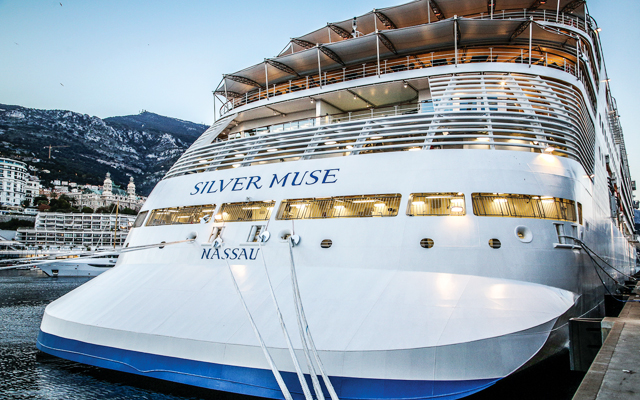
First product enhancements will roll out to the Silver Muse flagship later this month
With the purchase now complete, the two companies unveiled Project Invictus, a multi-year initiative to enhance Silversea’s offerings. Project Invictus enhancements range from product upgrades to magnified ship revitalisation programmes.
The first Invictus enhancements will begin rolling out on the Silver Muse this upcoming August 19, where an upgraded champagne and caviar offering will be initiated.
Immediately thereafter, these and other enhancements will be implemented fleet-wide.
Silversea’s growing fleet will be given an upgrade. The partners said in a statement that the planned renovation of Silver Whisper in December 2018 will be “much more comprehensive than initially anticipated” and include a partial refit of all guest cabins.
Moreover, Silversea’s Silver Wind will enter into an enhanced dry dock in December. Both vessels will join the overarching plan for a fleet-wide “Musification”, which will take inspiration from the design of the Silver Muse flagship.
The plan will be completed shortly after with a dry dock of the Silver Shadow.
With Silversea part of the family, RCL’s fleet now numbers 59 ships with an additional 15 on order. RCL brands include Royal Caribbean International, Celebrity Cruises, Azamara Club Cruises, TUI Cruises and Pullmantur Cruceros.
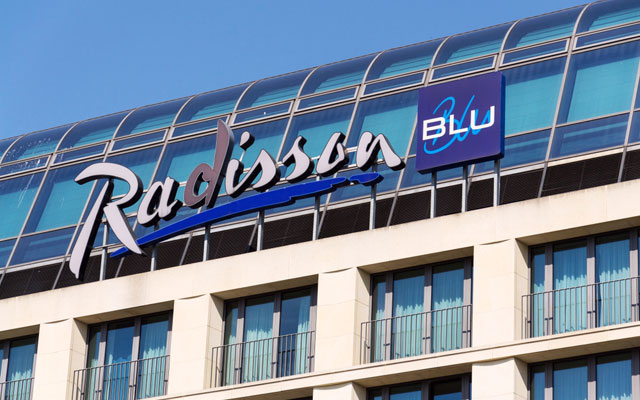
Radisson Blu, one of the brands under the Radisson Hotel Group
As HNA Group considers selling Radisson Hotel Group, Bloomberg reports that China’s state-owned Jin Jiang International is weighing a bid for the Minneapolis-based hotel company.
HNA Tourism Group had bought Carlson Hotels – comprising hotel brands Radisson, Park Plaza, Country Inns & Suites – for an undisclosed sum in 2016, before the latter’s recent rebrand into Radisson Hotel Group.
Radisson Blu, one of the brands under the Radisson Hotel Group
The debt-ridden Chinese conglomerate has been dumping assets globally, and its divestments snowballed to billions this year.
Bloomberg, quoting unnamed sources, said HNA could get at least US$2 billion from the Radisson sale, which is expected to attract other bidders.
Discussing HNA’s financial troubles in a recent interview with TTG Asia, Katerina Giannouka, Radisson Hotel Group’s head of Asia-Pacific, stressed that Radisson was self-financed and pursuing a five-year plan independent from the owning company’s contributions.
For potential bidder Jin Jiang, overseas expansion has been high on the agenda. It has been described by the CEO of Louvre Hotels Group, a company it acquired in recent years, as a “strategic, long-term player (that) does not want to exit”. Jin Jiang also owns 12.3 per cent of France’s Accor SA.
Local experience discovery platform Trell has raised US$1.25 million in seed funding from multiple investors. The Bengaluru-based startup, which generates content via short videos and images, will use the funds to scale and strengthen its product, technology and data science capabilities.
The latest seed round was co-led by BeeNext and WEH Ventures. Sprout Venture Partners and individual investors, such as Rajan Anandan, managing director of Google India, and Anupam Mittal, founder of Shaadi.com, also participated in the round through LetsVenture platform.
Earlier in March 2017, Trell had raised US$250,000 from existing investors including Aprameya Radhakrishna, founder of TaxiForSure; Nirav Choksi, chief executive of supply chain finance tech firm CredAble; Shanti Mohan, CEO of deals platform LetsVenture; Nitin Gupta, CEO of Ola Money and founder of payments firm PayU India; and Amit Lakhotia, former vice president of business at Indonesian e-commerce firm Tokopedia, among others.
Trell was launched in August 2017 as a platform designed for millennials to share their experiences of places and food, as well as discover those of others through user-generated short-form video content.
Prashant Sachan, Trell’s co-founder, said: “There is a rising trend of exploring local and travel experiences among the 230 million urban millennials in India. Their need to discover new experiences around them has to be served differently, as the existing platforms are using conventional and dated ways to do so.”
Co-founder Pulkit Agarwal added: “The content is all visual, geo-tagged and has a strong storytelling element, which makes it contextual and immersive, and this differentiates it from other competitors. It will offer an intuitive way for its users to discover real-life experiences around them.”
Trell – accessible on Andriod, iOS and Web – claims that it has already crossed half a million downloads and has over 200,000 monthly actives, within eight months of its product launch.
The platform is currently home to one million user-generated content uploads with experiences ranging from exploring local street food stalls to European backpacking trips.
According to Agrawal, users are creating over 10,000 original posts every day, a number which has been growing 1.5 times month-on-month since September 2017.
Nearly half of Asia-Pacific travellers begin planning at least 60 days in advance
Asia-Pacific travellers are the heaviest planners of all global regions, according to Sojern, with 45 per cent of travel searches starting more than 60 days out from the departure date.
Sojern’s Third Global Travel Insights Report of 2018 covers searches looking back at 2Q2018 and looking forward at 3Q2018.
Nearly half of Asia-Pacific travellers begin planning at least 60 days in advance
It further shows that 65 per cent of travel searches in Asia-Pacific start more than 30 days in advance of the departure date. In comparison, 63 per cent of travel searches in Europe and 61 per cent in Latin America started more than 30 days in advance of the departure date, while in the Middle East and Africa it was 43 per cent.
Another highlight is the finding that while mobile devices are abundant, global consumers are still using desktop for the majority of their searches while planning travel. In North America, 72 per cent of travel searches happened on desktop during Q2. For Asia-Pacific, it was 67 per cent and in Latin America it was 64 per cent.
Mobile search is “king” in two regions – Europe, with 53 per cent of European travel searches happening on mobile and 52 per cent in the Middle East and Africa.
“Even with mobile devices nearing global saturation, we continue to see that travel planning search volume remains desktop-heavy,” said Jackie Lamping, vice president of marketing at Sojern. “While there’s clear evidence that mobile is playing an increasing role in the dreaming and inspiration phases of trip planning – mostly driven through social sharing on Facebook and Instagram – travellers still come back to their desktop in order to research options in more detail, compare prices, and ultimately arrive at a confident decision.”
He explained that many consumers still feel that price comparison is better done on desktop—whether that’s due to faster website load times, access to more content, or the ability to open multiple browsing windows simultaneously.
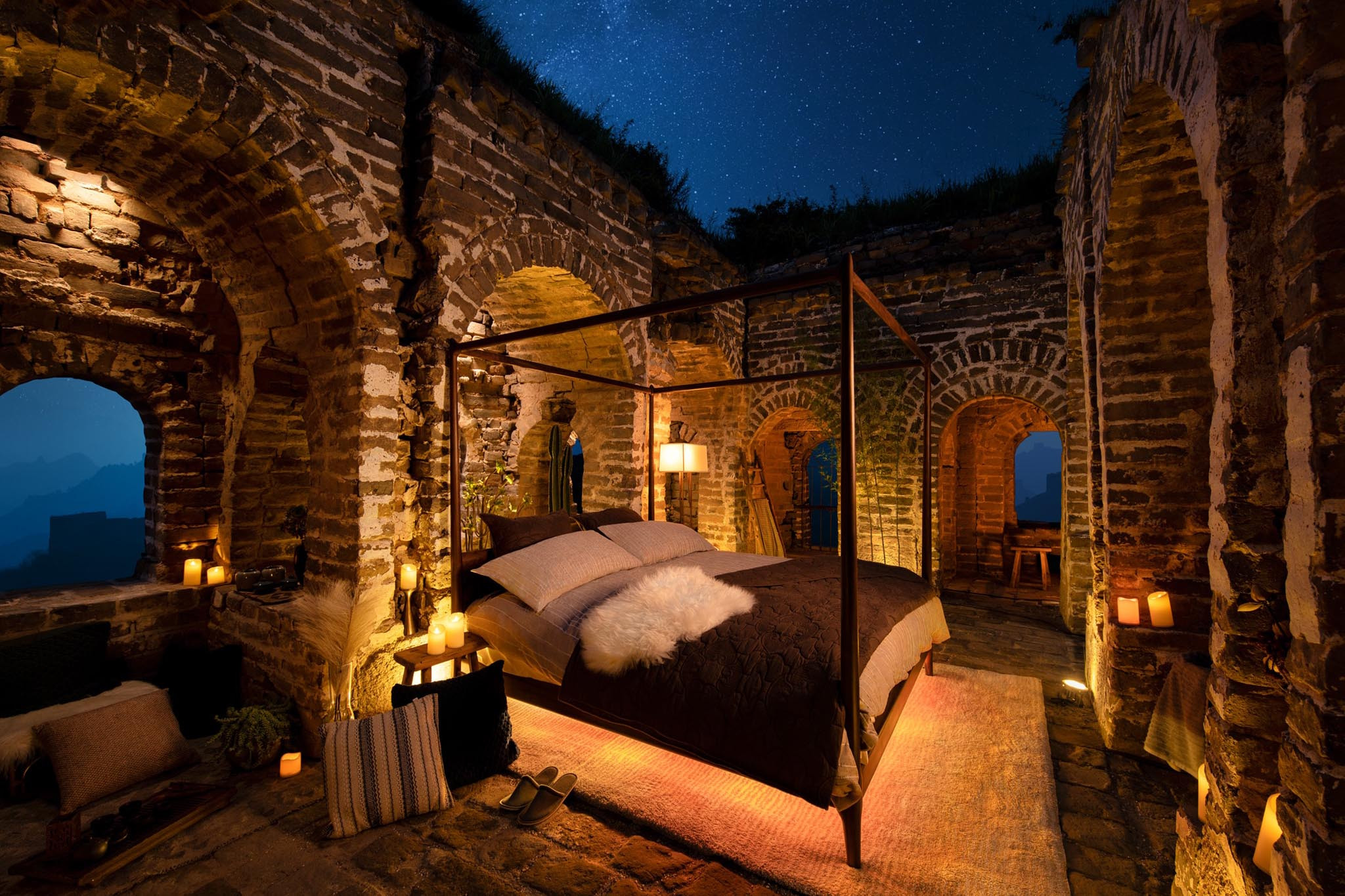
Airbnb shows it does not take its tagline “don’t go there, live there” lightly, having added the Great Wall of China to its platform not merely as a sightseeing option, but as a complete overnight stay experience.
The homesharing platform said it worked with historians and preservationist groups to open up “unprecedented access” to the world wonder, allowing guests to spend the night in a custom-designed home situated along the ancient portion of the wall.
The bedroom on the Great Wall
High above the ground within a centuries-old tower along the Great Wall, Airbnb has created a bedroom offering 360-degree views and a vantage point for stargazing.
At sunset, guests can enjoy a dinner with multiple courses, each representing a different aspect of Chinese culture. Dinner will be accompanied by a traditional Chinese music performance, which is bookable year-round for all travellers to China.
The following morning, guests will embark on a sunrise hike through China’s countryside while learning about the Great Wall, its heritage, history and protection efforts from the wall’s official historians.
Calligraphy is one of the Airbnb Experiences offered, along with the once-in-a-lifetime stay on the Great Wall
Airbnb has launched a contest to select four winners to enjoy its new offering, and is taking the chance to plug its Airbnb Experiences category of products.
During the stay, each winner will also have the option to choose from Airbnb Experiences currently on the platform, such as making their own personal stamp by learning Chinese seal-engraving or learning calligraphy on Chinese traditional fans during a personal Chinese calligraphy course.
Over the past year, the number of Airbnb listings in China has grown by 125 per cent, and there have been more than 3.3 million guest arrivals in Airbnb homes in China, it said.
Wyndham Hotels & Resorts will launch a 593-key resort in the western Pacific island destination of Palau, said to give the country’s Aimeliik region its first upscale international hotel.
Commenting on the group’s Palau debut, Joon Aun Ooi, president and managing director, South-east Asia and Pacific Rim, Wyndham Hotels & Resorts, said: “International visitor arrivals to Palau have jumped 50 per cent since 2010, and the country remains an intriguing and appealing destination for many Asian travellers. With direct air links from key source markets such as Seoul and Taipei, the prospects for Palau’s tourism industry – including the MICE sector – remain bright.”
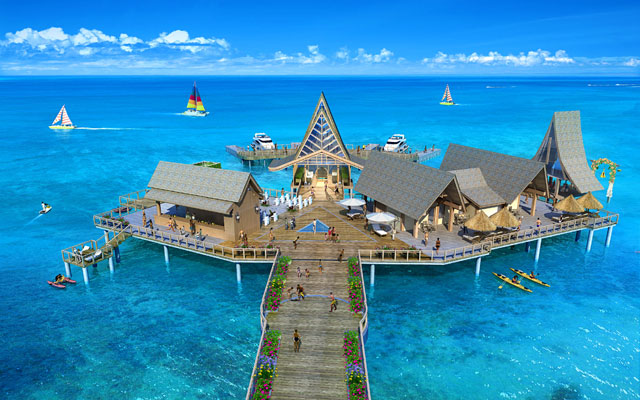
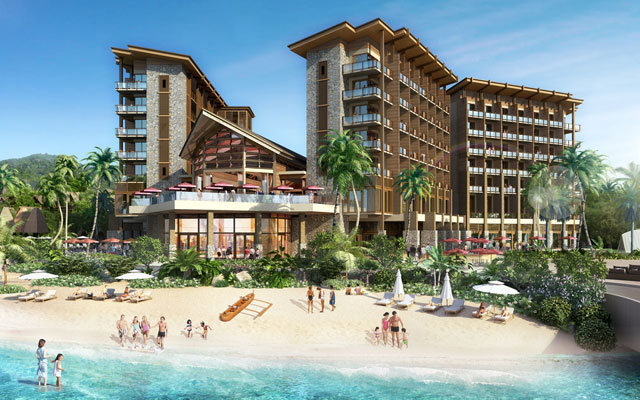
A rendering of the resort
Developed by the Sea Sky International Development Group, the resort will offer 132 guestrooms and over 400 villas, including over-water and hillside options.
It will also feature an executive lounge, two free-form pools, a children’s pool, a kids’ club and a wellness centre. The resort also includes a purpose-built conference centre with a variety of options for event planners, including a ballroom seating up to 140 guests and four meeting rooms for up to 60 people.
For F&B, guests can choose from a lobby lounge, beach bar and terrace, pool bar, an all-day dining poolside restaurant serving Asian and international cuisine, as well as a specialty Chinese restaurant.
A rendering of the docking platform
Palau comprises more than 200 jungle-clad islands in the western Pacific Ocean, about 1,500km east of the Philippines. It is a choice destination for divers and snorkellers, with its healthy and protected reefs housing marine life including approximately 1,500 species of fish, sharks, rays, turtles and more.
Wyndham Palau will be located 20 minutes’ drive from the Palau International Airport and a short boat transfer from Koror, the country’s main commercial centre.
One of the biggest advantages of cruise companies that struck me the other day – like ships passing in the night – is that their assets are moveable. I was reminded of this convenient truth for these companies when Norwegian Cruise Line Holdings (NCLH) decided to redeploy its China-centric ship, Norwegian Joy, from its homeport in Shanghai to the US.
The move created for it a domino effect of positioning its ships around the world where revenues would be highest. NCLH is a listed company; it minced no words that it was monetising strong global demand and driving higher shareholder returns.
Ican practically hear hotels moaning how they, too, wish they could move their property elsewhere each time RevPAR was down; alas, they have to stick their neck out in the market. That not sticking-it-out come rain or shine, which other tourism sectors do, is what bothers me about NCLH’s decision, no matter how logical you may say it is.
This is particularly so when the Norwegian Joy has been profitable since entering the China market – and only for just a little more than a year at that. It received the highest satisfaction level of all Norwegian Cruise Line fleet (NCLH also operates Oceania and Regent cruise lines), according to guest feedback surveys across all the line’s ships.
A lot of effort and progress have been made by the line to understand the Chinese consumers (even little things like shifting dining hours to 17.00 onwards than 18.00); increase their spending onboard through WeChat marketing; educate smaller agents to sell cruises; plus there’s the exclusive partnership between NCLH with Alibaba which has not even scratched its potential.
The ship itself was purpose-built for Chinese and its entry into China last year created a stir for cruising among Chinese travellers who love bells and whistles all the time.
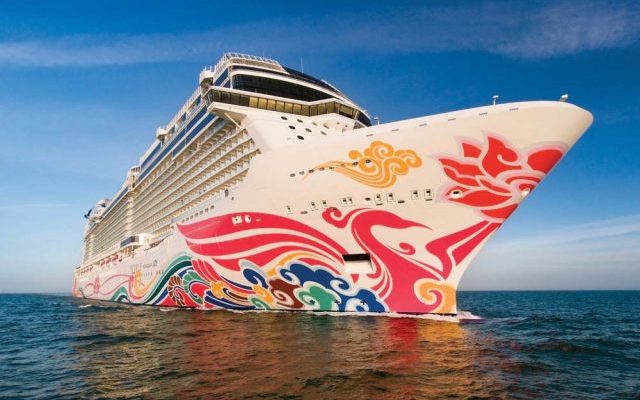
The Norwegian Joy will be moved from Shanghai to Seattle in April 2019
There are no fewer than 28 F&B outlets – the widest array of dining experiences yet on any new ship that has been purpose-built for China – accommodation offerings that make it attractive for multi-generational travel which is popular for Chinese, great facilities for gamblers and gamers alike, among others. Its hull artwork was painted by renowned Chinese artist Tan Ping, who picked the phoenix to symbolise supremacy over all birds of the world. Its godfather is Mandopop star Wang Leehom. Now imagine this ship homeporting in Seattle then Los Angeles. No wonder NCLH has to spend another US$50 million to rejig the vessel to suit a different customer set.
What’s the point of the rigmarole of building a China-centric ship, of saying the company is bullish about China, as NCLH’s president & CEO Frank Del Rio did just last February, only to sink the plan all too soon even when the toddler is profitable?
Granted, with only 26 ships, NCLH feels it is underserving many markets of the world. But that only means it has made a huge miscalculation of building a China-centric ship in the first place.
Clearly, NCLH now sees that the opportunity cost of being in China today is high, considering other parts of the world can bring higher returns than the wholesale ship charter style that is still predominant in China.
But there is also an opportunity cost of leaving a fast-growing and fast-changing market like China for a whole year. As to which is the larger opportunity cost, only time will tell.
There’s also something to be said of real commitment in helping develop a market – not just approaching it like ships passing in the night.