TTG Asia
Asia/Singapore Thursday, 2nd April 2026
Page 1280

How AI-powered chatbots are transforming travel experiences

0

Brought to you by Bold360 by LogMeIn
Over the past decade, technology has transformed many aspects of our everyday lives, including the way we travel. New digital platforms are also changing how travel companies conduct their business, to meet heightened customer expectations for speed and convenience. Empowered by their smartphones, a new breed of connected travelers has set the bar high for efficient and frictionless customer service—and they want their needs met in an instant.

Most companies in the travel and hospitality industry rely heavily on delivering excellent customer service to build their reputation and brand loyalty. With customer experience becoming a key success factor, many travel businesses are starting to adopt new technologies such as artificial intelligence (AI) to deliver the fast and personalized service that modern travelers demand.

Increasing role of AI in travel

AI is increasingly being used across the travel industry in a growing number of customer-facing and internal deployments. Through insights gleaned from a wealth of customer data, travel providers can quickly and accurately analyze, understand and anticipate their needs.

On the customer service front, AI-powered chatbots are now widely used to handle customer enquiries and deliver a more consistent experience across different channels. The key advantage here is how AI empowers travelers with the ability to self-serve. With AI chatbots, customers can quickly get the information they need, when they need it—without having to wait in line for a travel agent, or to be put on hold in a call center.

A good example is Bold360 by LogMeIn, an AI-powered customer engagement platform designed for travel operators to better engage their customers across multiple channels and devices throughout their journey.

Whether through web, mobile or messaging platforms, travelers can receive contextually relevant answers to frequently asked questions, such as flight status and reservation updates in real time. Bold360 also allows travel companies to seamlessly switch from AI chatbots to live agent support when additional help is required.

Delivering a tailored travel experience

Quick service response is just one factor that keeps travel customers satisfied. The ability to deliver a personalized travel experience is equally vital. That takes knowing each customer’s individual desires and preferences.

Before it used Bold360, Thomas Cook, like many travel companies, struggled to fully understand the needs of every customer to provide sufficiently tailored offerings, especially given the different markets and multiple websites it operates. Delivering the consistently high standard of service as expected also kept the company’s costs creeping up.

Following an initial deployment in the UK, Thomas Cook rolled out Bold360 in five languages across 13 websites and four agent support sites—using a combination of intelligent self-service and agent-assisted tools to deliver more personalized travel solutions.

Improvements were immediate. Contact center volume dropped 20% while agent interaction time dropped 10%. Thanks to Bold360’s AI self-service tool, inquiries are now routed based on context to the most appropriate support channel, and customer engagement has increased.

The bottom line is clear: customer experience can make or break your business in a fast-paced and competitive travel industry. Explore more about how Bold360 can empower you to differentiate your business and take personalized customer engagement to new heights at www.bold360.com.

For more Bold360 success stories: Yatra, India’s leading online travel agency, deployed Bold360 to provide a positive self-service experience to more customers, while reducing operational call center costs. Find out more here.

Dipping into experiences

0

Hotels in Singapore are diversifying their portfolio of offerings and services by adding day tours and activities, with several joining hands with local tour operators and booking platforms.

This comes as Singapore’s occupancy levels reportedly hit an all-time high in 2018, the first since 2012. According to data from STR Global, average occupancy rate rose by 3.1 per cent from 2017’s numbers to 83.7 per cent in 2018; average daily rate by 0.7 per cent to S$271.49 (US$199.80); and revPAR by 3.8 per cent to S$227.35.

Grand Copthorne Waterfront offers tours of its Tiong Bahru neighbourhood

Grand Copthorne Waterfront (GCW), for instance, launched a year-long campaign, Live Like a Local, offering hotel guests weekly neighbourhood tours and monthly cultural activities. These include a half-day tour with Tour East through one of Singapore’s oldest housing estates, Tiong Bahru, and dumpling making workshops. GCW and Tour East have also partnered and built a Premium Tour Lounge on the hotel’s third floor.

Roping in tours into hotel offerings is an “innovative approach” in the face of Singapore’s competitive hospitality landscape and technological disruption, which is “threatening the viability of the traditional hospitality model”, opined Gilbert Ong, director of marketing and communications for Millennium Hotels and Resorts, the operator of GCW.

He added the rise of FITs and demand for smaller group tours have spurred “a more intimate, immersive, meaningful and authentic experience”.

Other hotels like Amara Sanctuary Resort Sentosa leverage the storied past of the compound it occupies to offer a permanent tour in the Amara Heritage Trail, which takes guests on a walk through old soldier quarters and Sentosa’s World War II air raid shelters on the hotel’s grounds.

Six Senses Maxwell, on the other hand, has paired with Jane’s Singapore Tours to bring guests through locales such as MacRitchie, Botanic Gardens and the Civic District. Similarly, sister property Six Senses Duxton offers local heritage tours, complimentary traditional Chinese medicine consultations and tea appreciation sessions.

In the case of Shangri-la Hotels and Resorts, the luxury hotel group entered into a total product and marketing partnership with booking platform Klook. Guests at Shangri-La Hotel Singapore can now book experiences offered by Klook on a tablet with the Klook Concierge service. Both companies are set to jointly launch various marketing initiatives and unique experiences to Shangri-La on the platform.

Such a move has also helped to shine light on lesser-known experiences possible in Singapore’s tours, said Anita Ngai, chief revenue officer, Klook.

She elaborated: “Foreign guests know the top sights and activities in Singapore, such as Universal Studios and the Singapore Zoo, however, there are always more interesting and unique activities that deserve more exposure.”

As this movement burgeons, it may spark further collaborations between hotels and local tour providers. Six Senses Singapore’s general manager Murray Aitken and GCW’s Ong have indicated that this is a possible path they would take, in a bid to promote the local tourism sector while delivering unforgettable guest experiences.

Singapore’s retail scene in dire need of reform to curb plateauing tourist spending

0
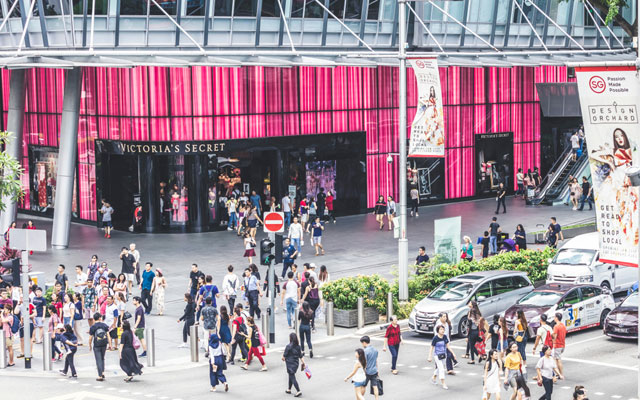
The 2.2-kilometre Orchard Road shopping precinct is in need of rejuvenation

Amid discussions of Orchard Road’s rejuvenation pipeline, Singapore’s retail players have expressed the need to reform local shopping offerings by providing a more “experiential” concept, in order to stimulate tourist expenditure.

The country has seen plateauing tourist spend over recent years, largely due to the rise of e-commerce. There is a glimmer of hope however, as tourism receipts broke the stagnation with a slight one per cent increase to S$27.1 billion (US$20 billion) last year.

The 2.2-kilometre Orchard Road shopping precinct is in need of rejuvenation

Higher tourist spending was registered for sightseeing, entertainment and gaming, as well as other tourism revenue components comprising airfares captured by local-based carriers.

However, expenditure on shopping, accommodation and F&B continued to decline, with 2018 seeing a 14 per cent dip to S$4.1 billion.

Concerned panellists at the SG Tourism Leaders Forum last week – comprising the Singapore Retailers Association (SRA) and Orchard Road Business Association (ORBA) – asserted that local retail experience has become outdated, and needs to be rejuvenated and enhanced.

Steven Goh, executive director, ORBA, revealed that a sizeable 30 to 40 per cent of sales along Orchard Road come from tourists, but the shopping belt has become “dated and old”, with too much road traffic and a lack of variation along the 2.8km stretch.

He said: “The government’s announcement to revamp Orchard Road is a step in the right direction, but Orchard Road is no longer the only shopping destination of choice. It should not just be about how to improve shopping, but how to make Orchard Road a liveable shopping street. There are not enough pedestrian crossings, and no priority is given to people over cars.

“My wish for it is to be a combination of different shopping experiences; for example, a combination of Tokyo’s Ginza Street, Omotesando and Shibuya. We need a lot of stakeholders, developers and government agencies to continue to work on this.”

The annual Great Singapore Sale (GSS) can no longer rely on its 25-year-old legacy and is due for a refresh, added Rose Tong, executive director of SRA, the organiser of GSS.

She lamented: “(GSS has run for) so long that it has become nothing more than sales and discounts. It’s actually one of the top five shopping festivals in the world, and it would be such a waste to let this 25-year heritage event die like that.”

Tong shared that SRA is currently “in discussions for a collaborative cross-marketing effort for the revamp of GSS”, and has already obtained “the support of the Restaurants Association of Singapore, ORBA, the Textile and Fashion Federation and Kampong Glam”.

Kampong Glam’s involvement will help expand the scope of GSS beyond Orchard Road and its sales and discounts. This is also a way for visitors “to really experience the different cultural facets of Singapore and colourful street murals that not even Singaporeans have noticed”, said Tong.

She said: “At the end of the day, GSS is all about selling Singapore and its experiences. We want to push more home-grown Singaporean designs and products, which will be an emphasis for us at this year’s GSS.”

GSS will also be halved from the usual 10 weeks to five weeks this year, and run from June 21 to July 28.

FAA reverses stance to ground Boeing 737 Max planes

0
XX

The US Federal Aviation Administration (FAA) has ordered the temporary grounding of Boeing 737 Max 8 aircraft operated by US airlines or in US territory, following the fatal crash of an Ethiopian Airlines jet on Sunday.

In a reversal of stance earlier this week that the Boeing 737 Max 8 aircraft was airworthy, FAA in a statement said its latest decision was a result of the data gathering process and new evidence collected at the site and analysed. This evidence, together with newly refined satellite data available to FAA, led to this decision.

Numerous countries have temporarily banned the 737 Max 8 from taking to the skies

The grounding will remain in effect pending further investigation, including examination of information from the aircraft’s flight data recorders and cockpit voice recorders.

The FAA’s move comes after the European Union Aviation Safety Agency suspended operations of the Boeing 737 Max aircraft in the bloc.

China, Indonesia, Singapore, Malaysia, Oman, Ethiopia, Norway and the Netherlands are now among a growing list of countries to suspend Boeing 737 Max jet from their airspace.

According to a CNN report, 50 countries have now grounded or banned the planes inside their airspace. Even Boeing has issued a statement stating the recommendation of the temporary global suspension of the entire 737 Max fleet.

Last Sunday, Ethiopian Airlines flight ET302 from Addis Ababa to Nairobi crashed minutes after takeoff, killing all 157 people on board. This is the second tragedy involving a Boeing 737 Max 8 in the past six months, coming after the Lion Air crash with a plane of the same model in October 2018.

Bangkok Airways takes codeshare, FC routes to strengthen Indochina market position

0

Linking up secondary destinations and opening access to more beaches in South-east Asia remain focal points for Bangkok Airways as it seeks to entrench its Indochina market position, revealed Puttipong Prasarttong-osoth, the president of Bangkok Airways.

The airline continues to introduce new connections to beach destinations in South-east Asia, including new services from Bangkok to Danang, Phu Quoc and Cam Ranh, and linking up its secondary hub of Chiang Mai with Hanoi. Coming up next will be two new routes from Chiang Mai to Krabi (end-March) and Luang Prabang (early April).

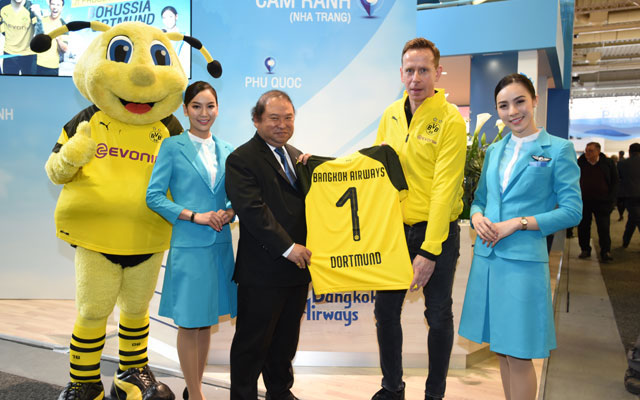
Bangkok Airways’ Puttipong Prasarttong-Osoth and Borussia Dortmund’s Jörg Heinrich

Such a strategy has worked especially well for the European market, for which beaches remain a top draw for South-east Asian holidays, Puttipong added.

And while Vietnam beaches have emerged as hot destinations in recent years, Puttipong revealed that the airline is also studying the feasibility of launching services to Myanmar’s untouched beaches in the south, although the country is currently hampered by the lack of adequate airport facilities.

Meanwhile, codeshare partnerships remain a vital strategy for Bangkok Airways in courting the European market.

“We now have codeshare partnerships with 27 airlines, with Philippines Airlines being the latest. We expect to sign with a few more carriers this year,” said Puttipong.

To further penetrate the European market, Bangkok Airways in 2018 sealed a two-year marketing partnership with Borussia Dortmund, one of Europe’s top football teams, to leverage branding cooperation of both companies to tap into a larger market reach in Asia, said Puttipong.

Dortmund has a big fan following from Germany, so we joined up with this football club to promote Bangkok Airways and make the airline better known across Asia and Europe.”

At the same time, Bangkok Airways’ adoption of IATA’s New Distribution Capability (NDC) standard has opened new opportunities and even geographic source markets for the carrier, vice president – sales Varong Israsena told TTG Asia.

“We were not able to offer our products on OTAs just 12 months ago. NDC has now enabled us to build another plug to bridge our products to our digital market. We can now sell on OTAs,” he said.

He added: “We have seen bookings coming from South Africa and Pakistan, which are new markets that we have never seen or sold in before. NDC has performed exceptionally well for us, and we were surprised too. However, we’re still in the infancy stage of our digital transformation.”

Bangkok Airways has unveiled plans to transform itself into a “fully digital integrated airline”, with one of the aims focussing on selling more tickets online.

Last year, the carrier also developed its systems to be able to connect to OTAs such as eDreams, Ctrip, Mystifly and MakeMyTrip.

Kempinski Hotels’ CEO and CFO to step down

0
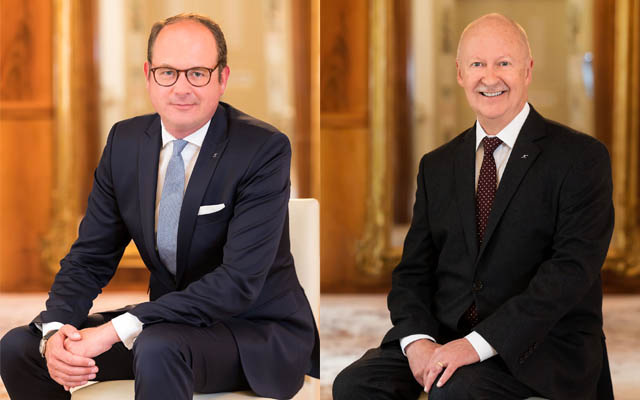
From left: Markus Semer and Colin Lubbe

Markus Semer, Kempinski Hotels’ chairman of the management board and CEO, and Colin Lubbe, Kempinski Hotels’ CFO and vice chairman, are both stepping down from their positions, the company revealed in a statement.

To ensure a continued successful management of the Kempinski Group, both men have accepted to extend their mandates during the transition until successors are found.

From left: Markus Semer and Colin Lubbe

Semer joined the company 16 years ago, and was deputy CEO for the past six years before becoming the chairman of the management board and CEO. Prior to this, Semer served for over 11 years as a member of the management board of Kempinski, and as a director of the board of Kempinski Hotels.

Semer will be leaving the hospitality group for a new assignment which begins in January 2020.

Upon Semer’s announcement to leave Kempinski, Lubbe will also not be prolonging his mandate as CFO and vice chairman of the management board.

Since his appointment 10 years ago, Lubbe has served as a member of the management board of Kempinski, and as a director of the board of Kempinski Hotels. For the last three years, Lubbe served as vice chairman of the management board.

Lubbe has also been in charge of finance, IT and technical & pre-opening services during this decade of service with the Kempinski brand.

Ctrip inks distribution deal with Millennium Hotels and Resorts

0
XXX

Millennium Hotels and Resorts (MHR) has entered into a distribution deal with Ctrip to promote its properties to the Chinese OTA’s customer base of 300 million.

Through this collaboration, MHR will partner with Ctrip’s membership programme to certify its portfolio of properties as “Chinese Friendly Hotels”.

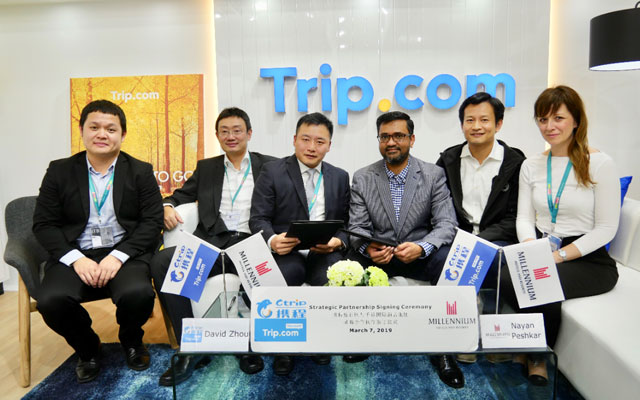
From left: Ctrip’s Jim Chung, Ray Chen and David Zhou; MHR’s Nayan Peshkar; Ctrip’s Jun Lai; and MHR’s Hana Chlebna at the signing

Currently, about one in four Chinese citizens use Ctrip to book and search for outbound flight tickets. According to Ctrip’s 2018 Travel Report, its customers’ top destinations are England, France, Germany, Thailand, Japan, Hong Kong, South Korea, Indonesia and the US, all of which are home to hotels owned or operated by MHR and its associates.

MHR and Ctrip will also work towards customer initiatives such as launching a flagship store on Ctrip’s digital platforms, joint marketing campaigns, as well as knowledge sharing and cross exposure programmes.

Nayan Peshkar, MHR’s senior vice president – digital, distribution & revenue strategy, commented that joining forces with Ctrip will enable the hotel group to raise its profile in the “large and fast-growing China travel market”. Asia currently forms MHR’s second biggest region of operations, he added.

Oyo pledges US$200m to bolster services in India, launches new midscale brand

0
XX

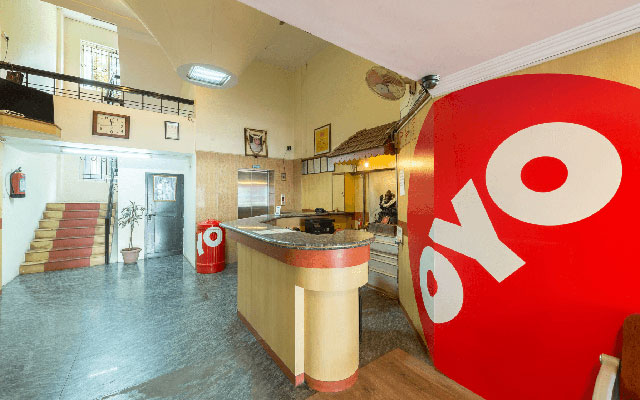
India-based hospitality company Oyo Hotels & Homes has pumped US$200 million into its India & South Asia business to expand its reach in the subcontinent.

Oyo is present in more than 250 cities in India, offering more than 173,000 keys. Last year, the company added over 81 Indian cities to its portfolio. Globally, it is currently present in 10 countries and 500 cities, and has over 515,000 rooms.

The group has committed more than US$200 million to be put towards technology investments, renovation, and managing investments

As well, Oyo recently launched Collection O, a midscale business hotel brand to cater to this burgeoning corporate travel segment.

Collection O joins six other brands in the company – Oyo Townhouse, Oyo Home, Capital O, SilverKey, Palette Resorts, and, more recently, Oyo Life in the housing rental space.

To ensure a secure and safe experience for guests, Oyo has piloted what it says is an industry-first in-app SoS button in over 25 cities in India, which activates on check-in and includes options to contact the police and Oyo’s 24/7 safety response team. In addition, the company will also ensure real photos of the property are provided to guests.

Guests will also have access to in-person assistance by the Oyo Captain, in-app feedback options, as well as CCTV surveillance in all lobby areas during their stays.

Tomeu Gili rejoins Bedsonline to helm sales division

0

Bedsonline has strengthened its senior leadership team with the appointment of Tomeu Gili as director of sales for Asia, the Middle East and Africa.

In this newly-created position, Gili will be responsible for supporting Bedsonline’s existing travel agency customers in the local markets to drive growth while further expanding and diversifying the number of agencies working with Bedsonline’s booking platform. He will be based in Dubai and lead a team of 70.

Gili brings with him over 20 years of experience in the travel industry, where he was spent time in leadership positions for companies such as Destinations of the World, RTS and Gowaii Corp. Prior to these, Gili worked for Bedsonline in senior leadership roles for 12 years following the brand’s launch in 2003.

This latest appointment follows Hotelbeds’ integration of both GTA and Bedsonline under the refreshed Bedsonline brand.

New hotels: Hotel Indigo Phuket Patong, Karma Reef Gili Meno and more

0

Hotel Indigo Phuket Patong, Thailand
This newly-opened property features 180 guestrooms and suites, all decorated to reflect the neighbourhood that it stands in – in this case, Patong’s past as a fishing village is highlighted.

There are six categories of rooms and suites, such as the Oasis Pool Access Room, where guests have access to a personal terrace and the pool, and the 72m2 Executive Suite. Aside from the three F&B venues, recreational facilities include a fitness centre, two swimming pools (one on the rooftop), and a full-size Muay Thai boxing ring. Meeting planners can book one of the three function spaces, or the rooftop garden, for corporate events.

Karma Reef Gili Meno, Indonesia
Located on the tiny, traffic-free island of Gili Meno, Karma Reef presents 14 rooms over several categories, from the 37m2 one-bedroom sea front tents to the 46m2 two-storey bungalows. Room service breakfast is included in the room rate.

Amenities on the island include the Sea Spa, the Tiki Bar offering cocktails and juices, Karma Beach restaurant, and the free use of bicycles and non-motorised water sports. A beach lounge offers night programmes such as live acoustic music, seafood barbecues, movie under the stars and traditional Indonesian-themed nights.

Mandarin Oriental Wangfujing, Beijing, China
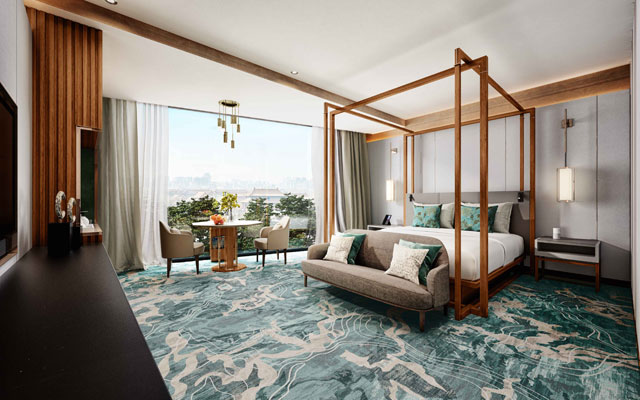
Located on the upper levels of the WF Central retail centre, the first Mandarin Oriental-branded hotel in China’s capital offers 73 guestrooms and suites. Rooms start from 55m2, with many offering views towards the Forbidden City. Amenities on-site include a spa with four suites, fitness centre, 25m-long indoor lap pool and three F&B options – rooftop MO Bar, Café Zi and Mandarin Grill + Bar.

SureStay Plus by Best Western Shin-Osaka, Japan
The SureStay Hotel Group has made its Japanese debut in downtown Osaka, near to the Shin-Osaka train station. The new-build offers 108 guestrooms all equipped with complimentary Wi-Fi, as well as facilities such as a gym, laundromat and a business centre. A restaurant on site serves daily buffet breakfast.

DoubleTree by Hilton Perth Northbridge, Australia
Located at 100 James Street, the new-build offers 206 guestrooms, each with a Digital Key allowing Hilton Honors guests to use their smartphones as room keys, Sweet Dreams by DoubleTree sleep experience beds and Crabtree & Evelyn bath products. Facilities include an outdoor pool and bar, 24-hour fitness centre, executive lounge on level two, a versatile meeting space with capacity of up to 160 guests, and the James St Bar + Kitchen all-day dining venue.