TTG Asia
Asia/Singapore Thursday, 2nd April 2026
Page 1088

Heritage Line takes luxe cruising experiences to Upper Mekong

0

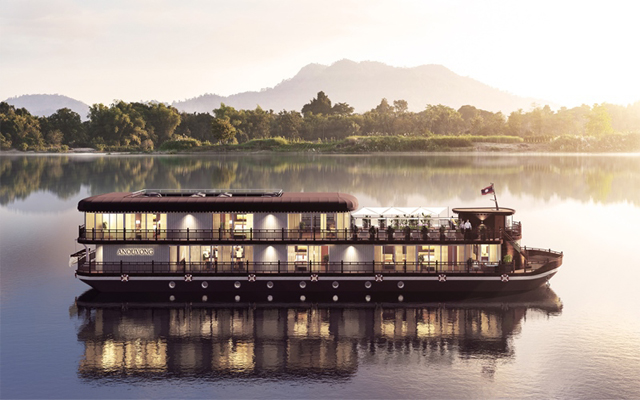
Vietnamese boutique cruise operator Heritage Line has started accepting bookings for sailings on its new 10-berth ship Anouvong, which will be the first luxury boat to ply the Upper Mekong River in Laos upon its launch later this year.

The boat, which features eight staterooms and two suites, will plot a course from the Golden Triangle at the Thailand/Laos border in the north-west, through the royal city of Luang Prabang, and down to the Lao capital, Vientiane.

Heritage Line Anouvong plots a course along the Mekong River in central and northern Laos

The cruise operator offers two journeys: The shorter three-night sailing leaves Luang Prabang and heads to the town of Huay Xai on the Laos/Thailand border (or vice versa); while the longer journey, spanning seven or nine nights, charts a course between the Laos/Thailand border at Huay Xai and Vientiane.

The shorter trip includes a visit to the village of Huay Palang to meet ethnic Khmu tribes and other highlights such as Pak Ou Caves, which is home to 4,000 sacred Buddhist statues.

The longer alternative embraces sightseeing along remote river areas and various activities such as kayaking through calm, shallow stretches and a gourmet banquet on a river sandbank, as well as a full discovery of Luang Prabang.

Anouvong is expected to begin sailings on September 29, 2020. It is now open for bookings over the next few months through any travel agents or directly with Heritage Line. Bookings made before March 31 will enjoy a 10 per cent discount on the three-night journey.

New hotels: Avani Ao Nang Cliff Krabi Resort, Wanderlust, and more

0

Avani Ao Nang Cliff Krabi Resort, Thailand
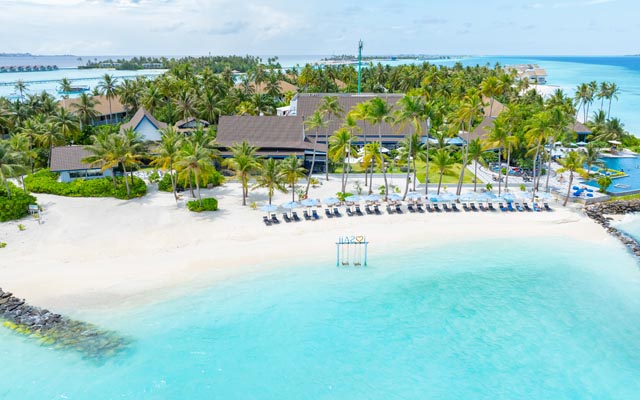
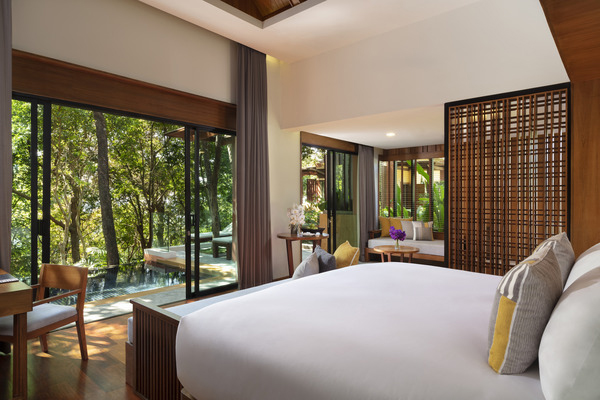
Avani Hotels & Resorts has opened the Avani Ao Nang Cliff Krabi Resort, marking the brand’s first entry into Thailand’s resort town of Krabi. Centrally located, the property offers 178 guestrooms and villas, the latter boasting a pool and relaxation area. On-site facilities include five F&B venues, a spa, a swimming pool, a gym, as well as indoor and outdoor playgrounds.
Wanderlust, Singapore
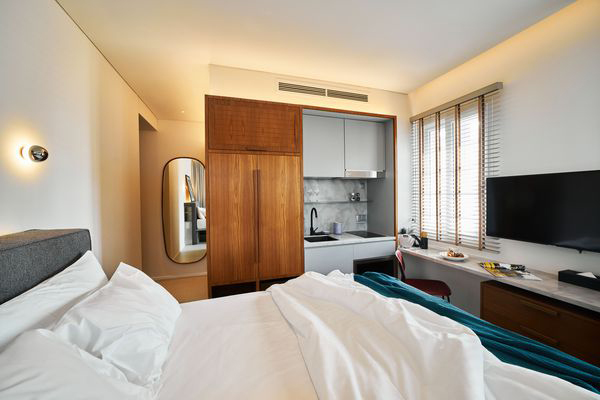
Following a complete facelift, the reimagined Wanderlust, the latest flexible living concept from 8M Collective, is now open for bookings. Embracing the select service model, Wanderlust offers a range of flexible rate packages and services depending on the desired length of stay. Amenities include complimentary laundry service, fully furnished pantries and common spaces.

The 29-key Wanderlust offers a range of room categories, from the Loft category, which features a lofted double bed to accommodate a separate living space, to the Wanderlust Room, which has a double bed and cosy fittings. The majority of rooms feature a kitchenette.

The property features an open-air terrace, a dipping pool, a Mama Shop that offers an array of locally sourced brands and staples, as well as a restaurant and bar helmed by Michelin-star-chef Rishi Naleendra, which is opening in April 2020.
Fusion Suites Vung Tau, Vietnam
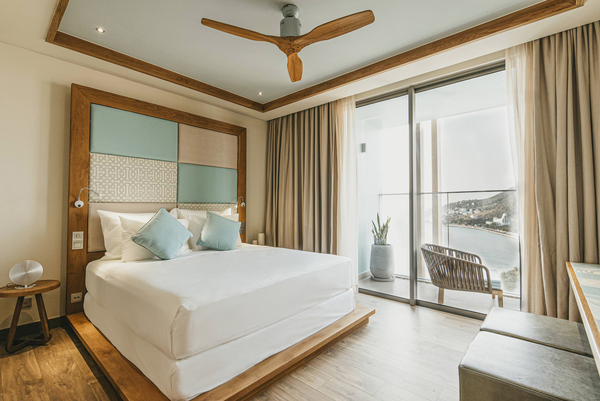
Fusion’s newest and third-suite style property, Fusion Suites Vung Tau, has risen in southern Vietnam’s popular coastal playground. Located in the heart of Vung Tau, the 19-storey hotel features 171 suites and apartments, a spa, a rooftop infinity pool, an all-day dining restaurant, a roof-top bar, and market stalls in the lobby. Wellness services and facilities include a spa, yoga and meditation, a fitness studio, a Jacuzzi, and a rooftop pool.
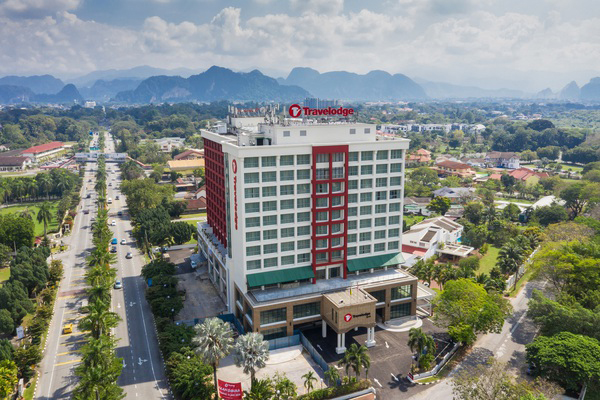
Travelodge Ipoh, Malaysia
Travelodge Hotels Asia has ramped up its expansion in Malaysia with the debut of its fourth hotel, Travelodge Ipoh, which opens after a rebranding and refurbishment of the former Heritage Hotel Ipoh. The 268-key hotel offers rooms in five categories: Superior, Deluxe, Premier, Family Deluxe and Family Suite. The hotel offers two meeting rooms, three ballrooms and a grand ballroom, plus a self-service laundromat, a gym, a kids’ play area, a multi-functional communal and dining space.
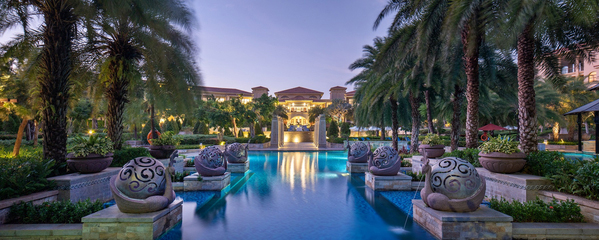
JW Marriott Sanya Haitang Bay, China
Located on a 21.8 km-long shoreline, the JW Marriott Sanya Haitang Bay is JW Marriott’s second resort on Hainan island and 18th hotel in Greater China. The property offers 142 guestrooms and 18 villas, ranging from 68m2 to 667m2, and each featuring private balconies.

Hotel facilities include an all-day open-kitchen restaurant, a lounge, a health club featuring over nine different-sized pools, and a spa. As well, guests can avail themselves of more than 3,490m2 of meeting space, 7,980m2 of outdoor lawn, flexible seating solutions and comprehensive business facilities.


Malaysia to roll out tourism stimulus package soon

0

The Malaysian government will be handing out a stimulus package to boost the economy and cushion the business fallout from the coronavirus outbreak by either end February or early March.

The move was announced by finance minister Lim Guan Eng following a three-hour meeting with local tourism industry players on Monday. The finance ministry has also scheduled further meetings with local businesses.

Malaysian government plans stimulus package as the Covid-19 epidemic takes toll on the tourism industry; Pangkor Island in Malaysia pictured

Earlier, Malaysian prime minister Mahathir Mohamad said the impact of the coronavirus outbreak had been felt most keenly by the tourism industry.

The Malaysian Association of Hotels reported total cancellations of 95,972 room nights, amounting to RM40 million (US$9.6 million) loss in revenue from January 26 to February 9.

Its CEO, Yap Lip Seng, shared: “We are tracking cancellations from our member hotels and the number is growing every day. Most cancellations are up to the end of February, with the majority originating from China. There are also cancellations from local Malaysians, Hong Kong, Singapore, Taiwan, Vietnam, (South) Korea and other countries. People are afraid to travel and that is a problem, despite the situation in Malaysia being well under control and we remaining safe for tourism.”

So far, out of the 18 positive Covid-19 cases recorded in Malaysia, 12 were China nationals while six were Malaysians.

The South Korean government has advised its citizens against travelling to Malaysia, Singapore, Japan, Taiwan, Vietnam and Thailand, in addition to China, due to the outbreak, reported Korean news agency Yonhap.

This will have a negative impact on arrivals from South Korea, which is among Malaysia’s biggest tourist source. For the first nine months of 2019, arrivals from South Korea increased by 9.7 per cent over the corresponding year to 508,080 tourists. The average length of stay of South Koreans was 6.5 nights and the per diem expenditure was RM728 (US$175.90).

On its part, the Malaysian Association of Tour and Travel Agents (MATTA) will hold a travel fair targeted at the domestic market, in a bid to offset the shortfall from Chinese tourists and to meet consumer demand.

MATTA president Tan Kok Liang said the tourism fair, which is supported by Tourism Malaysia, will be held on April 4 and 5 at Kuala Lumpur Convention Centre. Airlines, hotels and major attractions taking part in the fair are expected to roll out irresistible offers to entice visitors.

As a quick fix to overcome the current slowdown, the Malaysian Inbound Tourism Association is also focusing on domestic tourism by organising a week-long e-travel fair in late March.

The Philippines’ travel ban on Taiwan doesn’t make sense

0

The Philippines has placed a ban on arriving Taiwanese citizens as a precaution against the transmission of Covid-19 within the country.

The move would have been defensible if it were for public health and safety, like the travel ban imposed on China – where the coronavirus had originated from – and its special administrative regions of Hong Kong and Macau.

Philippine Airlines and Cebu Pacific have suspended flights to and from Taiwan amid Covid-19 fears

The government’s reasons for the Taiwan ban is because the World Health Organization (WHO) classifies Taiwan as being part of China and that the Philippines ascribes to the One China policy.

Note that the travel ban originally included just China, Hong Kong and Macau. Like an afterthought, Taiwan was lumped with the three more than a week later.

Jojo Clemente, president of the Tourism Congress of the Philippines, who hoped and implored the immediate overturn of the travel ban for Taiwan during the Congressional hearing on February 12, told me that the move was unnecessary since Taiwan “has its own safety protocols and probably quite stringent as well”.

As the government sticks to its lame excuse in including Taiwan in the travel ban, nowhere did it mention that Taiwan poses a health risk. Because it’s not a health risk, unlike China.

Put it this way: The 18 confirmed Covid-19 cases in Taiwan are much lower than those in say, Singapore and Japan, but the Philippines have not banned the others from entering the country.

The Philippine government’s reasoning is defective. And rightfully so, an indignant Taiwan wants the lifting of the travel ban.

Banning Taiwanese to the Philippines – which also means that Filipinos cannot go to Taiwan particularly as local airlines have stopped flying to Taipei, has grave repercussions to the tourism industry which is already hurting from numerous cancellations, rebookings, refunds, etc. due to the Covid-19 crisis.

Clemente noted that Taiwan is the Philippines’ fifth biggest inbound market so “closing that market will impose further hardships on an already battered industry”.

He is concerned that “a prolonged travel ban for no other reason than geopolitics may cause long-term damage for the tourism industry”.

It’s unthinkable what the economic ramifications are going to be for the Philippines should Taiwan discontinue its visa-free policy for Filipinos or worse, stop the flow of domestic helpers, factory workers and imports from the Philippines.

The free flow of travel is more beneficial to the Philippines than to Taiwan and halting it albeit temporarily is therefore more critical to the former.

The Philippines has a penchant for mixing politics and tourism, always with disastrous results, as even recent history had shown.

Time to heed the lessons from the past. Time to right the wrong. And it can do so beginning with the lifting of the travel ban on Taiwan, pronto.

Indonesia devises incentive programmes, special offers to ride through Covid-19 crisis

0

Government-level incentive programmes and special tourism deals are among the solutions Indonesian tourism stakeholders have developed to combat the loss in inbound and outbound traffic due to the Covid-19 outbreak.

Indonesia’s minister of finance Sri Mulyani Indrawati yesterday announced her office, alongside the Ministry of Transportation (MOT) and the Tourism Authority, are formulating incentive programmes for hotels and airlines to stimulate travel, particularly within the country.

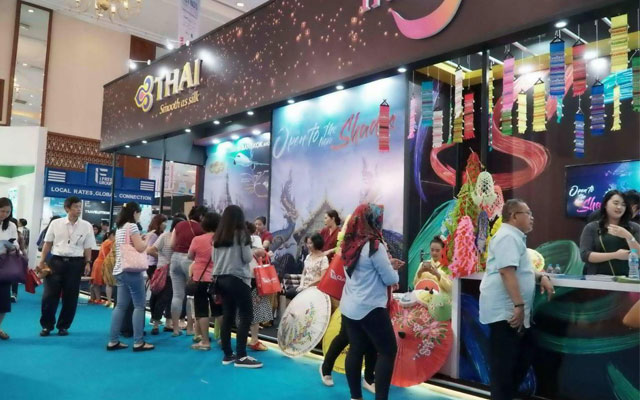
The ASTINDO Travel Fair will take place as scheduled this and next month amid the Covid-19 outbreak; Thai Airways’ booth at ASTINDO Travel Fair 2019 pictured

She said the proposal was under review by the MOT and Ministry of Tourism and Creative Economy.

Budi Karya Sumadi, minister of transportation, hoped the proposed incentive will have positive impact on airfares and hotel rates, and allow the creation of attractively-priced bundle packages comprising flight and accommodation.

The initiative is in line with measures rolled out by the hotel industry.

The Visit Wonderful Indonesia (Viwi) Nusantara Shocking Deals 2020 was launched by Indonesia’s vice president Ma’ruf Amin at the Indonesia Hotel and Restaurant Association (IHRA) National Conference last Monday.

The programme, which offers special rates to spur domestic travel, is initiated by several tourism industry associations, according to IHRA chairman Haryadi Sukamdani.

Meanwhile, the Indonesia Travel Agent Association (ASTINDO) has confirmed that it will push ahead with the ASTINDO Travel Fair in Jakarta, Palembang (February 21-23); and Padang, Surabaya and Bali (March 6-8).

ASTINDO chairman, Elly Hutabarat, is upbeat about the show’s success after seeing strong interest from participants. They include 100 exhibitors, of which 44 are travel agents; 16 airlines, such as Garuda Indonesia, Singapore Airlines, Emirates and All Nippon Airlines; and NTOs from various countries like Singapore, Thailand, India, South Korea and Japan.

Elly believes that the outbreak will not discourage people to travel because many tourist destinations remain unaffected by it and almost all countries has preventive measures to curb the virus spread.

ASTINDO secretary general, Pauline Suharno, said its members reckon that neither Indonesia’s travel ban nor Singapore’s orange alert level status were good enough reasons to postpone the fair. The travel and tourism community are banking on the fair to boost business, following a wave of refunds and cancellations due to the epidemic.

Elly said during a press conference in Jakarta on Tuesday that the tour packages bought by the visitors at ASTINDO Travel Fair is for travel later in May or June, and the outbreak would have ended by then.

Playing its part to correct misconceptions around Covid-19, ASTINO invited medical expert Erlina Burhan to speak with reporters.

Looking to harness the power of social media to bolster travel confidence and interest, ASTINDO is encouraging netizens to share their travel experiences, including tips and tricks, on Instagram with the hashtags #TipsTravellingAstindo and #AstindoTravelFair. Three winners with the most creative photos or stories will walk away with 500,000 rupiah (S$36.60) each on February 21 during the fair.

– Additional reporting by Kurniawan Ulung

Hotel owners and operators – how are you addressing the Covid-19 outbreak?

0
Robert Williams and Lada Shelkovnikova

The tourism and business travel sector feel the pain quickly whenever there is a constraint on international or local movement. As Covid-19 spreads, global travel is deeply affected. In many markets, passenger flows and property occupancies have weakened as travellers, businesses and governments make hard, though, predictable choices.

For the travel sector in Hong Kong (2019 protests) and Australia (bushfires) in particular, this comes at an already challenging time. It is likely some businesses will face cashflow difficulties.

What are we seeing?

Businesses in the hotels and resorts accommodation sector are focusing on Covid-19 at many levels as they work through the short- and longer-term implications of this epidemic.

As an employer…

Workplace legislation in most jurisdictions imposes a duty to look after the health, safety and welfare of employees as far as reasonably practicable, and we are seeing that as a key focus. Some concerns are less obvious at first glance, such as discrimination against perceived Chinese nationals and data protection issues around health declarations from clients and employees.

Employers may want to consider:

  • Staying abreast of current status and recommendations from local and international health organisations, and ensuring relevant internal communications are made regularly.
  • Educating staff to spot symptoms in themselves and other staff as well as incoming guests. Some operators may obtain medical advice to support the education efforts, including making the use of wipes, masks and other materials available and/or mandatory.
  • Restricting travel. Many businesses, including our own, have put the brakes on non-essential travel within Asia, and in some cases, more broadly. We hope that business travel will rebound strongly and swiftly once positive data emerges and confidence increases.
  • Checking health, long term disability and life insurance policies and any limitations in those policies. Do they cover epidemics? Is there a limit on the number of staff who can draw down benefits at any one time?
  • Implementing enhanced hygiene and property cleaning programmes.
  • Providing a safe workplace free from discrimination and harassment at a time of heightened tensions. The origins of Covid-19 are centred in Wuhan, China, and many assume that persons from mainland China or who have been in contact with Chinese nationals are more likely to be carriers of the disease. Spiked fears may cause many to overlook the fact that recent travel history should take precedence over the actual or perceived nationality of the individuals. Employers should be mindful to ensure that nobody is unduly discriminated against or harassed on grounds of nationality.
  • Asking appropriate staff to work from home. This may not be an option for on-property roles, such as housekeepers, chefs or waiters, though some businesses still need to consider managing their staffing complement if the downturn is prolonged.

When looking after guests, hotel operators may want to consider:

  • Accepting government-related quarantine business. Some hotels have been asked to accommodate at-risk travellers in isolation. Corporate accounts, FIT guests and hotel staff are likely to have strong views on potentially sharing any perceived risks.
  • Issuing declaration forms to staying guests and transient visitors, and seeking health and travel history information, to assist tracing at-risk individuals where a suspected or positive case arises in connection to the hotel. Care needs to be taken to only seek information that is permitted under applicable data protection laws, and dissemination and destruction of such information must be conducted in accordance with those controls. Medical information is particularly sensitive, and hotels must handle such data with care.

Staying prepared

  • Ensure crisis management protocols and infrastructure are available to support on-property teams with the consequences of a suspected or positive case in accordance with relevant local protocols and/or best practice.
  • Given this is unlikely to be the last such epidemic, develop a workable crisis plan that feasibly gathers and assesses information, balances risks, and introduces measures to protect as far as possible one’s business, staff and clients.

For owners and operators…

Currently, no market or geography looks immune to Covid-19. The scale of negative impact for some will be significant and long-lasting, especially considering that China has become a key tourism source market for many destinations. Owners and operators must keep in mind some key considerations in the running of their business:

A. Coronavirus outbreak as performance test releasing event?

It comes as no surprise that epidemics cause owners and third-party operators to reach for their hotel management contracts and check the force majeure events that release operators from any performance test or hurdles. We expect many hotels in Asia and beyond will have their performance test for the 2019/2020 financial year knocked out by Covid-19, especially where they have a single-limb GOP test (actual vs budgeted).

B. Budget deviations to prevent emergency

Hotel owners should expect shortfalls against budgeted performance as the spread of the outbreak impacts travel and bookings. Departures from approved budgets caused by emergency situations are permitted under most hotel management contracts.

In addition to the increase in expenditures to manage the emergency situation, cashflow and the GOP margins will be affected with revenues dropping as hotels witness travel bans, cancellation of stays, MICE events and weddings. Cashflow challenges at some properties will cause operators to make working capital calls on owners, particularly as most operators are issuing refunds for advance bookings and events.

C. Plugging the gap

Operators and asset managers are being asked to assess the likely impact of Chinese inbound business being withdrawn for 1Q and 2Q2020. In a number of markets, last year’s guest data shows that it will have a material impact on revenues, and the lower occupancy is expected to limit rate growth. Operators will look to adjust their marketing strategies to target domestic and other source markets to mitigate the loss from Chinese inbound business.

Government tourism marketing agencies have a strong role to play in mitigating the impact of Covid-19, as does the international effort to contain its transmission and spread.

Conclusion

The sector is in for a challenging period ahead. Owners and operators must remain vigilant as the Covid-19 situation continues to evolve and mitigate any potential risks, whether in health, safety or operations.

Indonesia extends visas for stranded Chinese tourists; Bali tourism to benefit

0

Indonesia has decided to allow Chinese tourists stranded in the country to extend their stay for up to a month, as travel to China remains restricted as the country attempts to curtail the spread of Covid-19.

Coordinating economic minister Airlangga Hartanto said that in addition to waiving overstay penalties for Chinese travellers, the government would also set up hotlines for nine ministries, including the Transportation Ministry, Manpower Ministry, Health Ministry and Finance Ministry.

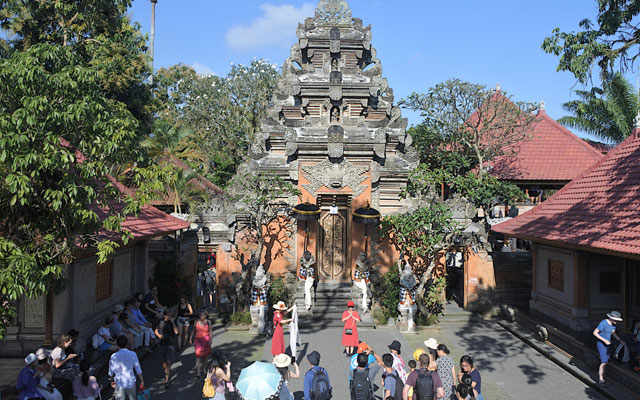
Bali’s tourism sector stands to benefit from visa extensions for Chinese tourists stranded in the country; Ubud Palace in Bali, Indonesia pictured

With no cases of infections in Indonesia, many stranded Chinese travellers have chosen to extend their stays in Bali where they feel safe, according to Elsye Deliana, head of Bali Liang, a member of the Association of the Indonesian Tours and Travel Agencies (ASITA) Bali chapter that handles the Chinese market.

“Most of them are also worried about getting infected with the virus if they go home,” she added.

I Ketut Ardana, managing director of Bali Sunshine and chairman of ASITA Bali Chapter, expressed support for the government’s move, which he expects will contribute to much needed tourism receipts.

Citing Bank Indonesia’s report, he said that each Chinese traveller could spend 9.7 million rupiah (US$710) per visit on average.

Ketut projected that if the travel ban continued until March, Bali could lose 300,000 Chinese travellers, with potential loss of 2.9 trillion rupiah. He added that on the whole, the country could lose 500,000 Chinese tourists, amounting to a loss of 4.8 trillion rupiah.

Sudarsana, general manager of business development with Santika Indonesia Hotel and Resorts, said: “We should welcome them. (Chinese travellers who) extend their stay in Bali can be substitutes for those who cannot come to Bali (due to the travel ban).”

While Bali vice governor Tjokorda Oka Artha Ardhana Sukawati, who is also chairman of Indonesia Hotels and Restaurants Association Bali chapter, has urged his members to offer discounted rates for stranded Chinese travellers extending in Bali, few trade players are doing so.

Sudarsana expressed no intention of altering prices for the Chinese travellers, while Ardana intends to maintain the price of his tour packages.

Booking.com tops SiteMinder’s 2019 ranking of hotel booking revenue makers in Asia

0

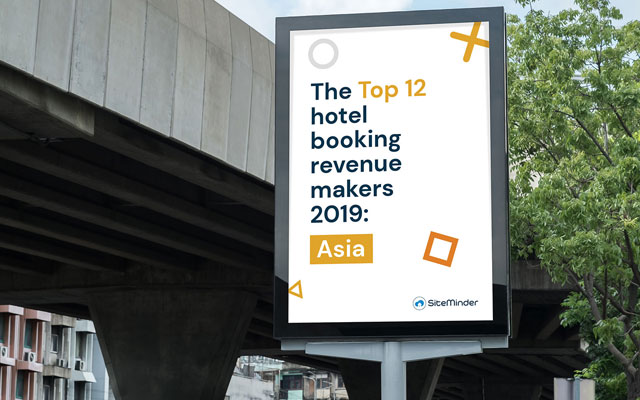
SiteMinder has named Booking.com, Agoda and Expedia Group as Asia’s top performing hotel distribution channels in its 2019 rankings which tracks performance across 20 of the world’s top tourism destinations.

The other top 12 hotel booking channels in 2019 for Asia, based on total gross revenue made for SiteMinder’s customers, are: hotel websites (direct bookings), Trip.com, Hotelbeds, Traveloka, Goibibo, Global distribution systems, Flight Centre Travel Group, HotelsCombined, and Tiket.com.

SiteMinder reveals the top 12 hotel booking revenue makers

The rankings reveal the fast-growing successes of both direct booking strategies for hotels and the growth strategies of the travel industry’s consolidation-hungry giants.

Within 14 of the 20 tourism destinations, direct bookings gained via a hotel’s website either climbed the list from the previous year or maintained their position among the top five spots. The sustained growth of the direct channel was matched only by that of Asia-headquartered Agoda, which made leaps across the EMEA region.

Other major findings included:

• The debut of Airbnb in six markets within Europe, Africa and the Americas, less than two years after launching its first global hotel technology partnership with SiteMinder to support traditional hospitality providers.
• The addition of Trip.com in another European market, Italy, alongside France, where the Chinese powerhouse made its western debut last year.
• The appearance of WebBeds brands JacTravel, totalstay, Destinations of the World and Sunhotels in half of this year’s top 12 lists.
• The re-entry of Australia-headquartered Flight Centre Travel Group in the country’s top 12, after four years. The company’s diversification and acquisition strategy in recent years is proving to have a strong impact in the merging world of travel management, having also made the list in South Africa for the first time.
• The debut of Lastminute.com in two markets within EMEA, proving the continued rise of spontaneous decision-making among today’s consumers.

SiteMinder’s senior director of global demand partnerships, James Bishop, said: “It’s exciting to reflect on this data each year and on the trends that we see in core tourism markets around the world. The swift rise of Airbnb in many markets, for example, is evidence of the hotel industry’s openness to adopting Airbnb as a partner and the benefits they are seeing from selling an experience, not simply a room. It is also evidence that Airbnb users no longer just look for homestays and spare spaces.

“Encouragingly, direct online reservations continue to contribute strongly to hotel revenue globally, with hotel websites remaining among the top four channels in the majority of markets and, in many instances, jumping up the ranks. It is clear that hoteliers are actively seeking to drive direct bookings, through greater knowledge and innovation, as well as investments in metasearch.

“We are also seeing technology providers supporting this appetite by adding professional services to their direct booking offerings, effectively acting as digital marketing agencies for hotels.”

Commenting on the Asia’s list, Brad Haines, regional vice president – Asia Pacific at SiteMinder, said: “Of note in our list of the 12 most popular booking channels is Trip.com, which has risen over the past year and is testament to the value that Chinese travellers have had on Asian economies.”

Philippine president plans tour to lift tourism spirits and encourage travel

0

Philippine president Rodrigo Duterte will be touring the country to show that the various destinations are safe for travel amid the Covid-19 scare, as part of a campaign to boost domestic tourism, reported the Philippine News Agency.

The plan, which is set to launch next week, was revealed by tourism secretary Bernadette Romulo-Puyat to reporters during a briefing in Pasay City, following her meeting with Duterte on Monday to discuss strategies to keep the country’s travel sector afloat.

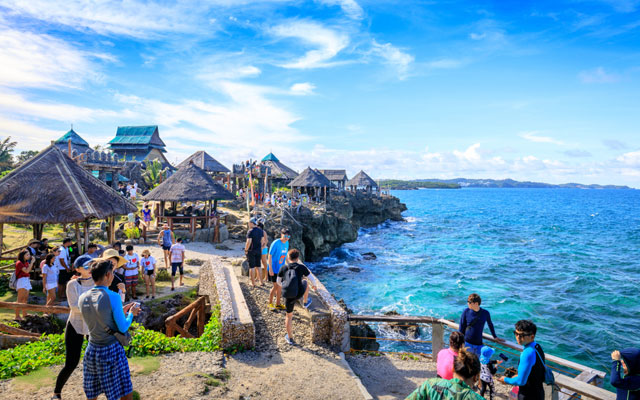
Philippine president Rodrigo Duterte to tour the country to show that it’s safe for travel amid virus fears; Crystal Cove Island in Boracay, the Philippines pictured

The campaign will target Boracay, Cebu, and Bohol – destinations heavily affected by the sudden drop in tourists from mainland China due to the Covid-19 outbreak, Romulo-Puyat said.

“(The visits) would probably be during the day… (Duterte) wants to even take the commercial (flight) and go through the proper protocols to show that it’s safe to travel around the country,” she added.

Earlier on, Duterte had imposed a travel ban on foreigners coming from China to prevent the spread of the virus in the country.

With China being one of the Philippines’ key source markets, the country’s tourism sector is projected to lose around US$291.71 million for February 2020 alone, according to the report.

Aviation roundup: Aeroflot, Qantas and Vietjet

0

Aeroflot connects Russia to Singapore

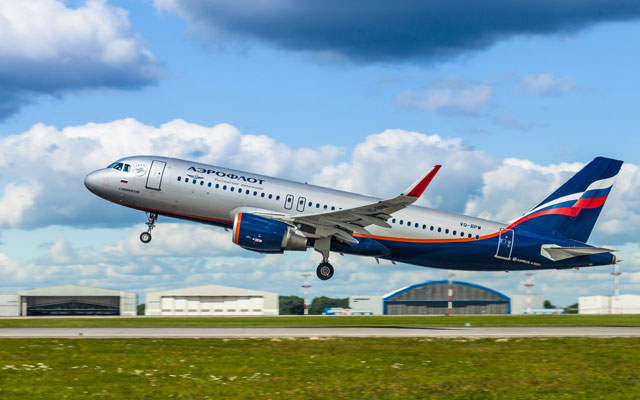
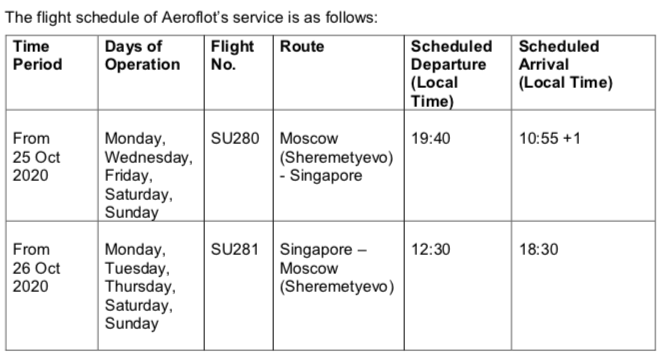
Russia’s national carrier Aeroflot will be launching non-stop services between Singapore and Moscow (Sheremetyevo) from October 25, 2020.

Using an Airbus A350-900 aircraft, Aeroflot will operate the five-times-weekly service from Moscow’s Sheremetyevo International Airport to Changi.

It is Changi’s first link to the airport, with a flight time of slightly more than 11 hours.

Qantas flies to San Francisco

Qantas has launched a new route linking Brisbane and San Francisco, marking the first time both cities have been linked by non-stop flights.

Using a new Boeing 787-9 Dreamliner, the service will be operated three times a week, on Tuesdays, Thursdays and Sundays. It has a flight time of 12 hours and 40 minutes.

Vietjet expands network in India

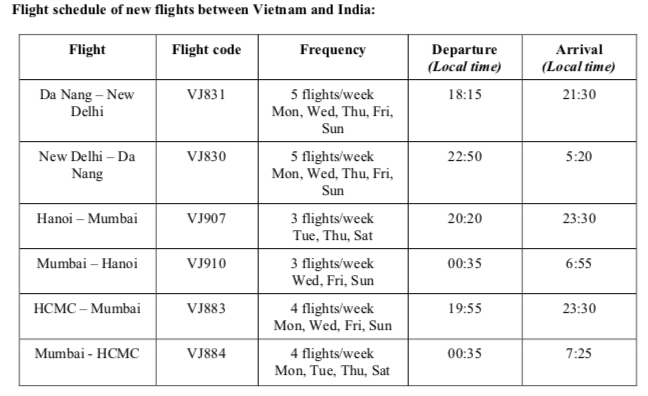
Vietjet has opened three new direct routes connecting Vietnam’s three largest hubs – Da Nang, Hanoi and Ho Chi Minh City – with New Delhi and Mumbai in India.

The Da Nang-New Delhi and Hanoi-Mumbai routes will commence operations on May 14, 2020, with a frequency of five flights per week and three flights per week, respectively.

The Ho Chi Minh City-Mumbai routes will operate four weekly flights from May 15, 2020.