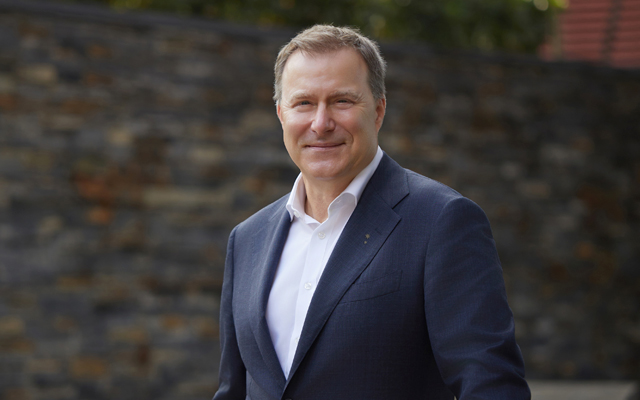
Capella Hotel Group’s new president, Roland Fasel, believes luxury hospitality shines when hotels act as custodians of the destination and anticipate every guest’s unspoken needs
 You have a strong background in luxury hospitality. How do you see luxury hospitality changing through the decades?
One big change I have seen over the last few years is that we are moving away from the product-led hospitality model, where luxury hospitality is defined by silverware, heavy curtains and thread count. I know the word experiential is overused, but we need to move away from being so focused on the product. Yes, the product is table stakes when you want to play in that level, but you can no longer differentiate or compete on product alone.
The way to compete now is to be the custodian and the bridge to the destination you operate in. So, you need to create great moments and connections that will truly transform the hotel experience.
Another big change in luxury hospitality relates to wellness and longevity. This is now a massive component in the traveller’s decision-making process. It influences where they will travel and where they will stay. Hotels will need to be ready with infrastructure and offerings that relate to wellness and longevity.
I am also seeing branded residences coming up in a big way in the ultra-luxury space.
I came across this term, hedonistic adaptation, at the ILTM Asia Pacific 2026 Opening Forum. It refers to the tendency for humans to get used to good things very quickly and then for them to regard the same good things as their next new normal. If luxury travellers are so used to all the great things, how can you make sure they continue to be wowed and impressed by Capella and Patina on their return?
That’s a very good question. When we do exceed a guest’s expectation, that delivery becomes their new service benchmark.
Well, I do believe in perpetual creativity and innovation. I believe we have to constantly understand our guests better – where they are on their journey, with their family, professionally, health-wise, etc. The more information we have about our guests, the better we can create a moment and a connection with them when they come to stay with us.
I also believe that people are curious, they want to connect with the destination where we operate in. They want the hotel to be the bridge to the destination. Capella hotels are big on cultural impact; they do a lot of show-and-tells and rituals through the Capella Culturists (who act as chief storytellers and hotel historians). On the other hand, Patina hotels use more creative and lifestyle programming, connecting guests and destination with music and art.
Our brands are not about younger or older guests. Rather, they speak to guests at different moments in their life. Perhaps there is a moment that you prefer cultural immersion, so you go to a Capella, and then another time when a Patina is what you would like.
The wider travel and tourism industry has been calling for more responsible consumption by travellers and responsible development by hospitality organisation. Do you see luxury hospitality’s evolution benefitting this call to action?
Being a responsible citizen is a clear part of our strategy. We are involved in the community of where we operate, such as through the support of local schools, and we are in the recycling and regeneration game. For example, we have coral propagation programmes that we integrate into guests activities. We have self-sufficient herbs and vegetable gardens at some of our hotels.
Sustainability is omnipresent. Hospitality businesses must be seen to make responsible behaviour a cohesive part of their brand proposition and guest experiences. Our coral propagation programmes, local art showcases and farm-to-table offerings allow our guests to be part of the responsible movement while inviting them to experience something unique to the destination.
In your newest career adventure, you are president of Capella Hotel Group. Your appointment press release says you will spearhead the group’s global expansion to double the current portfolio by 2030. How will this portfolio expansion happen?
You need to visualise our portfolio as a jewellery box, where we have 10 beautiful Capella and two Patina assets mostly in Asia-Pacific. We have a selective approach to how we are growing the Capella and Patina brands.
With the Capella brand, we are opening in Nanjing at the end of 2026 – the third Capella in China after Shanghai and Hainan. Nanjing was once the ancient capital of the Six Dynasties, giving us a valuable and storied location to position a hotel. We will also open in the Middle East and Italy – the brand is growing.
But the real growth potential lies in Patina because it is a more agile brand. It can be placed in locations with art and music, and built a little bigger if necessary, giving developers more flexibility to enter primary markets. It can also be positioned in secondary markets and resort destinations. Patina can reach 20 hotels very quickly, and then we will take it from there.
We will open Patina Tianjin – the first Patina in China – at the end of 2026.
Capella Kyoto and Patina Osaka are some of the group’s newest openings in Asia. What is outstanding about them?
Patina Osaka is located just steps from Osaka Castle and in a spot that is not obvious, so that grants guests more serenity. It has a listening room designed with Devon Turnbull’s immersive audio systems, a culinary programme that embraces the 72 micro-climates of Japan, and limited-edition merchandise that is designed in collaboration with Verdy, a highly influential Japanese graphic artist and designer based in Tokyo.
We have just opened Capella Kyoto in the historic Miyagawa-cho district, beside Kenninji Temple. Acclaimed Japanese architect Kengo Kuma restored and rebuilt the hotel that Capella Kyoto occupies, using wood and stones from around the area. We have woven local culture into the fabric of the hotel; we have an arrangement for local maikos (a young apprentice geisha) to come and interact with our guests, to share their training journey and priorities.
Lastly, since you are in the business of luxury hospitality, what delights you? I imagine you must be the hardest guest to please.
I am deep down an operator who comes out of the kitchen and learn details. Luxury is made up of layers, architecture and space. When I tour hotels, I notice details and touches that employees get right. It could be the way the shaving kit was set up, or how my needs were anticipated.
If you have been on the road for four or five hours, you don’t want a bottle of champagne on arrival. You may need hydration foods or a short treatment at the spa.
I notice these details and the interpretation of individuality in service.