TTG Asia
Asia/Singapore Friday, 3rd April 2026
Page 1338

New hotels: Voco Gold Coast, Alila Bangsar and more

0

Voco Gold Coast, Australia
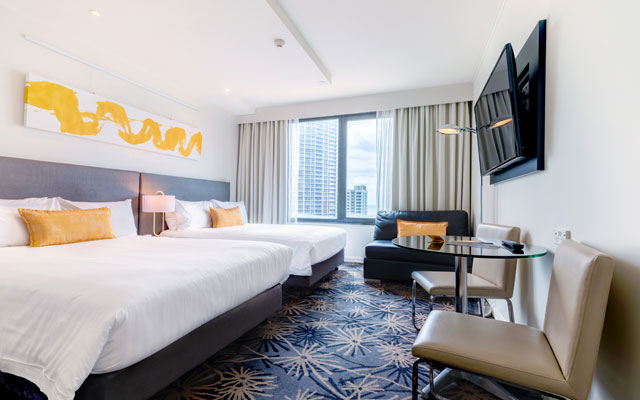
InterContinental Hotels Group has opened its first voco hotel, just five months after the upscale brand was launched. Standing in the heart of the Surfers Paradise in Gold Coast, the property offers 389 rooms, alongside a gym, two swimming pools, L’Aqua Day Spa and 800m2 of meeting space. There are also three F&B venues as well – Waves, Clifford’s Grill & Lounge and Social House – all designed to emphasise the property’s social element.

Other unique features that this voco property boasts include onsite beehives that produce honey for various uses in the hotel, as well as an initiative with Gold Coast City Council to ensure all kitchen waste is recycled.
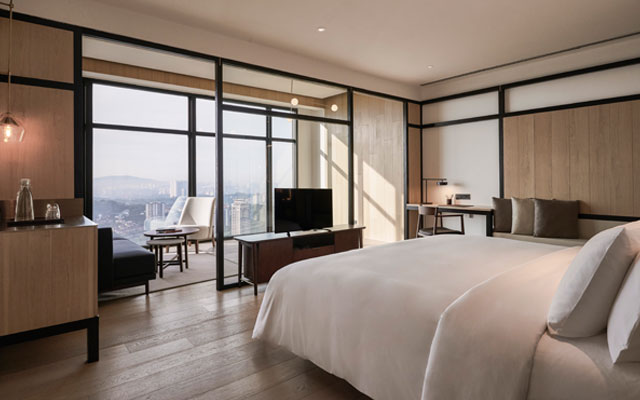
Alila Bangsar, Malaysia
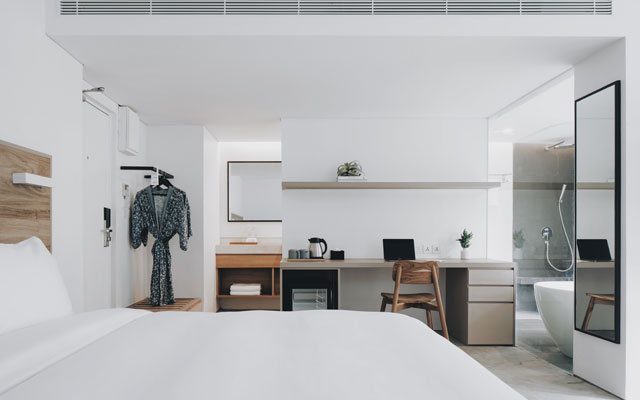
Alila’s first property in the country has recently opened, occupying the 35th to 40th floors of The Establishment, a mixed-use development in Kuala Lumpur’s Bangsar district. The urban retreat offers 143 rooms and suites across six categories, where each dwelling boasts floor-to-ceiling windows, as well as mod cons such as an LED TV, minibar and kettle.

F&B options include the pool bar, French semi fine-dining restaurant Entier on level 41, Pacific Standard cocktail lounge, rooftop bar Lido and all-day diner Botanica + Co. Other amenities include four meeting rooms, a pool on level 40 and a gym.
Lloyd’s Inn Bali, Indonesia
The Lloyd’s Inn brand, first founded in Singapore, has expanded to the Island of the Gods with its latest opening. The boutique hotel offers 101 rooms and seven room types ranging from 21m2 to 67m2. Facilities on-site include a lap pool, dipping pool, sun decks, spa, yoga lounge and garden. There are also two F&B options on-site: The Garden Café & Bar, which offers Indonesian fusion food; and the bar, which serves floral- and garden-themed drinks.
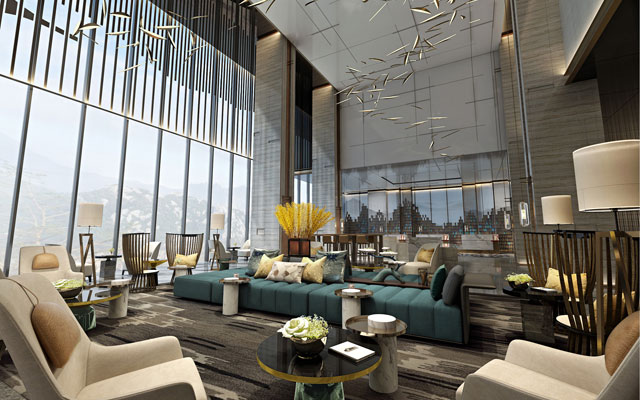
Grand Mercure Foshan Country Garden, China
The first international hotel in Jinshazhou, an island metropolis administered jointly by Guangzhou and Foshan, offers 219 guestrooms and suites. The hotel’s interior design reflects the locale’s culture that was inspired by the historic thousand-year-old Shabei Village located at the foot of Xunfeng Mountain.

Recreational facilities includes an outdoor swimming pool and fitness centre, a lobby lounge, and an all-day dining restaurant and bar with a private dining room. As well, the hotel offers more than 700m2 of event space across a ballroom and five multifunctional rooms.
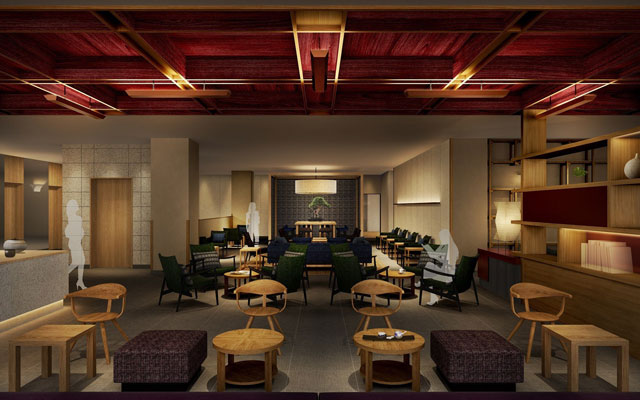
Agora Kanazawa, Japan
Agora Hospitalities will soon have a property in Kanazawa’s – the capital of Ishikawa Prefecture on Japan’s Honshu Island. The hotel offers a total of 200 rooms in twin, double and triple configurations, complete with free Wi-Fi, across 12 storeys. Amenities on-site include a lounge, hot spring, spa, gym, laundry facilities and a restaurant. Reservations are now open; the property is slated to open in autumn 2019.
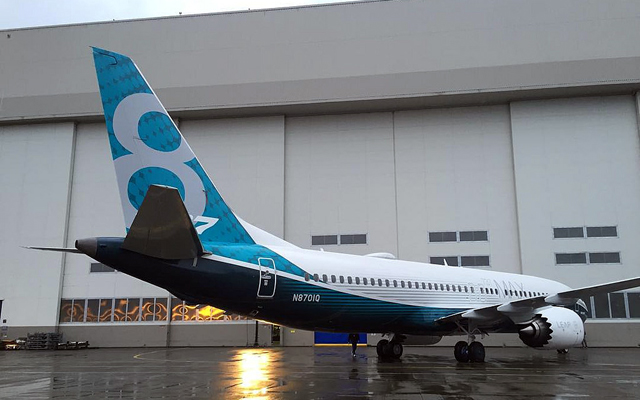
Families of Lion Air crash victims sue Boeing

0
The 737 Max 8's stall protection system has a different design from that of an earlier member of Boeing's narrowbody family

Two families of victims killed in the recent Lion Air crash are filing wrongful death lawsuits against Boeing, with attorneys alleging that the tragedy was caused by a defective anti-stall system and the aircraft manufacturer’s defective flight manual and operating procedures.

“Boeing knew or should have known its aircraft and flight operations manual were unsafe and created a significant safety hazard, but the defendant failed to notify or warn anyone, which has caused immense pain and loss for surviving family members,” said co-counsel, Steven Hart with Hart, McLaughlin & Eldridge.

The 737 Max 8’s stall protection system has a different design from that of an earlier member of Boeing’s narrowbody family

Shortly after the crash, Boeing issued an updated Operations Manual Bulletin directing operators to existing flight crew procedures to address circumstances where there is erroneous input from an AOA sensor.

Issuing bulletins, the aircraft manufacturer said in a statement, was standard procedure carried out “whenever appropriate”.

Some have reportedly pointed fingers at the pilot’s response to the erroneous readings, rather than the technical issue itself or Boeing’s failure to include the relevant operating procedures in the original manual, as having a part to play in the tragedy.

The 737 MAX 8 departed from Jakarta’s Soekarno – Hatta International Airport around 06.21 on October 29, 2018. Shortly after takeoff, the Lion Air crew contacted air traffic controllers and requested a return to Jakarta. The aircraft received authorisation to return, but it did not manage a turnaround.

Witnesses reported seeing the aircraft bank left, make significant altitude shifts, and then drop sharply.

Data from flight radars showed the plane was at an altitude of about 5,000 feet when its final descent began. The aircraft plummeted into the sea and disintegrated upon impact, killing everyone onboard.

According to Kabateck LLP, the firm heading the plaintiffs’ legal team, more families are expected to engage the legal team “particularly given recent concern about attempts in Indonesia to coerce family members into signing away their right to seek justice in court”.

“It has come to our attention that there have been attempts to get families who are unrepresented by counsel to sign away their rights to sue parties like Boeing in exchange for insurance payouts that are required by statute. The families must get full recovery from all responsible parties,” said founding partner Brian Kabateck.

“We will make sure that families seeking recovery against Boeing are protected. We have coordinated with local Indonesian counsel who will work with us to protect our clients and the rights of all the victims in this matter,” added co-counsel Sanjiv Singh.

Last month, a court in the US allowed passengers of Emirates 521, which crashed two years ago, to sue Boeing for damages caused. A lawsuit was originally filed in the UAE, but was rejected by the judge.

SilkAir to transfer routes to Scoot ahead of merger into SIA

0

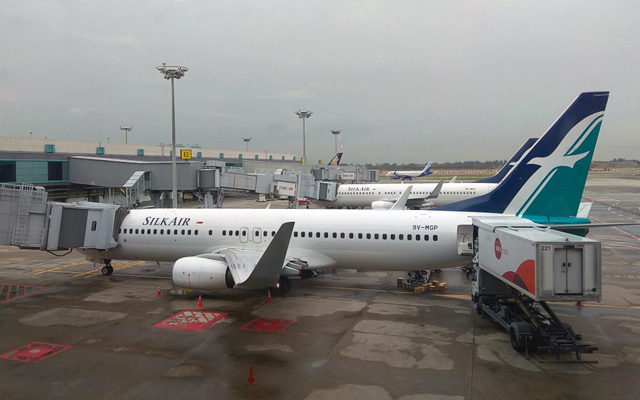
Scoot is to take over a number of SilkAir’s routes over the next two years, ahead of the latter’s merger into Singapore Airlines (SIA). Scoot will also be transferring some of its services to existing destinations served by SIA and SilkAir.

Expected to take place between April 2019 and the second half of 2020, the changes are the result of a review to identify which airlines in the SIA Group portfolio are best suited to meet evolving customer demand, according to a statement from the group.

SIA Group’s low-cost subsidiary, Scoot, will take over some of the routes currently served by SilkAir, the group’s regional subsidiary of the SIA Group that will eventually be absorbed into SIA 

The changes, which are subject to regulatory approvals, are planned as follows:

From SilkAir to Scoot:
• Luang Prabang and Vientiane in Laos, in April 2019
• Coimbatore, Trivandrum and Visakhapatnam in India, between May 2019 and
October 2019
• Changsha, Fuzhou, Kunming and Wuhan in China, between May 2019 and June
2019
• Chiang Mai (existing Scoot destination) in Thailand, in October 2019
• Kota Kinabalu in Malaysia, in December 2019
• Balikpapan, Lombok, Makassar, Manado, Semarang and Yogyakarta in Indonesia,
between May 2020 and July 2020
From Scoot to SIA (Both are existing SIA destinations):
• Bengaluru and Chennai in India, in May 2019 and May 2020
From Scoot to SilkAir (Both are existing SilkAir destinations):
• Shenzhen in China, from June 2019
• Kochi in India, from October 2019

In addition, SilkAir will be converting its Mandalay route to a seasonal service. Existing services will end in March 2019 and resume in November 2019, continuing until January 2020. Scoot will meanwhile be suspending services to Honolulu with effect from June 2019 as a result of weak demand.

Dates are indicative as a result of required regulatory approvals. Customers with existing bookings will be provided the option to switch to the new Scoot, SIA or SilkAir flights where possible, or be provided refunds.

“We are now at the half-way mark in our three-year transformation programme, and today’s announcement represents another development. The route review will strengthen the SIA Group for the long term, with the right vehicles in our portfolio of airlines deployed to the right markets,” said SIA CEO, Goh Choon Phong.

SIA announced in May that its regional wing SilkAir is to undergo a significant investment programme to upgrade its cabin products ahead of its eventual merger into SIA. The programme will see SilkAir’s cabins fitted with new lie-flat seats in Business Class, and the installation of seat-back in-flight entertainment systems in both business and economy Class.

The investments will ensure closer product and service consistency across the SIA Group’s full-service network.

Low-cost subsidiary Scoot’s fleet will meanwhile be expanded with the transfer of 14 Boeing 737-800s from SilkAir, while SilkAir will continue growing its operations in the years ahead as it takes delivery of new Boeing 737 MAX 8 aircraft.

More Korean temples open up to visitors

0
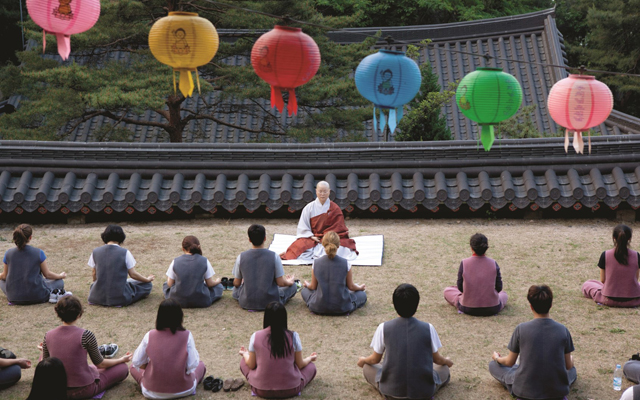
Access to South Korea's temples had largely been restricted until the Cultural Corps of Korean Buddhism opened them up during the 2002 World Cup (photo credit: Cultural Corps of Korean Buddhism)

Since public access to South Korea’s Buddhist temples opened up to promote cultural activities during the 2002 World Cup, 130 temples in the country now provide temple tour or stay programmes, 26 of which do so in English.

The interest in South Korean temple stays picked up this year, when the seven Sansa (mountain temples) were designated UNESCO World Heritage Sites. These temples are Daeheungsa, Magoksa, Beopjusa, Bongjeongsa, Buseoksa, Seonamsa and Tongdosa.

Access to South Korea’s temples had largely been restricted until the Cultural Corps of Korean Buddhism opened them up during the 2002 World Cup (photo credit: Cultural Corps of Korean Buddhism)

This is according to Templestay, a Cultural Corps of Korean Buddhism initiative that is said to be the only way international visitors can experience an immersion programme in the country’s temples, where access had for long been restricted.

Participants in Templestay may experience Yebul (a Buddhist ceremony), Chamseon (Seon meditation) and 108 bae (108 prostrations), as well as learn how to make lotus lanterns and Buddhist prayer beads and enjoy salt mandala (salt drawing).

Templestay also gives visitors the chance to try temple food, which adheres to a diet that does not use animal products or specific ingredients such as the “five pungent spices” of garlic, scallions, chives, onions and leeks.

It is now Templestay Weeks for Foreigners (November 5-30) in South Korea. Some 39 temples across the country are offering the programme, with options for a day tour at 10,000 won (US$9), while an overnight stay costs 20,000 won.

Absolute Hotel Services brings U to Koh Samui

0
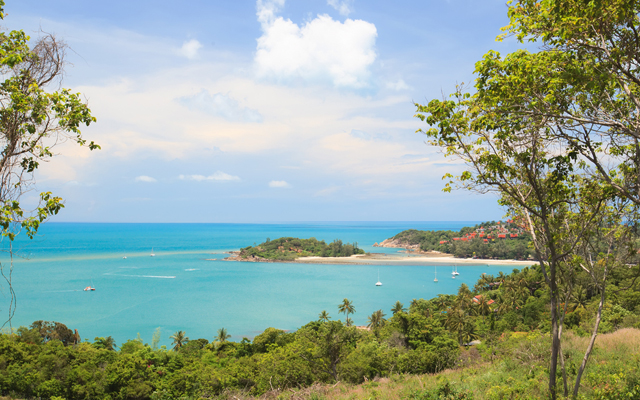
U Samui to open on a beach in the Bophut area

Thailand’s Koh Samui is set to have its first U Hotels & Resorts in late 2020.

Located 15 minutes from Samui International Airport, U Samui will offer 49 rooms and villas featuring Deluxe Seaview, Deluxe Seaview Pool Garden, Sky Suite Seaview, Seaview Pool Villa and Beachfront Pool Villa rooms.

The hotel’s services include a signature restaurant and pool beach bar, a swimming pool, gym (yoga classes available), garden and spa.

GM named for Asia’s first BW Signature Collection

0

Best Western Hotels & Resorts has appointed David Calvet as general manager of Tawaravadee Resort, BW Signature Collection by Best Western, in Thailand’s Prachinburi province.

The hotelier possesses an extensive knowledge of Thailand’s hospitality industry, having worked for for a series of international hotels in Bangkok and Phuket over the last 20 years.

Calvet was most recently the general manager of ibis Styles Bangkok Sukhumvit 50. Previously, he also held senior management roles with a series of well-known hotel brands, including Novotel and Sheraton. He also spent more than three years as directeur général of École d’Hôtellerie et de Tourisme Paul Dubrule, an international hospitality school in Siem Reap.

Tawaravadee Resort is Best Western’s first BW Signature Collection by Best Western property in Asia.

Langkawi Development Authority chief ending tenure on a high note

0

Small towns to crown Taiwan’s tourism campaign in 2019

0

After a year of promoting Taiwan’s islands under the Bay Tourism theme, the Taiwan Tourism Bureau (TTB) has announced that small towns will be the highlight of its 2019 campaign.

Under this theme, TTB will soon conduct open voting to the public to identify a list of suitable small towns. After that, a panel of professionals will be engaged to survey and finalise the featured towns.

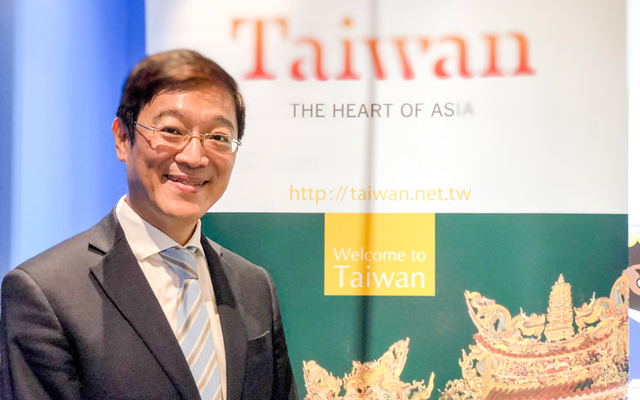
Lin: driving tourism traffic to small towns to spread benefits

A total of 30 towns will be promoted for this campaign, said Trust Lin, director of the TTB Singapore office.

He explained: “Usually, most new visitor markets will go to the capital city of Taipei, and if they have time, visit some nearby cities. Rarely do they go to the small towns.

“Our visitor numbers have been going up – we had more than 10 million for three consecutive years and hope to hit 11 million this year – but if we cannot redistribute them to the small cities, the benefits of tourism expenditure cannot be shared equally across the country. That’s why we are encouraging tourists to visit these small towns.”

Simultaneously, TTB will continue its tourism push to southern Taiwan by subsidising operators that offer tours to national scenic areas in the island’s south.

From this month, it will channel its funds towards promoting areas in Yilan, Hualien, Taitung, Kaohsiung and Pintung, said Lin.

“Combined with the visa waiver programme, I think we have become smarter with our promotions. We are also confident that our small towns are ready to receive visitors from all over the world,” he expressed.

Lin shared that since the implementation of the New Southbound Policy – which included visa waivers for countries like the Philippines and Thailand – arrival numbers from South-east Asia have increased.

According to TTB statistics, Taiwan received more than 2.1 million visitors from South-east Asia last year, posting a 29 per cent growth from 2016. From January to September this year, visitors from South-east Asia have exceeded 1.7 million, with a growth rate of 16.6 per cent.

“Traditionally, our number one market was Malaysia and number two was Singapore. But with the visa waiver programme, Vietnam has overtaken Malaysia as our new number one for the first nine months of 2018. This is followed by Malaysia, the Philippines, and then Singapore. It’s changing rapidly,” said Lin.

Lonely pyramids no more

0
Blue skies again for Egypt's tourism; tourists riding towards the Great Pyramid of Khufu and Pyramid of Khafre on camelback, Cairo, Egypt

As Egypt’s tourism sector picks up in the wake of recent revolutions, inbound players are reaching out to Asia in hopes that tourism arrivals will bounce back to its heyday numbers.

“The volume of tourism in the last two years has come back up very quickly. We expect this year’s numbers to be comparable to those 10 years ago,” said Ahmed Abdul Mounem, tourism manager, Castle Tours.

Blue skies again for Egypt’s tourism; tourists riding towards the Great Pyramid of Khufu and Pyramid of Khafre on camelback, Cairo, Egypt

He projects international tourist arrivals to Egypt to rise next year, as airlines from Russia, Germany and other countries relaunched services to the destination.

“In the last five years during the revolution, Asia was the only market that supported Egypt and sent tourists to us. These were Singaporeans and Malaysians, and China was the top source market,” observed Ahmed.

This enduring interest in Egypt is owed to the North African country’s history and legacy. Sabrina Zhao, operations, Unlimited Egypt Travel, explained: “To the Chinese, Egypt is still a mystical and exotic destination, owing to its ancient history and portrayal in movies like Death on the Nile.”

However, Chinese travel preferences have evolved over the years. Zhao shared: “Most travellers first come to Egypt to see the pyramids, but more Chinese are now interested in in-depth discoveries like wading or even fishing in the Red Sea.”

Ahmed added that luxury self-drive tours in the oases and deserts are gaining in popularity among his Chinese clients.

UNWTO in tourism partnership with Pokemon Go creators

0
Travel Joy Respect

UNWTO has partnered Niantic – the real-world games developer that created Pokemon Go and Ingress Prime – to enhance global tourism through mobile augmented reality (AR) game experiences.

Niantic was recently accepted as a UNWTO Affiliate Member at the 109th session of UNWTO’s Executive Council held in Bahrain last month.

UNWTO will collaborate with Niantic to curate global campaigns that will help build awareness for the organisation’s Travel.Enjoy.Respect campaign

The new partnership is part of the organisation’s ongoing efforts to bring together the actors of the ‘ecosystem’ of tourism technology under its priority of innovation and the digital transformation in tourism.

Commenting on the tourism relevance of Niantic games, Ion Vilcu, director of UNWTO’s affiliate members department, said: “Niantic are pioneers in creating real-world mobile game experiences that not only motivate their players to discover new places, but also to appreciate the culture and beauty of the world around them.”

Niantic’s games and global initiatives have been known for gathering players from around the world at real-world events, hence promoting civic engagement and cultural diversity while highlighting local heritage.

With the new partnership, UNWTO and Niantic will curate campaigns around the world that build awareness for the organisation’s Travel.Enjoy.Respect campaign, designed to enhance tourism’s contribution to the UN’s 2030 Agenda for Sustainable Development.

Each activity will also be designed to inspire and support exploration, and promote safe and responsible gaming practices for players of all ages.