TTG Asia
Asia/Singapore Thursday, 2nd April 2026
Page 1110

APAC fastest growing region for travel and tourism: WTTC

0

Asia-Pacific is the fastest growing region for travel and tourism, with 80% of the top fastest growing cities in the region, and contributing US$915 billion (33%) in direct travel and tourism GDP, according to a report by the World Travel & Tourism Council (WTTC).

The Cities Report for 2019 focuses on 73 major tourism city destinations, providing estimates of the GDP and employment directly generated by the travel and tourism sector; and highlights successful initiatives, strategies and policies that have been implemented to support this growth.

Asia-Pacific emerges fastest growing region for travel and tourism, with Chinese cities like Chongqing making up half of those cities; popular tourist spot Jiefangbei Pedestrian Street in Chongqing pictured

Chinese cities continue to mature rapidly, making up five of the 10 fastest growing cities in direct travel and tourism GDP over the last decade: Chongqing, Chengdu and Shanghai ranking first, second and fourth, and Guangzhou and Shenzhen coming in eighth and tenth.

International visitor spending is usually more important to cities than it is to countries as a whole, WTTC said in a statement. Six out of the top 10 cities for international visitor spending for 2018 were in Asia-Pacific, including Bangkok, Singapore, Tokyo and Shenzhen, found the study. This highlights the importance of revenues from international visitors which in some cases pay for major city infrastructure projects and services that improve the quality of life for residents, it added.

Notably, six out of the top 10 cities for domestic visitor spending are also in Asia-Pacific, and five of them are in China, with Shanghai taking the number one spot at US$79 billion, followed by Beijing at US$75 billion.

However, cities with an over-reliance on domestic or international demand can be more exposed to economic and geopolitical shocks, according to WTTC. For example, large cities which are highly reliant on domestic demand could be exposed to changes in the domestic economy.

On the other hand, cities which are more reliant on international demand and/or particular source markets may be vulnerable to external disruptions. The report highlights several cities which demonstrate a more balanced split between domestic and international demand, including two Japanese cities: Tokyo and Osaka.

The report also reveals that all but one of the 10 global cities with the highest direct travel and tourism growth over the past decade, are in emerging and developing economies, seven of which are in Asia-Pacific, such as China, Vietnam and the Philippines.

Infrastructure development and prioritisation of tourism has been a key driver of travel and tourism growth. The projected trends for 2018-2028 continue in this way, with all 10 coming from emerging and developing countries, and all but one located in Asia-Pacific, for example, India, Vietnam and Indonesia.

Spotlight on Oceania

Cities in Oceania make up a large portion of their respective countries’ travel and tourism GDP, with Brisbane and Sydney making up more than 30% of Australia’s direct travel & tourism GDP, and Auckland making up over 40% of New Zealand’s.

When considering the visitor impact of these cities, Sydney maintains the most even split between domestic and international, with domestic visitors contributing 56% towards the total visitor spend, and domestic contributing 44%. Brisbane’s split is similarly balanced with domestic visitors contributing 67%, and international visitors contributing 33%.

In terms of employment, Auckland contributes the most towards its respective country’s travel and tourism direct employment, offering 36.9% of all jobs in this sector, and 9.9% of total employment in Auckland. Additionally, Sydney and Brisbane collectively contribute 32.6% of direct travel and tourism employment to Australia.

The Global Picture

With over half (55%) of the world’s population living in urban areas, which is set to increase to 68% over the next 30 years, cities have become the hubs for global economic growth and innovation, while also attracting more people who want to live and do business there.

The report reveals these 73 cities account for US$691 billion in direct travel and tourism GDP, which represents 25% of the sector’s direct global GDP and directly accounts for over 17 million jobs.

Additionally, in 2018, direct travel and tourism GDP across the cities grew by 3.6%, above the overall city economy growth of 3.0%. The top 10 largest cities for direct travel and tourism contribution in 2018 offer diverse geographic representation, with cities such as Shanghai, Paris, and Orlando sitting in the top five.

WTTC president & CEO, Gloria Guevara said: “Asia-Pacific has been, and as shown by this important research, will continue to be a crucial region for travel and tourism. We are seeing an exciting amount of growth and development in the region and there is an opportunity to create sustainable change that will translate in further benefits for the local communities.

“Achieving sustainable growth in cities requires reaching far beyond the sector itself, and into the broader urban agenda. To drive true economic impact that can translate seamlessly into social benefits, a city must engage with all stakeholders, across the public and private sector, in order to establish the cities of the future.”

Phuket tourism buoyed by robust 2H2019 arrivals

0

Robust passenger arrivals in 2H2019, spurred by the growth in the Indian market, has helped to rebalance Phuket’s tourism market, according to a new report by C9 Hotelworks.

The Phuket Hotel Market Update showed that the launch of direct flights to Bengaluru, Delhi, and Mumbai has boosted Indian arrivals, with year-on-year growth of 298 per cent.

Phuket’s tourism industry kept afloat by robust passenger arrivals in 2H2019: C9

In 2019, year-on-year passenger arrivals declined in 1Q (-4 per cent) and 2Q (-7 per cent) due to international economic volatility, China-US trade tensions, and a strong Thai baht. As well, longhaul travellers from Australia and European countries (led by Scandinavia, Germany, and Italy) shrank. Moreover, Chinese arrivals moved into troubled territory with a negative year-on-year growth rate of -9 per cent.

However, passenger arrivals notably regained momentum in 3Q (3 per cent) and 4Q (8 per cent). The demand came from regional Asian feeders (led by India, Malaysia, and Singapore). Overall, for the year, passenger arrivals in 2019 are forecasted to be similar to 2018, but punctuated by a 2H rising trend.

In 2019, the total number of passenger arrivals at the Phuket International Airport is forecasted to be 9.1 million, with the December year-on-year monthly 2019 figure forecasted to be up by 8 per cent.

“Looking at key hotel performance trends, the second half growth spurt in demand drove full-year market-wide occupancy to 72 per cent. Rate pressure remains intense and a challenge to RevPAR, with Thai currency appreciation set to continue in 2020,” said C9 Hotelworks’ managing director Bill Barnett.

“A key airlift factor is direct flights and diverse destinations. Comparing mainland China with 21 destinations from 22 airlines and Russia with 34 destinations from eight airlines, the number of Indian arrivals from three cities and two airlines is anticipated to see continued market penetration and upside.”

Meanwhile, the top five locations for Phuket hotel pipeline developments are Patong, Bangtao, Kamala, Nai Harn, and Kathu, according to the report. The newly opened Porto De Phuket, alongside the Central Floresta and upcoming Andamanda, are all helping to position Phuket as a lifestyle, entertainment and shopping destination, it added.

In 2020, 5,009 new keys from 21 properties will enter the island hotel supply, which is a 6 per cent increase. The majority of future pipeline developments are in upscale and midscale tiers.

Contactless payment to ease commute on Taiwan’s airport metro

0

Taoyuan Metro company will launch contactless payment via bank cards starting January 16, 2020 to serve passengers travelling to and from the capital city of Taipei and Taoyuan International Airport (TIA).

The tap-and-go service will be made available to holders of Visa, Mastercard, Union Pay and JCB cards and mobile devices with NFC (Near Field Communication) functions, such as Google Pay, Apple Pay and Samsung Pay.

Taoyuan Metro’s representatives at the launch to unveil contactless payment on Taiwan’s airport metro

Those carrying JCB cards will be able to enjoy the service from June, according to Taoyuan Metro chairman Liu Kun-I.

The new service was announced last month by Taoyuan Metro at a press conference.

Taoyuan City mayor Cheng Wen-tsan said that the tap-and-go system for the rapid transit (MRT) line linking metropolitan Taipei and TIA would bring greater convenience to both domestic and international travellers.

As part of Taoyuan Metro’s efforts to apply advanced technologies to better serve passengers, the company has previously also introduced Wi-Fi networks and QR code system to streamline fare payment.

The mayor hopes to extend the contactless payment to all MRT lines in Taipei and other public transportation systems to benefit more riders.

Liu added that the company plans to introduce third-party payment and e-payment services later next year.

Soba-making workshop in Tokushimaya’s Iya Valley

0

Why
Iya Valley is peppered with numerous surprises for the experience-hungry traveller, with local stories and historical tales waiting at every turn. The humble making and cooking of soba (buckwheat noodles) – one of Shikoku’s specialities – is one such example.

What
Deep in the valleys of Tokushima’s rugged mountains sits a quiet studio run by Tsuzuki-san, an elderly soba master who supplies the noodles to restaurants and hotels across the region.

Classes taught by Tsuzuki-san are peaceful, but at the same time, fun and even challenging. She guides participants through the soba-making process, and the workshop is followed by a meal of vegetable tempura, cold dishes, and free-flow soba. As time drew to a close for my class, Tsuzuki-san brought us from noodle stirring to a heart-stirring end with a short performance of her award-winning folk singing.

How
We participants first had to don aprons and bandanas, before Tsuzuki-san embarked on the soba-making experience. She started by demonstrating how to mill soba grains with a hand-powered millstone. We then moved on to kneading, cutting, and finally, boiling the noodles.

Although she was only able to converse in Japanese and through hand gestures, Tsuzuki-san was encouraging and good-humoured, patiently guiding us in milling and kneading the soba.

The meal that followed was simple but scrumptious, and filled me with contentment as we sat on tatami and cushions in the cosy, homely restaurant. Tsuzuki-san’s performance at the end was the cherry on top of an enjoyable afternoon.

Verdict
Ideal for smaller travel groups or even solo travellers, Atelier Tsuzuki is one of Iya Valley’s truly hidden gems that offer an indelible taste of Tokushima.

Duration: Approximately two hours
Rate: 1,350 yen (US$12.30)
Contact
Website: iyajiman.com

Chan Brothers touts discounted tour packages for travel personnel

0

Wholesale Partners (WSP), the wholesale tours company of Chan Brothers Group of Companies, has launched the Travel Industry Staff Specials (TISS) programme offering discounted tour packages worldwide for personnel in the travel industry.

Following the launch of its white-label solution last October, WSP has created a site allowing industry professionals to book its over 1,000 tours at special rates, with different offers to be featured monthly.

Wholesale Partners pushes out Travel Industry Staff Specials programme offering discounted tour packages worldwide for travel personnel

TISS is now open for registrations for personnel from the airlines, tourism offices, hotels, car rental, cruise and travel media segments in the region.

The TISS site provides registered users with the tour itineraries, destination information, departure date, live status and prices of tours to over 100 countries worldwide.

Users can browse for tours by regions or destinations, understand the itineraries or watch the videos to have a feel of the holiday experience in the different countries.

For enquiries, email enquiry@wholesale-partners.com or log on to www.wholesale-partners.com to register for a TISS account.

Thailand projects US$105 billion tourism revenue in 2020

0

The Tourism Authority of Thailand (TAT) is expecting 3.18 trillion baht (US$105 billion) in overall tourism revenue for Thailand in 2020, or a four per cent year-on-year increase.

This includes 2.02 trillion baht from international tourists (up three per cent) and 1.16 trillion baht from domestic tourists (up five per cent).

Thailand expects to rake in US$105 billion tourism revenue in 2020

The outlook for 2020 follows the overall tourism situation in 2019, which is estimated to generate 3.06 trillion baht (four per cent increase over 2018), comprising 1.96 trillion baht (up four per cent) from 39.77 million international tourists (also up four per cent), and 1.10 trillion baht (up three per cent) from 167 million domestic trips (up one per cent).

Thailand welcomed her 39 millionth tourist on 27 December, 2019.

In 2020, TAT is seeing positive demand from international markets, such as the CLMV countries (Cambodia, Lao PDR., Myanmar and Vietnam), Malaysia, the Philippines, Indonesia, South Korea, Taiwan, India, Spain, Eastern Europe, Israel, and the US.

As well, the Chinese, Singaporean and Middle Eastern markets are showing signs of recovery. Meanwhile, arrivals from Japan, Hong Kong, Europe, Scandinavia, Australia and Latin America are expected to remain stable or show a slight growth.

TAT governor Yuthasak Supasorn said: “TAT’s target for 2020 is based on several favourable factors, ranging from the government’s stimulus measures, TAT’s focused marketing strategies and promotions of emerging destinations, new air routes, and the positive outlook of international tourists to Thailand from key source markets.

“TAT is preparing to overcome several challenges, including the effect from the China-US trade war, the rise in consumption tax in Japan, and Brexit. The strong Thai baht, Tokyo 2020 Summer Olympics, World Expo 2020 Dubai and stimulus visa schemes from country competitors have also been taken into consideration when laying out our tourism marketing strategies.”

MATTA takes action against MATA for trademark infringement

0

The Malaysian Association of Tour and Travel Agents (MATTA) is pursuing legal action against the newly-established Malaysia Association Tour Agency (MATA) to stop the latter’s use of the MATA acronym.

MATTA honorary secretary-general Nigel Wong said in a statement that it has issued a letter of demand through its lawyers to MATA, citing trademark infringement, misrepresentation and the deliberate passing of MATTA’s name and goodwill.

MATTA is suing the newly-registered MATA for trademark infringement

“MATTA’s solicitors have demanded that MATA cease and desist using the infringing mark and infringing name and have demanded a public apology to be published in leading national newspapers, failing which MATTA will instruct its solicitors without any further delay to commence legal proceedings,” Wong said.

He added that MATTA has received complaints because of confusion in the marketplace over the similar-sounding acronyms, which has also resulted in misreporting in the media – a recent article in The Star incorrectly stated the name of MATA’s president as the president of MATTA.

According to the Registrar of Society (ROS) records, five of the founding and current office bearers of the newly-registered MATA are also the current office bearers of Association for Travel Agencies of Umrah & Hajj Malaysia (PAPUH). Out of the five, two are current office bearers in the Malaysia Tourism Council, Wong pointed out in the release.

On September 11, 2014, MATTA held an Extraordinary General Meeting which voted overwhelmingly to expel all five of the aforementioned office bearers for causing moral and material damage to MATTA.

MATTA is also seeking an explanation from the ROS on how the registration of MATA could have been allowed by the ROS and has also instructed its solicitors to look into this issue.

When contacted, MATA president Mohd Khalid Harun told TTG Asia that the association is “not violating anybody’s trademark” and declined to comment any further.

MATA was registered in October 2019 with ROS Selangor and announced to the public in early November 2019 when they started a membership drive.

Marriott grows luxury portfolio

0

More than 30 luxury properties are expected to enter Marriott International’s portfolio of luxury brands this year, adding to the hotel company’s existing count of more than 420 hotels and resorts across nearly 65 countries and territories.

In 2020, the Ritz-Carlton brand will debut in Morocco, expand its presence in Japan, China and Mexico, and work towards the inaugural voyage of The Ritz-Carlton Yacht Collection expected in June 2020.

Marriott to add more than 30 properties to its luxury portfolio in 2020

Elsewhere, St Regis will make its foray into Cairo, and expand its resort portfolio with the opening of The St Regis Kanai Resort in Riviera Maya, Mexico, and open The St Regis Dubai, The Palm.

Lifestyle brand W Hotels will add properties in Philadelphia, Toronto, Chengdu, and Melbourne, and complete renovations in Washington DC, San Francisco and New York Union Square.

Meanwhile, more than half of W Hotels’ properties in North America, are undergoing or have completed multi-million-dollar renovations, including W Washington D. C. and W San Francisco, and most recently, W New York – Union Square.

The brand is also slated to debut in Italy with the planned openings of W Milan and W Rome.

The Edition brand, a collaboration between Marriott and boutique hotel creator Ian Schrager, is expected to debut in Iceland’s Reykjavik come 2020, with planned openings in Tokyo and Dubai as well.

The Luxury Collection anticipates openings in locations spanning the globe, including Nashville and Budapest, Hungary, as well as Hobart, Australia.

JW Marriott is spreading its reach globally, with several planned for the US, and one each in Istanbul; Danang, Vietnam; Nara, Japan; Muscat, Oman; and Monterrey, Mexico.

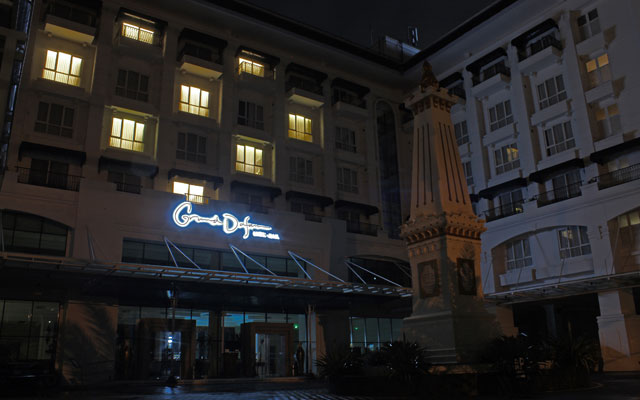
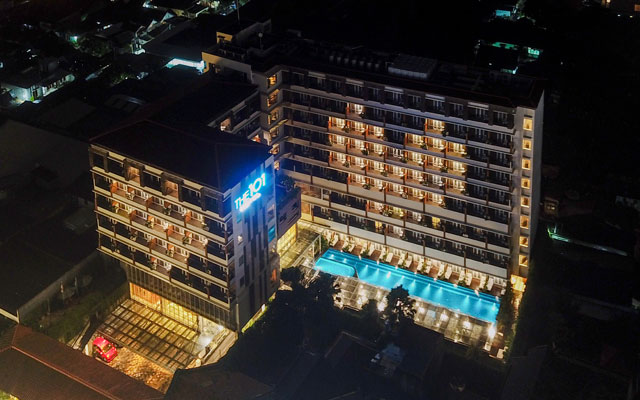
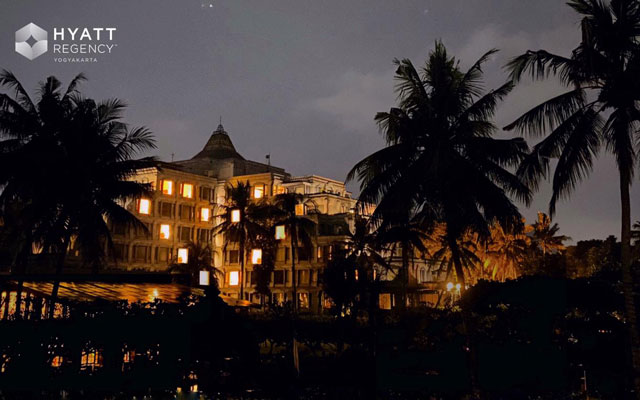
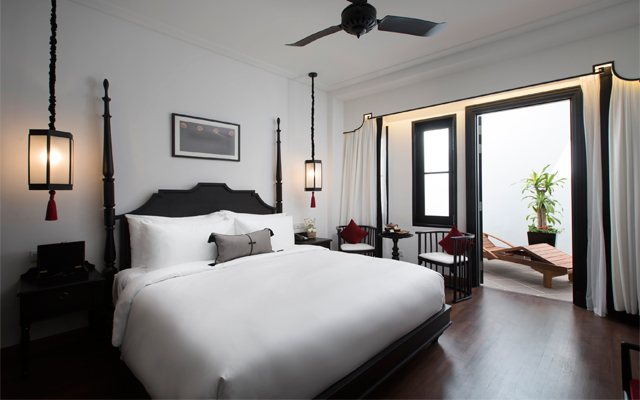
Archipelago signs trio of hotels across Indonesia

0

Archipelago International has signed three new hotel deals just before the end of 2019.

Debuting in 2021 is the 226-key Harper Hotel Mandalika Kuta Lombok, located right on Lombok’s Kuta Beach and within easy access to the Moto GP Lombok. The hotel will feature three meeting rooms, the signature Rustik Bistro & Bar, and Lombok’s very first beach club.

Archipelago closes 2019 by signing a trio of hotel deals, including one on Lombok’s Kuta Beach

Opening its doors in Sumatra’s city of Padang will be the 312-room Aston Minangkabau, which will feature a number of event spaces, as well as dining and wellness facilities.

Archipelago’s eighth presence in Yogyakarta will be marked by the arrival of the 150-key Royal Malioboro by Aston, located just a stone’s throw from the famed Malioboro street.

Millennial tour operator wants to veer travellers off the beaten path

0

What started as a travel community created with friends and family in 2017, soon blossomed into a full-fledged boutique travel agency Beyond Expeditions for Singaporean millennial Scott Tay.

The Singapore-headquartered boutique agency specialises in small group tours limited to six participants to off-the-beaten-track destinations in Mongolia, Kazakhstan and Ladakh.

When asked why he picked Mongolia as part of the tour itinerary, Tay told TTG Asia: “I was tired of working and took a long break, and one of the places I visited was Mongolia. What I liked about the country was the sense of freedom out in the countryside. I felt liberated, and there was nothing to distract me from living in the moment. Everything was so crisp, clear, and I swear I could even hear the birds chirping louder. This is precisely why I want to introduce more people to Mongolia.”

Tay added that he saw a way of bridging the geographical distance between Mongolia and Singapore by helping to fill the logistics gaps, given that he has visited the East Asian country countless times since founding his company in 2017.

Additionally, online information surrounding Mongolia is not readily available, while local operators typically sold similar packaged tours visiting the same tourist attractions.

A typical winter itinerary for Mongolia, for instance, may include a 30-minute husky ride for a group with a large travel agency. For Tay who hopes to give his travellers the unique experience of a nomadic life, he puts them on a three-day husky sledding expedition that includes bonding with the dogs and camping in the wild, on top of mushing through the snow.

To spread the word about Beyond Expeditions, Tay has hosted sharing sessions at Travel Revolution, as well as run numerous ads on Facebook and Instagram – the latter targeted at millennials. Business has been growing year after year, with Beyond Expeditions having served over 300 clients to date.

Besides millennials, Tay shared that some of his travellers are in their late 30s and 40s, with more of those in their 40s dropping him enquiries in recent times. His largest group of clients, however, are solo female travellers, which account for a whopping 98 per cent.

“There are many Singaporean ladies who are very curious about travelling to these off-the-beaten-track destinations, (and would like a group to travel with to err on the side of caution),” explained Tay.

While Tay is currently contented with Beyond Expeditions’ portfolio, his future goal is to have a repertoire of five countries, which will evoke a strong sense of adventure and bring about unique experiences.

“We are positioning ourselves as travel specialists. If I were doing, say, more than five countries, I don’t think I’d be a specialist anymore,” he said.

Echoing the sentiments of other tourism industry leaders, Tay believes that experiential travel will continue to grow in popularity, and there will be a shift away from “typical Singaporean holidays like shopping trips to Bangkok”.

“People are starting to tire of the conventional way of travelling. They crave for more experiences that will leave an imprint in their hearts,” Tay opined.

Alongside regularly scheduled group trips, Tay also runs charity expeditions in collaboration with local NPOs such as Singapore Cancer Society and Down Syndrome Association.

He elaborated: “We don’t embark on these tours for our own leisure, and we try to get our friends and family to support us in the cause by donating money directly to the organisation while we put in the effort in walking – or kayaking – for the expedition. The journey is usually harsh, for example, (trekking through) Mongolia (during winter lows of) minus 50 degrees celsius together with other cancer survivors.”

Beyond collecting donations, Tay and his expedition crew aim to inspire others in similar situations through these voyages, as well as send a strong message to cancer survivors and patients that there is life after cancer.

“For me, it’s about having a purpose. And I’m always up for trying and learning new things every day. That is what excites me and keeps me going,” Tay concluded.