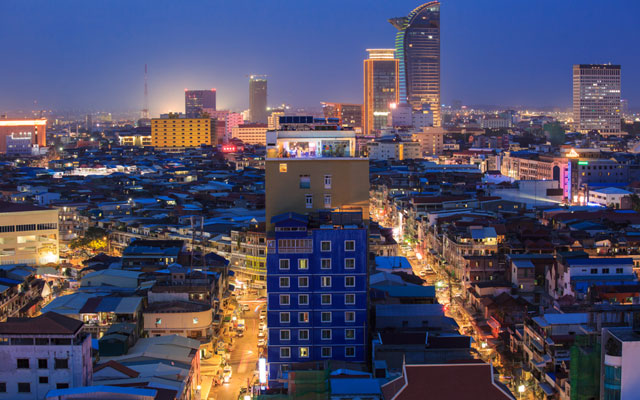
As fast-paced urban development and sprawling mega-infrastructure projects mount on Phnom Penh’s Mekong horizon, Cambodia’s attention has now shifted from its singular tourism magnet Siem Reap, where the Angkor Wat temple resides, to the nation’s capital city which brims with business and tourism potential.
That is the basis of a study by consulting group C9 Hotelworks, which showed that last year, the lead indicator of passenger arrivals by air saw Phnom Penh exceed two million passenger arrivals, surpassing Siem Reap’s for the first time in a decade.
Phnom Penh boasts a robust development pipeline
The report also showed a steady sustained growth trajectory, as passenger arrivals recorded double-digit growth rates from 2012 through 2018, with a CAGR (compound annual growth rate) of 18 per cent.
Clearly, the key catalyst of change for the city has been its proximity to the country’s leading private and public sector headquarters and strategic location for China’s ambitious BRI (Belt and Road Initiative). The BRI now spans across Cambodia and runs all the way south to the Gulf of Thailand and beyond into the South China Sea.
Asia is the dominant visitor source region, representing a 79 per cent market share, found the study. More telling is a deeper data dive that 66 per cent of the regional traffic is from mainland China.
China leads the top five geographic source markets at 52 per cent, followed by Malaysia (6 per cent), the US (five per cent), Japan (four per cent) and Thailand (four per cent).
Highlighting how overseas travellers are funnelling into the accommodation sector, C9’s report showed that there are 313 hotels with 19,337 keys and 523 guest houses in Phnom Penh.
A clear sign how fast-paced growth is impacting the hospitality sector is demonstrated in the fact that there are presently fifteen new hotels in the pipeline with 7,849 keys, with thirteen of the upcoming properties being major international brands including Marriott, Hyatt, Shangri-La and Accor.
As for the city’s hotel sector, there are challenges ahead with a spike in newer and bigger hotels, and it has yet to be seen how they will penetrate the existing hotel market.
C9’s managing director Bill Barnett said: “The next two years will see a massive transformation in the accommodation supply as ten new branded properties are forecasted to enter supply between now and 2022. While business travellers are the core guests, the task is how to attract other segments including tourists and the (corporate) sector.
“Phnom Penh finds itself in a similar situation as other Asian CBD gateway capital hubs like Jakarta and Yangon where hotels are defined by weekday business travellers. Manila, on the other hand, has been able to capitalise the gaming sector to grow the leisure segment and provides a more balanced model in the future.”
Unlike Siem Reap, hotels in Phnom Penh are mainly focused on the business segment. Expansion of the tourism sector remains challenging with limited direct flights, strained infrastructure and lack of diversity of tourism offerings, the report found.
Barnett added: “In general, the hospitality sector in Phnom Penh is at its early stage of development. The increasing exposure of global hotel operators, expansion of the country’s economy and improving infrastructure will help the city to shape its destination awareness and improve its appeal in the longer term.”
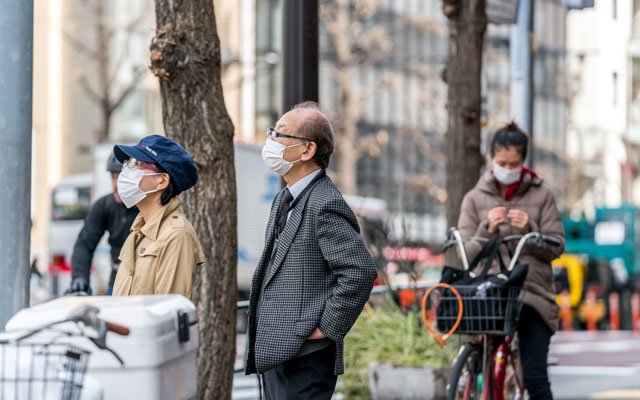
Seven Japanese prefectures, including Tokyo, entered a month-long state of emergency at midnight on April 7, as part of the government’s efforts to stem the rising tide of Covid-19 cases within the country.
Tokyo and its neighbouring prefectures Chiba, Kanagawa and Saita, as well as Osaka, Hyogo, and Fukuoka will be under this “soft lockdown” until May 6.
Major Japan cities enter state of emergency, amid fears that Tokyo is on the brink of a major outbreak
At a news conference on the evening of April 7, Japanese prime minister Shinzo Abe said that the move is necessary to prevent “an explosion in cases” in the seven prefectures, where a rapid rise in infections in recent days is putting strain on the healthcare system.
“We are not at a stage where rapid nationwide spread is being observed, but some areas are under pressure, so we don’t have the luxury of time. To relieve that pressure, there will have to be a transformation in people’s behaviour,” he said.
Under the new regulations, local governors are authorised to ask residents to stay at home and limit their social contact, and call on non-essential businesses, schools and public facilities to temporarily close, as well as cancel events.
Japan has one of the lowest number of Covid-19 cases among the Group of Seven nations, with 3,654 confirmed cases, 2,429 symptomatic patients, and 108 fatalities as of April 6, according to the Statista Research Department.
In Tokyo, however, infections have doubled over the past five days to hit 1,195. Chiba, Kanagawa and Saitama, which function as bed towns for the metropolis, have a combined 795 cases. Osaka is the worst affected after Tokyo, with 481 cases.
Unlike many other countries, which has stringent legal measures put in place during lockdowns such as fines and jail terms, no punishments will be meted out for those who defy the request. Instead, the government is urging citizens to practice “self-restraint” and exercise common sense.
Abe also urged residents in the seven prefectures to limit contact with those outside their household by 70 to 80 per cent. Workers in non-essential services should work from home, and companies unable to offer telecommuting should stagger employees’ working hours, he said.
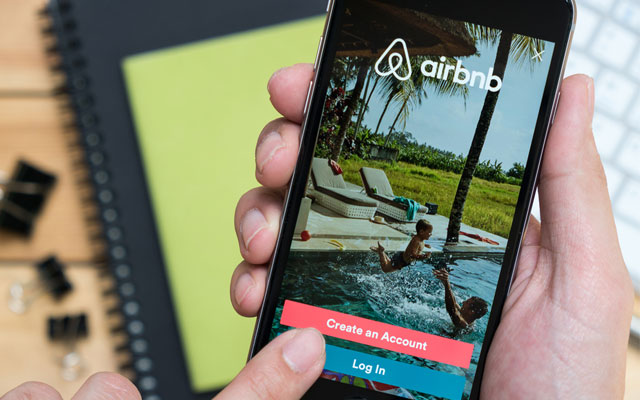
Airbnb has secured a US$1 billion investment from private equity firms Silver Lake and Sixth Street Partners to help the home-sharing giant to fight the economic fallout from the coronavirus pandemic.
The company said that it will primarily use the funds, which will be a combination of debt and equity, to attract more hosts so as to strengthen the company’s position for when travel rebounds. Airbnb also plans to invest in its business for longer-term stays.
Airbnb bags a US$1 billion investment to help the company to mitigate the fallout from Covid-19
Its CEO and co-founder Brian Chesky said that as travel recovers, people will be keen in visiting locations close to home and seeking out local, authentic experiences. As such, he said the future of Airbnb will focus on three core products: hosts, long-term stays and Airbnb Experiences.
Airbnb also said that it will contribute US$5 million from the US$1 billion investment to its Superhost Relief Fund, which helps hosts in need of financial assistance.
Silver Lake co-CEO and managing partner, Egon Durban, said in a statement: “While the current environment is clearly a difficult one for the hospitality industry, the desire to travel and have authentic experiences is fundamental and enduring.
“Airbnb’s diverse, global, and resilient business model is particularly well suited to prosper as the world inevitably recovers and we all get back out to experience it.”
With the intensifying Covid-19 situation in India, with authorities in some cities tightening restrictions on movement and warning that the 21-day nationwide lockdown which kicked in on March 25 could be extended, the hotel occupancy rates in the country has taken a beating.
India’s daily hotel occupancy dropped to 11 per cent during the period of March 23-29, according to preliminary data from STR.
India’s daily hotel occupancy plummets to 11 per cent; Mumbai skyline pictured
Vidhi Godiawla, STR’s business development manager for South and Central Asia, said: “India remained resilient in February – in comparison with other Asia-Pacific markets that were more deeply affected – thanks largely to robust domestic demand coupled with the low number of Covid-19 cases in the country at that time.
“The story was different in March, especially during the later portion of the month, with year-over-year occupancy declines in excess of 80 per cent for the last nine days we have processed (ending April 2, 2020).
“These declines are consistent with the significant measures taken by prime minister Modi to combat the spread of the virus, and the extent of these measures will determine the hotel performance impact in the short- to medium-term.”
Along with a steep downward trend in occupancy, average daily rate (ADR) and revenue per available room (RevPAR) have also dropped significantly in India.
ADR, which has decreased year-over-year by roughly 20 per cent or more for eight consecutive days, went as low as 4,924 rupees (US$65) on 28 March 28. RevPAR reached its lowest absolute level at 538 rupees on March 22.
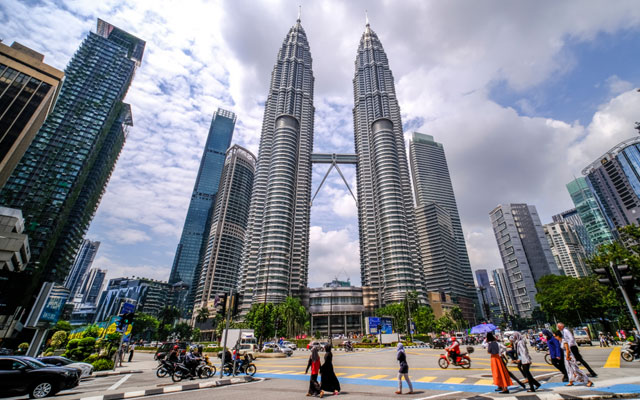
Tourism Malaysia plans to restart international promotion efforts from this September, and in the interim, focus will be on domestic recovery, and drumming up publicity around the country’s efforts to combat Covid-19.
To do so, the NTO will be leveraging social media and its overseas offices to dispense accurate information on what the Health Ministry has been doing to flatten the curve in Malaysia and protective measures against Covid-19 taken by the hospitality industry.
Malaysia maps out plans for tourism recovery
Efforts will also go towards strengthening the more than two-decade-old Malaysia Truly Asia branding and to build stronger branding within the international community for Malaysia as a preferred destination.
Musa Yusof, director-general at Tourism Malaysia, said that once the outbreak has been contained locally, the board’s immediate plan is to “refocus on domestic tourism to increase demand for the travel trade and related services, including airlines, accommodation, land transportation, retail and F&B”.
As part of the effort, Tourism Malaysia will work closely with industry partners to organise physical and virtual travel fairs. It will also encourage business event organisers to hold their events domestically.
Musa was speaking at Tourism Virtual Summit, a webinar held on April 7, which was organised by Tourism Productivity Nexus with the support of Malaysia Productivity Corporation.
To support the travel trade with international promotions post-pandemic, Musa said that Tourism Malaysia is looking at increasing the threshold of its matching grant to RM35,000 (US$8,040) per company for participation at international trade fairs, from RM15,000 previously.
He added that there were also plans to revive joint promotions and tactical campaigns with strategic airline partners and outbound travel operators overseas which had been put on hold due to Covid-19. This includes collaborations with domestic carriers such as Malaysia Airlines and AirAsia and foreign airlines including Turkish Airways, Emirates and Etihad.
He said that support for tour operators will also be introduced at a later stage for both overseas tour operators selling Malaysia as well as their inbound counterparts.
Post Covid-19 period, Musa envisages a growth in demand for FIT travel and experiential tourism as tourists become more sensitive to the call for social distancing and may shun group travel.
Tourism Malaysia will also organise familiarisation trips for key opinion leaders and media outlets specialising in niche segments exhibiting promising growth, such as sports tourism, agro tourism and health tourism.
The Japan National Tourism Organisation (JNTO) has launched a new e-learning platform for travel agents which is designed to aid training and development across a growing product base.
The portal delivers a complete suite of online training and engagement tools using the latest principles in e-learning, ensuring learners gain and retain knowledge in an “enjoyable, engaging and more effective way”.
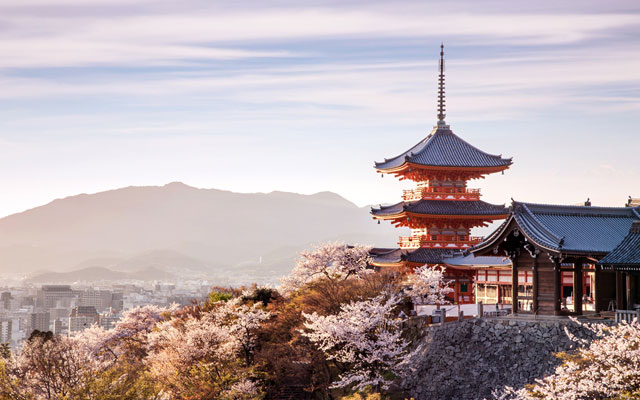
JNTO launches e-learning site for agents to learn more about Japan; Kiyomizu-dera Temple in Kyoto pictured
The e-platform uses varied modules to guide agents through all aspects of Japan, highlighting key information about each region and location.
Each course allows users to explore and learn about a variety of Japanese food, lifestyle, traditions, landscapes, sightseeing spots, and view the country’s futuristic cities.
There are a total of five courses, beginning with an introduction to Japan, with additional courses to be unlocked upon completion of the first course.
The training modules also highlight The Golden Route as it is the most popular route for the UK travellers visiting Tokyo, Hakone, and Kyoto.
The Covid-19 outbreak has led to a global economy crisis. Instead of wallowing in despair, travel and tourism businesses should adopt a different – and open – mindset to help find better ways to grow and be ready for the rebound when it happens. Here are five things you could do:
Focus on strategies
A business slowdown is rare in the hospitality industry, as it is kept busy year-round fulfilling the promise that the customer is king. The current business climate presents an opportunity for travel and tourism business leaders to recollect, re-structure and re-frame their strategies, so as to bring about a stronger recovery when the time is ripe.
Knowledge is power
Take advantage of the downtime to upskill your team in various subjects, such as crisis and disaster management, and to conduct stress management courses. This not only improves their employability, it is keeps them engaged and motivated.
Expand your line
When business is brisk, the focus in largely on perfecting the delivery of core products and service. Use this opportunity to sharpen your secondary products and service. To do this, you need to understand the unique traits and special offerings of your organisation, and build on them. Don’t forget to invest in product training so that your staff have the confidence in delivering a new line.
A new look at competition and partnerships
Unity and healthy competition is more important than ever, and this isn’t the time for undercutting practices. Businesses should identify ways to work together to leverage business opportunities. Consider joint ventures on new initiatives that can strengthen your position when travel confidence returns.
Build sustainable power
In your fight for survival, don’t forget your responsible tourism promise to make better places for people to live in and better places for people to visit. Consider hosting webinars to share your sustainable tourism projects and best practices with industry peers, or join such programmes to learn a new approach or two
Amid the unfolding pandemic that has forced the closure of hotels, bars, nightclubs and all entertainment venues in Pattaya and adjacent Chonburi province, a number of hoteliers and entertainment venue operators in Pattaya are putting their premises to good use during this closure period.
Usually occupied by the now absent Indian and Russian guests, Grand Bella Hotel has been proposed by Pattaya’s Committee for the Surveillance and Prevention of Covid-19 to serve as a temporary medical shelter for people being monitored for the virus’ symptoms.
Grand Bella Hotel Pattaya may be used as a temporary accommodation for suspected Covid-19 patients
If green-lit, the measure would physically separate those awaiting their Covid-19 test results or being monitored for signs of illness, from regular patients in hospitals across Pattaya City and the surrounding Chonburi province.
According to Morrakot Kuldilok, group director of Bella Villas Hotels, Grand Bella’s operator which runs seven properties in Pattaya, the hotel may also serve as a field hospital for Covid-19 patients.
Morrakot told Thai daily Kom Chad Luek: “Since we don’t have any guests at the moment, I think we should use the hotel for public benefit. We will be responsible for all incurred expenses, including utilities and food… We would like to make a small contribution to society and help contain the outbreak and reduce the number of infections.
“If we all work together to contain the outbreak, for example, by staying home and reporting useful information like in Wuhan, I believe the situation will improve or end within two to three months.”
Located in Central Pattaya, Grand Bella boasts three buildings and a total of 360 rooms. Some 140 rooms in one of the buildings may be converted into a field hospital, once their readiness has been verified by a medical team and approved by the Chonburi governor. Earlier this week, Bangkok Pattaya Hospital also announced its willingness to contribute the necessary medical supplies and other equipment.
Last month, Differ, one of Pattaya’s most popular nightclubs, served as a community kitchen providing free dinner boxes for up to 1,300 people every evening.
As of April 3, the total number of confirmed Covid-19 cases in Chonburi province, including Pattaya, stood at 61. – Additional reporting by Anne Somanas
Japan is set to declare a month-long state of emergency as soon as Tuesday that will cover Tokyo, Osaka and five other prefectures, in response to the rising tally of coronavirus infections in the country.
The declaration will also cover Kanagawa, Saitama, Chiba, Hyogo and Fukuoka prefectures, said prime minister Shinzo Abe on Monday.
Japan moves to declare state of emergency as the number of coronavirus cases in the country surge
Declaring a state of emergency won’t lead to a lockdown, but will empower prefectural governors to urge residents to abide by stronger social-distancing measures and to stay at home, except for essential tasks. Governors will also be authorised to ask schools, businesses and other public facilities to temporarily close. However, there will be no legal penalties for those who do not obey these requests by authorities.
Abe’s announcement comes amid mounting pressure for the government to pull the emergency trigger to curtail the rising tide of infections, especially in Tokyo, with the US government on Friday sounding alarm about the surge in virus cases in Japan. However, the government has been wary about doing so, as it would further dent economic activity in a country already on the brink of recession.
Furthermore, Abe said the government will prepare a 108 trillion yen (US$990 billion) stimulus package to soften the economic blow, which will include more than six trillion yen in cash payouts to households and small businesses, and 26 trillion yen to allow deferred social security and tax payments.
The number of new Covid-19 cases in Japan rose by 205 as of late Monday to total 4,041, excluding those who were aboard the Diamond Princess cruise ship docked in Yokohama through February, according to Kyodo News. The death toll rose by four to 108.
Mental well-being of staff neglected as companies struggle with survival
Stress of job insecurity, loss of colleagues and business performance can impact all ranks
Solutions include frequent conversations, training, fitness activities
An intense focus on business survival during this unusual crisis has caused a critical issue to be overlooked – and that is the mental state of travel and tourism workers and professionals as they endure fears of job security and stresses of a difficult business environment.
Andrew Chan, founder & CEO, ACI HR Solutions, told TTG Asia that not enough attention is being paid to managing staff’s mental state, and the risk of companies not doing so is the eventual price of compromised productivity.
However, Chan acknowledged that focusing on staff’s mental well-being was a tough thing to do as travel and tourism businesses are in “an unusual situation that is best described as the SARS crisis and GFC (the global financial crisis in 2007-2009) rolled into one”.
“Company leaders are being hit constantly with bad news on a daily basis, and it is a tough time to be a CEO, CFO and CHRO at the moment. Every company is scrambling and doing the best they can to avoid redundancies and minimise pay cuts while watching the bottom line. As you can imagine, staff’s mental well-being may not sit particularly high on an organisation’s agenda now,” Chan said.
But as companies work through the human resource aspect of their coping strategy, starting from clearing 2019 leave to enforcing unpaid leave and “making salary sacrifices”, Chan said staff would realise that a redundancy decision might be next on the cards.
He explained that the experience of this process is stressful for employees across the board.
“I worry particularly for the middle management. CEO, CFOs certainly have their stresses, but mid-management personnel who are managing a team is often the messenger. If they did not go through GFC before, they haven’t had the experience of retrenchment. When they suddenly get the directives from the main office to, say, chose 50 per cent of their team to let go, the pressure of that task is going to be immense,” Chan explained.
He added that mental care must be provided for displaced staff as well as those who got to keep their jobs.
“Those who aren’t retrenched are seeing colleagues they’ve worked with for years, and even, decades being let go. That is a heavy burden for them. It then affects productivity in the organisation because those who remain may have to do the work of two or three people in a stressful environment,” Chan said.
Prescription for the heart and mind
When asked what companies should do to help staff cope mentally, Chan said it could be a simple gesture of checking in on how they are feeling.
Chan also suggested sending staff for training so that they keep busy and maintain a positive mindset as work dwindles, and to provide transition support to displaced staff so they will not feel lost.
“Many displaced staff have not had to apply for a job in a very long time, and may not even have an updated CV. They may not even remember how a job interview is like. So, an organisation needs to look into providing that support for their displaced employees – to show them what needs to be done when applying for a job, how long the process will likely take, and help them set mini goals that they can work towards,” Chan said.
“Unfortunately, I see a lot of companies just say, ‘We are really sorry, here is your severance package, good luck’.
As the crisis deepens, Chan said organisations might need to “call in professionals to guide them” on providing mental care.
“In a few months’ time, we may see real tragedies. Recently, the German health minister committed suicide under great stress of having to deal with this health crisis. This is how intense the pressure is,” Chan warned.
Case in point: X-trekkers Adventure Consultant
When Khamisah Salamat, a product specialist with Singapore-based boutique active tour agency, X-trekkers Adventure Consultant, found out that her employer had chosen to send her for a series of courses during the crisis, a huge load was lifted off her shoulders.
Khamisah has been signed up for nine courses, covering occupational first aid, usage of Microsoft Excel and PowerPoint programmes, digital applications, service innovations and more.
“I started on my fifth course on Monday (April 6). These courses have been so fulfilling. But nothing beats knowing that my employer is investing in my personal growth during this challenging period, and that helps to lift my spirits and morale,” she remarked, adding that through the courses, she has been able to make new friends who are potential customers for when travel confidence returns.
Yeo Ching Khee, founder and director of X-trekkers Adventure Consultant, told TTG Asia that Khamisah will also be assured of continued employment as the courses are subsidised by the government under the condition that the staff remains on the payroll for the next six months.
“This crisis is likely to be a long one, and we have to find ways to think and act positively,” said Yeo.
Case in point: Accor
As the largest global hotel operator that employs over 150,000 employees across Asia-Pacific – half of the company’s worldwide operations at 300,000 – Accor takes a serious stance on staff welfare. Several mindful programmes and outlets that support mental, physical and emotional well-being are made available to its employees.
“At a time when our industry and our group is undergoing an unprecedented crisis, caring for our employees’ physical and mental well-being counts now more than ever before,” remarked Gaynor Reid, vice president communications & CSR, Asia Pacific, Accor.
Accor’s work in this area “is a step towards enabling our employees to deal with an increasingly stressful world”, Reid said, adding that emotional well-being still has a stigma attached to it.
In various parts of Asia-Pacific, such as Australia and India, Accor has established 24-hour helplines to help employees through dark, stressful moments.
In Australia, physical and mental wellness is cared for through a partnership with Lifeworks that has produced the new Lifeworks – Total Wellbeing App as well as various online resources, such as complimentary fitness programmes for self-isolation periods and Covid-19 webinars on Emotional Wellbeing and Talking to Your Children about Covid-19.
Accor Academy in Greater China runs a Keeping a Positive Mindset programme to instill hope in and boost the morale of its staff.
In India, the Accor Employee Wellbeing and Assistance Programme has been helping employees remain calm under pressure, be better prepared to deal with difficult situations and relationships, and support them to achieve resolution of personal/professional issues.
In Thailand, Accor’s Corporate Wellness Programme channels daily fitness challenges to team members and have them record their participation on video, which is then posted on a closed Heartists Facebook group. The programme has been particularly useful in keeping team spirit and the team moving during the ongoing lockdown.
These programmes join the company’s recent move to establish a €70 million (US$76 million) ALL Heartist Fund to assist its most vulnerable staff, partners and medical workers impacted by Covid-19.