TTG Asia
Asia/Singapore Saturday, 20th December 2025
Page 998

Singapore’s tourism sector gets fresh boost

0
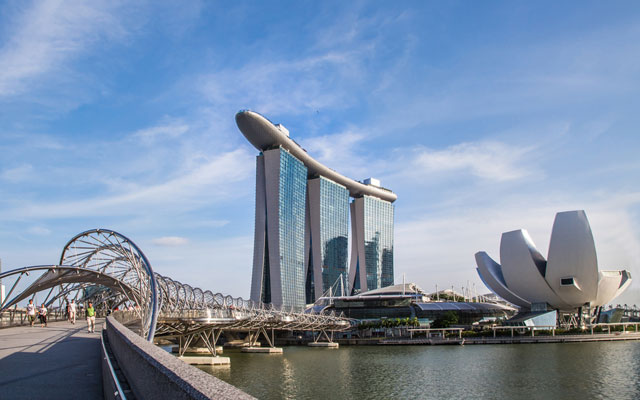
Landscape of Singapore city in day morning time

To further support tourism businesses during the circuit breaker and to give them a headstart for recovery, the Singapore Tourism Board (STB) has rolled out several new initiatives, including aid to ease cash flow concerns for travel agents.

The new relief measures complement the government’s allocation of more than S$60 billion (US$43 billion) to tide businesses and individuals through the pandemic.

Singapore Tourism Board rolls out initiatives to provide further relief to tourism businesses and workers

As part of the efforts, STB has launched a S$20 million Marketing Partnership Programme to help tourism businesses maintain their international presence, and build demand for when the market recovers.

Under the programme, STB will support part of the marketing costs, and award additional funding boosters to companies that collaborate with other tourism stakeholders to create value-added experiences.

Following the launch of Phase 1 of the programme for hotels on April 1, 2020, STB will be increasing support from 50 per cent to 70 per cent of qualified marketing costs, and will extend the programme to attractions, inbound travel agents, and the corporate sector in Phase 2. Applications for Phase 2 will open in early May, and interested applicants can email MPP@stb.gov.sg.

In addition, STB has launched the SG Stories Content Fund to encourage and support local and international content creators to create compelling stories of strength, resilience, solidarity and unity in Singapore.

The S$2 million fund for digital video content will cover the costs of creative development and conceptualisation, production and execution, as well as marketing and distribution. The fund will support 90 per cent of qualifying costs, capped at S$150,000 per project.

This complements funding support from the National Arts Council and the Infocomm Media Development Authority, as part of STB’s overall collective efforts to support the creative community.

Applications will open from May 1 to 31, 2020. All filming activities must adhere to prevailing safe distancing measures, said STB. As such, during the current circuit breaker period, all outdoor filming is prohibited and all content must be produced from home, it added.

In light of how Covid-19 is changing consumer behaviour and will have a lasting impact on travel, STB has developed a set of tools under a three-step framework to accelerate the tourism sector’s digital transformation.

Firstly, to help businesses understand their current state of transformation, STB will be launching the Tourism Transformation Index in 2Q2020. It is a self-diagnostic tool for companies to assess their strengths, identify areas of opportunity and provide recommendations on next steps to take in their digital transformation journey. Companies can indicate their interest to participate at go.gov.sg/interest4txi.

Secondly, STB will open the Three House, a dedicated innovation space located on STB’s premises for companies to collaborate and test new ideas and solutions. More details will be announced at a later date.

Lastly, STB has created a suite of smart services that allow businesses to tap shared data and content to drive innovation and guide their business decisions.

This includes the Singapore Tourism Analytics Network, or Stan, which is being made available to the industry for the first time. Through Stan, industry stakeholders can access updated tourism statistics, and exchange data, to plan for recovery. More information can be found at stan.stb.gov.sg/portal.

Furthermore, to help affected businesses rethink their strategies and prepare for recovery, STB Marketing College – a learning and development programme tailored for travel and tourism marketers – has partnered key digital players such as Facebook, Google and LinkedIn to develop web-based training for the tourism industry.

Facebook Singapore, for example, has produced a webinar series that targets businesses in the travel, hospitality, retail, and corporate sectors. In this series, experts will share business insights and best practices to engage customers and help businesses adapt during these challenging times. The first episode will be streamed on April 30, 2020. To register for the free sessions, visit digitalupskillingsg.splashthat.com.

STB is also supporting Google and UOB in their redesign of the SME Leadership Academy programme to focus on SMEs in retail and tourism. The online programme will cover topics including digital marketing, online collaboration tools to support remote working and overseas market expansion efforts. More information can be found at leadershipacademy.withgoogle.com.

In addition, STB will partner LinkedIn to develop another online training programme, with more details to be announced at a later date.

As well, STB will be rolling out additional assistance for travel agents, who have seen a significant drop in the volume of sales and bookings since the start of the Covid-19 outbreak.

In order to free up cash flow during this period, STB has reviewed the legislative framework to identify areas where the cost of regulatory compliance could be reduced, following careful assessment that the risk to consumers is significantly lower during this period.

As such, the minimum financial requirement for travel agents will be reduced by 90 per cent from April 8, 2020 to December 31, 2020. All travel agents may also submit auditor-certified accounts in lieu of audited statement of accounts for the financial year ending on or after March 1, 2020.

STB CEO Keith Tan said: “The Government has set aside more than S$60 billion to help businesses and Singaporeans through Covid-19, and STB’s additional measures aim to complement that. This is the toughest period that Singapore tourism has ever faced, but we will stand together with the industry to get through this, and prepare for the eventual recovery.”

Olympics delay spell lower returns for Tokyo hotels

0

The Summer Olympics’ performance gains for Tokyo hotels are projected to be lower now that the sporting event has been pushed back by a year, according to the latest data from STR and Tourism Economics.

“We are projecting less overall demand when compared with our initial forecast for 2020, and while double-digit RevPAR growth is expected, it will come from a much lower base,” said Robin Rossmann, STR’s managing director.

Tokyo hotels projected to post lower gains from Olympics delay

“Lower absolute demand levels would be linked with traveller perception based on the timeline of the Covid-19 pandemic, as well as financial challenges of a potential global recession. The still high level of demand combined with ADR growth should drive RevPAR upward, similar to the growth percentage we saw during last year’s Rugby World Cup in the market.”

Tokyo is expected to see double-digit increases in RevPAR in both July 2021 (+22.1 per cent to 16,968 yen; US$160) and August 2021 (+27.2 per cent to 17,995 yen).

While growth levels are similar to the previous forecast, absolute levels will be much lower. Additionally, as a result of the event date change, the same months in 2020 are forecasted for double-digit RevPAR declines.

Indonesia suspends all passenger flights

0

The Indonesian government has temporarily suspended all commercial and chartered flights, following the decision to ban people from travelling to their hometowns during the Ramadan and Eid-ul-Fitr holidays, in a bid to curb further spread of the coronavirus.

The ban will take effect from April 24 to June 1, and might be extended depending on the situation, said Novie Riyanto, director general of air transportation, Ministry of Transportation, at a press conference on Thursday.

Indonesia bans passengers flights to stop Ramadan exodus; airport terminal in Jakarta pictured

However, Novie said that airports and navigation space remain open for five exceptions, including flights for leaders of state institutions and state guests, representatives of international organisations, repatriation of Indonesian citizens and foreigners, law enforcement operations, cargo or passenger planes used to transport necessary goods such as medical and food supplies, and other flight operations that support Covid-19 containment efforts.

Under the new regulation, Novie said that airlines would be mandated to give full refunds to passengers, in cash or voucher. For the latter, the voucher must be valid for at least one year with a one-time extension.

The government has also suspended inter-city transport by train and buses during this period.

Malaysia extends lockdown for third time until May 12

0

Malaysia’s nationwide movement control order (MCO) has been extended once again by another two weeks, until May 12, with the possibility of a further extension, announced prime minister Muhyiddin Yassin in a televised broadcast on April 23.

This marks the third extension of the MCO, which kicked in on March 18 to stem the spread of Covid-19.

Malaysia extends movement curbs for a third time till May 12; members of the public lining up to do a Covid-19 mass test in Kuala Lumpur pictured

The prime minister said that that if the number of new infections continue to slow, the government will consider relaxing the MCO regulations in stages to allow more sectors to operate, subject to strict conditions.

On April 23, the country’s health director-general Dr Noor Hisham Abdullah said border control measures had reduced the number of imported Covid-19 cases and should be further continued.

In light of the increasing number of Covid-19 cases in more than 180 countries, he said: “Lifting the MCO does not mean we will lift border controls. In fact, we need to strengthen it further.”

The number of Covid-19 cases in Malaysia as of March 23 totalled 5,603, of which 3,542 had recovered, and the death toll is 95.

Avani Hotels & Resorts names five new additions

0

Avani Hotels & Resorts has made five appointments for several of its hotels located in Thailand, Indonesia and the Maldives.

Farah Jaber has been named cluster general manager of the two Thailand properties – Avani Ao Nang Cliff Krabi Resort and Avani+ Koh Lanta Resort (the latter is scheduled to open by end-2020).

From left: Farah C Jaber; Stephan Moonen; and Karun Cornell

Jaber started his career with Minor Hotels in 2013 as an executive assistant manager at Anantara Rasananda Koh Phangan Villas. In 2016, he was promoted to resident manager of Anantara Sathorn Bangkok Hotel and Oaks Bangkok Sathorn before moving to Vietnam as general manager of Anantara Mui Ne Resort in 2017. More recently, he spearheaded the successful opening of Anantara Quy Nhon Villas as cluster general manager along with Avani Quy Nhon Resort also under his leadership.

As well, Stephan Moonen and Karun Cornell have been appointed Avani+ Khao Lak Resort general manager and director of sales & marketing, respectively. The resort is also scheduled to open later this year.

Moonen boasts 15 years’ experience within the hospitality industry, where he first started out as an assistant hotel manager in a luxury hotel before joining Intercontinental Hotels Group. In 2011, he joined Marriott International in the UK, and undertook senior leadership roles at the Edinburgh Marriott and the Residence Inn Edinburgh, and The London Marriott Hotel and Executive Apartments Canary Wharf. His most recent role was general manager at the London Marriott Park Lane.

Meanwhile, Cornell brings more than 10 years of hospitality experience to the resort. He started his career with Bandara Hotels & Resorts, before joining Fair House Group in Koh Samui as a group director of sales & marketing.

From left: Marlon Abeyakoon and I Made Subrata

Over in the Maldives, Marlon Abeyakoon has been appointed general manager of the 200-key Avani+ Fares Maldives Resort that will open in 2021.

Abeyakoon has spent almost two decades in hospitality with multiple international hotel brands in UAE, the UK, Sri Lanka, the Maldives and Fiji. He started his career with One&Only in Dubai in 1999 before moving to the UK with GLH Hotels and Hilton in 2013 as hotel manager at DoubleTree London. In 2018, he moved to Sri Lanka to helm Reethi Beach Resort as general manager. Prior to joining Avani+, he was general manager of the Sheraton Fiji Resort.

Lastly in Indonesia, I Made Subrata has been named general manager of Avani Seminyak Bali Resort, which is scheduled to be rebranded this year.

Made began his career in hospitality on his home-island Bali as the pre-opening team of InterContinental in 1993. In 2004, he joined Conrad Bali as guest activities manager and worked his way up to rooms division manager. He then moved to Sheraton Bali Kuta Resort as executive assistant manager, before joining The Elysian Boutique Villa Hotel as resort manager.

A great place to stay

0

The Muslim travel market is growing, with CrescentRating – the world’s leading source of intelligence on Muslim travel – projecting 158 million Muslim travellers by this year, up from 25 million in 2000; and US$300 billion in travel spend by 2026.

And serviced residences in Asia are eager to get a slice of that pie. Some of the savvier chains, having foreseen the potential of this market, had taken steps years ago to improve their product offerings to address the accommodation needs of Muslim travellers.

Guus Bakker

According to CrescentRating’s Muslim Traveller Faith-based Service Needs 2.0 model, must-haves for Muslim travellers include halal food, prayer facilities, water-friendly washrooms and the absence of Islamophobia.

In CrescentRating’s research in 2019, Muslim survey participants said accommodation operators and airports must provide these essential faith-based services.

Far East Hospitality (FEH), which has a portfolio of nine serviced residences in Asia-Pacific – eight in Singapore and one in Kuala Lumpur, has implemented changes to better cater to Muslim travellers. Its efforts, according to CEO Arthur Kiong, included installing bidets in guestrooms, providing halal breakfast options, and training staff to be familiar with the selection of halal restaurants and mosques in the area around the property as well as important information Muslim guests would seek during the fasting month.

Said Kiong: “We also have team members on duty who are fluent in Bahasa Melayu, and depending on the demand for it, we are open to sending our employees for language courses in Arabic as well.”

FEH’s efforts are paying off, with an overall 12 per cent year-on-year incremental growth in room nights from the Muslim travel markets.

“While the majority of our Muslim guests are from neighbouring countries like Malaysia and Indonesia, we are noticing more check-ins from countries in South Asia and the Middle East,” shared Kiong.

Oakwood Asia Pacific, which recorded a “healthy growth” of 13.4 per cent in Muslim guests at its properties in Malaysia, Indonesia, Thailand and Japan between 2018 and 2019, had also geared up early to court the promising market.

Dean Schreiber, interim CEO, Oakwood and managing director, Oakwood Asia Pacific, shared that property enhancements have included Muslim-friendly facilities such as washlet toilet seats in public and guestroom toilets, and individual prayer rooms for male and female conference guests with attached ablution facilities.

“We provide halal menu options in our restaurants, and some of our properties, such as Oakwood Hotel & Residence Sri Racha (in Thailand), are halal certified,” he added.

Guus Bakker, CEO EMEA of Frasers Hospitality, takes pride in his properties being Muslim-ready. “At our properties, we ensure staff are able to advise on our halal certifications as well as halal menu offerings. Additionally, properties that see a higher number of Muslim guests have bilingual staff who are able to attend to guests both in English and their native language,” he explained.

Attention is paid to feeding Muslim guests well, something that Frasers properties achieve by “making significant adjustments in our breakfast offerings, restaurant and in-room dining menus to meet the changing preferences of our regional guests”.

In love with space and accessibility
Presently, regional serviced residences are welcoming mostly holidaying families with a preference for larger spaces, young couples on their honeymoon, and corporate travellers desiring a home away from home.

Bakker said easy access to halal food, affordable luxury goods shopping and entertainment options for families and kids alike ranks high among his Muslim guests. As such, Frasers properties in Asia-Pacific, which are conveniently placed near halal restaurants as well as grocery shops, have been winners in the books of these travellers.

For FEH properties that are located close to hospitals and medical facilities, a market niche has emerged – Muslim medical tourists.

In these properties, such as Orchard Scotts Residences, Orchard Parksuites and Regency House – all in Singapore, facilities such as accessible rooms and wheelchairs are available for loan.

“As the recovery and rehabilitation process differs between individuals, our serviced residences offer the flexibility for guests to extend their stay on a weekly basis,” said Kiong.

Changing profiles
Schreiber observed that his Muslim guests are getting younger and new travel patterns have emerged.

“Instead of travelling with their family or a small group, we are seeing more Muslim millennials travelling with friends as well as solo travellers for leisure and business purposes,” he said.

“The shift in travel patterns may be caused by a change in objectives of travel experiences. More Muslim guests are willing to explore non-Muslim countries such as South Korea, Thailand and Japan due to the influence of pop culture, for example, to catch a K-pop concert or visit attractions and restaurants featured in a popular drama or movie,” he added.

Schreiber also expects to welcome more young female Muslim travellers over the next few years, a projection that Bakker shares.

Bakker also foresees that the Muslim family travel market will continue to expand and drive demand for larger residences to accommodate all members.

Meanwhile, Kiong believes that Singapore Tourism Board’s new efforts to appeal to Muslim travellers through a partnership with Have Halal Will Travel booking platform, as well as the production of educational travel guides and materials targeting Muslim travellers around Asia in collaboration with CrescentRating, will result in more leisure travellers, especially millennials and families, over the next few years.

“With Singapore’s strengthened economic relations with the Middle East, we also foresee a possible increase in business travellers staying with us when they are here on business trips or for conventions,” Kiong added.

Mark these properties

From left: Fraser Residence Orchard, Singapore; Oakwood Hotel & Residence Sri Racha; Orchard Scotts Residences

Fraser Residence Orchard, Singapore offers fully-furnished and luxurious units that are equipped with high-end appliances and modern conveniences. With the world’s top brands and an array of halal eateries at the doorstep, long-stay guests with young children can be reassured of the convenience and accessibility the property has to offer. Chefs can also prepare meals upon request, perfect for residents with dietary requirements.

Oakwood Hotel & Residence Sri Racha in Thailand boasts magnificent panoramic views of the Gulf of Siam. It offers 458 rooms and apartments with modern hotel amenities that are perfect for leisure and corporate travellers. An array of services, from personalised check-ins to private dining, as well as facilities such as children’s play area, karaoke room, golf driving practice room and library will appeal to families as well. In addition to TrEat Restaurant, a halal-certified restaurant, there are also six function rooms for business meetings and social gatherings.

Orchard Scotts Residences is an award-winning property that is situated in Singapore’s famed Orchard belt, placing guests in easy reach of the finest shopping, halal dining and entertainment options. The nearest mosque is located 10 minutes away on foot. Despite being at the doorstep of the city centre, the property is a sanctuary with 2.5 hectares of sculpted gardens. Guests can choose from one-bedroom apartments to a plush four-bedroom penthouse.

PATA’s revises forecast to a 32% decline in visitor numbers in 2020

0

Newly updated forecasts from (PATA) has painted a likely 32% reduction in international visitor arrivals into and across Asia-Pacific this year, which brings visitor volume back to levels last seen in 2012.

Taking into account the impacts of the Covid-19 pandemic, the volume of arrivals is now expected to be under 500 million this year

PATA’s latest forecast expects arrivals into and across Asia-Pacific to fall by 16% in the best scenario and 44% in the worst

At this stage, PATA expects growth to resume in 2021, returning to forecast levels by 2023. However, this depends on how quickly and completely the pandemic is contained and controlled.

A more optimistic scenario suggests arrivals in 2020 will fall just 16% year-on-year while a pessimistic narrative predicts a reduction of approximately 44%.

The impacts are expected to be most severe in Asia, especially North-east Asia, which is now predicted to lose almost 51% of its visitor volume between 2019 and 2020 (most likely scenario), followed by South Asia with a reduction of 31%, and then South-east Asia with a 22% drop in visitor arrivals.

West Asia is projected to lose almost 6% in visitor arrivals, followed by the Pacific with a projected contraction of 18%, and the Americas with a loss of a little under 12%.

Recovery rates relative to 2019 are expected to occur in most destination regions/sub-regions in 2020, however, North-east Asia is likely to take a little longer and exceed the 2019 volume of arrivals in 2022.

The same is essentially true for visitor receipts as well as they are expected to drop by 27% between 2019 and 2020 under the most likely scenario, reducing to US$594 billion, significantly below the original 2020 forecast of US$811 billion.

Asia is expected to lose more than US$170 billion (-36%), with North-east Asia predicted to lose more than US$123 billion (-48%) under this most likely scenario, followed by South Asia with a US$13.3 billion loss (-33%) and South-east Asia with a US$34.6 billion shortfall (-20%). The Americas is projected to lose more than US$35 billion (-13%) and the Pacific US$18 billion (-18%).

Recovery at the annual level is expected to return more quickly across most regions/sub-regions, with perhaps the Pacific taking a little longer to return to 2019 levels.

Hardy: if arrivals returned only slowly, travellers should be incentivised to remain in the destination longer and see more of what it has to offer

PATA CEO Mario Hardy said: “While there are obvious reductions in arrivals, there still remains a significant volume of visitors expected into Asia-Pacific through 2020, with just under half-a-billion such travellers still generating almost US$600 billion, with each visitor still requiring and expecting the attention and service that this region has become famous for delivering.”

He added: “Nevertheless, perceptions are difficult to change so recovery might take longer in the minds of many potential travellers. This however gives us time to reconsider the position we had created up to 2019; if numbers return only slowly, the obvious imperative will be to offer travellers such incentives that they remain in the destination longer and see more of what it has to offer. The metric should therefore shift from the numbers of arrivals, to time spent in any one destination and the dispersion across it. Receipts will then follow.”

The full PATA Asia Pacific Visitor Forecasts 2020-2024 report is available on the PATA Store.

Booking.com unveils positive trends in sustainable travel among Indians

0

A study on sustainable travel conducted among Indian travellers by Booking.com in March 2020 has revealed positive trends.

A vast majority (96%) of Indian travellers said sustainable travel was important to them, while nearly seven in 10 (76%) said they were more determined to make sustainable choices when looking to travel again in the future.

Indian travellers are more determined to make sustainable choices when looking to travel again in the future

Witnessing the impact tourism had on the environment while on vacation has also motivated 73% of travellers to make more eco-friendly choices in their everyday life.

However, while many of the findings are promising, there are still obstacles to overcome. 39% of Indian travellers do not know how or where to find sustainable travel options and more than half (54%) think there are insufficient travel options available. As such, there remains an opportunity to educate travellers on available sustainable travel options.

To make it easier for travellers to find and make sustainable travel choices, the Travalyst coalition – a global partnership founded by The Duke of Sussex together with Booking.com and other travel companies – recently announced the development of new frameworks that will help sift out more sustainable accommodation, aviation and experience options across the industry.

Sustainable accommodation choices
Some 97% of Indian travellers said they planned to stay in eco-friendly accommodation in 2020, while out of the 74% of travellers who have previously stayed in eco-friendly accommodation, nearly half (46%) did so to help to reduce their impact on the environment.

To help convince the 3% of travellers who did not express interest in staying at an eco-friendly accommodation, a universal eco-labelling system could be put in place. 77% of travellers surveyed expressed that they would feel reassured about staying in an accommodation if it has an eco-label.

Booking.com is making headway for clearer labeling and exploring new ways to highlight sustainable practices at accommodation of all kinds across the globe. These first steps to highlight sustainability practices at a property — which can also be verified by customers — are part of the company’s ongoing work with Travalyst to develop an industry-wide sustainability label.

The considerate traveller
Some 44% Indian travellers admitted they would be more encouraged to make sustainable travel decisions if travel companies proposed alternative destinations to reduce overcrowding.

Travellers were also considering alternative modes of transport to reach their destination, with 47% having opted to travel by train instead of car for longer distances to reduce their carbon footprint.

These findings suggest that when travelling is back on the agenda, travellers will likely want to continue making considerate choices by heading to less-visited destinations and selecting alternative modes of transport to get there.

The research, commissioned by Booking.com and conducted by an independent party, are sought to understand 21 other markets, including Brazil, Mexico, the US, Canada and Australia.

Bureau Veritas, Accor launch health and safety standards label

0

Global hospitality group Accor and certification services provider Bureau Veritas are launching a health and safety standards label to help hospitality businesses in Europe reopen safely.

Hospitality establishments can be certified under the label when they are found to have met its stipulated cleaning protocols and appropriate safety standards. The label will cover both accommodation and catering services, and will lay out sanitary standards for Accor’s hotels, other chains and independent hotels.

The health and safety standards label will encourage travellers’ confidence in Accor hotels in Europe

Bureau Veritas will kick this off with Accor in France before extending it to the rest of Europe, shared Jacques Pommeraud, CEO, Bureau Veritas Africa & France.

Initiated in conjunction with doctors and epidemiologists, the label was developed through partnership with trade associations, such as the Union des Métiers etdes Industries de l’Hôtellerie (UMIH) and Groupement National des Chaînes Hôtelières (GNC).

The project is set to be presented next week to relevant French government ministries and Alliance France Tourisme — a group of companies looking to spur tourism development in France — in hopes that the label will receive the involvement of and be validated by these parties.

Accor and Bureau Veritas will also submit a concrete proposal to governments in France and in Europe to call for the loosening of lockdown measures in light of the label.

Eventually, both parties are slated to release an operational guide for all hospitality industry stakeholders. The guide would allow stakeholders to effectively apply the health and safety recommendations set by authorities such as the World Health Organsation (WHO).

To make the project useful for the end-user, Accor and Bureau Veritas also intend to set up a dedicated Bureau Veritas website for European travellers and customers to search for certified hotels and dining establishments.

Marriott sets up Global Cleanliness Council

0

Marriott International has established the Marriott Global Cleanliness Council to advance the company and its properties’ health and safety standards amid the Covid-19 pandemic.

Chaired by Ray Bennett, chief global officer-global operations, Marriott International, the Council will develop a new level of international hospitality cleanliness standards and norms designed to promote the safety of consumers and Marriott employees.

Marriott Global Cleanliness Council’s work will be back by scientific advice and expert guidance

Bennett emphasised that the Council’s efforts will be backed by scientific advice, and would involve a holistic response framework beyond just disinfecting hotels.

The Council will receive inputs from company leaders with expertise in housekeeping, food safety, occupational health and staff well-being.

Additionally, external experts such as Micheal Sauri, infectious disease specialist, Adventist Healthcare, and Ruth Petran, senior corporate scientist-food safety and public health, EcoLab, will advise the Council.

Over the next few months, Marriott will also employ enhanced technology to prevent the spread of the virus at its properties.

Electrostatic spraying will be used to rapidly clean hotel areas such as guest rooms, gyms and public areas. The technology is said to use the highest tier of disinfectants advised by the World Health Organisation (WHO) in dealing with known pathogens.

The group is also testing out the use of ultraviolet light technology to sanitise guest keys and devices carried by employees.