Hyatt has appointed Herman Kemp as general manager of Hyatt Regency Phnom Penh, which will become the first Hyatt Regency hotel in Cambodia when it opens in 1Q2021.
A Dutch national with extensive experience in South-east Asia, Kemp will also oversee the pre-opening of the 247-room property.
With more than 20 years of hospitality experience, Kemp’s career has taken him to hotels and resorts in The Netherlands, Indonesia and Cambodia. Most recently, he was general manager of Park Hyatt Siem Reap from 2016 to 2019, before relocating last year to lead the new Hyatt Regency Phnom Penh.
Kemp commenced his hospitality career as a marine hotel operations controller with the Seattle-based cruise company Holland America Line. Over the next 12 years, he held various F&B and management roles at Le Meridien, Sofitel and Carlton hotels, all in The Hague. In 2012, Herman was appointed general manager of Aryaduta Medan in North Sumatra, Indonesia before moving in the same role to The Edge Bali in 2014.
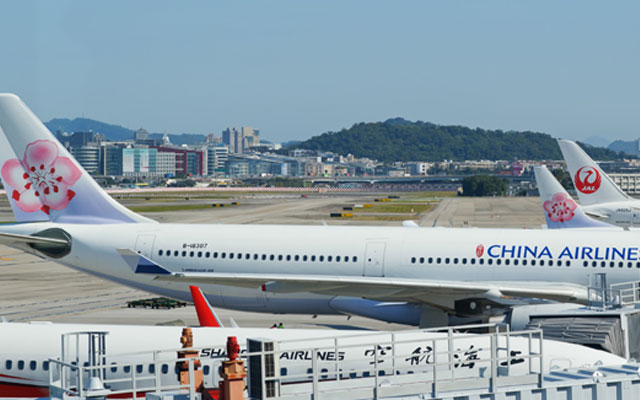
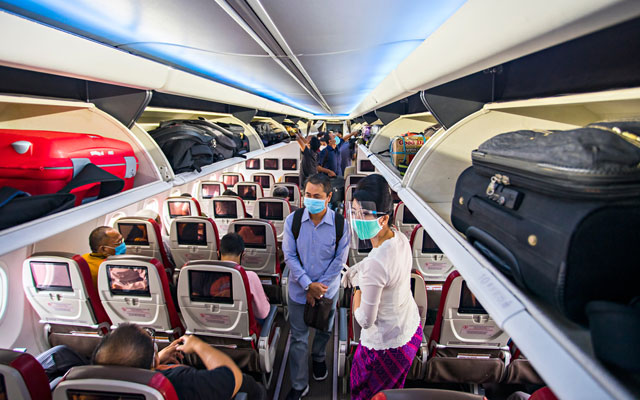
Business continuity remains central to the work of the Association of Asia Pacific Airlines (AAPA) as cross-border travel continues to be stifled, with key stakeholders in the aviation sector jointly declaring on November 13, at the conclusion of the AAPA Assembly of Presidents, their solidarity and commitment to work with governments to revive air travel.
The Assemble was held with the International Air Transport Association and the Airports Council International Asia-Pacific.
Asia-Pacific airlines will account for a third of global airline losses
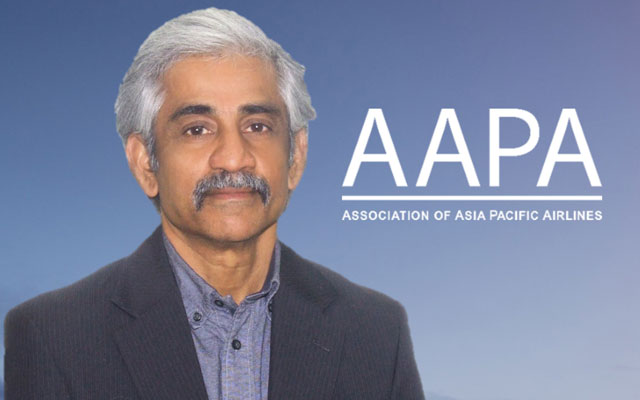
Subhas Menon, director general of AAPA, said: “Facing indefinite border closures, airlines are under enormous pressure to minimise losses and conserve cash as they endeavour to survive the crisis.”
AAPA estimates that regional airlines will account for more than US$29 billion in losses this year – one-third of global airline losses.
In addition to the joint declaration, the AAPA Assembly of Presidents issued a number of resolutions addressing various industry priorities.
For instance, it viewed the setting up of a robust international testing framework, based on mutually-recognised accredited facilities delivering rapid, accurate, affordable and scalable testing prior to departure, coupled with other risk mitigation measures recommended by the International Civil Aviation Organization (ICAO), as an effective approach to safely restart international air travel. It also viewed blanket quarantine measures to be a significant deterrent to air travel.
Menon believes that strong multilateral collaboration among governments to relax travel restrictions and quarantine requirements based on risk assessment and medical evidence, will be key to aviation recovery.
Noting that a broad framework conducive to the early restart and recovery of aviation is urgently needed, AAPA has called on governments to refrain from increasing the burden of aviation levies in any form and to support Asia-Pacific airlines as they face unprecedented financial and operational challenges due to the prolonged grounding of international aviation.
Menon: inconsistent measures will hamper the meaningful restart of cross-border air transport
Menon said: “The ICAO Council Aviation Recovery Taskforce (CART) guidelines established earlier this year provide practical guidance to governments and industry to restart aviation and recover from Covid-19 in a coordinated manner, while keeping the safety, health and well-being of the travelling public as a top priority. Inconsistent and patchy measures create unpredictability and confusion for both travellers and airlines, while hampering the meaningful restart of cross-border air transport.
‘”The prolonged closure of borders has had deep and lasting effects on the public and the wider economy. It has now become critical to improve collaboration and cooperation across borders so as to mitigate further damage and jumpstart recovery efforts. Asia-Pacific airlines are firmly committed to working with governments and other stakeholders to rebuild passenger confidence and pave the way for the meaningful recovery of travel and tourism as essential services supporting commerce and livelihoods within the region and across the world.’’
While he said efforts by governments to initiate green lanes, fast lanes and travel corridors have not provided much respite from the decimation of demand in the region, due to onerous requirements of such schemes, he acknowledged that the unique Singapore-Hong Kong travel bubble, which will come into play on November 22, is a positive step in the right direction.
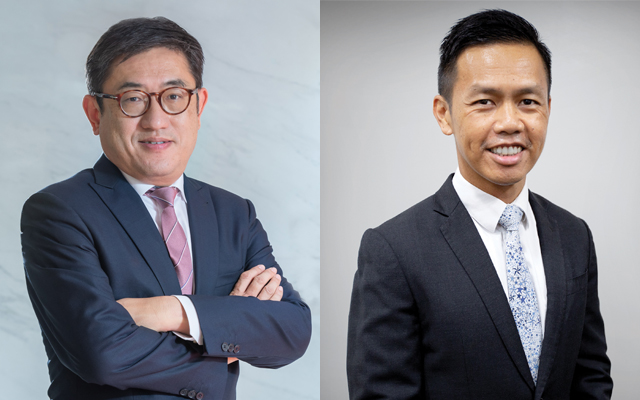
HKTB's Dane Cheng and STB's Keith Tan indicate that this demonstrates the deep connections and close friendship between Singapore and Hong Kong
The Hong Kong Tourism Board (HKTB) and the Singapore Tourism Board (STB) have agreed to collaborate to welcome the launch of the Hong Kong-Singapore Air Travel Bubble (ATB), ahead of the departure of the first flights on November 22, 2020.
The ATB – a bilateral, all-purpose and quarantine-free arrangement between the two nations – was first announced in early November. The partnership between the HKTB and the STB is also the first between the two tourism boards.
HKTB’s Dane Cheng and STB’s Keith Tan indicate that this demonstrates the deep connections and close friendship between Singapore and Hong Kong
As part of the partnership, the tourism boards of the two cities will undertake joint promotional activities such as coordinated social media content. Both tourism boards have also prepared special gifts to welcome the first batch of visitors on the ATB, such as a limited-edition reusable face mask that showcases unique aspects of both cities.
Travellers on the first ATB flights out of both cities on November 22 will also be treated to a special inflight menu that includes local favourites from Hong Kong and Singapore, curated by Cathay Pacific and Singapore Airlines. This menu will be available on all ATB flights till the end of this year.
HKTB executive director Dane Cheng said: “It is a hugely important moment that shows the world that safe international travel is possible, and paves the way for us to bring tourist flights to and from other markets.”
Singapore Airlines executive vice president commercial Lee Lik Hsin added: “The Air Travel Bubble arrangement between Singapore and Hong Kong facilitates the keenly anticipated return of leisure travel for both cities as we continue with our recovery from Covid-19. It is a signal that we can open up in a safe and calibrated way with the necessary bilateral protocols in place.”
Hong Kong will welcome the winter holidaymakers from Singapore with its Christmas celebrations, together with a host of gastronomical offers from the Hong Kong Wine & Dine Festival. Other activities include hiking cycling, as well as visiting exhibitions such as Hong Kong Spotlight by Art Basel and Botticelli and His Times – Masterworks from the Uffizi in the Hong Kong Museum of Arts.
In Singapore, visitors from Hong Kong will avail a line-up of Christmas events, ranging from the light-up along Orchard Road to Gardens by the Bay’s festive extravaganza Christmas Wonderland. They will also be able to experience Singapore’s offerings such as Aqua Gastronomy, an underwater dining pop-up at Resorts World Sentosa’s S.E.A. Aquarium, and the Changi Jurassic Mile, an outdoor display of lifelike dinosaurs along a bike and walking path that connects Marina Bay in downtown Singapore to the Changi Airport.
Travellers to both destinations can also look forward to attractive deals and experiences from a range of tourism partners. These offers are available on HKTB’s platform (discoverhongkong.com/TravelBubble) and STB’s visitor portal (visitsingapore.com/hk-deals).
The health and safety of locals and travellers remain a key priority. To provide visitors with peace of mind, both destinations have put in place city-wide certification programmes for hygiene and safety – the Anti-Epidemic Hygiene Measures Certification Scheme in Hong Kong, and SG Clean in Singapore.
The Malaysian Association of Tour and Travel Agents (MATTA) has expressed its concerns around the failure of credit and leasing companies to extend loan moratoriums as advised by the Prime Minister.
MATTA president, Tan Kok Liang, said in a press release: “According to a media report, about 10,000 bus operators are currently owing up to RM3 billion (US$730.2 million) of debt in total. Bus operators have had no business since March, yet they are still required to make repayments to the credit and leasing companies.
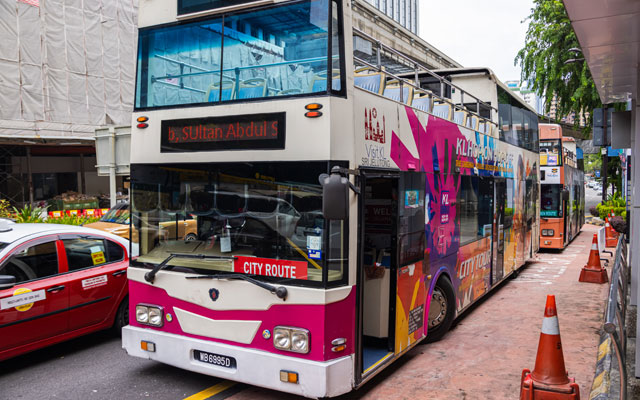
With no tourism business since March, Malaysian bus operators are heavily in debt
“It is ironic that despite being in the business of lending and leasing, credit and leasing companies are not regulated under Bank Negara Malaysia (Central Bank of Malaysia). It has been more than six months that the tourism industry, in particular the coach operators, have been highlighting this issue, yet to date no proactive action has been seen taken to tackle this serious issue.
“This matter had previously been brought up in March 2020 when we received complaints from our members that leasing and credit companies have created their own rules and practices in respect of moratoriums on repayment of loans instead of applying the directions issued by Bank Negara Malaysia.”
Tan claims in his statement that none of the relevant ministries directly involved such as Ministry of Domestic Trade, Ministry of Housing and Local Government, Ministry of Transport or the Ministry of Finance have shown interest in resolving the predicament of the tourism industry.
Tan noted that the recent Budget 2021 had provided for sales tax exemption for the purchase of new coaches without acknowledging the reality that many of these coach owners have and will default in repayment obligations, and their buses, coaches and vans may then occupy the yards of credit and leasing companies. MATTA saw no effort and measures in the proposed budget to address these and other industry issues.
Tan said: “Failure to address the issues and concerns of the tourism sector will greatly affect the intended tourism restart in the near future in 2021 and may lead some parties to conclude that the government views the industry as dead in 2021.”
He added: “MATTA views the failure to place credit and leasing companies under the purview of Bank Negara Malaysia or other authority during this pandemic specifically on the moratorium issue has resulted and added to the misery of the tourism industry. In the last eight months of facing the Covid-19 pandemic, tourism vehicles stand idle with no movement and revenue.
“Despite the credit and leasing companies being aware of the dire and desperate situation of the tourism industry, MATTA has received some reports from its members that credit and leasing companies have insisted on not extending moratoriums. In short, we are being told that they have turned a deaf ear.”
MATTA calls for immediate government regulation and to place the credit and leasing companies under the provisions of the Financial Services Act or other relevant legislation. It also urges the government to consider appropriate and necessary action to ensure that the actions of credit and leasing finance companies are in line and compatible with the welfare, public interest, and good order of the nation during the crisis.
InterContinental Hotels Group (IHG) has signed a landmark deal with Techvance Properties Management to bring the Hotel Indigo brand to Kuala Lumpur, with the property at the base of the picturesque Bukit Nanas scheduled to open in 2023.
The 180-room Hotel Indigo Kuala Lumpur on the Park will be located close to KL Tower and KL Forest Eco Park, and its design will reflect the historical charm of local heritage buildings and the breadth of nearby modern architecture.
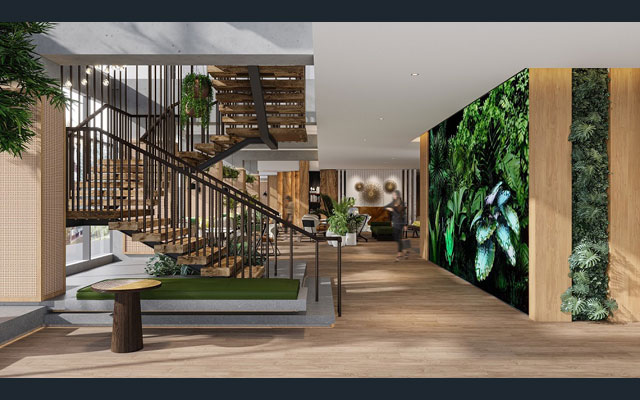
An interactive Green Wall will rise in the hotel lobby
The property will be built on sustainability promises, with environmentally friendly methods prioritised in its planning and the use of reclaimed materials in its construction, among others.
In line with IHG’s broader sustainability efforts, the hotel will also be plastic straw-free and opt for bulk amenities in all its guestrooms.
With greenery from one of the country’s oldest forest reserves woven throughout the hotel to bring the forest inside, memorable features include an interactive Green Wall in the lobby and a spot of quiet serenity amid the bustle of the city in a Secret Garden.
Serena Lim, vice president, development for South East Asia and Korea, IHG, said: “All of our guests, whether they are staying for leisure or business, will be offered a unique mix of rainforest relaxation alongside the delights of the city, which is just minutes away. We want to offer everyone who stays with us not only a memorable trip, but also an experience they will remember for many years to come.”
The Delivering Group has broadened its alliance of hospitality and tourism technology specialists with a new partnership with tailor-made online booking experts Book Tech.
Formerly known as Book Beach Club, and within hotels, beach clubs, marinas, nightclubs and resorts – to regain ownership of their customers through its ground-breaking interactive online booking platform and mobile app.
Book Tech offers F&B venues a customer-facing interactive online booking platform and mobile app
The Delivering Group co-founder Mark Simmons noted that hospitality and tourism companies across the region were increasingly looking to safe and efficient digital solutions to manage and communicate with their customers under the new normal brought about by the pandemic.
“However, many have struggled with the challenge of sourcing and partnering with so many different suppliers and platforms, all focusing on different touchpoints in the customer journey,” said Simmons.
With the addition of Book Tech to The Delivering Group’s technology alliance, which includes AI chat specialist HiJiffy and hotel technology consultancy CUBE, hospitality and tourism companies can “connect with the leading players in AI chat solutions, revenue management and distribution, online booking platforms, 24/7 customer engagement, sales and marketing, media communications and resourcing” all under one roof.
Book Tech CEO, Chris Adams said the new partnership was a logical progression for the company to bring AI technology and other digital services into its platform and broaden its exposure to Asian markets.
Sydney Harbour Bridge was transformed into a massive birthday cake complete with illuminated LED candles for Qantas Airways’ 100-year anniversary on Monday evening.
More than 1,300 LED tubes, 126 LED fixtures and 38 searchlights were used in the city’s birthday bash for the airline, which started off as Queensland and Northern Territory Aerial Services on November 16, 1920. The projection of 60 historic images and two, 65-metre-high birthday candles onto the southern and northern pylons completed the transformation.
Destination NSW’s surprise Centenary celebration for Qantas is part of a line-up of events that support the recovery of Sydney hospitality and tourism businesses
A low flying Qantas 787 ‘blew out’ the candles as it went over the Sydney Harbour Bridge.
New South Wales minister for jobs, investment, tourism and Western Sydney, Stuart Ayres, said: “Sydney has benefited immensely from 100 successful years of business for Qantas – from bringing visitors to the state and boosting our visitor economy to providing local jobs.
“What better way to mark such an important milestone for Qantas than with a celebration in the city it has chosen as its headquarters for the last 82 years involving another much-loved Sydney icon, the Harbour Bridge.”
Almost 200 passengers, including 100 Qantas staff, were on board the 100-minute flight which was a special Centenary Scenic Flight to mark the airline’s 100th year.
The candle-blowing moment was a surprise for those on the ground and on board the flight.
The activation, executed by Destination NSW, complements a new campaign of activity designed to support the recovery of Sydney hospitality and tourism businesses.
Destination NSW CEO, Steve Cox said the Qantas Centenary provided an opportunity to send out a message of hope, both to Sydney businesses and to residents of Sydney and New South Wales.
“This stunt was just the beginning of what will be a truly amazing line-up of events coming up across the city, and we are looking forward to welcoming visitors from across Australia to Sydney this summer,” said Cox.
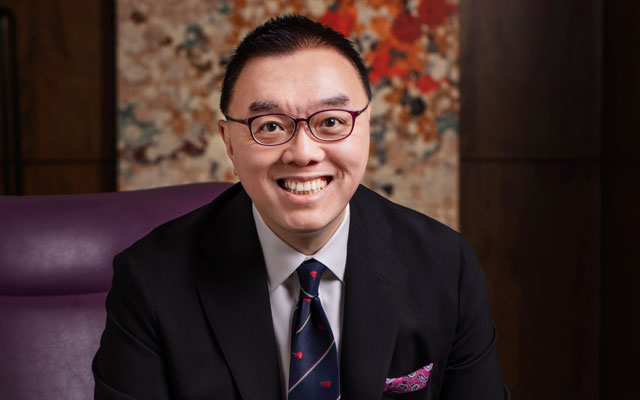
With Hong Kong’s visitor arrivals and hotel occupancy dipping to record lows this year owing to the pandemic, Hong Kong Hotels Association (HKHA)’s newly-elected chairman, Peter Wong, faces a formidable challenge ahead, stepping into his new role for a two-year term (2020-2022).
Possessing over 38 years of operations and management experience, Wong has been a member of the association’s executive committee since 2008. He is currently senior vice president – hotel division of Sun Hung Kai Properties and general manager of Royal Plaza Hotel. Having joined Royal Plaza Hotel in 2005 as general manager till now, Wong also oversees the other three hotels under Royal Hotels Hong Kong, namely, Royal Park Hotel, Royal View Hotel and Alva Hotel by Royal, as well as other partner hotels and new hotel opening projects owned by SHKP.
Hong Kong hoteliers in crucial need of government subsides to mitigate pressing financial woes: Wong
Since taking up the post in late August, one of Wong’s most urgent tasks has been to work with the association’s committee to extend support and assistance to its existing 141 members and the wider industry in riding out the pandemic at a time where travel remains largely at a standstill with an uncertain near-term outlook.
Stressing the need for industry cooperation over competition, he also urged the government to reopen borders between Hong Kong and mainland China and provide further support to impacted players.
“We urge the government again for further extension of the Employment Support Scheme or government subsidies of a similar scale, in order to provide support to hotels,” he said, noting that once the second round of ESS ends this month, about a quarter of 38,000 full-time hotel jobs will be at risk.
“Frankly, we hotels can’t survive solely on staycation traffic/local business without any inbound traffic,” he added. “Additionally, I know some owners have been relying on loans to continue running their business, thus, substantial government subsidies are badly needed to alleviate their financial anxiety.”
Highlighting the industry’s efforts in upholding good hygiene and safety standards, Wong said the association is “striving for further relaxation in the number of dine-in guests as well as hosting banquets and small-scale events”.
Aside from his new appointment at HKHA, Wong also serves as a management committee member of 90-member Federation of Hong Kong Hotel Owners, whose hotel holding company members collectively own more than 90 per cent of all hotel rooms in the city – a role which he said may help promote more collaboration with HKHA.
Out of HKHA’s 141 members, about 60 per cent is made up of non-brand hotels. “Some of them are new to the industry and don’t know much about the trade, so we can offer them some inputs,” said Wong.
The association will mark its 60th anniversary next year and Wong hopes to leverage the occasion to promote the history, development and achievements of Hong Kong’s hotel industry.
In a bid to tackle the acute labour shortage in the hospitality sector, it has partnered with the Education Bureau to host career talks and roadshows in secondary schools next year, which will see HKHA committee members sharing their career journey in order to inspire the next generation of leaders. To date, more than 10 schools have signed up. As well, a dedicated IT committee will be formed to consolidate smart technology development, with tech talent to be recruited from member hotels.
South-east Asian leaders have agreed to take steps towards the establishment of an ASEAN travel corridor arrangement framework to facilitate essential business travel within the region.
Such an arrangement would necessitate the development of a common set of safety measures to safeguard public health in the face of Covid-19, noted the leaders in a joint statement issued at the 37th ASEAN Summit, which took place on November 12 and was hosted virtually by Vietnam.
Indonesia pushes for regional travel bubble to come into effect by early 2021
Travellers will also be required to strictly abide by the prevailing public health regulations stipulated by the authorities of the receiving countries.
The ASEAN Coordinating Council, supported by the ASEAN Coordinating Council Working Group on Public Health Emergencies, has been tasked to coordinate and oversee the development of an ASEAN travel corridor arrangement framework.
This plan will build upon existing bilateral travel corridors set up between individual ASEAN member states, as well as those established with partners outside the region, said the regional grouping in a statement. For instance, Singapore has already established green lanes with ten countries, including ASEAN members Malaysia, Indonesia, Brunei and Vietnam.
The leaders further added that they do not preclude the application of the framework to other categories of travel in the future.
Indonesian president Joko Widodo is pushing for the regional travel bubble to come into effect by early 2021, according to Bloomberg. Earlier in June, Indonesia had proposed the move, which was backed by Thailand and Malaysia, but other countries have not signalled their support for the arrangement, said the report.
Indonesia is battling the largest coronavirus outbreak in South-east Asia, having recorded 463,007 infections and 15,148 deaths as of Saturday. This month, the country entered its first recession since the 1998 Asian financial crisis, after two successive quarters of economic shrinkage.
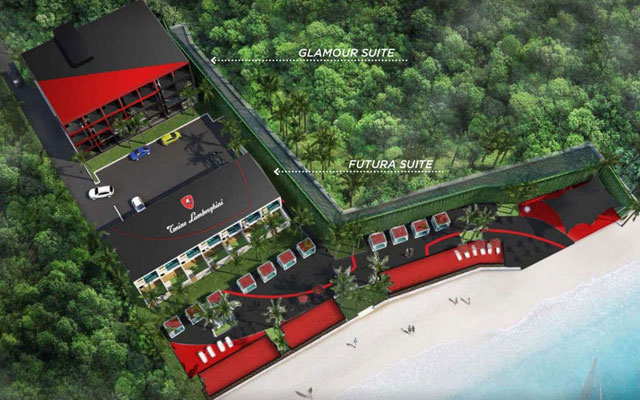
Italian luxury lifestyle brand Tonino Lamborghini has unveiled plans to launch its inaugural hotel project on the idyllic Thai island of Phuket, as part of a collaboration with developer Utopia Corporation.
Scheduled to open in 2023, Tonino Lamborghini Boutique Hotel Phuket will be a luxury resort nestled directly on the beachfront at Chalong Bay, on Phuket’s secluded southeast coast.
The 46-key Tonino Lamborghini Boutique Hotel Phuket is slated to open in November 2023
Designed by architect Alexander Wong, the hotel will feature a Glamour Lobby fitted with slatted rosewood LED screens, alongside a collection of 39 suites and seven villas, all of which are adorned with designer furnishings and abstract artworks.
Tonino Lamborghini Boutique Hotel Phuket will start construction in August 2021, with completion expected by July 2023. The hotel is expected to celebrate its grand opening in November 2023.





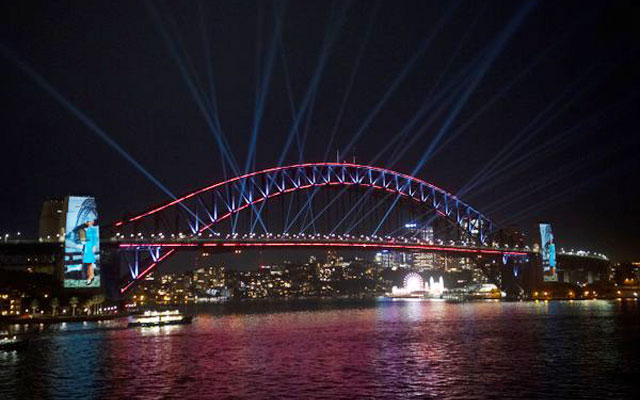







Sydney Harbour Bridge was transformed into a massive birthday cake complete with illuminated LED candles for Qantas Airways’ 100-year anniversary on Monday evening.
More than 1,300 LED tubes, 126 LED fixtures and 38 searchlights were used in the city’s birthday bash for the airline, which started off as Queensland and Northern Territory Aerial Services on November 16, 1920. The projection of 60 historic images and two, 65-metre-high birthday candles onto the southern and northern pylons completed the transformation.
A low flying Qantas 787 ‘blew out’ the candles as it went over the Sydney Harbour Bridge.
New South Wales minister for jobs, investment, tourism and Western Sydney, Stuart Ayres, said: “Sydney has benefited immensely from 100 successful years of business for Qantas – from bringing visitors to the state and boosting our visitor economy to providing local jobs.
“What better way to mark such an important milestone for Qantas than with a celebration in the city it has chosen as its headquarters for the last 82 years involving another much-loved Sydney icon, the Harbour Bridge.”
Almost 200 passengers, including 100 Qantas staff, were on board the 100-minute flight which was a special Centenary Scenic Flight to mark the airline’s 100th year.
The candle-blowing moment was a surprise for those on the ground and on board the flight.
The activation, executed by Destination NSW, complements a new campaign of activity designed to support the recovery of Sydney hospitality and tourism businesses.
Destination NSW CEO, Steve Cox said the Qantas Centenary provided an opportunity to send out a message of hope, both to Sydney businesses and to residents of Sydney and New South Wales.
“This stunt was just the beginning of what will be a truly amazing line-up of events coming up across the city, and we are looking forward to welcoming visitors from across Australia to Sydney this summer,” said Cox.