

Travel bubble brings slow recovery for Singapore, Hong Kong inbound
Inbound players in Singapore and Hong Kong are reporting a slow but exciting return in travel demand between the two Asian cities on the back of a soon-to-come bilateral air travel bubble, reflecting a different reality from ForwardKeys’ recent report showing sharp spikes in flight searches and bookings between Singapore and Hong Kong.
Singapore inbound player SingExpress Travel has received enquiries after the travel bubble announcement and is now getting regular group bookings every week from several Hong Kong agents. Senior manager – inbound asia, Bernard Yu, is anticipating a further increase during the Christmas holiday period.
While his Hong Kong agents were worried about extra costs from pricier flight tickets and compulsory Covid-19 tests, most were “excited” about business prospects after a drought of “no outbound business to anywhere”, Yu told TTG Asia.
SingExpress Travel has lined up a collection of tour programmes that are “ready to go once we get the latest updates from both authorities”, said Yu. These itineraries include a theme park programme for families and an affordable Private Premium Food Trail Programme.
Yu said “any number of tourists coming in is a good start”, especially as inbound business had ground to a halt since mid-February.
SingExpress Travel’s state of business appears to be an exception, as things are staying quiet for other ground operators, who speculate that the delay in tour bookings may be due to travellers from Hong Kong bidding their time until more details about the travel bubble are confirmed.
“We believe that travellers from both countries are still waiting for further announcement from both governments as to when exactly the travel bubble will start and what the requirements will be, such as how many tests are required and the costs of the tests,” surmised Stanley Foo, founder and managing director, Oriental Travel and Tours in Singapore.
TY Suen, founder & CEO of Singapore’s Woopa Travels, shared hopes that more enquiries will flow in “after the details are finalised”.
To prepare for the eventual return of visitors from Hong Kong, Woopa Travels is working with the Singapore Tourism Board and its regional offices to monitor demand in Hong Kong and develop enticing offers.
Meanwhile, Oriental Travel and Tours is considering the adoption of Cantonese-speaking guides to attract Hong Kong travellers and cater to this new segment which previously did not represent a substantial portion of demand.
In 4Q2019 – before the onset of Covid-19 – Singapore received 489,000 travellers from Hong Kong, placing it as the top 13th source market for the island nation.
Foo said: “(Although) the Singapore-Hong Kong travel bubble will not substantially impact the tourism industry in Singapore, we see it as the start to the signing of more travel bubble agreements with other countries in the world.”
Hong Kong’s inbound players are also still seeing quiet days, but hopes are growing.
Gray Line Tours, executive director, Ronald Wu, said the business outlook is still “sketchy” without clear information on the daily visitor quota and the number of flights per day.
That said, Wu regards the travel bubble between Singapore and Hong Kong as a “good start for our tourism recovery”.
“If this is implemented smoothly and well, it will be a model for more destinations to come,” he remarked, adding that other favourable conditions must also exist, such as the availability of affordable Covid-19 tests that come with quick results.
Wing Wong, executive director of W Travel, which has entertained some enquiries from Singapore since the announcement, remarked that it is “vital to get moving”, even if the market is small.
The agency is looking to spur demand through tours that feature heritage and environmental protection, and which take tourists away from the crowds.
Wong expects Singapore travellers to surface in December but with concerns mounting over pricey airfares, he believes demand will be confined to luxury and business travellers.
Discova’s country manager for China & Hong Kong, Sandy Ho, shares reserved expectations, saying that Singapore travellers to Hong Kong tend to favour low-cost carriers, so pricey airfares at this stage could stall recovery.
Offering a more optimistic view is The Hari Hong Kong, a hotel due to open in mid-December. The hotel spokesperson told TTG Asia that the travel bubble will bring leisure travel opportunities for the festive season starting around December and running through to Valentine’s Day in February. Business travel will also benefit from the relaxed quarantine requirements and unrestricted activity likely to come with the travel bubble.
The hotel is banking on “revenge travel” to bring about a surge in inbound business to Hong Kong, as well as other bilateral travel bubbles that will be formed following the first Singapore and Hong Kong arrangement.
“It is important for Hong Kong to test the waters and be truly ready to navigate in the new normal. For us and our peers, our goal is to make sure international travel to Hong Kong is once again safe and pleasant,” added the spokesperson. – Additional reporting by Prudence Lui
Malaysia travel trade decry Budget 2021 as insufficient and biased
Malaysia’s Budget 2021, tabled on November 6, has drawn criticism from travel and tourism industry leaders for failing to provide strong relief to safeguard jobs and businesses as well as for directing greater job assistance to the aviation sector over others in the industry.
Malaysian Association of Tour & Travel Agents (MATTA) president, KL Tan, said the budget would do little to help the tourism sector on its road to recovery.
He accused Budget 2021 of neglecting the welfare of 3.6 million workers in the field and small and medium-sized tourism companies.
“The allocation of RM50 million (US$12.2 million) for maintenance works and overhaul of tourism facilities are not enough to improve tourism products,” Tan added, warning that the “next 12 months is bleak” and the industry risks drastic contraction “without the right support”.
Tan opined that the government should have also allocated funding for re-skilling and training programmes accessible to all in the tourism industry, and not just the aviation sector.
Budget 2021 will direct RM50 million to re-skilling and deployment programmes for 8,000 of airline employees that were retrenched this year.
Tan, expressed: “MATTA views this support as unfair and biased to only one sector, the airlines, (when the tourism industry comprises also) travel agents/tour operators, hotels, land transportation, F&B operators, shopping, and others that employ more than 3.6 million people and contributes 15 per cent to the national GDP.”
He revealed that the country’s 5,000 travel companies had to lay off five employees on average, amounting to at least 25,000 workers being left without income during this pandemic.
“The Minister of Tourism, Arts and Culture had quoted that near to one million people working in the tourism industry will lose their jobs,” he added, urging the government to “give due and urgent consideration and sufficient allocation to this vulnerable industry that has to face the brunt of the Covid-19 pandemic”.
Yap Lip Seng, CEO, Malaysian Association of Hotels, also lamented the limited reach of Budget 2021, expressing disappointment with the continued insufficient wage support of RM600 per employee per month.
“The industry had repeatedly urged the government to consider a higher amount based on percentage, 50 per cent for employees with wages up to RM4,000 per month and 30 per cent for employees earning RM4,001 to RM8,000. This model is adopted in many countries to support the industry and to protect jobs of the people.”
Yap highlighted the need for higher cash assistance to businesses and correction for the inefficient implementation of loan moratorium, which is at the discretion of financial institutions and commercial banks.
A recent survey conducted by the Malaysian Association of Hotels reported an immediate drop in hotel occupancy with the September spike in Covid-19 cases. Overall occupancy dipped to 35 per cent on the first week of October, 30 per cent the second week, and eventually only 20 per cent on the last week of the month.
“The government needs to acknowledge these indicators and that the industry is in need of more assistance,” stressed Yap.
He said while the industry is grateful that the government is extending direct assistance to displaced airline employees, the government also needs to look at the situation in entirety where airlines, an essential stakeholder of the tourism industry, must also be protected.
“Malaysia cannot afford…anymore closures in the tourism industry; she risks even higher cost of rebuilding the industry and losing tourism capacity leading to loss of revenue in the long run,” he said.
Malaysia Budget Hotel Association deputy president, Sri Ganesh Michiel, said it is critical that the government extend the loan moratorium and wage subsidy programme up to June 2021 for the hard-hit hotel and tourism industry, and provide more tax reliefs for both industry players and domestic tourists.
Tan Ming Luk, country head for OYO Malaysia, also expressed his disappointment that there were no allocation to further stimulate domestic tourism in 2021.
Malaysian widens and extends movement restrictions
The Malaysian government has extended the Conditional Movement Control Order (CMCO) in Kuala Lumpur, Selangor, Putrajaya and Sabah to December 6 while imposing the same on all states in Peninsular Malaysia except Kelantan, Perlis and Pahang.
The last round of CMCO on the populous Kuala Lumpur, Selangor, Putrajaya and Sabah regions was supposed to have concluded on November 9.
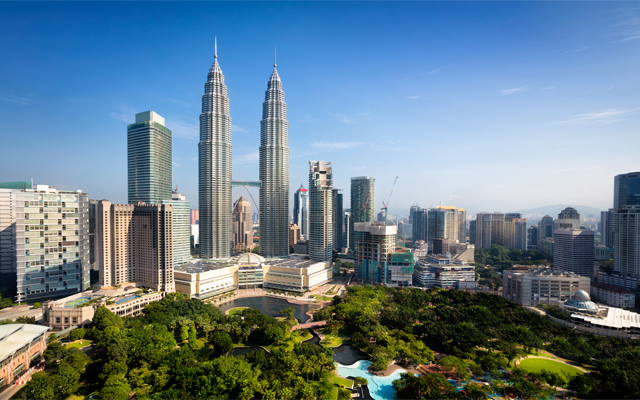
The measures are an attempt to stem the spike in Covid-19 cases in these states by reducing movement and travel among the community.
On November 8, Malaysia recorded 852 new infections and four fatalities, bringing the death toll to 286. Up until then, a total of 40,209 cases have been reported in Malaysia.
During this CMCO period, inter-district and interstate travel is prohibited, except for emergencies and with permission from authorities. Concerts, nightclubs, pubs, theme parks, indoor playgrounds and cinemas are prohibited from operating in the affected CMCO areas.
Meetings, workshops, conferences, seminars and exhibitions are not allowed along with social gatherings.
While tourism activities requiring entering or leaving the CMCO areas are not allowed, the state government of Melaka will appeal against the restriction in the state to save the tourism industry.
Its chief minister, Sulaiman Md Ali, was reported to have said that the matter would be brought up at the National Security Council meeting on Covid-19 to look at relaxing the CMCO to allow inter-district travel within the state.
Nigel Wong, secretary general at the Malaysian Association of Tour and Travel Agents (MATTA), said: “The CMCO is going to further hamper domestic tourism in the country. We hope the government will be able to bring it under control and end the CMCO sooner, if possible, in order to re-stimulate domestic tourism.”
THAI takes off with a religious flight over sacred sites
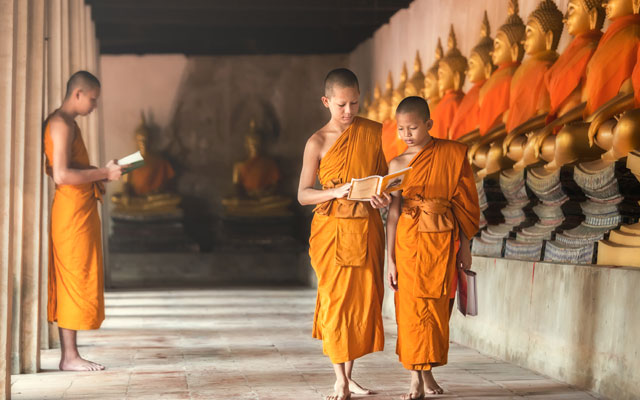
Thai Airways International (THAI) will commence a special flight on November 30 that takes pious Buddhists over 99 sacred sites across the country as they chant mantras.
The three-hour flight will not land, allowing worshippers to “receive positive energy from chanting while onboard”, said Wiwat Piyawiroj, executive vice president for THAI’s commercial operations, in a report by Bangkok Post.
The flight is part of the airline’s Magical Flying Experience campaign and in line with the government’s policy to boost the domestic travel sector.
Worshippers will fly over holy sites in the capital and 31 provinces, including Chon Buri, Nakhon Pathom, Ayutthaya and Nakhon Ratchasima. Tickets will cost about 10,000 baht (US$328) for business class and 6,000 baht for economy.
TTG Conversations: Five questions with Andrew Chan, ACI HR Solutions

Hiring in the travel and tourism landscape is starting up slowly, with job opportunities emerging more in startups and companies that are pivoting to new businesses that take advantage of the current consumption behaviours.
In this new episode of TTG Conversations: Five questions video series, Andrew Chan, founder and CEO of ACI HR Solutions, discusses problems stemming from an employers’ market today, age discrimination in hiring, resources available to travel and tourism job seekers, and more.
Slow and steady wins
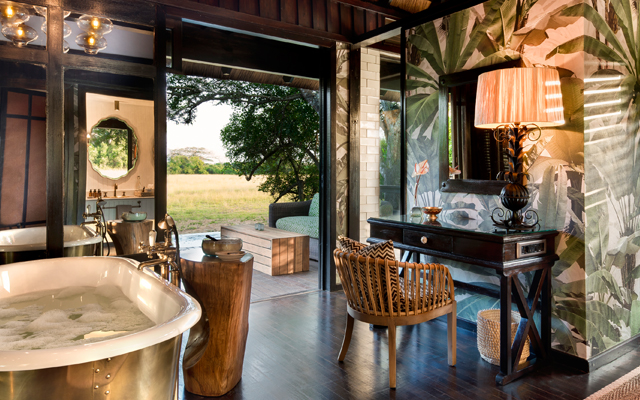
With the country’s borders still closed to leisure travel, Singapore’s spenders are turning to easy-going staycation experiences to satiate their desire for a relaxing holiday. These programmes – ranging from private activities to immersive dining – may be an early signal of how luxury travel could recover in the medium term.
For instance, Capella Singapore has introduced a series of programmes for its staycation groups. Besides a Revitalising Yoga Class every Sunday and Tea Time at The Living Room, guests may also participate in a Build Your Own Boba class, Rum Appreciation, a Heritage and Art Tour, and a Floral Styling Workshop. Children can get busy with the Little Stars Culinary Workshop, with the choice of making cake pops or decorating cookies and cupcakes.
Meanwhile, the iconic Raffles Singapore has partnered with award-winning Peranakan attraction The Intan to launch the Intricacies of the Peranakan Culture package. Staycation guests can enjoy a one-hour guided tour by The Intan’s owner Alvin Yapp, complete with two-way Raffles Limousine transfer, traditional Peranakan refreshments, and the opportunity to view exclusive collections.
Also garnering much fanfare is Grand Hyatt Singapore’s rerun of Le Petit Chef, an immersive dining adventure in the hotel’s mezza9 La Cave wine cellar featuring a theatrical 3D projection-mapping performance. Since its relaunch earlier this year, its weekend sessions have almost all sold out.
“Both Grand Hyatt Singapore and Andaz Singapore have received staycation bookings, which are driving weekend occupancies. There is a strong pent-up demand for people in Singapore to get out of their homes and to reconnect with their loved ones in a different but safe environment. We expect domestic leisure demand and F&B to drive business at our hotels during this period,” shared Carina Chorengel, senior vice president – commercial, Asia Pacific, Hyatt.
The rise of slow travel
This pattern of slow and meaningful local stays will likely spread into the outbound tourism sphere, predict travel businesses.

Iain Langridge, divisional managing director, Asia Pacific at Belmond, said: “There’s a greater desire to slow down, reconnect and savour life’s simple pleasures, as well as a nostalgia to return to fond and familiar destinations. We are anticipating more travel within Asia as Singaporeans and Singapore residents explore more of their own ‘backyard’ and seek extended, private and inherently safe escapes.”
In preparation for this demand, Belmond has evolved its off-property programmes to include more outdoor, conscientious and community-based excursions. For instance, guests at Belmond La Residence Phou Vao may join a local collective of traditional textile weavers to learn about the traditional Laotian process of creating designs using natural ingredients.
He added that Belmond plans to continue its “hyper-localisation strategy” by focusing on markets where it will be easier to travel to from Singapore, such as Thailand.
Trend findings from andBeyond corroborate this movement towards hyper-localisation, as the company reports demand for “simpler itineraries”. Its chief marketing officer, Nicole Robinson, explained: “We are seeing demand for simpler itineraries within a single country, (with travellers) looking at what can be done without having to cross too many borders. Spending more time in a single destination encourages more meaningful experiences.”
Month-long getaways will also be a thing of the past; rather, agencies like Belmond are expecting Singaporeans to spend shorter time abroad as they dip their toes into cross-border travel in the short term. Langridge noted: “Singaporean and Singapore-based luxury travellers are accustomed to getting on a plane for a short getaway. With the prolonged travel restrictions, we expect short weekend trips among this demographic to continue to be popular.”
This growth in outbound traffic from Singapore may proceed slowly in the initial stages of recovery even when borders have reopened and there is clarity provided on international movement, opined Robinson. She expressed: “We don’t anticipate a quick comeback, as there are people who will naturally still be very cautious without a vaccine. Until then, the growth and return will be gradual.”
Tour operators rail against Indonesia’s “Jurassic Park” project
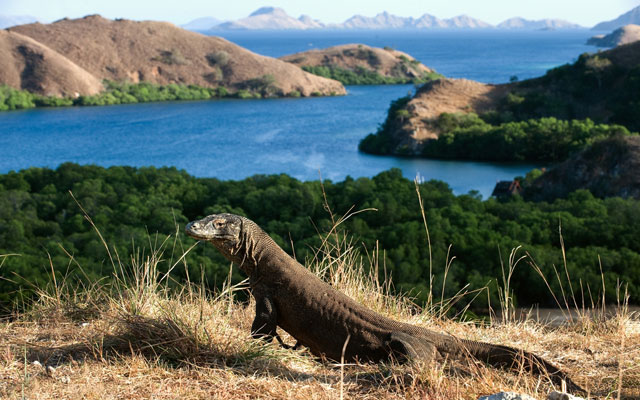
Protests have broken out over a string of new facility and infrastructure developments taking place in Loh Buaya, Rinca Island, the less-touristy neighbour of Komodo Island famed for its komodo dragon inhabitants.
The development, which is perceived as a threat to the natural habitat of the vulnerable species, received a barrage of criticism after a photo of a komodo dragon facing off against a big truck on Rinca Island went viral on social media, leading some netizens to dub the project “Jurassic Park”.
Speaking at an online press conference, Wiratno, director general for natural resources and ecosystems, denied claims that the government was turning Rinca Island into a “Jurassic Park”, clarifying that development works involved only the remodelling of existing facilities and infrastructure.
He said that the enhancing of existing facilities and infrastructure aimed to facilitate access to information in Komodo National Park to be more centralised and to support tourism in the Loh Buaya, Rinca Island. The project is targeted for completion in June 2021.
He explained: “An elevated deck will be built that can be used by tourists to observe the dragons from above. We also plan to build an information centre, where future visitors to Rinca, can not only see the dragons, but also enjoy the history and other stories of Komodo in there.”
As part of the facelift, the current pier will also be dismantled to make way for a new one shaped like a Komodo dragon’s Y-branched tongue, which will allow more ships to dock safely, according to Wiratno.
However, the Indonesian travel trade raised concerns that infrastructure development could threaten the Komodo dragons’ natural habitat, and even eliminate the island’s prestige and charm as a tourist attraction.
Questioning the purpose of Rinca’s revamp, Paul Tallo, chairman of the Indonesia Inbound Tour Operators Association, said: “Is this really for tourism? For tourists? Because (the development) is not what the tourism industry needs, and not what the tourists want.”
“We are very worried because the construction seems rushed – there is no broad and clear study, analysis, and thought regarding habitat protection and the fate of Komodo dragons and flora and fauna around the national park,” he added.
Agreeing, Leonardus Nyoman, director of Flores Exotic Tours, said: “The construction of this facility is contrary to the post-pandemic tourism trend, where tourists are looking for nature and sustainability.”
With this development, the government seems to want to turn Komodo National Park into a mass tourism destination, which could harm the habitat of the dragons, he added. “In fact, the biggest market currently is special interest. This shows that the government does not conduct market research before carrying out development,” he said.
Both Paul and Leonardus opined that the government fails to focus on pressing issues, such as human resources in tourism and public education about tourism, but instead builds things that are inconsequential and controversial.
Responding to the claims, Josef Nae Soi, deputy governor of East Nusa Tenggara, explained: “We will continue to strive to preserve (Komodo Island) by making it a limited destination. Therefore, Komodo Island, will still remain untouched by any developments and be pegged as a super premium destination with limited number of visitations.”
Loh Buaya on Rinca Island, on the other hand, would be open to a wider range of travellers, hence, the facility development, he said.
Josef vowed that the Komodo dragons and the sustainability of flora and fauna habitat in the National Park will remain top priority. He said: “Any development will ultimately aim to protect the Komodo dragons. There will be no construction of resorts, hotels, or tourist facilities that can interfere.”
Thai AirAsia slashes airfares, rolls out ad campaign to spur recovery
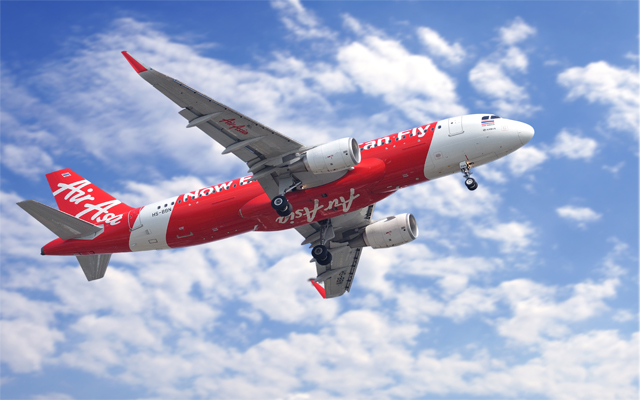
Thai AirAsia has launched an airfare sale and an advertising campaign to encourage domestic travel for the rest of 2020 up to early 2021, following the relaxing of Covid-19 travel restrictions in Thailand.
The Travel for Thailand, Get 30% Off promotion applies to all seats on all flights. Seats are available for booking via the airasia.com website and super app from now until November 8, 2020 for travel from November 8, 2020 through to January 31, 2021.
The promotion includes a series of travel-inspired advertisements that support both business and leisure travel, including many local tourism operator offers, to help boost the recovery efforts in Thailand.
AirAsia Thailand CEO Santisuk Klongchaiya said: “Domestic tourism is key to stimulating Thailand’s economy as international borders remain closed due to Covid-19. As Thailand’s major domestic airline, we are thrilled to further support and promote domestic travel that will provide a welcome boost to our country’s economic recovery.”
Thai AirAsia’s new advertising series calling on residents to travel has been airing as a 30-second TV commercial, with the full version viewable on the AirAsia Thailand’s Facebook page and AirAsia’s Youtube channel. As well, the airline is inviting regional stores and businesses to post their information and promotions under the videos section with the aim of a faster recovery for local tourism industry players.
First look: Dream Cruises unveils Covid-19 assessment room

Dream Cruises will resume cruising service in Singapore from Friday (November 6) with its megaship, World Dream. Ahead of the first of its Super Seacation sailings, local media were given a tour of the facilities to highlight the stringent health and safety protocols onboard World Dream.
In an unprecedented move, all guests are given a designated arrival time to ensure safe distancing as well as allow time for Covid testing. We learnt that some passengers arrived as early as 09.00 this morning for the cruise that will depart at 21.00 today, and sail the Malacca Strait and South China Sea before returning to Singapore.

Prior to embarkation, members of the public and media had to undergo a Covid-19 antigen rapid test at the cruise terminal. A second test has to be taken when disembarking. Besides being required to check in to the ship via Safe Entry, all passengers aged seven and above will also be issued a MICE Pod – similar to the TraceTogether app, but for cruises – for contact tracing purposes.
Among other safety protocols include increased frequency of sanitation and disinfection in all rooms and suites and public areas using hospital grade disinfectants, with emphasis on high contact points. Temperature screening and scanning of ID card for entry into onboard facilities are also standard procedures.
Capacity of the ship has also been halved, while all theatres, kids’ club and entertainment venues have reduced capacity. At restaurants, no more than five people are allowed to seat at one table. Self-service buffet lines are also a thing of the past, with guests served by crew members wearing face masks and gloves. Thermal scanners and hand washing stations have also been installed at F&B venues, with cruise ambassadors on board to ensure safe distancing is being adhered to.
In addition, seven splendid cabins near the onboard medical facility have been converted into isolation wards to house suspected and positive Covid passengers, with 34 quarantine cabins reserved for close contact cases.
Stay tuned for our full report next week.








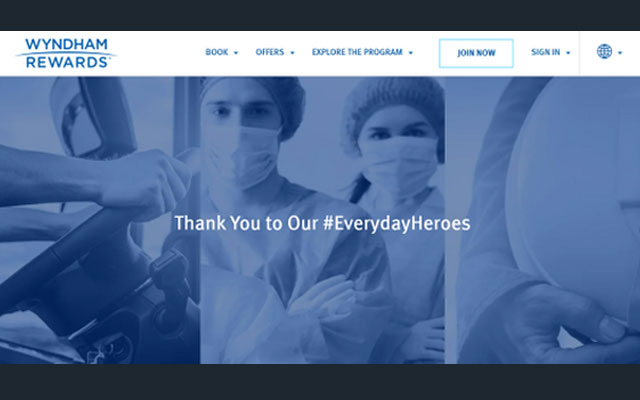
More than 45,000 essential workers across the globe will bag 7,500 surprise Wyndham Rewards points, which could earn them a complimentary one-night stay in a hotel within the company’s global network.
The initiative is part of Wyndham Hotels & Resorts’ ongoing #EverydayHeroes campaign, which will see Wyndham Rewards points being sent to any healthcare worker, delivery driver, warehouse worker, grocery associate and hotel staff or other essential workers who had opted into the campaign prior October 27, 2020.
The campaign was launched in April 2020.
In Asia-Pacific, the company will issue approximately 10 million reward points along with an upgrade to the Gold membership.
Joon Aun Ooi, president, Asia Pacific, Wyndham Hotels & Resorts, said: “Through the extension of the additional Wyndham Rewards points, we hope to bring encouragement and cheer to these workers by offering a well-deserved retreat at a Wyndham property of their choice, be it for a stay close to home, or a holiday when the world opens up to travel again. We also look forward to providing them a safe and clean stay enhanced by Wyndham’s Count on Us campaign, as well as extending a warm and welcoming Wyndham experience at our hotels.”