The Covid-19 crisis has heavily impacted hotel businesses around the world, but for long-stay operator Oakwood, its stable occupancy rates have garnered greater attention from owners and developers.
Leaning into this interest, Oakwood announced last week its transition into solely developing its hospitality portfolio, with the corporate housing segment to be managed by its relocating solutions partner Dwellworks.
Schreiber: strong market potential for differentiated hospitality products in the serviced residences industry
Dean Schreiber, chief executive officer of Oakwood and managing director of Oakwood Asia Pacific, explained: “Our operating model has gained a lot of attention from owners and developers looking for solid returns on investment. This is particularly evident in the current Covid-19 pandemic, where we have seen the unprecedented closure of thousands of hotels around the world; yet at Oakwood, we have still been able to maintain stable occupancy rates at lower operating costs, and at the same time not having to sacrifice any service standards with this operating model.”
He added that the group has identified “market potential for differentiated hospitality products in the serviced residences industry”, and aims to sharpen its offerings across its six brands in order to appeal to the “savvy corporate executives at different life cycles”.
With its new direction, Oakwood plans to double its portfolio of managed properties by 2025. Destinations in the pipeline for Asia-Pacific include Beijing, Foshan, Melbourne, Phnom Penh, Jakarta, Yokohama, Kyoto, Yangon, Bangkok, Manila and Ho Chi Minh City; as well as Dubai and North America’s Seattle, Philadelphia and San Francisco.
Schreiber expressed that although its opening schedules are expected to be delayed due to disrupted construction across Asia, he believes that “some of these projects catch up” as governments have begun to reopen some sectors of economies.
“We anticipate the opening of the next Oakwood property in the third quarter of 2020, followed by quick successions in the months ahead. Once travel restrictions are lifted, I am confident that more projects will be added to the list above,” he confirmed.
The pandemic has spurred the group to enhance its hygiene and sanitation measures across its properties, and guests can expect “a series of creative solutions” that will elevate Oakwood’s service standards in the age of the “new norm of travel”, revealed Schreiber.
A destination marketing campaign implemented earlier this year by a Chinese digital marketing company and Japan International Economic Development Organisation (JIEDO) to draw Chinese travellers to Osaka and Wakayama has attracted stronger than expected interest.
iClick Interactive Asia Group, which is involved in the campaign, said the activity has drawn 49,845 likes, comments and shares – 97 per cent more than expected.
An online destination marketing campaign for Osaka and Wakayama (pictured) that targeted Chinese travellers was a success
A total of two million views were registered across the campaign, according to iClick.
To promote the southern Kansai destinations, iClick worked with Chinese online influencers to come up with videos featuring attractions in Osaka and Wakayama, as well as itineraries tailored to travellers’ needs.
Additionally, the influencers strategically promoted top-of-mind awareness of holiday car rentals as a convenient mode of transport around the region, due to its developing transport networks.
The two partners also tapped on travel websites such as Ctrip as well as a range of Chinese social media, including content-based platforms Tiktok, Weibo and Xiaohongshu, to engage Chinese travellers.
The New Zealand tourism and hospitality industry has been calling for more targeted support from the government, particularly financial support, after the national budget for 2020 was laid out on May 14.
As part of its Budget 2020 plans, the government has set aside NZ$400 million (US$244 million) for a targeted Tourism Recovery Fund. Besides this, wage subsidies have been extended, recovery task forces set up, and channels to provide tourism businesses with advice through the difficult period put in place.
New Zealand’s latest Tourism Recovery Fund is deemed insufficient to aid struggling hospitality businesses
However, Hospitality New Zealand, the country’s commercial accommodation and F&B association, expressed fears in a statement that the current support might not be enough, and called for more extensive and concrete support.
Despite the extension of the Wage Subsidy Scheme, which will reduce “some … operating costs”, the lack of a “targeted working capital grant” or concrete rental financial support means hospitality businesses will continue to struggle with operating costs, noted Julie White, CEO, Hospitality New Zealand.
Rent makes up 30 per cent of business costs, explained White.
The government’s extension of the Wage Subsidy Scheme has meant the pumping in of another NZ$3.2 billion, on top of the NZ$10 billion already paid out under the scheme. However, the wage subsidy is capped at an eight-week lump sum per employee.
Chris Roberts, CEO, Tourism Industry Aotearoa, reckoned that “some (tourism businesses) will be disappointed it is only for an additional eight weeks”.
While he acknowledged in a press statement following the release of Budget measures that the support was “welcome”, he, too, echoed the need for “further initiatives… in the months and years ahead”.
The Budget 2020 measures follow an earlier Covid-19 response package released in March, where the New Zealand government set aside NZ$12.1 billion – about four per cent of the country’s GDP in 2019 – to aid businesses and individuals through the pandemic.
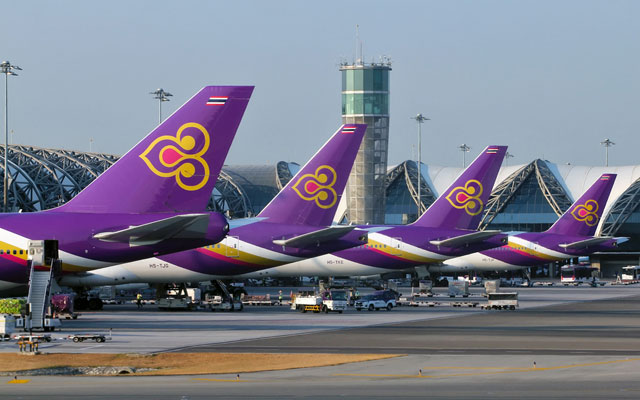
The Thai cabinet on Tuesday approved the ailing state enterprise Thai Airways International (THAI) to file for bankruptcy protection at the Central Bankruptcy Court to rehabilitate its business in the face of Covid-19 disruptions, evaporating liquidity and insurmountable debt, ending all possibility that the airline will receive any financial assistance from the government.
THAI will also file for Chapter 11 in the US.
THAI will stick to its scheduled resumption of passengers flights after June 30
The bankruptcy court will oversee the rehabilitation process and appoint an administrator with the consent of THAI’s creditors. The decision will help the flag carrier avert bankruptcy and save it from furloughing its entire workforce of over 20,000.
However, as the Ministry of Finance, THAI’s largest shareholder, will reduce its stake in the airline from the current 51 per cent to below 50 per cent to transform THAI into a limited company, THAI staff will no longer be protected by the State Enterprise Labor Relations Act. Given the airline’s cripplingly low employee productivity compared with other leading regional flag carriers, the action may lead to a 25 per cent dismissal of its workforce by 2022 as THAI seeks a new path toward profitability.
The bankruptcy protection may also empower THAI to delay its 150 billion baht (US$4.7 billion) purchase of 38 new airplanes from Boeing, negotiate for debt cuts, convert its debt into equity, minimise costly sale of tickets through traditional travel agents, and replace its board of directors – currently filled with civil servants and air force generals – with professional, seasoned business executives.
Despite the process now in play, acting THAI president Chakkrit Parapuntakul on Tuesday issued a press release clarifying that the airline will continue operating as permitted by the ongoing Covid-19 restrictions. THAI is currently scheduled to resume flying passengers after June 30.
THAI has been loss-making every year since 2013, except in 2016 when a small profit of 15 million baht was reported. According to its latest financial report, the airline’s assets amounted to 257 billion baht at the end of last year while its total liabilities were 245 billion baht. Its current liabilities of 84.4 billion baht far exceed its current assets of 49.5 billion baht, hindering its debt servicing ability. Its debt-to-equity ratio stood at the calamitous 21:1.
THAI’s shareholders’ equity, valued at 11 billion baht at the end of 2019, is now decimated by the projected loss of 18 billion baht in the first half of this year, reports the Bangkok post.
Following this landmark cabinet’s decision that ended months of speculation and years of ineffective business rehabilitation plans, THAI stock has jumped by more than 14 per cent, a reversal of a decline of more than 89 per cent since a peak in May 2013.
IATA has outlined a temporary layered approach to biosecurity for restarting passenger flights amid the pandemic, and along with that a commitment by airline CEOs to adhere to five restarting principles.
In a press statement issued this morning, IATA said its Biosecurity for Air Transport: A Roadmap for Restarting Aviation aims to provide the confidence that governments will need to enable the reopening of borders to passenger travel; and the confidence that travellers will need to return to flying.
IATA is faced with a short time frame for governments to agree to a layered approach to biosecurity for restarting passenger flights
At the departure airport, IATA foresees several layers of protective measures, including restricted access to the terminal building; temperature screening by trained government staff at entry points; physical distancing through all passenger processes, including queue management; use of face coverings for passengers and masks for staff in line with local regulations; self-service options for check-in used by passengers as much as possible; efficient boarding and hand luggage limitations; and cleaning and sanitisation of high touch areas in line with local regulations.
In-flight, layers of protective measures include face coverings for all passengers and non-surgical masks for crew; simplified cabin service and pre-packaged catering; reduced congregation of passengers in the cabin; and enhanced and more frequent deep cleaning of the cabin.
At the arrival airport, IATA expects accelerated processing and baggage reclaim to reduce congestion and queuing as well as health declarations and robust contact tracing to be undertaken by governments, and more.
IATA stressed that these measures should be temporary, regularly reviewed, replaced when more efficient options are identified or removed should they become unnecessary.
IATA hopes two areas could be game-changers in facilitating efficient travel until a vaccine is found. Firstly, it supports testing when scalable, accurate and fast results are available. Secondly, it supports the development of immunity passports to segregate no-risk travellers, at a time when these are backed by medical science and recognised by governments.
As the mutual recognition of globally agreed measures is critical for the resumption of international travel, IATA is reaching out to governments with the Roadmap.
Alexandre de Juniac, IATA’s director general and CEO, said: “(Many governments) are planning a phased re-opening of borders in the coming months. We have a short time to reach agreement on the initial standards to support safely reconnecting the world and to firmly establish that global standards are essential to success. The vital element is coordination. If we don’t take these first steps in a harmonised way, we will spend many painful years recovering ground that should not have been lost.”
At the same time, airline CEOs on IATA’s Board of Governors have committed to five restarting principles:
Putting safety and security first by implementing a science-based biosecurity regime and ensuring that aviation is not a meaningful source for the spread of communicable diseases
Responding flexibly as the crisis and science evolve, by utilising new science and technology as it becomes available, developing a predictable and effective approach to managing any future border closures or mobility restrictions, and ensuring that measures are scientifically supported, economically sustainable, operationally viable, continuously reviewed, and removed/replaced when no longer necessary
Recognising that aviation will be a key driver of the economic recovery, and to re-establish capacity that can meet the demands of the economic recovery as quickly as possible, and ensure that affordable air transport will be available in the post-pandemic period
Meeting environment targets, such as achieving IATA’s long-term goal of cutting net carbon emissions to half of 2005 levels by 2050, and successfully implementing the Carbon Offsetting and Reduction Scheme for International Aviation (CORSIA)
Operating to global standards which are harmonised and mutually recognised by governments
As Indonesian airlines restart domestic flights, local travel companies are shut out from reaping the benefits of resumed flights as a circular from the Ministry of Transportation (MOT) dictates that only airlines are allowed to issue flight tickets.
Airlines which have resumed domestic flights are Sriwijaya Air, Garuda Indonesia, Citilink, and Lion Air Group’s members Lion Air, Wings Air, and Batik Air.
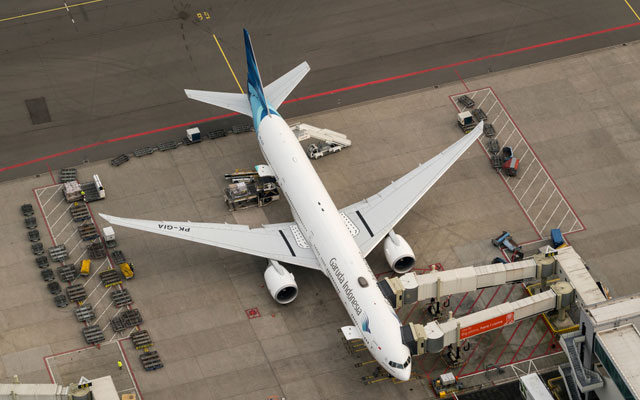
A circular issued by Indonesian authorities stating that only airlines are allowed to issue flight tickets has travel agencies feeling left out in the cold
Last week, the Covid-19 task force, which represents the central government, rolled out a circular allowing certain passengers to travel, on the basis that they provide relevant health and travel documents.
Passengers allowed to travel include state officials and business people from the health and essential service sectors, repatriated Indonesian nationals, as well as individuals with emergency needs, such as seeking medical care and performing pilgrimages for the sake of deceased family members.
In response to the resumption of flight services, Novie Riyanto, air transportation director general at MOT, issued a new circular about its operational guidance, regulating that only airlines are allowed to issue flight tickets, leaving travel agents out in the cold.
Expressing disappointment, Budijanto Ardijansyah, vice chairman of the Association of Indonesian Tours and Travel Agencies (ASITA), pointed out that travel companies are the strategic partners of airlines, and that the government should not overlook the former when drafting policies.
ASITA has voiced its concern to the ministry, he shared, and added that it planned to hold a web meeting with MOT officials to discuss the issue.
Pauline Suharno, secretary-general of Indonesian Travel Agents Association (ASTINDO), said she had sent protest letters to the ministry, the airlines, and the Indonesia National Air Carrier Association (INACA).
She questioned why the MOT had scrapped travel companies’ rights to issue flight tickets, especially since travel companies were willing to adhere to the requirements set out by the Covid-19 task force.
Like airlines, experienced travel agents have the ability to run background checks on passengers and ensure they meet the criteria before issuing tickets to them, as required by the Covid-19 task force, Pauline claimed. Moreover, travel firms would not allow junior staff to handle that task, so the government should not doubt their capability, she added.
She said that if travel companies were allowed to issue tickets, it would help them to build and maintain customer relationship amid the pandemic.
Pauline added that although the clients of travel agencies could still book air tickets via the agency’s portal that provide links to airlines, the problem was that the travel agent would then have to make a trip to the airline’s office to get the ticket issued and they would have to pay in cash.
This would greatly inconvenience travel agents, and was a difficult task to do during this period, since most staff are furloughed amid the government’s call to stay at home due to the outbreak.
Minor International, which operates hotel brands such as Marriott, Four Seasons, Anantara and Avani, will raise 25 billion baht (US$782.5 million) in capital through perpetual bonds, a rights issue and three-year warrants.
In a statement issue on Monday, the company said the comprehensive funding strategy is a “proactive approach to ensure its ability to service its obligations and to maintain its commitment to the quality of he balance sheet”.
Minor International will raise 25 billion baht in capital between 2020 and 2023
The share capital increases, to be completed between 2020 and 2023, are subject to shareholders’ approval at the Annual General Meeting of Shareholders to be held on June 19.
The announcement came after company reported a loss of 1.77 billion baht in 1Q2020, versus a profit of 583.1 million baht a year earlier, as a result of the adverse impact of the Covid-19 pandemic on its three businesses across the globe.
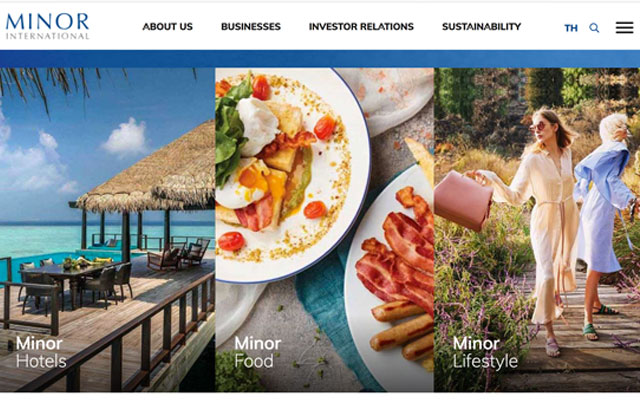
Minor International comprises Minor Hotels, Minor Food and Minor Lifestyle.
Construction of the world’s longest rollercoaster at sea, the star attraction of Dream Cruises’ new ship Global Dream, is in full swing.
The coaster, which was announced by Dream Cruises and Maurer Rides last October, has been dubbed Space Cruiser and will be the highlight of the Dream Park at the Pier, the first-ever theme park at sea.
Pre-assembly for the world’s longest rollercoaster at sea is well underway in Germany
Currently, the rollercoaster is being built for testing on land in the immediate vicinity of the MV Werften shipyards in Germany.
The first photos of the construction process show the scope and scale of the world’s longest offshore rollercoaster.
After leaving the station, the ride starts with an acceleration section followed by two closely spaced inclined 90-degree curves.
The following two “camelbacks” provide a spectacular and breathtaking launch above the railing and the heads of the passengers, with a maximum speed of up to 60km/h.
A 360-degree downward and upward helix form the end of the 303m-long track before the vehicles reach the station again.
Expedia has launched the Travel from Home virtual tour series featuring a catalogue of virtual activities and experiences to satiate Singaporeans’ wanderlust during this stay-home period.
Curated with Expedia Local Expert partners around the world, the Travel from Home series, now available on Expedia.com.sg, offers nature, cultural, educational and entertainment virtual tour experiences.
Enthuse the kids with immersive storytelling from the heart of Paris with Expedia’s new Travel from Home series
History junkies can take a virtual trip to look at ancient Rome’s gladiatorial glory, relive the tragedy of Pompeii or marvel at the Palace of Versailles, while culture vultures can virtually visit some of the world’s national museums and architectural marvels. Those who prefer a guided experience can also participate in art-historian led tours to many of the world-acclaimed international galleries.
Elsewhere, aspiring master chefs can take cooking lessons from seasoned chefs or local home cooks from around the world, with recipes ranging from homemade pasta, authentic Italian tiramisu, and Spanish tapas.
Also available are fun options for the whole family, such as immersive storytelling from Paris, a virtual drive through the streets of Berlin, a live concert and music quiz, and interactive dance lessons from Greece.
Buffets giving way to served and in-room dining options
Guest activities being monitored to avoid crowding
Increased digital touchpoints to minimise cross-contamination
Guest experiences at hotels in Asia are set to change in the wake of Covid-19, as hotels tweak guest-facing services and activities to accommodate heightened hygiene and sanitising standards.
Among the changes, according to hoteliers who spoke to TTG Asia, are reduced sharing opportunities at F&B outlets, increased availability of digital touchpoints and new forms of greetings to welcome guests.
Hotel buffets may have to give way to a la carte and set meal options, as safety and hygiene measures are enforced
New ways of dining
With cross-contamination being of great concern, some hotels have done away with buffets while others have chosen to modify them to reduce contact between guests.
Javier Pardo, vice president of operations for Avani Hotels & Resorts, said doing away with buffet at his properties will “reduce the risk of guests touching shared utensils at the buffet (line)”.
Onyx Hospitality Group, on the other hand, has chosen to serve breakfast from a menu, which Charles Yap, vice president, marketing communications, believes will be a suitable move operationally as guest volume will be lower than usual in the first few months of travel and tourism recovery.
Over at Ovolo Group, the breakfast service could be served “to the guest in-room, or (as) a pre-packaged grab-and-go offering”, said Tim Alpe, the group’s chief operating officer, Hong Kong and Indonesia.
Ovolo has also recently launched a Restaurant-in-Room concept, offering catered meals from a local restaurant in the comfort of a serviced apartment.
While Yap believes that the much-loved generous morning spreads will return along with travel confidence, health and hygiene measures will remain for a longer time.
He said: “As buffets make their come back, we can expect to see the deployment of more acrylic or glass protection panels on counters, the introduction of individualised portions such as salad greens and sauces in personal-sized jars, and of course, more rigorous and frequent disinfection and replacement of serving utensils.”
Other changes in the hotel dining service include presenting personal serving spoons when delivering a shared dish, designing menus in single portions rather than a sharing size and paring down buffet spreads, suggested Kerry Healy, vice president sales Asia-Pacific at Accor.
Eating well
With the pandemic pushing health concerns to the forefront, some hoteliers are also predicting a greater demand for wellness cuisine as guests return.
Healy said: “Menus (at Accor properties) are likely to focus more on fresh, local ingredients… and we will look at introducing healthier options as we believe people are going to seek dishes that promote their well-being.”
Mark Thomson, spokesperson with Minor Hotels, agreed. He revealed that Anantara, one of the hospitality group’s brands, will roll out wellness cuisine that includes immune booster programmes, with specialist wellness chefs preparing fortifying meals and juices to help guests naturally boost their immune system.
Healy: Accor is looking into providing in-room exercise equipment for guests
Controlled interaction
Elsewhere in the hotels, shared facilities and group activities will see various operational changes to ensure health and safety measures are enforced.
At Anantara hotels, fitness classes will be modified. Guests will now be able to book personal training sessions or activities such as yoga and pilates as individuals, couples, or in small groups, with safe distancing measures adhered to.
At Onyx properties, guests are invited to reserve a gym session or sunbed space in advance to facilitate better crowd control.
Healy is exploring the feasibility of providing in-room exercise equipment for guests at Accor properties, while every public space will have “new cleaning and physical distancing measures” such as spaced out deck chairs.
Taking a step further, Avani properties will seal off every guestroom for 24 hours after cleaning and before the next guest can enter, shared Pardo. His team is also looking into a UVC light device that can disinfect a room in 30 minutes and the installation of air purifiers.
Digital shifts
More digital touchpoints will be introduced to minimise cross-contamination risks, and hoteliers stress that guests can have a technologically-enabled, contactless hotel stay and still find it personalised.
Pardo said: “We are introducing contactless service – digital check-in and check-out, bill payments via payment gateways, and a digital concierge app that is work-in-progress now.”
To bring warmth into these contactless changes, Pardo said “handshake-less greetings such as the traditional Thai wai greeting, Korean jeol bowing, and even the Vulcan salute popularised by Star Trek” will be used to demonstrate welcome.
For Alpe, instead of a typical face-to-face greeting, guests can be welcomed by personalised messages in their rooms – on the TV and iPad.