

Airport recovery expected to be slow, uncertain: ACI

The Airports Council International (ACI) has forecasted a slow and uncertain recovery for airports in Asia-Pacific and Middle East, and one that is dependent on vaccine supply and distribution.
Forecasted to close 2020 with a passenger traffic decline of about 58 per cent, Asia-Pacific airports are expected to return to 2019 pre-Covid passenger volume of approximately 3.4 billion passengers by 2023.

Over in the Middle East, 2020 passenger traffic is expected to decline about 72 per cent, and will only return to pre-Covid passenger levels in 2024.
“This forecast is based on the assumption that an effective vaccine is distributed in 2021, and broader population vaccination is largely accomplished by early 2022. Limited vaccine supply and slow distribution combined with a prolonged economic downturn risks postponing the recovery of the whole region to 2024,” said Stefano Baronci, director general, ACI Asia-Pacific.
“For the aviation industry to continue providing vital services and supporting the global vaccine distribution undertakings, ACI Asia-Pacific urges the inclusion of all aviation workers and airport staff as essential workers as part of the World Health Organization’s Strategic Advisory Group of Experts on Immunization recommendations and national vaccination plans,” urged Baronci.
Despite the sombre recovery projections, ACI expects both Asia-Pacific and the Middle East to catch up and become the fastest growing regions in the world over the next two decades, based on World Air Traffic Forecasts 2020-2040.
Total passenger traffic is forecasted to grow fast at a compound growth rate of 5.2 per cent in the Middle East and 4.7 per cent in Asia-Pacific.
Among the top 10 fastest-growing countries with more than 50 million passengers by compound growth rate from 2019 to 2040 are Saudi Arabia, United Arab Emirates and Iran in the Middle East; and Indonesia, India, Vietnam, the Philippines and China in Asia-Pacific.
Hong Kong expands official quarantine hotel list
The Hong Kong government has added four hotels to its designated quarantine hotels scheme to provide more options in the lower rate category.
According to Patrick Nip, secretary for the Civil Service, the four new entrants are IW Hotel, Ovolo Southside, Silka Far East Hotel and Silka Seaview Hotel. At the same time, four hotels – Eco Tree Hotel, Mojo Nomad Aberdeen Harbour, O’ Hotel, and The Luxe Manor – have chosen to withdrawn from the second cycle.
Nip said their withdrawals were made due to personal considerations or commercial reasons.
Some 2,000 invitations were sent to properties with valid hotel or guesthouse licenses in the government’s second cycle of participant acquisition. The exercise drew more than 70 applications, and a total of 36 hotels were qualified – 32 of which are part of the first cycle of the scheme.
Altogether, the 36 designated quarantine hotels will provide 10,000 rooms across various room types and rates to support overseas returnees from February 20 to April 20 this year.
A spokesperson from the Food and Health Bureau told TTG Asia that the inclusion of cheaper room options was made in consideration of market demand.
“In this new cycle, the number of hotels charging HK$500 (US$64.50) and below per day will increase from seven to 11. The number of these rooms will almost doubled to more than 2,800. In fact, 83 per cent of the total room supply in the second cycle will cost HK$1,000 or less per day,” she elaborated.
She explained that the government considered design, facilities and operations in selection suitable candidates for the scheme’s second cycle, stating that the hotels must meet the government’s infection control requirements.
“We have also taken into account other factors including the location of the hotels, the number of rooms they can offer and their rates, etc.”
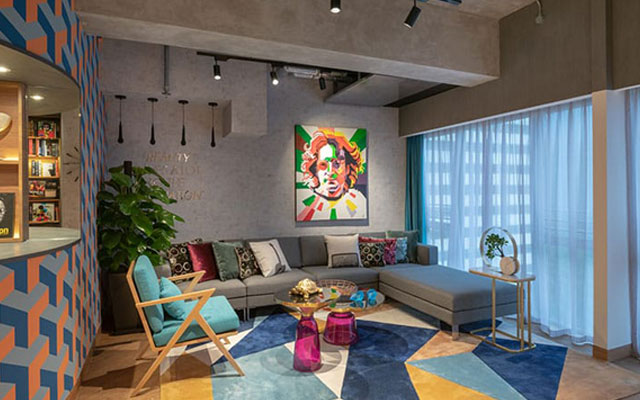
Ovolo COO Tim Alpe expressed delight over Ovolo Southside’s entry into the scheme and said the property is ready to welcome quarantine guests. The property will offer its well-regarded Quarantine Concierge perks, as well as high-speed WiFi 6 to enable guests to be on Zoom and Netflix at the same time.
An industry observer told TTG Asia that the scheme has attracted overwhelming interest because of the financial incentives that come with participation. The government will guarantee 50 per cent occupancy at HK$600 per room or 70 per cent of non-suite room rate, whichever is lower.
He said that amid travel restrictions, hotels that fail to be a designated quarantine property will struggle with business, as the number of visitors to Hong Kong are “close to zero” and these hotels are not allowed to accept quarantine guests.
PATA on CEO hunt

PATA has embarked on a search for a new CEO as the current chief Mario Hardy approaches the end of his term on May 31, 2021.
In an open call for applicants, PATA said the next CEO will “build upon the strong legacy of our association and lead us to further success and prosperity”.
The PATA CEO is a non-voting ex-officio member of the PATA Board and the PATA Executive Board, and shall have charge of the general management and business affairs of the association. To be based in Bangkok, he or she will provide strategic leadership to the association and represent the interests of the membership and industry through advocacy and actions at a regional and global level, among other responsibilities.
Application closes on February 28, 2021.
S’pore suspends green lanes with Malaysia, South Korea, Germany
Singapore has suspended reciprocal green lane arrangements with Malaysia, South Korea and Germany for three months, due to a resurgence of Covid-19 cases worldwide.
The green lanes, which allow essential travel for business or official purposes, will be reviewed at the end of the three months, said the Ministry of Foreign Affairs (MFA).
Travellers who have already obtained prior approval to enter Singapore can continue to do so.
The move will not affect Singapore’s Periodic Commuting Arrangement with Malaysia, which is set in place for longer-term work and business travel.
While Singapore has reciprocal green lanes with Japan and Indonesia, new applications have currently been put on hold due to infection concerns. Japan suspended all her business track arrangements earlier this month as the country entered a state of emergency.
Indonesia also announced a temporary ban on the entry of all foreign nationals on December 28. However, border closures to foreigners were recently extended from January 26 to February 8.
With this latest suspension, only the green lanes with Brunei and a few cities in China – Chongqing, Jiangsu, Guangdong, Shanghai, Tianjin, Zhejiang – remain open.
Asia dominates Lowy Institute’s top 10 Covid-19 management chart

New Zealand, Vietnam and Taiwan have scored the top three positions on Lowy Institute’s Covid Performance Index, which ranks 98 countries around the world based on their Covid-19 pandemic management.
The study, published on January 28, reviews countries with publicly available and comparable data on the virus, focusing on six measures across 36 weeks following their 100th confirmed case of Covid-19. Fourteen-day rolling averages of new daily figures were calculated for the following indicators: Confirmed cases, Confirmed deaths, Confirmed cases per million people, Confirmed deaths per million people, Confirmed cases as a proportion of tests, and Tests per thousand people.
Findings determined that although the coronavirus outbreak started in China, countries in Asia–Pacific, on average, proved the most successful at containing the pandemic.
Among the top 10 performers, six are Asia-Pacific countries. Thailand, Australia and Sri Lanka rank fourth, eighth and 10th respectively.
Singapore takes 13th spot; Malaysia 16th; South Korea 20th; Myanmar 24th; Japan 45th; Nepal 70th; Philippines 79th; Bangladesh 84th; Indonesia 85th; and India 86th.
The Covid Performance Index also looked at how political systems, population size, and economic development have influenced the management of the pandemic.
Political systems
While the tools to contain the spread of Covid-19 have been common to most countries, the manner which governments convinced or compelled their citizens to adhere to these measures often reflected the nature of their political systems.
Despite initial differences, the performance of all regime types in managing the coronavirus converged over time. On average, countries with authoritarian models had no prolonged advantage in suppressing the virus. Indeed, despite a difficult start and some notable exceptions, including the US and the UK, democracies found marginally more success than other forms of government in their handling of the pandemic over the examined period. By contrast, many hybrid regimes, such as Ukraine and Bolivia, appeared least able to meet the challenge.
Population
Categorising countries based on their population size revealed the greatest differences in experiences with the pandemic. These results stand even after taking into account per capita indicators to evaluate performance, minimising the likelihood of a methodological bias against countries with more infections because they have larger populations. The fact that internal borders are often more open and porous than international borders may have facilitated the spread of the virus within countries with larger populations.
At the outset of the global pandemic, there was little discernible difference in country performance by population size. However, experiences between large, medium, and small populations diverged markedly less than a month after countries recorded their hundredth Covid-19 case. Smaller countries with populations of fewer than 10 million people consistently outperformed their larger counterparts throughout 2020, although this lead narrowed slightly towards the end of the examined period.
Economic development
The study noted that countries with higher per capita incomes had more resources available to fight the pandemic and performed better on average than developing countries for most of the crisis to date. More surprising is that many developing countries were able to cope with the initial outbreak of the pandemic and that advanced economies, as a grouping, lost their lead by the end of 2020 – with infections surging again in many places that had achieved apparent success in suppressing first waves of the pandemic.
Richer countries were quickly overwhelmed when the virus first emerged. International air travel accelerated virus transmission from abroad in these countries. By contrast, many governments in developing countries had more lead time – and often a greater sense of urgency – to put in place preventative measures after the scale and severity of the global crisis became known.
The relatively ‘low-tech’ nature of the health measures used to mitigate the spread of the virus to date, including large-scale lockdowns, may have created a more level playing field between developed and developing countries in the management of Covid-19. Despite this, the uneven deployment of the first vaccines against Covid-19 could give richer countries a decisive upper hand in crisis recovery efforts, and leave poorer countries fighting against the pandemic for longer.
The people predicament: How will we retain talents whose faith is broken?

For as long as I have been covering travel, tourism and business events news – just 15 short years – laments of talent shortage have never ceased. There was always not enough folks who were both educated or experienced and passionate enough to outlast the pressures of long hours, frequent travels, and more attractive salaries offered by other industries.
These laments will deepen because of the dire straits the pandemic has put the industry in, which has resulted in an exodus of talents through business closures, retrenchments and dampened spirits.

According to ACI Report 2021, an annual salary and employment trends study published by ACI HR Solutions, 24 per cent of the industry was made redundant in 2020, and nine per cent have yet to secure re-employment.
For some, the state of joblessness provides a rare time for rest and family reconnection. For others, it is a period of endless anxiety because from where will the next meal come?
This period of endless anxiety is not reserved just for displaced workers. Those holding on to their jobs are now shouldering additional loads in place of their retrenched colleagues while drawing a reduced wage. Half of 829 respondents from across Asia-Pacific and surrounding regions took a pay cut in 2020, with 36 per cent of them getting 25-50 per cent less income.
A depressing year for our industry has led 20 per cent of respondents to lose confidence in our industry. Even worse, 68 per cent of respondents plan to quit or exit the industry in the next 12 months, with 27 per cent open to exploring opportunities outside of the industry.
Kaye Chon, dean and chair professor of The Hong Kong Polytechnic University’s School of Hotel and Tourism Management, has often emphasised on the versatility of the hospitality expertise. Hospitality graduates and professionals are highly sought after by luxury retail companies, banks, medical services or any businesses that require a tender human touch.
For an industry that often says its success depends on its people, losing good people to despair and other industries is worrying. On the bright side, this crisis could be a turning point for the travel, tourism and business events profession.
There are some practices effected during lockdowns that can work great now and forever more, and not just for the multinational companies but also for small outfits. For example, working from home and supporting it with a proper structure; relegating less critical meetings to web format; flexi-hours with wage adjustments as an option; and a regular mental well-being programme.
Here’s one more – compulsory skills upgrading for all staff which counts towards their performance appraisal. If there is one thing this travel and tourism crisis has taught us, it is that constant innovation is critical. Skills and jobs can be made obsolete by new challenges which require creative, new solutions. Constant staff training could be a company’s insurance against redundancy.
Karen Yue is group editor of TTG Asia Media. She sets the editorial direction for the company’s stable of travel trade titles and platforms, and produces content for them as well.
Driving female empowerment, one motorbike tour at a time
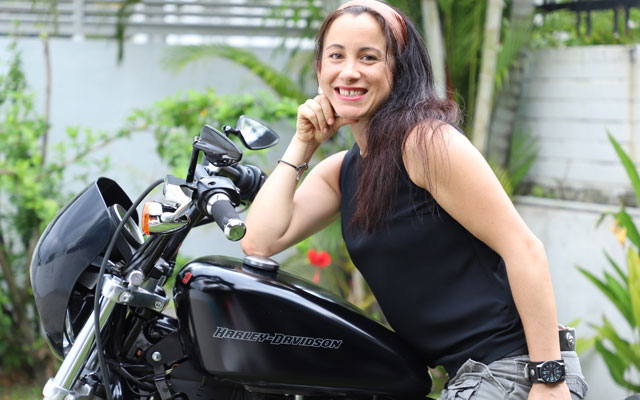
Alison Grün’s Harley-Davidson purrs into action. She scoots around the buzzy streets of downtown Kuala Lumpur, zipping past colonial-style buildings, vibrant wall murals and the iconic Petronas Twin Towers. Riding pillion on her Sportster 883cc is a young female on a half-day tour to discover the capital city’s hidden gems.
But Grün is not just another biker out on a joyride. She is a woman on a mission to use motorcycles as a vehicle to drive female empowerment and champion inclusive tourism development by creating touring job opportunities for local women riders.
The 35-year-old’s love affair with two-wheelers started as a child riding pillion on her dad’s Harley while growing up in France, with both her parents being part of a close-knit motorcycle club. But it wasn’t until her regional sales manager job brought her to Malaysia in early 2015 that she saw how motorcycling could liberate women weighed down by family and societal expectations.
Grün shared: “When I joined the Ladies of Harley Malaysia and connected with many women riders in the region, I felt inspired to see how motorcycling could emancipate them, bring some balance in their life, and gave them an opportunity to not only be themselves but also to have fun as women, not as mothers, corporate leaders, sisters, wives or daughters.”
When Grün lost her corporate job last year, it was this desire to propagate women empowerment through motorcycling that led to her setting up women-led motorbike tour company FreeW in June 2020.
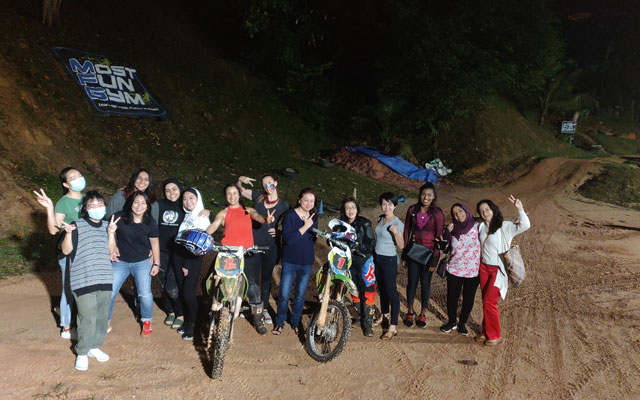
The W stands for Women, Will and Wheels, and embodies the organisation’s aim to provide an ecosystem for women to step out of their comfort zones and realise their potential, and to build a sisterhood of sorts with fellow bikers across the globe. It aspires to provide local women with more enriching economic opportunities in tourism and motorsports. To that end, Grün also teaches women in Malaysia to ride two-wheelers to empower them to find more employment opportunities.
FreeW’s roots, in actuality, go back to 2019.
Over the last few years, Grün has been undertaking off-road motorcycle tours in the Himalayas, both in India and Nepal, which ignited her interest and love for rural and community-based tourism.
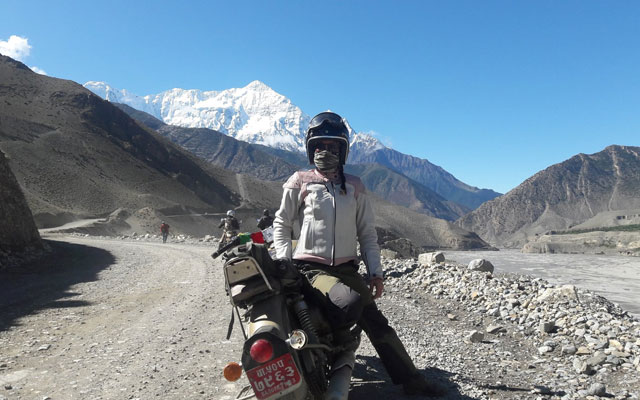
“I was really touched by the women there. I was impressed by both their physical capabilities and mental resilience, and felt we had so much to learn from them. However, the language barrier and travelling with men, even though very fun, limited my ability to interact authentically with them,” she recalled.
“I suggested to the Nepali team to hire women tour guides as I’d love to come back with a group of female riders. I knew we’d appreciate an experience above the physical challenge, taking our time to enjoy impromptu interactions and reconnect with our womanhood. They looked at me in awe, saying there was no such thing in Nepal. ‘Why not?’ I said. That’s how it all started.”
Riding rough terrain
In December 2019, Grün worked with the Nepali team to design a tour that would not only take them to breathtaking landscapes, but also allow them to invest in local women’s economic empowerment through local craft classes and homestays.
That Nepal tour was slated to be held in April 2020 as FreeW’s first women-only tour, with a Nepalese woman rider to lead the tour with Grün and her team. Alas, the tour was put on ice when Malaysia went into its first lockdown in March 2020.
On the upside, the pandemic freed up Grün’s schedule so she could work on sharpening FreeW’s vision and crafting tours with women rider friends. Ongoing collaborations span the region, including one in India with Jai Bharathi from MoWo, a riding school empowering women through mobility; and another with Anne Cruickshanks from Myanmar Pure Travel. A tour in Iran, in partnership with Mahsa Homayounfar from Not Just a Tourist, is also on the cards.
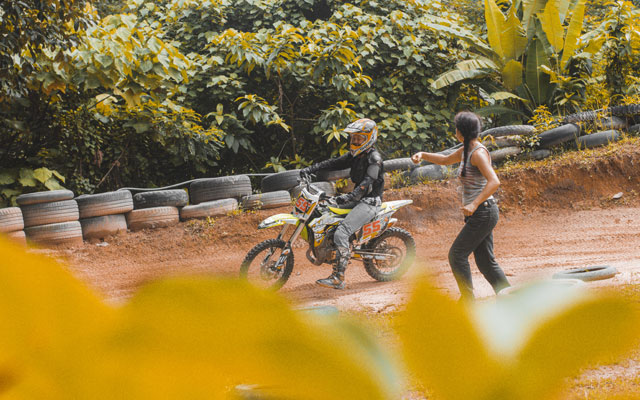
Seeing also a huge market gap in motorcycle training classes in Malaysia – and how both safe riding skills and self-confidence on the road are prerequisites to hosting FreeW’s tours – Grün developed a training programme to coach women (and men) how to ride or boost their confidence on two wheels. The course has begun to gain “traction”, and Grün is in talks with driving schools to help them deliver corporate programmes.
“I also started doing my own motorcycle tours with my Harley-Davidson to give people an opportunity to experience that thrill, where I take passengers off the beaten path to discover Kuala Lumpur and its surroundings from a different perspective,” she said. “I’m hoping to give Malaysian women riders opportunities to do so too in the future.”
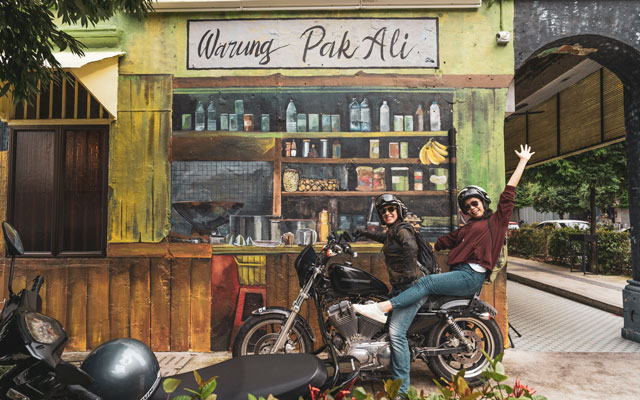
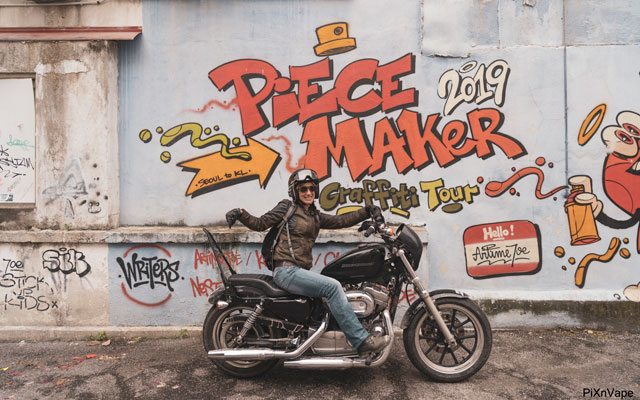
Over the last few months, Grün has conducted about 10 personalised tours – a figure she calls “encouraging”, given that Malaysia was placed under movement curbs for a good portion of the time. Prevailing travel restrictions, however, have posed a major speed bump for her overseas road trips. While about 25 women have signalled their interest in the various FreeW tours, uncertainties around the pandemic and ever-evolving travel rules restrain them from making any definite bookings.
Still, that has not stopped Grün from planning her 2021 tour line-up in Nepal, Myanmar and India, hoping to do at least some recce rides. Roping in locally-based women riders to run these tours, she will work with them remotely to adapt the tour to the local environment.
Currently, she is also in discussions with women riders in several Asian countries – Thailand, Cambodia, Laos, Bangladesh and Pakistan – to conceptualise and lead FreeW tours. “In Malaysia, I want to strengthen the motorcycling classes offering, organise more events, and train other women riders interested in sharing their motorcycle passion with others, as tour guides or riding coaches,” she said, adding that corporate partnerships will also be a key focus to accelerate growth in 2021.
Tourism ad blitz launched to get Aussies hitting the road again

A week-long tourism advertising blitz has kicked off across Australia this week, aimed at getting locals to book domestic holidays to give the sector a badly-needed boost.
Running from January 31 to February 6, 2021, the A$5 million (US$3.8 million) campaign is the latest burst of activity as part of Tourism Australia’s Holiday Here This Year campaign, which encourages domestic travel in order to support tourism operators and communities across the country.
It features Australian destinations, tourism products and experiences, including areas impacted by last summer’s bushfires. The week of activity combines event sponsorships, publisher-created content and in-programme editorial integration as well as national advertising running across key television programmes, online and print, and 2,500 outdoor ads.
Minister for trade, tourism and investment Dan Tehan said the campaign is part of the government’s ongoing support for the tourism industry.
“We want Australians to get excited about holidaying in Australia. Our country is one of the most popular tourist destinations in the world and this year is an opportunity for Australians to discover why,” he said.
“This nation-wide advertising blitz will inspire Australians to plan and book their next domestic getaway in the weeks and months ahead. Domestic tourism is worth A$100 billion to the Australian economy and our tourism industry supports more than 621,000 local jobs.”
Tourism Australia managing director Phillipa Harrison said that with many Australians returning to work, now was the perfect time to provide them with the inspiration and ideas to book their next holiday.
“Summer is typically the busiest time for our tourism industry, with many operators relying on the revenue generated during this period to support them throughout the year. But as a result of the challenges that we’ve continued to face across the country, for many tourism businesses, this holiday season unfortunately hasn’t gone to plan so far,” she said.
“Despite the recent disruptions, consumer confidence remains high with many Australians keen to take a break and get out and explore their own backyard. This campaign is all about capitalising on this pent-up demand by providing those people with all the content and inspiration they need to convert this desire and yearning for a holiday into actual bookings.
As part of the nationwide initiative, Tourism Australia is also encouraging the industry to coordinate an aligned advertising push across their own marketing and social media channels during the same period.
Thai attractions come to 3D life
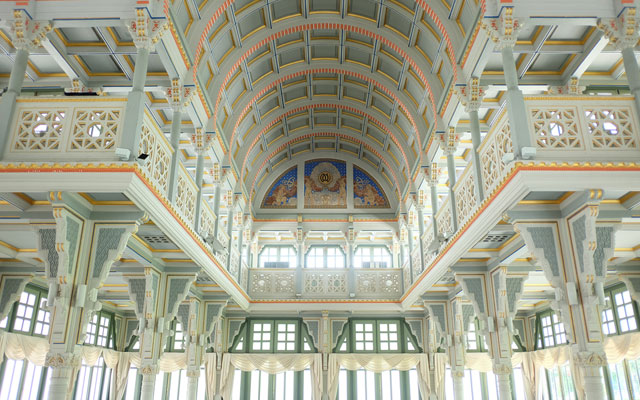
The Tourism Authority of Thailand has launched a series of virtual reality tours to four destinations across Thailand – Bangkok, Phuket, Chiang Mai, and Surat Thani.
The tours, which are immersive 360-degree adventures that allow visitors to explore the attractions in 3D, are accessible via individual links on the Tourism Thailand Virtual Tours main page.
After clicking on the link, visitors are led directly to the attraction. Icons on the bottom left allow for viewing floorplans and for navigation, while other functions let visitors view in VR or share with friends on social media.
Once inside an attraction, visitors can move around using the cursor, while some of the attractions have information about its historical background or details of items on display in both English and Thai.
In Bangkok, the Mekhala Ruchi Pavilion lets visitors virtually explore the two-storey teak wood building, which was the residence of King Rama VI while Phayathai Palace was under construction. Meanwhile, the virtual tour of Thewarat Sapharom Hall showcases the elegant interior of the palace’s throne hall, and the Phiman Chakri Hall stands out for its iconic turret.
In Chiang Mai, visitors can dive deep into a virtual visit of Phra Chao Tan Chai Ma Tam Na Bun Chapel or the Big Reclining Buddha at Wat Chedi Luang. There is also a tour of Phra Maha That Chedi for the 12 astrological signs and Phra Chao Pun Ton. The final two attractions in Chiang Mai include the statue of Khruba Chao Teung Na Ta Si Lo and Ma Tam Na Bun Chapel.
In the southern region, there are virtual tours of Chedi Khao Hua Chuk in Surat Thani and Chinpracha House in Phuket.
The virtual reality tours give visitors a bird’s-eye view of these famous attractions, allowing them to move around simply by clicking on points of interest. They are designed to inspire wanderlust and encourage armchair travellers to visit the landmarks in future.

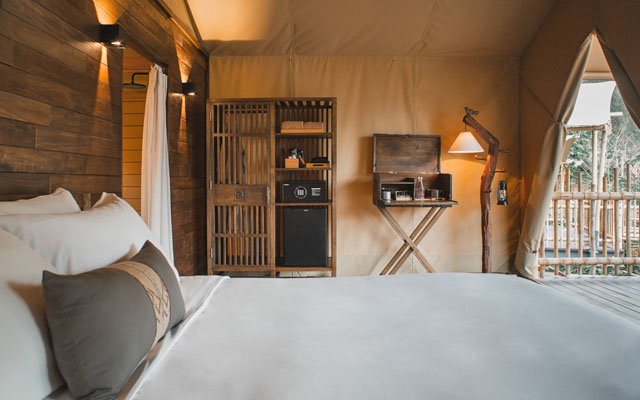






Although Covid-19 cases have steadily declined since mid-January in Chonburi province, Pattaya’s hotels still face a tough battle to claw back visitors ahead of the Lunar New Year holidays.
The province’s hospitality industry took a beating after being declared a maximum-control zone at the beginning of the year amid Thailand’s second Covid-19 outbreak.
Despite being downgraded from a Red Zone to an Orange Zone as of February 1, with pubs and entertainment facilities being allowed to reopen and serve alcohol until 23.00, the stigma of the outbreak and media reports about domestic travel restrictions continue to deter many would-be travellers to Pattaya.
“People need to know that they can travel safely, and that there are many benefits to traveling now; the hotels are empty, the prices are very good, and the beach in Pattaya is very clean,” said Vitanart Vathanakul, CEO of the Royal Cliff Hotels Group.
He doubts Pattaya hotels will be able to pick up significant bookings for the Lunar New Year period, which has been declared an official holiday in 2021 by the Thai government to catalyse domestic travel.
“The news that’s been published gives the impression that it’s hard to travel here, which is a pity because otherwise there would be more tourists. I would like people to know that Pattaya has fewer cases now; it’s no longer a Red Zone. You can travel, if you travel with caution,” he elaborated.
The mandatory lockdown in Chonburi province has adversely affected Pattaya’s hotels, many of which are empty. Some have opened food stalls on the streets with food from their restaurants to rake in extra cash to pay their staff.
Although hotels in Chonburi were issued a forced legal closure order on January 28, to give hospitality staff access to social security funds, hotels with checked-in guests and those who wished to stay open were allowed to do so if they notified the district chief within seven days.
“It’s good for the media to urge people to be careful, but the media can also play a key role in encouraging people to travel with caution, using social distancing and safe practices,” said Vitanart, whose hotels remain open and ready to welcome leisure tourists and business events.
In Orange Zones, meeting facilities can remain open and events with 300 pax or less are allowed.
“If you want to organise a meeting or event, consult your hotel to check on the situation. Many people don’t know that Pattaya has been taken off the high risk category, and that right now people who want to travel here can do so at very affordable prices. That way, hospitality providers gain income and their staff get paid; it’s a win-win situation,” he added.
Before Thailand’s second outbreak, the hospitality industry in Pattaya had recovered partially given its popularity as a self-drive destination and also with the support of the We Travel Together domestic subsidy programme.