Singapore Changi named world’s safest airport
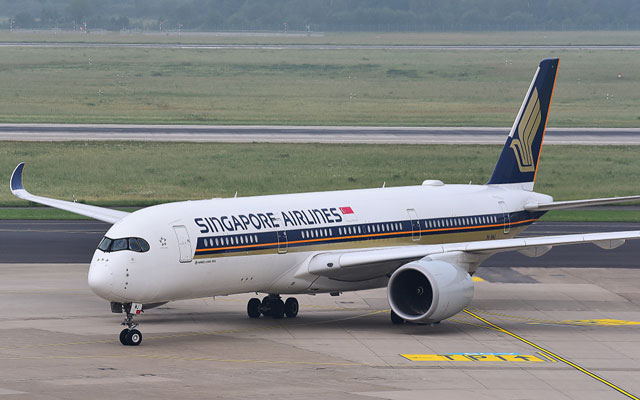
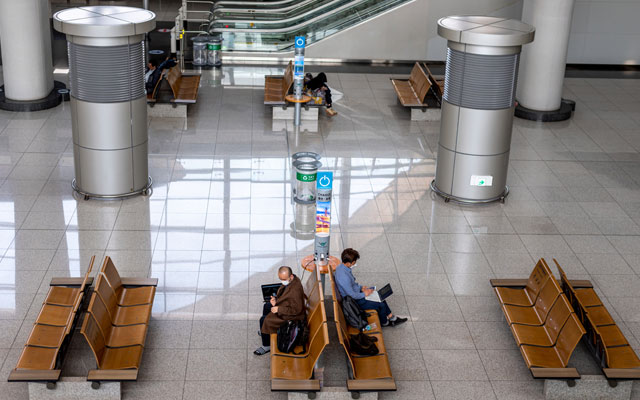
Singapore Changi has topped Safe Travel Barometer’s list of the world’s safest airports, which assessed more than 200 airports on their implementation of Covid-19 health and safety protocols.
Singapore Changi Airport posted a Safe Travel Score of 4.7 out of 4. Safety measures taken by the airport include the implementation of touchless initiatives to enhance the passenger experience across the landside and airside areas. These include sensor-based check-in kiosks and biometric- based immigration systems to eliminate fingerprint scanning.

The Safe Travel Score is an industry-first rating initiative, based on an independent audit of more than 200 airports and 20 traveller health and safety measures announced by airports.
Close on the heels of Changi Airport is Frankfurt Airport, Chengdu Shuangliu International Airport, and Delhi’s Indira Gandhi International Airport, each tied at a Safe Travel Score of 4.6 out of 5. UAE’s Abu Dhabi International Airport and Dubai International Airport are tied at 4.5 each.
Other airports which made it to the global top 10, achieving a Safe Travel Score of more than 4.3 out of 5, include Bengaluru Kempegowda International Airport, Hong Kong International Airport, Beijing Capital International Airport, and London Heathrow. Not a single airport from North America made it to the global top 10 list, primarily due to the relatively slow pace of implementation.
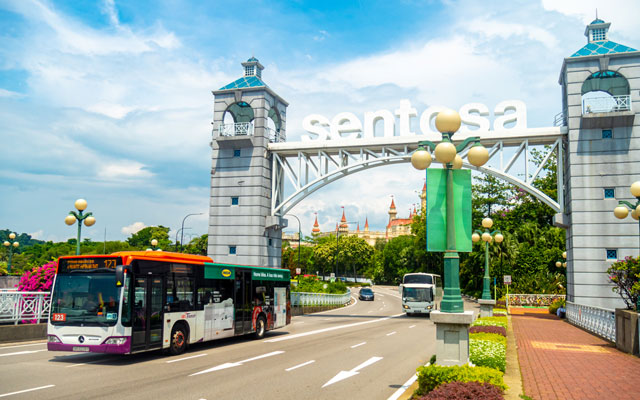
Plan a daycation Anywhr across Singapore
Anywhr, a Singapore-based travel company that curates surprise trips around the world for travellers, has launched a domestic initiative.
For S$30 (US$22) a day, the company will draw up a customised full-day itinerary with activity and restaurant recommendations across Singapore for residents.

The itinerary will be sent within 24 hours of the booking, with up to three revisions allowed. All reservations will be made on behalf of the guests, with each group booking capped at five persons.
Anywhr co-founder Zelia Leong shared the company decided to launch this offering because many of her previous clients felt “sad and stuck” in Singapore and have run out of things to do.
In addition, certain activities deemed high-risk during the coronavirus outbreak are now off-limits, while numbers at restaurants are limited to ensure social distancing.
Response to the new offering has been “positive”, Leong said, adding that the company does not take a commission or referral fee by recommending customers to certain partners.
She added: “We get our sources from many local partners and our Trips team who are experienced in curating custom itineraries, and travellers enjoy some special perks and discounts on activities we recommend.”
South Australia unveils US$14.6m boost for regional tourism
The South Australian Tourism Commission (SATC) has committed to a A$20 million (US$14.6 million) support package to encourage private investment in demand-driving regional tourism infrastructure, create jobs and aid Covid recovery.
Grants from A$20,000 to A$500,000 are available for new and improved regional accommodation, as well as quality tourism products and experiences that attract more visitors and a higher return.

The multi-million-dollar Tourism Industry Development Fund was announced by premier Steven Marshall on Sunday. Run over two years, the programme will assist regional tourism businesses to recover quicker and stronger and get more South Australians into work. It is part of a suite of support packages aimed at the tourism sector, which has been significantly impacted by bushfires and Covid-19.
Marshall said: “There’s no doubt the tourism industry is one of the hardest hit by the Covid-19 pandemic, but it’s also one of the most innovative and creative. We want to ensure that regional tourism businesses are supported to improve and diversify their offering so they can remain sustainable, increase visitor demand, and have visitors linger for longer.
“Regional tourism is playing a major role in rebuilding our state’s visitor economy and creating local jobs. We already know 43 cents in every tourism dollar is spent in our regions and early indications show this fund will create around 1,400 ongoing direct tourism jobs.
“One of the key strategic priorities identified across all regions for growing the visitor economy in our state is improved accommodation, products and experiences. That’s exactly what the Marshall government is doing, while getting shovels in the ground faster and more South Australians back into jobs.”
Applications to the Tourism Industry Development Fund are limited to private sector businesses. Projects must commence within three months from time of a successful application. A maximum of 30 per cent state government funding will be committed to the total project value.
Examples of eligible projects could include new accommodation or refurbishments to existing properties; the development or enhancement of tourism experiences, including innovative transport options; and infrastructure to enhance visitor engagement such as a new cellar door experience or an interactive display.
The funding programme is now open, and will run until March 31, 2022 or until all funds have been allocated. Applications will be assessed by a panel including representatives from the SATC and the South Australian Financing Authority.
Wyndham signals growth in APAC amid pandemic
Despite Covid-19 headwinds, Wyndham Hotels & Resorts managed to sign 59 new hotels across Asia-Pacific in 1H2020, a positive year-over-year growth signalling long-term confidence in the region.
Within South-east Asia and Pacific Rim (SEAPR), the company signed 21 new hotels in 1H2020, which is more than 30 per cent year-on-year growth compared to the same period in 2019. Highlights include an expansion of Wyndham’s presence in Japan with the debut of the Wyndham Grand and Wyndham Garden brands in the country, signing four new hotels in Bangkok, and the launch of La Quinta by Wyndham in New Zealand with two new-construction hotels in Queenstown and Auckland.

In Greater China, 38 deals were directly signed in 1H2020, which is also more than 30 per cent year-on-year growth. Key signings in the country include Wyndham Grand Lishui, Wingate by Wyndham Weihai and Wyndham Garden Wuhan Jianghan, among others.
In early June, Wyndham merged its SEAPR and Greater China business units to form a new operating region, collectively known as Asia-Pacific.
The restructuring is part of a larger, company-wide initiative designed to realign Wyndham’s global business operations and maximise competitive advantage. This will allow Wyndham to strengthen its strategic positioning further to support existing operations, drive further expansion and create additional opportunities for cross-regional collaborations.
Across Asia-Pacific, Wyndham is closely monitoring regulations and guidance from relevant local authorities for restarting the industry. While international travel remains limited, the company is finding pockets of opportunities with a shift in focus to domestic travel in the region in countries like China, Thailand and Vietnam.
Aquarius International embarks on US$250m aggressive expansion across SE Asia
Bangkok-based investment firm Aquarius International Hospitality Development (AQI) will plow US$250 million into a string of hotel and real estate investments in Thailand and South-east Asia as part of a major expansion across the region.
Rollout of the five-year plan will begin in 4Q2020, and will encompass a luxury resort and residences, private island beach club, F&B services, yacht charter operations, and an online travel booking community.

“We firmly believe in the long-term vitality of the Asian travel and tourism industry, especially at the top-end, and at the heart of this prosperity is Thailand, which benefits from excellent accessibility, global visitor appeal and incredible natural assets,” said Nixon Chung, COO of AQI, which is owned by Norcal Venture Capital Group.
AQI will unveil its first two projects this year: Aquarius Residences & Resort in Koh Chang, an exclusive cliff top eco-sensitive retreat; and AQ Privilege Beach Club & Residences in Koh Man Nai, a private island located on Koh Chang’s west coast.
Currently under construction on the southern tip of Koh Chang, in eastern Thailand’s Trat province, Aquarius Residences will comprise a collection of 23 pool villas and 99 low-rise condominiums, including 12 penthouse units with private rooftop garden.
Slated to open in three phases from 2022, the residence will offer its residents and guests exclusive access to the nearby islet of Koh Man Nai, where AQ Privilege Beach Club & Residences is located.
AQI will also be unveiling AQ Ventures, a luxury yacht business that will sail South-east Asia’s tropical seas. Based in Koh Chang and Phuket, the operator will provide a full range of services, including yacht chartering, sales and management, as well as expert advice to clients looking to purchase their own yacht.
Adding on to the group’s hospitality portfolio is AQ Food & Beverage, a high-end restaurant and catering business comprising hotel F&B operations, premium gourmet stores, restaurants and food delivery. Following a successful partnership in Japan, the group plans to launch flagship AQ Gourmet & Dine Stores in Bangkok and Ho Chi Minh City in 4Q2020 and 1Q2021, respectively.
Weaving together all of these individual elements is AQBooking.com, AQI’s elite travel club that enables global travellers to explore premium tourism products, all supported by concierge services.
Onyx unveils new GM appointments across Thailand
Onyx Hospitality Group has made five key hotel leadership appointments across Thailand.
Rejoining the group as the new general manager of Oriental Residence Bangkok, Christoph Leonhard will be leading the city-centre hotel, which will soon be reintroduced as part of the newly-unveiled Saffron Collection.

Having held rooms division and general manager roles with Onyx Hospitality Group’s Amari brand for close to a decade in Hua Hin, Koh Samui and the Maldives, Leonhard also gained experience from leading companies and brands like The Peninsula, St Regis and Accor.
Meanwhile, Sukamal Mondal has been promoted to cluster general manager for the Shama Serviced Apartments portfolio of four properties in Bangkok, and will continue to lead as general manager of Shama Lakeview Asoke Bangkok. An Onyx veteran with over 14 years of experience in China and Thailand, Sukamal also served as general manager of Oriental Residence Bangkok.
In the south of Thailand, Thomas Hain will move from Onyx Hospitality Group properties in Koh Samui to Krabi to take on the role of general manager at the newly-renovated Amari Vogue Krabi.
With over 20 years of hospitality experience in a variety of rooms division roles in Europe, the US and Asia for companies like Marriott, Hyatt, Accor and IHG, Hain joined Onyx in 2018 as the resident manager of Amari Koh Samui and was subsequently appointed general manager for the group’s two hotels on the island.
Next, Paul Halford will be appointed cluster general manager for Amari Koh Samui and Ozo Chaweng Samui, after two years as opening general manager for Ozo Phuket. Halford joined Onyx in mid-2018 from Radisson Hotel Group where he held senior roles in Australia, Fiji and Thailand.
Lastly, Richard Margo has been appointed general manager of Ozo Phuket, from his current role as hotel manager of the group’s Amari Phuket which he has held since 2014. Joining Onyx eight years ago as resident manager of Amari Pattaya, Margo’s career in hotels started from the F&B side of the business. He has held roles with Le Meridien in Belgium, Ireland, Portugal and Jordan, as well as with Hilton in Malaysia and Thailand.
Tapping silver linings in the midst of Covid

Why did you move from Marriott International to Hyatt, and what did it mean for your career?
I was president of Starwood’s Asia-Pacific business before it merged with Marriott in 2016. I stayed on as CEO for Greater China to ensure that employees were placed in the right jobs. That also allowed me to take care of those who decided to exit the company. You can easily walk away when there is a merger, but my objective was to make sure that there were good teams in place, and to learn how Marriott does things. After 15 months, I felt I had achieved my objectives, and I thought it might be the time to retire, or at least take a break.
One day, I got a call from David Udell (Hyatt’s group president), who invited me to join Hyatt. That is a brand I have known for many years, and I have always admired its loyal and long-serving staff. In fact, my wife was with the group for 23 years before she left in 2012. I thought about the job offer during my four-month break, and later went to meet the Hyatt senior leadership to ask them what they wanted to do with the company.
There seemed to be a lot of opportunities for the group, particularly in China. It was also open to doing things differently. Most importantly, it was willing to change. If I am going to work with a company, it has to be the best one, and Hyatt’s successful F&B and people culture fascinated me. Finally, I took the offer.
My role was expanded to cover the Asia-Pacific region in June 2020. I already had experience of that, and I am still familiar with all the different players. My vision is to accelerate growth in key markets like South-east Asia, Japan, South Korea, and Australia.
What changes have you made to the company?
I joined in April 2018. Over the next couple of months, I visited our hotels in Greater China in person, because that’s the only way to learn about the business and the people, and to understand the products, locations, and owners. I always prefer face-to-face conversations, as it allows me to learn more about my colleagues. So please don’t give me any presentation, as I can read reports online.
My footprint covered very remote places (and one of those trips helped me) find new talent.
In between my travels, we set up a Shanghai hub in August 2018, as the one we had in Beijing was small. If you run hotels in China, you need local people. When we asked people to join us, we made sure they had the ability to do things differently. We made it clear that we were not planning to run things like a traditional hotel company. We would be more innovative and look at things differently. That’s why travelling to about 80 hotels (out of the 87 hotels we have in Greater China) really helped me. I did not manage to visit the last seven hotels because of Covid-19.
What have been your biggest achievements since taking on the role?
We formed a strong digital team in 2018 to focus on the use of smartphones for shopping. The only way to get that done was to set up a local team who knew the local market and customers. We recruited them to do something different, that is, a WeChat store for Hyatt; we were China’s first hospitality company to do so. We could not have done that without this team.
It’s important to have an online store today, as a lot of people are buying online. The good thing is that China has contained the pandemic quite well, and we have seen a surge in domestic travel to resort destinations. Having the digital team really helped us this year, especially with the recovery.
Then there’s the strategic joint-venture hotel brand, UrCove, by Hyatt, Homeinns, and Beijing Tourism Group. When I came onboard in April 2018, I wanted to create a new brand that targeted the upper mid-scale. That’s a demographic on which we had not made much of an impression.
That’s why I asked for breakfast/dinner/lunch meetings with CEOs of domestic players like David Sun from Homeinns, who I found shared my views. By December, we had agreed all the terms, and we officially formed the joint venture in February 2019. We launched this brand four months later. No Hyatt staff are involved in this brand, and the CEO runs it like a start-up. He formed his own leadership team, and reports directly to the board.
Homeinns started as a data company, not a hospitality company. They know more about technology than we do, so we use their platform. That has saved us a lot of time and effort. Homeinns, which has 5,000 hotels, is a domestic company, so we complement each other.
Tourism has been badly hit by the pandemic. What needs to be done to speed up the sector’s recovery?
Obviously, a vaccine is everyone’s hope. But the borders need to open up, as government restrictions inhibit travel. It can take only one hour to travel from Hong Kong to Macau, but a 14-day quarantine rule is applied to both cities. So it ends up taking 28 days for a trip which lasts an hour. That is challenging. Hopefully, governments will open the borders.
Which geographical markets should Hyatt focus on?
China will remain vital to us due to its population size, and also its outbound travel market. After that, we will focus on growing markets in Japan and South Korea, and try to open new markets in South-east Asian locations like Hanoi, and some gateway cities in which we don’t yet have a presence. New locations like Nha Trang and Ko Samui are also on the list, because people want to go to resorts.
What issue in Asia-Pacific do you think about the most?
We have obviously had a fair share of disasters over the years. It started with the tsunami/earthquake (2001) and SARS (2003). We went through those and recovered. But Covid-19 takes it to the next level. It’s now eight months since the outbreak. I am sure a lot of people will have learnt a lot from this. You can’t really take things for granted and need to adapt to a new reality.
Tell us about about Hyatt’s robust plans for expansion.
It’s amazing that we opened six hotels in the first eight months of this year, namely, Park Hyatt Suzhou, Hyatt Centric Kanazawa, Hyatt House Kanazawa, Park Hyatt Niseko Hanazono, Hyatt Regency Yokohama and Hyatt Place Taiyuan Longcheng. The group remains very bullish in terms of openings. Eight more properties, namely, Hyatt Regency Lanzhou, Park Hyatt Auckland, Andaz Xiamen, Grand Wuji Hotel in Nanjing, UrCove by Hyatt in Shanghai (Jiang’an, Wujiaochang and South Lujiazui), and Andaz Bali, will come online before the end of 2020. We also have a big Grand Hyatt in Jeju, South Korea, in the pipeline.
Covid-19 taught us a lot, especially when it comes to air circulation. We look at air circulation in the planning stages. We make sure that it is safe. There’s a big focus on health and hygiene now. I think from an industry standpoint, we are doing a lot in that area.
How will the business in general change as a result of the pandemic?
The upside is that there are now many new ways of doing…business. For instance, there is a greater focus on local markets, as people can’t travel.
I regard health and well-being as new ‘luxury items’. We’ve already done a lot to make sure our guests feel safe (at) our hotels.
There are still meetings even though we can’t all get together under one roof. Hybrid meetings (are happening). For those who can’t (attend an event at our) hotel, we can go to their office or home to set things up. This service is newly launched because of the pandemic.
Apart from selling hotel and F&B vouchers through live-streaming in Beijing, Xi’an, Guangzhou, and Suzhou, we also organised a virtual wedding fair in Hong Kong which sold F&B vouchers as well. You just need to keep innovating.
You rose from pastry chef to your present position. What are the ingredients to your success?
A native of Singapore, I started as a pastry chef in Brunei and then I was offered different things to do – procurement, operations, development and technical services, and so on. I arrived in Hong Kong the day after June 4, 1989 and since then, it has become my home. I learnt something from every job I did, and it was always useful for my next job. I always stress the importance of understanding the culture and respecting people, whether I’m dealing with a team member or an owner. That’s my secret recipe for success.
In China, every city and province is different. When I was in development, I took up running, and that allowed me to see new cities up close. It enabled me to go off the beaten track, which was good, because rather than letting someone take you around, you can see things for yourself.
Are travel agents still important?
Online travel agents and traditional agents like professional conference organisers (PCOs) are our partners. We have been helping some PCOs to work during this period, and we have been staying connected. Obviously, Hyatt uses its own channels, but we know our partners each have their own customer base, so it’s important we tap into each other’s knowledge. To me, this is about people and relationships. We know that they need help at the moment, and we do what we can. We try to make sure there is a chance for everyone to survive, even though we are all facing hard times.
Entry ban needs rethink, say Penang medical tourism players
Penang medical service providers are urging the Malaysian government to rethink its blanket ban on incoming travellers from a number of ‘high-risk’ countries – a move which has dealt a fresh blow to the country’s once-thriving medical tourism industry.
Malaysia first announced an entry ban on long-term pass holders from India, Indonesia, and the Philippines, which was later expanded to include countries with more than 150,000 coronavirus cases.

Malaysia had harboured hopes to attract some two million medical travellers from abroad this year through its Malaysia Year of Healthcare Travel 2020 campaign, which unfortunately, has been dashed by pandemic-induced travel restrictions.
Countries on the entry ban list include key source markets for Malaysia’s medical tourism, including Indonesia which accounts for more than 60 per cent of all annual sales, the Philippines, the US, the UK, and Bangladesh.
Penang players in Malaysia’s medical tourism industry opined that the government needs to consider other solutions to replace the entry ban.
Chan Kok Ewe, Penang Health Association founding chairman, suggested that Malaysian authorities set up a think tank to formulate a more sustainable solution to handling the protracted crisis.
He said: “Health authorities, economists and politicians must sit down and discuss what the best way out of this problem is. In the past, medical professionals knew how to deal with tuberculosis and leprosy. So why can’t we do something to deal with Covid-19 (before a vaccine is found)? We will have to live with it so let’s find the best ways and means to deal with it.”
He suggested that a study be conducted to find a strategy for allowing medical tourists into the country without risking public health.
One of the ways that could be done is by enforcing stringent SOPs like quarantine and Covid-19 testing, opined Mary Ann Harris, executive director, Penang Centre of Medical Tourism. She suggested that instead of a blanket ban, medical tourists be required to self-isolate for 14 days and present a negative Covid-19 certificate prior to departure for Malaysia.
She said that a key lesson the pandemic has taught stakeholders is the need to diversify source markets and not over-rely on countries like Indonesia.
She added: “It is vital to look for other source markets. We can replicate our success with the Indonesian market by looking at other markets that share similarities in language, such as Singapore.”
Last month, Penang’s chief minister, Chow Kon Yeow, said that the state had temporarily halted all medical tourism activities until it finalises a new set of health and safety procedures in light of the coronavirus crisis.
As such, the state is currently not handling any foreign patients, despite existing demand for its medical services, especially among the chronically ill, shared Mary Ann.
Both Chan and Mary Ann were speaking at the recent World Hospitality, Lifestyle and Entertainment Exhibition & Conference hybrid forum entitled Malaysia: An Emerging Global Giant in Medical Tourism.
In 2019, Malaysia attracted 1.3 million inbound medical tourists, with more than half seeking treatment in Penang. Malaysia was the top healthcare travel destination in the world by volume. Medical tourists to the country contributed more than RM1.8 billion (US$434 million) in hospital receipts and RM6.6 billion in total economic impact last year.
Australia’s major airlines, travel agencies unite to call for lifting of Queensland border restrictions
Qantas and Virgin have banded together with Flight Centre and Helloworld to launch a publicity campaign calling on the government to reopen Queensland’s borders immediately to save the battered tourism industry.
The quartet will run the four-week campaign to coincide with Queensland’s state elections on October 31, according to news reports.

They were quoted by reports as saying that reopening state borders is essential to jumpstart businesses and sustain livelihoods.
“We want to see Australians reunite with loved ones after months of being separated and we want to see local businesses, and the one million people in the tourism industry, get back to work,” an online petition by Qantas which accompanies the ad campaign reads.
“We’re calling for decisions on domestic border closures to be risk-assessed against an agreed set of medical criteria and a shared definition of what constitutes a Covid hotspot.”
The call comes after months of pandemic-induced travel restrictions that has decimated the global tourism industry and left many businesses fighting for survival.


IHG has signed a management agreement with Tokyo Century Corporation to open a Hotel Indigo property in the popular highland destination of Karuizawa come 2022.
In addition to its 155 rooms across three wings, Hotel Indigo Karuizawa will also feature meeting facilities, a spa, a gym, and dining options with a focus on local cuisine using seasonal ingredients.
The new property marks Japan’s third Hotel Indigo, following the opening of Hotel Indigo Hakone Gora in 2020, and the upcoming Hotel Inuyama Urakuen Garden, which will open in mid-2021.