Gearoid Lyons has been appointed general manager of Conrad Bangkok in Bangkok, Thailand.
Lyons brings with him more than 20 years of experience in the hospitality industry. Prior to this, Lyons most recent role was hotel manager at Waldorf Astoria Bangkok.
Joining Hilton in 2010, he has previously held various management roles in full service and luxury hotels across multiple markets including London, Sydney, Perth, Tokyo and Bangkok.
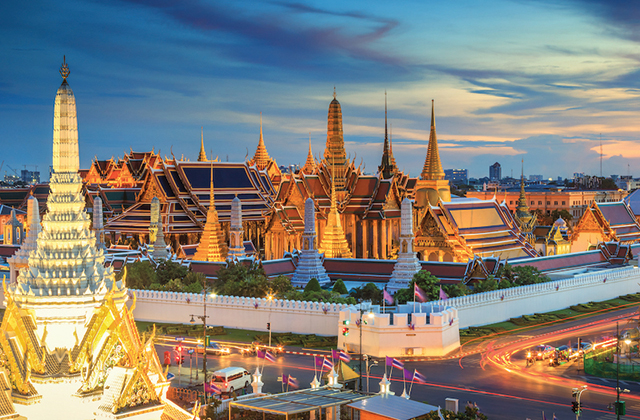
Thailand inches one step closer to reopening its international borders with the launch of a coronavirus vaccine passport on Thursday, and the continued rollout of the national vaccination drive, with plans to inoculate staff at 58 alternative local quarantine (ALQ) hotels within Q3.
Of the vaccination plan, the tourism sector will receive 50,000 doses of Sinovac vaccines, out of a total 200,000 doses that had been shipped to the country in February. The sector expects to receive a second batch of five million doses, out of 26 million doses scheduled to arrive by end-June.
Hospitality workers in five tourist hotspots across Thailand included in first round of national vaccine drive
These vaccines will be administered to 13,000 employees at 58 ALQ hotels in five major tourist cities – Phuket, Surat Thani, Chon Buri, Chiang Mai and Krabi (the first batch excludes Krabi).
These ALQ hotels have a combined 6,716 rooms; comprising Phuket with 24 hotels (2,752 rooms), Chonburi with 16 hotels (2,522 rooms), Surat Thani with 10 hotels (288 rooms), Krabi with seven hotels (1,024 rooms), and Chiang Mai with one hotel (130 rooms).
Phiphat Ratchakitprakarn, minister of tourism and sports, said the vaccine quota has been submitted to the Ministry of Public Health. “The immunisation drive in the five provinces will be done within Q3. And I hope they would be ready to accommodate foreign tourists after that,” he said.
Phiphat also urged the Centre for Covid-19 Situation Administration (CCSA) to approve other types of accommodation besides hotels for quarantine purposes, such as villas and resorts.
In a move to reopen the country, the Thai government yesterday officially unveiled the vaccine passport titled International Certificate of Vaccination or Prophylaxis. Every Thai who has been vaccinated will obtain one.
The vaccine passport was created by the Ministry of Public Health, and unveiled by minister Anutin Charnvirakul in Bangkok.
Meanwhile, the government has green-lit the Songkran festival, the country’s biggest annual event, to go ahead next month in order to boost tourism and the economy. In Bangkok, Songkran will proceed at Khao San Road, and is expected to draw a large number of domestic visitors.
Malaysia Tourism Council (MTC) will launch a B2B platform next month specialising in niche products, and targeted at both international and domestic travel trade players.
MTC president, Uzaidi Udanis, said he is targeting at least 500 activities and attractions from all across Malaysia when the platform goes live.
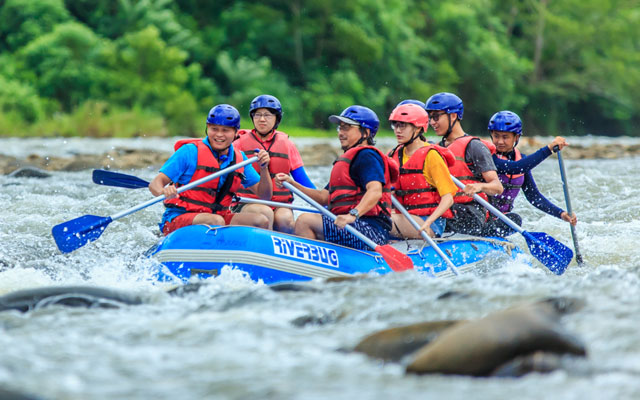
White water rafting among products to be featured on Malaysia Tourism Council’s new B2B platform
The platform, dubbed Universal Pass (UPass), will focus on Malaysian niche products that are not easily available to overseas wholesalers and not sold by OTAs. What sets it apart is its reservation system which allows bookings with instant confirmation and dynamic pricing.
Homestays, white water rafting, glamping by the river and adventure tours are among products to be featured on the platform, which will be run by a dedicated team from MTC and financed by industry players themselves. Uzaidi, however, declined to reveal the amount of investment.
On setting up the portal, Uzaidi said: “We are preparing for the reopening of international borders. When inbound travel restarts, we expect to see more travellers looking for unique, outdoor experiences and activities.
“This portal will be able to provide them with plenty of choices, and with dynamic pricing, trade buyers will be able to get some good deals, especially during low season.”
Once the platform goes live, MTC will start promoting the site to the international travel trade as well as keep them in the loop on the latest products and offerings in Malaysia.
Uzaidi said: “Overseas wholesalers will be able to make direct bookings with local product owners and suppliers, and get instant confirmation.”
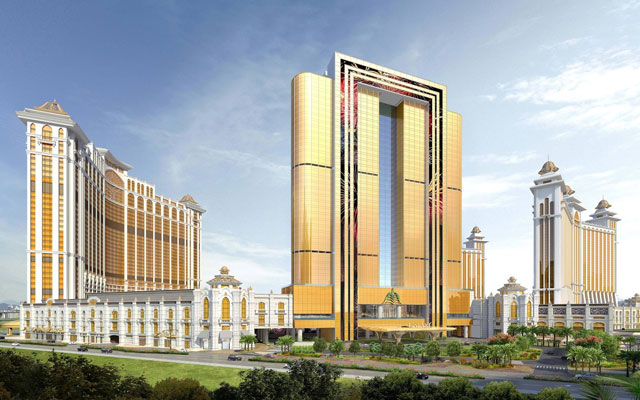
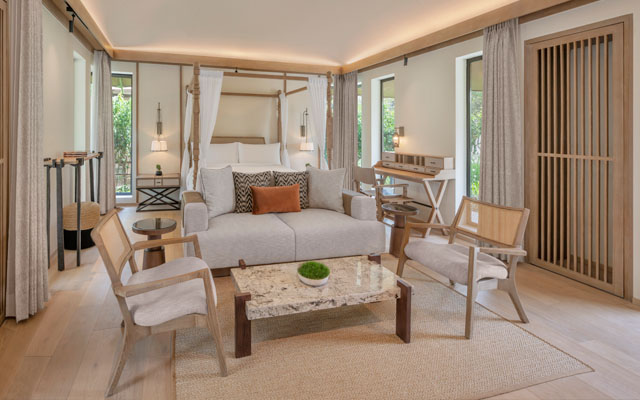
Galaxy Entertainment Group has signed a deal with Accor to open an exclusive all-suite tower, Raffles at Galaxy Macau, within the integrated resort in 2H2021.
Located on the resort’s east promenade, Raffles at Galaxy Macau will feature approximately 450 suites, with a glass airbridge connecting the two towers on every floor. A selection of suites will boast their own private pools and gardens, while a small number of unique loft suites will be fitted with double-storey windows.
Raffles at Galaxy Macau is set to open in the second half of 2021
Guests may enjoy Raffles’ legendary signature afternoon tea experience or unwind in a secretive twist on the Raffles’ hallmark Long Bar – provenance of the iconic Singapore Sling – where they can sip a new iconic Sling tailored for Macau, or escape to The Glass House for breakfast or an elegant snack to enjoy the outdoors, in an indoor environment.
The Glass House, set amidst a Mediterranean-inspired garden, is within a few steps of the Raffles’ private infinity edge pool. Details on a luxury spa, and a specialty restaurant whispered to be helmed by a multi-Michelin-starred Japanese chef, are still under wraps. Guests will also enjoy easy access to entertainment, shopping, dining and leisure attractions at Galaxy Macau, directly connected to the resort’s lobby podium.
Launching on March 9, a new video series under the TTG Conversations banner will cast the limelight on tourism businesses that have found creative solutions to navigate disruptions caused by the pandemic.
TTG Conversations: Innovator Chat peeks behind the curtain to explore how industry players – both big and small – have turned to innovative or even unorthodox means to ensure business continuity amid travel standstill.
Guest speakers for the debuting March season include Jane Goh of Xperience Singapore Travel & Events, as well as Byron Koh of Lion Heartlanders and TY Suen of Woopa Travels
From gamifying virtual tours to ‘adopting’ wildlife, these unique programmes have proved a critical lifeline that could eventually influence the way travel products are consumed when leisure tourism revives.
Catch weekly rollout of new episodes of TTG Conversations: Innovator Chat on ttgasia.com, and on TTG Asia Media’s YouTube channel.
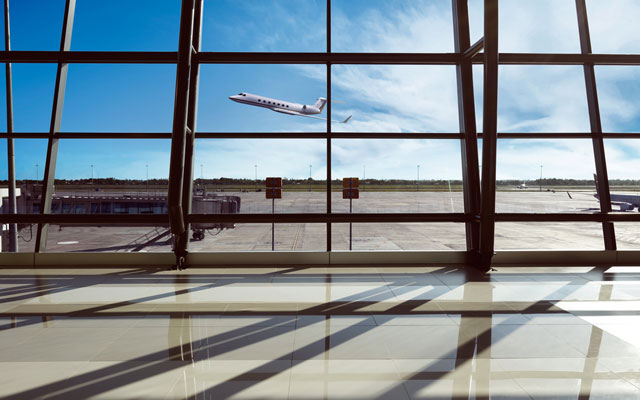
Demand for air travel has continued to fall, due to increased travel restrictions by governments to combat new Covid variants.
According to the IATA, passenger traffic fell in January 2021, both in comparison to pre-Covid levels (January 2019) and the immediate month prior (December 2020).
The aviation industry is expected to burn through US$75-$95 billion in cash this year, according to IATA
Total demand in January 2021 (measured in revenue passenger kilometers or RPKs) was down 72% compared to January 2019 (2020 statistics are distorted due to the impact of Covid-19). That was worse than the 69.7% year-over-year decline recorded in December 2020.
Total domestic demand was down 47.4% versus pre-crisis (January 2019) levels. In December, it was down 42.9% on the previous year. This weakening is largely driven by stricter domestic travel controls in China over the Lunar New Year holiday period.
International passenger demand in January was 85.6% below January 2019, a further drop compared to the 85.3% year-to-year decline recorded in December.
“2021 is starting off worse than 2020 ended and that is saying a lot. Even as vaccination programmes gather pace, new Covid variants are leading governments to increase travel restrictions,” said Alexandre de Juniac, IATA’s director general and CEO.
“The uncertainty around how long these restrictions will last also has an impact on future travel. Forward bookings in February this year for the Northern Hemisphere summer travel season were 78% below levels in February 2019.”
Asia-Pacific airlines’ January traffic plummeted 94.6% compared to the 2019 period, virtually unchanged from the 94.4% decline registered for December 2020 compared to a year ago. The region continued to suffer from the steepest traffic declines for a seventh consecutive month. Capacity dropped 86.5%, by far the lowest among regions.
Middle Eastern airlines saw demand plunge 82.3% in January compared to January 2019, which was broadly unchanged from an 82.6% demand drop in December versus a year ago. Capacity fell 67.6%.
China’s domestic traffic was down 33.9% in January compared to January 2019, dramatically worsened compared to the 8.5% year-over-year decline in December. The fall was owing to stricter traffic controls ahead of the Lunar New Year holiday period amid several localised Covid-19 outbreaks.
Australia’s federal government has extended by another three months the emergency travel ban through to mid-June, amid concerns that the pandemic continues to pose a public health threat to the country.
The emergency directive, initially slated to end on March 17, 2021, has been pushed back to June 17, with federal health minister Greg Hunt saying that the move was due to the “unacceptable risk” of Covid-19 outbreaks in other countries.
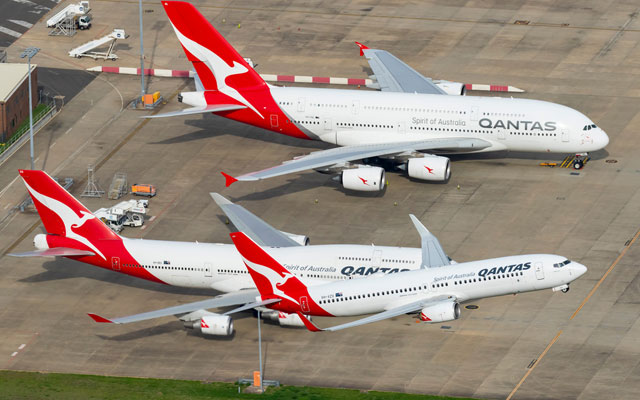
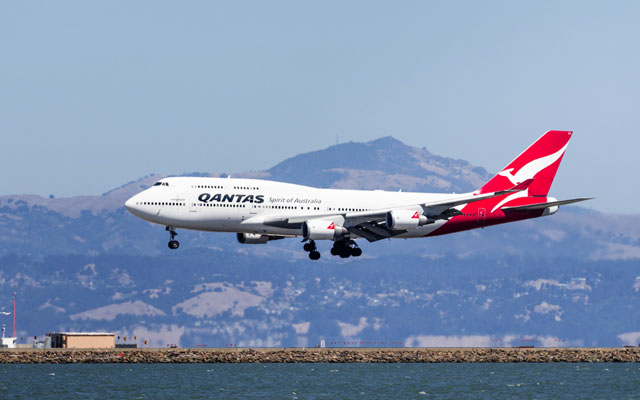
Qantas delays reboot of international flights to end of October
The international travel ban first kicked in on March 17, 2020 under the Biosecurity Act 2015, with the initial outbreak of Covid-19. The ban was due to expire in December, but was extended for three months, and now once again.
Hunt said: “The Australian Health Protection Principal Committee has advised the Australian government (that) the Covid-19 situation overseas continues to pose an unacceptable public health risk to Australia, including the emergence of more highly transmissible variants.
“The extension of the emergency period for a further three months is about mitigating that risk for everyone’s health and safety.”
During the emergency period, precaution measures that will prevail include pre-departure testing and mandatory mask-wearing on international flights, and restrictions on international travel for Australians leaving the country. Trading restrictions on retail stores at international airports will also continue, while cruise ships are banned from operating within Australian territory.
However, Hunt said, the Australian government continues to work closely with relevant authorities and the cruise industry “to develop a framework for the staged resumption of cruise ships in a manner that is proportionate to the public health risk”.
Meanwhile, Qantas has pushed back by four months its plans for the restart of international flights to end of October, when the country’s vaccination programme is expected to conclude.
Veganism’s influence in the tourism space is growing, with vegan-friendly tours, excursions and digital travel apps emerging as another tool for travel companies to attract eco-focused travellers, according to GlobalData.
As tourism companies look to recover from Covid-19, they see greater personalisation as key in helping to ensure customer satisfaction. Consequently, accommodating every traveller type – vegan included – will be critical in the future of travel.
Veganism’s influence on the travel industry will grow, says GlobalData
Johanna Bonhill-Smith, travel and tourism analyst, commented: “A common objective across the entire travel and tourism sector is to deliver a ‘seamless’ traveller experience for each customer along every touchpoint, on an individualised, trip-by-trip basis.
“Vegan travellers can often encounter problems ranging from where to stay to a lack of suitable meal choices. Language barriers and cultural differences can often exacerbate these problems. This creates an opportunity where personalised recommendations are lacking and catering for a growing vegan consumer base could soon be a key differentiator.”
Unique apps have emerged, with Veg Visits and Air Vegan identified as key innovators. Veg Visits, for example, is a vegan home-sharing platform providing individuals with ‘vegan hosts’ across 80 countries. Air Vegan rates how vegan-friendly an airport is, giving users insights into the best vegan food spots within it.
Some lodging providers also commonly provide for the vegan tourist – for example, Hilton opened its first vegan hotel suite in 2019. Tour operators are also capitalising on this market with smaller companies such as Responsible Travel promoting 34 vegan holidays across destinations worldwide including Greece, Ethiopia, India and Costa Rica.
Bonhill-Smith said: “The view that a vegan diet reflects a more sustainable form of lifestyle is gaining increased traction and is no longer considered a market niche.”
In a GlobalData survey conducted in December 2020, 76 per cent of over 5,700 global respondents say they were influenced by how ethical/environmentally friendly/socially responsible the product/service is. Prior to Covid-19, only 46 per cent of global respondents say they actively buy products that are ‘better for the environment or animal friendly’ in GlobalData’s 3Q2019 consumer survey, which polled more than 29,000 respondents.
“This suggests travellers’ perceptions are changing during Covid-19 and many may decide to make more environmentally-friendly decisions – including going vegan,” Bonhill-Smith said.
“Servicing a traveller’s every need is going to be critical in post-pandemic recovery to both restore confidence and ensure satisfaction. With a greater level of satisfaction, there is, in turn, a higher chance to attract loyal customers – a promising prospect in light of Covid-19 and the detrimental losses it has inflicted on company revenues,” he added.
“As travel companies aspire to personalise each individual’s experience, ‘veganism’ should be an area to be acknowledged and acted upon, not ignored across the tourism sector.”
Turespana, or Tour Spain, in Guangzhou is the first European NTO to partner COTRI (China Outbound Tourism Research Institute) in its Advantage: Tourism (A:T) programme to reboot business from China.
COTRI CEO, Wolfgang Georg Arlt, said: “With the progress of testing and vaccination, the easing of restrictions can be expected in the coming months. What is important is to prepare now for the new wave of Chinese outbound tourists to stay ahead of the competition.”
Spain expects 300,000 visitors from China this year; tourists at Puerta del Sol in Madrid, Spain pictured
Spanish stakeholders participating in A:T include DMOs and NTOs that support tourism, food, and others, he added.
According to COTRI, only a trickle of Chinese living within the Schengen Area are crossing into Spain, but is predicting “a deluge once virus-related restrictions are lifted”. As for Greater China, Spain is already receiving visitors from Macau, Arlt noted.
China sent 700,000 visitors to Spain in 2019. That number dropped to 100,000 in 2020 – mostly in January and February – due to travel bans implemented amid the pandemic.
With the vaccine rollout globally, Spain is expecting 300,000 visitors from China this year. Most are expected to arrive in the second-half of the year, and will originate from first- and second-tier cities like before.
Arlt said content for Tour Spain’s pilot project focuses on gastronomy and shopping for local products, and is in line with the overall plans for tourism development in 2021 and steps for further digitalisation. Technology partners in A:T are Planet, Tencent Cloud International and TCI Research.
Meanwhile, another European partner will join the A:T programme this month and COTRI is in discussion with several other partners, including big attractions, international hospitality and transportation companies.
The aim of A:T, launched late last year, is to focus on delivering quality, bespoke products to different Chinese source market segments to create new demand in different parts of a destination at different times of the year; and to recommend management practices to promote sustainability.
The programme audits and analyses existing and possible new offers with stakeholders learning via online China Tourism Training and accessing a private-public sector partnership task force to match bespoke offers and source market segments.
A:T solutions, according to COTRI, are based on sustainable, long-term development approaches to benefit guests, the host community and those working in the industry to improve yield and market share, and to minimise the ecological footprint.
Qantas is set to operate a series of mystery flights for domestic travellers keen to satisfy their wanderlust amid international travel restrictions.
The national carrier last operated mystery flights in the 1990s when travellers would turn up at the airport and be allocated seats on a scheduled flight to any of the airline’s destinations where they spent a day at their leisure before flying home.
Qantas mystery flights will take passengers to an unspecified destination outside major capital cities
Building on that concept, Qantas will offer three mystery flights onboard Boeing 737 planes that will include not just the flight, but an entire day of activities in a mystery destination that will be outside major capital cities.
Qantas Group CCO, Stephanie Tully, said the mystery flights were about giving Australians memorable travel experiences and promoting domestic tourism.
“Our customers tell us that where they can and can’t travel within Australia has been a bit of a mystery lately,” she said.
“The vaccine rollout is bringing a lot more certainty and domestic border restrictions should soon be a thing of the past. In the meantime, these flights turn that mystery into a positive by creating a unique experience for the many people keen to start travelling again.
“As well as helping bring more of our people back to work, these mystery flights are another way to support tourism operators in regional areas especially, who have been hit particularly hard by several waves of travel restrictions.”
The airline’s mystery flight experience is the latest in its series of concept flights to boost domestic tourism amid the ongoing pandemic, following its flights to nowhere (when domestic border closures were at their peak) and flights to somewhere (when initial reopening began last year).
The mystery flights will depart from Sydney (April 18), Brisbane (March 27), and Melbourne (May 1) to a destination within approximately two hours. As part of creating a unique onboard experience, the flights will include some low-level scenic flybys of key landmarks en route.
Experiences on the ground could include anything from a winemaking course in a premier Australian wine region to a gourmet lunch with musical entertainment on the shores of one of Australia’s tropical island wonders.
For each mystery flight, the airline has provided clues for customers to pick their preferences and to assist with baggage packing.
Seats on the mystery flights go on sale on Qantas.com at midday today. The all-inclusive fares, which include meals and alcoholic and non-alcoholic beverage plus activities on the ground, are A$737 (US$574) for Economy and A$1,579 for Business. All three flights will operate with net zero emissions, with 100 per cent of emissions carbon offset.













Galaxy Entertainment Group has signed a deal with Accor to open an exclusive all-suite tower, Raffles at Galaxy Macau, within the integrated resort in 2H2021.
Located on the resort’s east promenade, Raffles at Galaxy Macau will feature approximately 450 suites, with a glass airbridge connecting the two towers on every floor. A selection of suites will boast their own private pools and gardens, while a small number of unique loft suites will be fitted with double-storey windows.
Guests may enjoy Raffles’ legendary signature afternoon tea experience or unwind in a secretive twist on the Raffles’ hallmark Long Bar – provenance of the iconic Singapore Sling – where they can sip a new iconic Sling tailored for Macau, or escape to The Glass House for breakfast or an elegant snack to enjoy the outdoors, in an indoor environment.
The Glass House, set amidst a Mediterranean-inspired garden, is within a few steps of the Raffles’ private infinity edge pool. Details on a luxury spa, and a specialty restaurant whispered to be helmed by a multi-Michelin-starred Japanese chef, are still under wraps. Guests will also enjoy easy access to entertainment, shopping, dining and leisure attractions at Galaxy Macau, directly connected to the resort’s lobby podium.