

SG-HK air travel bubble to take off on May 26
The much-delayed air travel bubble (ATB) between Singapore and Hong Kong that will allow quarantine-free travel between the two cities is poised to kick off on May 26.
This comes six months after the ATB’s original planned launch last November was deferred by both parties due to the worsening Covid-19 situation in Hong Kong.
Both parties will start the Singapore-Hong Kong ATB cautiously, with one flight a day in each direction, capped at 200 passengers on each flight for the first two weeks, Singapore’s Ministry of Transport (MOT) said in a statement on Monday (April 26). The numbers will be reviewed thereafter, it added.
Singapore’s transport minister Ong Ye Kung said in the release: “I am happy that Hong Kong got the Covid-19 situation under control. It has been a long few months, but the conditions are now ripe again to relaunch the ATB. Both sides will need to stay very vigilant in the next one month, so that we can launch the first flights smoothly. It is a significant ATB between two aviation and financial services hubs in Asia.”
Hong Kong’s secretary for commerce and economic development, Edward Yau, added: “With gradual stabilisation of the fourth wave of epidemic in Hong Kong, we have been engaging in active discussion with Singapore on the relaunch of ATB. The two governments have reached consensus on the latest arrangements and will put in place more stringent public health protocols in response to the latest epidemic development. Our goal remains striking a right balance between public health and travel convenience so that the public will feel assured while providing certainty.”
Both sides will closely monitor the Covid-19 situation from now to the ATB’s targeted launch date, and will proceed with the launch if the situation continues to be steady and under control in both cities, said MOT.
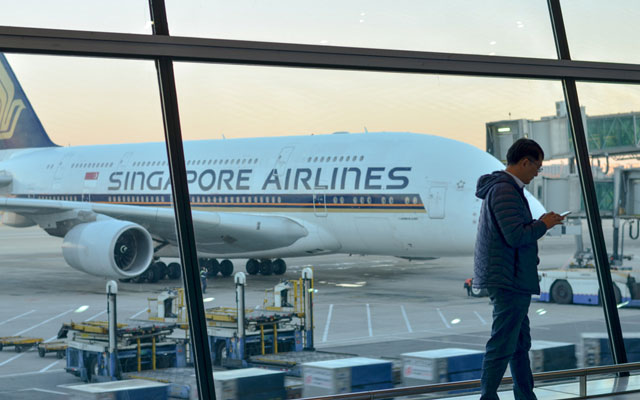
The ATB flights will be operated by Singapore Airlines (SIA) and Cathay Pacific.
Welcoming the move, a spokesperson from SIA, said in a statement: “This is an important milestone in our recovery from the Covid-19 pandemic, and helps to establish confidence in the safe resumption of international air travel with the necessary protocols in place. Singapore Airlines strongly support all efforts to open the Singapore air hub up in a safe and calibrated manner. We will continue to be nimble and flexible in adjusting our capacity to meet the demand for air travel.”
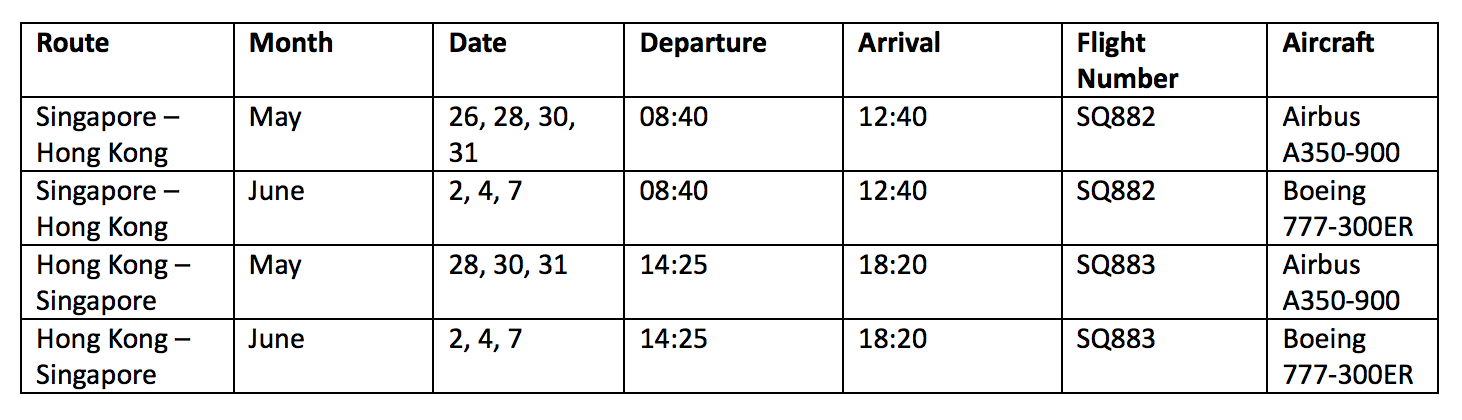
SIA has also released its ATB flight schedule to and from Hong Kong.
The airline’s inaugural ATB flight from Singapore to Hong Kong, SQ882, will depart on May 26; while its inaugural ATB flight from Hong Kong to Singapore, SQ883, will depart on May 28.
From May 26 to June 7, the flight schedule will be as follows:
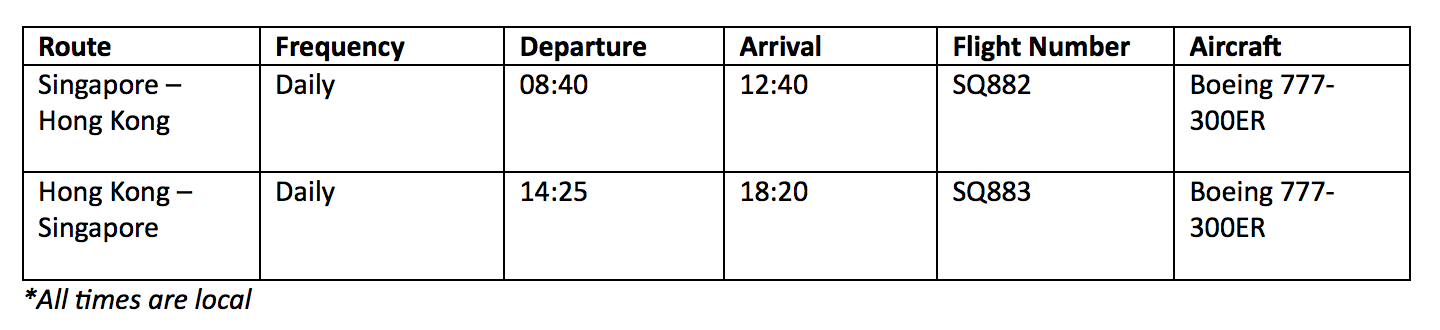
From June 9, SIA will operate daily ATB flights, with the schedule as below:
In a statement, Cathay Pacific said that these ABT flights will be operated by pilots and cabin crew who have all been fully vaccinated.
“With travel having been difficult for everyone over the past year, we know that our customers have been eagerly anticipating the launch of our Hong Kong-Singapore air travel bubble flights so that they can rediscover the joy of flying. We believe the safe and secure bubble flights will be a milestone showcase for the opening of similar travel arrangements with other popular destinations,” said the airline.
Cathay Pacific’s ATB flights will operate as CX759 and CX734 using the airline’s modern, fuel-efficient Airbus A350-900 aircraft. The inaugural CX759 flight from Hong Kong will depart on May 26, while the first CX734 flight from Singapore will depart on May 27.

From May 27 to June 9, the flight schedule will be as follows:
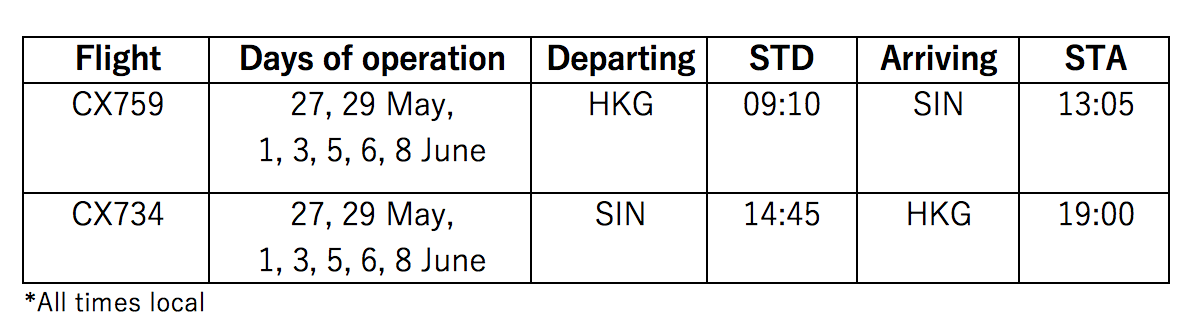
From June 10, Cathay Pacific will operate daily return ATB flights to Singapore.
This article has been updated to include Cathay Pacific’s comments and ABT flight details.
TTG Conversations: Five Questions with Bill Bensley, BENSLEY
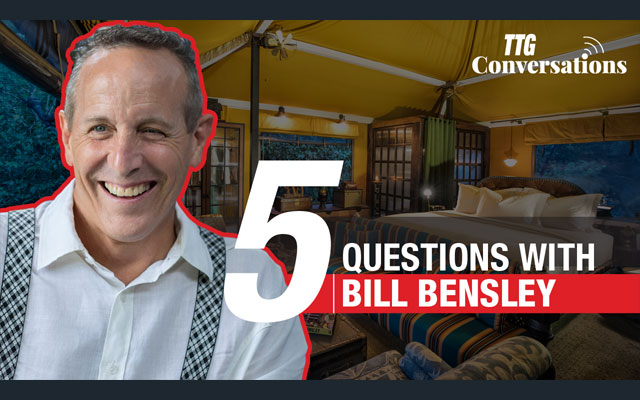
The global travel freeze has put tremendous pressure on environmental and wildlife conservation efforts, as funding from supporting tourism businesses has diminished while economic hardships have forced some locals to return to detrimental activities, notes Bill Bensley, founder and creative director at BENSLEY.
To keep conservation efforts going, Bensley, who is behind the renowned eco-friendly luxury resort, Bensley Collection – Shinta Mani Wild in Cambodia’s Cardamom National Park, has taken over park protection financing on his own.
In this new episode of TTG Conversations: Five Questions video series, Bensley also talks about how he is supporting resort staff impacted by the tourism crisis as well as local villagers through his Shinta Mani Foundation’s organic farms, his work with the Wildlife Alliance, and the fun remedies he has prescribed to encourage resort bookings and donations to conservation efforts.
Travel restrictions against travellers from India on the rise
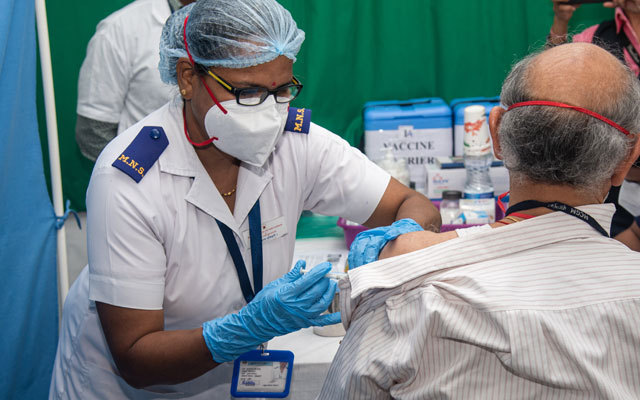
More countries are imposing travel restrictions on Indian arrivals as India continues to grapple with her worst Covid-19 wave of infections.
Some 349,691 new infections were recorded on April 24 alone, giving India the dubious honour of being a record breaker for the most number of Covid-19 infections in a day.
New Zealand, the UK, Italy, the US, the UAE, Indonesia, Singapore and Hong Kong are among countries that have imposed temporary restrictions on travellers who have resided in or visited India.
For instance, New Zealand is suspending the entry of all travellers from India, including her own citizens, for two weeks between April 11 and 28, while the UAE has barred the entry of travellers from India for 10 days from April 25 until May 4.
Humanitarian help is pouring into India as the crisis intensifies. The European Commission is coordinating with member countries to provide oxygen and medicine to India, while Singapore state investment firm Temasek is sending medical equipment, including oxygen-related supplies.
Over the weekend, the White House announced it would lift a ban on sending raw materials abroad, enabling Indian vaccine manufacturers to make more AstraZeneca vaccine.
Amid growing global concern for India’s predicament, Rajeev Kohli and Rohit Kohli, joint managing directors of Creative Travel, one of India’s largest travel and tourism companies, have published a statement urging the public to appreciate India’s past success in Covid-19 pandemic containment.
They noted that the number of cases had dropped across the country, allowing a relaxation of movement restrictions. However, that led India to drop her guard, they opined.
“Our governments, central and state, allowed for large political and religious gatherings (in the millions), and this was perhaps just (the) opening that the virus was looking for. Our governance lacked the foresight to see what was coming. The second wave came so fast that it took us all by surprise. We were not prepared,” they wrote.
The Kohli brothers also expressed: “As you see images of India this week, let’s not forget all the images we saw of body trucks in New York or stretchers on the street in Italy. The world is all the same. We have all suffered the same aspects of the pandemic. A small difference in India is that our last rites are very public, very poignant and very visual, and that makes for good news headlines and graphics. As much as we hate it, we need to accept that media markets tragedy.”
The statement emphasised India’s ongoing efforts, such as the national vaccination programme, as well as the country’s low caseloads and low mortality rates. “India still has one of the lowest per million caseloads and one of the lowest mortality rates at 1.13 per cent against the world average of 2.12 per cent. We have had an average of 147 deaths per million of population, and only 1.3 per cent of the population has been infected,” they wrote.
The statement concluded with a belief that India’s resilience, spirituality and supportive community will take the country out of the latest crisis. – Additional reporting by Rohit Kaul
Leslie Chiyoma takes helm at Grand Park Otaru
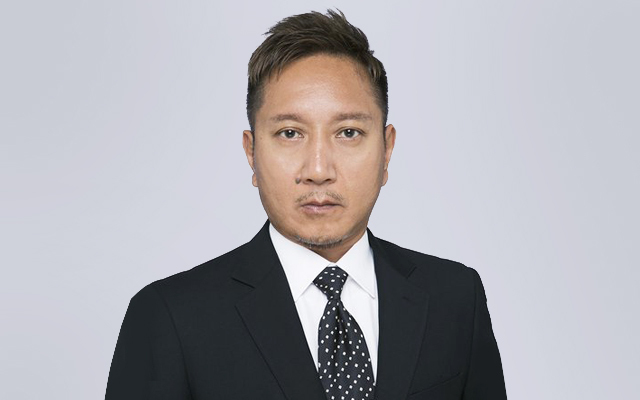
Grand Park Otaru has appointed Leslie Chiyoma as general manager of the hotel.
With more than 20 years of hospitality experience, Chiyoma has held leadership appointments with luxury hotel chains and select service hotels in Japan, Asia-Pacific, Middle East, and Africa.
Born in Saitama, Japan, Chiyoma started his career as a sales manager in an international hospitality company. He worked across multiple functions and rose through the ranks to leadership positions that required him to oversee the development of a new resort and operate a new hotel in Niseko, Hokkaido.
He was also a hotel performance consultant for nearly a decade where he provided analysis and guidance for 38 hotels across the world.
Meliá Koh Samui


Location
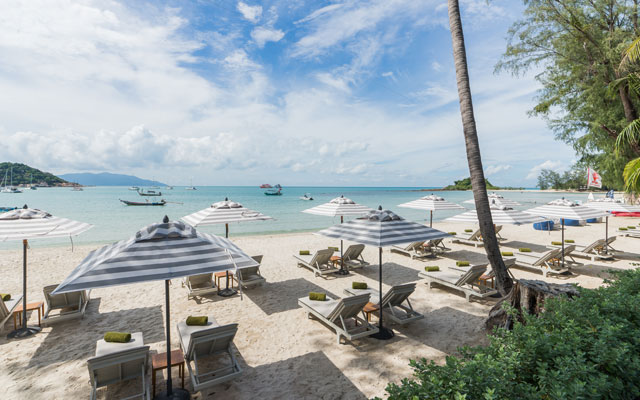
Meliá Koh Samui is located only 15 minutes from the airport on Choeng Mon Beach, a series of bays on the northeastern tip of the island, close to Chaweng. The property is more upscale than the neighbouring Big Buddha beach, and while its pristine white sands are a tranquil home for a few other three- to five-star resorts, the beach is very quiet for guests.
Rooms
Dotting the property are iconic 100-year-old teakwood barges, a throwback to Thailand’s maritime heritage when golden teakwood barges sailed the Chao Phraya River with their cargoes, mainly rice. In the 1990s, when Samui had reached its peak as a tourist destination, the antique barges were bought and towed to Choeng Mon Beach and transformed into the Imperial Boat House Samui resort, before it was renovated and reopened as Meliá Koh Samui in January 2020.
During the renovation, all the barges were meticulously restored and transformed into the unique Level Boat Suites, of which there are several sizes to woo honeymooners. Several layouts are on offer, but most boast two stories – a cozy bedroom on the upper floor, with a wooden staircase taking guests to the lower level where they will find an atmospheric living room space decorated with oars and boat paddles and ethnic fabrics. Some suites open to balconies, while others offer lagoon pool access.
Meliá Koh Samui also offers Deluxe Rooms, Premium Rooms, Family Suites and a Presidential Suite. There are also Premium Pool Access Rooms with a generous balcony and sunbed from which guests can conveniently dive into the resort’s pool loop for a swim. Altogether, there are 159 rooms and 41 suites (34 barge suites).
F&B
During Covid times, the resort has been courting the domestic crowd with its lavish F&B offerings, including a very extensive Sunday brunch menu which has created buzz among Samui residents.
Malaysian chef Azizskandar Awang, who joined Melia Koh Samui from the Anantara Lawana Koh Samui, previously won recognition from the Hotelier Awards Asia 2018 and Thailand Tatler.
Together with his team of chefs at the Breeza Beach Restaurant and Bar and Koko Kitchen, he has crafted all the delightful Mediterranean cuisine on offer, such as the Tapas buffet which boasts an entire leg of Iberian ham carved on the spot, paella and other Spanish delights, an eight-course Italian dinner, and an enticing breakfast menu. During breakfast, a delectable charcuterie cart also makes its rounds from table to table.
For those looking to create customised events, the hotel also has a special indoor private dining room suitable for corporate gatherings and meetings, and an outdoor barbeque space on the sand where meals can be served picnic-table style with a pop-up minibar for crafted beachside cocktails.
Facilities
The playful facilities at Meliá Koh Samui very much enhance the resort and add to its appeal.
In keeping with the marine theme, a lagoon pool weaves throughout the resort. It flows past the pool access rooms and barge suites, and through a river pool, ending in a vast two-level infinity pool overshadowed with sweeping palms that makes for a breathtaking panoramic sight against the ocean backdrop. Guests can lounge on the pool floats early on sunny mornings for that mind-blowing Instagrammable shot.
A small water park with a slide, umbrella fountain and pool bar sits in the middle of the resort, promising hours of fun for families and kids. It is located right below the kids’ club, which offers childcare for parents craving some couple time.
In the afternoons, guests can meander down to the cotton candy bar, open between 16.00 to 17.00, for free cotton candy spun right on the spot, which you can enjoy while dangling your feet from the beach-side hammocks as you admire the sunset over the bay beneath the palms.
At YHI Spa, we are placed into the capable hands of Kantima Chompoolad, the resort’s wellness manager. With over 15 years of hospitality and wellness experience, she and her therapists have created treatments coupled with Haarn products, a local Thai aroma and spa brand. Guests can also enjoy a Thai herbal steam pre- or post-treatment, and relax in the luxury of a private treatment room with fully adjustable lighting and sound volumes.
The resort also has 548.9m² of meeting and events space on offer, with the Dok Mui ballroom and six smaller meeting rooms; and a fitness centre.
Not to be forgotten are the brand’s signature Power Lounge, which houses a billiards table and healthy minibar, and the Levels executive lounge, which offers a private breakfast buffet and opens into a large outdoor rooftop event space, the perfect place to down early-evening cocktails while soaking in panoramic views of the glistening Gulf of Thailand.
The Gallery store in the lobby has local products from social businesses on offer, and the massive Boat Bar and dining area in the lobby area (closed during Covid times) adds to the resort’s already vast F&B offerings.
Service
As a guest, I experienced wonderful service from the enthusiastic team and kitchen staff at Meliá Koh Samui who are very passionate about what they do and always happy to share the resort’s story, such as the lore behind the old maritime photos in the lobby, or the meaning behind the names of the meeting rooms, some of which are named after the island’s official flower, a delicate white bloom called Dok Mui.
The resort is a sprawling property, and friendly staff manning golf carts were on call at all times to shorten the time it took me to get around.
The resort has, like other Meliá properties, implemented Stay Safe With Meliá – a safety and hygiene programme audited by Bureau Veritas, a global leader in inspection, certification and testing. Every room is stickered shut after cleaning to ensure non-contamination.
During our stay, we were also treated to a beautiful island-hopping outing in collaboration with Oceana Samui, that included a full-scale multiple course seafood BBQ-grill picnic paired with bubbly champagne and wines on the sands of the nearby Koh Tean island. The resort collaborates with the Oceana Samui tour company to create tailored private group outings.
Verdict
Meliá Koh Samui is a resort that readily draws us in to experience its charms. Be it solo travellers solo, group of friends, families, honeymooners, or small corporate groups, the resort’s cohesive offerings has something to please every demographic.
Number of rooms 159 rooms and 41 suites (30 barge suites)
Rate 6,665 baht nett (US$213; the current opening offer for a Premium Pool Access Room)
Contact details
Tel: +66 77 938 899
Email: reservation.kohsamui@melia.com
Website: www.melia.com/en/hotels/thailand/koh-samui/melia-koh-samui-beach-resort/services.htm
Tourism Malaysia unveils interactive e-brochures as part of digital push

Tourism Malaysia has rolled out five new interactive brochures and travel guides, in a rebranding of the agency’s digital travel brochures.
Dubbed Interactive Digital Brochures, they can be accessed via Tourism Malaysia’s recently-revamped microsite, ebrochures.malaysia.travel.
Tourism, arts and culture minister Nancy Shukri said that the interactive brochures “gives new life to digital brochures in pdf format, which previously could only be downloaded and printed”.
Initially, five popular Tourism Malaysia digital brochures have been uploaded on the site, namely, Malaysia Travel Guide, Kuala Lumpur the Dazzling Capital City, Langkawi the Jewel of Kedah, Islands and Beaches, and Adventures with Nature. More interactive brochures will be uploaded in time, Nancy said at the launch on April 20.
The all-new digital versions incorporate interactive multimedia elements such as text, audio, graphics, animation and video.
The site is user-friendly and more responsive, thus, making it easier for the public to access the brochure via mobile devices, tablets and laptops. Additionally, the contents of the digital brochures can be easily shared through various apps like Facebook, Twitter, WhatsApp, and even email.
Nancy revealed: “The launch of Interactive Digital Brochures is in line with efforts to intensify the digitisation of tourism to revitalise the tourism industry, as outlined under the National Tourism Policy (DPN) 2020-2030.
“This site utilises Google Maps links to help tourists and tour operators to plan trips, choose suitable accommodations and find out (surrounding) facilities such as petrol stations, restaurants, parking facilities and hospitals.”
Bangkok Airways operating at 30% capacity, targets domestic tourists
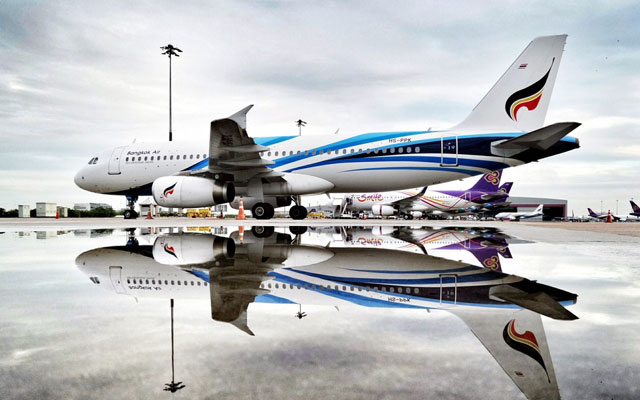
Bangkok Airways is currently operating at only a third of its full capacity on domestic routes, as border curbs continue to hamper air travel recovery.
Of its fleet of 39, the airline is currently flying only 13 aircraft – six airbuses, and seven ATR72-600s – some on scheduled flights, and others on chartered flights.
Operating at such low capacities has impacted the airline’s revenue. At the end of November 2020, Bangkok Airways announced a total revenue of 903 million baht (US$28.7 million) for its operating results in 3Q2020, a decrease of 86.5 per cent year-on-year with net losses of 1,585.1 million baht.
Komkrit Ngamwongwirot, director of key account and ancillary product, Bangkok Airways, said that the airline’s sole focus is on domestic passengers for the time being.
“Similarly to other peers in the industry, we’ve had to shift our focus to domestic. So the message and the media have changed. Thais use a lot of social media, so instead of focusing on the traditional media which also costs more, we use a lot of social media as a medium to communicate with customers at the moment,” he shared.

Bangkok Airways used to heavily advertise its international routes – which was a major source of income for the airline pre-Covid, as it flew to 10 other countries in East Asia – and had earlier this year planned to resume international routes in 4Q2021. However, due to Thailand’s worsening third Covid-19 wave coupled with a lack of clarity from the government on a timeline for reopening to international flights, the airline has shelved plans for resuming international flights indefinitely.
“In the short-term, I see some consolidation of airlines post-Covid because of the financial issues,” Komkrit predicted. “In the medium-term, we see technology playing a big part for airlines. We’re moving to digital, API, contactless and biometric technologies. Also, new city pairs (may emerge for) airlines; instead of flying into big cities, hub and spoke, I foresee that in the future, airlines may be looking at smaller city pairs.”
As Thailand’s current third wave of Covid-19 is expected to intensify further, Bangkok Airways has announced that it will postpone the inauguration of its new flight route between Bangkok to Mae Sot until October 17, 2021.
As of April 22, the airline also reported that three routes will be temporarily suspended as follows: the Phuket to Hat Yai route from April 23 to October 30, 2021; and the Bangkok to Sukhothai and Bangkok to Trat routes during the entire month of May 2021.
Singapore further tightens border measures for travellers from India
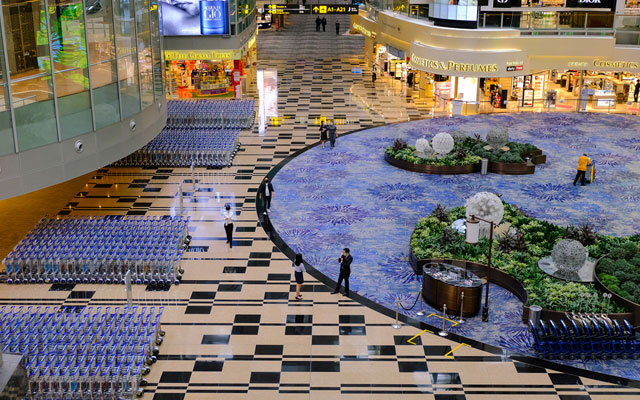
Singapore will ban all long-term pass holders and short-term visitors with recent travel history to India within the last 14 days from setting foot into or transiting through the country from Friday (April 23), 23.59.
This applies to travellers who have obtained prior approval for entry into Singapore, the Ministry of Health (MOH) said in a press release on Thursday (April 22).
In addition, all travellers with recent travel history to India who have yet to complete their 14-day stay-home notice (SHN) by April 22, 23.59, will need to complete their additional seven-day SHN at dedicated SHN facilities, instead of their place of residence, according to the release.
They will undergo Covid-19 PCR tests on-arrival, on day 14 of their SHN, and another test before the end of their 21-day SHN period.
Singapore’s further tightening of border measures for travellers from India comes following a surge in Covid-19 cases in the South Asian country. In addition, a new Covid-19 cluster was detected among its migrant worker community earlier this week.
While MOH said that there is no evidence that the recent cases at the Westlite Woodlands Dormitory are linked to the new virus strain from India, it said that the stricter border controls are to guard against the risks of any potential “leaks” from newly arriving workers from India, which could cause another wave of infection in the dormitories. It also cited reinfection risks among recovered workers as the reason for the tightening of measures.
With the emergence of new Covid-19 variants, MOH said that it will closely monitor for reinfection of recovered cases, and is reviewing the country’s border measures for recovered travellers. It added that imported cases suspected of reinfection will be isolated and undergo repeat Covid-19 PCR tests to ensure prompt detection.
The multi-ministry taskforce has been closely monitoring the global Covid-19 situation, “especially given the rapidly deteriorating situation in India”, said MOH.
Buying intentions stay strong for South-east Asia destinations
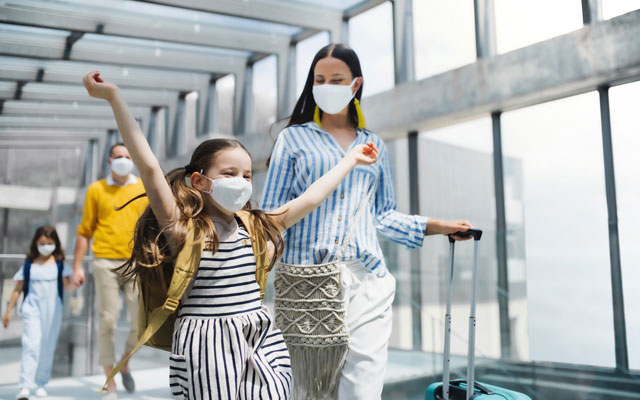
• Buyers say clients are ready to travel as soon as restrictions are lifted
• Vaccination of travellers has helped to boost travel confidence
• Destination research has started; clean and safe destinations are preferred
Although current international arrivals into South-east Asia are still severely marred by a volatile pandemic situation and travel restrictions, regional and international travel trade buyers have begun working on travel programmes in the region for a possible roll-out later this year.
Walter L Keats, president of US-based Asia Pacific Travel, expects travel to South-east Asia to be possible as early as November 2021 and that demand will continue through March 2022 – the typical winter travel season when Americans escape the cold at home.
His confidence is built upon the ongoing vaccination programme in the US and president Joe Biden’s goal to vaccinate all willing residents by July 4, 2021.
“This will unleash a wave of pent up demand for travel by these Americans,” Keats projected, but added that for outbound travel to be possible, destinations and airlines must agree on acceptable vaccination passports.
While waiting for an encouraging travel landscape to materialise, Keats has started to study the South-east Asian marketplace so as to help with travel programming.
Keats is among more than 150 regional and international travel trade buyers that have registered for Great ASEAN Travel Fest 2021, an online travel trade event focusing on promoting South-east Asian destinations and supporting players working towards business recovery. The event is happening on May 4 and 5, 2021. Participation numbers are expected to climb as registration remains open.
Sharing the same confidence is Zaim Muhammad, representative of Dubai-based Travel Counsellor, who expects the UAE’s successful vaccination programme to spur outbound travel confidence.
Zaim believes that South-east Asia, a popular region among UAE travellers pre-pandemic, will continue to charm once international borders reopen.
Melody Palomares, president of MAVP Travel & Tours in the Philippines and president/founder of the United Travel Agencies and Operators Association, has also started to research into South-east Asian destinations with the potential to welcome her incentive groups. Clients have expressed intentions to “push through with their incentive trips once borders are open”.
New and safe destinations with a track record of low Covid-19 infection numbers are desired, shared Palomares.

Traveller health and safety as priority is a prime criteria echoed by several Great ASEAN Travel Fest 2021 buyers who spoke to TTG Asia.
Keats said vaccinated American travellers would be confident of travelling even to destinations without a majority vaccinated population, as long as health and safety protocols are in place, such as safe distancing and masking requirements.
Palomares added that outdoor attractions and activities, such as national parks, would be most attractive for her clients looking for social distance assurance. Destinations that offer contact-less screening technology at airports, hotels, restaurants and attractions would also be stand-out options.
As travel planning begins, buyers underline the importance of regular and detailed communications from destination marketers and sellers, particularly in relaying information on Covid-19 travel and activity regulations, new products and services in existing and emerging tourist destinations, and the availability of flexible booking arrangements.
Slow recovery for now
International air arrival numbers into South-east Asia for the period of January 1 to April 15, 2021 have stayed low, according to ForwardKeys’ Air Ticket Data, reaching only five per cent of pre-pandemic 2019 levels.
Researchers at the intelligence firm are not surprised, given the different pandemic situations among ASEAN member countries. They noted that Singapore, whose government has been successful in controlling caseloads, implementing a nation-wide vaccination programme, moving forward with travel bubbles, and establishing safe meeting zones for business travellers like the Connect@Changi facility, is seeing international arrivals recovering to six per cent of 2019 levels.

Domestic air arrivals within the individual South-east Asian countries look brighter, with Malaysia, Indonesia and the Philippines having clawed their way to 17 per cent, 20 per cent and 24 per cent of 2019 levels, respectively.

Domestic air travel recovery within Vietnam is most outstanding, having surpassed 2019 levels at 120 per cent. The country has escaped relatively unscathed from the pandemic, compared to her neighbours in the region. Domestic flights were resumed and lockdowns lifted in mid-April 2020, allowing tourism recovery to begin from mid-May. Between January 1 and April 11, 2021, domestic air arrivals in Vietnam recorded a 20 per cent increase compared to 2019 levels.
Despite a resurgence of Covid-19 cases in summer, domestic travel picked up steam from 4Q2020 when infections were contained.
Jameson Wong, ForwardKeys’ Asia-Pacific director, told TTG Asia that “the path to recovery in Asia-Pacific will be gradual, fragile and full of unexpected twists as the vaccination drive increases consumer trust, yet a lot depends on the pace of the rollout and new cases of Covid-19”.






New Zealand has temporarily suspended arrivals from Western Australia due to a Covid-19 outbreak, days after a quarantine-free travel bubble opened between the two countries.
“As set out in our Trans-Tasman bubble protocols, travel between New Zealand and Western Australia has been paused, pending further advice from the state government,” a statement on the New Zealand government website read.
The development comes after the Western Australian government announced a snap three-day lockdown for the Perth and Peel regions, starting midnight Friday (April 23) to Saturday, following a community case of Covid-19.
New Zealand and Australia had opened their travel bubble on April 18.