

TTG Asia
Asia/Singapore Monday, 22nd December 2025
Page 936

Beijing Capital Airport gets digital makeover

0

Beijing Capital International Airport (BCIA) has introduced a contactless experience for its passengers, in what SITA has called its most extensive biometric deployment to date.

BCIA joins the many airports around the world, including Singapore’s Changi Airport, which are undergoing digital makeovers to create touch-free experiences in a bid to reduce the risk of Covid-19 transmission.

Biometrics and contactless technologies means passengers can now glide through the Beijing Capital International airport in an entirely touch-free experience

As the busiest airport in China and the second busiest in the world, BCIA has completely automated the entire passenger journey using SITA technology – from check-in and bag drop to immigration, security, and boarding.

Passengers only need to enroll once during check-in, before enjoying a seamless, contactless journey through the airport enabled by facial recognition. Improved processing efficiency also means shorter queuing time and allowing for more social distancing among passengers.

SITA Smart Path can significantly speed up passenger processing at BCIA, processing over 400 passengers boarding an Airbus A380 in less than 20 minutes. As well, SITA Smart Path enables hands-free and touchless duty-free payment, enabling quicker processing by removing the need to retrieve and show a boarding pass at check-out.

The deployment included the implementation of over 600 biometric checkpoints through the airport including 250 lanes of automatic gates, 80 kiosks, and 30 self-bag drop stations which will process passengers from international flights.

The biometric technology is currently activated across multiple checkpoints at BCIA including manual check-in, self-service check-in, bag drop, restricted access, security, and boarding.

Near-term outlook for APAC hotels remains dim

0
Tokyo cityscape and Mountain fuji in Japan

Battered by the coronavirus pandemic, hotels across Asia-Pacific continued to perform poorly in Q2, with a gradual U-shaped recovery likely, according to Colliers International’s Hotel Insights 3Q2020 report.

The report showed that overall room occupancy and average daily rate (ADR) for hotels in the region decreased to 33.9 per cent and US$60.32, respectively. Revenue per available room (RevPAR) for the region declined by some 69.9 per cent year-on-year.

The Covid-19 pandemic has adversely impacted the hotel sector in Asia-Pacific, with Japan among the region’s lowest performers in Q2; Tokyo cityscape against the backdrop of Mount Fuji in Japan pictured

In terms of room occupancy, most markets witnessed year-on-year declines in excess of 40.0 per cent, while Singapore only declined by 14.5 per cent. Japan, Thailand, Hong Kong and Vietnam led the field in being the top five lowest performers.

In local currency terms, Thailand and New Zealand are the only markets that witnessed year-on-year increases in ADR in excess of 2.0 per cent in Q2. Meanwhile, Singapore’s growth gaming revenue (GGR) is expected to drop between 65-75 per cent this year.

Govinda Singh, executive director and head of hotels & leisure for valuation & advisory services, Asia, commented: “The global economic outlook is expected to remain subdued in the near term given the ongoing uncertainty and risks of new waves of Covid-19. Therefore, the outlook for the hospitality industry in the region is expected to be dimmed in the near term.

“Nonetheless, we believe the hospitality industry will rebound when travel returns, given its legacy of resilience and agility. To prepare for hotels reopening, hoteliers will need to take a cross-disciplinary approach so that hotels are well-positioned to build public trust and offer compelling product and service offerings, enabling hotels to thrive in the new operating environment with an evolving customer mix and preferences.”

Domestic travel will return first while international travel, particularly if it involves air travel, will take a longer time to recover. The weekend leisure segment is expected to lead the recovery, driven by the pent-up demand for travel as international travel restrictions and quarantine measures remain largely in place globally.

Underpinned primarily by essential business travel, the corporate travel segment should be next to return, followed by the extended leisure segment, as consumers’ confidence increases over time alongside the lifting of international travel restrictions. Corporate and group segments will likely be last to recover given the high adoption of technology as an effective platform for business activities.

As markets start to recover, consumers will prioritise health, safety and hygiene when it comes to travel planning and decision making. Personal space will also be more important; instead of large tour groups, independent travel will take precedence and people will likely prefer bespoke holidays and seek out travel experiences with a purpose (such as health and wellness, eco-travel, etc.).

Technology will also take on a more critical role in the traveller ecosystem and be a key tool in the revival of travel. Robots, chatbots, automation, recognition technology, artificial intelligence, internet of things, and virtual reality will become increasingly commonplace.

The gradual lifting of restrictions and the implementation of the Chinese government’s stimulus plans, alongside the promotional initiatives to spur growth and consumption, have encouraged the return of domestic tourism in China. This was reflected in the tourism receipts generated from domestic tourism during the Labour Day holiday in May, which was RMB47.6 million (US$6.8 million), as compared to that of RMB8.3 million (US$1.2 million) during the Tomb Sweeping Day holiday in April.

In line with the improving trend of domestic tourism, the hotel industry in China saw an uptick in occupancy levels month-on-month after bottoming out in February. China has also been in discussions with several countries on the easing of borders for essential business travel.

The most liquid markets in Q2 were Japan and South Korea, while markets such as Hong Kong SAR, China and Taiwan saw little investment sales during the quarter. With international travel restrictions in place, domestic investors remain the dominant group in investment transactions.

In the coming months, investment activity is expected to gain pace as investors move to take advantage of any opportunities that will emerge, although cautious sentiment and stricter underwriting remain key given the evolving situation.

For value-add investors and those looking to create a presence in the region’s key city and resort markets, this may be the right time to explore. With access to mainstream financing likely to be limited in the near term, cashed-up investors who can transact quickly will be in prime position.

Millennium & Copthorne Hotels trims SG workforce

0
Grand Copthorne Waterfront Hotel Night Exterior

Singapore-based Millennium & Copthorne Hotels has let go of 159 employees in the city-state as it restructures its operations against the backdrop of a pandemic-induced tourism crisis.

The exercise impacts about 15 per cent of the firm’s Singapore-based workforce, of which 42 are foreigners, reported local newspapers.

Millennium & Copthorne Hotels, which runs more than 100 hotels worldwide including the Grand Copthorne Waterfront Hotel (above), has retrenched 159 employees in Singapore amid the pandemic

This follows a February retrenchment, although group chief operating officer Kieran Twomey said then that the retrenchment exercise was unrelated to the pandemic.

The company has also tightened expenditure, including reducing salaries for senior management by up to 30 per cent.

The group has six hotels in Singapore.

New hotels: lyf Sukhumvit 8 Bangkok, InterContinental Chongqing Raffles City, and more

0

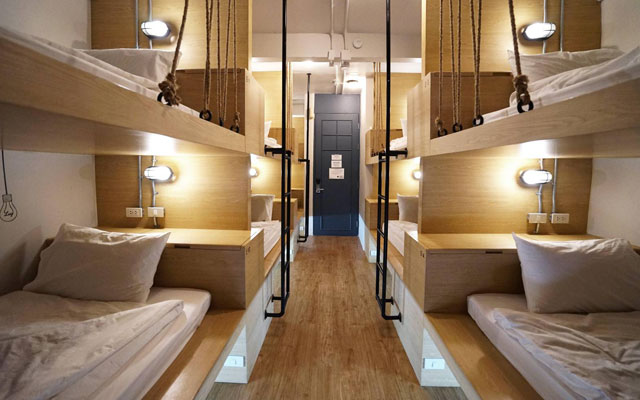
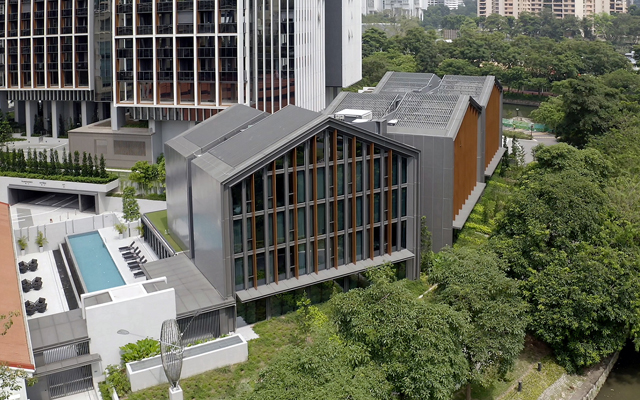
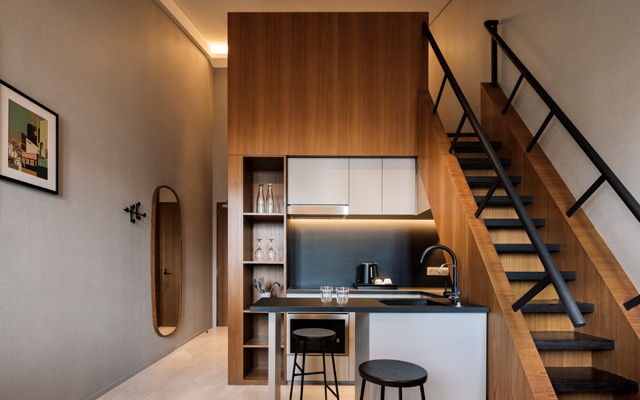
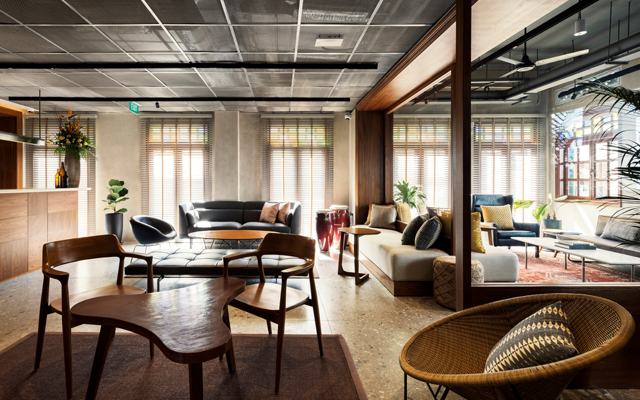
lyf Sukhumvit 8 Bangkok, Thailand
A stone’s throw from Nana BTS Skytrain station is the first lyf property in Thailand. Lyf Sukhumvit 8 Bangkok offers 196 studios, as well as creatively-designed, multifunctional social spaces. These include the Connect co-working and lounge zone, Bond social kitchen, a laundromat, an outdoor terrace and a rooftop fitness area. The property conducts weekly social programmes to build connections and inspire the exchange of new ideas.

InterContinental Chongqing Raffles City, China
Located in Chongqing’s Chao Tian Men Square, the luxury hotel offers 380 keys spread across the 44th to 65th floors in one of Raffles City complex’s eight towers. Facilities comprise a 25m-long infinity pool and fitness centre, while F&B options include Jing Dining Room & Bar serving a blend of Cantonese cuisine and Chonqing’s local specialities, as well as lounges The Maven, and Horizon. Also available are 2,000m2 of meetings and events spaces, including two pillarless ballrooms of 1,250m2 and 450m2.

Quest Palmerston North, New Zealand
Replacing the former Quest Apartment Hotel in Palmerston North, the brand-new, 40-apartment hotel is a joint venture between local iwi, Rangitāne o Manawatū and Wallace Development. Situated in the Palmerston North CBD, the hotel offers studios, one- and two-bedroom apartments. Each studio features a fully equipped kitchenette, while the one- and two-bedroom apartments boast full kitchens, laundry facilities and internet access on-demand. Guests will also enjoy access to local restaurant chargeback and the Quest Pantry Shopping service, which delivers groceries right to the guest’s door.

Holiday Inn Gurugram Sector 90, India
Located in the heart of New Gurugram, Holiday Inn Gurugram Sector 90 will be the first Holiday Inn hotel in the city and the third in the Delhi-NCR area. The 263-room hotel is part of the mixed-use development V3S Sapphire 90, which offers shopping, retail, multiplex, food court, and restaurants. Hotel facilities include an all-day dining restaurant, featuring a bar and lounge, serving Asian, Indian and Western cuisine with both buffet and à la carte offerings. Elsewhere, the Viva All Day Dining offers an interactive dining experience and an urban Aravali landscape view. The hotel also features banquet and meeting rooms spread across 510m2, a rooftop swimming pool, and a 24-hour fitness centre.

Beijing Capital Airport gets digital makeover

0
Interior view of Beijing capital international airport terminal No.3

Beijing Capital International Airport (BCIA) has introduced a contactless experience for its passengers, in what SITA has called its most extensive biometric deployment to date.

BCIA joins the many airports around the world, including Singapore’s Changi Airport, which are undergoing digital makeovers to create touch-free experiences in a bid to reduce the risk of Covid-19 transmission.

Biometrics and contactless technologies means passengers can now glide through the Beijing Capital International airport in an entirely touch-free experience

As the busiest airport in China and the second busiest in the world, BCIA has completely automated the entire passenger journey using SITA technology – from check-in and bag drop to immigration, security, and boarding.

Passengers only need to enroll once during check-in, before enjoying a seamless, contactless journey through the airport enabled by facial recognition. Improved processing efficiency also means shorter queuing time and allowing for more social distancing among passengers.

SITA Smart Path can significantly speed up passenger processing at BCIA, processing over 400 passengers boarding an Airbus A380 in less than 20 minutes. As well, SITA Smart Path enables hands-free and touchless duty-free payment, enabling quicker processing by removing the need to retrieve and show a boarding pass at check-out.

The deployment included the implementation of over 600 biometric checkpoints through the airport including 250 lanes of automatic gates, 80 kiosks, and 30 self-bag drop stations which will process passengers from international flights.

The biometric technology is currently activated across multiple checkpoints at BCIA including manual check-in, self-service check-in, bag drop, restricted access, security, and boarding.

Bringing up NDC

0

Airlines are generally in a bad state during this travel crisis but at a recent Amadeus webinar on the NDC-X programme, you spoke of continued work and investment in NDC projects by your team and airline partners. What is the state of NDC adoption by airlines, particularly those in Asia-Pacific?
We haven’t had any partners stop their projects. Some have slowed down a little because, as you know, they are facing bigger problems – they want to get back in the air and have passengers onboard, which are their top focus.

I think everybody is seeing NDC as the medium- to long-term future. The oil tank has started to turn, and it may take a while to make that complete change in direction but it is not going to stop now.

Most airlines see the advantages for themselves and want to move to this future of retailing. Those who can are continuing. In Asia-Pacific, we’ve had a number of large airlines, like Singapore Airlines, that are using our NDC tools.

But it isn’t just Amadeus that is doing NDC; there are other aggregators in the market that is taking NDC content from airlines.

How is the progress in Asia-Pacific compared to the rest of the world?
I’m seeing airlines in this region really wanting to put differentiating content in NDC, whereas there are some airlines in other regions that are still trying to get the plumbing in place, or are replicating what they are doing now on EDIFACT, perhaps with slight alterations for NDC.

We’ve got other things happening in this region too. When we start to make a big travel agency roll-out of our products, I get the feeling that Asia-Pacific will be in a really strong position (for NDC adoption) and to achieve an essential airline-agency collaboration (for mutual benefits from an improved buying and selling process).

Speaking of that essential buy-in from both seller and buyer for NDC’s success, what is the level of adoption and acceptance today from both parties?
It is still quite low at the moment. We are piloting a few things in the market. We will need all the airlines in the region to be ready, you know, to be fully behind us and in the same way. Although the level of adoption is still low, I expect the next few months to see a great lift-off.

NDC is a two-sided thing and relies on the network effect. What we see on our side is that travel agencies are very demanding about what they want with NDC. What’s the point of (going through the changes) if they are going to get the same air content that they do through EDIFACT channels?

On the other side, airlines need to be ready to put their content (on NDC) and bring something more, something special, or something targeted to the table.

There is still a sense of apprehension among travel agents about NDC, stemming largely from its complexity, the cost of having to alter their processes to accommodate NDC, and fear of losing GDS incentives just so they can access NDC content. Is NDC really as difficult and restrictive?
When NDC was first announced, it was a great, new idea started by IATA with all the airlines pushing for it. It sounded like it was going to be a plug-and-play solution, and the guy programming in his garage will be able to do NDC messaging and create fantastic new apps (to facilitate it).

The reality is that while there is an NDC Standard, it can be interpreted by airlines in different ways. And that’s really where the complexity lies. We face that every day at Amadeus, so I can fully understand why a travel agency doesn’t want to do five different flavours of NDC with five top airlines, and another four flavours with the next tier.

(The differences could come from) NDC version 18.2 from one airline and 19.1 from another. The data can also be different.

Today, the prime booking flow is relatively standard. We are finding that the important (functions) now are servicing, ticketing and payment, and that would include schedule changes and cancellations. These processes can be different from airline to airline, partly due to messaging and partly due to the business practices of the airline. These differences are the ones causing travel agencies to go, “Whoa, I don’t really want to manage all that, just let me get my NDC content from someone with a simplified flow.”

There are a bunch of travel agencies that don’t book (air content) that frequently (and therefore do not see the need to deal with the complexities), but even some of the really large travel management companies are not building direct NDC connections themselves. They are waiting for an aggregator like Amadeus to be in the middle and handle all that complexity in the backend.

Now, at Amadeus, we focus on making it simple for the travel counsellor who can always follow the shop, order, pay workflow no matter which airline he is buying from.

As you can imagine, we are doing a lot of work behind-the-scenes to normalise all that data so that everything (the interface) looks the same and travel agencies are not confused.

We have three common interfaces today – the travel API, Amadeus Selling Platform Connect, and Amadeus cytric corporate booking tool. All handle NDC and traditional traffic. With Amadeus cytric in particular, (NDC and traditional) content looks exactly the same because it is normal people booking and they don’t know anything about NDC and want content as straight-forward as possible.

What about the loss of incentives in booking NDC content?
The thing is, a lot of airlines are using NDC as an opportunity to change their commercial model. There are some travel aggregators in the market that can offer NDC content and are charging travel agencies for accessing their content directly.

From the airlines’ perspective, they see that there is less work for GDSs to do in the middle, so they feel they should not be paying as much. These are commercial discussions that go on between the airlines and us. That might lead to some adjustments to the model, and with that, some adjustments to incentives too.

At Amadeus, we try the best we can to retain the model that is in place and has been very successful for a very long time. We believe the current model can continue to work and bring value to all parties.

The pandemic has led to some significant transformations in the travel and tourism industry. Does the crisis have an effect on NDC progress, perhaps in emphasising certain advantages of NDC that were never before appreciated?
There has been a big focus on NDCs being primarily a selling tool, but it is more than that.

One good thing about NDC is that it can bring along a wealth of information to travel agencies, not just pertinent to the sales process. There is now a lot of talk about rebuilding passenger confidence in the post-Covid phase. Airlines could share information (that helps educate and reassure passengers) on NDC, such as their social distancing rules, their enhanced hygiene and sanitisation procedures on the aircraft or at their lounges, etc. NDC has the capability to convey such information all through the different stages to the sellers and onwards to the customers.

The pandemic (and travel crisis) has also emphasised the importance of servicing. Amadeus has been working hand in hand with travel agencies since the day it was formed, so we know that the servicing side, such as duty of care, emergency support for corporate customers, flexible changes due to shifting meeting plans, etc, are just as important as the price point. In fact, a low price point isn’t enough to make a sale.

At the same time, the use of vouchers was previously not well supported by NDC, but we are starting to discuss how vouchers could be best used going forward.

Are there already airline partners using NDC for such communications?
Not yet. NDC has the rich media capability, but airlines need to understand how they intend to use it (alongside other current communication channels like the press and online) and how to craft their message.

What is Amadeus doing to get the NDC story right with its travel agency community?
It differs with each market segment. Generally though, once travel agencies start looking at the tools Amadeus has put in place (to access NDC content), they will understand that NDC is not a scary thing.

We also take feedback from our travel management and agency community to heart, and invest in making sure the servicing capability works. We cannot do this on our own, so we are sharing feedback with our airline partners and IATA.

Safe restart of tourism is possible: UNWTO

0
Malaysian health Ministry officers use a thermal scanner to check the temperatures of passengers arriving at the Kuala Lumpur International Airport.

UNWTO is urging governments around the world to get the tourism sector back on track, with stringent health and safety protocols in place, stressing that this is “no time for timid leadership”.

According to UNWTO, Covid-19 travel restrictions have cost the tourism industry dearly. Between January and May, the sudden and rapid fall in tourist arrivals cost an estimated US$320 billion – three times the impact of the 2007-2009 Great Recession on the tourism sector.

Safety protocols at ports and airports can drive the safe restart of tourism, says UNWTO; Malaysian health ministry officers using a thermal scanner to check the temperatures of arriving passengers at the Kuala Lumpur International Airport pictured

In an open letter, UNWTO secretary-general Zurab Pololikashvili said: “The reopening of borders to tourism is a welcome relief to millions who depend on our sector. But this alone is not enough, especially in view of recent announcements and measures which seem further and further away from the international coordination that UNWTO has been calling for since the pandemic erupted.

“In these uncertain times, people around the world need strong, clear and consistent messages. What they don’t need are policy moves which ignore the fact that only together are we stronger and able to overcome the challenges we face.”

Stressing on the importance of tourism for jobs and economies, Pololikashvili urged global leaders to do everything they can to get people travelling again, while keeping to safety protocols as part of the new norm.

He added: “As UNWTO has said from the start of this crisis, governments have a duty to put the health of their citizens first. However, they also have a responsibility to protect businesses and livelihoods. For too long, and in too many places, the emphasis has overly focused on the former. And we are now paying the price.

“It doesn’t have to be this way. As a sector, tourism has a long history of adapting and responding to challenges head-on.”

Noting how countries around the world have implemented solutions to adapt to the new reality as a vaccine remains elusive, Pololikashvili said that rapid but rigorous testing at ports and airports, as well as contract tracing efforts have the potential to drive the safe restart of tourism.

He continued: “These solutions need to be fully embraced, not just cautiously explored. To delay will be a catastrophe and risk undoing all the progress we have made to establish tourism as a true pillar of sustainable and inclusive development.

“Moreover, it will be the most vulnerable members of our societies who will be hit the hardest as those most shielded from the economic and social consequences of tourism’s standstill urge continued caution.

“Short-sighted unilateral actions will have devastating consequences in the long run. By and large, people have learned how to behave in a responsible way. Businesses and services have put protocols in place and adapted their operations. Now it’s time for those making the political decisions to close the gaps, so that we all can advance together.”

Agoda lends a hand to WWF’s tree planting project

0

More than 50 Agoda employees, including CEO John Brown, recently worked alongside the local Chiang Mai community to kick-start the planting of 6,000 trees, as part of its CSR sustainability initiative in collaboration with World Wildlife Fund (WWF) Thailand.

In what was its first venture with WWF, Agoda pledged to plant trees on behalf of its hotel partners in Thailand and China. Agodans, some of its hotel partners, alongside local community volunteers, and students from the School of Forest Industry Organization No. 13 pitched in to plant some of the 6,000 trees on August 14.

Agoda employees, including CEO John Brown (fifth from right), took part in WWF Thailand’s tree planting project

The teams prepared the fertilisers and planted seedlings, as part of the WWF effort which also incentivises ten farming families that manage this land to shift from mono-agriculture farming to the ‘three forests, four benefits’ way of managing the land – an agroforestry strategy by Thailand’s late King Bhumibol Adulyadej referring to how trees will produce wood, firewood, fruit, and construction materials. By following that principle, the farmers can help restore the environment and stop topsoil destruction.

The project is part of WWF’s Forest Landscape Restoration Fund 349, based on the ‘three forests, four benefits’ principle. Its mission is to restore the ecosystem, and create a sustainable food system to help farmers escape the debt cycle arisen from monoculture, while conserving the soil, watersheds, and natural forest which helps in flood mitigation.

Chengdu Tianfu International Airport takes shape

0

Qatar Airways refunds US$1.2b ‎

0