The Covid-19 pandemic has upturned the tourism industry, with many businesses scrambling to make sense of new and evolving demands in domestic travel while keeping an eager eye on early signs of recovery.
Recognising the need for clarity and data-driven direction, TripAdvisor launched a slate of live data capabilities and safety search filters to guide the way forward.
Sarah Mathews, its group head of destination marketing APAC, shares that while outdoor and family-friendly adventures are on the rise, the continuously strong demand for urban escapes and dining means that businesses should stay on their toes when providing transparent health and safety information to customers.
In this episode of TTG Conversations: Innovator Chat, Mathews talks about the recent changes to TripAdvisor and what destinations have learned from its new Tourism Sentiment Index.
As a fresh wave of Covid-19 outbreak in Thailand continues to hamper the tourism industry’s rebound, more travel companies and tourist bus operators across the country have ceased operations.
The spate of closures signals that the pandemic has had a far more severe impact on the industry as compared to the financial crisis “Tom Yum Kung” in 1997 and previous episodes of political tensions over the years.
Virus resurgences continue to threaten tourism recovery in Thailand
Earlier this week, the Thai Hotels Association stated that they would only be able to continue retaining their employees for one more month. It also warned that if the dire situation prevails, more hotel closures and staff layoffs are likely to follow.
Meanwhile, the Thai Restaurant Association (TRA) is strongly urging the government to lift the ban on dine-in services at eateries in six provinces – Bangkok, Chiang Mai, Chon Buri, Nonthaburi, Pathum Thani and Samut Prakan – that was enforced following a surge in virus cases after the Songkran Festival.
This followed an earlier order by the government that all restaurants and food shops in the provinces are allowed to open until 21.00 only to offer takeaways. The new measures will put hundreds of thousands of jobs at risk, TRA said.
Between April 2021 and now, some 10 to 15 per cent of the remaining 13,000 travel companies across Thailand have closed their doors.
“Many more tour companies, especially SMEs, are expected to ‘disappear’ in the near future,” Phuriwat Limthavornrat, managing director of P. Incentive Tour Event Co and president of the Association of Domestic Travel said on Thursday (May 6).
He estimated that some 60,000 to 70,000 tourism workers have lost their jobs since the pandemic, with many more layoffs to follow “soon”.
He added that the pandemic has wiped out all non-registered or illegally-run travel companies, while long-established firms with licenses have remained, but downsized staff.
According to president of the Thai Transportation Operators Association, Wasuchet Sophonsathien, more than 20,000 buses out of a total 40,000 to 50,000 buses have been mothballed due to a tourist drought.
As a result, tourist bus operators are suffering losses totalling an estimated 50 billion baht (US$1.6 billion) per month.
Wasuchet said that the tourism lull’s impact on transportation is generally less than that on hotels, based on asset value comparison. As such, bus service providers can afford to wait out the tourist drought for an additional four to five months.
The association is calling on the government for financial assistance as well as to lure foreign tourists back to the country as soon as possible to save the sector from collapse.
Hong Kong has finally put a date to her move to ease quarantine for fully vaccinated inbound travellers – and the relaxation of its strict inbound policy will begin on May 12.
This decision was announced today, after it first revealed its intention in mid-April to shorten mandatory quarantine for fully vaccinated visitors from low-risk countries to just seven days, down from 14.
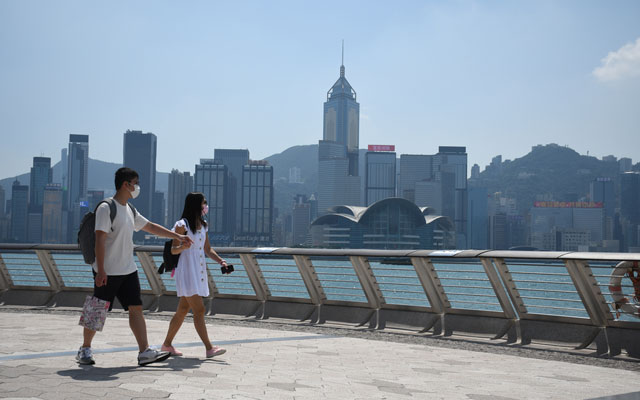
Vaccinated travellers from low-risk countries can enter Hong Kong with just a seven-day quarantine
This will benefit fully vaccinated travellers from countries such as Australia, New Zealand and Singapore. They will be required to self-monitor for an additional week.
Those from high- and medium-risk areas will serve a 14-day quarantine, instead of 21 days, in addition to another week of self monitoring.
Those coming from extremely high-risk areas will still have to fulfill a 21-day quarantine, even if they are inoculated against Covid-19.
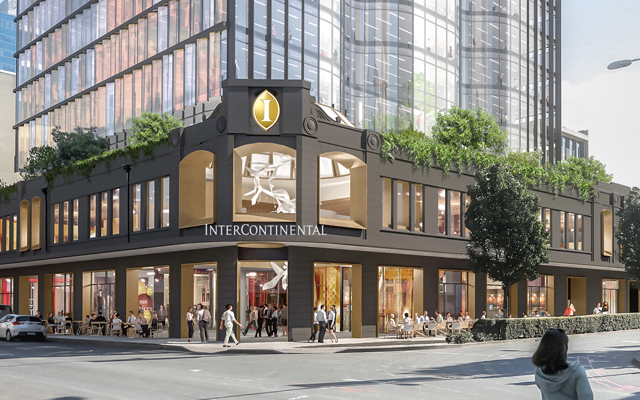
InterContinental Hotels & Resorts is set to arrive in Greater Western Sydney with the opening of InterContinental Parramatta, in partnership with owner Holdmark Property Group.
Artist’s impression of InterContinental Parramatta
Scheduled to open in 2025, the new-build InterContinental Parramatta will be part of a mixed-use development that also includes offices and a ground floor retail precinct.
Located at the junction of two of Parramatta’s most bustling streets – Church and Macquarie Street – the 200-key hotel will feature a restaurant and rooftop bar, club lounge, pool, gym, wellness centre and more than 900m² of meeting space.
Destinations which are opening to vaccinated travellers have seen a significant lift in bookings, showing that vaccinations may hold the key to reviving international travel, according to ForwardKeys’ latest data.
Greece and Iceland, which have announced that they will welcome vaccinated visitors this summer, have seen inbound flight bookings pick up dramatically.
ForwardKeys research shows strong correlation between vaccination rates and outbound travel
Three origin markets, namely, Israel, the US and the UK, where vaccination campaigns are particularly well-advanced, have seen outbound flight bookings climb more steeply than elsewhere.
Greece has seen a surge in interest and flight bookings from major outbound markets such as the US and the UK. The country tops the list of most popular destinations for British travellers this summer, with confirmed tickets for travel between July and September currently 12 per cent ahead of where they were at the equivalent moment in 2019.
Furthermore, analysis of the most resilient destinations in Europe this summer revealed that seven of the top ten cities are Greek. Leading the list is the island of Mykonos, with summer bookings currently standing at 54.9 per cent of what they were at the equivalent point, pre-pandemic.
It is followed by the Spanish island, Ibiza, where bookings are at 49.2 per cent. The next eight destinations in order of resilience are Chania (48.9 per cent), Thira (48.1 per cent), Kerkyra (47.5 per cent), Thessaloniki (43.7 per cent), Palma de Mallorca (41.2 per cent), Heraklion (36.6 per cent), Athens (33.2 per cent) and Faro (32.8 per cent).
The correlation between the announcement of relaxed travel restrictions and bookings is also demonstrated by flight tickets issued from the US to Iceland.
On March 26, its government announced that all vaccinated travellers would be exempt from entry restrictions and the level of issued tickets soared to 158 per cent of what they were during the equivalent week in 2019.
The correlation between vaccination rates and outbound travel is strong, as consumers gain confidence. Bookings to Europe from Israel, which has vaccinated over 60 per cent of its population, are currently at 63 per cent of 2019 levels and bookings from the UK, which has vaccinated over 52 per cent, are at 32 per cent of 2019 levels.
Olivier Ponti, vice president insights, ForwardKeys, commented: “Vaccinations appear to hold the key to reviving international travel, as countries that make clear promises to welcome vaccinated travellers are being rewarded by strong surges in flight bookings. We are seeing a revival of confidence in outbound travel from countries where there has been a successful rollout of Covid-19 vaccines too.”
“From a commercial perspective, the outlook is likely to be a little better than the numbers portray because travellers are booking longer durations. Furthermore, if restrictions are eased in both origin markets and destinations, there are grounds for further optimism because there is strong pent-up demand and, during the pandemic, people have shown themselves willing to make bookings at significantly shorter notice than they used to.”
Sri Lanka’s recent move to ban travellers from India due to the exponential growth in Covid-19 cases there was inevitable as the safety of Sri Lankans remains a priority over economic interests, industry officials said.
Trevor Rajaratnam, former president of the Travel Agents Association of Sri Lanka, called the ban a “sensible” decision to avoid the virus spreading in Covid-19 certified hotels where Indian visitors would come into contact with other foreign guests and local staff.
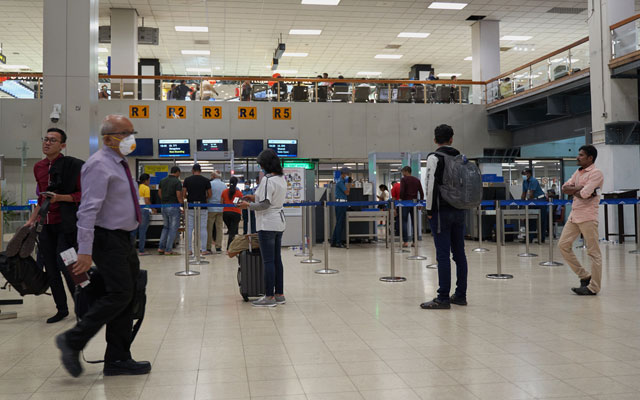
Sri Lanka latest country to impose travel ban on India; people in anti-virus masks at the Colombo airport pictured
On Thursday, Sri Lanka’s Civil Aviation Authority announced that due to the Covid-19 pandemic situation in India, passengers travelling from India will “not be permitted to disembark in Sri Lanka with immediate effect”. Indian travellers were welcome under a special travel bubble.
Since reopening its borders to tourism on January 21, 2021, Sri Lanka has seen only a trickle of arrivals. India has been Sri Lanka’s biggest source market in the pre-pandemic period. However, during the period from January 21 to end-April 2021, Kazakhstan emerged the country’s top source market, followed by Ukraine, Germany and then India.
Hiran Cooray, chairman of the Jetwing Symphony Group of Hotels, also welcomed the government’s move to ban Indian travellers. “Health is our number one priority,” he said, adding that it would also be wise for authorities to enforce a lockdown in Sri Lanka for one to two weeks given the sharp rise in the number of virus cases locally.
On Thursday (May 6), Sri Lanka hit a record daily toll of 1,939 Covid-19 infections and 14 deaths, taking the total to 117,529 cases with 734 deaths. The spike in cases has been attributed to Sri Lankans thronging shopping malls and street markets and travelling on crowded trains and buses during the long New Year holiday in mid-April.
A manager at a hotel situated in the central hill station of Kandy, a popular resort town, said they haven’t seen any Indian visitors since the pandemic started. He added that pre-Covid, Indian visitors usually accounted for 25 per cent or more of the total number of guests at the property.
Demand for private jets in Japan is seeing record growth among high-end business and leisure travellers who are seeking to avoid crowds and maintain social distancing amid the ongoing Covid-19 crisis.
ANA Business Jet Co. reported a 10 per cent year-on-year increase in charter flights in 2020, as well as a 30 per cent increase in inquiries.
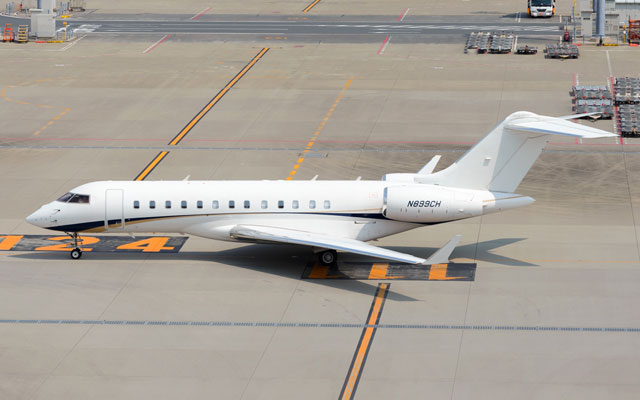
Surge in wealthy Japanese travellers turning to private jet services to escape crowds amid coronavirus
The subsidiary of ANA Holdings was launched in 2018 with the goal of arranging charter flights connecting to scheduled ANA services, mainly bound for North America and Europe. Their planes, which include long-range, mid-sized and light jets, were initially targeted primarily at executives, but the pandemic has spurred the company to diversify.
Jun Katagiri, president of the company, said the recent growth has been stimulated by wealthy individuals and businesses looking for private aircraft because they seat fewer passengers and pose lower infection risks.
Japan Airlines also reported increased sales of its chartered jet flights in the past year.
Also capitalising on demand for social distanced-travel is Fuji Business Jet. Based near Mount Fuji, in Shizuoka Prefecture, the company started operating in April 2020 with two jets, but has since added to its fleet following an uptick in customers.
High-end travel agents are seeing the expansion of the private jet market as an opportunity to build more custom-made travel options into their Japan packages. US-based travel agent All Japan Tours, for example, offers charters on private jets in addition to rides on private helicopters and private yachts.
The demand bodes well for the development of the luxury aviation market in Japan where the number of wealthy households reached 1.3 million in 2019, the highest since 2005.
Still, the market remains small. At the end of 2019, there were only 61 charter jets registered in Japan, compared with 20,978 in the US and 497 in China.
More areas in Malaysia have been placed under the movement control order (MCO), joining six districts from Selangor that begun their 12-day MCO yesterday (May 6).
Kuala Lumpur and parts of Johor, Perak and Terengganu have been placed under a two-week MCO, starting from today (May 7). The development comes as daily Covid-19 cases in the country continue to rise, edging closer to 4,000.
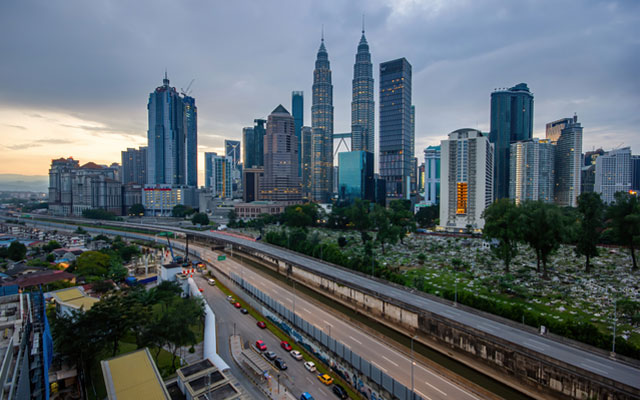
Kuala Lumpur to start a two-week lockdown from today
During the MCO period, interstate and inter-district travel are prohibited for affected areas, except for emergency and work purposes. While dine-ins are not allowed, food establishments are allowed to operate from 06.00 to midnight to offer takeaways.
Daily markets, farmers’ markets, public and weekend markets can operate from 06.00 to 14.00; while hospitals, clinics and medical labs are allowed to operate as normal.
Social gatherings such as wedding receptions, engagement parties and retreats are not permitted.
The government has also imposed a temporary ban for travellers from Bangladesh, Pakistan, Nepal and Sri Lanka. Senior minister (security cluster), Ismail Sabri Yaakob, said the ban was applicable to all pass-holder categories, including long-term social visit pass holders, business travellers and social visitors.
However, exemption is given to diplomatic and official passport holders as stipulated in the Vienna Convention on Diplomatic Relations in 1961.
On Wednesday (May 5), Malaysia recorded 3,744 new Covid-19 cases nationwide, with Selangor topping other states with 1,548 cases. Of this number, 1,051 originated from clusters and close contact with Covid-19 positive cases, health director-general Noor Hisham Abdullah said in a statement.
Seventeen Covid-related deaths nationwide were also reported on Wednesday, bringing the death toll to 1,591.
While swathes of Asia triumphed against the rest of the globe in the early stages of the pandemic by controlling the spread of the virus, shutting borders and locking down economies, the region’s inoculation is lagging. This has prompted tourism business leaders to urge the region to ramp up the rollout of vaccination programmes and scrap quarantines for inoculated visitors in order to rebuild traveller confidence.
At PATA’s Virtual PAS Forum 2021, John Brown, CEO of Agoda, said vaccinations both at home and abroad are key for international travel to rebound in the region.
(From left) Agoda’s John Brown;Wego’s Ross Veitch; and TripAdvisor’s Stephen Kaufer spoke at PATA’s Virtual VAS Forum 2021
“No vaccination, no vacation,” he noted. “The third chapter of getting back really requires the vaccination of a population overall. Asia, is pretty far behind. All markets are way down in the single digits while a lot of the West is into the double digits.”
Evidence that vaccinations quickly restore traveller confidence can be seen in the US, where almost 40 per cent of the population are now fully vaccinated.
Greg Klassen, partner at tourism research consultancy Twenty31 Consulting, said a study revealed 43 per cent of Americans now feel safe flying. This compares with 30 per cent globally.
“We really need Americans to be flying to other parts of the world with that level of confidence,” he noted.
While domestic travel still dominates in the US, an increasing number of trips to the Caribbean and Mexico are being booked. Once more borders across the world start reopening, he expects Americans – and other vaccinated populations – will look farther afield.
Stephen Kaufer, CEO of TripAdvisor, added: “What we all hoped for was once people are vaccinated it would release a fair amount of pent up demand and we’re absolutely seeing it in the US. I hope people can look at the US and see once vaccinated, wow, travel is going to come back very quickly.”
The Middle East is another shining example, where vaccination programmes are rapidly being rolled out. Ross Veitch, CEO and co-founder of Wego, goes as far as to predict a strong summer period.
“It’s going to be one of the first regions where most of the population is vaccinated,” he remarked. “The chances of us having a decent summer are looking reasonably good at this point.”
In April, Emirates ran a trial flight carrying almost 400 fully-vaccinated passengers. While the flight did a round-trip from Dubai over the UAE, Tim Clark, Emirates’ president, said the exercise proved the airline is ready to resume business, provided health protocols and travel certification rules are established in each destination.
He added that while some airlines plan to make it mandatory that passengers are fully vaccinated, this is not the industry’s role. “It is not for the airlines to make that decision,” he said. “It needs to be taken by the states in which the passengers they are carrying arrive into.”
While vaccinations are key, Veitch added that another crucial step in reviving tourism across the region is opening borders without quarantine to the growing number of vaccinated travellers.
“As long as quarantines don’t go away, there isn’t going to be a huge resurgence in cross-border travel,” he opined. “A more risk-moderated approach to travel restrictions needs to be taken and we need governments to start focusing their attention on this.”
Tourism business leaders are advocating the reopening of borders without quarantine to the growing number of vaccinated travellers
For example, Hawaii is now allowing international travellers from South Korea, Japan, Taiwan and Canada to bypass the mandatory 10-day quarantine if they have taken a trusted Covid-19 test. The Thai island of Phuket will also start welcoming vaccinated visitors with no quarantine from July – although this may be impacted by the latest outbreak. Cambodia is also mulling allowing vaccinated international travellers in with no or reduced quarantine from October.
Brown said that at an absolute maximum, quarantine should be one-night at a hotel of visitors’ choice while they wait for rapid test results.
“People will get off the plane and do a rapid test,” he said. “The worst case, they go to a hotel for a night and sit at the pool for a couple of hours the next day to wait for their results, and then they’re free. It’s basically what they would do anyway. If governments, OTAs, tour operators and other partners can offer a product like that, then people will come.”
As governments across the region mull the safest way to start welcoming foreign visitors, Kaufer said it is important the tourism industry “keeps the voices loud to as many different government channels as possible” to reassure them that this is a safe way to welcome travellers.
“It defies common sense that a vaccinated individual wouldn’t be welcome in a country and as this takes off I hope you can flash your vaccine card and come right on in,” he said. “I’m so confident that would spur a tonne of international demand.”
Previously optimistic travel search activity between Singapore and Hong Kong has taken a plunge as Singapore tightens its safety measures in response to rising community cases over the past week.
According ADARA data, search activity for Singapore-Hong Kong flights plummeted some 90 per cent between the start of the Covid-19 infection cluster on April 27 and May 4 – a quick halt to the 1,400 per cent spike accompanying the announcement of the Singapore-Hong Kong travel bubble on April 26.
Latest movement restrictions in Singapore have not impacted June school holiday bookings for The Fullerton Hotels and Resorts’s properties in the city-state
This “stop and start” pattern mirrors an earlier attempt at the Singapore-Hong Kong bubble in November 2020, and has also been observed in the Australia-New Zealand bubble, noted Singapore’s transport minister Ong Ye Kung. He added: “Perhaps that is why we call them bubbles; because they are, by nature, a bit fragile, given the circumstances we are in.”
For some of Singapore’s inbound tourism players, adopting a cautious strategy for the travel bubble may now be paying off. Search activity for Hong Kong-Singapore flights modestly doubled after the bubble announcement, and was quick to flatline after news of Singapore’s recent cluster.
Several tour operators, such as Xperience Singapore DMC and Oriental Travel and Tours, maintained their domestic focus as bookings continue to pour in, buoyed by the government’s decision to extend the SingapoRediscover Vouchers to December 31.
Although the latest cluster incited a clampdown on tour group capacity – from May 8, it will be reduced from a maximum of 50 to 20 – business that have taken on a more conservative approach are enjoying strong forward bookings into the June school holidays.
Oriental Travel and Tours’ co-founder, Jasmine Tan, shared: “Our tour sizes have remained the same at 20 pax per guide. Now, instead of eight per sub-group, we have five, so our tour bookings are not affected.
“For the month of May, we are almost fully booked on weekends and the Hari Raya holiday. We only have a few slots available in the end of May. We’ve also begun to see some bookings for the first two weeks of June.”
Similarly, The Fullerton Hotels and Resorts saw optimistic demand for May and June from both the domestic crowd and bubble travellers from Hong Kong. While its promotions targeting Hong Kong sparked “quite a number of enquiries and bookings, mainly from corporates in the legal, banking, financial and aviation industries who are keen to book for stays between seven to 14 nights”, Singapore demand continues to hold strong, said its general manager, Cavaliere Giovanni Viterale.
He described: “We are experiencing healthy forward bookings for the June holiday period and continue to expect an upward trend as we draw closer to the holiday season, especially from families and couples. The (stricter Covid-19 measures) will only take effect from May 8 to 30, hence, we have not received much impact on the bookings for the June holiday period.”
For now, the group is doubling down on its safety protocols, with approximately 90 per cent of its staff vaccinated against Covid-19.
Also prudently poised for the June holiday crowds is Gardens by the Bay, which recently launched the Dale Chihuly: Glass in Bloom exhibition.
Jason Koo, its director of attractions operations, shared that May numbers at its ticketed attractions are expected to be on par with the average booking rate of 30 to 40 per cent.
“The reduction in capacity at attractions from 65 to 50 per cent is understandable and prudent in light of the increased community cases in Singapore. We do not expect the reduction to immediately impact us this month; however, we do hope the local health situation will improve soon to allow us to receive more visitors during the June school holidays,” he expressed.













Hong Kong has finally put a date to her move to ease quarantine for fully vaccinated inbound travellers – and the relaxation of its strict inbound policy will begin on May 12.
This decision was announced today, after it first revealed its intention in mid-April to shorten mandatory quarantine for fully vaccinated visitors from low-risk countries to just seven days, down from 14.
This will benefit fully vaccinated travellers from countries such as Australia, New Zealand and Singapore. They will be required to self-monitor for an additional week.
Those from high- and medium-risk areas will serve a 14-day quarantine, instead of 21 days, in addition to another week of self monitoring.
Those coming from extremely high-risk areas will still have to fulfill a 21-day quarantine, even if they are inoculated against Covid-19.