

Courtyard by Marriott to make Sri Lanka debut in Colombo
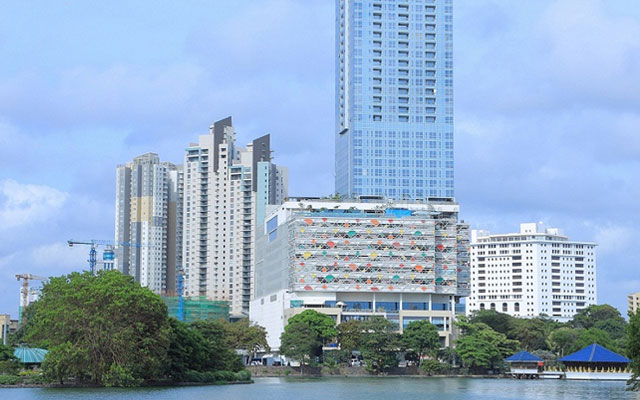
Marriott International has signed an agreement with Colombo City Centre Partners, part of the Abans Group, to debut the Courtyard by Marriott brand in Sri Lanka come late 2021.
Set in the heart of Colombo city adjacent to the Beira Lake, the Courtyard by Marriott Colombo will offer 164 guest rooms and suites, each featuring a work area, smart amenities, and high-speed internet access.
The hotel is set to feature two dining venues – an all-day dining restaurant as well as an adjoining Lobby Lounge decked with a full-service bar and a quick-bites menu. Other facilities will include a 24-hour fitness centre, an outdoor swimming pool and three meeting rooms.
Lourve Hotels Group plans expansion spree in Saudi Arabia
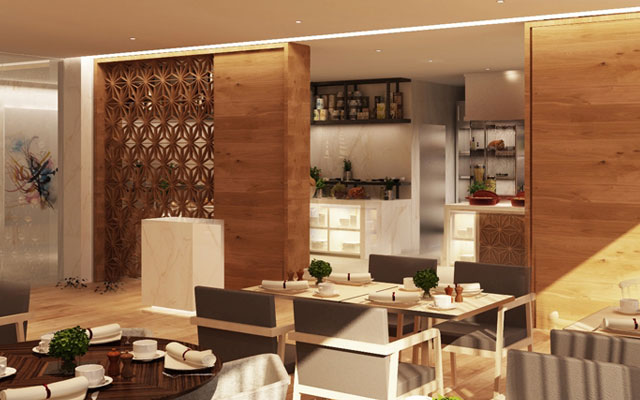
Paris-based Louvre Hotels Group plans to expand its portfolio in Saudi Arabia to 47 hotels by 2025, adding a total of nearly 7,000 rooms to its portfolio.
The new properties will be under its Campanile, Golden Tulip and Tulip Inn brands.
This year alone will see five new openings, including the Golden Tulip Riyadh (94 rooms) set to debut this month, followed by the Golden Tulip Unaizah (84 rooms).
The Tulip Inn Dammam Corniche (70 rooms) and the Tulip Inn Al Balaad Madinah (150 rooms) are both slated for a Q3 opening, while the Golden Tulip Umm Al Qurah (454 rooms) will open in Mecca come Q4.
Animal Farm & Nature Highlights virtual tour

Why
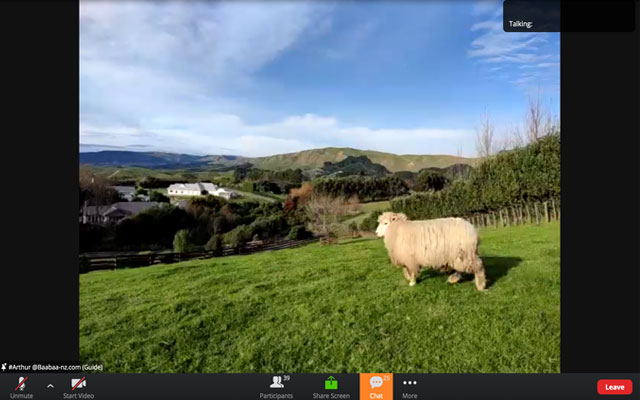
A flock of Romney sheep leisurely grazing in their paddock of undulating greens backdropped by majestic mountains is a sight to behold. One gazes up curiously, clueless as to the over 40 pair of eyeballs staring back at her.
Our virtual sojourn on this Sunday morning is to a lifestyle farm in New Zealand, run by Singaporean banker-turned-farmer Arthur Chin – Singapore-based agency Monster Day Tours’ latest virtual tour offering, introduced to give those missing travelling during the June school holidays a therapeutic escape.
What
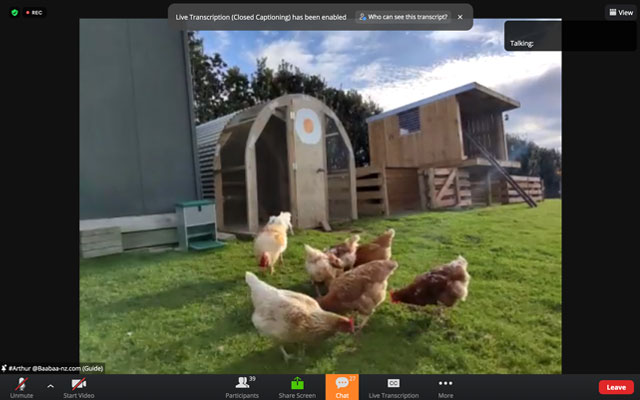
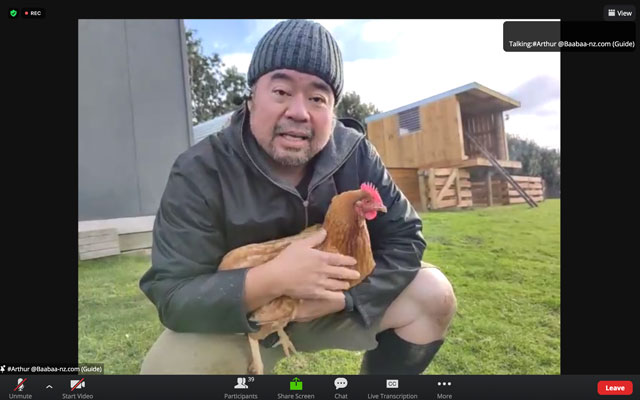
Nestled in the city of Palmerston North, a two-hour drive from the capital city of Wellington is the postcard-perfect, unspoiled oasis that is New Zealand Nature Highlights. Founder Chin started hosting virtual tours since the pandemic last year to introduce his farm to the world amid global lockdowns.
During the online experience, live-streamed via Zoom, we got up-close to the farm animals – sheep and lambs, kunekune pigs, and red shaver chickens – learnt about the back-breaking work that goes into running the 25ha property, and found out how Chin plays cupid for his ewe lambs during breeding season.
Much of the fun of the tour stems from how Chin deftly sandwiched riveting anecdotes between farming tidbits. There is an inspirational moment where Chin shared how he left his banker job after 15 years to pursue a PhD in animal husbandry and start his own farm. Equally gripping is Chin’s recount of how he once performed CRP on Oliver the lamb to bring him back to life.
Tourism practitioners and corporate groups may be keen to take a leaf out of Chin’s sustainability playbook. Green practices he adopts on the farm include rainwater harvesting, and the utilisation of a septic system that compost waste into fertiliser.
Perhaps, the most surprising takeaway from the virtual tour was learning how Chin employs technology to achieve economies of scale in his one-man operation, such as the usage of RFID tags for sheep tracking and a drone deployment strategy for farm surveyance.
How
Our session was attended by over 40 participants, with many joined by young kids. Several opportunities were made available to pose questions to Chin, who expertly fielded all queries.
As part of the interactive element, participants were kept engaged through pop quizzes based on what was shared by Chin, with attractive prizes to be won.
Participants can join the tour as part of a group, or book a private session with family and friends. Virtual vacations make for an interesting way to bond and celebrate special moments, like birthdays and graduations. For private tours, there is a minimum requirement of 20 participants, and prizes can be customised.
Verdict
For 1.5 hours, we found ourselves whisked away from our routine and transported to a grassy oasis of bucolic bliss. The virtual farm escapade will make for a welcome respite for homebound city dwellers who, like us, are looking to escape to greener pastures, literally, amid ongoing travel restrictions.
Rate: S$20 (US$15) per person
Dates: June 13 and 27, from 10.30 to 12:00
Contact
Tel: +65 87497346
Email: info@monsterdaytours.com
Website: https://www.monsterdaytours.com/virtual-events-and-classes
Four Seasons unveils new private jet itineraries
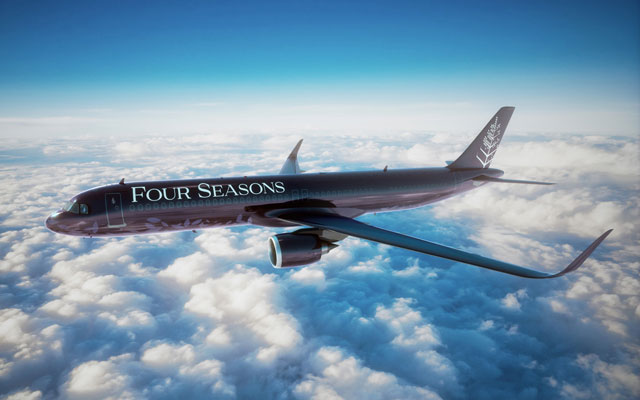
Four Seasons Hotels and Resorts has launched two new 2022 itineraries to explore remote destinations like the Antarctica and Machu Picchu as part of its private jet experience.
This comes after “overwhelming” response to the announcement of three 2022 itineraries aboard the new Four Seasons Private Jet late last year, “signalling considerable pent-up demand for travel”, said Christian Clerc, president, global operations for Four Seasons Hotels and Resorts.
He added: “Now, more than ever, guests are planning bucket-list trips to far corners of the world to make up for lost time. To meet this demand, we’ve introduced two additional opportunities to explore new and remote destinations with legendary Four Seasons service in the sky.”
Taking place from November 28 to December 18, Uncharted Discovery is an all-new 21-day expedition featuring seven destinations. Guests will get to explore the wonders of Antarctica, the majesty of Machu Picchu, the booming arts scene of Bogota, and the vibrant flavours of Buenos Aires.
As well, World of Adventures will return in 2022, offering a tour of eight countries across four continents over 24 days. Highlights of the tour happening from May 3 to 26 include evening meditation with an expert yogi in Seychelles, gorilla-spotting at the Volcanoes National Park in Rwanda, and an exploration of the Galapagos Islands aboard a private ship.
Both itineraries will take place aboard a customised, 48-seater Airbus A321neo-LR aircraft, with an experienced flight crew that includes a dedicated concierge, executive chef and journey physician.
Airbnb on the hunt for 12 people to live anywhere for 10 months
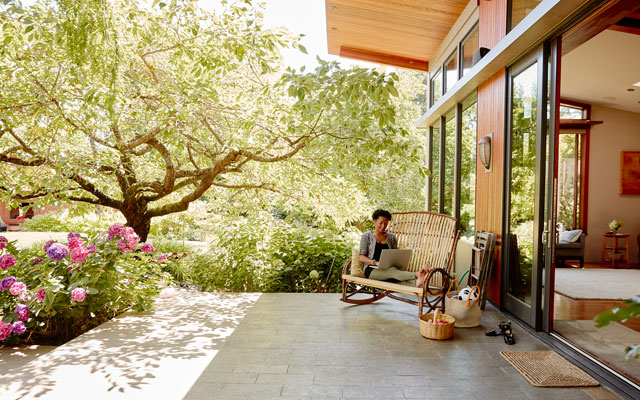
In light of the pandemic-induced shift to remote working, Airbnb has launched a programme that will enable 12 individuals to live exclusively in Airbnb-listed properties for 10 months.
Under the Live Anywhere on Airbnb programme, the home-sharing giant will cover the cost of accommodations and provide a transportation allowance for the duration of the programme.
In return, participants will share their experiences with Airbnb to “help inform future product upgrades and innovations on the platform to better accommodate nomadic living”, it said in a press statement.
According to the Airbnb Report on Travel & Living, the share of stays 28 days or longer on Airbnb increased 10 per cent in nights booked when comparing 2019 to 1Q2021. Some 11 per cent of Airbnb’s long-term stay bookers in 2021 reported living a nomadic lifestyle, with 74 per cent of consumers it surveyed across five countries expressing interest in living someplace other than where their employer is based post-pandemic.
Through this programme, participants could help shape the future of long-term living on Airbnb, including product changes and resources that may improve the long-term living experience, ideal types of accommodations for solo travellers or groups like families, connections to local community members and businesses, as well as better understanding of financial benefits of hosting while travelling.
Airbnb is seeking a diverse set of 12 individuals who can be part of the programme for 12 consecutive months from July 2021 to July 2022. The programme is open to participants aged 18 years and above, and each participant will be allowed to bring up to three companions with them.
The 12 participants will be selected by a panel of interviewers in July, and will begin travelling from September. Interested parties can submit their application by June 30 at www.airbnb.com/liveanywhere.
Second Covid wave batters India hotels

After an improved start to 2021, India’s hotel occupancy has been on a rapid decline amid the second Covid-19 wave in the country, according to data from STR.
India’s monthly occupancy reached a pandemic high in February (53.9 per cent), which looked to be solid progress towards recovery as the monthly level was roughly 73 per cent of the 2019 comparable. By April, however, occupancy in the country fell to 31.0 per cent, and more recently, just 21.5 per cent for the week ending May 30.
“We saw India’s resilience as an emerging market play out over the early portion of 2021,” said Vidhi Godiawala, STR’s business development manager for South and Central Asia. “Unfortunately, massive lockdowns have restricted movement and business over the last few months, thus, causing hotel performance to lose steam.
“Until March of this year, India and China were trading places for the highest intention to travel. While current travel sentiment remains clouded, recovery from the first wave gives us reason to believe there is light at the end of the tunnel for hotels in the country.”
While the country as a whole has fallen back to late-2020 levels, some markets are experiencing more promising metrics.
During the week ending May 30, Mumbai saw the country’s highest occupancy level (43.2 per cent) among STR-defined markets, which was 60 per cent of the comparable week in 2019. The market, however, is expected to experience flattened demand levels in 2022. Chennai (38.3 per cent) and Gujarat (32.2 per cent) also saw higher occupancy levels with better 2019 comparisons.
Singapore to ease Covid-19 restrictions in two phases from June 14
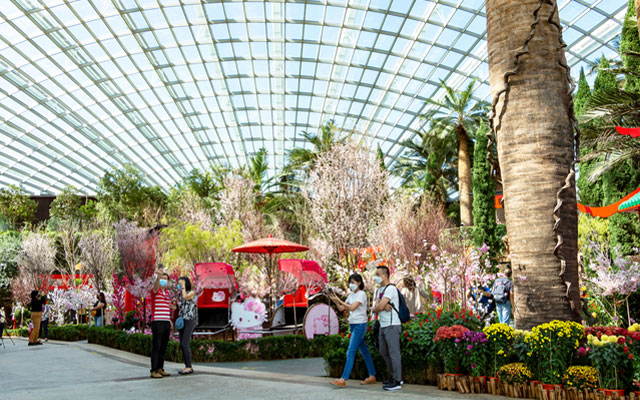
Singapore will allow people to gather in groups of five, up from two persons, from June 14, as the country moves to ease restrictions in two phases following a decline in the number of Covid-19 community cases.
In addition, households will be able to host five distinct visitors per day, up from two, said the Ministry of Health (MOH) in a statement on Thursday (June 10). However, citizens are still advised to limit the number of social gatherings to no more than two a day to reduce the risk of transmission.
As part of the first phase of Singapore’s reopening on June 14, attractions, cruises, museums and public libraries will also be allowed to increase their operating capacity limits from the current 25 per cent to 50 per cent.
The size limits for cinemas and events such as MICE, live performances, spectator sports, congregational and worship services, and marriage solemnisations will also be increased to 250 attendees with pre-event testing. Testing will not be required for events with 50 or fewer attendees.
Should the situation remain under control, dining-in at F&B establishments will also be allowed to resume from June 21, under the second phase of the reopening.
Wedding receptions will also be allowed to resume with up to 100 attendees with pre-event testing required for all attendees. For wedding receptions up to 50 attendees, testing is required only for all members of the wedding party (of up to 20 attendees including the wedding couple).
Gyms and fitness studios may also resume indoor mask-off sports activities, with indoor and outdoor sports classes to be capped at 30 persons. Meanwhile, work-from-home will remain the default arrangement.
A warm welcome
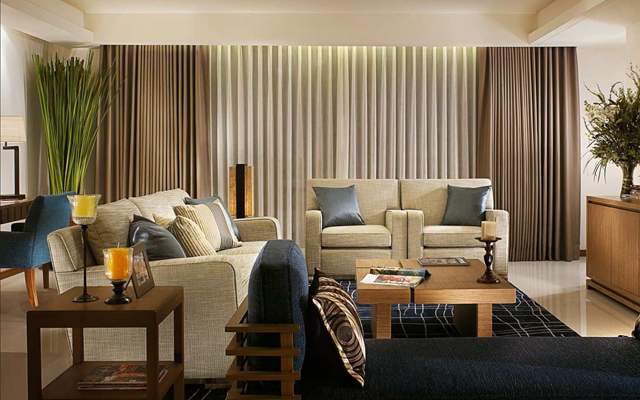
While recovery to pre-pandemic occupancy continues to elude the hospitality trade, serviced residences have received an unexpected blessing in disguise. Remote work and telecommuting are driving consumers in search of more conducive places to work that can double up as a vacation opportunity – a demand that has driven long-stay players towards more inventive, daily offerings.
For instance, Oakwood’s workcation product, Work from Oakwood, provides its guests day access to available recreational facilities, a private kitchen, snacks and beverages, as well as complimentary and discounted printing services. Since its launch in September 2020 at 27 properties across Asia-Pacific and the US, the package has enjoyed “a consistent take-up in bookings month on month”, accompanied by a “healthy” average occupancy of 55 per cent across all brands, shared CEO Dean Schreiber.
Schreiber added: “For the workcation segment, properties in dense gateway cities like Singapore, Bangkok and Tokyo have proven to enjoy greater demand.”
Pan Pacific Serviced Suites Beach Road in Singapore also released a comparable workcation package in response to “the needs of locals who were in search of indulgent alternatives to the usual work-from-home routine”, described Cinn Tan, chief sales and marketing officer, Pan Pacific Hotels Group (PPHG).
With this, guests can take up a one-bedroom suite with complimentary amenities such as a welcome hamper, mini-bar with snacks, in-room Nespresso coffee and tea as well as complimentary parking.
“We received good response during the initial launch period as people were seeking alternative working venues. However, demand has slowed down slightly this year, most likely due to more people gradually returning to work. While the workcation bookings contribute only a slight increase in revenue, it has given us the opportunity to showcase our Serviced Suites to Singaporeans,” shared Tan.

The Ascott launched its Work in Residence initiative in August 2020, giving guests the option of daily, weekly or monthly packages for work suites in 85 properties worldwide, as well as selected amenities such as a dedicated workstation, regular housekeeping, complimentary coffee and tea, high-speed WiFi, and complimentary parking. Guests can also request for task lights, USB charging ports, a webcam and Bluetooth speakers with microphones. Further conveniences, such as food delivery, grocery shopping, printing, concierge or book-a-chef for in-room dining, are available too.
This offering has allowed The Ascott to maintain “robust” occupancy at its properties over the course of the pandemic, said Ervin Yeo, its managing director for South-east Asia.
For instance, lyf Funan Singapore was able to maintain a strong occupancy rate of more than 80 per cent from April to June 2020 as a result of the Work in Residence programme. As at March 2021, it had achieved 85 per cent average occupancy, with 68 per cent being corporate groups and long-stay guests of between one and 24 months.

Yeo elaborated: “Revenue from long-stay guests has increased, particularly on stays of three to 12 months. (The) Work in Residence initiative had the highest demand in Japan, followed by countries such as Singapore, China, Vietnam and Indonesia.
“We have (also) seen increased bookings of our Work in Residence packages for day use amid the Covid-19 situation.”
All work, all play
The Ascott has gone beyond the workcation game, now offering its apartments to be used as live-streaming spaces and fitness studios. For instance, Ascott Raffles City Shenzhen and Somerset IOC Hangzhou have hosted long-staying Internet celebrities and employees of new media and ecommerce companies, along with their live-streaming events and photoshoots. Ascott Raffles City Chengdu and Somerset Riverview Chengdu in China have converted some apartments into fitness studios, which instructors can reserve at special rates to conduct classes for guests.
In Vietnam, selected apartments in Somerset Grand Hanoi, Somerset Hoa Binh Hanoi and Somerset Vista Ho Chi Minh City have similarly been converted into yoga studios.

In another initiative, The Ascott released Space-as-a-Service in August 2020 for collaboration with corporations and enterprises. Under this banner, the company has partnered with Nestlé to set up “We Proudly Serve Starbucks” coffee kiosks in the lobby of its Citadines-branded properties.
These inventive verticals netted the group more than S$91 million in 2020, revealed Yeo, and strengthened confidence in its brands. “Property owners continue to sign new management and franchise contracts with us despite Covid-19. In 2020, Ascott signed a record of over 14,200 units across 71 properties globally. This exceeds the number of units secured in 2019, marking a fourth consecutive year of record growth,” Yeo told TTG Asia.
Meanwhile, Dash Living, which offers serviced living rental solutions, is reaching out to merchants located around its partner properties – the most recent portfolio additions being Ovolo’s The Sheung Wan and The Aberdeen in Hong Kong – to foster a service ecosystem around the workcation experience. Its tenants are afforded lifestyle benefits in the precinct, such as fitness centre access, F&B discounts and monthly events organised by Dash Living or its tenants.
“We differentiate by creating a community for our tenants, with convenience, a sharing economy and tenant engagements in mind. During the pandemic, Dash Living has managed to maintain an occupancy rate of over 90 per cent,” said Aaron Lee, founder, Dash Living.
The journey forward
While demand from the workcation segment continues to hold strong for serviced residences, forward-looking players are levelling up in pursuit of higher domestic numbers.

The Ascott is turning its sights back to its loyalty programme, Ascott Star Rewards (ASR), having launched a mobile app in October 2020 to service its members. Besides membership and point management, the ASR app enables guests to perform self-check-in and check-out, make digital payments, access their apartments with a digital key and place service requests. With flexible bookings now the name of the reservations game, ASR members may receive bonus loyalty points even for cancelled bookings, which can be redeemed in the future when travel resumes.
For PPHG, its serviced residences are paying close attention to the non-working crowd to keep its occupancy healthy for 2021. For instance, Parkroyal Serviced Suites has launched a pet-friendly staycation package, targeting local homeowners who desire a mini retreat with their “furkids”.
France, Spain welcome vaccinated travellers

Travellers are once again welcomed in France and Spain, as both countries reopen their borders this week for travel and tourism.
Spain lifted border restrictions on June 7, allowing in vaccinated travellers from all over the world. At the same time, the government has lowered the entry barriers for non-vaccinated Europeans. While this segment of travellers have been able to enter Spain with a negative polymerase chain reaction (PCR) test taken within 72 hours, they can from June 7 take a cheaper antigen test instead.
Over in France, the government has removed the need for Covid-19 tests for vaccinated European travellers, and is welcoming vaccinated tourists from most parts of the world with reduced restrictions. The relaxed rules will especially benefit travellers from Green zone countries – countries that have been successful in managing the pandemic – such as Australia, South Korea, Israel, Japan, Lebanon, New Zealand and Singapore. Vaccinated travellers from Green zone countries are exempted from Covid-19 tests.
Vaccinated visitors from Orange zone countries, such as the US and Britain, will no longer need to serve arrival quarantines but must show a negative PCR test within 72 hours of arrival or a negative antigenic test within 48 hours. Unvaccinated children will be allowed to enter with vaccinated adults, but will have to show a negative test from age 11.
The resumption of international tourism in France and Spain follows European Union’s decision on May 21 to issue a digital health pass by end-June that returns travel freedom to residents in the region. Several European Union member countries, such as Greece, Germany and Denmark, have started to issue these passes ahead of implementation deadline.
While international travellers are now welcomed, they may continue to be subjected to compulsory PCR tests and quarantines upon return home.
Singapore residents, for example, are required to submit a negative PCR test 72 hours before departure from either Spain or France, clear a PCR test on arrival in Singapore, and serve a 21-day quarantine at a government-allocated facility at their own expense, during which two more PCR tests will be conducted.






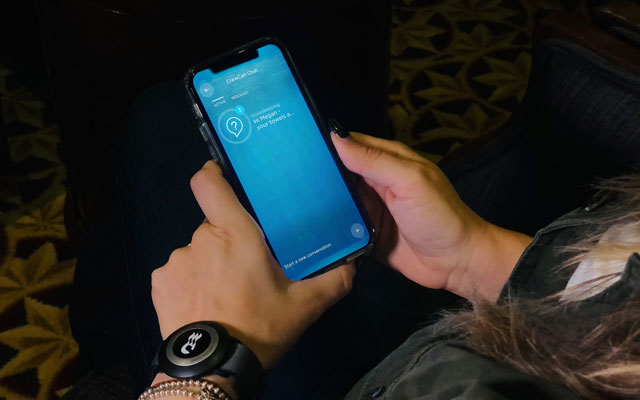
Princess Cruises is introducing a new on-demand service that allows guests to call a crew member to their exact location to make an in-person request for assistance.
CrewCall service on demand will be available on stateroom TVs as well as the MedallionClass app and leverages the OceanMedallion wearable to guide a crew member to a guest’s exact location upon request.
The corresponding CrewCall Chat feature lets guests text their specific question or request using a smart device to be answered or actioned virtually by crew.
Jan Swartz, president of Princess Cruises, said in a statement that CrewCall allows the cruise line “to deliver high-touch, personalised service” and “minimises wait time at our guest services desk while simultaneously improving our responsiveness”.
Both CrewCall features expand the OceanNow digital experience guests use to place food, beverage, retail and amenity orders for delivery directly to their location.
CrewCall will be available to guests when Princess returns to sailing starting July 25 aboard Majestic Princess in Alaska, and aboard Regal Princess and Sky Princess with “seacations” in the UK starting July 31.