

Direct flights between India, Cambodia to take off
Cambodia and India have agreed to start direct flight connections and promote closer tourism exchanges and cooperation in all areas after the Covid-19 crisis subsides.
The agreement was reached during a meeting last week between Cambodian tourism minister Thong Khon and Indian ambassador to Cambodia, Devyani Uttam Khobragade, the Phnom Penh Post reported.
Khon was quoted by the report as saying that the two countries have a long history of cultural and religious ties, with holy sites across India playing host to hordes of Cambodians on religious tours pre-pandemic.
To foster active tourism cooperation, he urged the Indian government to reschedule religious tour packages after Covid-19 had been stamped out.
Khobragade fully backed a direct air route connecting the two countries as “it will bring a lot of benefits to the tourism sector, considering how young Indians nowadays really like these kinds of tourism tours”.
Khmer Angkor Tour Guide Association president Khieu Thy told The Post that direct flights with India would be a boon for Cambodia.
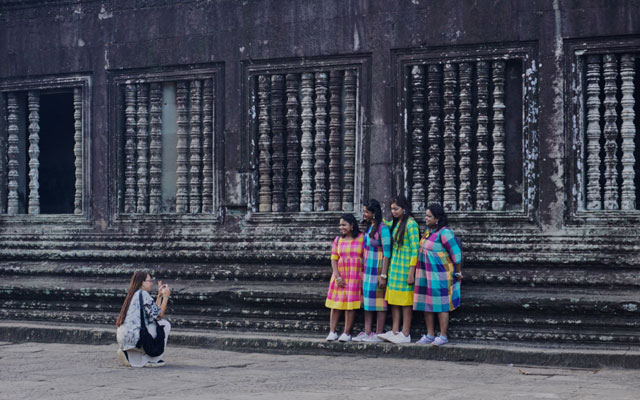
Ancient Khmer temples remain a major drawcard for Indian visitors, he said, noting how closely related the religions that inspired their construction are with those of India.
“The number of Indian tourists coming to Angkor Wat has increased every year (with the exception of 2020) and this will create more jobs for local people,” Thy said.
An MoU between Cambodia and India that authorises the rights to operate a direct flight was signed back in 2002, according to Secretariat of State for Civil Aviation spokesman Sin Chansereyvutha.
Nearly 1.3 million international tourists visited Cambodia in the first 11 months of last year, down 78.2 per cent as compared to the same period in 2019, according to official data. Indians accounted for 12,869 visitors, marking a 80.2 per cent drop from the 65,077 tallied in the same period in 2019.
Tourists trickle back to Sri Lanka after borders fully reopen to all except UK visitors
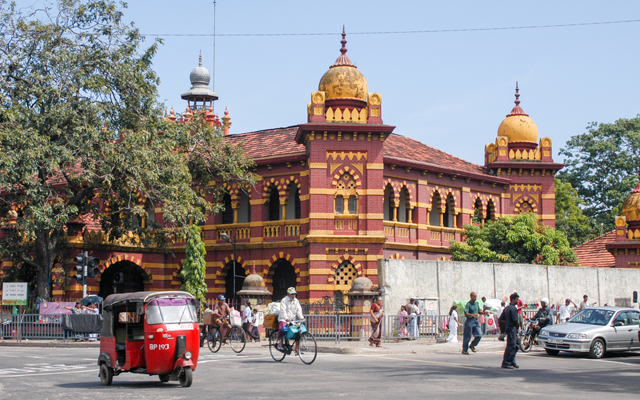
Sri Lanka has welcomed its first batch of visitors from Germany, the Netherlands and Switzerland, after reopening its borders to foreign tourists last Thursday, following a 10-month pandemic-induced closure.
The lifting of the ban on all commercial travellers, bar those from the UK which is currently under lockdown amid a virus surge, comes after a successful pilot project to test the waters ahead of the country’s full reopening. Started on December 28, the month-long pilot project involving Ukraine tourists ended on Sunday with a total of 1,700 arrivals.
A Sri Lankan Tourism official said on Sunday that since the reopening of the Bandaranaike International Airport (BIA) and the Mattala International Airport (MRIA) for commercial travel, the country has seen “a trickle of arrivals”, but is hopeful that “interest would catch up” down the road.
As of Sunday, less than 100 tourists including a group of five travel agents and two journalists whose agenda is to examine Sri Lanka’s potential for wellness holidays, have arrived in the country. A group of Chinese visitors are due to arrive this week, while the country expects to start receiving Russian tourists from next month, with SriLankan Airlines resuming flights to Moscow from February 15. To date, 15 airlines have scheduled regular flights to Sri Lanka.
As Sri Lanka reopens its doors to the world, every effort has been made to ensure that the island country is “safe, secure and serene” for visitors, Sri Lanka Tourism chairperson Kimarli Fernando told a conference in Colombo on Thursday. She said breaching the health guidelines could amount to an offence, urging travel and tour agencies to inform their clients of the strict regulations in place and to ensure no violations occur during their tours.
Under the health guidelines, visitors need not serve a mandatory quarantine on arrival, but they must obtain a visa online, and a mandatory Covid-19 insurance cover costing US$12, which covers US$50,000 worth of hospital or medical bills for a month. All visitors must also present a valid PCR test taken 96 hours before arrival.
Travellers also have to pre-purchase PCR tests online prior to setting foot in the country. Each test costs US$40. The first test will be taken on arrival at their hotel, and the second, after five to seven days or at the onset of symptoms. A third test is required for visitors staying between 10-14 days.
A pre-confirmed booking at a safe and secure certified hotel is also required for the first 14 days. A quarter of the room inventory in these hotels will be kept vacant to be used as health facilities in case tourists have to self-quarantine.
Sri Lanka’s main source markets are India, the UK, Russia and China. The country attracts around two million tourists a year, but officials said no targets have been set for this year.
As of Saturday, Sri Lanka has reported 57,587 cases of Covid-19 and 280 related-deaths.
Hong Kong trade pours cold water on debt-ridden Ocean Park’s planned resort makeover
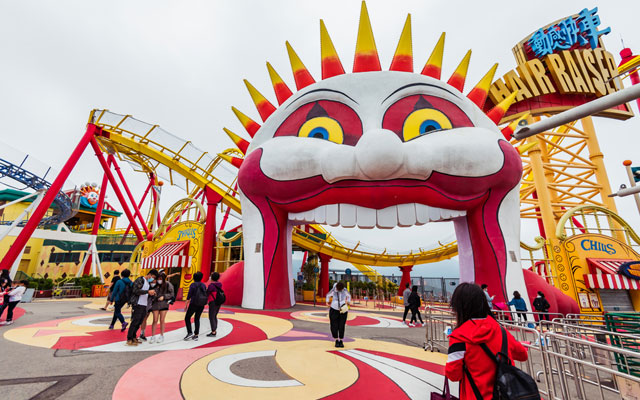
Tour agents in Hong Kong have cast a shadow of doubt over the financial viability of the government’s multi-million-dollar plan to transform the cash-strapped Ocean Park into an entry-free, adventure-themed resort destination within the next two to three years.
The fate of the city’s iconic theme park was decided after the government and Ocean Park Corporation completed a rethink exercise to chart the way forward for the park.
Under the plan, a new non-ticketed retail, dining, and entertainment (RDE) zone is to be created at the lower park area, which will be managed by a private developer under a long-term concession agreement. The RDE zone will house public spaces to host open-air markets and events, a children’s playground and water play area. Conservation and education-related facilities and attractions, including the Grand Aquarium and the soon-to-be-completed Steam Hub, will also be integrated into the RDE zone.
In order to become financially sustainable in the long run, the park will outsource part of its park area or facilities to different operators. With that in mind, a pay-as-you-go ticketing model is also being considered, in place of the existing pay-one-price model, to help boost the park’s attendance.
Other key components of the revamp include a new adventure-themed zone which could feature outdoor attractions, such as Xraycer and Zipline; as well as new wellness-themed zones for activities such as glamping, trekking, meditation, and yoga retreats. Some 12 aged rides including Mine Train and Raging Rivers will be phased out to make way for new facilities, including a line-up of 26 new rides.
The iconic Cable Car and the Ocean Express will be retained to connect the lower park area with the upper park area, at the same time, it has been proposed for a pier to be developed in the lower park area at Deep Water Bay so that the public can access the new RDE zone by sea in future. A plan is also being mulled over for another pier to be built adjacent to the Water World in Tai Shue Wan to boost connectivity between the two areas.
Slated for a summer opening, the long-awaited Water World will be the city’s first year-round, all-weather water park featuring 27 indoor and outdoor water attractions such as a man-made beach, a surf rider, and an eight-lane mat racer. A resort-style cabana area will also provide space for dining and relaxation. Operation of this facility will be overseen by the park, at least in the short- to medium-term, to ensure its early opening.
The secretary for commerce and economic development, Edward Yau, said the park will cut down on facilities and related expenses which are not cost-effective and re-orient its development focus back to education and conservation.
He added that the park’s transformation will “take time and resources”, thereby, requiring the government’s assistance in the following areas: bearing the costs for conservation and education work of the park for four years, deferring the repayment of government loans, extending the repayment period and waiving the interest, and providing a non-recurrent funding to help the park to cope with its present financial need.
The chairman of the board of the Ocean Park Corporation, Lau Ming-wai, said: “The new model of operation enables us to improve, innovate, and invigorate the park in the exciting years ahead. Our renewed direction embodies our vision of advancing Ocean Park into Hong Kong’s leading education platform, with a strong mission to promote environmental conservation and protection. Leveraging our exceptional location and with the launch of the Water World, we are confident that Ocean Park will play a pivotal role in the Invigorating Island South initiative.”
However, industry players have casted doubt on the viability of this new business model to sustain operations of the park.
While noting that the new operating and pricing models aim to achieve business sustainability, Gray Line Tours chairman, Michael Wu, expressed uncertainty as to whether it would work. He said: “I received phone calls from agent friends asking how we can promote the park in future when the pay-one-price model is removed, and clients have to pay extra on-site for certain rides and facilities.”
Instead, he proposed for the park to retain its basic admission fee model, with chargeable optional rides, citing the example of Chimelong Paradise in Shenzhen, where visitors are charged an admission fee which includes ride access, but have to fork out extra for shows.
Wu added: “To me, the proposal looks like a major landlord subleasing space and living on rental fee. The transformation is just for the sake of survival, without any proactive initiatives. With dolphin show to go off the list, what else can it excite visitors with?”
He also raised doubts as to whether a mere focus on conservation, education and natural beauty is able to achieve breakeven. While he does contend that “the ticket-free area at lower hill will be a mecca for domestic helpers” and “the Water World is set to draw more young visitors who rarely see such scale and design in the region”, he also stressed that “in the long-term, the park needs to reinvent to stay competitive and draw repeated visitors”.
W Travel Service managing director, Wing Wong, opined that the free admission would not be enough to attract visitors. “As far as I know, the mainland Chinese aren’t keen on ocean conservation and nature protection. Under this new model, I doubt how it could generate more income if there are no new exciting ideas – those wellness ideas like yoga and glamping are only gimmicks.
“Also, although Water World is an all-year round attraction, it may face a seasonal demand issue. It may be worthwhile to make money in real estates, developing some prime spots in order to drive regular income.”
Last year, the park obtained the Legislative Council’s funding approval to support its operation for a year. Under this new move, the government will pump a maximum yearly financial assistance of HK$280 million (US$36.1 million) into Ocean Park for four financial years starting from 2022-23 to support the education and conservation initiatives in its future strategy.
Disgruntled Accor staff lash out at South-east Asian chief over alleged lack of Asian leadership
A community of disgruntled Accor employees in Asia has demanded dialogue with Garth Simmons, CEO of South East Asia on what it claims to be a loss of Asian leadership across South-east Asia, Japan and South Korea following October 2020’s global restructure.
The restructure saw Accor dissolving the Asia-Pacific headquarters and replacing it with three hubs of Pacific, Greater China, and South-east Asia plus Japan and South Korea that report directly to Paris.
Identifying themselves as Many Concerned Asian Employee, the community asked for reasons as to why all key positions across Accor’s Asian properties were held by “white people” despite a headcount of 60,000 Asian staff, and claimed that responses from the South-east Asian office have been slow.
Correspondence between the community and Simmons was leaked to the press by the former.
In response, Accor has issued a press statement saying that it remains “strongly committed to diversity and inclusion” in its hiring practice.
“As part of the restructure, roles were appointed based on expertise and experience, and not on race, gender or background. We currently have 33 per cent of senior vice president or vice president roles in our management team which are held by Asians. Our goal is to increase this percentage and develop even more local talents into executive positions as our business recovers,” said an Accor spokesperson.
The statement also explained that the Covid crisis and continued travel restrictions had left the company with little choice but to release expatriate and local staff across the region.
“Tough decisions had to be made and these decisions inevitably impact people’s lives and can leave some disgruntled or unhappy employees. Throughout the process, we respected the applicable employment laws in each country. We also chose only internal candidates in order to protect as many of our people as possible.
“We appreciate that, in addition to a corporate office restructure, many people were also affected at hotel level because of decisions by hotel owners who also had to resize their teams,” it added.
While TTG Asia has reached out to Many Concerned Asian Employee for further information, a response was not available at press time on Friday evening.
Cambodia seeks to turn Kep province into tourist magnet

A master plan to develop the Kep province in Cambodia into a high-end, eco-tourism destination, covering four prime sites and 251 projects, is being drafted by the country’s tourism ministry.
Tourism minister Thong Khon was quoted by the Phnom Penh Post as saying that the facelift is to strengthen Kep’s attractiveness and competitiveness as a luxury destination for foreign travellers, in order to help restore the industry to pre-pandemic health.

During a recent meeting presided by Thong Khon to discuss the plan, Ny Phally – ministry undersecretary of state and director of the secretariat of the inter-ministerial commission – said the four primary development areas are Kep town, Ankol beach, the Phnom Vore region, and the province’s archipelago.
Phally said under the master plan, the Kep beach will be improved upon, and the Angkol beach will be developed as a new tourist site, while the Sre Ambel salt fields will be turned into an agro-tourism destination.
“Apart from improving these coastal areas, there are many other development projects, including expansion of international sports facilities, construction of a tourist-oriented war museum and organisation of visits to the 13 islands which are rich in biodiversity like corals, sea dolphins, dugong, fish and many other rare species,” he was quoted by the report as saying.
In its draft master plan, the inter-ministerial commission outlined nine key strategies, including developing tourism resources in Kep town, creating travel corridors, and improving the quality and safety of tourism in the region.
Hyatt Regency Phnom Penh

Location
Located in the heart of the capital, Hyatt Regency Phnom Penh sits close to the capital’s main attractions, including the National Museum, Royal Palace and Silver Pagoda. Rooms boast striking citywide panoramas that sweep across the capital and Tonle Sap and Mekong rivers.
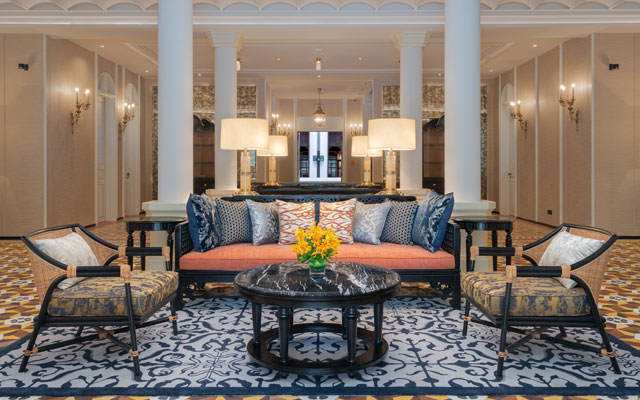
The property melds old and new with a stunning revamped colonial villa serving as the lobby and an upstairs lounge bar against the backdrop of 10- and 14-storey contemporary towers.
Rooms
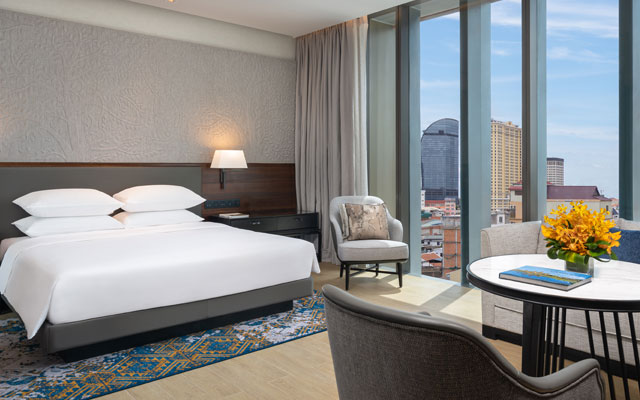
The property takes in three styles of suite and nine room options. Each feature a chic contemporary design with light spilling in through floor-to-ceiling windows. I checked in at the King Palace View Deluxe room, a 49m² space that boasts vistas of the nearby Royal Palace. It features a comfortable king bed, desk and seating area with a sofa and table. A large bathroom has a separate bath tub, rain shower and toilet.
F&B
There’s plenty of eating and drinking options. The Attic sits in the eaves of the colonial villa and makes for a stylish space to enjoy carefully-crafted cocktails and snacks. The Market Café is light and lofty and serves breakfast, a la carte options and delightful, four-course afternoon tea.
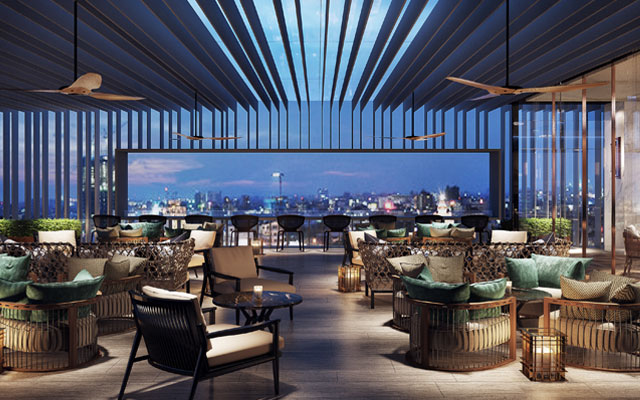
On the 14th floor sits FiveFive rooftop restaurant and bar. The chic indoor and outdoor space offers splendid views coupled with a menu of fresh seafood and meats. The Metropole Underground is slated to open in Q1 as a 20th century metro-themed bar.
Facilities
Guests can keep fit at the 24/7 fitness centre and large outdoor swimming pool, while businesses can make use of the 1,400m² of flexible meeting and conference spaces capable of accommodating up to 1,500 pax. The 10th floor Regency Club serves food and drinks throughout the day and evening, and Jivapita Spa will open in February.
Service
The property has been designed for Covid times. Hand sanitisers are dotted throughout, QR code menus are available for dining, while sealed stickers reassure that rooms and other items, such as TV remotes, have been sanitised. Temperatures are taken on arrival and staff wear masks. Additionally, the service is impeccable. Smiling staff were on hand to greet me throughout my stay and explain each dish and cocktail served.
Verdict
The hotel is an excellent addition to the capital’s upmarket offerings and is already proving popular with grounded locals and expats taking advantage of the staycation package and the capital’s latest sophisticated drinking and dining options.
Number of rooms 247
Rates
Standard rates from US$200. Staycation packages from US$157.
Contact details
Tel: +855 23 600 1234
Website: www.hyatt.com/en-US/hotel/cambodia/hyatt-regency-phnom-penh/pnhrp
Norwegian Cruise lets guests Take 5
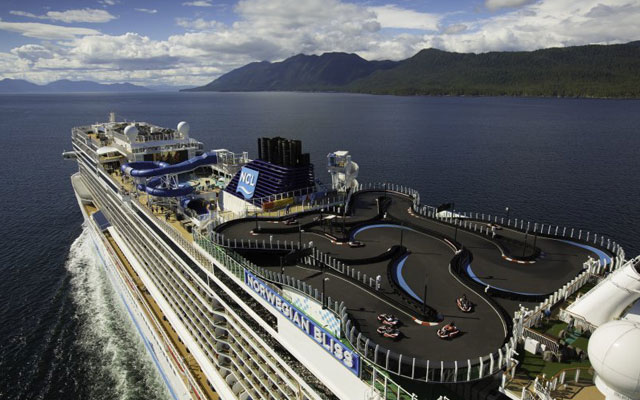
Norwegian Cruise Line (NCL) is ringing in the new year with its Take 5 offer, providing up to US$2,900 in value for a limited time.
Applicable fleetwide across all stateroom categories and destinations, NCL’s promo allows guests in Asia-Pacific to enjoy all five Free at Sea offers: a beverage package, a shore excursion credit, a specialty dining package, and a Wi-Fi package. For family or group reservations, the third and fourth guests can also sail at a reduced rate on select sailings.
A 50 per cent reduced deposit and 30 per cent off voyage total fare are also available as a combination promotion.
The Take 5 promo will also be available across the line’s forthcoming Asia-Pacific voyages onboard Norwegian Sun.
Royal Caribbean to sell Azamara brand to private equity firm
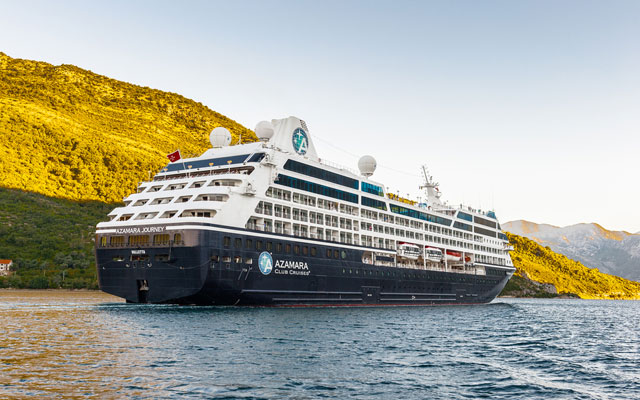
Royal Caribbean Group has reached an agreement to sell its Azamara brand to US-based private equity firm Sycamore Partners for US$201 million, as it seeks to shed assets amid the pandemic.
Expected to close in 1Q2021, the all-cash, carve-out transaction will see Sycamore Partners acquiring the cruise line’s three-ship fleet and associated intellectual property.
In a statement announcing the deal, Royal Caribbean said Azamara’s value proposition and operations “will remain consistent under the new arrangement” and it would “work in close collaboration on a seamless transition for Azamara employees, customers and other stakeholders”.
Royal Caribbean Group chairman and CEO, Richard Fain, said the company will focus its growth strategy on its three global brands: Royal Caribbean International, Celebrity Cruises and Silversea.
Minor Hotels inks pact with Funyard Hotels & Resorts, eyes expansion in China
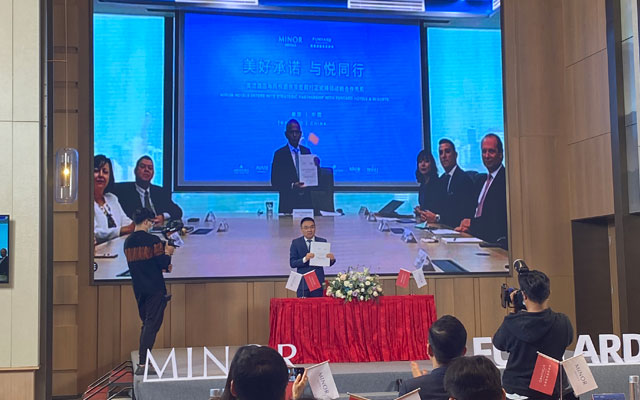
Bangkok-based Minor Hotels has signed an MoU to form a joint venture with Funyard Hotels & Resorts, a core alliance enterprise of Country Garden Group, to expand its portfolio of brands across China.
The brands include Anantara, Avani, Oaks, Elewana, Tivoli and NH – many of which will be making their debut in mainland China.
The announcement comes at the time when the growth of China’s travel sector is expected to accelerate post-pandemic. With demand for leisure and resort services shifting from overseas to domestic, optimism about China’s tourism and resort market is at all-time high.
At the recent virtual MoU signing ceremony, Ji Hongjun, president of Funyard Hotels & Resorts, said: “The pandemic is further accelerating the process of the Chinese economy shifting towards the domestic market. This means new opportunities in domestic tourism and hospitality.” He added that the partnership seeks to “tap into the Chinese resort market and bring new energy to Chinese and even global tourism.”

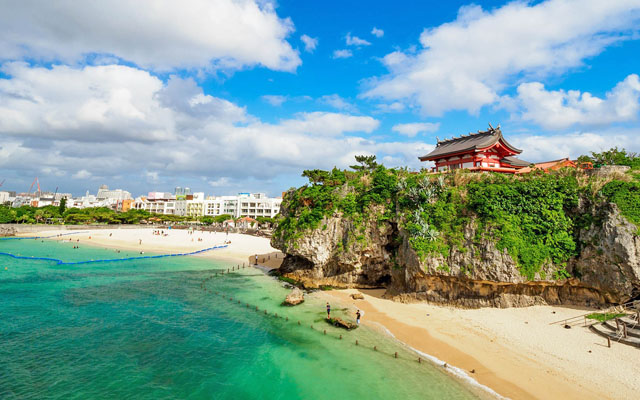






Marriott International will be growing its Asia-Pacific footprint with plans to open 100 properties across the region this year.
In 2020, the company celebrated its 800th hotel opening in the region, with 75 properties added to its portfolio during the year. Nearly 27,000 rooms were added to the region’s development pipeline in 2020 alone, in addition to the signing of Marriott’s largest branded residences project.
Greater China has led the global recovery to date, and the company expects to soon celebrate its 400th hotel in Greater China and its 50th hotel in Shanghai with the opening of JW Marriott Shanghai Fengxian in spring 2021.
The group will also strengthen its luxury portfolio across mainland China, with expected openings in 2021 such as W Changsha, W Xiamen, St. Regis Qingdao and The Ritz-Carlton Reserve Jiuzhaigou.
On the back of strong post-pandemic demand for leisure bookings at Marriott’s properties across mainland China, the company is introducing more additions across its brand portfolio, with the expected opening of Sheraton Mianyan in the Sichuan province, and the anticipated opening of The Westin Nanjing Resort & Spa.
Beyond Greater China, Marriott continues to strengthen its footprint, with several expected brand debuts across Asia-Pacific in 2021. In Japan, W Hotels is expected to debut with the opening of W Osaka, while The Luxury Collection is also slated to debut in Australia with the opening of The Tasman in Hobart. Elsewhere, the Ritz-Carlton brand is expected to celebrate its debut in the Maldives in early summer.
Further expanding the group’s presence in resort destinations, the JW Marriott brand is slated to make its way to Jeju Island in South Korea with the planned opening of JW Marriott Jeju in late 2021. The company’s signature wellness brand, Westin, is also set to debut in one of India’s top beach destinations, Goa, this summer.
To support domestic travel in Japan, the company plans to open six additional Fairfield by Marriott hotels throughout 2021 along Michi-no-Eki roadside stations. Japan expects to have more than 30 Fairfield by Marriott hotels by the end of 2023.
Meanwhile, Australia’s Melbourne is expected to see the opening of the country’s second W Hotel with W Melbourne in spring and the opening of Melbourne Marriott Hotel Docklands in early 2021.