TTG Asia
Asia/Singapore Thursday, 25th December 2025
Page 854

Discova sets sights on Asia with new sales team

0

Discova has formed a dedicated sales team who will focus on Asia both as a source and destination market, as it gears up to seize domestic and regional travel opportunities in the region.

The team located in various markets across Asia will be serving Discova’s partners and their travellers based in the region.
As part of Discova’s focus to serve domestic travellers, it has expanded its product portfolio in key Asian markets, including launching a new graffiti tour in Kampong Glam in Singapore

Andrew Turner, director of sales at Discova, said: “Discova is deeply rooted in Asia. We have been operating in Asia for over 25 years and have helped thousands of travellers from all around the world discover this amazing region. It is only natural that we are now expanding to serve partners and their travellers based in Asia. We believe Asia offers a great potential both from a domestic and regional tourism perspective.”

With domestic travel paving the way for tourism’s return, Discova has been expanding its product offering in key Asian markets including Thailand, Singapore, and Japan to meet growing domestic tourism demand.

For example in Singapore, Discova has launched a new graffiti tour, offering Singaporeans the opportunity to rediscover the trendy Kampong Glam neighbourhood. Visitors are taken to the street art of the area by local graffiti artists and invited to draw graffiti on designated walls.

“Even though we sometimes sell our products directly to domestic travellers like expats in Thailand, we are primarily a B2B business and as such, we are focusing on serving domestic travellers through our partners,” said Turner.

The newly appointed Asia sales team is also gearing up to seize intra-Asia tourism opportunities when borders reopen in the region.

Turner explained: “Before Covid hit, our intra-Asia travel business was growing, and we believe this trend will be amplified in a post-vaccine world. Asia-based travellers will most likely avoid long-distance trips and prioritise short-haul flights and close destinations they are already familiar with. We want to tap into this growing market working together with our Asia-based partners.”

Having organised programmes in partnership with local schools and universities in Asia for international students from Australia, Europe and the US, Discova is now expanding its educational travel offering to Asia-based international schools and universities for Asia-based students.

“Asia-based international schools and universities are looking for opportunities to participate in community development projects in the region as part of their students’ curriculum. Thanks to our long-standing relationships with our communities across Asia, we are able to respond directly to the needs of those educational organisations,” said Turner.

As well, Discova is expanding its offering for corporates, including employee incentive or employee engagement activities.

Turner explained: “With employees encouraged to work remotely, there is growing demand from corporates in the region for employee engagement initiatives or activities which will bring people back together. Each initiative is tailor-made; we often engage directly with the human resources department of the company to build the employee engagement activity based on their requirements.

“Our focus on domestic and intra-Asia travel is part of our long-term growth plan in the region. It is particularly exciting because it encourages us to create new products for customers who are particularly savvy, having first-hand knowledge of the destination and the region they live in. Our domestic and intra-Asia travel products are very inspiring and will certainly appeal to international travellers when borders reopen.”
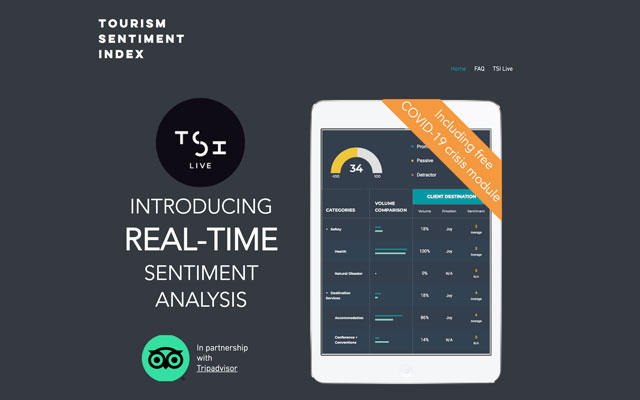

TripAdvisor tracks traveller sentiment with new analysis tool

0

Staybridge Suites to debut in India come 2023

0

Malaysia Airlines to roll out digital travel health pass

0

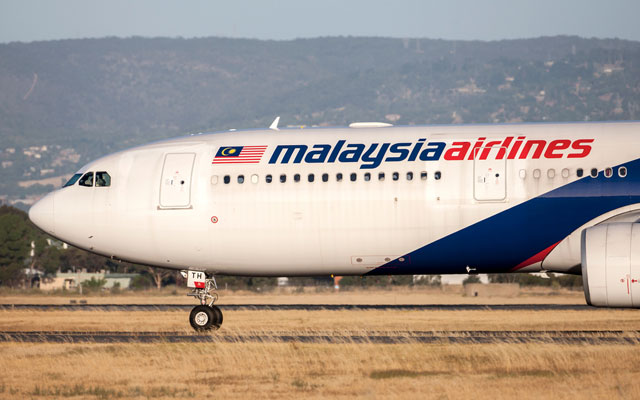
Malaysia Airlines (MAS) has plans to introduce the Digital Travel Health Pass to help streamline its passengers’ travel journey, in the latest effort by the airline to instil post-pandemic travel confidence.

The health pass, which will be integrated with the MAS mobile app, will allow passengers to easily make appointments with certified medical partners to carry out a Covid-19 RT-PCR test or include their Covid-19 vaccination certificate on their mobile phones.

The travel health pass is part of Malaysia Airlines’ commitment to provide safe travels to its passengers 

In addition, passengers can verify their travel eligibility with the airline before their travels, making them aware and informed of the constantly developing travel policies worldwide.

The Digital Travel Health Pass will incorporate some modules of the IATA Travel Pass that have been developed on the basic principle to allow travellers to be in control of their journey while travelling around the world.

With that, passengers will be able to create a digital passport, verify their test/vaccination requirements and status, and share their “OK to Travel” status with the relevant authorities. This digital ID on the App will pave the way for MAS’ passengers to eventually take advantage of contactless technology options throughout the travel processes.

As part of the airline’s efforts to provide safe travels to its passengers amid the pandemic, the travel health pass is the one-step solution in ensuring all passengers can travel safely while maintaining that all the necessary precautions are taken in limiting the spread of the virus. Creating a contactless journey with travel documents stored securely on the platform, passengers will enjoy a safer, end-to-end seamless travel experience.

MAS said that it is working closely with the relevant authorities to roll out the health pass, with more details to be revealed “in the coming weeks”.

Fresh Covid spike thwarts Japan’s domestic air travel rebound

0

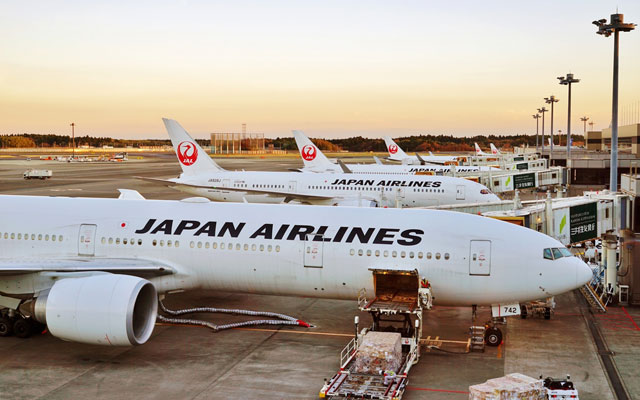
Japan’s domestic airlines have scaled back flight plans so far this year in response to the country’s third wave of Covid-19 infections.

In January and February, Japan Airlines (JAL) operated about 50 per cent of its normal domestic schedule, while All Nippon Airways (ANA) ran one- to two-thirds of its flights.

Third Covid wave forces Japan Airlines to halve capacity on domestic flights this and last month

The move is further evidence that the country’s domestic flight rebound is being hampered by spikes in virus transmission, according to data from the Centre of Aviation.

In 2020, monthly domestic passenger volume in Japan dipped from almost 9 million in January to about 7.5 million in February, as news began to unfold about the novel coronavirus. It then plummeted to less than 1 million in May, marking a drop of 93 per cent year-on-year, the result of a freeze on international travel and a state of emergency declaration asking residents to stay home as much as possible from April 7 to May 6.

Since May, the number of domestic passengers per month rose sharply to exceed 2.5 million in July. Growth remained stagnant through August, the period of Japan’s second wave of infections, before reaching almost 5 million passengers in October, the last month for which data is available.

Japanese airline domestic capacity rate, too, appears related to the spread of Covid-19 in Japan. Following an initial plunge in March and April 2020 corresponding with the stay-at-home request, domestic capacity began to recover in June 2020, reaching more than 2.6 million seats. But this growth was lost in August, when a second wave of infections pushed capacity down to less than 2 million seats.

With the July 22 launch and subsequent promotion of Go To Travel, the government-sponsored domestic travel subsidy campaign, capacity began to recover. JAL and ANA announced plans to operate at about 85 per cent of their pre-pandemic schedule in December 2020, but the arrival of a third Covid wave and the suspension of Go To Travel on December 28, hurt the airlines again. Over the New Year period, JAL reported a 52 per cent reduction in domestic bookings year-on-year, while ANA reported a 58 per cent decline year-on-year.

Global airlines to continue burning cash through 2021: IATA

0

Erawan Group marches on with APAC expansion

0

Thai hotel developer Erawan Group is set to expand its portfolio in Thailand and overseas, with the aim of becoming the leading budget hotel operator in Asia-Pacific by 2025.

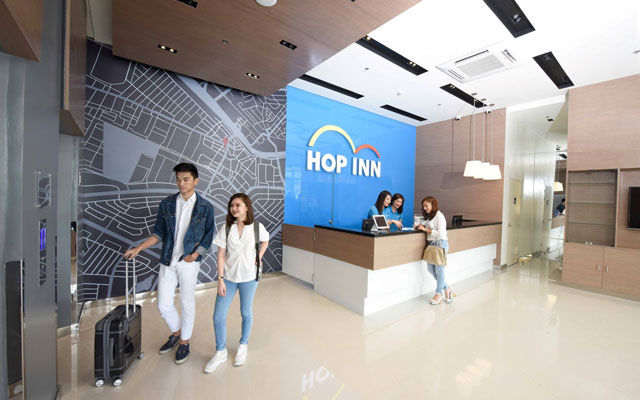
As part of a five-year plan (2021-25), the group targets to raise the number of its Hop Inn hotels in Thailand to 100 from the current 46, which will bring the total room count from 3,600 to more than 7,200.

Erawan Group plans to double the number of Hop Inn hotels in Thailand within the next five years

At the same time, the group has finalised deals to double its portfolio in the Philippines from five to 10 hotels, adding 937 rooms to the existing 843. The new properties will be situated in Cebu, Ortigas, Davao, Iloilo and North EDSA. An additional five new projects are underway.

Erawan Group’s president Petch Krainukul said the budget hotels will serve mainly the respective domestic markets, ahead of the large-scale return of international guests, which he predicts will not manifest until 2023.

Hop Inn holds bright prospects: Its only major rival in Thailand is the B2 Hotel brand, while it ranks among the top three players in the Philippines’ budget hotel sector.

Shifting its focus to overseas markets is the fourth phase of the group’s growth plan set into motion since 2016, following a focus on the luxury segment (before 2005), diversifying into other brands (2005-10), and moving into budget including the creation of Hop Inn (2011-15).

Besides Thailand and the Philippines, the group is also eyeing opportunities to acquire properties in other countries as well as seeking to raise three billion baht in capital to drive expansion.

In 2020, the group logged an accumulated loss of 1.71 billion baht (about US$57 million) due to the Covid-19 pandemic.

Budget hotels like Hop Inn are predicted to recover ahead of other segments. While the group’s major luxury flagship hotels including Grand Hyatt Erawan Bangkok, JW Marriott Bangkok and Renaissance Koh Samui Resort and Spa have been suffering from the decline of international visitors, its economy and budget segments have seen improvements.

ANA trials autonomous buses at Haneda Airport

0

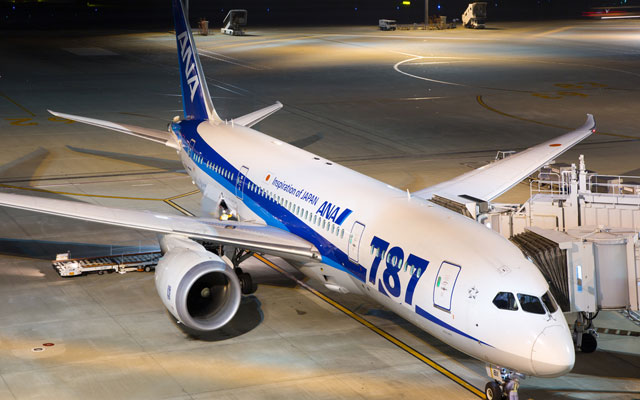
Japan’s All Nippon Airways (ANA) is eyeing the implementation of autonomous buses at Tokyo Haneda Airport by 2025, following a successful series of trials carried out this month.

Driverless buses are a central part of the airline’s vision for a “Simple and Smart” airport of the future, which ANA says can be achieved through widespread application of sustainable autonomous technology.

ANA is the first airline in Japan to trial autonomous buses

Masaki Yokai, senior vice president of ANA, said that use of the buses, which are powered by electricity rather than gasoline, will “result in fewer emissions and decreased carbon footprints at airports”. The company, he added, is “optimistic that (the completed trials) will give us the information we need to continue improving these technologies.”

The trials were carried out from February 1–12 in collaboration with Softbank’s Boldly mobility initiative, Advanced Smart Mobility and BYD Japan. Autonomous buses were used to transport almost 60 airport employees at any one time. Routes were limited to Terminal 2’s restricted area, where aircraft and cargo vehicles are located.

The technology allowed dispatchers to monitor the progress of the buses in real time and receive feedback to evaluate the journey at all times. Cameras displayed multiple views of the road and environment around the bus as well as the vehicle’s interior. A remote monitoring system was also used to manage bus departures and the opening or closing of bus doors, a first for ANA.

The February tests are the latest in a series of efforts by the airline to experiment with autonomous vehicles, which began in February 2018. They follow the successful trial of an autonomous towing tractor and automated baggage loader at Kyushu Saga International Airport from September 28 to October 5, 2020.

ANA says its next step is to test driverless buses to transport passengers, which is expected to be carried out in 2021.

Full recovery for APAC hotel demand not until 2023

0

Aussie youth leads growing demand for responsible travel

0