Digital expansion has left no segment of the travel ecosystem untouched by cyber risk, with companies like Bangkok Air, Marriott Hotels, SITA and Ticketmaster having fallen victim to attacks or been fined for data breach.
According to Chng Tien San, vice president, cybersecurity, C&I, APJ, Mastercard, cyber risk exposure will increase as the travel industry evolves and every organisation regardless of size is vulnerable to cyber threats.
Data breaches can result in not only financial damage, but also loss in consumer trust, noted Chng
Chng noted the pandemic had further escalated cyber risk with an explosion of digital third-party relationships.
Speaking during the Travel in the New Normal: Rethinking Technology and Cyber Risk webinar, organised by PATA last week, Chng warned that many companies view cybersecurity as an “afterthought”, despite cybercrime being a consistent threat.
Data he shared showed cybercrime was a US$350 billion worldwide problem and growing; and that 70 per cent of attacks targeted small businesses, with 63 per cent of small businesses having experienced a cyberattack in the last 12 months.
When asked how much companies should be investing to beef up protection, Chng said it was common to invest 10 per cent of turnover on IT expenditure and that between seven and 15 per cent of that sum is set aside for cybersecurity depending on the industry.
“But it is not one size fits all,” he stressed, adding that it would be higher for businesses in finance, manufacturing and retail.
Chng commented that SMEs not equipped with cybersecurity skill sets, not knowing how to start and what to protect in an expanding online ecosystem and cloud-based environment could raise their level of awareness and knowledge by accessing the Mastercard Trust Center.
The centre includes links to curated education, resources and tools from trusted external sources.
Businesses, he advised, needed “visibility of their assets and (know) how to protect customer data, IP, pricing, etc”. They should also work with trusted third-party suppliers, as well as train staff and establish organisation house rules on processes when there is a breach and the crisis response.
Shangri-La Hotels and Resorts, Singapore and Häagen-Dazs have collaborated to create Singapore’s first ice cream-themed staycation.
The Häagen-Dazs Staycation package is available at two of the group’s properties in Singapore – Shangri-La Singapore near Orchard and Shangri-La Rasa Sentosa, Singapore.
Shangri-La’s Häagen-Dazs Staycation package includes limited edition collectibles and several sweet treats
The package includes exclusive Häagen-Dazs collectible cushion, teddy bear, bath bomb, face mask, coaster set, picnic mat and cooler bag.
Each room also comes with a mini-freezer stocked with Häagen-Dazs pints, stickbars and mini-cups that can be enjoyed during the stay or as take-home treats. Also included in the package is a specially curated dessert featuring classic Häagen-Dazs flavours, and a S$20 (US$14) Häagen-Dazs voucher.
The two-day, one-night package at Shangri-La Singapore is priced from S$499 nett, and comes with complimentary breakfast for two at The Line and complimentary car parking.
For Shangri-La Rasa Sentosa, Singapore, the package is priced from S$599 nett for a two-day, one-night stay and from S$1,088 nett for a three-day, two-night stay. Each package comes with complimentary daily breakfast for two.
The packages are exclusively available on Klook’s booking platform, for stays from October 1 to November 18.
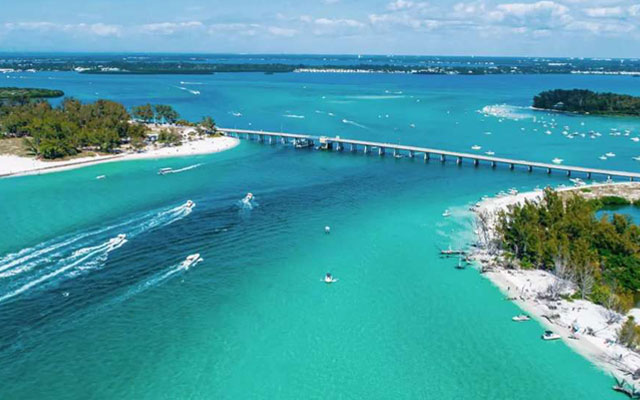
Rosewood Hotels & Resorts has signed a deal to launch the brand’s inaugural stand-alone residential project in Lido Key, which will take the form of a 65-unit condominium slated for completion in 2025.
Rosewood Residences Lido Key – spearheaded by developer The Ronto Group and real estate investment firm Wheelock Street Capital – will be situated off the coast of Sarasota, Florida, a short walk from St. Armands circle.
Rosewood Residences Lido Key in Sarasota, Florida marks the brand’s first stand-alone residential project
Set to occupy 1.41ha of beachfront real estate, the residences will boast Gulf of Mexico views and average approximately 390m² in size.
On-site amenities will include a private restaurant and chef services for in-residence dining and catering, fitness centre with options for private training and yoga sessions, outdoor pools, massage rooms, private guest suites with housekeeping service, lounge featuring library and game room, and a 24-hour concierge.
Rosewood Residences Lido Key are for purchase only, no rentals will be available. Sales reservations for the condominium will launch in December 2021, with pricing yet to be announced.
The last few years have seen steady progress on New Distribution Capability (NDC). However, the onset of the pandemic raised concerns that NDC might take a backseat. Interestingly, though, despite the challenges of the past 18 months, momentum around NDC hasn’t stalled.
In fact, the drive to improve travel retailing, personalisation and simplifying processes has led to much progress. We are optimistic that this drive will continue through 2021 – a year that is shaping up to be one in which NDC deployment is scaling globally.
This optimism carries over to the Asia-Pacific region where we’ve seen a number of important milestones with carriers like Singapore Airlines late last year and Qantas this year. We’ve also partnered with some of the biggest travel agencies across the region in G.M. Tour and Travel, Riya Travel and Hana Tour. Suffice to say, Asia-Pacific has been a dynamic growth region for NDC.
The time is now for the industry to truly engage and realise the maximum benefits from investments made in NDC as we work to rebuild travel.
Technology is no longer a barrier to adoption and it’s now possible for travel sellers and buyers to consume aggregated content, including low-cost carrier (LCC) content, delivered via different technologies in a single application with an improved booking experience. Also, airlines are beginning to differentiate with NDC by offering product bundles and price points that deliver exactly what travellers want.
NDC is the present and the future
So, what role does NDC play in rebuilding travel? It’s simple. The NDC retailing process enables industry players to get creative in the digital retail space, which opens many more doors to facilitate opportunities like dynamic packaging, fare bundles and other ancillary services.
NDC allows airlines to create richer content and distribute tailored offers through travel agents and corporate booking tools in real-time. In turn, travel sellers will have the tools to efficiently build personalised offers for travellers.
Take Qantas as an example. The airline can now recognise frequent flyers that book via NDC-enabled travel sellers at the tier level and is able to present customised deals based on price, points rewards, ancillary options and bundles. There will come a time when Qantas enables payment with a combination of cash and miles via NDC for frequent travellers, opening a whole new world of retailing options.
Give travellers what they want
The technological expectations of travellers have been set by brands like Amazon, Netflix, and Spotify when it comes to ease of use and personalisation. NDC can give travellers the same smooth experience they are used to with the technology they use in other parts of their lives.
The end-to-end integration of NDC enables advanced servicing capabilities, so travellers can change, modify or cancel a booking quickly with just a few clicks. The process is smoother and faster so travellers can easily access more information and make better informed choices.
The next step in NDC
The industry has come a long way since the inception of NDC. Yes, there are still challenges to contend with, but also achievements to be celebrated. This is where things are about to get more interesting.
At Amadeus, we are working hard so that by the end of 2021, every Amadeus-connected travel seller globally will be able to access content sourced from both NDC and EDIFACT technologies through a single search query, with a simplified end-to-end booking flow, using the Amadeus NDC-enabled solution of their choice.
We understand that there are still some obstacles to overcome around servicing, integration and lack of standardisation to obtain the full benefits of NDC. However, we also recognise that NDC is a journey, and by working together as an industry, we will not only overcome these issues but unlock limitless possibilities to improve travel retailing.
Find out more in our recently launched spotlight paper titled NDC: 2021 and the path to industrialisation, featuring insights from House of Travel and Qantas, as well as other airlines, travel sellers, corporations and industry bodies.
Bookings from Singapore to Germany has increased, with leisure travel leading the way, following the announcement of the Vaccinated Travel Lane (VTL) between both countries, which kicked off on September 8, according to recent data from ForwardKeys.
Demand for travel from Singapore to Germany 135 per cent higher than from Germany to Singapore: ForwardKeys
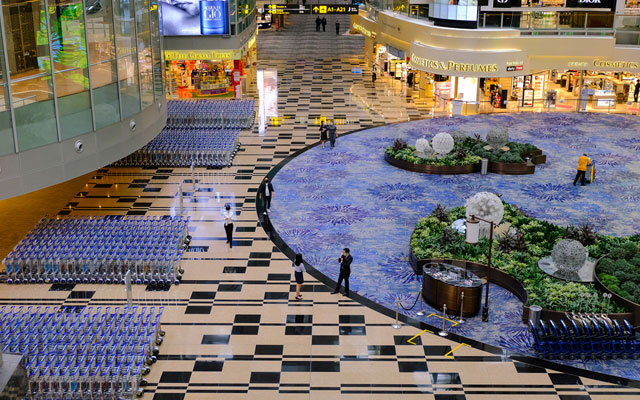
Since the pandemic stymied international travel for residents in Singapore since March last year, Germany is the first quarantine-free, longhaul destination for fully vaccinated travellers.
When examining the air tickets issued between the announcement day on August 19 and September 3, demand for travel from Singapore to Germany was 135 per cent higher than from Germany to Singapore.
Tickets from Germany to Singapore reached 18 per cent of that issued in the same period in 2019, while in the other direction, it’s at 93 per cent of 2019 levels.
“We had observed similar lopsided demand when the Australia-New Zealand air travel bubble (ATB) launched in April earlier this year, with almost three times as much travel going to New Zealand than the opposite direction,” said Jameson Wong, vice president strategic clients & partnerships APAC at ForwardKeys.
“However, while that initial rush was primarily due to returning New Zealanders residing in Australia, the Singapore to Germany air bookings reflect a considerable amount of pent-up demand from the leisure segment. For both directions, around 70 per cent are return tickets, indicating a sizeable pie of short-term visitors,” added Wong.
Further analysis using data from ForwardKeys’ Destination Gateway revealed that the biggest proportion of travellers from Singapore to Germany are indeed leisure travellers, accounting for 76 per cent of all travellers – up from 43 per cent in 2019.
“From quarantine-free fine prints, traveller confidence, timing, clarity of information, attractiveness of the destination to the ease of making travel arrangements, the stars seem to be well aligned for longhaul, outbound leisure travel to truly restart,” commented Wong.
The number of travellers choosing to book directly with airlines has also grown four folds, 88 per cent now versus 22 per cent in 2019, revealing the control and assurance that travellers need in the post-Covid era.
According to Ema Mandal, ForwardKeys insights specialist, the average length of stay for the leisure travellers has grown by only two days – from 13 days in 2019 to 15 days.
“We thought the metric would have lengthened significantly given the prolonged halt on longhaul. But it seems the travellers from Singapore to Germany are ‘warming up’, playing it safe and have not yet started to take advantage of the fact that one can take domestic flights within Germany without affecting the return VTL eligibility, which could have driven up the length of stay,” Mandal said.
A closer look at seasonality reveals some similarity in travel patterns across the main traveller segments.
Arrivals started to increase from September 8 when the VTL kicked off, but quickly dwindle off in early November and subsequently pick up again when the school holidays commence from November 20, peaking into December, just in time for the Weihnachtsmärkte in Deutschland, or Christmas Markets in Germany.
Hilton has appointed industry veteran Cedric Nubul as general manager for Hilton Singapore Orchard, which is set to open in January 2022 following an extensive refurbishment of the current Mandarin Orchard Singapore.
Nubul brings over 20 years of experience with Hilton hotels, including strong experience in conversion of hotels. He served in the role of general manager across the Caribbean and Colombia over the past eight years, and previously worked across France, Spain, Italy, the Maldives, and Malaysia.
The Indonesian government has unveiled its three-stage recovery plan to build a more resilient tourism industry post-Covid.
Speaking at the Global Tourism Forum last week, Rizki Handayani, deputy of tourism product and MICE at the Ministry of Tourism and Creative Economy (MoTCE), said in the first stage of recovery (2021 to 2022), the focus will be on spurring domestic tourism and accelerating digital transformation within the sector, while ensuring that the CHSE (Cleanliness, Health, Safety and Environmental Sustainability) protocols are being implemented across destinations.
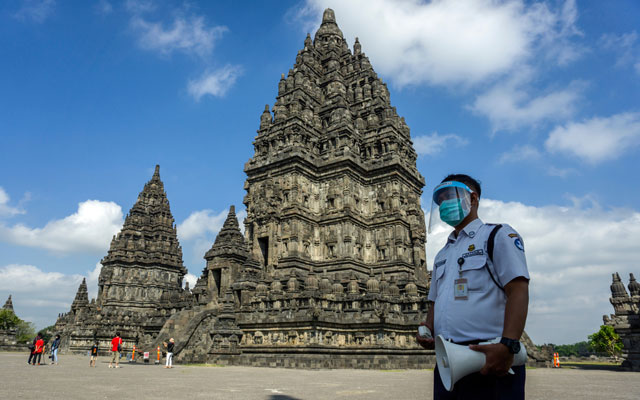
Domestic tourism will lead the initial recovery phase; a security officer standing guard at Prambanan Temple in Yogyakarta, Indonesia pictured
The ministry will also focus on establishing travel bubble arrangements, and work with related government agencies to prepare for the gradual reopening of destinations across the country, particularly Bali.
To pave the way for Bali’s reopening, Teuku Faizasyah, director general of information and public diplomacy, Ministry of Foreign Affairs, said that his office would help MoTCE analyse potential source markets and keep international travellers updated of the Covid-safe measures in place at tourist destinations.
Budi Tirtawisata, CEO of Panorama Group, urged the government to ease entry requirements for international travellers, including exempting them from quarantine if they test negative for Covid-19.
In the second phase of the recovery programme, from 2022 to 2024, MoTCE will aggressively promote tourism villages as it projects that community-based tourism will shine in the post-Covid era, said Rizki.
During this recovery stage, the government will focus on boosting the sector’s resilience, through stimulus funding to support the digitisation of tourism villages and development of creative hubs, as well as facilitating collaboration between e-commerce players and banks for capital assistance.
Rizki expects that the growth and acceleration phase will take place from 2024 to 2029. During this stage, the government will strengthen quality tourism and the destination resilience, promote wellness and adventure products, intensify marketing campaigns, speed up digital transformation, as well as strengthen the supply and value chains of the industry.
Few would think of launching a travel business today, right in the midst of a prolonged pandemic and tourism crisis, but former architect and business entrepreneur Michiyo Kawabe sees promise in heading that way.
With other partners, Kawabe officially registered Michi & Co with the Singapore Tourism Board in June, setting the company on the path of offering curated tours around Japan’s lesser known regions, with the promise of connecting travellers with local communities.
Michiyo Kawabe (left) launches Japanese tour company and ropes in Singapore-based Japan specialist, Salamat Khamisah (right), to develop programmes
According to Kawabe, the ultimate goal of Michi & Co is to offer travellers a “learning journey” that gives them a deeper look into the local way of life and which will support the local people and their livelihood.
For a start, Michi & Co offers two- and four-night itineraries each to Hayama and Kamakura in Kanagawa prefecture and Hakuba and Togakushi in Nagano prefecture. The programmes are built around private, luxury villas, some of which Kawabe helped designed.
The Hayama villa, built a century ago, stands next to the Hayama Imperial Villa. Kawabe has preserved its original structure while bringing in modern luxuries and amenities, such as a balcony Jacuzzi with garden and ocean views, and a Western dining room and kitchen. The villa can take four guests in bed, and four more on futons.
Over at Hakuba, the villa is a classic ski cabin that is within easy reach of major ski resorts. The three-bedroom villa is good for up to six guests, but larger families can take a second villa of a similar size on the same site.
Kawabe will tap into the network of staycation.jp, an online portal of vacation rental villas all over Japan that she set up years ago, to offer other accommodation options.
Michi & Co hopes to draw international travellers deeper into Japan, where they would reside in private villas and enjoy experiences off the touristy tracks; Hayama villa pictured
Itineraries play up the Japanese countryside, and offer uniquely Japanese experiences, such as unwinding around a takibi – bonfire – with a master who will speak about the art of making a bonfire, interacting with a local fisherman, visiting farmer’s markets, dining at restaurants that are hidden gems, participating in meditation rituals and pottery crafting, and more.
As the company continues to build up its product line, Kawabe said programmes would carry on the promise of taking travellers off the beaten track to appreciate more of Japan.
Salamat Khamisah, a recognised Japan destination expert in Singapore, joins the company as tours and operations manager. She believes that Michi & Co’s direction to “have our guests learn about the local culture in less congested parts of Japan through curated journeys fits with the post-pandemic expectation that people will favour private tours instead of the usual group tours, and for destinations away from the big cities”.
“It may seem strange to start a travel agency now, especially one that focuses on Japan when there are still inbound travel restrictions, but I think this gives us time to prepare. Demand will rebound very quickly and we should not wait till borders are reopened to begin planning and marketing. By then, there will be a huge rush of travel agent activities,” reflected Khamisah.
Khamisah will be leveraging her expertise in Halal tourism to support Michi & Co’s development in this growing tourism segment. “We are able to provide Halal or Muslim-friendly F&B catering and accommodation, and I have a reliable network of Japanese suppliers who are familiar with serving Muslim travellers,” she shared, adding that the plan is to support Muslim travellers from anywhere in the world, not just those from Singapore.
To establish the Michi & Co branding and engage potential travellers, the team has been conducting Japanese tea ceremonies that give customers a taste of the destination to whet their travel appetite.
“It is encouraging to know that many who have attended our sessions have expressed interest to holiday in Japan once the borders reopen. They are all bidding their time, waiting for Japan to welcome again foreign visitors,” said Khamisah.
Besides Japanese tea ceremonies, Kawabe is looking to offer meditation or online interactions with other Japanese masters. In addition, guests will soon be able to purchase products that allow them to bring uniquely Japanese experiences home.
“We have started selling green tea products, which are a nice match with our tea ceremonies. I think handicraft make interesting products to sell as well, as there are many stories of the artisan and Japanese culture embedded within. Our introductory sessions and products will allow our guests to experience a part of Japan before their visit in the near future,” said Kawabe, adding that “a successful travel agent is one that can tell a good story of the destination and the value of local culture”.
Editor’s note: Content has been updated to reflect an amendment. The original copy states that private villas featured in the tours are built, designed and owned by Kawabe. This is not the case.
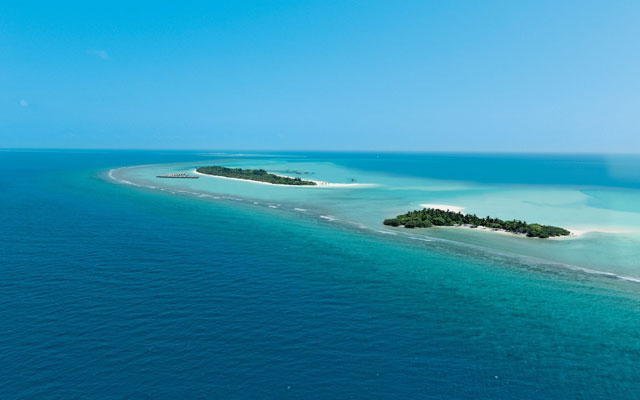
Six Senses will add its second branded property in the Maldives in the form of Kanuhura situated on the private island hideaway of Lhaviyani Atoll.
The property encompasses three private islands – two deserted neighbouring islands and Kanuhura itself. The conversion of the Kanuhura resort into a Six Senses branded property is the group’s second collaboration with Singapore-based Hotel Properties Limited.
Kanuhura Maldives will be converted into a Six Senses branded property come late 2022
When it adopts the Six Senses brand in late 2022, the resort will offer 80 private overwater, beach and family villas offering sunset or sunrise views. It can be reached via a 40-minute seaplane flight from the main international airport on Malé.
Enhancements are planned over the coming months including an upgrade of the overwater villas to include private pools, new family suites, new dining concepts and a pioneering wellness offering.
Below the water, the Lhaviyani Atoll offers more than 40 dive sites for exploring marine life. In the coming months, new watersport activities and high-performance equipment will be added in partnership with Ocean Wings, a subsidiary of Ocean Group Maldives. A turtle safari may also be organised on request to a turtle point less than five minutes away from the resort.
In keeping with its sustainability ethos, Six Senses will also line up projects to support a neighbouring island community with a focus on education and student development.
Also in the works is new landscaping of the organic herb garden, where vegetables, herbs and salad leaves will be collected each day for use in the restaurants and interactive workshops with the chef. The boutique will also provide a new space dedicated to sustainable fashion.
Six Senses Kanuhura will be the brand’s second property in the Maldives, after Six Senses Laamu. Prior to its conversion, the property is available for bookings through www.kanuhura-maldives.com and www.ihg.com.
Iceland-based airline technology provider, Dohop, is working to strengthen its global presence, with a focus on the Asia-Pacific region over the next five years.
Dohop’s commercial director, Sarah Hanan, shared that Asia-Pacific’s vast population coupled with the fact that it was the fastest-growing region for air travel globally pre-Covid, presents a “significant opportunity” for the brand’s growth.
Hanan: Intermodal air-rail connections at airports in Asia-Pacific markets still under-developed
“We believe we are uniquely positioned to be able to support the aviation industry in its recovery by facilitating new route connections, thus providing opportunities for incremental revenue through partnerships with our existing network of 60 airlines,” she said.
Since its founding in 2004, Dohop has supported thousands of connections between low-cost carriers, full-service carriers and hybrids. It provides booking engines and microsites that enable carriers through API integrations to easily and seamlessly offer connecting itineraries with their partner airlines.
It also offers bespoke customisation of the platform to fully integrate with a partner’s website and booking flow. Additionally, it can also support the sale of seats with seat maps, bags, meals, inflight entertainment and additional ancillaries, along with frequent flyer programme integration.
Currently, Dohop has five airline platforms in the Asia-Pacific region. However, a few have been disabled due to Covid-19 restrictions. The company is in ongoing discussions with many airlines based in Asia-Pacific to grow its network.
Besides virtual interlining, Dohop is also helping airlines navigate the disruption to flight schedules caused by ever-changing travel restrictions owing to the current pandemic. It has responded quickly to change requests and proactively presenting new opportunities as they arise.
The Asia-Pacific region is supported by Dohop’s team based in Bangkok and Beijing. Marketing initiatives are done out of its headquarters in Reykjavik, Iceland, and supported by its regional offices.
Earlier this year, Dohop enabled intermodal connections between easyJet and Deutsche Bahn who launched combined transportation connections on Worldwide by easyJet in July.
Hanan shared: “Dohop is actively working on expanding our network of rail providers globally, which will in turn be able to facilitate an increasing number of intermodal connections, which we believe play a key role in international travel.”
While the intermodal proposition is gaining momentum in Europe as markets recover, the take-up rate in Asia-Pacific is slower. Said Hanan: “Countries such as Japan and China have extensive high-speed rail networks. However, air-to-rail connections are not yet fully developed.”
She added: “We are in talks with several airlines to expand intermodal. It is a convenience to customers, when they can pre-book their onward connection from the airport.”

















Shangri-La Hotels and Resorts, Singapore and Häagen-Dazs have collaborated to create Singapore’s first ice cream-themed staycation.
The Häagen-Dazs Staycation package is available at two of the group’s properties in Singapore – Shangri-La Singapore near Orchard and Shangri-La Rasa Sentosa, Singapore.
The package includes exclusive Häagen-Dazs collectible cushion, teddy bear, bath bomb, face mask, coaster set, picnic mat and cooler bag.
Each room also comes with a mini-freezer stocked with Häagen-Dazs pints, stickbars and mini-cups that can be enjoyed during the stay or as take-home treats. Also included in the package is a specially curated dessert featuring classic Häagen-Dazs flavours, and a S$20 (US$14) Häagen-Dazs voucher.
The two-day, one-night package at Shangri-La Singapore is priced from S$499 nett, and comes with complimentary breakfast for two at The Line and complimentary car parking.
For Shangri-La Rasa Sentosa, Singapore, the package is priced from S$599 nett for a two-day, one-night stay and from S$1,088 nett for a three-day, two-night stay. Each package comes with complimentary daily breakfast for two.
The packages are exclusively available on Klook’s booking platform, for stays from October 1 to November 18.