

Optimism for travel restart as Thailand readies to reopen for vaccinated
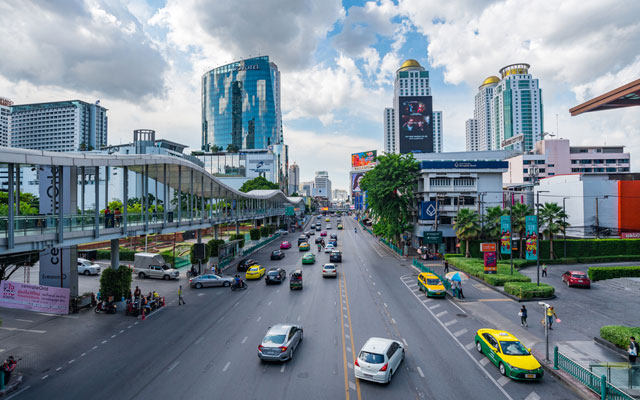
Thai tourism operators are seeing a very positive outlook with international travellers eager to travel to Thailand following the government’s announcement that the country will welcome fully vaccinated tourists without quarantine requirements starting November 1.
Initially, at least 10 countries deemed low-risk including the UK, Singapore, Germany, China, and the US will be allowed to enter Thailand.
Sisdivachr Cheewaratanaporn, managing director of Quality Express Tour, said the news is welcomed, following nearly two years of hardship for tourism operators due to the Covid-induced travel slump.
“At this time, tourists in many countries want to travel to Thailand,” Sisdivachr said. He added that even though some countries like China, Japan and Hong Kong have yet to allow their citizens to travel abroad, there is an optimistic demand outlook from other potential markets.
For instance, Indian tourists which has become a key visitor source market for Thailand, have shown a readiness to return once entry restrictions are relaxed. Also, European tourists are likely to be among the first groups to return to Thailand during the year-end season and in 1Q2022.
He shared that the agency has started working with overseas agents to sell packages, and have received “fairly good feedback”.
Luzi Matzig, chairman of Asian Trails Group, revealed that the reopening of Thailand to vaccinated visitors is a step in the right direction that restores confidence from international markets, especially Europe, that are crucial to the country’s tourism recovery.
Some 70 per cent of the European Union’s adult population has been fully vaccinated and allowed to travel overseas, however, they want the Thai government to waive the need for certificate of entry application in order to ease travel, he noted.
Matzig said he is currently working with agents in European countries to prepare tours, and that the response has been “very positive”.
Supawan Tanomkieatipume, managing director of the Twin Towers Hotel Bangkok, expressed optimism over the country’s reopening next month, saying that he looked forward to hotels, and F&B and entertainment venues being filled again, especially in December when restaurants will be allowed to resume the sale of alcoholic beverages.
Supawan said that she has been receiving an uptick in requests from travel agents asking for room rates on behalf of their clients.
She also shared that many hotels in the capital and in major tourist destinations have been receiving calls from potential clients looking to rent spaces to run year-end events.
Indonesian trade pushes for shorter quarantine ahead of Bali’s reopening
Trade associations are calling on the Indonesian government to shorten the quarantine period for all arriving passengers from abroad, as the country prepares to reopen Bali for fully vaccinated visitors from select countries starting October 14.
The call comes after coordinating minister for maritime and investment affairs Luhut Binsar Pandjaitan announced on Monday (October 11) that the government will cut the quarantine period for international visitors from eight to five days.
Despite the reduction, the trade feels the policy will put a damper on Bali’s reopening plan and hinder recovery of the travel industry. Hence, they are hoping that the government will consider further cutting the quarantine time to one to three days for incoming visitors.
That sentiment will be conveyed in a letter addressed to the related government offices written by four major travel associations – Association of the Indonesian Travel Agencies (ASITA ’71), Association of the Travel Agencies in Indonesia (ASTINDO), Indonesia Inbound Tour Operators Association (IINTOA) and Indonesian Tour Leaders Association (ITLA).
Speaking at an open discussion among the four travel associations last weekend, Artha Hanif, chairman of ASITA ’71, questioned the need for a five-day quarantine for incoming travellers to Bali, given that they must meet the criteria of being fully vaccinated, and must present a negative Covid-19 PCR test result before departure, and be tested again on arrival.
“These are healthy people we are talking about. Why should we treat them like sick ones who have to be confined to their hotel rooms, eating hotel food which may not be to their liking since no outside food is allowed during the quarantine?” he said.
Instead, he suggested that the self-isolation period be cut to three or even two days, by which time the PCR test result should have been released. This will help travellers to save on travel expenses, given that serving a hotel quarantine will incur a minimum additional cost of seven million rupiah (US$492), according to Artha.
He also noted that sufficient protocols are in place to protect travellers’ safety, as they will be monitored by the Peduli Lindungi contact tracing app and must also purchase travel insurance for Covid-19-related medical expenses prior to arrival. As well, the places they will be visiting have received the Cleanliness, Health, Safety, and Environment Sustainability (CHSE) certification, he added.
Similarly, Paul Edmundus Talo, chairman of IINTOA, questioned the need to subject incoming travellers to a five-day quarantine given that they are fully inoculated. “I think a two- or even one-day quarantine to wait for the PCR test result (to be released) is reasonable,” he said.
The current quarantine policy hampers both inbound and outbound travel sales, as it is costly and inconvenient, opined Pauline Suharno, chairman of ASTINDO.
She suggested for the government to follow Dubai’s model of quarantining incoming visitors for one day until the release of their on-arrival PCR test result.
Pauline also expressed hope that the government work on establishing travel corridor arrangements with other countries and regions to facilitate two-way, quarantine-free travel as part of its border reopening plan.
Agreeing, Tetty Ariyanto, chairman of the ITLA, suggested that the travel industry urge the government to open travel corridors with select countries based on reciprocity, similar to the recently-announced vaccinated travel lanes between Singapore and South Korea.
With Bali’s reopening limited to 18 countries deemed low-risk including China, Japan, New Zealand, South Korea, and the UAE, Paul pointed out that many of those countries have outbound travel restrictions in place.
He said: “China and New Zealand, for example, are still limiting their people to travel. In the meantime, Germany and the Netherlands, which has at least 7,000 tourists waiting to travel (to Bali), are not on the list.”
SIA launches seasonal flights to Seattle and Vancouver

Singapore Airlines (SIA) will be launching seasonal flights to Seattle and Vancouver, offering customers more travel options to North America during the year-end holiday season.
From December 2 to February 15, the airline will operate four-times-weekly services to Vancouver, Canada and Seattle. Two of the weekly flights from Seattle and Vancouver to Singapore will operate as vaccinated travel lane (VTL) services, providing eligible customers quarantine-free entry into Singapore.

SIA is also converting its daily direct San Francisco-Singapore services to designated VTL services from next Wednesday (October 20). These provide additional quarantine-free travel options for customers to travel to and from North America, on top of the earlier announced VTL services from Los Angeles and New York.
SIA will deploy the 253-seater Airbus A350-900, with 42 business class seats, 24 premium economy class seats and 187 economy class seats, on the Singapore-Vancouver-Seattle service.
Flight SQ28 will depart from Singapore at 09.15 and arrive at Vancouver International Airport (YVR) at 07.30, and depart Vancouver at 08.40 to land at Seattle-Tacoma International Airport (SEA) at 09.30.
Flight SQ29, SIA’s twice-weekly designated VTL service, will depart from Seattle at 11.00 and arrive at Vancouver at 11.45 on the same day. It will then depart from Vancouver at 13.15 and arrive in Singapore at 22.05 the following day.
SIA will also operate SQ27, a twice-weekly Seattle-Vancouver-Singapore service that is not a designated VTL flight in order to cater to customers who are ineligible to enter Singapore under the VTL arrangement.
On the San Francisco service, flight SQ34 departs Singapore at 18.40 and arrives at 19.05. The return flight SQ33 departs San Francisco at 22.05 and arrives in Singapore at 05.45 two days later. The flight timings will change with effect from October 31.
For this service, SIA operates the 161-seat Airbus A350-900 ULR with 67 business class seats and 94 premium economy class seats.
The addition of San Francisco, Seattle, and Vancouver expands the SIA Group’s VTL network to 17 cities. SIA will operate VTL services from Amsterdam, Barcelona, Copenhagen, London, Los Angeles, Milan, New York, Paris, and Rome from October 19, and Seoul from November 16.
These are on top of the existing VTL services from Bandar Seri Begawan, Frankfurt, and Munich. Scoot, SIA’s sister airline, will begin VTL flights from Berlin from October 20.
Multi-city itineraries within VTL countries are allowed if customers meet the eligibility criteria. Customers travelling on the VTL flights also enjoy transfers via Singapore Changi Airport to 59 destinations within the SIA Group network.
BWH Hotel Group announces new president and CEO

Lawrence (Larry) M. Cuculic has been appointed president and CEO by
BWH Hotel Group’s Board of Directors, taking over from outgoing president and CEO, David Kong.
Cuculic has been serving as senior vice president and general counsel for the company for 12 years and will assume his new role as president and CEO on December 1, 2021.
Prior to joining BWH Hotel Group, Cuculic was senior vice president general counsel and corporate secretary for Wabash National Corporation. Previously, Cuculic served as vice president legal and corporate secretary for American Commercial Lines, and was a partner in the law firm Gambs, Mucker & Bauman.
Tourism WA welcomes new managing director

Former Perth Airport executive Carolyn Turnbull has been appointed as Tourism Western Australia’s new managing director, for a five-year term that will commence October 18, 2021.
Turnbull brings 20 years of international leadership experience in the tourism and hospitality industry, and joined Tourism WA in 2020 as the executive director – industry, aviation and markets.
The industry leader’s experience includes senior executive roles with global hospitality brands including Aman Resorts.
Before joining Tourism WA, Turnbull was spearheading the development of the western gateway as chief aviation development officer at Perth Airport.
Kathy Fong leads Sabre’s HK travel agency business

Kathy Fong has been appointed as country manager of Sabre’s travel agency business in Hong Kong.
In this role, Fong will be responsible for leading sales, tracking performance, business development and agency engagement in Hong Kong, including customers in mainland China and Macau. She will also pursue key business opportunities in line with Sabre’s long-term strategic plan in these North Asia markets.
A veteran in the travel industry, Fong has spent more than 25 years with Sabre, with the past 20 years in various sales roles. Most recently, Fong served as leader of Sabre’s premier accounts team in Hong Kong.
Fresh new look for Ramada Resort by Wyndham Phillip Island
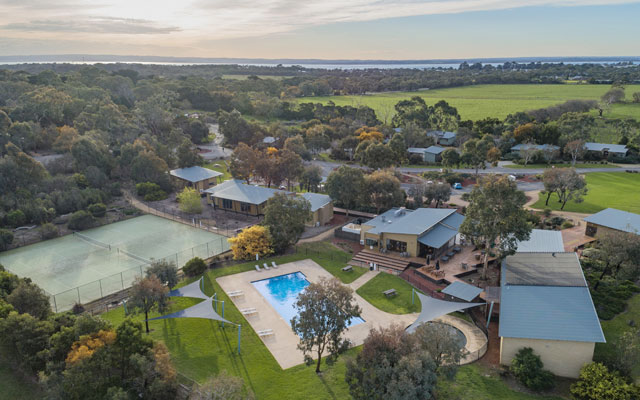
Ramada Resort by Wyndham Phillip Island has completed a A$7.5 million (US$5.5 million) major renovation, adding features like brand new accommodation offerings, and a redesigned restaurant and bar; while also introducing a host of onsite activities.
Nestled on 26.3ha of Victorian bushland, Ramada Resort by Wyndham Phillip Island features studio, two and three-bedroom villa accommodation and is accessed by resort guests and members of Club Wyndham South Pacific vacation club. The resort is home to a range of facilities along with conference and events spaces.
The refurbishment project, which commenced in 2019, included the renovation of 137 villas and the addition of new Deluxe and Grand villas. The onsite restaurant has also been redesigned with a sleek fit out and an upgrade to its culinary offerings. Renamed Flametrees, the restaurant offers an extensive menu, wine list, cocktail bar, and fireside dining.
Family-friendly activities introduced at the resort include an outdoor cinema, jumping castles (during school holidays), trivia and bingo nights, scavenger hunts and kite-flying competitions. The resort has acquired pedal karts and has converted a walking trail into a mini grand prix track as a nod to Phillip Island’s own world-famous circuit.
Onsite facilities also include a gym, sauna, indoor and outdoor spa, two outdoor swimming pools, a children’s wading pool, electric bikes, games room, three tennis courts and a children’s playground.
IHG signs Holiday Inn property in Dandenong
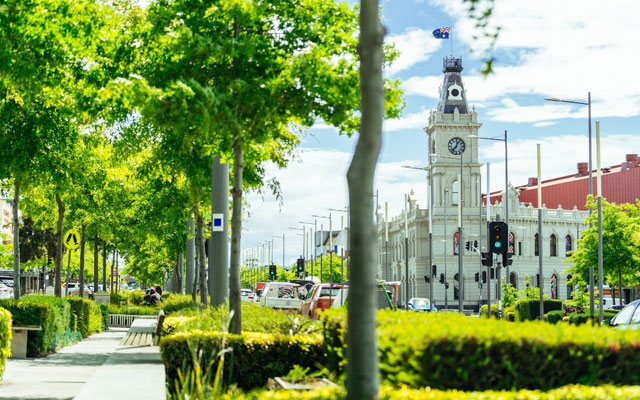
IHG Hotels & Resorts will continue its expansion in Victoria with the signing of the Holiday Inn Dandenong with hotel owners, the Pelligra Group.
This will be IHG’s fifth hotel with the Pelligra Group, joining Holiday Inn Melbourne Airport, the newly opened Holiday Inn Werribee, and upcoming Holiday Inn Melbourne Richmond and Crowne Plaza Melbourne Carlton.
Formerly the Ramada Encore by Wyndham Dandenong, the hotel will undergo a A$10 million (US$7.3 million) refurbishment, and open as a Holiday Inn in April 2022. This will include all 108 guestrooms receiving a major refurbishment plus an additional 18 new rooms added. The lobby will also be transformed to incorporate Holiday Inn’s Open Lobby concept.
Holiday Inn Dandenong will join the 42 open or pipeline Holiday Inn brand family hotels in Australasia and the Pacific.
Robert Cousins joins Niccolo Suzhou as GM

Wharf Hotels has appointed Robert Cousins as general manager of Niccolo Suzhou.
 A 22-year hospitality veteran, Cousins has extensive hotel operations experience in China. Prior to Niccolo Suzhou, he was general manager of Waldorf Astoria Xiamen – which he successfully opened – and previously held leadership positions at Raffles in Hainan, and Fairmont Peace Hotel in Shanghai.
The Canadian began his hospitality career in rooms and expanded his experience in F&B, while working in Canada and the US.






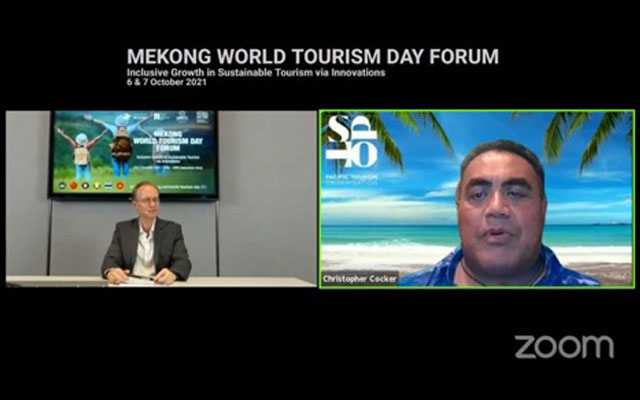
The Pacific Tourism Organization (SPTO) and Destination Mekong have signed a MoU to foster a collaborative partnership that will benefit both organisations and their stakeholders.
A key objective of the partnership is to accelerate sustainable and inclusive tourism growth post-pandemic, so as to ensure that tourism’s benefits are equitably distributed to all stakeholders while also enhancing sustainable tourism development practices in the destinations.
With their extensive membership of the greater Mekong sub-region (Cambodia, Laos, Myanmar, Thailand and Vietnam, as well as Southwestern Chinese provinces of Yunnan and Guanxi) and 20 Pacific Island countries (PICs), spanning all four sub-regions, SPTO and Destination Mekong represent tourism destinations that will benefit from information sharing and best-practice experiences under the MoU.
Speaking at the MoU announcement at the virtual Mekong World Tourism Day Forum, Destination Mekong founder and outgoing executive director of the Mekong Tourism Coordinating Office, Jens Thraenhart, noted the importance of innovative collaboration during this time.
“The MoU with SPTO signals an important step in a partnership agreement between two major regional tourism organisations, in a time when collaboration and sharing of knowledge is more important than ever, to practically assist our business communities prepare for a balanced tourism ecosystem”, he said.
Similarly, SPTO CEO Christopher Cocker, emphasised the importance of building partnerships to effectively address common challenges. “Innovation and collaboration will drive tourism’s recovery and ensure resilience in the long run,” he said.
SPTO and Destination Mekong intend to host a virtual mini tourism forum towards the end of 2021, with details to be announced in due course.