 In an interview with NCL’s Asian leaders back in April 2021, I was told there was already a strong and regular forward booking momentum in Asian source markets even though travel restrictions were still plenty. Now that travel is far more accessible around the world, how does cruise/fly-cruise demand look?
Let’s start with some context. If you look back in 2019, CLIA (Cruise Lines International Association) data showed nearly 30 million people took a cruise. In 2009, that number was about 18 million. Between those years, cruising was growing at a compound rate of six to eight per cent per year.
And then we had the pandemic. The first year was exceptionally challenging and the following year was a little better. But if you think about that in context, that’s about 60 million (of lost cruise opportunities)…over the past two years.
So, what we are seeing now is a significant bounce back worldwide. That differs across markets, as different markets move at different speeds. Where countries are opening up a lot more and learning to live with Covid, such as the UK and the US, we are seeing a much stronger bounce back.
Generally, we are excited by the trends as people return to travel.
We began our ‘great cruise comeback’ on July 25, 2021. We started our first sailing on the Norwegian Jade out of Athens. I was lucky to be on that one, and it was an emotional moment for us. Our crew comes from over 100 nationalities worldwide, and a large portion of that is Asian. They were so happy to be back at work and serving our customers again.
We are going from strength to strength, and now have 13 of our ships in operation. All 17 for the NCL brand will be operational by the end of May this year.
Asian bookings are coming back but are a little slower (compared to other regions). I was in India recently, and there was a really strong feeling about the return to travel. Our travel trade partners are very keen to engage and get back to business.
We are finding that people are willing to book forward, and are a little more reticent about booking for the current year. That said, bookings are getting stronger every day. We see Asian demand bouncing back in Japan, India and Singapore, which are some of our core markets.
You spoke of the eagerness of Indian partners in getting back to business. India is now a highly valuable Asian source market for travel and tourism, with China still out of the picture. As Asia emerges from lockdown, with varied freedom of travel, do you see key source markets here changing for NCL?
Pre-pandemic, our top Asian markets were usually Japan, India and Singapore.
We are committed to all our markets. All through the pandemic we never stopped promoting to our customers, we never stopped trying to help them. Our webinars with our travel agents have continued throughout the past two years, and I am always with my key partners once a week. So much is changing, so we have to communicate constantly.
As a business, we have two core philosophies. Guest first – we believe that when we build a great product and give the customer great services onboard, they will repeat-purchase and help our business grow.
Partners first – we believe that no great business is built overnight and one has to invest in a partnership. We are adding six new Prima Class ships; one every year starting from this August. That will give us a 40 per cent increase in capacity over the next six years. Because of this, we will need our distribution partners in all of our markets… to get behind (the Prima Class products) and grow the business.
Asia is one of the most cautious region when it comes to resuming international travel. The steel grip is easing now. How is that impacting NCL’s cruise programming for this part of the world?
We work with governments to provide the right product at the right time to the right people. The pressures of the pandemic is lessening around the world as more and more people are vaccinated, have obtained booster shots, or have been infected and recovered from Covid. We have to learn to live with Covid.
We have planned our ships out to 2024 and the programme is all set up, but we will continue to see what governments are doing and respond accordingly.
With more of Asia opening up, will NCL consider bringing forward its regional sailing? How easy is it to modify your schedule and bring a ship out to a region ahead of plan?
This is quite a complex process.
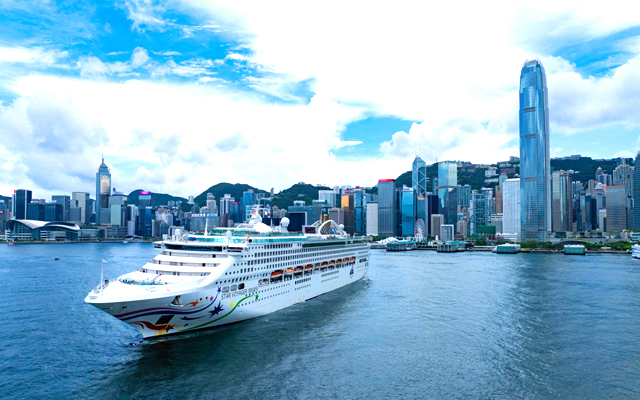
Our plans for the 2022/2023 season are to bring Norwegian Sun here and operate out of Tokyo, Singapore, Bangkok and others from October 2022 to April 2023. There will be 16 itineraries across most of Asia. Because we are planning so far out, we don’t typically chop and change itineraries unless governments say we can no longer do that or there is a new restriction of some sort.
We also believe that our customers don’t want (changes) when they have booked way in advance. Our partners don’t want that because they have invested resources to make the itineraries work.
So, we won’t change unless we really have to.
Are post-lockdown cruising habits different from pre-pandemic?
Customers have always wanted immersive experiences and exotic itineraries. But now, people are taking longer vacations, buying up multiple suites, and are more willing to spend.
I guess that’s revenge travel. I laugh at the term, but it is true. When you have not been able to travel for two years, you are happy to spend more money to see more things.
As we enter an endemic Covid phase, do see cruise customers lowering their guard and wanting fewer health and safety restrictions onboard?
Our health and safety process will remain and we continue to consult our expert Healthy Sail Panel. We are sticking with our protocols so that our customers will continue to feel assured, no matter where they are joining us. There are only slight nuances depending on the destination (we sail out from).
Customers are getting used to cruising again. We have been sailing since July 2021. Customers say they feel very safe onboard because of our vigorous health and safety procedures. Having been on 10 cruises since we restarted sailing, I don’t see behaviours changing. If anything, I find that customers feel safer onboard with us than on land.
I think it is very important that they feel safe when they board the ship. Our bars and restaurants are open – every facility is. Of course, we are not yet at a 100 per cent capacity in most markets. We don’t necessarily have to be back at that level now although we know we will get there eventually.
I always say to our travel partners that nobody approaches the bottom of the stairs and then jump right to the top. They take steps. And that’s what we are doing – we are taking steps. We expect to see occupancy improve every month, and that’s already happening.
Are pandemic concerns influencing the way NCL partners with destination operators to develop land programmes? How do land programmes look post-lockdown; how different are they to pre-Covid times?
One of the main reasons why people choose to sail with us is that they want to see all the wonderful sights in attractive ports of calls. So, we work very closely with our land partners throughout the pandemic to ensure their health and safety procedures are fit for our purposes.
We are looking to develop longer land programmes that are more immersive and with more overnight options. We want to give our customers more time to enjoy certain key areas, which is what most of our customers want now.
We’re seeing intensifying destination and tourism marketing throughout the world in the past few weeks. What’s on NCL sales and marketing agenda?
We have been investing more and more money every month on advertising – it goes back to my analogy about climbing up the stairs. We never stopped advertising and engaging. It is very important for our brand. It is also very important that we continue to communicate with our partners.
In fact, we have invested a lot last year. We introduced new technology on Norwegian Central Asia, a super service that gives all of our marketing materials to our partners for their use. We collaborated intensively with our partners to get the message out on what we do.
Going forward, I see ourselves spending even more money to get our brand out there – the extent varies by marketplace, of course.
We are super excited about our Prima Class ships, so we will be investing money (to promote these) in every market we service.
The Prima Class is really revolutionary in terms of space ratio. It has three infinity pools, a three-storey racecourse, the Indulge food court with 11 stations within, and the Ocean Boulevard that offers 44,000ft2 (4,088m2) of space for panoramic views.
We will have a wonderful christening event for Norwegian Prima, the first of six vessels in the Prima Class. Katy Perry was recently announced as the godmother, and she is a worldwide superstar. We are looking forward to meeting her onboard Norwegian Prima and seeing her perform. That’s another thing NCL invests heavily in – our entertainment programmes.
I was fortunate to be on Norwegian Prima when it was up in Venice. Norwegian Viva will follow soon afterwards.
The demise of Crystal Cruises and Dream Cruises came as a surprise for many customers and travel agents. While this is an issue with a company unrelated to NCL, has it affected travel agents’ confidence in dealing with cruise businesses?
No. NCL has always followed the two core principles of guests first and partners first. That translates into our operations. When we are forced to cancel a cruise, we make sure that we give our customers FCCs (Future Cruise Credits), which are usually more than what they had paid for their booking, or a refund if they prefer to get their money back. Right from the outset we made sure we treated the customer right.
And for our travel partners, we protected their commission.
If you ask around the industry, people would be very complimentary about how NCL manages its guests and is very open and honest with our travel partners.



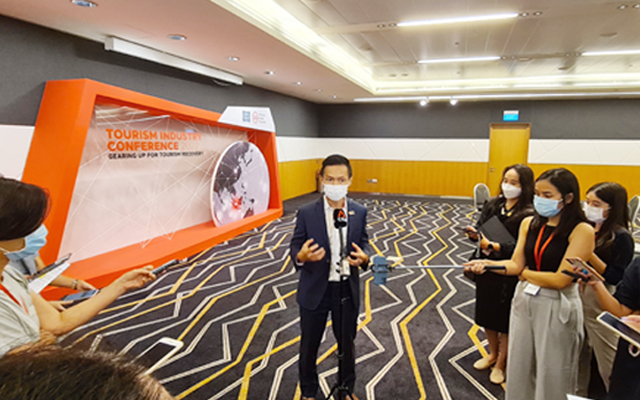
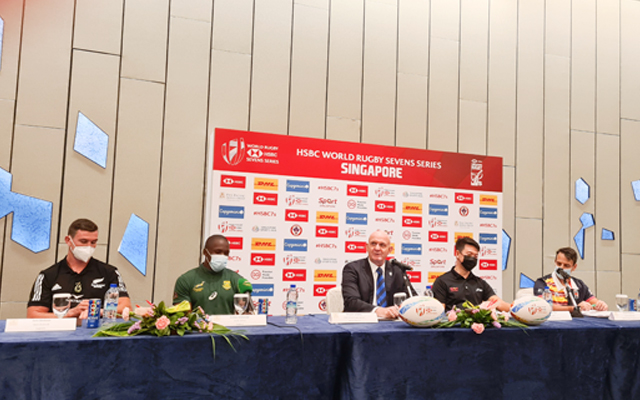







The Singapore government has earmarked close to half a billion dollars to support the tourism sector’s trek to recovery over the coming years, alongside new and enhanced programmes, revealed minister of state for trade and industry, Alvin Tan at this morning’s Tourism Industry Conference.
In his address at Suntec Convention Centre, Tan said the funds would be used to support and sustain strategic manpower capabilities in the sector, offset business costs, as well as amplify Singapore’s international recovery plans.
He called on industry stakeholders to utilise the financial support for business transformation and development of new experiences.
“Test-bed new and innovative concepts and solutions, especially in wellness and sustainability. Continue to develop your talent, to ensure that the tourism workforce is equipped with the skills needed to support your business transformation plans,” Tan urged.
As tourism returns against a backdrop of inflation, Singapore Tourism Board’s (STB) chief executive Keith Tan said the fresh funds would also come in handy to help tourism players deal with rising costs of operations.
However, he emphasised that “business cost is a reality” and that “all businesses in Singapore must internalise that, and not expect the STB or the government to shield them from rising business costs”.
As the cost of travel rises, it is even more important that tourism players develop experiences, attractions and events that travellers find are worth every dollar.
Adding on to the minister’s suggested priorities for the usage of the fresh funds, STB’s Tan encouraged industry players to look at developing great experiences for visitors or to attract new offerings that have yet to wash up on Singapore’s shores.
“For example, we don’t want the same old Christmas light-up on Orchard Road. How can we multiply the wow factor of that annual event?” he explained, adding that the new experiences should serve to differentiate Singapore from other destinations.
Sustainability focus
With sustainability recognised as an engine of growth for the tourism industry, Singapore will build on its existing Singapore Green Plan 2030, introduced in 2021, to launch the Tourism Sustainability Programme (TSP), which provides tourism businesses with resources to identify strategic areas for sustainability efforts.
In line with Singapore’s ambition to become one of the world’s most sustainable urban destinations, the TSP will focus on three main areas: capability and growth; innovation; and education and awareness.
Capability building and training will be supported through Training Industry Professionals in Tourism (TIP-iT). TSP will also offer grants such as Business Improvement Fund (BIF) to improve companies’ resource efficiency and competitiveness.
To foster innovation, TSP will support the development and test-bedding of innovative sustainable solutions through the Singapore Tourism Accelerator. Innovative technology providers and tourism businesses will work together to develop solutions in areas such as waste, water, energy and carbon emissions management that can be scaled up across the industry.
To continuously educate and provide information on best practices and focus areas to inspire industry players to consider new opportunities, the Hotel Sustainability Roadmap jointly launched by STB and Singapore Hotel Association in March, sets out sustainability targets for the hotel industries and strategies to help them achieve these goals.
Singapore’s sustainability focus will include collaboration with other tourism segments to set “ambitious” targets and strategies, noted STB’s Tan. Initiatives include the Singapore Association of Convention & Exhibition Organisers & Suppliers’ move to align its MICE Sustainability Certification with internationally-recognised standards; participation in the Global Destination Sustainabilty Index to benchmark performance against other business events destinations; and certification of Singapore as a sustainable destination under the Global Sustainable Tourism Council’s Destination Criteria.
Workforce focus
As Singapore strengthens her destination appeal, STB is working to ease manpower pressures on industry stakeholders.
Tan noted that the tourism industry lost a third of its workforce over the past two years.
While the reopening of land borders with Malaysia will alleviate some staffing bottlenecks, it is imperative that Singapore continues to build up her future-ready workforce capabilities, he opined.
To this end, STB worked with the National Trades Union Congress and Workforce Singapore to set up the Tourism Careers Hub (TCH) late last year.
Tan encouraged industry players to reach out to TCH to help find workers with the right skills or to upskill their staff to meet their needs.
Through the TCH, STB works with the tripartite partners to extend end-to-end job facilitation, training and support for the sector’s workforce.
Digital transformation focus
Firms keen on digital transformation have benefited from STB’s Tourism Technology Transformation Cube (Tcube), which was launched last year. This digital transformation support has been further enhanced with a programme that supplements tourism businesses’ Augmented Reality (AR) capabilities.
STB has developed 100 3D models of points of interests, and these are available via the Tourism Information and Services hub for industry players to utilise for free. The concept has been expanded into Extended Reality (XR), which encompasses Augmented, Mixed and Virtual Reality.
To create engaging interactive content, STB is also keen to pilot proof-of-concepts with the sector. It has worked with S.E.A. Aquarium on an AR app for visitors to interact with marine animals digitally, and learn more about marine life.
To expand these efforts, STB launched a grant call, The Next Experience, in February with the purpose of creating XR-enabled experiences that motivate people to visit multiple points of interest. STB has received healthy interest ahead of the proposal deadline on April 23. – Additional reporting by Karen Yue