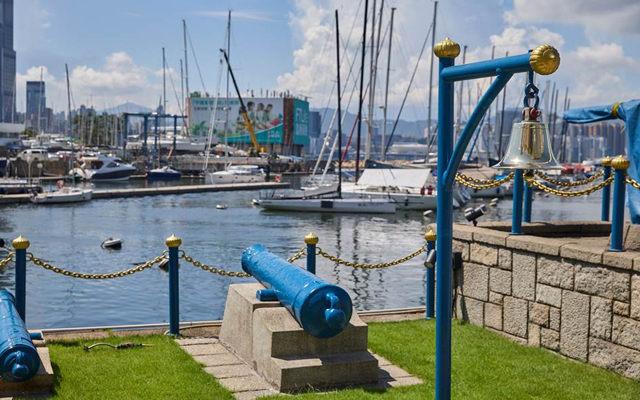
Royal Caribbean Group is committing to the next phase of its ongoing partnership with World Wildlife Fund (WWF) for guidance and counsel in establishing bold environmental goals and sustainable business practices. This renewal of the partnership the group’s broader decarbonisation strategy, focused on establishing Science-Based Targets.
Royal Caribbean Group first partnered with WWF in 2016, where the conservation organisation has since offered advice on sustainability matters in the group’s business and guided the cruise line on promoting responsible tourism in priority coastal destinations and protecting the oceans through global conservation investments.
Royal Caribbean Group partners World Wildlife Fund to establish environmental goals and sustainable business practices
The partnership had established and met the 2020 sustainability goals, and over the next five years will be focussing on setting ambitious, measurable sustainability targets around the reduction of carbon emissions, the sustainable growth and development of the business, sustainable commodity sourcing and tourism, the elimination of single-use plastics and waste management, among other areas.
Royal Caribbean Group CEO Jason Liberty said: “Healthy, sustainable oceans are paramount to our mission of delivering the best vacations responsibly. Our partnership with WWF encapsulates our belief in continuous improvement and our commitment to advancing our environmental, social and governance (ESG) work. The support and assistance of WWF will be invaluable to realising this mission as we work to set and achieve our sustainability goals.”
President and CEO of WWF-US Carter Roberts shared: “Scale matters, particularly in the face of global challenges like climate change and ocean conservation. We’re grateful for the progress Royal Caribbean Group has made toward achieving its sustainability goals since 2016, and we’re energised by an ambition for even greater things to come.
Roberts added: “Our work together is grounded in the reality that people everywhere – from local communities and Indigenous peoples to urban residents and tourists – rely on the ocean for food, livelihoods, and enrichment. We’re committed to doing everything possible to keep ocean ecosystems thriving for the benefit of all people, as well as the many other creatures for whom the ocean is their home.”
This year, WWF and Royal Caribbean Group will work together to establish sustainability goals across three key areas of Ship, Sea and Shore: ‘Ship’ will see the continuous improvement of operational sustainability; ‘Sea’ will focus on investing in ocean health through targeted philanthropy, education and fundraising campaigns; while ‘Shore’ embeds principles of sustainable development in projects and increasing sustainability and certification of tour operators.
Royal Caribbean Group will continue to provide financial support to WWF’s global ocean conservation work through a US$5 million philanthropic contribution and collaborate with WWF to build global awareness about ocean conservation issues among Royal Caribbean Group’s guests.
Tourism players can now get the opportunity to market and put their products and services in front of a massive market of 20 million gaming players, if they can get their avatars ready in time.
BuzzAR, a Singapore-based metaverse start-up, is launching its virtual land, ToonLand, next year. Bell Beh, its co-founder and CEO told TTG Asia that hospitality stakeholders can then utilise its metaverse with its huge audience for branding and as a new way to engage their customers.
citizenM intends to use profits from the sale of NFTs to finance a real-life hotel where token holders will vote on the location
“We are building the creator tools for creators and authoring tools for businesses to co-create within ToonLand,” she explained.
BuzzAR’s suite of augmented reality (AR) and artificial intelligence (AI) solutions has changed the way tourism stakeholders interact with their customers.
Some metaverse applications for their hospitality clients include gamified wayfinding to guide tourists from point A to B and an avatar engine to turn face into avatar in real-time.
At the upcoming London Tech Week in June, BuzzAR will launch a CryptoToon API (Application Programming Interface) project with the Singapore Economic Development Board, as well as mark the official launch of its genesis NFTs (non-fungible tokens), which will be user-generated.
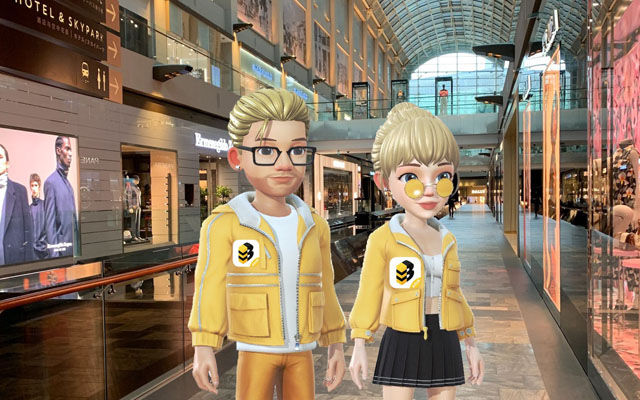
Using the start-up’s intuitive APIs, everyone can create their own avatars and mint their own NFTs. “We have over 2.18 million avatars, created by users from 163 countries and the numbers are growing exponentially everyday,” added Beh.
Essentially, BuzzAR aims “to lower the entry barriers for everyone to tap into this trillion-dollar (metaverse) market”.
Enter the metaverse
First described by sci-fi author Neal Stephenson in his 1992 novel Snow Crash, the buzzword, metaverse, surged to the forefront when Facebook CEO Mark Zuckerberg rebranded his technology giant to Meta Platforms.
Zuckerberg envisioned an embodied Internet, in which people can have enriched interactions – a blend of VR (virtual reality), AR, and AI – and where one can move from object to object, world to world using AR.
Although the metaverse only started trending recently, the concept is not new.
A convergence of the digital and physical worlds or “phygital”, it has already been adopted by gaming platforms. Technology companies have tried to incorporate metaverse elements in popular games including Animal Crossing and Fortnite.
While it is unlikely that virtual travel will ever replace the wonderous experience one gets when exploring a destination in person, it will no doubt benefit hospitality players if they embrace new technologies for their businesses to be future-ready and to increase bottomlines too.
Hotels and NFTs
Hospitality players and aspiring hoteliers can take a leaf from citizenM’s playbook on how to build virtual and physical hotels by utilising NFTs for financing, promote digital art and artists, as well as engage guests both online and in the real world.
In a recent move to venture into the metaverse, the global hospitality brand claimed to be the first to buy property in The Sandbox.
The Sandbox is a metaverse where users can create and monetise their own distinct worlds and game experiences on LANDs, which are NFTs that represent virtual real estate.
citizenM acquired a LAND site in the leading decentralised gaming virtual world to begin building a hotel. “We are thrilled to be the first hospitality company to build in the metaverse,” said Robin Chadha, CMO of citizenM.
“As a brand that has always pushed the boundaries and challenged traditional models, this new venture in The Sandbox fits not only with our brand strategy but also the commitment we have to the creative community and to our guests both online and in the real world.”
Once the LAND is bought, citizenM aims to finance the build of a hotel in the virtual world through the sale of an exclusive collection of NFTs with real-world rewards or utilities attached.
Utilities will take the form of discounts, free drinks and more with the specifics determined by the level of NFT assigned to the purchaser. They will be redeemable at any of citizenM’s growing portfolio of hotels in the real world. Currently, it includes 24 hotels in 16 cities globally.
Once the virtual hotel – a location for avatars visiting The Sandbox to work, sleep and play – is built, citizenM will collaborate with an additional roster of digital artists to create and sell NFTs that can be purchased in the digital space.
Eventually, the pioneer of affordable luxury hotels plans to use these profits, as well as the incorporation of a decentralised autonomous organisation (DAO), to fully finance a physical, real-life property where token holders will vote on the location – essentially creating a hotel for the people, by the people.
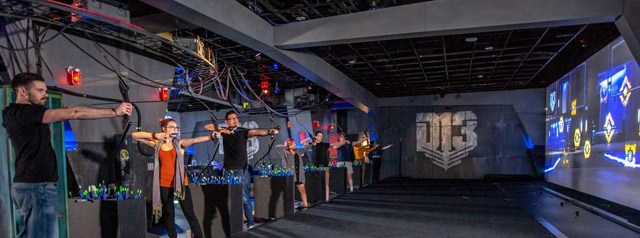
The Hunger Games: The Exhibition invites visitors to use real bows and safe arrows to interact with a virtual world
Cruising into metaverse
Norwegian Cruise Line is also in on the game, launching its own NCL NFT marketplace to allow travellers and NCL loyals to own a piece of its newest vessels, Norwegian Prima and Norwegian Viva.
It claims to be the first in the cruise industry to sail into the NFT marketplace.
Italian artist Manuel Di Rita, who designed the hull art on both ships, will create six art pieces – one will be auctioned at a starting rate of US$2,500, and the remaining NFTs will be sold for prices beginning at US$250. The auction winner will also be awarded a balcony stateroom on one of Norwegian Prima’s inaugural voyages in the US.
All proceeds from the NFT auction and sales will be donated to Teach For America, which finds, develops, and supports a network of leaders who expand opportunity for children.
Elevating the booking process
As BuzzAR’s ToonLand illustrated, another obvious metaverse application for hotel chains, cruise brands, travel agencies and other businesses is to use the platform to amplify their promotional efforts.
For a start, hospitality players can enrich the guest experience – right from the consideration stage.
Xiong Zehui, assistant professor, Information Systems Technology and Design, Singapore University of Technology and Design, told TTG Asia: “In the area of hospitality, when customers book a hotel room, they can tele-present in the room they want to book through virtual reality. In this way, customers can view the inside and outside of the hotel room and know exactly what they are getting prior to booking it.”
Travellers can even turn into digital avatars and virtually walk through the hotel property or resort before the check-in.
Through immersive experiences, hospitality players can now showcase their rooms, décor, amenities and even surroundings to its full splendour to entice keen guests – taking the booking process to the next level.
Indeed as Beh pointed out, adopting metaverse applications can generate various benefits relating to brand awareness, productivity and increase in revenue, done through very creative solutions.
She shared how one hospitality client accumulated an estimated S$500,000 (US$365,604) in bookings after running a WebAR campaign with BuzzAR, gaining an ROI of 100 times.
BuzzAR’s avatars in a public mall setting. Courtesy of BuzzAR
Alleviate manpower crunch
Avatars and AR/VR may even replace physical staff, according to articles on Hospitality Net. AI-powered avatars can further eliminate the variations in service operations caused by human individual factors.
With the metaverse becoming a virtual workspace for hospitality staff, hotels can deploy flexible, work-from-home schedules that today’s workforce demands, as well as address the labour challenge.
Digital attraction opportunities
In the same vein, tourism players can deploy metaverse applications such as the use of mixed reality to create digital attractions based on existing ones in the real world.
Such content can interact with the visitor in 3D and real-time – not only as a complement to the real attraction but also as a stand-alone digital attraction for visitors in the metaverse, according to Xiong.
He cited the example of Disney, the international leader in tourism and hospitality with an extensive portfolio of physical parks and virtual entertainment content worldwide.
Disney’s virtual game, Play Disney Parks, is complementary to its physical parks. The AR game allows visitors of the park to complete tasks with family and friends, based on Bluetooth beacon settings and the phone camera, to activate the hidden AR elements around them.
While waiting in line for a ride on a spaceship, players can for instance see the rocket “flying” overhead.
Another Singapore-based start-up, Vizzio, which is at the forefront of 3D capture and visualisation, has created a 1:1 replica of Gardens by the Bay in under three days for an event.
In the project, Vizzio’s AI created the models using a patent-protected algorithm that can create normalised digital surface model raster by aggregating the height of points gathered from satellite imagery.
Vizzio is able to stream this event over the network to any browser without the need to install any app – an exciting enterprise use of metaverses, according to Vizzio’s co-founder and CEO, Jon Li.
Every metaverse application requires 3D content, be it a digital product, an indoor space or an entire city.
Li opined: “We see the metaverse as a continuum that spans the spectrum of digitally enhanced worlds, realities and business models. It applies across all aspects of business, from consumer to worker and across the entire enterprise; from reality to virtual and back; from 2D to 3D; and from cloud and artificial intelligence to extended reality. It is the future of digital businesses.”
The current pandemic may have made offline activities challenging but the metaverse opened up other possibilities – by scanning the space of the attraction and uploading the results to the cloud, the cloud algorithm can process the data of the authentic international attraction into an explorable space, added Xiong.
In the metaverse, crowding, labour, climate, venue limitations, traffic conditions are no longer part of the equation as visitors can explore attractions without leaving the comfort of their homes.
Room for innovation
Later this year, Cityneon Holdings will launch Avatar: The Experience at Gardens by the Bay’s Cloud Forest in Singapore.
The walk-through event incorporating metaverse applications allows guests to connect with the alien world of Pandora, its bioluminescent environments, mythical creatures, flora, and the captivating culture of its indigenous people, the Na’vi.
Welby Altidor, group chief creative officer, Cityneon, told TTG Asia that the company is constantly on a lookout for ways to integrate different technologies into their immersive offerings.
“The metaverse is something we have already applied to many of our experiences, such as the use of AR, VR, and other new technologies, and we are also continuously exploring different ways to tell the story to make the experiences truly memorable for our guests,” Altidor added.
For its brand-new artefact IP experience, Machu Picchu and the Golden Empires of Peru, Cityneon has integrated a VR experience where visitors can admire the UNESCO heritage site in its full view.
The Hunger Games: The Exhibition uses an award-winning game engine to create the archery experience where visitors use real bows and safe arrows to interact with a video virtual world on the world’s largest interactive touchscreen display.
Cityneon houses teams dedicated to applying new technologies – BIG LAB creates the content for all its experiences, and designs all the guest experiences; ANIMAX, which comprises a team of creative technologists, is behind its state-of-the-art animatronics.
“Our visitors feel that the virtual worlds really add to the experience and the feedback has been very encouraging. We definitely see great potential in developing this technology for all our other experiences that are touring the world,” added Altidor.
To take it further, travel and hospitality brands can come up with similar “packages” to allow tourists to virtually visit a destination or attend a festival with friends.
Some of these friends may be on-site at the festival while others attend virtually, through holograms or their avatars.
Adopt a metaverse strategy
Industry stakeholders in Singapore keen to undergo a digital transformation can look to Singapore Tourism Board’s (STB) Tourism Technology Transformation Cube’s (Tcube) support to supplement their businesses’ AR capabilities.
STB has developed 100 3D models of points of interests, and these are available via the Tourism Information and Services hub for industry players to utilise for free. The concept has been expanded into extended reality (XR), which encompasses augmented, mixed and virtual reality.
To create engaging interactive content, STB is also keen to pilot proof-of-concepts with the sector. It has worked with S.E.A. Aquarium on an AR app for visitors to interact with marine animals digitally, and learn more about marine life.
It even launched a grant call, The Next Experience, in February with the purpose of creating XR-enabled experiences that motivate people to visit multiple points of interest.
Beh reckoned: “Every business should have a metaverse strategy. The estimated market for businesses is at least 100 billion dollars.
“Early adopters will dominate the game, as history has taught us many times. If I were a hospitality business, I would allocate a percentage of revenue to be re-invested in this high growth area.”
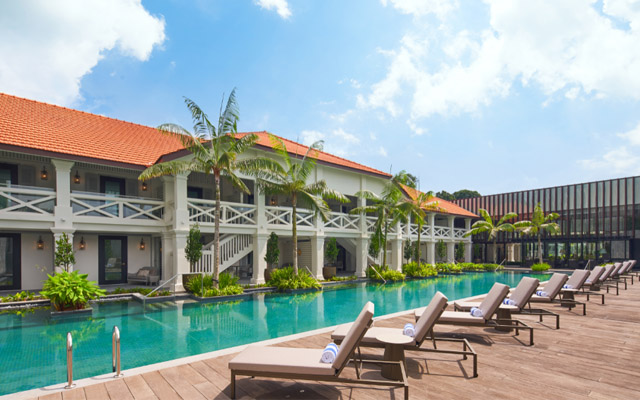
The Barracks Hotel, a charming conserved colonial building previously occupied by the British Army, invites guests to retreat into tranquillity and explore Singapore’s storied past with its newly launched Heritage Safari – Colonial Architecture Tour, and Cultural Gems.
The Colonial Architecture Tour lets guests explore the colonial black-and-white buildings that were once home to the British armed forces in the 1800s, and historical sites including Fort Siloso, Mount Imbiah, Seletar Estate, Gillman Barracks, and Dempsey Hill, all while riding in the Barracks Jeep, the main mode of transport for British soldiers back in the day. At the end of the day, guests can indulge in a three-course dining experience at Tamarind Hill, a renowned Thai restaurant housed in a restored colonial manor at Labrador Nature Reserve.
The Barracks Hotel invites guests to explore Singapore’s history and culture
Cultural Gems traces Singapore’s multicultural heritage through the city’s ethnic enclaves, where guests can choose from one of four walking tours in Chinatown, Kampong Glam, Katong or Tiong Bahru, led by Tour East.
The Chinatown tour includes a private tea appreciation workshop with food pairing at Tea Chapter, while the Kampong Glam tour offers guests the opportunity to create their own batik masterpiece using traditional and modern tools.
At Katong, foodies can witness the art of popiah skin-making and assemble their own popiah; thereafter, visit a Peranakan chef’s house to enjoy an array of Peranakan delicacies. Lastly, the Tiong Bahru tour is ideal for those keen on picking up basic photography skills. Led by a professional photographer, guests will gain photography tips while exploring the neighbourhood and its history.
Collaborating with Joe’s Tailoring, a family-owned, bespoke tailoring house, each guest receives a personalised safari shirt, complete with customisable name monogram, buttons, thread colour, and barracks embroidery. The fitting experience is accompanied by a choice of Prosecco or The Barracks Hotel’s signature tea blend, 1904.
The Heritage Safari package offers a two nights’ stay in a premier room or a suite, and includes the tour experience, daily breakfast at The Living Room, and more.
In the early days of the Covid travel disruption, industry observers and leaders said isolation and self-reflection would trigger an awakening among consumers to desire a more meaningful life when the lockdown was over. The numerous traveller intention surveys that followed us through the past two years also pointed to an era of more responsible, meaningful travel.
Now that travel barriers are increasingly being dismantled and travel freedom is being returned to most people, we will finally know if these expectations were correct or if traveller intention surveys were distorted by social desirability bias.
The good news is, many destination developers and marketers are not leaving it to travellers to make the right move. It takes two to tango, so they have been shaping the narrative the right way themselves, through messages that inspire meaningful, immersive and sustainable travel.
Throughout the travel freeze, Spain Tourism Board has been deepening South-east Asian travel agents’ understanding of Spain’s various points of appeal, with the aim of spreading post-lockdown tourism attention to lesser-known parts of the country and play up unique local experiences.
Raising awareness of off-the-beaten-path destinations and customised programmes is recognised as an effective solution for overtourism issues that were present pre-pandemic.
Tourism Western Australia has redefined its strategy to emphasise the Australian state as a premium destination that offers bucket-list worthy adventures across the destination, not just in the busy heart of Perth. It wants high-value travellers, who are known to spend more, disperse farther and stay longer. This approach ensures that the NTO acts “sustainably and in good faith for the protection and preservation of our natural landscape”, said managing director Carolyn Turnbull.
Mauritius tourism stakeholders are moving in similar directions, crafting and promoting authentic experiences that enable visitors to form meaningful connections with the locals.
At the Southeast Asia Development Symposium 2022 in March, PATA CEO Liz Ortiguera said the metrics by which tourism is measured “will be completely different” from pre-pandemic yardsticks. Performance based on large arrival volumes is out; quality dispersion, longer stays, and tourist receipts that flow into the local community are in.
That’s not to say that the world has no place for travellers who just want to shop and feast. There is nothing wrong with that. Some forward-thinking destinations have long been putting the spotlight on local entrepreneurs, especially those with a sustainable business model, and whose products and services tell a valuable story of the local culture and heritage, so that every purchase is unique, meaningful and impactful.
So, will the travel and tourism industry be able to truly build back better? It does look like we will.
The tourism industry stands to benefit from the government’s move to further relax Covid-19 restrictions from May 1, with fully vaccinated travellers aged 13 and above no longer required to undergo Covid-19 tests before and after arrival, while travellers under 12 will not need to undergo Covid-19 tests upon arrival regardless of their vaccination status.
Travellers also no longer need to have Covid-19 insurance coverage to enter the country.
Bhoonee: removing the hassle of Covid-19 tests will make the destination more attractive
Entry to all premises will be allowed for everyone, and check-ins with the MySejahtera app for contact tracing purposes will no longer be required.
While wearing of face masks is not required outdoors, it is strongly encouraged by the authorities.
Uzaidi Udanis, president, Malaysian Inbound Tourism Association, said the health minister’s recent announcements of further relaxations are timely and very much welcomed by the tourism sector – this would help revive the industry which had been battered by the pandemic.
At the same time, petrol prices are being heavily subsidised by the government, which helps to stabilise the cost of public transportation in the country.
World Avenues Travel & Tours executive director, Ally Bhoonee, a big player in the Middle Eastern market, said the relaxation of Covid-19 restrictions coincides with the peak Middle East summer travel season. Pre-pandemic, Middle Eastern travellers were top spenders in Malaysia.
Bhoonee said: ”Removing the hassle of having to take Covid-19 tests will make the destination more attractive to the Middle Eastern traveller. We will use the Arabian Travel Mart tradeshow next month as a platform to broadcast this piece of good news to our partners in the Middle East.”
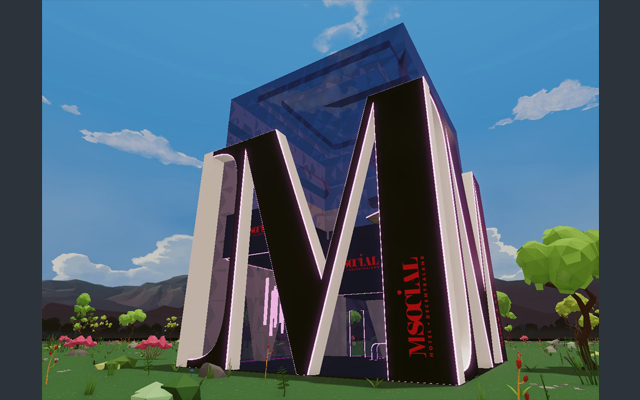
Millennium Hotels and Resorts will launch M Social Decentraland on May 5, 2022, making it the group’s first virtual property to join physical outposts in Paris, New York, Singapore and Auckland.
Modelled on different M Social hotels around the world, the new hotel encapsulates M Social’s brand and aims to be a place for all to gather and discover the virtual reality universe of Decentraland.
Millennium launches its first virtual hotel, M Social Decentraland
Located near Genesis Plaza, at the heart of Decentraland, Millennium’s virtual hotel sits on prime digital land and is positioned as a hub for explorers to discover new experiences and connect with like-minded individuals.
Kwek Leng Beng, executive chairman, Millennium & Copthorne Hotels, said: “M Social is about being different, being one of a kind. As we look towards the future, we need to look past the traditional model of hospitality and engage our guests through new immersive experiences. We hope to redefine hospitality through M Social Decentraland by creating online adventures that integrate with real life events.”
Guests who step inside M Social Decentraland can interact with an avatar that welcomes everyone in the lobby. The avatar guides guests on a journey of discovery through the hotel. Those who reach the top of Decentraland will stand a chance to win real world hotel surprises.
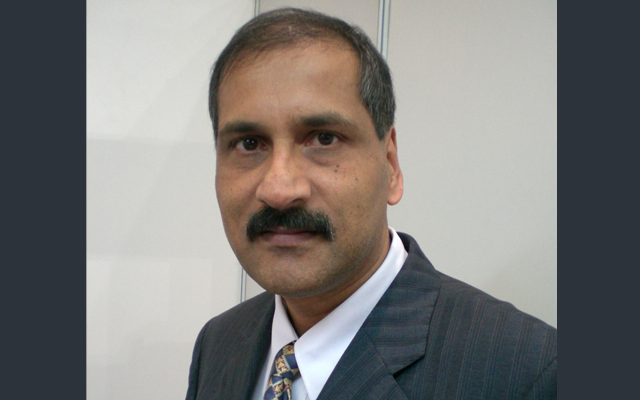
“The hospitality landscape is rapidly evolving. We are embracing different technologies to engage customers and enhance guest experiences. The metaverse is one such avenue that presents a myriad of opportunities for us to create unique social connections with our guests,” said Saurabh Prakash, group senior vice president, commercial for Millennium Hotels and Resorts.
Saurabh added: “M Social Decentraland will enable us to reach out to new and existing customers in both the physical and virtual world with online connection to offline engagement.”
Millennium will be in discussion with like-minded partners on future collaborations. Future integration for the hotel will include linkage to the M Social website and special events to mark occasions like Valentine’s Day and New Year’s Day.
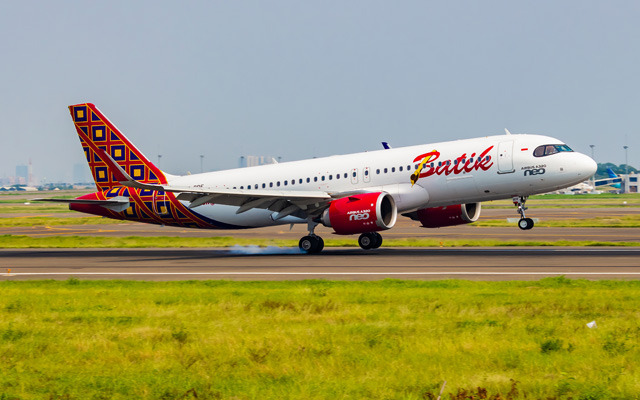
JAKARTA, INDONESIA - OCTOBER 6, 2020 : A Batik Air A320-200 arriving at Soekarno Hatta Intl Airport in Jakarta, Indonesia.
Malaysian-based regional airline, Malindo Air, has been rebranded as Batik Air and will commence business under the new identity on April 28.
The rebranding exercise is in line with the Lion Group’s goal to establish a common identity for the full service airlines within the group.
Malindo Air has been rebranded as Batik Air (Photo: Leony Eka Prakasa)
With this approval in place, Batik Air will conduct improved business for seamless transfers, leveraging Kuala Lumpur International Airport as a transit hub for the Lion Group of Airlines.
“With the rebranding exercise and the reopening of the borders taking place in the region, we are very excited for the opportunities presented to us for the potential growth of our airline. With the new brand, we will be able to offer fresh and new services,”said CEO Mushafiz Bin Mustafa Bakri in a press release.
The rebranding exercise will be conducted in phases.
At the same time, Batik Air will be adding a number of B737 aircraft to its existing fleet to service markets it operated in prior to the pandemic.
Findings from a new consumer research led by Cruise Lines International Association (CLIA) are painting a picture of resilience in the cruise community, with passenger volume growing and cruise intent improving.
Sharing the findings at the Seatrade Cruise Global in Miami, which concludes on April 28, Kelly Craighead, president and CEO of CLIA, said passenger volume is expected to recover and surpass 2019 levels by the end of 2023, and recover 12 per cent above pre-pandemic levels by the end of 2026.
CLIA ocean-going members have announced their commitment to net-zero carbon cruising by 2050
“Cruising is accessible, responsible, and experiential – making it the best way to see the world for people of all ages and interests. With the support of an incredibly resilient community, the future of the cruise industry is bright,” Craighead stated.
CLIA noted that over 7.5 million passengers having sailed in nearly 90 markets since cruise operations resumed during the pandemic.
Intent to cruise is rebounding, finds the CLIA study, with 63 per cent of cruisers or potential cruisers indicating they are ‘very likely’ or ‘likely’ to cruise in the next two years.
Sixty-nine per cent of respondents that have never cruised said they are open to cruise, exceeding pre-pandemic levels.
Millennial cruisers are the most enthusiastic about taking another cruise, with 87 per cent indicating they will take a cruise in the next few years, followed by Gen X at 85 per cent.
As cruise operations continue to ramp up, CLIA and its member cruise lines have deepened their environmental sustainability commitments that will drive innovation for a more efficient future.
CLIA ocean-going members have announced their commitment to net-zero carbon cruising by 2050. Further to that, by 2035 all ships calling at ports where shoreside electricity (SSE) is available will be equipped to use SSE, allowing engines to be switched off and effectively eliminating carbon emissions while berthed at port.
Where SSE is not available, ships will use available alternative low carbon technologies required by ports.
The industry is acting now for the future, stated CLIA in a press statement.
Recognising that shoreside power is only one pathway to decarbonisation, CLIA also shared that it will join the Global Maritime Forum Call to Action for Shipping Decarbonization to make zero emission vessels and fuels the default choice by 2030.
“The cruise industry has an extraordinary ability to innovate, and we want to channel our collective expertise and commitment to help find solutions as an active partner in the effort to decarbonise shipping. We continue to set ambitious carbon reduction goals as an industry, and cruise lines are showing the way by partnering with fuel suppliers, shipyards, technology manufacturers and academic institutions to develop new lower carbon fuel sources. We are investing in our future,” said Pierfrancesco Vago, chairman, CLIA.
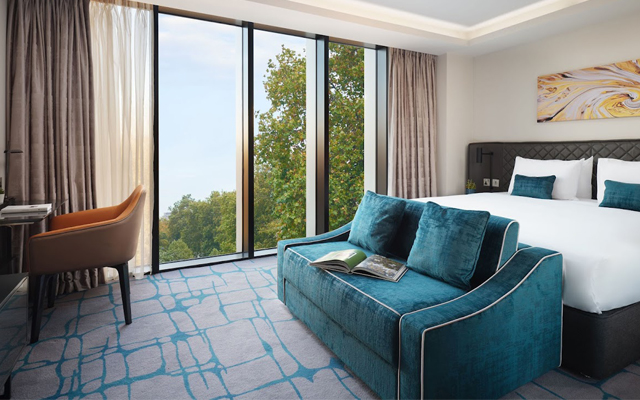
Dorsett Hospitality International has paved the way into London for its new brand Dao by Dorsett, with the first property opening this June.
Dao is conceived to be socially and locally driven, adopting an ‘aparthotel’ model where guests enjoy their own custom living space in fully serviced apartments alongside multiple touchpoints to interact with their local environment.
Dorsett Hospitality International launches new ‘aparthotel’ brand, Dao by Dorsett
Establishing Dao’s first property in London, through Dao West London, signals the brand’s mission to be positioned in central locations and lively neighbourhoods across the world. Dao West London also kicks off a strong launch pipeline, which includes an Asian opening this summer.
Dao West London, situated in Shepherd’s Bush, west London, will feature 74 fully serviced apartment units overlooking Shepherd’s Bush Green. The property is a five-minute walk from the underground station, the retail haven of Westfield London as well as White City.
Winnie Chiu, president, Dorsett Hospitality International, said: “Dao translates into English as ‘the way’ and emphasises how our hotels will lead and pave the way in letting our independent, dynamic guests explore the community and immerse themselves in the local area.
“The world has changed irrevocably in recent years, but the value of connections is more priceless than ever. By offering a longer-stay option with thoughtful services and amenities, our guests will be able to maximise their time reconnecting with friends and loved ones as travel continues to resume and is defined by connecting with your local community.”
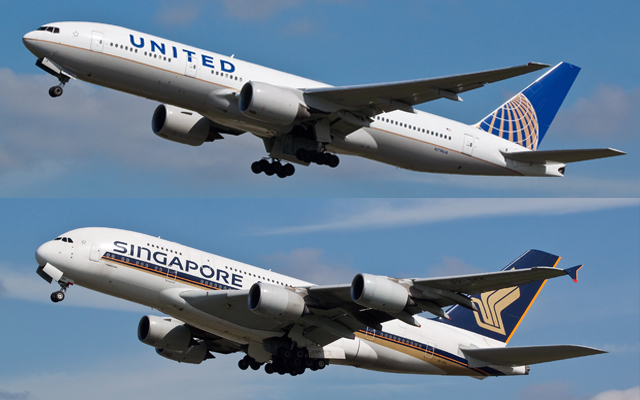
Star Alliance members United Airlines and Singapore Airlines (SIA) are expanding their codeshare arrangements to include 19 new destinations in Asia and the US.
From April 26, United’s customers will be able to connect to nine new codeshare destinations in the SIA Group network, including Bandar Seri Begawan, Siem Reap, Kuala Lumpur, Penang, Bali, Jakarta, Surabaya, Perth and Male.
United Airlines and Singapore Airlines expand their codeshare arrangements
SIA customers may connect on United’s flights out of Los Angeles to 10 new codeshare destinations in the US, such as Austin, Baltimore, Boise, Cleveland, Denver, Honolulu, Las Vegas, Phoenix, Reno and Sacramento, all of which complement existing connections.
This expansion is timely as more countries around the world ease border restrictions and demand for international air travel is on the rise, recognised both airlines.
The codeshare flights will be made available for sale progressively through the airlines’ respective booking channels, subject to regulatory approvals.